
In this guide
An estimated energy bill is one where the supplier has charged for how much energy it thinks the household used, not what the meter actually recorded. Unless a home has a smart meter or prepays for energy, the bill is likely to be based on estimated use, worked out from previous bills (usually for the same quarter or month) and a database of similar properties. Bills typically cover a quarter, so one missed reading can mean three months charged on a guess1.
The risk runs both ways. When suppliers do not receive meter readings they estimate, and that can lead to overpaying or to owing a large amount once a real reading arrives2. In Northern Ireland, an 'E' beside a meter reading on the bill marks the usage as estimated, meaning the household may be charged for energy it has not used; there, NIE Networks reads electricity meters and visits homes four times a year to do so3.
A working smart meter removes the need to submit readings at all: it sends electricity and gas readings to the supplier automatically, and suppliers fit one free of charge4. What remains is dependence on that meter staying connected and on the supplier's systems handling the data. The sections below cover how to read every common meter type, how often readings happen, and where the guesswork still creeps back in.
What an estimated bill is and why it happens
An estimate fills the gap when no actual reading reached the supplier for the billing period. The method is the one described above: past bills for the same period plus comparison with similar homes1. The estimate is not a penalty, but it has no knowledge of what changed in the home: a new baby, a heat pump, someone now working from home, or a household that has moved out for the winter.
A higher than expected bill can have several causes, and an estimate is only one of them. Smart Energy GB lists an estimated rather than accurate bill, a supplier raising its prices, and accidental overcharging as possibilities8. A bill that shows an 'S' beside the reading came directly from a smart meter; one that shows an 'E' was estimated3.
The Energy Ombudsman's case files show how estimates build into large corrections. In one case, a missed meter exchange meant the supplier had billed electricity using estimated readings only for the previous six months, although eight months earlier a meter reader had recorded a reading of 34518 from the meter9. A second case followed the same pattern of six months billed purely on estimates10. In another, the account had been opened to the wrong reading:
"The account had been opened to an incorrect meter reading, which had inflated the amount the consumer was asked to pay."
Standard meter customers who do not send readings will most likely end up with an estimated bill, and with it the chance of overpaying or underpaying12. When an underpayment is corrected, the rules on how far back a supplier can charge are covered in back billing rules and catch-up bills, and the markers printed on a bill are explained in what estimated meter readings mean on your bill.
Reading a smart meter: the IMPORT screen
Most of the time there is nothing to read. A smart meter sends readings automatically, which Ofgem states means bills based on accurate meter readings and not estimates13. The supplier uses the meter's data to bill for the energy used, and the in-home display shows how much energy is being used during the day14.
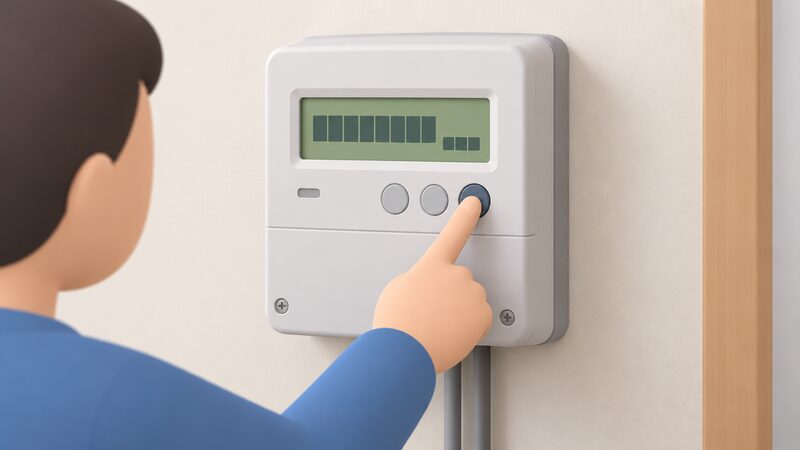
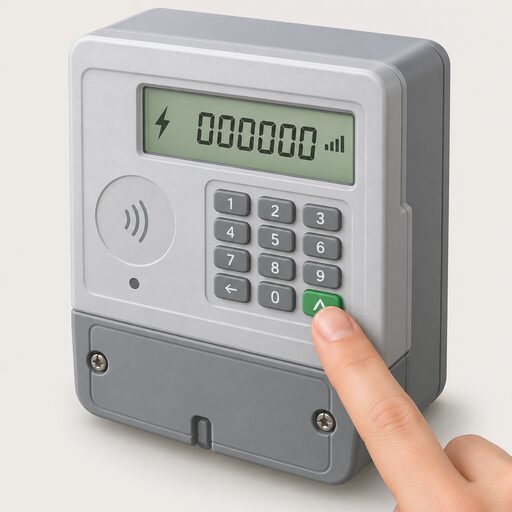
When a supplier does ask for a manual reading, the display on the meter itself holds it:
- On an electricity smart meter, press 9 on the keypad, or A if the meter has A and B buttons.
- Keep pressing until the screen flashes or shows the word IMP or IMPORT.
- The number shown beside it, followed by kWh, is the reading2.
IMPORT is the electricity drawn from the grid. Homes with solar panels or a battery may also see export registers; those are not the figure the supplier needs for the import bill.
Smart Energy GB lists the occasions when a manual reading may still be requested: switching supplier, a meter that has temporarily lost connection, closer monitoring of use, changed meter settings, a switch of supplier with a first generation SMETS1 meter, or a supplier confirming recent usage15. Even with a smart meter fitted, readings can be supplied manually if the supplier requests them15.
Reading a dial meter, one dial at a time
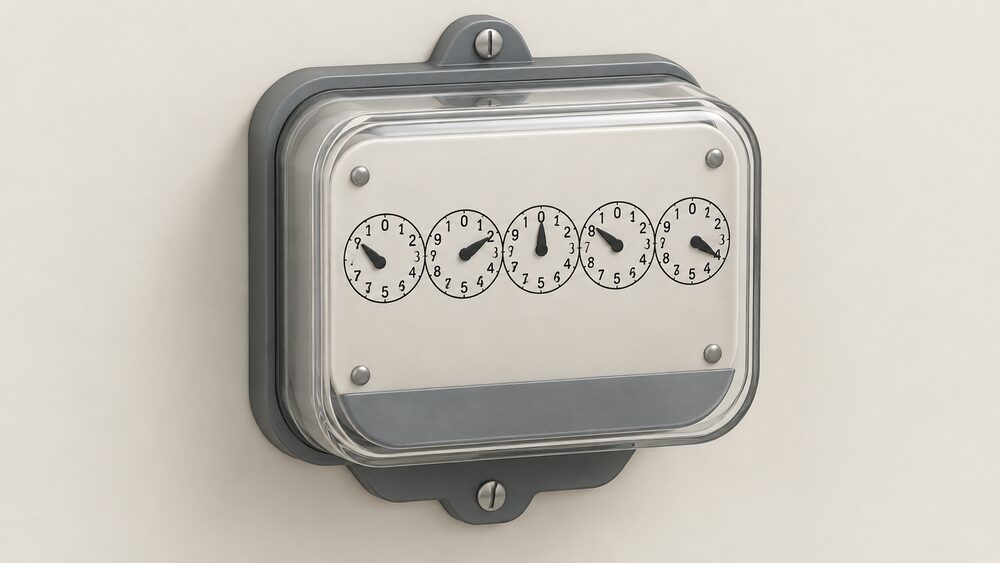
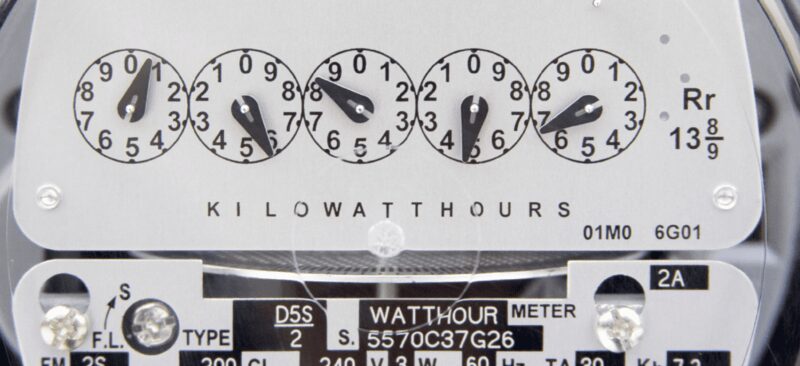
Dial meters are the oldest design still in homes. An electricity dial meter has five or more dials; a gas dial meter has four or more, set side by side12. Each dial turns to point at a number from 0 to 9, and each turns in the opposite direction to its neighbours, which is why a quick glance so often produces the wrong reading16.
Citizens Advice sets out the method for electricity dial meters16:
- Read the first 5 dials from left to right, ignoring any red dials or dials marked 1/10.
- If a pointer is between two numbers, write down the lower number.
- If a pointer is between 9 and 0, write down 9.
- If a pointer is directly over a number, underline it; if the next dial to the right is between 9 and 0, reduce the underlined number by 1.
The Centre for Sustainable Energy gives the same approach in shorter form: start with the dial on the left, write down the number the pointer has just gone past, and check the next dial to the right whenever a pointer sits directly over a number2. Age UK adds that red numbers are ignored17.
A worked example shows why the last rule matters. Dials that appear to show 15659 actually give a reading of 15649, because the fourth pointer is on 5 but the next dial is between 9 and 0, so the fourth dial has not yet completed its turn12. The Centre for Sustainable Energy's own illustrated electricity example gives a full reading of 058462.
Dial meters cannot send data, so a household with one relies entirely on its own readings or a meter reader's visit to avoid estimates. Step by step guidance for every type is in how to read a gas or electricity meter.
Economy 7 meters give two readings, day and night
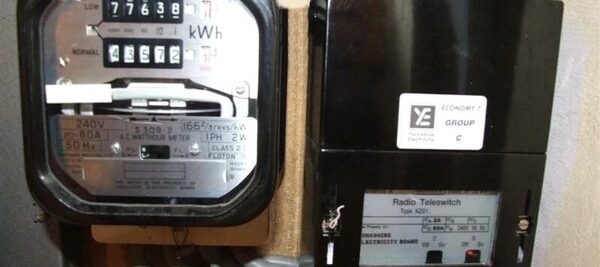
An Economy 7 meter includes 2 different readings6. Economy 7 is a dual rate electricity arrangement, which is why the meter provides two readings rather than one18. One register records on-peak use, which may be marked 'normal' or 'day'; the other records off-peak use, marked 'low' or 'night'. Some meters label them Rate 1 and Rate 2, or R1 and R22.
| Register | Usual labels | Where it appears |
|---|---|---|
| Day (on-peak) | 'normal', 'day', Rate 1 or R1 | Top reading, or the default display |
| Night (off-peak) | 'low', 'night', Rate 2 or R2 | Bottom reading, or reached by pressing a button |
The layout in the table comes from Confused.com and the Centre for Sustainable Energy6. On digital and prepayment Economy 7 meters, each reading is usually reached by pressing a button on the meter6.
Both readings matter. If only one is supplied, the supplier has to estimate the other, and the split between day and night use then becomes a guess. Because the two registers are charged at different unit rates, an estimate that places too much use in the day register raises the bill even if the total is right.
For scale, Ofgem's Typical Domestic Consumption Value for a medium electricity user on a multi-register meter such as Economy 7 is 3,900 kWh a year19. That is a benchmark for comparing tariffs, not a household's own figure, and it is covered in typical domestic consumption values. How day and night units are priced is explained in Economy 7, Economy 10 and restricted meter billing.
How often meters are read: quarterly bills, four visits a year in Northern Ireland
There is a gap between what people expect and what the rules in this area say. Bills typically cover a quarter1, so a reading close to each bill date keeps the bill on actual use. In Northern Ireland the network operator carries the reading duty for electricity: NIE Networks is responsible for reading electricity meters and visits homes four times per year3. For Great Britain, no equivalent routine visit frequency is set out here.
The only statutory reading interval found for household gas sits in the Electricity (Prepayment Meter) Regulations 2006, which provide that, where ongoing gas consumption is being recovered, the supplier will make reasonable endeavours to obtain gas meter readings at least every six months20. That is a narrow provision, not a general promise of a reading every six months for every home.
Reading duties are clearer for households paid for generating or producing heat:
| Scheme | Reading or verification rule | Source |
|---|---|---|
| Feed-in Tariffs | FIT Licensees must verify generation and/or export meter readings at least once every two years | Ofgem21 |
| Domestic Renewable Heat Incentive | Meter readings submitted every three months for the seven years the installation is accredited | Ofgem23 |
Smart meters change the frequency entirely. Automatic meter readings give the supplier monthly, weekly, daily or even half-hourly readings5. Every UK household is expected to have been offered a smart meter by the end of 203012.
For a household with a traditional meter, the practical position is that the frequency of actual readings is largely in its own hands. More detail on supplier visits is in how often must my supplier read my meter.
A smart meter replaces the estimate with half-hourly data
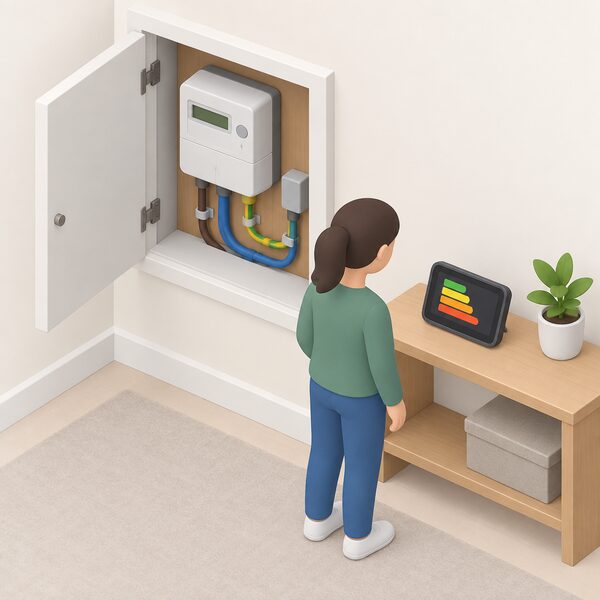
The official case for smart meters rests on billing. The Data Communications Company states that readings are sent automatically over its secure network, so the household pays only for the energy used and not the approximate cost of an estimated bill24. Government guidance adds the mechanism: smart meters automatically record energy use in half-hour periods, which lets suppliers bill on actual rather than estimated use25.
That promise is not new. In January 2012 the then energy minister wrote:
"And it will mean an end to estimated billing: no more nasty surprises for consumers."
The Data Communications Company describes suppliers receiving accurate and reliable readings automatically over the DCC network, enabling billing only for energy used27. Smart Energy GB makes the point for carers: a bill based on the energy the cared-for person has actually used, with no readings to take on their behalf28.
For independence, a smart meter does two things. It removes the household's need to supply data, and it gives the household half-hourly information about its own use, which Ofgem states could help find ways to save money and opens access to more flexible tariffs, including dual-rate tariffs13. It does not change who sets the price: except by switching, the household does not control the tariff its supplier sets24. The accuracy of the bill now depends on a communications network and a supplier's systems rather than on a householder with a torch at the meter cupboard.
When smart meters still need manual readings
A smart meter that is not operating in smart mode still records energy use accurately, and the household can still take manual readings from it29. What it stops doing is sending those readings, and that is when estimates return.
The first bill after installation may still be estimated7. Smart Energy GB states the same, and that if estimated bills continue after that point the supplier should be contacted30. The in-home display does not replace the bill: it is for information only, and regular bills continue as before, accurate without manual readings once the meter communicates7.
Once installed and working in smart mode, regular manual readings should not be needed31. The exceptions are the occasions listed earlier, including switching supplier and a first generation SMETS1 meter after a change of supplier15. Where the meter cannot communicate over the designated wireless network, the supplier may ask for a temporary manual reading so bills stay accurate until the fault is fixed30.
This is the clearest limit on the independence a smart meter provides: its smart function belongs to the arrangement between meter, network and supplier, not to the household. Switching and its effect on meters is covered in switching energy supplier.
What happens when a meter stops communicating
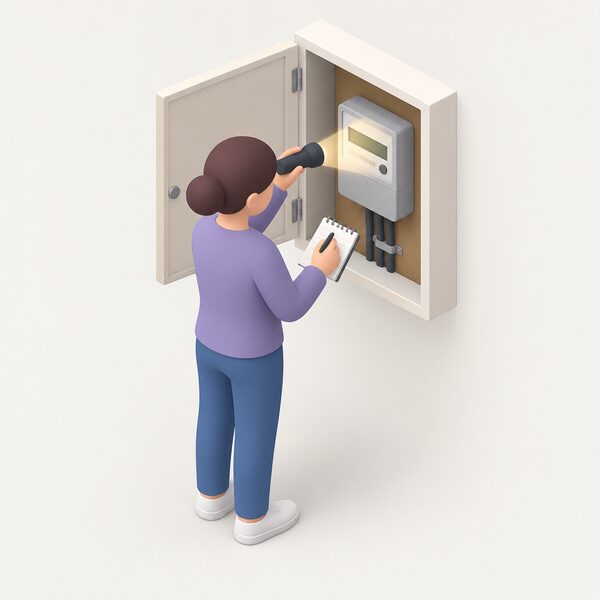
Ofgem describes two kinds of smart meter fault: the meter may stop recording the energy used, or it may no longer send readings to the supplier13. The same guidance appears on its current help page14. The second is far more common in practice and the less serious, because the meter still holds an accurate record.
When communication is lost, Smart Energy GB lists what follows15:
- bills may temporarily become estimated;
- manual readings may be needed;
- the in-home display may stop updating correctly.
A traditional meter that is never read produces the same result: a bill that is most likely estimated, with the risk of paying too much or too little12. Smart meters transmit only information about how much energy has been used to the supplier33, so there is no other data stream a supplier can fall back on when the link fails.
Households with solar panels on the Feed-in Tariff scheme face a separate issue. Where a generation meter develops a fault, the Energy Ombudsman states that FIT payments stop from the date of the last accurate meter reading34. Under the Domestic RHI scheme, failing to keep meters in good working order or to notify a fault within 28 days is treated as non-compliance, which could lead to suspension, loss of payments or revoked accreditation23. Having a smart supply meter fitted does not affect generation payments, Ofgem states35.
The pattern is consistent: an accurate reading taken before a fault is what limits the size of any later correction.
Smart meters do not need Wi-Fi or broadband
A frequent assumption is that a smart meter runs over the home internet. It does not. The Data Communications Company states that a smart meter does not need, or connect to, the public internet or home Wi-Fi36. Smart Energy GB states that a smart meter does not use Wi-Fi, connect to a router or affect broadband speed, and that no broadband or internet package is needed for it to send readings31.
Readings travel over a separate secure data network, so the meter should not cause delays or problems with a home's Wi-Fi37. For a household without broadband, or in an area with poor connectivity, this matters: automatic readings do not depend on the home's own connection. They do depend on the smart meter network reaching the property, which is the reason some installations fall back to manual readings.
Cost, choice and your rights
A smart meter is free: Ofgem's guidance is to contact the supplier to get one for free4. Any household that pays for its energy, owning or renting, should be able to book an installation where a smart meter is expected to work in the property25.
Having one is a choice. The Energy Ombudsman states:
"While it is your right to refuse the installation of a smart meter, if your traditional meter needs to be replaced due t"
The quoted text is cut short in the record, but the point it makes is that refusal is a right, while replacement options may be limited if a traditional meter is faulty or unsafe38. Which? states the right to refuse plainly39. When the Energy Bill [HL] 2022-23 was before Parliament, the House of Commons Library noted that nothing in it would allow anyone to enter a property by force to install a smart meter40.
Renters
The rule turns on who pays:
- Tenants who pay the gas or electricity bills themselves, or prepay, can choose a smart meter41.
- Ofgem recommends telling the landlord before getting one37, and the tenancy agreement is worth checking38.
- Where the landlord pays the energy bills, the decision on a smart meter is the landlord's42.
Residents who pay a landlord or site owner by meter readings or estimates should only be charged at the unit rate agreed in their tenancy, licence or occupancy agreement43.
What the bill is built from
Whatever the reading method, the charge is built from the same parts: wholesale, network, operating, debt and industry costs, supplier earnings before interest and tax, policy costs and VAT, together with the type of energy used, the type of meter and how the bill is paid44. VAT on domestic energy is 5%45. Each part is explained in what makes up an energy bill and how to read a gas and electricity bill. Every bill must show the meter readings and usage for the last billing period1, which is where estimates are first spotted.
Smart meters and prepayment
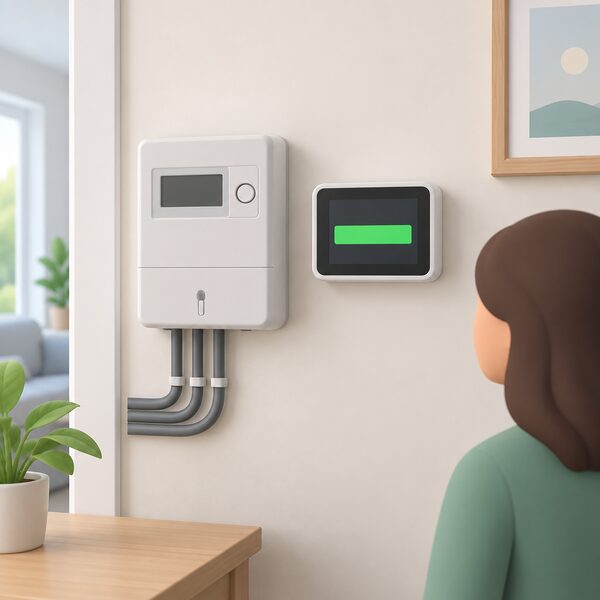
A smart prepayment meter is a smart meter set to prepayment mode, so energy is paid for in advance46. It measures gas and electricity use and can send readings automatically to the supplier46. Its in-home display shows real-time use, daily cost and, for prepayment customers, remaining credit18. Estimates play little part here: prepaying homes are already largely outside estimated billing1.
Topping up is where a smart prepayment meter differs most from a key or card meter:
| Meter | How credit is added |
|---|---|
| Traditional prepayment | Key or card, at a local PayPoint store or Post Office47 |
| Smart prepayment | Barcode at PayPoint or Post Office47; online, via app, by telephone or text message, with no key or card28 |
Cash top-ups remain possible on a smart meter through the barcode route47. Ofgem also notes that in prepayment mode credit can be added automatically or without visiting a shop4. Smart meters are set up for both prepay and credit customers48.
Under the price cap for 1 January to 31 March 2026, the typical annual bill for a prepayment customer was around £1,71149. How prepayment compares with other ways to pay is set out in price cap rates by payment method.
The closed Energy Bills Support Scheme showed a practical difference: smart prepayment customers had the discount credited directly to their meters each month, while traditional prepayment customers received vouchers by text, email or post to redeem at PayPoint or a Post Office50.
For independence, a smart prepayment meter reduces reliance on a shop being open and on a physical key, but increases reliance on the supplier's app, payment systems and the meter's network connection. The wider picture is in energy bills and energy independence and the energy bills and price cap guide.
Sources51 cited
- How to read your energy bill, Confused.com, 2025-12-15
- Reading your gas or electricity meter, Centre for Sustainable Energy, 2026-08
- Bills and metering, Consumer Council for Northern Ireland, 2026
- Getting a smart meter, Ofgem, 2026
- How to get a smart meter, Smart DCC, 2026
- How to read your gas and electricity meter, Confused.com, 2025-12-15
- Switching supplier, tariffs and bills FAQs, Smart Energy GB, 2026-03-16
- Smart meters not working, Smart Energy GB, 2026-03-16
- Incorrect estimated billing case study, Energy Ombudsman, 2026-09-20
- Billing case studies, Energy Ombudsman, 2026-09-20
- Estimated meter readings lead to electricity bill dispute, Energy Ombudsman, 2026-07-29
- Gas and electricity meter reading guide, Uswitch, 2026-04-23
- Get help with your smart meter, Ofgem, 2026-09-17
- Get help with your smart meter, Ofgem, 2026
- How can I read a smart meter, Smart Energy GB, 2026-08-17
- How to read your energy meter, Citizens Advice, 2026-09-17
- Energy meters, Age UK, 2026-09-10
- Understanding your gas or electricity bill, Centre for Sustainable Energy, 2026-02
- Summary of changes to the energy price cap, 1 October to 31 December 2025, Ofgem, 2025-08-27
- The Electricity (Prepayment Meter) Regulations 2006, legislation.gov.uk, 2006
- Supplier Performance Report July to December 2023, Ofgem
- Feed-in Tariffs guidance for renewable installations, Ofgem, 2021-12-13
- Domestic RHI guide to metering, Ofgem
- How do smart meters save energy, Smart DCC, 2026
- Smart meters: your rights and expectations, GOV.UK, 2025-08-08
- Letter from Charles Hendry to the Daily Mail on smart meters, GOV.UK, 2012-01-20
- How accurate are smart meters, Smart DCC, 2026
- Smart meters and carers, Smart Energy GB, 2026-08-19
- Smart meter performance, Ofgem, 2026
- Smart meter FAQs, Smart Energy GB, 2025-08-08
- How do smart meters work, Smart Energy GB, 2026-08-27
- What happens if your energy supplier goes out of business, Ofgem, 2026
- Smart facts, Smart Energy GB, 2026-03-16
- Feed-in Tariffs, Energy Ombudsman, 2026-09-20
- Feed-in Tariffs: generators, Ofgem, 2026-09-17
- Does a smart meter need Wi-Fi, Smart DCC, 2026
- Myth-busting smart meter problems, Smart Energy GB, 2026-09-17
- Smart meters, Energy Ombudsman, 2026-09-20
- Do I have to accept a smart meter, Which?, 2026-05-12
- [Energy Bill [HL] 2022-23 research briefing](https://commonslibrary.parliament.uk/research-briefings/cbp-9865/), House of Commons Library
- What is a smart meter: easy read, Smart Energy GB, 2026-03-16
- Help me decide, Smart Energy GB, 2026-03-16
- If you live in a home with a business energy contract, Ofgem, 2026
- How your electricity or gas bill is calculated, Ofgem, 2026
- Check if you are owed money on your energy bill, Ofgem, 2026
- Benefits for prepay customers, Smart Energy GB, 2026-08-19
- Prepayment meters: consumer guidance, Ofgem, 2026
- What is a smart meter, Smart Energy GB, 2026-08-10
- Energy price cap explained, Welsh Government, 2026
- Energy Bills Support Scheme research briefing, House of Commons Library
- Energy Costs (Pre-payment Meters and Social Tariffs) Bill briefing, House of Commons Library, 2022-12-14
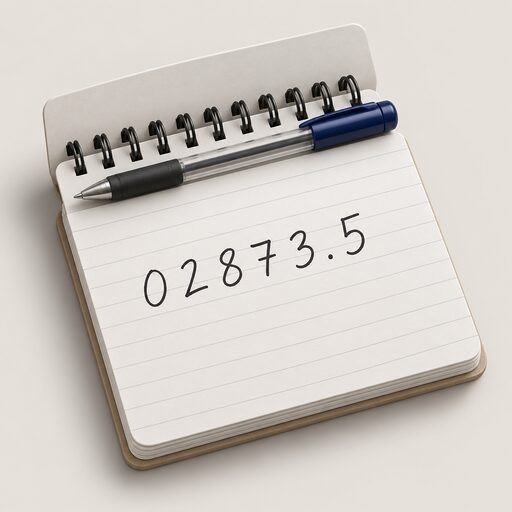 Take a Meter ReadingWhich numbers do you actually read on a gas or electricity meter, and which ones do you ignore?
 Get a Reading From a Smart MeterHow to bring up a meter reading on a smart electricity or gas meter when a manual reading is still needed, and the difference between the meter itself and the in-home display.
 Meters and Time-of-Use TariffsDo you need a smart meter for a time-of-use tariff, and does it have to send readings every half an hour?
 Smart Meter Faults and FixesYour smart meter has stopped working.
 Submit Meter ReadingsThe routes for sending readings, by app, online account, phone and automated line, and the timing that gets them onto the right bill.
 Who Owns Your Home Energy DataYour smart meter records how much gas and electricity you use, and that information belongs to you, not your supplier.