

In this guide
Northern Ireland runs a separate energy market from Great Britain, and the support that has been available to households there has followed a separate path too. The clearest example is the crisis payment made in winter 2022/23: every household in Northern Ireland received a single, one-off £600 payment, made up of £400 under the Energy Bills Support Scheme Northern Ireland and £200 under the Alternative Fuel Payment1. In Great Britain the equivalent support was delivered differently, through monthly electricity bill discounts and a separate payment for off-gas-grid homes.
That £600 was paid to around 500,000 households in Northern Ireland3. The estimated cost of the Energy Bills Support Scheme Northern Ireland element alone was approximately £332 million, based on estimates of eligible households4. The £200 Alternative Fuel Payment went to all households in Northern Ireland irrespective of heating type, which is a notable difference from Great Britain, where the payment was aimed at households not on the mains gas grid2.
Since then, the support landscape has shifted towards oil. Northern Ireland has a much higher share of homes heated by oil than the rest of the UK, and the Home Heating Oil Support Scheme was created to help households with the cost of home heating oil, offering eligible households a £100 voucher for use with oil suppliers in Northern Ireland6. Around 340,000 households across Northern Ireland were expected to be eligible7.

What help is available with energy bills in Northern Ireland
The £600 payment is the figure most households in Northern Ireland remember, and it is worth being precise about what it was. It was a single, one-off payment per household, not a monthly discount, and it combined two separate schemes: £400 of support under the Energy Bills Support Scheme Northern Ireland and £200 of support under the Alternative Fuel Payment2. All households across Northern Ireland received it, and around 500,000 households were expected to benefit3.
The design reflected the Northern Ireland market. Because a large share of homes there are not on mains gas, a payment routed through electricity suppliers alone would have missed the households most exposed to heating oil prices. The £200 Alternative Fuel Payment was therefore paid to all households in Northern Ireland irrespective of heating type, rather than being restricted to off-gas-grid homes as in Great Britain2.
The Energy Bills Support Scheme Northern Ireland was expected to cost approximately £332 million, based on estimates of eligible households4. The scheme was given effect through legislation covering domestic energy price reduction schemes in Northern Ireland, which worked by reducing the amounts that would otherwise be charged for domestic electricity supply by licensed suppliers who were parties to the scheme10.
For a household thinking about energy independence, the shape of this support matters. It was a crisis intervention delivered through suppliers and government, not a change in the underlying dependence on imported fuel. Northern Ireland households remain exposed to oil prices in a way that most Great Britain households are not, because so many homes there heat with oil rather than gas. Approximately 500,000 homes in Northern Ireland rely on oil as a primary heating source8.
Energy Bills Support Scheme Northern Ireland: the £400 discount and who gets it automatically
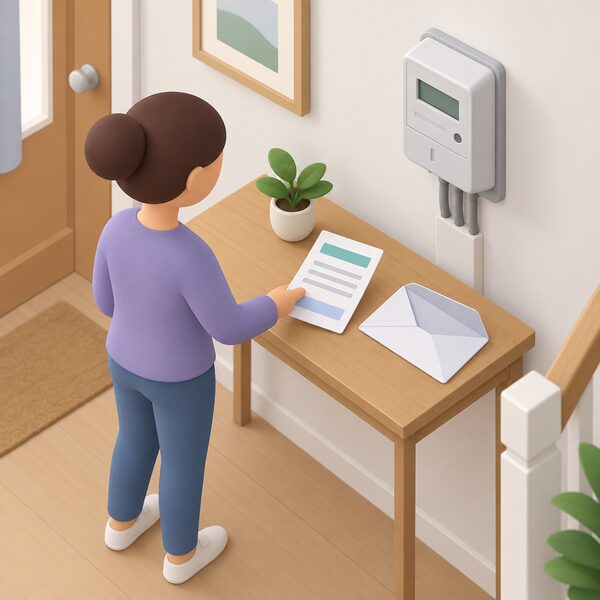
The £400 element was delivered automatically. Suppliers provided vouchers to all their customers without any application being necessary11. Customers who paid by Direct Debit received the £600 into their bank account directly, while other customers were sent a voucher to redeem through their chosen payment method2.
That automatic delivery is the key point for anyone looking back at the scheme. There was no application process and no eligibility test to pass. The payment was attached to the household's energy supply rather than to income, benefits or heating type.
The Energy Bills Support Scheme in Great Britain also provided a £400 energy bills discount for all households, delivered through domestic electricity suppliers4. In Great Britain the discount was applied over a six-month period12. Suppliers were required to notify customers in writing that they had received the £400 Energy Bill discount from HM Government13. The Northern Ireland version compressed the same £400 into a single payment alongside the £200 fuel payment.
The Energy Prices Act 2022 provided the legislative basis for these domestic energy price reduction schemes, including the Northern Ireland arrangements10. The Act also covered reduced energy charges for non-domestic customers in Northern Ireland, reducing the amounts that would otherwise have been charged for non-domestic electricity supply by licensed suppliers10.
The Alternative Fuel Payment: £200 towards heating oil and other fuels
The Alternative Fuel Payment was a one-off payment for households not on the mains gas grid, set at £200 for households and at least £150 for non-domestic customers14. In Great Britain it provided a one-off payment of £20015. In Northern Ireland it was paid to all households irrespective of heating type, at £200 per household2.
The scheme went through a change of design. An earlier version, set out in the Domestic Alternative Fuel Payment provisions, was a one-off £100 support payment for households in the UK who use alternative fuels for heating4. A Lords debate on the Energy Prices (Domestic Supply) (Northern Ireland) Regulations 2022 recorded that the alternative fuel payment would provide £100 to support households who do not use mains gas for heating16. The final scheme paid £200, and around 2 million households were eligible across the UK under the Alternative Fuel Payments scheme17.
Households using heating oil, LPG or coal received a one-off £200 payment credited on energy bills from February 202318. The Alternative Fuel Payment Alternative Fund provided a one-off payment of £200, and the Energy Bills Support Scheme Alternative Funding provided a one-off payment of £400 in both Great Britain and Northern Ireland15.
The distinction between the two £200 routes matters. Households with a domestic energy contract received the payment through their supplier. Households without one, such as those in park homes or off the grid in certain ways, were routed through the alternative funding arrangements instead.
| Payment | Amount | Who received it in Northern Ireland | Delivery |
|---|---|---|---|
| Energy Bills Support Scheme NI | £400 | All households | Automatic, via supplier2 |
| Alternative Fuel Payment | £200 | All households, irrespective of heating type | Automatic, via supplier2 |
| Combined crisis payment | £600 | All households | Direct Debit into bank, or voucher2 |
| Alternative Fuel Payment Alternative Fund | £200 | Households without a domestic energy contract | Alternative funding route15 |
| Energy Bills Support Scheme Alternative Funding | £400 | Households without a domestic energy contract | Alternative funding route15 |
The Home Heating Oil Support Scheme: £36.4 million for oil-heated households
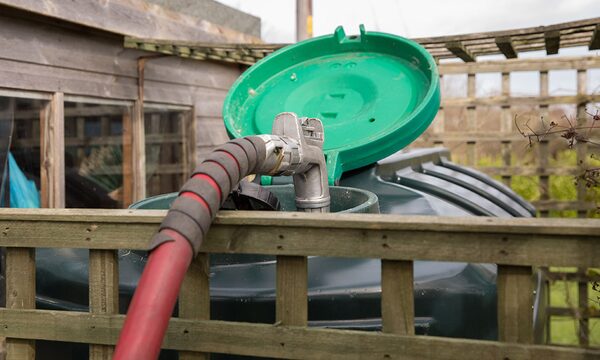
The Home Heating Oil Support Scheme is the most recent dedicated support for Northern Ireland households, and it is aimed squarely at the fuel most of them use. The Executive agreed a £36.4 million support package for home heating oil users in Northern Ireland, with the Department for Communities administering delivery8. The scheme provides eligible households with a £100 voucher for use with oil suppliers in Northern Ireland6.
The funding was split. The package included £17.2 million allocated by the UK Government, and an additional £19.2 million provided by the Executive8. The scheme was expected to reach around 340,000 eligible households across Northern Ireland7, and the £100 digital pre-paid card scheme was designed to support around 340,000 households who use oil as their main source of heating9.
The scale of the scheme reflects the scale of oil dependence. Approximately 500,000 homes in Northern Ireland rely on oil as a primary heating source8. That is a far higher proportion than in Great Britain, and it means Northern Ireland households are exposed to oil price movements in a way that gas-heated households are not.
For a household's energy independence, the scheme is a cushion rather than a solution. It lowers the cash cost of one delivery. It does not insulate a household from oil price movements, and it does not reduce the volume of oil a home needs. Reducing that volume means improving the fabric of the home or changing the heating system, which is where the grant schemes and the advice services come in.
NI Energy Advice: free, independent advice and grant referrals on 0800 111 4455
NI Energy Advice is the main advice route for Northern Ireland householders. It offers free, independent and impartial energy advice to domestic householders in Northern Ireland, plus referrals to energy grants and other sources of help19. The service can be reached on freephone 0800 111 4455, open 9am to 5pm Monday to Friday9.
The advice line covers saving energy in the home, energy efficiency grants and other help that may be available20. It is also the entry point for the Affordable Warmth Scheme, which can be accessed by calling the NI Energy Advice Service on freephone 0800 111 4455 or by completing the NI Energy Advice online form21.
The referral function is the part that matters most for a household in difficulty. NI Energy Advice can make referrals to energy grants and other sources of help22. That means a household does not have to identify the right scheme itself; the advice service can point to it.
"NI Energy Advice offers independent and impartial energy advice to domestic householders in Northern Ireland - plus referrals to energy grants and other sources of help."
The service is free to the householder. It is funded through the Northern Ireland Sustainable Energy Programme, whose list of schemes for 2026-27 names the Northern Ireland Energy Advice Service and its freephone number9. The same service appears in the 2024-25 list of schemes, so it has been a standing part of the Northern Ireland support landscape rather than a short-term measure23.
For energy independence, an advice service does something a payment cannot. It identifies where a home is losing heat and which grant will pay for fixing it. That is the route from emergency support towards a lower underlying bill.
The Consumer Council: comparing tariffs and cutting running costs

The Consumer Council is the statutory consumer body for Northern Ireland, and it does two things that matter for energy bills. It offers an energy price comparison tool to compare electricity and gas tariffs for all suppliers in Northern Ireland20. It also gives free advice and can investigate complaints about natural gas and electricity20.
The comparison tool is the practical answer to the question of whether switching is worth it. Northern Ireland has its own suppliers and its own tariff structures, so a comparison site built for Great Britain will not cover the market properly. The Consumer Council tool covers all suppliers in Northern Ireland20.
Suppliers themselves also offer advice on more efficient use of energy that could help to cut bills20. That is a smaller lever than switching tariff or improving the home, but it costs nothing.
Independent guidance on small changes around the home puts the saving at around £350 a year across both Great Britain and Northern Ireland24. Within that, switching appliances off at the plug is put at roughly £45 a year, or £55 in Northern Ireland24. Those figures are modelled estimates rather than guarantees, and they depend on what a household actually does.
For a household's independence, the comparison tool and the advice line both reduce reliance on a single supplier's default position. Neither changes the fact that Northern Ireland's electricity and gas are supplied through a regulated network that a household cannot opt out of. What they change is how much a household pays for the same units.
Complaining about your energy supplier: how the Consumer Council can investigate
The Consumer Council gives free advice and can investigate complaints about natural gas and electricity20. That is a stronger role than a general advice line: it can take up a case with a supplier.
The complaints that reach this stage are usually about billing and service rather than price. Suppliers are the first point of contact for the issues below, and a consumer body becomes involved once the supplier has had the chance to put things right25.
- Late, incorrect or missing bills
- Back billing
- Being overcharged
- A faulty meter
- Poor customer service
- Refusing to refund credit from an account
Suppliers also refer customers who are struggling to pay bills to organisations like Advice NI, which offers free, independent debt advice20. That referral route matters because energy debt and benefit entitlement often sit together, and a supplier is not the right body to assess either.
For a household, the practical sequence is to raise the issue with the supplier, keep a record of what was said, and escalate to the Consumer Council if it is not resolved. The Consumer Council's involvement does not change the underlying dependence on the supplier, but it does give the household a route that does not rely on the supplier's own goodwill.
Debt help from suppliers: the Energy Support Fund and grants of up to £2,000
Energy debt in Northern Ireland is handled through a mix of supplier schemes, advice referrals and the grant system. Suppliers refer customers who are struggling to pay bills to organisations like Advice NI, which offers free, independent debt advice20. NI Energy Advice provides referrals to energy grants and other sources of help19.
The grant landscape is broader than energy alone. The Affordable Warmth Scheme is accessed through the NI Energy Advice Service on freephone 0800 111 4455 or through the NI Energy Advice online form21. Energy saving grants vary by area, and the NI Direct guidance on grants points households to what is available where they live26.
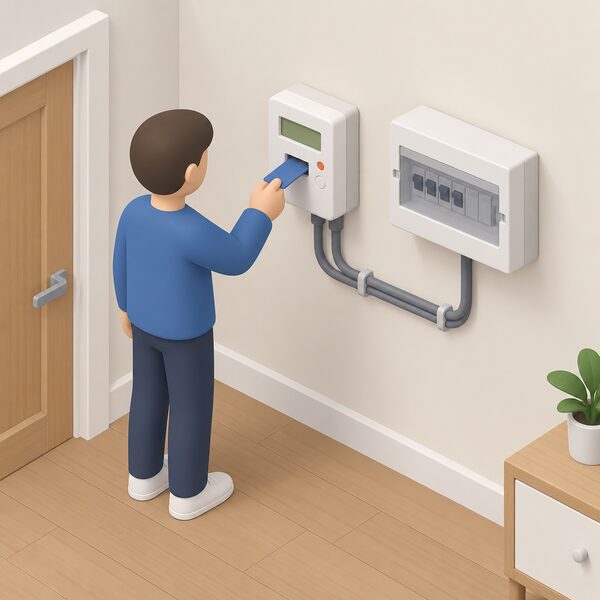
Where a supplier says money is owed and moves to a prepayment meter, the rules are specific. A supplier can install a prepayment meter without permission only where the household is building up an energy debt and other ways of recovering that debt have not worked27. Before doing so, the supplier must visit the home to understand the circumstances and check whether a prepayment meter is safe and suitable for the household27. The supplier must give £30 credit once the meter is installed or the existing meter is switched remotely to prepayment mode27.
Compensation may be available where a household was forced to have a prepayment meter between 1 January 2022 and 21 January 2023 and the supplier did not follow the rules properly27. That is a defined window and a defined test, and it is separate from any debt the household owes.
For energy independence, debt is the point where dependence bites hardest. A household in arrears has less choice about supplier, tariff and payment method, and a prepayment meter removes the ability to spread cost across the year. The advice and grant routes exist to shorten that period.
The Emergency Energy Tariff proposal: what it would mean for hard-pressed households
The Emergency Energy Tariff was a proposal rather than a scheme in force, and it is worth being clear about that distinction. The Energy Price Guarantee schemes in Great Britain and Northern Ireland were intended for customers on domestic tariffs, with some non-domestic premises with similar metering and tariff arrangements in scope, including places of worship, some farms and small businesses operating from former dwelling-houses16.
The Energy Price Guarantee itself was announced as support for families and businesses while the government took action to reform the energy market28. In Northern Ireland the support took the form of the £600 payment rather than a unit rate cap applied in the same way as in Great Britain, because the Northern Ireland market does not have the same price cap mechanism.
The unit rate support that did apply in Northern Ireland was set out in the official statistics: up to 19.9 p/kWh discount for electricity and 4.8 p/kWh for gas in Q4 20221. A separate figure in the same body of statistics gives up to 13.6 p/kWh for electricity and 3.9 p/kWh for gas1.
A scheme has also been announced to cut energy bills in Northern Ireland by £30 a year29. That is a standing reduction rather than a crisis payment, and it is a different mechanism from the £600.
For a household, the significance of the Emergency Energy Tariff debate is what it signals about the limits of the current approach. A tariff designed for hard-pressed households would change the price a household pays rather than making a one-off payment. That is a structural change to dependence on the market, and it has not been implemented.
Where to start, and what remains dependent

The support available to Northern Ireland households has been substantial but episodic. The £600 payment in winter 2022/23 reached around 500,000 households and combined £400 under the Energy Bills Support Scheme Northern Ireland with £200 under the Alternative Fuel Payment1. The Home Heating Oil Support Scheme then directed £36.4 million at oil-heated households, with a £100 voucher for around 340,000 eligible households6.
What remains is dependence. Approximately 500,000 homes in Northern Ireland rely on oil as a primary heating source, and oil prices are set internationally8. Electricity and gas come through a regulated network with no alternative supplier of last resort. The advice and grant routes, NI Energy Advice on 0800 111 4455 and the Consumer Council's comparison and complaint services, reduce the cost of that dependence but do not remove it9.
For a household, the practical order is:
- Check what the current scheme offers, starting with the Home Heating Oil Support Scheme and the grant guidance for your area6.
- Use the free advice line, NI Energy Advice on 0800 111 4455, to find grants for the fabric of the home9.
- Compare tariffs through the Consumer Council tool, which covers all suppliers in Northern Ireland20.
- Escalate unresolved billing problems to the Consumer Council once the supplier has had the chance to resolve them20.
Each step reduces what the household pays. None of them changes where the energy comes from.
Sources29 cited
- Energy bills support: research briefing, UK Parliament, 2026
- Northern Ireland households to receive voucher support for energy bills, GOV.UK, 2022
- Vital help with energy bills on the way for millions more homes, GOV.UK, 2022
- Energy Bills Support Scheme: research briefing, UK Parliament, 2022
- Increased flexibility of Alternative Fuel Payments, GOV.UK, 2023
- Home Heating Oil Support Scheme, Department for Communities, 2026
- Lyons announces opening date for Home Heating Oil Support Scheme, Department for Communities, 2026
- Lyons announces agreement on Home Heating Oil Support, Department for Communities, 2026
- £100 Home Heating Oil Support Scheme goes live for applications, Department for Communities, 2026
- NISEP List of Schemes 2026-27, Utility Regulator, 2026
- Energy Prices Act 2022, legislation.gov.uk, 2022
- Energy Bills Support Scheme: research briefing, UK Parliament, 2023
- £400 energy bills discount to support households this winter, GOV.UK, 2022
- Alternative Fuel Payments: research briefing, House of Commons Library, 2026
- Energy bills support: an update, National Audit Office, 2024
- Energy Prices (Domestic Supply) (Northern Ireland) Regulations 2022(NorthernIreland)Regulations2022), Hansard, 2022
- Energy Price Guarantee for families and businesses, GOV.UK, 2022
- Energy Bill Support Scheme: research briefing, UK Parliament, 2023
- Energy saving grants in your area, NI Direct, 2026
- Advice if you're struggling to pay your energy bills, NI Direct, 2026
- Affordable Warmth Scheme, Northern Ireland Housing Executive, 2026
- Energy efficiency tips, NI Direct, 2026
- NISEP 2024-2025 list of schemes, Utility Regulator, 2024
- Make your home more energy efficient, Confused.com, 2026
- Complain about your energy supplier or network operator, Ofgem, 2026
- Check energy suppliers can install prepayment meters without household permission, Ofgem, 2026
- Stay warm at winter, Belfast City Council, 2026
- Government introduces new Energy Prices Bill, GOV.UK, 2022
- Energy Performance Certificates, NI Direct, 2026
 Housing Stock Data for NIMost homes in Northern Ireland heat with oil, so why are the grants and help different from the rest of the UK?
 Utility Regulator NIWho sets your energy prices in Northern Ireland and who can you complain to?
 Energy Bills in Northern IrelandNorthern Ireland has no price cap.
 Energy Consumer BodiesWho do you call about an energy problem where you live?
 Community Energy in NICan a community group in Northern Ireland sell power to its neighbours, and is there funding to get a project off the ground?
 Fuel PovertyWhy does Northern Ireland have such a high rate of fuel poverty, and how many households are affected?