

In this guide
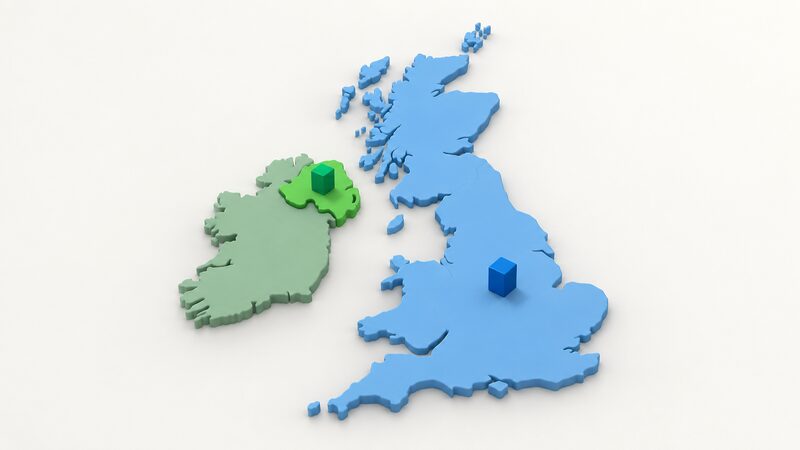
Energy in Northern Ireland is regulated by its own body. The Northern Ireland Authority for Utility Regulation, known as the Utility Regulator, is the statutory regulator named in UK energy legislation for Northern Ireland, and it is the body that may give a Northern Ireland domestic electricity supplier directions about how it performs the terms of a designated scheme1. Ofgem's jurisdiction stops at the Irish Sea: it describes itself as the independent energy regulator for England, Scotland and Wales, that is Great Britain2. The consequence for households is that the price protections, the supplier field and the oversight arrangements familiar from Great Britain do not carry across unaltered.
That difference explains most of what a Northern Ireland household needs to know. There is no default tariff cap of the Great Britain kind. Under the Energy Price Guarantee arrangements, government confirmed that energy prices were not capped in Northern Ireland and that suppliers have the flexibility to set their tariffs independently to reflect their costs of operating3. Oversight instead runs through supply licences and a tariff review process that the Utility Regulator oversees. Household protection therefore rests on licence conditions, on price controls applied to the networks, on the Consumer Council for Northern Ireland, and on complaint routes that end at the Energy Ombudsman.
For a household trying to reduce its dependence on a supplier, the regulatory picture matters in three practical places: what can be built or connected (building control and connection rules), what help exists to cut demand (the Northern Ireland Sustainable Energy Programme), and what happens when billing or service goes wrong. Each sits with a different body.
What the Utility Regulator does in Northern Ireland
The Utility Regulator is defined in statute rather than by convention. The Energy Prices Act 2022 defines the "Northern Ireland Regulator" as the Northern Ireland Authority for Utility Regulation, and gives it a direct enforcement handle: it may give a Northern Ireland domestic electricity supplier directions in relation to the supplier's performance of the terms of a designated scheme1. That is the pattern across Northern Ireland energy law. The regulator licenses and supervises the suppliers and network companies, and the levers it pulls are licence conditions and directions, not retail price ceilings.
Supply itself is concentrated. Power NI is the main electricity provider in Northern Ireland, and it is overseen by the Utility Regulator10. For a household, that concentration cuts both ways: fewer suppliers to switch between, but a regulator whose scrutiny of the dominant supplier's tariffs is correspondingly close.
The regulator's remit is not the whole of energy policy. Statistics on Northern Ireland domestic electricity consumption are sourced from the Department for Energy Security and Net Zero (Northern Ireland)11. Carbon policy has its own footing: the Climate Change Act (Northern Ireland) 2022 means Northern Ireland must cut carbon emissions, alongside changing market prices12. Technical connection rules for generation at a house sit elsewhere again: in Northern Ireland, connection requirements are governed by the Electricity Safety, Quality and Continuity Regulations (Northern Ireland) 2012 and Engineering Recommendation G98/NI13. A household adding solar or storage is dealing with that framework, not with the Great Britain equivalents described on the Ofgem page.
Advice is deliberately separated from regulation. NI Energy Advice offers independent and impartial energy advice to domestic householders in Northern Ireland, plus referrals to energy grants and other sources of help14. The Consumer Council NI and NI Energy Advice give free, independent and impartial energy advice to all domestic householders in Northern Ireland, and NI Energy Advice can also make referrals to energy grants12.
Regulating suppliers where there is no price cap
In Great Britain the headline consumer protection is the default tariff cap, and Ofgem publicly announces changes to the default and prepayment caps15. Northern Ireland has no such mechanism. The government's own Energy Price Guarantee guidance states that energy prices were not capped in Northern Ireland and that suppliers have the flexibility to set their tariffs independently to reflect their costs of operating3.
What filled the gap during the 2022 to 2023 crisis was a bespoke statutory scheme. The Energy Prices Act 2022 provided for domestic energy price reduction schemes for Northern Ireland that worked by reducing the amount that would otherwise be charged for Northern Ireland domestic electricity supply by licensed electricity suppliers who are parties to the scheme, with a parallel provision reducing amounts charged for non-domestic electricity supply1. Enforcement sat with the Utility Regulator, which may give a Northern Ireland domestic electricity supplier directions in relation to that supplier's performance of the terms of the designated scheme1. The arrangement was temporary, and it rested on legislation rather than on any standing cap.
Delivery was through ministerial directions applying to Northern Ireland, issued under the Act. Directions No. 1 required domestic electricity and gas suppliers in Northern Ireland to seek agreement to make tariff changes on days other than the first day of a quarter16. Later directions, made under sections 22(2) and 22(4)(b) of the Energy Prices Act 2022, were cited as the Energy Price Guarantee for Domestic Electricity Consumers in Northern Ireland Direction No.2 and the Energy Price Guarantee for Domestic Gas Consumers in Northern Ireland Direction No.217. Separate scheme documents covered domestic electricity consumers and domestic gas consumers in Northern Ireland11.
Two things follow for households. First, tariff discipline in Northern Ireland runs through licence conditions and, where a scheme exists, directions to named licensed suppliers, rather than through a published cap that anyone can look up. Second, comparison is the household's own job: the Consumer Council offers an energy price comparison tool to compare electricity and gas tariffs for all suppliers in Northern Ireland19. That is the practical counterpart to the absence of a cap, and it is why the energy price cap page describes a Great Britain instrument only.
Price controls and the climate resilience requirement
Network costs reach households through their bills whether or not retail tariffs are capped, and it is here that the Utility Regulator exercises its most conventional economic function. Its price controls require business plan strategies to consider how climate change could impact networks and to outline adaptation actions to manage risks to services20. The Climate Change Committee records this among the policies for a well adapted energy system, alongside the incorporation of climate resilience into planning and siting decisions, regulation and strategic planning20.
The significance for a householder is indirect but real. A price control sets the allowed revenue a network can recover, and therefore the network element of a bill; by writing climate adaptation into the business plan strategies it approves, the regulator is treating resilience of supply as a cost to be funded rather than an optional extra. Loss of supply is the risk that most directly undermines a home's energy security, and the adaptation requirement is aimed at exactly that.
Northern Ireland's regulatory perimeter is also expanding in the same direction as Great Britain's, but under its own authority. Parliamentary analysis of the Part 7 heat networks provisions records that the Utilities Regulator would regulate in Northern Ireland21, where the Energy Act 2023 named Ofgem as the regulator for heat networks in England, Scotland and Wales22. The Energy Prices Bill likewise amended a distinct body of Northern Ireland law, including the Energy (Northern Ireland) Order 2003 and the Electricity (Single Wholesale Market) (Northern Ireland) Order 200716. Anyone reading the heat network regulation rules for Great Britain should treat the Northern Ireland position as separate.
The Northern Ireland Sustainable Energy Programme
NISEP is the main regulator-backed energy efficiency programme for Northern Ireland households, and it is funded by households themselves. The fund is collected from all Northern Ireland electricity customers through a public service obligation23. It pays for a range of measures: funding for various energy saving schemes such as boiler upgrades, LED light bulbs and draught proofing24.
Administration is contracted out. Energy Saving Trust is the programme administrator of NISEP on behalf of the Utility Regulator25, a description repeated in the published scheme lists for 2024/25 and for 2026/2726. The role of programme administrator is defined by condition 43 of the NIE plc licence27, which is a reminder that NISEP is a creature of licence obligation rather than of a separate grant statute. The Utility Regulator publishes the list of schemes each year, as it did for 2023/202428 and for 2026/20275.
Delivery is devolved to intermediaries. The programme was delivered by 11 scheme managers for 2026/27, and the published route for a household is to identify the scheme it wants to apply for, check eligibility, and contact the relevant scheme manager by the telephone number or email address given5.
| Body | Role in Northern Ireland household energy |
|---|---|
| Utility Regulator | Statutory regulator; publishes the NISEP scheme list5 |
| Energy Saving Trust | NISEP programme administrator on behalf of the Utility Regulator4 |
| Scheme managers (11 in 2026/27) | Deliver individual NISEP schemes and handle applications5 |
| Northern Ireland Housing Executive | Runs the Affordable Warmth Scheme and manages the Energy Advice Line23 |
| Consumer Council NI / NI Energy Advice | Free, independent and impartial advice and grant referrals12 |
NISEP is not the only route. The Affordable Warmth Scheme is run by the Northern Ireland Housing Executive23, which also manages the Energy Advice Line and provides advice on energy efficiency schemes28. The independence gain from these programmes is genuine but bounded: insulation, draught proofing and a more efficient boiler cut the volume a household buys, they do not change who it buys from. Further background on the administrator sits on the Energy Saving Trust page.
How the Utility Regulator differs from Ofgem
The clearest statement of the difference is Ofgem's own. It describes itself consistently as the independent energy regulator for England, Scotland and Wales2, as Great Britain's independent energy regulator29, and as the energy regulator in Great Britain30. Ofgem also performs the day to day functions of the Gas and Electricity Markets Authority, the statutory body behind Great Britain schemes such as the domestic Renewable Heat Incentive.
| Great Britain | Northern Ireland | |
|---|---|---|
| Regulator | Ofgem, for England, Scotland and Wales2 | Northern Ireland Authority for Utility Regulation1 |
| Retail price cap | Default and prepayment caps published by Ofgem15 | No cap; suppliers set tariffs to reflect costs3 |
| Heat networks | Ofgem named regulator under the Energy Act 202322 | Utilities Regulator would regulate21 |
| Crisis support 2022 to 2023 | Energy Price Guarantee scheme documents11 | Separate Northern Ireland schemes and directions1 |
The practical consequences are these. A Northern Ireland household cannot rely on a published cap figure as a reference price. It has a smaller supplier field, with Power NI as the main electricity provider under the Utility Regulator's oversight10. And it should be read alongside Great Britain consumer guidance with care: the Energy Ombudsman states that it only handles disputes involving suppliers trading in Britain8. For comparison with the other devolved pictures, see energy and buildings policy in Scotland and energy and buildings policy in Wales, and the wider framework at /regulation-policy/.
Building standards sit with the Department of Finance and 11 district councils
Nothing a household builds is regulated by the Utility Regulator. The Northern Ireland Building Regulations are legal requirements made by the Department of Finance31, which has responsibility for maintaining the Building Regulations for Northern Ireland32. They are administered by 11 district councils6, and district councils have sole responsibility for enforcement32. The Building Regulations (Northern Ireland) 2012 apply to Northern Ireland alone33.
Energy conservation is explicit in their purpose. The regulations are described as designed to further the conservation of fuel and energy6. The detail sits in Part L: Part L of the Building Regulations (Northern Ireland) and the associated Technical Document L give further details of what is required, accessible through the Building Control Northern Ireland website34. That is the part engaged by a solid fuel stove, a new boiler, insulation upgrades or the fabric changes that follow a heat pump installation.
Energy certificates are a separate statutory strand. The Energy Performance of Buildings (Certificates and Inspections) Regulations (Northern Ireland) 2008 came into operation on 30 June 200835, with regulation 33 empowering the enforcement authority to issue penalty charge notices for any breach36. They were later amended by the Energy Performance of Buildings (Certificates and Inspections) (Amendment) Regulations (Northern Ireland) 201337.
When things go wrong: complaining about a Northern Ireland supplier
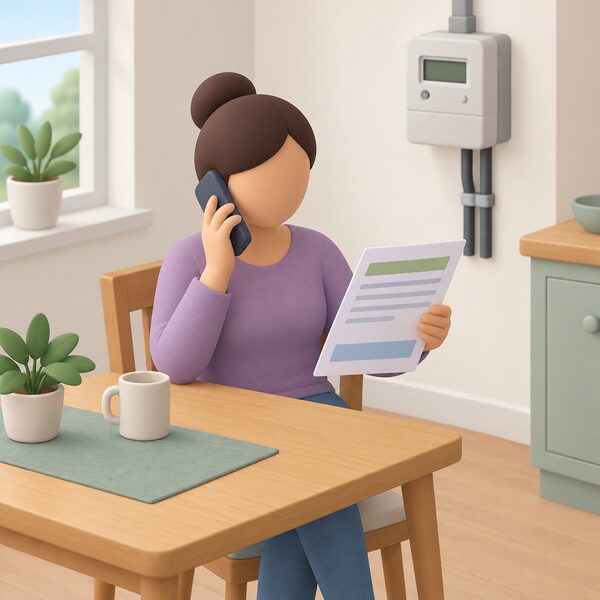
The first step is the supplier. Published guidance lists the problems to take to an energy supplier directly: late, incorrect or missing bills; back billing; being overcharged; a faulty meter; poor customer service; and refusing to refund credit from an account38. For households behind on payments, the contacts given for problems dealing with a fuel supplier include the Consumer Council for Northern Ireland39.
That is a meaningful difference from Great Britain. In Northern Ireland the Consumer Council is the statutory consumer body households are pointed to, and it also provides the energy price comparison tool for all suppliers in Northern Ireland19, together with free, independent and impartial advice through itself and NI Energy Advice12.
Escalation grounds are the same shape wherever the household is. A complaint can be escalated where a reported problem is not fixed within 8 weeks, where the customer and the energy company cannot agree how to fix it, where a deadlock letter is received stating the problem cannot be fixed or that there is no more the company can do, or where the customer is unhappy with the decision received40.
The Energy Ombudsman: eight weeks, or a deadlock letter
The Energy Ombudsman is an independent service, separate to Ofgem, for problems with an energy supplier, an energy broker, a network operator or a heat network supplier38, and it is approved by Ofgem to handle service disputes in the energy sector8. Its scope also covers Green Deal providers where they are unable or unwilling to help if something goes wrong with a Green Deal plan41.
The timing rule is consistent across its guidance. If eight weeks pass without a resolution, or the supplier sends a deadlock letter sooner, the dispute can be brought to the Energy Ombudsman for free and independent review7. A case requires that the supplier has been allowed 8 weeks to resolve the dispute, or that a deadlock letter has been received allowing earlier escalation42. A deadlock letter allows a customer to come to the Ombudsman sooner than 8 weeks43, and the dispute must be escalated within 12 months of receiving the letter9. For heat networks, the period after which a complaint can be escalated remains eight weeks22, and the heat supplier has 8 weeks to resolve the complaint22. The same eight week or deadlock letter test appears in the heat network dispute checklist44.
- Raise the problem with the supplier, heat network supplier or network operator and ask them to put it right45.
- Allow 8 weeks, unless a deadlock letter is issued earlier42.
- Register the dispute, which can be done through the website, by post, email or telephone46.
- Escalate within 12 months of any deadlock letter9.
Contact details are published. Energy complaints are taken on 0330 440 1624, with option 3 for heat networks when prompted8. Where a heat network is not registered on the website, the same number is given to raise the dispute45. The postal address is Energy Ombudsman, P.O. Box 966, Warrington, WA4 9DF42. Heat network disputes have been handled since 1 April 2025, and disputes for a number of flexibility service providers since 8 January 202641. A case can be brought once at least 8 weeks have passed since the issue was first raised with the supplier, or a deadlock letter has been received8.
What the Ombudsman can and cannot do

Its powers are remedial. It can tell suppliers to take practical action, such as crediting or cancelling an account or changing a tariff, to make an apology, or to offer a financial award, or a combination of these, and it may make recommendations to prevent issues happening again9. The process runs by asking the customer for information and evidence, reviewing evidence from both sides, informing the customer of the decision, and giving the energy company a set of actions to resolve the problem40. On average most disputes are resolved within 6 weeks of the Ombudsman receiving evidence from both parties9, and once the customer accepts the decided resolution the supplier is obliged to implement it within 28 days8.
The limits are stated just as clearly. The Ombudsman cannot punish companies, dictate how companies operate, or issue fines9; it states that this is the responsibility of the companies' trade body or regulator8.
"We do not issue fines or dictate how companies operate, this is the responsibility of the companies' trade body or regulator"
Financial awards are based on the cost of putting things right, such as ensuring the customer has been charged accurately, clearing unfair charges or fixing faults9. Maximum awards run up to £10,000 for domestic energy disputes and up to £20,000 for small business disputes in network operator cases, with the same domestic ceiling and a £20,000 micro business ceiling for flexibility service providers, and up to £10,000 for energy brokers; the level of maximum financial award may vary depending on the type of energy company and the terms of reference that cover that scheme9. Expectations should be calibrated to practice rather than the ceiling: the average award is around £5047, and the most common financial award is around £50, sometimes referred to as a Time and Trouble Award8.
Eligibility is limited to domestic and small business consumers47, with only domestic consumers, micro businesses and small businesses able to apply46. The published thresholds define a micro business as having annual electricity consumption of not more than 100,000 kWh or gas consumption of not more than 293,000 kWh, turnover or balance sheet total not exceeding £2 million, and fewer than ten employees or their full time equivalent8. A small business has fewer than 50 employees or full time equivalent, turnover of at most £6.5 million or a balance sheet total of £5.0 million, electricity consumption of not more than 200,000 kWh and gas of not more than 500,000 kWh8. Network operator disputes are considered where there is a loss of service or a problem with a connection or repair43. The service is free to consumers8. Comparable detail for Great Britain sits on the energy complaints and redress page.
What this means for a self-sufficient household in Northern Ireland
Reducing dependence in Northern Ireland means working with a different set of institutions at every step. Generation and storage at home are constrained by the Electricity Safety, Quality and Continuity Regulations (Northern Ireland) 2012 and G98/NI13. Fabric and heating work is approved and enforced by one of 11 district councils under regulations made by the Department of Finance6. Efficiency funding comes through NISEP, administered by Energy Saving Trust for the Utility Regulator and paid for by every electricity customer through a public service obligation4. Advice comes free from the Consumer Council and NI Energy Advice12.
The dependence that remains is worth naming. Without a retail price cap, a household's exposure to tariff movements is managed by licence oversight and by its own comparison shopping, not by a published ceiling3. NISEP funding is recovered from bills, so the programme is a redistribution among electricity customers rather than free money23. And redress, while free at the point of use, is remedial only: the Ombudsman fixes the individual account and cannot fine or direct the company9. The regulator, not the Ombudsman, holds the enforcement powers, and in Northern Ireland that regulator is the Utility Regulator1.
Sources47 cited
- Energy Prices Act 2022, legislation.gov.uk, 2022-10-25
- Customers' satisfaction with their supplier: supplier-level findings, Ofgem, 2025-12-02
- Energy Price Guarantee up until 30 June 2023, GOV.UK, 2026-09-17
- NISEP List of Schemes 2026-27, Utility Regulator, 2026-04
- NISEP list of schemes 2026/2027 published, Utility Regulator, 2026-04-01
- Building Regulations, Building Control Northern Ireland, 2026
- EV tariffs and home charging: what consumers need to know, Energy Ombudsman, 2026-09-11
- Energy Ombudsman FAQs, Energy Ombudsman, 2026-09-19
- What to expect, Energy Ombudsman, 2026-09-19
- Energy Prices (Domestic Supply) (Northern Ireland) Regulations 2022 debate(NorthernIreland)Regulations2022), Hansard, 2022-11-16
- Domestic electricity consumption indicator, Office for National Statistics, 2025-12-18
- Low carbon heating, nidirect, 2026-09-17
- Plug-in solar consultation document, GOV.UK, 2026-06-16
- Ventilation systems, nidirect, 2026-09-17
- Higher wholesale costs push default and pre-payment price caps, Ofgem, 2019-02-07
- Energy Price Guarantee for domestic energy consumers in Northern Ireland: ministerial directions, GOV.UK, 2023-01-04
- Energy Price Guarantee for Domestic Electricity Consumers in Northern Ireland Direction No.2, GOV.UK, 2023-06-23
- Energy Price Guarantee for Domestic Gas Consumers in Northern Ireland Direction No.2, GOV.UK, 2023-06-23
- Advice if you're struggling to pay your energy bills, nidirect, 2026-09-17
- A well-adapted energy system: monitoring framework, Climate Change Committee, 2026-09-19
- Energy Bill research briefing, House of Commons Library, 2026-09-20
- Heat networks regulation: consumer protection guidance decision, Ofgem, 2026-01-13
- Energy saving grants in your area, nidirect, 2026-09-17
- Cost of living and winter support, Belfast City Council, 2026-09-20
- Energy efficiency schemes research briefing, House of Commons Library, 2026-05-13
- NISEP List of Schemes 2024-25, Utility Regulator, 2024-10
- NISEP Framework Document, Utility Regulator, 2009-09
- NISEP list of schemes 2023/2024 published, Utility Regulator, 2023-05-09
- Electricity distribution networks study: government response, Ofgem, 2025-07-07
- Energy price caps information leaflet, Ofgem, 2018-12
- Northern Ireland Building Regulations, Building Control Northern Ireland, 2026
- Building Regulations discussion document and pre-consultation, Department of Finance, 2023-10-11
- The Building Regulations (Northern Ireland) 2012, Building Control Northern Ireland, 2012-05-15
- Stove guidance for householders, Building Control Northern Ireland, 2015-11
- The Energy Performance of Buildings (Certificates and Inspections) Regulations (Northern Ireland) 2008, legislation.gov.uk, 2008-04-10
- Energy Performance of Buildings Regulations (Northern Ireland) 2008, Building Control Northern Ireland, 2008-04-10
- Energy Performance of Buildings (Certificates and Inspections) (Amendment) Regulations (Northern Ireland) 2013, Building Control Northern Ireland, 2013-01-21
- Complain about your energy supplier or network operator, Ofgem, 2026
- Overdue utility bills, nidirect, 2026-09-17
- Complain about your energy supplier, Ofgem, 2026
- How we can help, Energy Ombudsman, 2026-09-19
- Creating a case with the Energy Ombudsman, Energy Ombudsman, 2026-09-20
- Disputes with network operators, Energy Ombudsman, 2026-09-20
- Raise a dispute: heat network supplier, Energy Ombudsman, 2026-09-19
- Heat networks affected by the Energy Prices Act 2022, Energy Ombudsman, 2026-09-20
- Disputes with flexibility service providers, Energy Ombudsman, 2026-09-20
- We may be able to help resolve your energy dispute, Energy Ombudsman, 2026-09-20
 Energy Bills in Northern IrelandNorthern Ireland has no price cap.
 Suppliers in Northern IrelandNorthern Ireland runs its own energy market, with its own regulator, its own suppliers and no price cap.
 Devolved vs Reserved PowersWho decides what you pay for gas and electricity, and who decides how your home is insulated or improved?
 The Full Energy Suppliers GuideWho the UK's domestic gas and electricity suppliers are, how the market is structured across Great Britain and Northern Ireland, what a supplier is licensed and obliged to do, how the price cap limits bills, what happens when a supplier fails, and who regulates it all.
 Energy Supply in NICan you get gas where you live in Northern Ireland, and what happens if your power goes off?
 Installer in Northern IrelandHow do you check an installer in Northern Ireland is properly registered, and who do you complain to if the work goes wrong?