

In this guide
The rules that govern a home's energy equipment come from three different places, and they are not interchangeable. Parliament and the devolved administrations write the law: the Building Regulations in England and Wales, the Building (Scotland) Regulations 2004, and the Building Regulations (Northern Ireland) Order 1979. The British Standards Institution is the UK national standards body, and it publishes European standards in the UK as BS EN1. Between the two sit the guidance documents, technical handbooks and approved documents that explain how a designer or installer is expected to meet the legal standard in practice.
The practical consequence for a householder is that a product carrying a recognised mark, or an installation signed off by a registered competent person, is being measured against a published specification rather than against a statute. The Building Standards Division oversees and updates the Scottish building standards system2, and the technical handbooks it issues explain the intent of each functional standard as well as how to achieve the requirements set out in the Building (Scotland) Regulations 20043. In England and Wales, the equivalent role is played by approved documents and by the designated standards that UK approved bodies use when carrying out assessments4.
Enforcement sits with a different set of bodies again. The Office for Product Safety and Standards is the UK national regulator for weights and measures and has a role in setting direction for local enforcement5, while in Great Britain the usual enforcement authority for product safety is the local trading standards authority6. Product safety regulation in the UK is the responsibility of market surveillance authorities7. Understanding which body does which job is the difference between knowing whether a rule is binding, advisory, or simply a specification a manufacturer has chosen to meet.
Legislation, standards and guidance: three different things
The distinction matters because each layer carries a different kind of authority. Legislation is made under powers set out in statute. The Building Regulations (Northern Ireland) Order 1979 sets out the purposes for which requirements may be made: to secure the health, safety, welfare and convenience of persons in or about buildings and of others who may be affected by buildings or matters connected with buildings; to further the conservation of fuel and power; to further the protection and enhancement of the environment; and to promote sustainable development8. Those four purposes are the legal foundation on which every subsequent technical requirement in Northern Ireland rests.
Standards are published specifications. The British Standards Institution is the UK national standards body, and BSI publishes European standards in the UK as BS EN1. That role comes with an obligation: the British Standards Institution's agreement with the European Committee for Standardisation obliges it to withdraw UK national standards after a harmonised European Standard with the same scope and field of application has been produced2. The Structural Eurocodes illustrate how this works in practice. From 31 March 2010 a suite of new British Standards for structural design, based on European Standards often called the Eurocodes, replaced conflicting national structural design standards which were withdrawn by BSI1.
Guidance is the third layer, and it is the one a householder is most likely to encounter without realising it. The building standards technical handbooks provide guidance on achieving the standards set in the Building (Scotland) Regulations 20049. They are issued by Scottish Ministers through the Building Standards Division for the purpose of providing that guidance10. The technical handbooks explain the intent of each functional standard as well as how to achieve the requirements set out in the Building (Scotland) Regulations 20043. A handbook is not the law, but it is the document a verifier, an installer and a designer will all be working from.
"The building standards technical handbooks provide guidance on achieving the standards set in the Building (Scotland) Regulations 2004"
What the figures show

The measurable content of this system is thinner than the volume of documents suggests, and what exists is mostly about scope and coverage rather than performance numbers. The Building Standards Technical Handbook for domestic buildings, April 2026 edition, was prepared by the Building Standards Division within the Directorate for Housing of the Scottish Government2. The 2022 domestic handbook covers General, Structure, Fire, Environment, Safety, Noise, Energy, Sustainability, Defined Terms, and a list of standards and other publications9. That structure is the map of what the Scottish system regulates.
The Energy Performance of Buildings (Certificates and Inspections) (England and Wales) Regulations 2007 ran to 5 pages and 76.2 KB as a published PDF11. Its main purpose was to implement Articles 7, 9 and 10 of the Energy Performance of Buildings Directive (EU/2002/91/EC) in England and Wales11. That regulation has since been superseded: it was revoked and replaced by the Energy Performance of Buildings (England and Wales) Regulations 2012 with effect from 9 January 201312. The 2012 regulations have themselves been amended twice, by the Energy Performance of Buildings (England and Wales) (Amendment) Regulations 202113 and by the Energy Performance of Buildings (England and Wales) (Amendment) Regulations 2022, which amends the Energy Performance of Buildings (England and Wales) Regulations 201214.
The pattern is worth noting for anyone trying to follow the rules. A regulation is made, amended, consolidated and replaced on a cycle of roughly a decade, and each version carries its own commencement date. The 2007 certificates and inspections regulations were revoked by the 2012 regulations in whole15, as were the 2008 amendment regulations15 and the 2012 amendment regulations15. The Energy Performance of Buildings (England and Wales) etc. (Amendment) Regulations 2013 were signed by Greg Barker, Minister of State, Department of Energy and Climate Change12.
| Document | Scope | Date | Source |
|---|---|---|---|
| Building Standards Technical Handbook, domestic, April 2026 | Prepared by the Building Standards Division, Directorate for Housing, Scottish Government | March 2026 | 2 |
| Building standards technical handbook 2022: domestic | General, Structure, Fire, Environment, Safety, Noise, Energy, Sustainability, Defined Terms | 2022 | 9 |
| Energy Performance of Buildings (Certificates and Inspections) (England and Wales) Regulations 2007 | Implemented Articles 7, 9 and 10 of Directive EU/2002/91/EC | 10 April 2007 | 11 |
| Energy Performance of Buildings (England and Wales) Regulations 2012 | Replaced the 2007 regulations from 9 January 2013 | 2012 | 12 |
What drives the content of a standard
Three forces shape what ends up in a standard or a piece of guidance. The first is the legal purpose set out in the parent statute. In Northern Ireland the Building Regulations (Northern Ireland) Order 1979 sets the purposes of requirements as securing health, safety, welfare and convenience, furthering the conservation of fuel and power, furthering the protection and enhancement of the environment, and promoting sustainable development8. Every technical requirement in the technical booklets has to sit inside one of those purposes.
The second is consultation. The Building Regulations &c. (Amendment) Regulations 2012 record that, in accordance with section 14(3) of the Building Act 1984, the Secretary of State has consulted the Building Regulations Advisory Committee for England and such other bodies as appear to him to be representative of the interests concerned16. That is the formal route by which industry bodies, professional institutions and consumer representatives get to shape the wording before it becomes law.
The third is the drive to standardise across the UK where the underlying engineering is the same. The Domestic Building Services Compliance Guide for Scotland replicates guidance published in support of building standards elsewhere in the UK and supports standardisation of the specification and expected performance of fixed building services throughout the UK17. The same is true of the guidance on insulation of pipes, ducts and vessels, which replicates guidance published in support of building standards elsewhere in the UK and supports standardisation of the specification and expected performance of fixed building services throughout the UK18. In setting standards for building work the Building Regulations influence emission reductions in new buildings and existing buildings in Wales19.
The result is a system where the legal instruments diverge by nation but the technical content converges, because the same manufacturers, the same test houses and the same professional institutions sit on the committees in each administration.
How it differs across England, Scotland, Wales and Northern Ireland
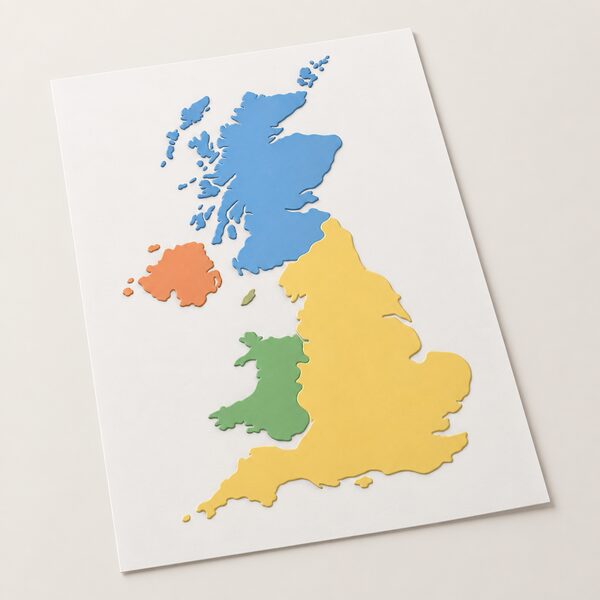
The building rules themselves are devolved, and the differences are structural rather than cosmetic.
Scotland has its own regulations and its own guidance. The building standards technical handbooks provide guidance on achieving the standards set in the Building (Scotland) Regulations 2004, in two volumes covering domestic buildings and non-domestic buildings20. The 2022 domestic handbook has been issued by Scottish Ministers, through the Building Standards Division, for the purpose of providing that guidance10. Supporting documents are available alongside it9. Scotland has also been developing its own route on energy performance: the Scottish Government consulted on building regulations covering energy standards and associated topics, publishing a consultation paper with ISBN 978180201204021, and has published an energy efficient Scotland route map22.
Wales has its own approved documents and its own consultation process. The Welsh Government has consulted on Approved Document L Volume 123 and issued a written statement on building regulations consultation changes to Part L covering conservation of fuel and power19. People who are responsible for building work in Wales, including an agent, designer, builder or installer, must ensure that the work complies with all applicable Building Regulations requirements23.
Northern Ireland operates under its own order and its own technical booklets. The Building Regulations (Northern Ireland) Order 1979 sets out the regulation-making purposes8, and the Building Regulations (Northern Ireland) Order 2009 provides the current statutory framework24. Technical Booklet B covers materials and workmanship1. Building control advice and guidance is published by Building Control Northern Ireland25.
England, Scotland and Wales share one thing that Northern Ireland does not: the designated standards for construction products apply to England, Scotland and Wales4. UK approved bodies use them when carrying out assessments4. That is the mechanism by which a product assessed once can be accepted across three nations.
Who certifies a product for the UK market
Certification is where the standards meet the product. A UK approved body carries out assessments against the designated standards for construction products4. That assessment is what allows a manufacturer to demonstrate that a product meets the specification a designer or a building control body will expect to see.
Product safety sits on a separate track. The Office for Product Safety and Standards is the enforcement authority responsible for ensuring compliance with the legislation on behalf of the Department for Science, Innovation and Technology for UK consumer connectable product security legislation26. In Great Britain the usual enforcement authority is the local trading standards authority6. Product safety regulation in the UK is the responsibility of market surveillance authorities7, and product recalls and alerts are published by government27.
The Office for Product Safety and Standards acts as the UK's national regulator for Weights and Measures and has a role in setting direction for local enforcement5. Trading Standards has reported that cost of living pressures and soaring prices have exposed gaps in bulk fuel checks5, which is a reminder that enforcement capacity is a real constraint on how thoroughly any standard is policed in practice.
Where a product is new to the market, the safety specification itself can be a differentiator. On plug-in solar panels, the government has stated that the UK safety specification is more stringent than that of Germany, where the technology is already widely used27. That is a claim about the specification, not about the product, and it illustrates how a national standards decision can shape what is available to households.

Where the professional institutions and guidance bodies fit
The professional institutions do not make law, but their guidance is often the document that turns a functional standard into a specification an installer can work to. The Domestic Building Services Compliance Guide for Scotland is the clearest example: it replicates guidance published in support of building standards elsewhere in the UK and supports standardisation of the specification and expected performance of fixed building services throughout the UK17. The guidance on heating systems performs the same function17, as does the guidance on heating under the environment heading20.
The technical handbooks themselves are the primary guidance instrument in Scotland. They explain the intent of each functional standard as well as how to achieve the requirements set out in the Building (Scotland) Regulations 20043. The 2020 domestic handbook provides guidance on achieving the standards set in the Building (Scotland) Regulations 200428, and the energy sections of the 2020 and 2022 handbooks set out the energy requirements in the same terms29.
The retrofit side of the market has its own standards architecture, developed after the Each Home Counts review. In October 2015 the UK Government commissioned Dr Peter Bonfield to chair an Independent Review of Consumer Advice, Protection, Standards and Enforcement for Energy Efficiency and Renewable Energy22. The Energy Company Obligation (ECO3) then adopted PAS 2030 and PAS 2035. Both standards arose from agreed recommendations of the Each Home Counts review, developed by consensus of industry representative steering groups and subject to public consultation, with BEIS a sponsor and active participant31. Those are the standards that sit behind PAS 2035 and PAS 2030.
What this means for a household's energy independence
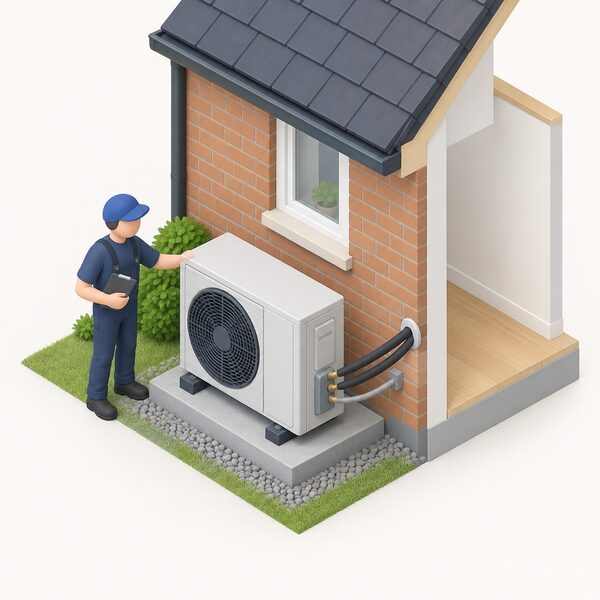
The standards system is what allows a household to buy equipment and have work done without personally verifying every technical claim. A product assessed by a UK approved body against a designated standard4, an installation carried out to a technical handbook's guidance3, and a retrofit project delivered to PAS 2030 and PAS 203531 are all relying on the same chain: a committee writes a specification, a test house or approved body checks against it, and an enforcement authority polices the edges.
What that buys a household is confidence in the equipment, not independence from the network. A certified heat pump, solar array or battery still depends on the grid for import and export, on a supplier for billing, and on the manufacturer for warranty and spares. Certification does not change any of that. It changes what a household can expect the equipment to do, and what recourse exists if it does not.
The dependence that remains is worth naming plainly. Standards are written by committees that include manufacturers, and the withdrawal obligation on BSI means a UK national standard can disappear once a European one covers the same scope2. A household buying to a standard is buying to a specification that can be revised, replaced or withdrawn. The protection is real but it is not permanent, and it is not the same thing as owning the means of generation outright.
For the wider picture of how these rules interact with tariffs, obligations and network charges, the UK home energy regulation and policy guide sets out the full framework. The specific regimes for electrical work sit under BS 7671 and Part P, and the markings a product carries are explained in UKCA, CE, Kitemark and Keymark.
Sources31 cited
- Technical Booklet B: Materials and Workmanship, Building Control Northern Ireland, July 2013
- Building Standards Technical Handbook, Domestic, April 2026, Scottish Government, March 2026
- Monitoring and improving building regulations, Scottish Government, 17 September 2026
- Designated standards for construction products, UK Government, 18 December 2020
- Cost of living pressures and soaring prices expose gaps in bulk fuel checks, Trading Standards, 16 March 2026
- General Product Safety Regulations 2005: Great Britain, UK Government, 13 December 2024
- Product recalls and alerts, UK Government, 7 April 2022
- Building Regulations (Northern Ireland) Order 1979, legislation.gov.uk, 19 December 1979
- Building standards technical handbook 2022: domestic, Scottish Government, 1 June 2022
- Building standards technical handbook 2022: domestic, 0.1 Application, Scottish Government, 2022
- The Energy Performance of Buildings (Certificates and Inspections) (England and Wales) Regulations 2007, UK Government, 10 April 2007
- The Energy Performance of Buildings (England and Wales) etc. (Amendment) Regulations 2013, legislation.gov.uk, 9 January 2013
- The Energy Performance of Buildings (England and Wales) (Amendment) Regulations 2021, legislation.gov.uk, 23 March 2021
- The Energy Performance of Buildings (England and Wales) (Amendment) Regulations 2022, legislation.gov.uk, 31 March 2022
- The Energy Performance of Buildings (England and Wales) Regulations 2012, schedules, legislation.gov.uk, 2012
- The Building Regulations &c. (Amendment) Regulations 2012, legislation.gov.uk, 17 December 2012
- Building standards 2017: domestic, 6.3 Heating system, Scottish Government, 1 March 2017
- Building standards 2017: domestic, 6.4 Insulation of pipes, ducts and vessels, Scottish Government, 1 March 2017
- Written statement: building regulations Wales consultation changes Part L, Welsh Government, 31 July 2012
- Building standards 2017: domestic, 3.13 Heating, Scottish Government, 1 March 2017
- Building regulations: energy standards and associated topics, Scottish Government, 23 July 2021
- Energy Efficient Scotland route map, Scottish Government, October 2015
- Approved Document L Volume 1 consultation version, Welsh Government, August 2025
- Building Regulations (Northern Ireland) Order 2009, legislation.gov.uk, 2 March 2009
- Building control advice and guidance, Building Control Northern Ireland
- Regulations: consumer connectable product security, UK Government, 8 January 2024
- Households can save as plug-in solar panels come to market, UK Government, 26 August 2026
- Building standards technical handbook 2020: domestic, 0.3 Exempted buildings, services, fittings and equipment, Scottish Government, 2 December 2020
- Building standards technical handbook 2020: domestic, 6.0 Introduction, Scottish Government, 2 December 2020
- Building standards technical handbook 2022: domestic, 6.0 Introduction, Scottish Government, 2022
- The Energy Company Obligation (ECO3) Order 2018, legislation.gov.uk, 12 November 2018
 Standards for Emerging ProductsIf a heat pump or solar product is new, who checks it is safe and works properly?
 The Full Brands GuideWhich boiler, heat pump or solar brand can you trust, and who actually owns it?
 Certificates You Should ReceiveAfter work like solar panels or a new boiler, what paperwork should you actually be handed, and by when?
 National Home Energy InstallersWho actually turns up to fit your boiler or solar panels when you book with a big national company?
 Backup Power Safety RulesWho signs off a battery or backup circuit, and can you legally plug in a power station or a plug-in solar panel in the UK?
 DIY Home Battery BuildsBuilding your own home battery?