

In this guide
An energy consultation is the formal stage at which a government department or regulator sets out a proposed change to the rules and invites anyone affected to comment before the change is made. For a household, that is the point at which a future requirement on a boiler, an EPC, a heat pump or a supplier's conduct is still open to argument. Once the consultation closes and a decision is published, the rule moves into regulations, a statutory instrument or a licence condition, and the opportunity to shape it has passed.
The scale of participation varies enormously. The reforms to the Energy Performance of Buildings regime drew over 1,600 responses from a broad range of stakeholders1. A Scottish consultation on energy performance certificates drew 323 responses to the consultation paper, of which 201 came from individuals2. A licence modification consultation drew twenty-seven responses, including views from members of the public, trade associations and electricity suppliers3. Individual householders are a small but real part of that picture.
Consultation periods are usually measured in weeks rather than days. The Energy Performance of Buildings regime ran for 12 weeks, from 4 December 2024 to 26 February 20251. The Consumer Outcomes stage 2 consultation closed on 19 August 20264. Not every change is consulted on: the explanatory memorandum for the Energy Performance of Buildings (England and Wales) (Amendment) Regulations 2024 states that a formal public consultation has not been undertaken and that there is no statutory requirement to consult before making those Regulations5.
What an energy consultation is and what it can change
A consultation is not a vote and it is not a referendum. It is a structured request for evidence, and what it can change depends on the legal power behind it. Some consultations precede new regulations, some precede a change to a regulator's licence conditions, and some precede nothing binding at all, because the department is testing an idea before committing.
The subjects that reach a household are broad. The reforms to the Energy Performance of Buildings regime consulted on changes to Energy Performance Certificates, Display Energy Certificates and air conditioning inspection reports1. A separate consultation proposed the Home Energy Model as the replacement for SAP, the method used to estimate the energy performance of homes7. The 2023 consultation by the previous Government on that new model is the origin of the current work8. Ofgem has consulted on energy price cap disclosure arrangements, so that stakeholders or their advisers can take part with the topics they are being consulted on9. The Government has also consulted on strengthening protections in the energy supply market and enhancing the powers of the Energy Ombudsman10.
What a consultation can change, then, is the detail: the threshold, the deadline, the exemption, the evidence route, the penalty. The Climate Change Committee has recommended creating a public energy advice service to give households guidance on decarbonising and adapting their homes, a recommendation that would need its own policy process before it existed11. A consultation is where such a proposal is tested against the practical objections that only people living with the rules can raise.
For a household's energy independence, the consultation stage is the last point at which the cost and feasibility of a requirement can be argued before it binds. A minimum efficiency standard, a heat pump specification or a metering obligation all arrive through this route, and all of them affect what a home can install, keep or sell.
The lifecycle of a rule: proposal, consultation, response, decision

The sequence is consistent across departments, even where the paperwork differs.
- Proposal. The department or regulator publishes a consultation document, often with an impact assessment and supporting analysis. The Heat in Buildings Strategy consultation, for example, was accompanied by an Environmental Report and a Partial Business and Regulatory Impact Assessment12.
- Consultation. The document is open for a set period. The Energy Performance of Buildings regime ran for 12 weeks1.
- Analysis. Responses are counted and analysed, sometimes by an independent body. The Heat in Buildings Bill consultation received over 1,600 responses, and an independent analysis was commissioned and will be published in due course13.
- Response. The government publishes its decision, in full or in part. A further response covering the remaining parts of the Energy Performance of Buildings regime consultation will be published in 202614.
- Implementation. The change is made through regulations, a statutory instrument or a licence modification.
The analysis stage is where the numbers become visible. A Scottish building regulations consultation analysis recorded 69 responses to one open question, although only 35 were substantive, and 95 responses to another15. In the same analysis, 75%, or 79 respondents, provided additional views to Question 52, and 90 respondents answered a yes/no question while 41 responses came to the accompanying open question, all from organisations15. Those figures show how thin the evidence base can be on a specific technical point, which is precisely where a well-argued household response carries weight.
The decision stage is not always tidy. The reforms to the Energy Performance of Buildings regime consultation has concluded, and the Government's stated aim for the EPC changes is that the certificate provides accurate information to determine eligibility for schemes and measure progress against government targets1. A partial response has been issued, with the rest deferred14. A household tracking a rule should follow the consultation page through to the outcome page, because the outcome is where the binding detail appears.
Live and recent consultations to know about
Several consultations in this area have closed recently or are at the analysis stage, which is useful context for anyone planning work on a home.
| Consultation | Status | Key date |
|---|---|---|
| Reforms to the Energy Performance of Buildings regime | Concluded, partial response published, further response due 2026 | Ran 4 December 2024 to 26 February 20251 |
| Home Energy Model: replacement for SAP | Concluded | Published 13 December 20237 |
| Consumer Outcomes, stage 2 | Closed, awaiting decision | Response deadline 19 August 20264 |
| Updating standards for local space heating products | Closed, analysing feedback | Last updated 25 March 202616 |
| Changes to various permitted development rights | Analysing feedback | Last updated 13 February 202417 |
| Warm Healthy Homes Fund (Northern Ireland) | Closed, responses no longer accepted | Closed 19 August 202618 |
| Heat network zoning | Government response published | Last updated 21 January 202619 |
The pattern is that a consultation closes, the department says it is analysing feedback, and the outcome follows months or years later. The Home Energy Model consultation document ran to 83 pages, and the approval of the model was expected at least 3 months after publication of the consultation response7. That gap between closing and deciding is normal, and it is the period in which the arguments made in responses are weighed.
For a household, the practical value of this list is timing. A consultation that has closed cannot be influenced, but its outcome can still be anticipated, and a consultation that is open is worth the twenty minutes it takes to answer the questions that bear on your circumstances.
Who consults: the Secretary of State, Scottish Government and building standards bodies

The body running the consultation tells you which law it can change, and that matters because home energy rules are split across administrations.
In England, the relevant department consults on building regulations and energy performance, and the Secretary of State holds the underlying powers. The legislation behind scheme administration gives the Secretary of State power to give financial assistance to the scheme administrator, to make payments to the scheme administrator otherwise than as financial assistance, to guarantee the discharge of any financial obligation incurred by the scheme administrator, and to make regulations conferring or imposing specified powers or duties on scheme administrators21. Those are the kinds of power a consultation is testing how to use.
In Scotland, the Scottish Government consults through its own directorate and hub. The consultation on proposals for a Heat in Buildings Bill was administered by the Scottish Government energy and climate change directorate, with responses via Citizen Space at consult.gov.scot or by email to HiBConsultation@gov.scot with the Respondent Information Form22. The Heat in Buildings Strategy consultation followed the same route, and its stated next step was to analyse responses and publish the final version of the strategy later in the year24.
In Wales, the Welsh Government publishes its own Approved Documents, including a consultation version of Approved Document L Volume 125. In Northern Ireland, departments consult separately: the Department for Communities ran the Warm Healthy Homes Fund consultation, and the Department of Finance ran a review of energy efficiency requirements and related areas of Building Regulations as Phase 2 in a programme for energy related aspects of the Building Regulations18.
The consequence for a household is that a consultation run by one administration does not change the law in the others. Building standards, rented sector efficiency rules and several consumer protections are devolved or split, so the relevant consultation is the one run by the administration that holds the power. The pillar guide to UK home energy regulation sets out how those powers divide, and the pages on energy and buildings policy in Scotland and energy and buildings policy in Wales cover the devolved positions in more detail.
How to respond to a consultation: what a response should contain
A response does not need to be long, and it does not need to be written in the language of the department. What it needs is a clear answer to the questions asked, evidence from your own circumstances, and a statement of what you think should change and why.
Most consultations offer a questionnaire, and that is the primary route. Where the questionnaire is not usable, departments provide an alternative: the Warm Healthy Homes Fund consultation states that if completing the questionnaire is not possible, you can respond by completing the consultation questionnaire above, and the Scottish Heat in Buildings consultation accepts responses by email with a completed Respondent Information Form18. The Scottish private rented sector consultation on minimum energy efficiency standards accepts responses at PRSMEESConsultation@gov.scot, and the topics consulted on were the proposed minimum standard, timescales for compliance, properties in scope, exemptions, the level of cost cap exemption, and the approach to monitoring and compliance6.
A useful response typically does four things:
- Answers the specific question. Consultations are analysed question by question, so a response that addresses Question 52 or Question 54 is counted where a general essay is not.
- Gives evidence from your own property or tenancy. Cost, disruption, technical feasibility and timescale are the things a department cannot model accurately.
- States the change you want. A minimum standard, an exemption, a longer lead-in time or a different evidence route.
- Says who you are. Individual responses are recorded separately: 201 of the 323 responses to the Scottish EPC reform consultation came from individuals2.
What happens to responses: how decisions are made and announced

After the closing date, the department or regulator analyses the responses and publishes the result. That publication takes two forms: an analysis of what respondents said, and a government response setting out what will be done.
The analysis is often the more revealing document. The Scottish building regulations analysis broke responses down by question, showing how many answered and how many gave substantive comment15. The Scottish EPC reform consultation analysis recorded the total and the split between individuals and organisations2. A licence modification consultation recorded twenty-seven responses, including views from members of the public, trade associations and electricity suppliers3. These documents show which arguments were made and how often, which is useful for anyone preparing a response to a related consultation later.
The government response is where the decision appears. It may accept, reject or modify the proposal, and it may be partial. The Energy Performance of Buildings regime consultation received over 1,600 responses, and a further response covering the remaining parts will be published in 20261. The Future Homes and Buildings Standards consultation response records that the Approved Document text has been kept broadly as presented at consultation stage, which is a direct statement that the draft survived the process20.
Where a regulator is consulting, the outcome may be a licence modification rather than a regulation. Ofgem states that if it decides to proceed with changes to its rules, a policy consultation would be followed by a statutory consultation4. That two-stage structure means a policy consultation is not the last word, and a household following a proposed change should watch for the second stage.
The decision is announced on the same page as the consultation, usually under an outcome heading, and the implementing instrument is published separately on legislation.gov.uk. The guide to Ofgem's role explains how licence modifications work in practice, and the DESNZ page covers the department that runs most home energy consultations in England.
Consultation versions of the Approved Documents: guidance that is not yet law
A consultation version of an Approved Document is a draft published for comment, and it carries no legal force. The distinction matters because a consultation draft can look exactly like the guidance it will become.
The Welsh Government's Approved Document L Volume 1 is marked, in terms, "Consultation version. Not statutory guidance."25 It applies to dwellings only, gives guidance for newly constructed dwellings in Sections 1 to 14, and is the 2025 edition25. Until it is finalised, the statutory position is the one set by the regulations in force, not the draft.
The current statutory guidance for England is a different document. Approved Document L, Volume 1 applies to dwellings only, gives guidance for new dwellings in Sections 1 to 9, and covers extensions to and work on existing dwellings in Sections 4, 5, 6, 10 and 1128. The 2021 edition incorporating 2023 amendments is the version in force, and it gives guidance for existing dwellings in Sections 3, 4, 5, 10, 11 and 1229. The section numbering differs between the draft and the statutory version, which is one reason a consultation draft cannot be read as the current requirement.
The same principle applies to the Home Energy Model. The consultation proposed the use of the Home Energy Model replacing SAP, and the model's approval was expected at least 3 months after publication of the consultation response25. Until that approval is given, SAP remains the method in use. The Home Energy Model page covers the replacement in detail.
Case study: the private rented sector MEES consultations
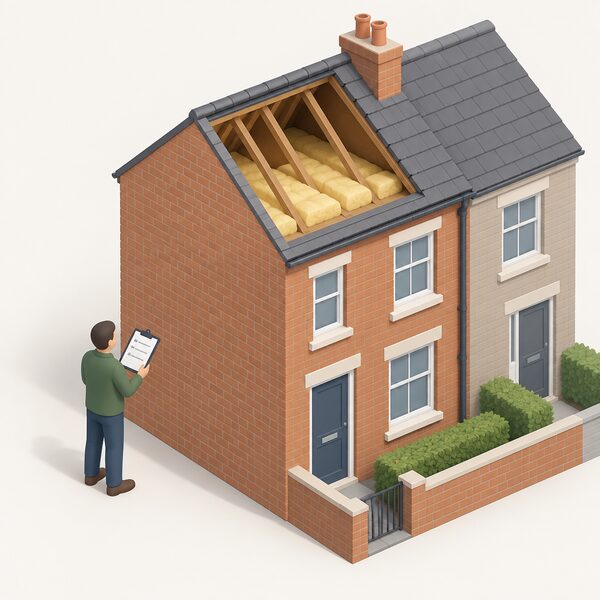
The private rented sector minimum energy efficiency standards are a worked example of how a proposal moves through consultation, and of how long the process can take.
In Scotland, the consultation on the proposed regulations to introduce minimum energy efficiency standards in domestic private rented sector properties set out the topics to be consulted on: the proposed minimum standard, timescales for compliance, properties in scope, exemptions, the level of cost cap exemption, and the approach to monitoring and compliance27. The consultation proposed using existing powers within the Energy Act 2011, with a start from 2028 for new tenancies and a backstop by 2033 for all privately rented homes30. It proposed that Local Authorities should be responsible for monitoring and compliance, and that HEETSA should be available as an option to evidence potential negative impacts on the fabric of a property and to support an exemption30. It also proposed a 12 month lead in time period for works to contribute to the total cost cap, and an amendment to the Energy Act 2011 to increase the maximum financial penalties that could be imposed up to £30,000 in future30.
An earlier Scottish consultation on energy efficiency and condition standards in private rented housing closed on 30 Jun 2017, with feedback updated on 13 Dec 20186. It received 198 responses to both parts of the consultation6. A separate consultation on Minimum Energy Efficiency Standards for the private rented sector closed on 13 March 20186. The gap between these exercises and the 2025 regulations consultation shows how long a proposal can sit between consultation and implementation.
In England, the social rented sector was the subject of a consultation on MEES which closed on 10 September, and the MHCLG response to the Improving the Energy Efficiency of Socially Rented Homes consultation was to follow in early 202614. The page on social and rented housing standards covers the standards themselves, and the EPC regulations and reform page covers the certificate that underpins them.
What a consultation outcome means for householders and landlords
An outcome is the point at which a proposal becomes a requirement, and the practical effect depends on what was decided.
For a landlord, the outcome of a MEES consultation sets the standard, the deadline and the exemption route. The Scottish proposals would start from 2028 for new tenancies and reach all privately rented homes by 2033, with a 12 month lead in time for works to count towards the cost cap and penalties of up to £30,000 in future30. Those are proposals, not law, until the regulations are made. The page on energy efficiency standards for privately rented homes in Scotland tracks the position.
For an owner occupier, the outcome of a building regulations or EPC consultation changes what a future improvement, extension or sale will require. The EPC changes are intended to provide accurate information to determine eligibility for schemes and measure progress against government targets, which affects both grant access and the certificate's role in a transaction1.
For any household, the outcome of a consumer protection consultation changes the route to redress. The Consumer Outcomes consultation recorded that billing complaints represented almost 60% of all domestic complaints received by the Energy Ombudsman4. Where a consultation changes the rules on billing, metering or supplier conduct, the effect is felt in how a complaint is handled. The energy complaints and redress page sets out the current routes.
The independence question is straightforward. A consultation is the mechanism by which the rules that constrain what a home can install, keep or sell are made. Following the consultation, responding to it, and reading the outcome are the ways a household has any influence over those constraints before they bind. Once the instrument is made, the only remaining routes are the courts, the regulator's own review processes, or a later consultation that reopens the question.
Sources30 cited
- Reforms to the Energy Performance of Buildings regime, GOV.UK, 2024-12-04
- Energy Performance Certificate reform consultation analysis, Scottish Government, 2025-01-23
- Explanatory memorandum to the Electricity and Gas (Market Integrity and Transparency) (Amendment) Regulations 2019, legislation.gov.uk, 2019-06
- Energy Consumer Outcomes: proposed implementation, Ofgem, 2026-06-23
- Explanatory memorandum to the Energy Performance of Buildings (England and Wales) (Amendment) Regulations 2024, legislation.gov.uk, 2026-09-17
- Energy efficiency programme consultation, Scottish Government, 2026-09-20
- Home Energy Model: replacement for the Standard Assessment Procedure, GOV.UK, 2023-12-13
- Energy Security and Net Zero Committee report, UK Parliament, 2025-05-09
- Energy price cap disclosure arrangements: autumn 2024 consultation, Ofgem, 2024-11-05
- Energy Market Consumer Protection debate, UK Parliament, 2026-06-17
- Risks to health, wellbeing and productivity from overheating in buildings, Climate Change Committee, 2026-09-19
- Energy Efficiency (Domestic Private Rented Property) (Scotland) Regulations 2026: partial BRIA, Scottish Government, 2025-06-06
- Heat in Buildings progress report 2024, Scottish Government, 2024-10-10
- Reforms to the Energy Performance of Buildings regime: partial government response, GOV.UK, 2026
- Scottish Building Regulations proposed changes to energy standards: consultation analysis, Scottish Government, 2022-06-15
- Updating standards for local space heating products, GOV.UK, 2026-03-25
- Changes to various permitted development rights, GOV.UK, 2024-02-13
- Warm Healthy Homes Fund consultation, Department for Communities Northern Ireland, 2026-08-19
- Proposals for heat network zoning, GOV.UK, 2026-01-21
- Future Homes and Buildings Standards consultation response, GOV.UK, 2026-03
- Energy Act 2004, Part 6, Chapter 4, legislation.gov.uk, 2026-09-17
- Delivering net zero for Scotland's buildings: Heat in Buildings Bill consultation, Scottish Government, 2023-11
- Heat in Buildings Bill consultation: how to respond, Scottish Government, 2023-11
- Heat in Buildings Strategy consultation, Scottish Government, 2026-09-20
- Approved Document L Volume 1: consultation version, Welsh Government, 2025
- Review of energy efficiency requirements and related areas of Building Regulations, Department of Finance Northern Ireland, 2026-09-17
- Consultation on draft Energy Efficiency (Domestic Private Rented Property) (Scotland) Regulations, Scottish Government, 2025-06-06
- Approved Document L, Volume 1: Dwellings, GOV.UK, 2026
- Approved Document L, Volume 1: Dwellings, 2021 edition incorporating 2023 amendments, GOV.UK, 2026-09-17
- Private rented minimum energy efficiency standard consultation, Scottish Government, 2026-09-20
 Getting Installation QuotesHow householders obtain quotes for boilers, heat pumps and solar PV, how many quotes are usually recommended, what a survey should involve, and the difference between an estimate, a quotation and a fixed price.
 Building Regulations EnglandAdding a heat pump, solar panels or an extension usually needs building regulations approval, and it is separate from planning permission.
 Installation ContractsCan you cancel a solar panel or boiler contract after signing?
 The Full Boilers and Heating GuideWhich boiler suits your home, and when is it worth swapping the old one?
 Public Attitudes to Home EnergyWhat do people in the UK really think about heat pumps, solar panels and smart meters?
 Manufacturer WarrantiesHow long does a boiler, heat pump or solar panel warranty actually last, and what do you have to do to keep it valid?