
In this guide
The Home Energy Model (HEM) is the calculation methodology that will replace the Standard Assessment Procedure (SAP) as the way the energy performance of homes is worked out. SAP is the methodology currently used by the government to estimate the energy performance of homes, and it is the method behind the information displayed on domestic EPCs1. HEM is designed to assess the energy performance of homes and will replace SAP as the calculation methodology for EPCs2.
The change is not cosmetic. SAP estimates performance month by month; HEM simulates energy performance for each half-hour of the day, which allows it to represent time-varying electricity prices, on-site generation and storage, and how a home actually uses power across a day3. The government has said HEM remains its methodology of choice for the future and that it is committed to transitioning to HEM as the sole methodology at the earliest opportunity4.
The timing has moved. HEM will no longer launch at the same time as the Future Homes Standard (FHS), and is expected to follow after at least a three-month delay5. The FHS itself will launch with only SAP 10.3 available, with HEM approved as an alternative once it meets the full criteria required of an approved calculation methodology4. For a household, the practical effect is that the rating on a new home, and eventually on an existing one, will be produced by a model that can see the half-hour, not just the month.
What the Home Energy Model is
HEM is a calculation methodology designed to assess the energy performance of homes2. It is the domestic half of a pair: the Home Energy Model covers domestic buildings and the Simplified Building Energy Model covers non-domestic buildings, and the two are used to calculate the new ratings for each8. In Scotland the same technical infrastructure is being built, replacing SAP with the new UK Home Energy Model calculation methodology together with a new EPC Register, with significant parts shared with the UK Government9.
The model is not a consumer tool. It is the arithmetic underneath a compliance and rating system, and it is approved through a formal route. In England and Wales, the approved calculation methodologies for a new dwelling under Regulation 24 are the Home Energy Model and the government's Standard Assessment Procedure for the Energy Rating of Dwellings10. The current approved version of SAP for new dwellings in England is version 10.3, updated from version 10.27.
That dual listing matters. It means HEM and SAP sit side by side in the regulations for a period rather than one switching off the other overnight. The government has described a dual running period during which either the HEM or SAP 10.3 system can be used for compliance with the Future Homes Standard4.
For a household, HEM is the reason a future EPC may say something different about the same house. It is also the reason a new-build assessment can account for a battery, a heat pump or a smart tariff in a way the monthly method could not.
Why SAP is being replaced
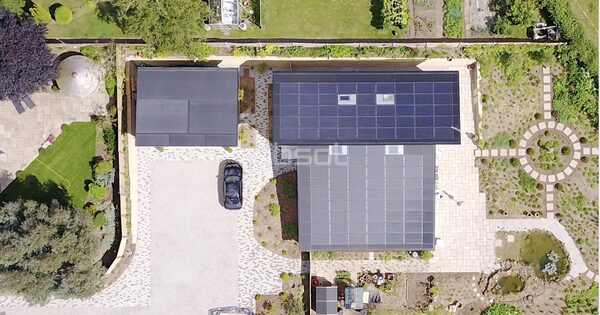
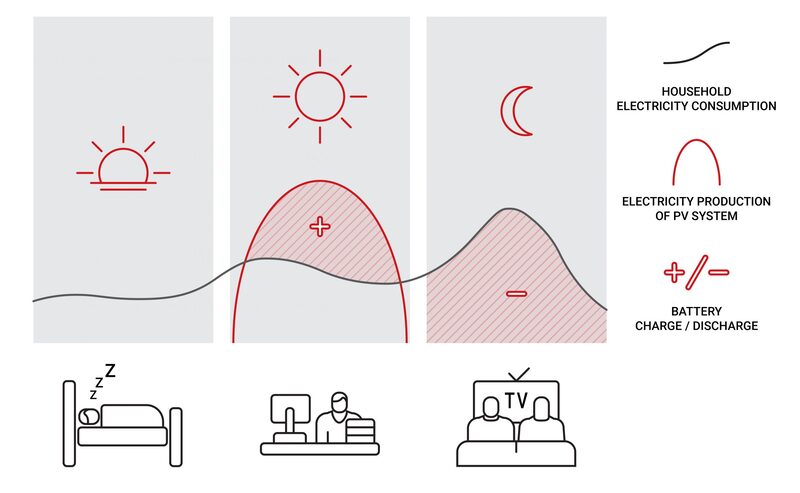
The case for replacement rests on what a monthly estimate cannot see. HEM simulates energy performance for each half-hour of the day, as compared to each month for SAP, which enables the model to reflect time-varying electricity prices and the way homes use and store energy3. A monthly figure averages away the morning and evening peaks, the midday solar surplus and the effect of a battery shifting load from one to the other.
There is also evidence that the old method has not matched measured performance. In the Active Homes project, the measured space heating fuel use for houses was on average around 3 times higher than the developer SAP estimate11. That is a gap between a modelled figure and a metered one, and it is the kind of gap a more granular model is intended to narrow.
SAP has been revised before, and revisions move the numbers. A change to SAP implied a 25% fall in modelled energy usage for English dwellings12. That is a reminder that the methodology itself, not just the building, drives the rating.
The replacement is also about policy reach. Energy Performance Certificates are the basis of many energy efficiency policies in the domestic built environment13, and research has been commissioned to support updates to SAP and to inform the succeeding Home Energy Model and the processes around generating and using EPCs13. When the rating method changes, the policies that lean on the rating change with it.
"The new model simulates energy performance for each half-hour of the day (as compared to each month for SAP), enabling a more accurate assessment of the impact of measures such as solar panels, battery storage and smart controls."
How HEM differs from SAP in practice
The headline difference is the time step, but the operational differences run further. HEM is a cloud calculation: the plan is to run the HEM cloud calculation service, called Energy Calculation as a Service (ECaaS)14. That is a departure from a desktop tool run by an assessor, and it centralises the calculation so that one approved engine produces the result.
The model also carries a much larger input set than the reduced method used for existing homes. Where full information about a home may not be available, EPC assessors use the reduced SAP method, RdSAP15. HEM is being built for the full-information case first, which is why its first use is new-build compliance rather than the existing stock.
The version in circulation is HEM 1.02. The government's stated position is that HEM remains its methodology of choice for the future, with a commitment to transitioning to HEM as the sole methodology at the earliest opportunity4. Until that point, the two systems coexist.
| Feature | SAP | Home Energy Model |
|---|---|---|
| Time step | Each month3 | Each half-hour of the day3 |
| Current approved version for new dwellings in England | 10.37 | HEM 1.02 |
| Calculation route | Assessor tool | Cloud service, Energy Calculation as a Service14 |
| Existing homes | RdSAP where information may not be available15 | No approved HEM methodology at present6 |
| Building scope | Dwellings10 | Domestic buildings8 |
What changes for EPCs
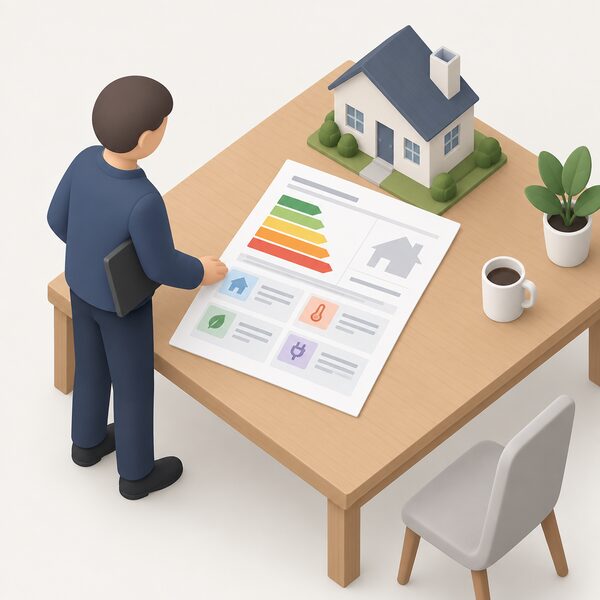
The EPC itself is being rebuilt around the new method. The plan is to establish a new technical infrastructure to replace the current Standard Assessment Procedure with the new UK Home Energy Model calculation methodology, together with a new EPC Register16. In Scotland the same replacement is described, with significant parts shared with the UK Government9.
The rating system is also changing shape. A new EPC rating system for domestic buildings will give clearer information on the fabric energy efficiency of a property, the emissions, efficiency and running costs of its heating system, and the cost of energy to run the home to standardised conditions9. That is a move from a single headline band towards several distinct measures.
The Climate Change Committee recommended four primary metrics for domestic EPCs, using real-world units and clear simple names: Energy, total energy use intensity in kWh/m2/yr; Fabric, space heating demand intensity in kWh/m2/yr; Heating, heating system type ranked from 1 to 6; and Cost, energy cost intensity in £/m2/yr17. Those four are the recommended structure, not a settled regulation.
Integration is staged. The government said it would explore integrating HEM into Energy Performance Certificates in 2026, aiming to improve clarity and usability5. Existing certificates are not invalidated by the change: under proposals for the private rented sector, properties with a current EPC C would be recognised as compliant under the future standard until the EPC expires18.
New-build compliance and the Future Homes Standard
The Future Homes Standard is HEM's first use. HEM will replace SAP for demonstrating new-build compliance with Building Regulations Part L19. The FHS was introduced for new build in 202520, and the government has said it is to be implemented in early 202621.
The sequencing is deliberate. The FHS will launch with only SAP 10.3 being available, and HEM will be approved for use as an alternative to SAP 10.3 once it meets the full criteria required of an approved calculation methodology4. During the dual running period either the HEM or SAP 10.3 system can be used for compliance with the Future Homes Standard4.
Withdrawal of the older method will be signalled in advance. The government expects to give industry six months' notice before setting a date beyond which SAP 10.3 can no longer be used to file Building Control plans for the Future Homes Standard4.
The consultation history is long. The Future Homes Standard was consulted on in detail from November 2023 to March 202422, and the Home Energy Model consultation opened at 10am on 13 December 2023 and closed at 11:59pm on 27 March 20245. The closing date for all three related consultations was extended by three weeks23.
Transitional arrangements for the wider standards were set out as a 6-month or up to 12-month period between legislation being laid and coming into force, followed by a 12-month transitional period23. In Wales, a consultation version of Approved Document L Volume 1 has been published24, and in Northern Ireland the technical guidance sits in Technical Booklet F125.
Timeline: launch, delay and the move to a sole methodology
The dates that matter are the ones that have moved. HEM will no longer launch at the same time as the Future Homes Standard, and is expected to follow after at least a three-month delay5. The government expects approval to be at least three months after publication of the consultation response4.
| Date | Event |
|---|---|
| 13 December 2023 | Home Energy Model consultation opens, 10am5 |
| 27 March 2024 | Home Energy Model consultation closes, 11:59pm5 |
| November 2023 to March 2024 | Future Homes Standard detailed specification consultation22 |
| Early 2026 | Future Homes Standard implementation21 |
| 10 February 2026 | Government states HEM will no longer launch with the FHS5 |
| 24 March 2026 | SAP 10.3 approved for new dwellings in England7 |
| 2026 | Integration of HEM into EPCs to be explored5 |
The end state is a single method. The government has committed to transitioning to HEM as the sole methodology at the earliest opportunity4, and HEM is due to supersede SAP as the energy calculation model for EPCs from 20266. Until the sole-methodology date is set, both routes remain live for new-build compliance.
What HEM means for solar, heat pumps and storage
The half-hourly time step is what makes HEM relevant to home energy equipment. By simulating each half-hour, the model can reflect time-varying electricity prices and the impact of measures such as solar panels, battery storage and smart controls3. A monthly method cannot distinguish a unit of electricity generated at noon from one generated at 7pm, and that distinction is the whole economics of a home battery.
Demand side response is the household-facing consequence. Demand side response could make household energy bills cheaper26, and a model that resolves the half-hour is the mechanism by which that value can be counted in a rating.
The equipment itself is already being coordinated in real homes. At Etopia Homes in Corby, Northamptonshire, a Smart Home Energy Management (SHEM) system coordinates the technologies11. That is the pattern HEM is built to represent: generation, storage and flexible load working to a schedule rather than a monthly average.
Grant funding follows the methodology. Under the Warm Homes: Social Housing Fund Wave 3, eligible measures are any energy efficiency and heating measures compatible with the latest version of the Standard Assessment Procedure that will help improve the energy performance of homes, excluding heating systems solely fuelled by fossil fuels27. Compatibility with the calculation method is a condition of funding, which is why a methodology change ripples into what can be installed and paid for.
For a household, the independence question is straightforward. A model that can value half-hourly self-consumption makes on-site generation and storage more legible in a rating. It does not remove the grid connection, the metering arrangement or the supplier relationship, and it does not by itself change what a household is paid for exported power.
Limitations and concerns
The concerns fall into three groups: the model's transparency, a defect found in its treatment of solar, and the absence of an approved route for existing homes.
On transparency, the calculation runs as a cloud service, Energy Calculation as a Service14, which centralises the engine but gives an assessor less visibility of the working than a desktop tool. The government's own framing is that HEM must meet the full criteria required of an approved calculation methodology before it can be used as an alternative to SAP 10.34, which is the control on that risk.
On solar, the practical concern is that a new engine can produce a different answer for the same array. The half-hourly approach is intended to improve accuracy for solar, battery storage and smart controls3, but any change of method moves modelled outputs, and a change to SAP previously implied a 25% fall in modelled energy usage12.
On existing homes, the position is unambiguous: at present there is no approved HEM methodology for existing homes6. The existing stock stays on RdSAP, the reduced method used where information may not be available15. That leaves the majority of homes outside the new model for now.
Wider delivery concerns have been raised in consultation. Responses to the Heat in Buildings Bill consultation noted a lack of skilled people to install and maintain clean heating systems, a lack of a developed supply chain, and the need for electricity infrastructure upgrade28. The same consultation found that traditional buildings, flats and rural properties were frequently noted as being less suitable for both energy efficiency improvements and clean heating systems28. The Home Builders Federation expressed concerns about mandating solar panels restricting housebuilding innovation, unrealistic running cost estimates, no account of maintenance costs borne by homeowners, and considered the proposed 40% area coverage requirement to be very high22.
Who carries out an assessment
The assessor structure carries over from SAP. SAP assessments for new dwellings are performed by accredited On Construction Domestic Energy Assessors29. RdSAP assessments are carried out by accredited Domestic Energy Assessors, who are accredited by Approved Organisations and must hold specific qualifications and experience29.
The calculation engine is separate from the assessor. The plan is to run the HEM cloud calculation service, Energy Calculation as a Service14, so the assessor gathers and inputs the data while the approved engine performs the calculation centrally. That is a different division of labour from a desktop tool, and it is the reason the approval criteria for the methodology carry so much weight.
The National Calculation Method and Product Characteristics Database remains the reference point for the underlying method and product data30. For a household, the practical implication is that the person who visits the property is still an accredited assessor, and the change is in what happens to the data afterwards.
What this means for householders and energy independence

HEM changes how a home's energy performance is counted, not what the home is connected to. The grid connection remains, the supplier relationship remains, and for a gas-heated home the gas supply remains. What changes is the resolution at which self-generated and self-stored energy can be valued in a rating.
That has a direct bearing on the case for solar, batteries and smart controls. A model that simulates each half-hour can reflect time-varying electricity prices and the impact of solar panels, battery storage and smart controls3, and demand side response could make household energy bills cheaper26. Those are the mechanisms by which a household reduces what it draws from the grid, and HEM is the first domestic methodology able to see them.
The dependence that remains is on the calculation itself. HEM runs as a cloud service14, so the result depends on an approved engine and a register rather than a local tool. It is also not yet available for existing homes6, which means the great majority of households will keep a rating produced by the older, reduced method for some time.
The transition is committed but not complete. HEM remains the government's methodology of choice for the future, with a commitment to transitioning to HEM as the sole methodology at the earliest opportunity4. Until that date is set, and until an approved route for existing dwellings exists, the honest position is that HEM is the future method for new homes and a planned method for everything else.
Sources30 cited
- EPC reform consultation: government response, Scottish Government, 2025-01-21
- HEM technical paper 12: heat pump methodology, UK Government, 2026-01
- Energy Performance of Buildings (Scotland) Regulations 2025 update, Scottish Government, 2025-10-10
- Future Homes and Buildings Standards consultation response, UK Government, 2026-03
- Home Energy Model: replacement for SAP consultation, UK Government, 2026-02-10
- Energy Performance of Buildings (Scotland) Regulations 2025: stock model research, Scottish Government, 2025-10-10
- Notice of approval of calculation methodologies for new buildings, UK Government, 2026-03-24
- Energy Performance of Buildings (Scotland) Regulations 2025 update: government response, Scottish Government, 2025-10-10
- Reforming energy performance certificates, Scottish Government, 2025-01-21
- Approved Document L Volume 1: Dwellings, UK Government, 2026
- Building for 2050: low cost, low carbon homes, UK Government, 2022-12-05
- Ofgem future insights series 4, Ofgem, 2017-03
- Energy Performance Certificate (EPC) accuracy research, UK Government, 2026-05-26
- EPC reform consultation: government response, Scottish Government, 2025-01-21
- Energy Performance Certificates: research briefing, House of Commons Library, 2026-09-17
- EPC reform consultation: government response, Scottish Government, 2025-01
- Letter: reform of domestic EPC rating metrics, Climate Change Committee, 2026-09-19
- Improving the energy performance of privately rented homes: 2025 update, UK Government, 2025-02-07
- Technical annex for chapter 2: what EPCs measure, UK Government, 2026-03-09
- Heat pumps investment roadmap, UK Government, 2025
- Families to save in biggest home upgrade plan in British history, UK Government, 2026-01-20
- The Future Homes and Buildings Standards: 2023 consultation, House of Commons Library, 2026-09-17
- The Future Homes and Buildings Standards: 2023 consultation, UK Government, 2024-03-04
- Approved Document L Volume 1: consultation version, Welsh Government, 2025-08
- Technical Booklet F1, Northern Ireland Building Control, 2012-10
- Demand side response research briefing, Parliamentary Office of Science and Technology, 2026-06-07
- Warm Homes: Social Housing Fund Wave 3 scheme guidance addendum, UK Government, 2026-06
- Delivering net zero for Scotland's buildings: Heat in Buildings Bill consultation analysis, Scottish Government, 2026-01-29
- EPC reform consultation, Scottish Government, 2023-07-25
- National Calculation Method and Product Characteristics Database, NCM PCDB, 2026-09-17
 Home Energy AssessmentsWhich home energy check do you actually need?
 Energy Performance CertificatesAn Energy Performance Certificate rates how energy efficient your home is, from A down to G.
 SAP and RdSAP AssumptionsWhy does an energy rating not match your actual bills?
 Measured vs Modelled PerformanceWhy does a home use more energy than its rating predicts, and what does that mean for your bills?
 EPC Regulations and ReformSelling or renting out a home means you need an Energy Performance Certificate.
 Where to Start ImprovementsThe first steps are assessment, not purchase: read the home's EPC and its recommendation report, see actual consumption on a meter or in-home display, and take the no-cost adjustments such as turning the thermostat down one degree.