

In this answer
Short answer
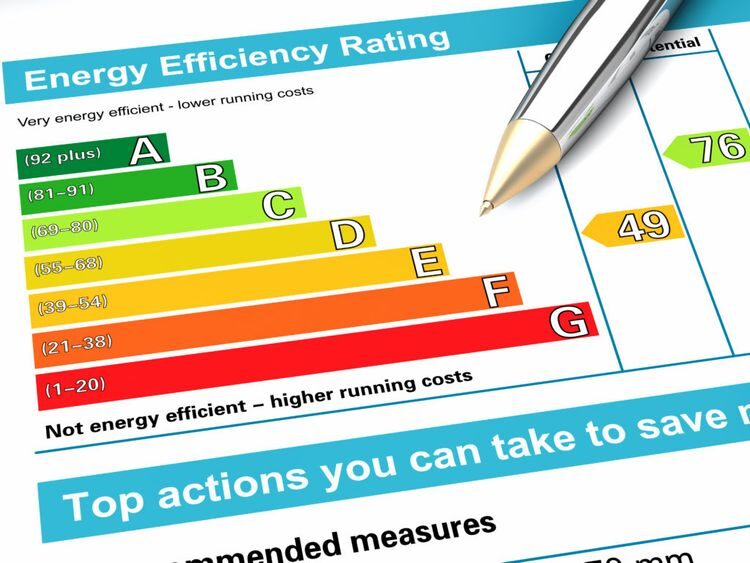
An EPC rates a home from band A (most efficient) to G (least efficient), and it is an estimated, standardised rating based on a model rather than a measurement of your particular flat1. Every certificate comes with a report setting out cost effective measures that can improve energy efficiency and the rating, such as low energy bulbs or upgrading insulation3. That report is the practical starting point for a flat, because it names the measures the assessment model rewards.
Flats score poorly for structural reasons more often than behavioural ones. The rating is built from the fabric of the building, the heating system and running costs, and a flat in a converted house may share walls, a roof and a heating system it does not control. Where the freeholder or management company owns the structure, the measures with the largest effect on the model are frequently outside a leaseholder's or tenant's gift.
The measures that remain within reach are real but smaller: draught-proofing, heating controls, lighting, and in rented flats the route of asking the landlord to act. The sections below set out what the certificate measures, what can be done without consent, what a landlord must do, and where minimum standards for rented flats are heading.
What an EPC rating measures, and why flats often score poorly
An EPC is an estimated, standardised rating (A to G) of a building's energy efficiency based on a model2. It is not a meter reading and not a survey of your flat's actual performance. The Committee on Climate Change has said the ratings are an important policy tool, used to define standards and targets for reducing emissions from homes, but poorly suited to this role8. That tension matters for flats: the rating drives legal obligations even though it is a modelled estimate.
The metrics behind the rating are being reformed. The proposal is that domestic EPCs should include four primary metrics, using real-world units and clear simple names: Energy, meaning total energy use intensity in kWh/m2/yr; Fabric, meaning space heating demand intensity in kWh/m2/yr; Heating, meaning the heating system type, with categories ranked from 1 to 6; and Cost, meaning energy cost intensity in £/m2/yr9. In Scotland, domestic EPCs will show ratings for heat retention, heating system and energy costs10. Reforms to the rating metrics should be applied alongside wider improvements to the EPC system to improve the quality of assessments and use of data9.
Flats sit awkwardly against all of this. A flat's heat loss depends on the building envelope, the position of the flat within the block, and whether neighbouring flats are heated, none of which the occupier controls. The heating system is often communal or shared. The cost metric reflects a tariff the occupier may or may not choose. So a low rating in a flat is often a statement about the building and the services serving it, not about how the household lives.
Low-cost measures that need no consent

Draught-proofing is one of the most cost-effective ways to keep your energy bills low, and one of the cheapest and most effective ways to improve comfort in your home11. For a flat it is also the measure least likely to require anyone's permission, because it works on the flat's own windows, doors and service penetrations rather than the structure.
The measures that appear in EPC improvement reports include installing loft or wall insulation, upgrading to energy-efficient windows and doors, switching to a condensing boiler or a renewable energy source, adding hot water cylinder insulation, and using smart heating controls and low-energy LEDs3. In a flat, the first two usually belong to the building rather than the flat, and the third may be communal. The last three are more often within reach.
Local authority programmes have funded simple measures directly. One council scheme lists free simple home energy measures including LED lighting and draught proofing13. Availability varies by area and by scheme year, and eligibility is set locally.
For a flat, the practical order is usually: close the draughts you can reach, fit low-energy lighting, set heating controls so the flat is heated when occupied rather than continuously, and then look at what the building itself needs. The last of those is a conversation with the landlord or the freeholder, covered below.
Smart meters in a flat: who can get one and what it costs
Smart meters are already being successfully installed in many flats14. Many homes can upgrade right now, but where you live, the type of home you live in, and the age and type of your existing meter may mean your energy supplier will take a little longer to get yours to you15. Blocks of flats are specifically named among the homes where installation can take longer16. The constraint is usually technical: meter position, signal, and the way services are arranged in the block.
The cost position is clear. Smart meters are free to install in both homes and businesses by the energy companies6, and you can get one installed by your energy supplier at no extra cost17. There is no legal obligation to have one17.
For renters, eligibility turns on who holds the account. If you are a private renter, and the energy bills are in your name or you prepay for your energy, you can choose to have a smart meter, after checking the tenancy agreement and letting the landlord know18. If your lease says you need your landlord's permission to change the meter, Ofgem, the energy regulator, says they should not unreasonably prevent this19. Smart Energy GB recommends you tell your landlord before you get one15, and its renter guidance says it is recommended that you let your landlord know before you make the change19.
Switching from an existing gas or electricity prepay meter to a smart credit meter is straightforward for customers who meet the supplier's conditions20. That route matters in flats where a prepayment meter was inherited from a previous occupier.

What your landlord is responsible for, and what you can ask for
The division of responsibility in a rented flat is set by law and by the tenancy. The landlord must have an EPC, make it available to potential tenants, and give a copy to the new owner when selling1. If a property is being rented, it is the landlord's responsibility to provide the EPC to the potential tenant21. In Scotland, a landlord who does not provide an EPC can be fined £500 or more7.
On gas, your landlord is responsible for servicing boilers and appliances annually and must provide an up-to-date gas safety record, which is a legal requirement22. That is a duty, not a favour to be requested.
On improvements, the position depends on the rating. If your EPC says your home is rated in band F or G, your landlord normally has to make some improvements23. In Wales the same trigger applies: if your EPC says your home is rated in band F or G, your landlord normally has to make some improvements24. If your landlord will not make improvements, you can complain to the council, which can give your landlord a fine24.
Where a tenant wants to go further, the rules constrain the landlord's refusal. Landlords must not unreasonably refuse tenant requests for energy efficiency improvements funded at no cost to the landlord, for example through grants or third-party funding25. That is the lever for a flat rated D or E where the household wants work done but cannot fund it.
"Landlords must not unreasonably refuse such requests where the improvements can be funded at no cost to the landlord (for example through grants or third-party funding)"
Two further points shape what is realistic in a flat. First, the freeholder or management company may control the structure, so consent can be needed from more than one party. Second, some measures carry exemptions: where a recommended wall insulation measure would have a negative impact on the property, the landlord must register a written opinion from the relevant expert stating that the property cannot be improved to an EPC E rating because of it26. Exemptions are registered, evidenced and time-limited.
Grants and efficiency upgrades: raising it with your landlord
The practical advice for renters is to talk to your landlord about grants or efficiency upgrades, and to use simple steps like draught-proofing or a portable dehumidifier in the meantime27. That framing works because it separates the measures a household can take unilaterally from the ones that need the owner's involvement.
Where a grant exists, the landlord's refusal becomes harder to justify. The no-cost funding rule means a landlord must not unreasonably refuse a request for improvements funded at no cost to them25. Council schemes have funded simple measures such as LED lighting and draught proofing13. In Northern Ireland, the Affordable Warmth Scheme requires a private landlord to pay 50% of the total cost of the energy efficiency measures to improve their property28. In Scotland, there is a Private Rented Sector Landlord Loan; where it is used to replace an existing heat pump, the applicant must provide a letter from an installer detailing why a replacement is the most suitable option, including details of the existing system's faults29.
Exemptions do not last indefinitely. After the exemption period expires, the landlord must try again to improve the property's EPC rating to meet the minimum level of energy efficiency, and if this still cannot be achieved, a further exemption may be registered26. That gives a tenant a legitimate question to ask: whether an exemption is registered, when it expires, and what was tried.
Councils also set their own targets. One council strategy sets a target that every Council property achieves an EPC rating of C or better by 203030. Targets of that kind apply to council stock rather than private lets, but they show the direction of travel for the rented sector as a whole.

Minimum Energy Efficiency Standards: where rented flats are heading

The current legal basis in England and Wales is the 2018 Minimum Level of Energy Efficiency standard, band E, for domestic private rented property31. The minimum standard of energy efficiency for certain domestic rented property is a rating of E or above25. Properties let with an EPC rating of F or G must be improved to a minimum rating of E, or an exemption registered where applicable31.
The direction of travel is higher. The Heat in Buildings strategy proposes requiring all private rented sector properties to reach a minimum standard equivalent to EPC C by 2028 where technically feasible and cost-effective at change of tenancy, with a backstop of 2028 for all remaining existing properties5. In Scotland, EPC reform is being taken forward with a role for the new rating system in supporting proposed regulations such as a private rented sector minimum energy efficiency standard32.
The most recent official position goes further still. Landlords will be required to ensure their properties meet a minimum score of EPC C against the fabric performance metric and either the heating system or the smart readiness metric, from 1 October 203033.
| Standard | Applies to | Rating required | Date |
|---|---|---|---|
| Current minimum, England and Wales | Domestic private rented property | Band E or above | In force25 |
| Proposed minimum, Scotland | Private rented sector properties | Equivalent to EPC C, where technically feasible and cost-effective | 20285 |
| Announced future requirement | Private rented homes | EPC C against fabric performance metric plus heating system or smart readiness metric | 1 October 203033 |
For a flat, the 2030 framing is the one to watch, because it splits the rating into a fabric component and a systems component. A flat in a solid-walled conversion may struggle on fabric while doing well on heating system or smart readiness, and the two-part test reflects that. The unresolved question is how a leaseholder or tenant influences a fabric score that depends on a building they do not own. That is a matter for the freeholder, the management company and, ultimately, the regulations.
Where a flat's independence ends
A flat can reach a good degree of control over its own running costs: draught-proofing, lighting, heating controls and a smart meter with an in-home display all sit within the household's gift, and the smart meter is installed at no extra cost6. Switching supplier or tariff is available at any time where the tenant pays the bills34, and residents with their own contract may be able to switch their business energy supplier35.
What remains outside that control is substantial. The fabric of the building, the roof, the external walls and often the heating system belong to someone else. The EPC rating itself is a modelled estimate rather than a measurement2, and the metrics behind it are under reform9. Where the flat is rented, the legal minimum is currently band E25, with EPC C proposed for 2028 in Scotland5 and required against a two-part test from 1 October 203033. Where the flat is leasehold, structural work needs consent from the freeholder or management company as well as the landlord.
The honest summary is that a flat household can improve comfort and cut waste without asking anyone, can require a landlord to meet existing duties on the EPC and the annual gas safety record1, and can press for grant-funded improvements that the landlord must not unreasonably refuse25. Anything that changes the building itself depends on other people, and the timescale for that is set by regulation rather than by the household.
Sources35 cited
- Energy Performance Certificate guidance, nidirect, 2026-02-26
- Measuring the invisible: HTC and the future of retrofit, Stroma, 2026-09-20
- What is an EPC, Retrofit Academy, 2025-08-18
- Support for landlords, Centre for Sustainable Energy, 2026-06
- Heat in Buildings Strategy summary, Scottish Government, 2021-10
- Smart metres, Energy Systems Catapult, 2025-08-19
- Problems with renting and energy bills, Citizens Advice Scotland, 2026-09-20
- Letter on reform of domestic EPC rating metrics to Lee Rowley MP, Climate Change Committee, 2026-09-19
- Letter on reform of domestic EPC rating metrics to Patrick Harvie MSP, Climate Change Committee, 2026-09-19
- EPCs are changing, Scottish Government, 2026-08-24
- Make your home warmer, Home Energy Scotland, 2026-09-20
- DIY draught-proofing, Centre for Sustainable Energy, 2026-07
- Energy saving grants and funding, Tameside Council, 2026-09-17
- Can I get a smart meter, Smart Energy GB, 2026-03-16
- Help me decide, Smart Energy GB, 2026-03-16
- Smart meters for landlords, Smart Energy GB, 2026-03-16
- Do you have to have a smart meter by law, Smart DCC, 2026
- Smart meters for renters, Smart Energy GB, 2026-03-16
- Smart meters, Energy Ombudsman, 2026-03-16
- How to get a smart meter, Smart DCC, 2026
- Trading standards guidance on EPCs, Anglesey County Council, 2025-09
- Gas safety and carbon monoxide, nidirect, 2025-11-24
- Make sure your home is energy efficient, Citizens Advice, 2026-09-19
- Make sure your home is energy efficient (Wales), Citizens Advice Wales, 2026-09-17
- Minimum Energy Efficiency Standards guidance, Anglesey County Council, 2026-05
- Guidance on PRS exemptions and exemptions register evidence requirements, UK Government, 2026-05-05
- Your home retrofit guide, Low Carbon Hub, 2025-10-30
- Affordable Warmth Scheme, Northern Ireland Housing Executive, 2026-09-17
- Private rented sector landlord loan overview, Energy Saving Trust Scotland, 2026-09-20
- Our climate action on buildings, Bristol City Council, 2026
- Minimum Energy Efficiency Standards, Carmarthenshire County Council, 2026-09-20
- EPC reform: government response, Scottish Government, 2025-07-11
- Clean Flexibility Roadmap, July 2026 update, UK Government, 2026-07
- Switch your home energy supplier, Ofgem, 2026
- Alternative homes energy guidance, Ofgem, 2026
 Energy Performance CertificatesAn Energy Performance Certificate rates how energy efficient your home is, from A down to G.
 Energy Improvements in FlatsLiving in a flat, what can you actually change yourself and what needs the freeholder or management company to agree?
 Where to Start ImprovementsThe first steps are assessment, not purchase: read the home's EPC and its recommendation report, see actual consumption on a meter or in-home display, and take the no-cost adjustments such as turning the thermostat down one degree.
 Landlord Energy PermissionHow a tenant raises a request for insulation, heating, glazing or ventilation work in a rented home, what the EPC and the minimum band E rule mean, which grant schemes need landlord consent, and what happens when a landlord refuses.
 Read an EPCA walk through each part of an EPC: the A to G rating and potential rating, the estimated costs, the fabric and heating assumptions and the recommendation table, plus what the assessor did and did not inspect and how the rules differ across the UK.
 Improve an EPC RatingWhich home improvements actually raise your EPC score, and by how much?