

In this answer
Short answer
If you rent your home, the landlord arranges and pays for the annual boiler service. That is the plain position from the Energy Saving Trust: "Renting your home? Your landlord should arrange and pay for the service."1 The same duty is set out for landlords by OFTEC, which states that landlords should arrange for heating equipment to be regularly serviced2, and by the Northern Ireland Sustainable Energy Programme, where the homeowner or landlord is responsible for arranging and paying for the annual service after installation3.
The service sits alongside a separate legal duty. Landlords must by law have appliances checked yearly, and tenants should have a gas safety certificate4. The Health and Safety Executive requires an annual gas safety check within 12 months of a new appliance or flue being installed and annually thereafter, carried out by a Gas Safe registered engineer5. The record of that check must be kept for two years and a copy issued to each existing tenant within 28 days of completion, and to new tenants before they move in5.
So there are two things happening each year, not one: a maintenance service of the boiler, and a compliance check of every gas appliance and flue the landlord provides. They are often booked as a single visit, but only the safety check produces the certificate.
The landlord's legal duty: annual gas safety check and CP12
The annual gas safety check is the landlord's responsibility by law, and it is not optional or transferable by agreement. The Health and Safety Executive states that the landlord must "arrange for an annual gas safety check to be carried out within 12 months of the installation of a new appliance or flue which you provide and annually thereafter by a Gas Safe Registered engineer"5. The same 12 month interval applies to LPG appliances, where landlord duties are the same as for natural gas5.
Northern Ireland sets this out in its own guidance: the landlord is responsible for servicing boilers and appliances annually and must provide an up-to-date gas safety record, which is a legal requirement8. The National Energy Action checklist puts it in tenant-facing terms: "If you rent, by law landlords must carry out an annual safety check and give you a Gas Safety Certificate."9 Electricity North West repeats the point for its own customers: by law the landlord has to carry out an annual safety check of gas appliances in the home10.
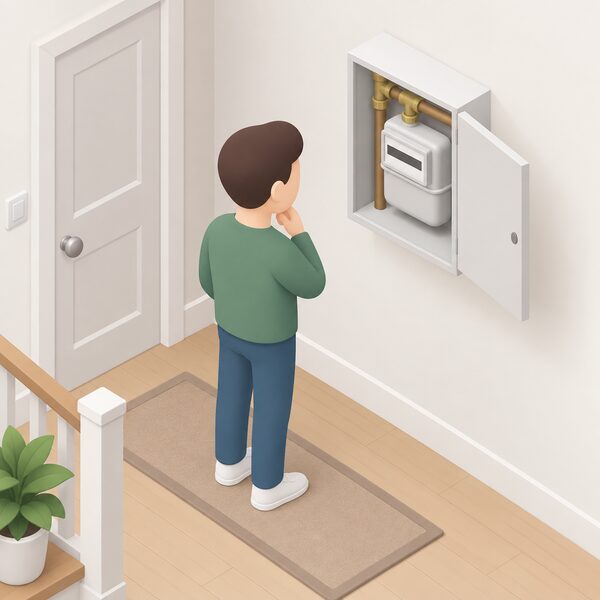
The certificate itself is the landlord gas safety record, commonly called a CP12. It is the document that proves the check happened. The Health and Safety Executive requires the landlord to keep a record of the safety check for two years and issue a copy to each existing tenant within 28 days of the check being completed and to any new tenants before they move in5.
There is one boundary worth knowing. Where a tenant has bought their own gas appliance from the landlord, the tenant becomes responsible for the annual gas safety check and maintenance of that appliance11. Where a tenant owns an appliance the landlord did not provide, the landlord remains responsible for parts of the associated installation and pipework, but not for the appliance itself11. Communal appliances serving multiple dwellings stay with the landlord, who must ensure the appliance is maintained by a Gas Safe registered engineer and checked as part of the annual gas safety check11.
What the check covers and when you get your copy
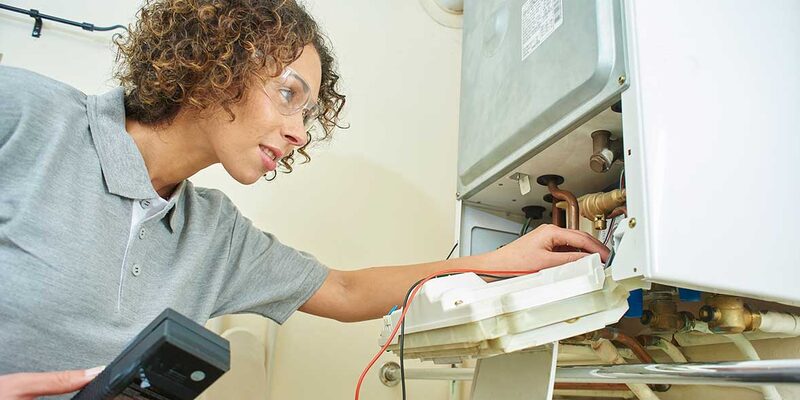
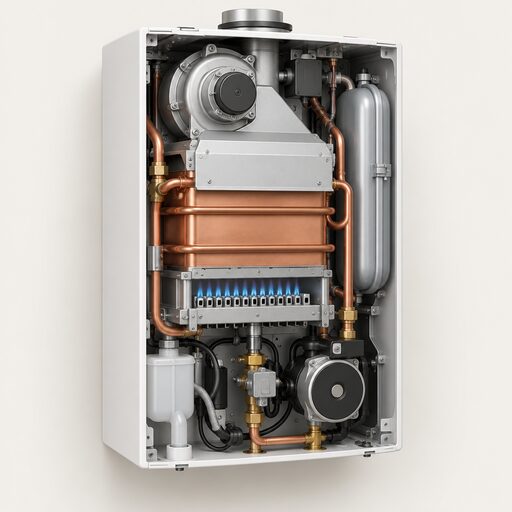
A boiler service and a gas safety check are different jobs, even when one engineer does both in one visit. During a service a Gas Safe registered engineer carries out maintenance checks on all the key parts of the boiler12. The work typically includes removal of the case to inspect boiler components including the heat exchanger, burner and main injector, a visual inspection of the boiler and flame, flue checks inside and outside, operating pressure and input heat, case seals, safety devices, and firing the boiler to spot faults7.
The safety check is narrower in purpose and wider in scope: it covers every gas appliance and flue the landlord provides, not just the boiler. That is why a landlord with a gas hob, a gas fire and a boiler needs all three on the record.
A gas boiler service takes between 30 minutes and two hours, but may take longer depending on the boiler's type, location, age and condition7. A tenant should expect an appointment, access to the boiler, and a written record afterwards.
"Ask for a copy of the annual gas safety record."
The timing rule is the one tenants most often need. Existing tenants get their copy within 28 days of the check being completed; new tenants get theirs before they move in; the landlord keeps the record for two years5. If a copy has not arrived, the request should go to the landlord or letting agent in writing, with the date of the check if it is known.
What tenants can do if the service is not arranged

The first step is a written request to the landlord or letting agent, dated, asking for the date of the last gas safety check and a copy of the record. The second is escalation to the council. Citizens Advice states that if the landlord will not make improvements, the tenant can complain to the council, which can give the landlord a fine14. That is the enforcement route for the private rented sector minimum standard, and it applies where a landlord refuses to act on a legitimate request.
Where a tenancy agreement places maintenance responsibility on the tenant, OFTEC recommends that tenants use an OFTEC registered technician who can provide a copy of the appropriate service report form to demonstrate that they have met the terms of their tenancy agreement15. That report is the tenant's evidence if a dispute arises later.
Two related duties are worth knowing. HMO landlords must also ensure any appliances supplied as part of the tenancy agreement, such as washing machines and electric cookers, are maintained in a safe and working condition16. And where boiler work is carried out by an installer who is not in an approved Competent Person scheme, the firm or the householder will need to give notice to the local authority of the intention to carry out the boiler work in advance17. Building regulations approval from the council or a registered building control approver is the alternative route where the installer is not on a Competent Persons Scheme18.
If the boiler is not working at all, the tenant can ask the landlord to arrange a repair, and Cadent's guidance is clear that if you rent your home, you will need to contact your landlord to arrange a safety check for all gas appliances and flues by a Gas Safe registered engineer19. The Gas Safe Register can be called on 0800 408 5500 to check an engineer's registration before any work goes ahead20.
Costs: who pays and typical £35 to £150 range
The landlord pays. The service is part of the landlord's legal obligation, not a cost the tenant is expected to absorb, and the Energy Saving Trust states plainly that the landlord should arrange and pay for the service1.
What the work costs is a separate question, and the published figures vary by source and by date. Which? reports that a boiler service can cost between £70 and £110, not including any resulting repairs21. Uswitch gives an average of around £90 to £100 per service, with gas boilers typically around £90 to £100 and oil boilers typically around £90 to £9522. Which? also reports a figure of around £79 on average, though some can be up to £120 depending on where you are6. Uswitch cites Checkatrade's figure of £100 including VAT per service as of March 202622.
| Source | Figure | Basis |
|---|---|---|
| Which? | £70 to £110 | Excludes resulting repairs21 |
| Uswitch | £90 to £100 | Average per service22 |
| Uswitch (Checkatrade) | £100 including VAT | As of March 202622 |
| Which? | Around £79, up to £120 | Average, varies by location6 |
| Uswitch | £90 to £95 | Oil boiler service22 |
The spread reflects what is included, where in the UK the property sits, and whether the visit is bundled with the gas safety check. A landlord arranging both in one appointment is not paying twice for travel.
For context on what a tenant might otherwise buy, HomeServe Boiler Cover starts from £6.99 a month23, and British Gas HomeCare Basic covers the gas boiler and controls, including all repairs and, subject to certain terms, replacement of the boiler if necessary, plus accidental damage protection and an annual boiler service24. These are products a landlord or homeowner might buy; they are not a substitute for the landlord's legal duty.
Where the responsibility sits when the property changes hands
Two situations shift the picture. The first is a tenant who has bought an appliance from the landlord: from that point the tenant is responsible for the annual gas safety check and maintenance of that appliance11. The second is a home supplied through a business energy contract, which some rented and shared buildings are. Ofgem advises checking, before moving in, who holds the energy contract, how energy charges are calculated, how much residents typically pay, whether charges are metered or estimated, whether you can choose your supplier or tariff, and whether it is possible to switch to a domestic contract26. Those checks matter for the household's control over its own supply, even though they do not change who services the boiler.
For a tenant, the practical position is this: the boiler service and the gas safety check are the landlord's to arrange and pay for, the record is the tenant's to request and keep, and the council is the enforcement route when the landlord will not act. The dependence that remains is on the landlord and on the gas network itself. A tenant cannot switch the servicing duty to a supplier, and cannot arrange a statutory check in the landlord's name. What a tenant can do is hold the paperwork, know the dates, and escalate in writing.
If a boiler is losing pressure, locking out or needs a reset between services, the steps are covered in how to reset a boiler and how to repressurise a boiler. For the wider question of how often a service is needed, see how often should I have my boiler serviced, and for what can void a manufacturer's warranty, DIY boiler repairs and warranty. Tenants who want to change supplier should read can I switch energy supplier if I rent.
Sources26 cited
- Take control of your heating, Energy Saving Trust, 2026-09-11
- Carbon monoxide safety, OFTEC, 2026-09-17
- Northern Ireland Sustainable Energy Programme, Energy Saving Trust, 2026-09-07
- Carbon monoxide, CIPHE, 2026-09-17
- Gas safety in the home: frequently asked questions, Health and Safety Executive, 2026
- Why you need a boiler service and what to ask about, Which?, 2025-10-27
- Boiler maintenance guide, Uswitch, 2026-09-03
- Gas safety and carbon monoxide, nidirect, 2025-11-24
- Your home energy checklist, National Energy Action, 2026-09-10
- Gas and carbon monoxide safety, Electricity North West, 2026-09-19
- What landlords must do: safety checks, Health and Safety Executive, 2026
- Boiler servicing guide, Confused.com, 2025-07-23
- Carbon monoxide, SGN, 2026
- Make sure your home is energy efficient, Citizens Advice, 2026-09-17
- Guide to carbon monoxide safety, OFTEC, 2026-09-20
- Charity supports safety for migrant communities, Electrical Safety First, 2026-09-19
- Building regulations: boilers and heating, Welsh Government, 2026-09-17
- Upgrading and replacing your boiler, Centre for Sustainable Energy, 2026-06
- Repair and replacement, Cadent Gas, 2026-09-20
- Make the right call, Cadent Gas, 2026-09-20
- Common boiler problems and repair costs, Which?, 2025-09-17
- How much does a boiler service cost?, Uswitch, 2026-09-03
- HomeServe boiler cover, Uswitch, 2026-09-17
- British Gas HomeCare, Uswitch, 2026-06-01
- Common mistakes that can invalidate your boiler warranty, Which?, 2025-10-22
- If you live in a home on a business energy contract, Ofgem, 2026
 Gas Safety in the HomeYour landlord has to arrange a yearly gas safety check by a Gas Safe registered engineer and give you the record if you rent.
 HMOs and Shared HousesWho is responsible for the electrics, the gas and the fire alarms when you rent a room in a shared house?
 Landlord Electrical ChecksWho is responsible for checking the electrics are safe in your rented home, and how often should it happen?
 Rented Homes and Landlord MetersWho is responsible for the energy in your rented home?
 Servicing and MaintenanceWhat an annual gas or oil boiler service covers, the intervals manufacturers specify, the link between servicing records and warranty validity, and what servicing means for a household's energy independence.
 Controls in Rented HomesCan you change the heating controls in a rented home, and who pays if they break?