
In this answer
Short answer
A DIY repair can invalidate a boiler warranty, and the risk is not only financial. Vaillant's guidance is blunt: attempting to fix certain problems yourself, outside a short list of minor fixes, "can void your warrantee and pose a serious safety hazard"1. Which? goes further on the casing, stating that removing the boiler casing is dangerous for non-professionals and "invalidates any warranty you may have remaining on the boiler"2.
The dividing line is not how hard the job feels. It is whether the work touches the gas side, the combustion side or the sealed casing. Independent guidance reports that two of the three most common boiler faults can be handled by a competent DIYer without an engineer3, which is why repressurising and bleeding radiators sit on the safe side while anything inside the case does not.
The warranty itself is a contract with the manufacturer, not with the installer or the supplier. New boilers typically come with a manufacturer's warranty ranging from 2 to 10 years4, and the maker decides whether a claim is paid. Most manufacturers make that cover conditional on annual servicing by a Gas Safe registered engineer5.
What DIY work does to your warranty, and the safety risk behind it
The warranty consequence and the safety consequence are the same event seen from two angles. Oftec, the oil heating trade body, states that attempting repairs or a boiler installation yourself, or using someone who is not properly qualified, "could void your boiler warranty in the likely event it causes damage"7. The word "likely" matters: the exclusion is usually triggered by damage or by non-compliant work, not by the mere fact that a householder touched the appliance.
Manufacturers write that exclusion into their terms. Ideal Heating's standard warranty does not apply to any defect, damage or breakdown caused by inadequate servicing, deliberate action, accident, misuse or third party interference, "including modification or an attempted repair which does not fully comply with industry standards"1. The same document excludes defects arising from the design, installation and maintenance of the central heating system, and from sludge or scale1.
The safety side is separate and stricter. Which? advises that anyone who is not a trained heating professional should never attempt repairs that involve removing the boiler casing3. Where a leak is found, the guidance is to call a qualified heating engineer as soon as possible rather than investigate8. Gas work is regulated, and the engineer's Gas Safe registration is the evidence that the person doing it is competent to do so.
What counts as a DIY repair versus a minor fix
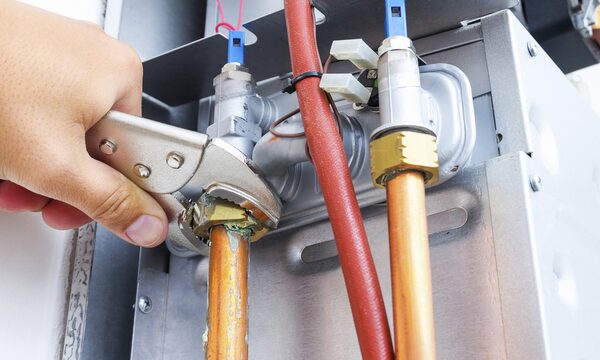
The practical test is whether the task requires the case to come off or the gas supply to be disturbed. Independent guidance reports that two of the three most common boiler faults can be handled by a competent DIYer and do not always require an engineer3. Those tasks sit outside the appliance: repressurising a system through the filling loop, bleeding a radiator, and thawing a frozen condensate pipe are all external operations.
Everything else belongs to a registered engineer. Which? states that a non-professional should never attempt repairs involving the removal of the boiler casing3, and Vaillant's advice is never to attempt to fix the problems it lists, outside the minor fixes it names1. The line is drawn at the case, not at the difficulty of the job.
There is a second category of fault that voids cover without any DIY work at all. Alpha's support guidance states that if a fault on the central heating system is having a detrimental effect on the performance of the boiler, it will invalidate the boiler warranty9. Dirty system water, sludge and scale are the usual causes, which is why the Heating and Hotwater Industry Council notes that manufacturers' generous warranties on new condensing boilers are conditional on the heating system being effectively cleaned at the time of installation10.
| Task | DIY or engineer | Effect on warranty |
|---|---|---|
| Repressurising via the filling loop | DIY, external | No effect if done correctly3 |
| Bleeding a radiator | DIY, external | No effect3 |
| Thawing a frozen condensate pipe | DIY, external | No effect3 |
| Removing the boiler casing | Engineer only | Invalidates any remaining warranty2 |
| Gas-side or combustion work | Gas Safe engineer only | Voids cover if attempted7 |
| Annual service | Gas Safe engineer only | Required to keep cover valid5 |
Who decides whether the warranty is void: the manufacturer
The manufacturer is the arbiter. Which? explains that under a manufacturer's warranty the maker will repair a fault for free, usually on condition that the boiler is serviced annually, and that a lack of regular servicing could void the warranty11. Manufacturer guidance confirms the route: the first step in a claim is to contact the boiler manufacturer directly12.
What the maker will do is set out in its own terms. Ideal Heating's standard warranty states that it will, at its option, repair or replace a boiler free of charge where it suffers a mechanical or electrical breakdown as a result of defective workmanship or materials, and that it will arrange for an engineer or appointed contractor to inspect and repair, or to replace the boiler where repair is not economic in its sole opinion1. Vaillant's domestic guarantee covers material and labour charges to repair or replace components within the boiler against manufacturing defects, provided the repair is carried out by Vaillant or a Vaillant authorised Gas Safe registered engineer13.
That last condition is the one householders most often miss. A repair done by anyone else, however competent, falls outside the guarantee's own terms. Ideal's exclusions also cover removal of the boiler from its place of installation without prior consent, failure to follow the claim procedure, and costs incurred during delays in fixing reported faults1.
"provided the repair is carried out by Vaillant or a Vaillant authorised Gas Safe registered engineer"
How to keep your warranty valid while still doing safe checks yourself
Annual servicing is the single condition that appears in almost every set of terms. Which? reports that not getting a boiler serviced every year might invalidate its protection policy where the boiler is still under the manufacturer's warranty14, and that not keeping up with annual servicing can invalidate any warranty on the boiler15. Uswitch states that a boiler guarantee may require servicing at least once a year, otherwise the guarantee is invalidated16, and that many boiler warranties require regular servicing to remain valid17.
Manufacturers say the same in their own words. Baxi states the boiler must be serviced at least annually to keep the warranty valid18. Ideal Heating states the boiler needs to be serviced annually to keep it valid6, and that having the boiler checked annually is a condition of the warranty, so a household that has not had a service in the past year might have to pay for repairs6. ATAG's warranty terms require an annual service by the installer19, and Fuse Energy's guidance notes that annual servicing by a Gas Safe registered engineer is usually required4.
Registration is the other administrative condition. Which? lists failing to register the warranty with the manufacturer within 30 days of installation as a common mistake that can invalidate it, and notes that registration is usually done on the manufacturer's website or by calling them20. Ideal's terms state the boiler must be registered within 30 days of installation to qualify for the full warranty period1.
- Register the warranty with the manufacturer within 30 days of installation20.
- Book an annual service by a Gas Safe registered engineer5.
- Keep the service records and the registration confirmation.
- Check the appliance instructions for any maker-specific conditions10.
- Contact the manufacturer before arranging any repair12.
Where to turn instead: qualified engineers and the maker's own service

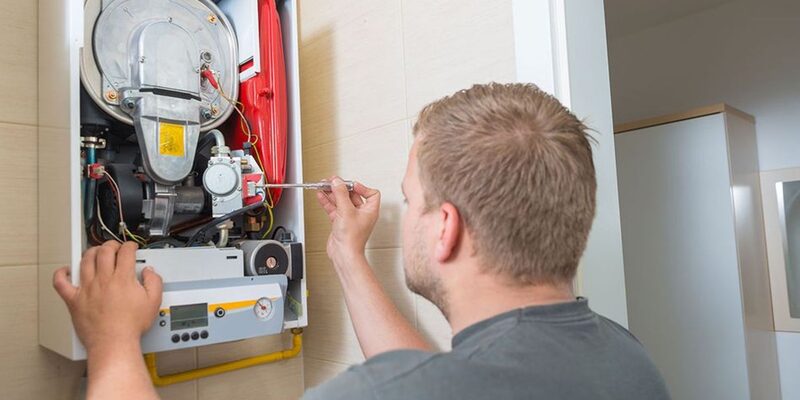
The alternative to DIY is not simply "call someone". It is a specific route that keeps the warranty intact. Most boiler manufacturers offer warranties that are only valid if the boiler is installed and serviced annually by a Gas Safe registered engineer5, and Alpha's guidance is that the boiler should be serviced by a qualified Gas Safe registered engineer21. The manufacturer may give more detailed advice in the appliance instructions, which must always be complied with to protect the warranty10.
Under a valid warranty, the repair should cost nothing. Ideal Heating states that if the boiler is still under warranty, any repairs should be free of charge6. That is the practical argument against DIY on a covered appliance: the household is paying for cover through the purchase price and the annual service, and a self-repair risks both the cover and the safety of the property.
Where the fault is a leak, the response is time-critical. Which? advises calling a qualified heating engineer as soon as possible and not removing the boiler casing8. If a gas leak is suspected, the emergency engineer makes the property safe, but repairs to appliances including boilers after that point need to be paid for by the householder or arranged through insurance with suitable cover in place22. A standard home insurance policy is unlikely to cover the cost of repairing wherever the leak is; home emergency cover is usually needed for that23.
For a household working through a fault, the sequence is: check the pressure and any external controls, then contact the manufacturer or a Gas Safe registered engineer. Pages on how to reset a boiler after a lockout and how to repressurise a boiler with a filling loop cover the external checks that sit outside the warranty conditions, and how to check an engineer is Gas Safe registered covers verifying the person who does the work.
What the warranty does and does not cover
Cover is narrower than most householders assume. Which? reports that most warranties cover the cost of parts, but some may not cover labour costs to carry out repairs, and some take a deposit for a call-out that is returned only if the fault is covered20. Ideal's standard warranty funds a free parts and labour repair service, at its option repairing or replacing a boiler free of charge where it suffers a mechanical or electrical breakdown as a result of defective workmanship or materials1.
The exclusions are worth reading before any work is booked. Ideal's terms exclude removal of the boiler from its place of installation without prior consent, defects caused by inadequate servicing, deliberate action, accident, misuse or third party interference including modification or non-compliant attempted repair, the design, installation and maintenance of the central heating system, de-scaling or work from hard water scale, aggressive water or sludge from corrosion, failure to adhere to the claim procedure, any other costs or expenses arising from the breakdown, incorrect installation of the boiler, flue system or condensate disposal facility, and costs incurred during delays in fixing reported faults1.
For context on what a compliant repair looks like, the energy efficiency obligations set warranty floors for funded work. A heating qualifying action that is the repair of a qualifying boiler or electric storage heater must be accompanied by a warranty for at least one year24, and under the 2018 Order a boiler repair must be accompanied by a warranty for at least two years25. Ofgem's guidance sets the expected lifetime of a qualifying repair at one year where a warranty of at least one year but less than two years has been provided, and two years where the warranty is two years or more26. Those are scheme rules for funded work, not domestic warranty terms, but they show the minimum standards expected of a repair.
Where a DIY repair leaves the household
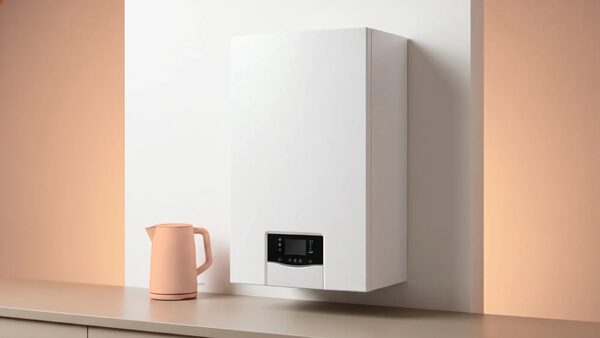
The energy independence question here is narrow but real. A boiler warranty is a form of protection bought with the appliance, and it depends on a chain the household does not control: the manufacturer's terms, an annual visit from a registered engineer, and a registration made within 30 days. A DIY repair breaks that chain at the point where the household has the least leverage, because the maker decides whether the fault is covered11.
What remains within the household's control is the external work: pressure checks, radiator bleeding, condensate thawing, and keeping the paperwork. Those tasks carry no warranty penalty and no gas safety risk3. Everything inside the case, and everything on the gas side, depends on a Gas Safe registered engineer, and on a manufacturer that honours its own terms.
Sources26 cited
- Ideal Heating standard warranty terms and conditions, Ideal Heating, 2026-09-17
- What should your boiler pressure be, Which?, 2025-09-16
- Common boiler problems and repair costs, Which?, 2025-09-17
- Key factors choosing a new boiler, Baxi, 2026-08-04
- Why you need a boiler service and what to ask about, Which?, 2025-10-27
- How often do you need a boiler service, Ideal Heating, 2026-09-17
- Five reasons households should not attempt DIY repairs, Oftec, 2026-08-17
- What to do if your boiler breaks down at Christmas, Which?, 2025-12-12
- Is my central heating system covered by the boiler's guarantee, Alpha Innovation, 2025-07-16
- HHIC guidance, Heating and Hotwater Industry Council, 2026-09-17
- 6 mistakes to avoid when looking for boiler cover or boiler servicing, Which?, 2022-09-06
- Boiler warranty, Fuse Energy, 2026-07-28
- Domestic boiler guarantee, Vaillant, 2026-09-17
- Getting the best boiler service, Which?, 2025-09-17
- Gas leaks safety, Uswitch, 2026-06-01
- Boiler maintenance guide, Uswitch, 2026-09-03
- How much does a boiler service cost, Uswitch, 2026-09-03
- My boiler is leaking, what should I do, Ideal Heating, 2026-09-17
- New boiler, Fuse Energy, 2026-04-28
- Common mistakes that can invalidate your boiler warranty, Which?, 2025-10-22
- Best way to keep my boiler in good working condition, Alpha Innovation, 2025-11-06
- What to do if you smell gas, Confused.com, 2025-09-08
- The Electricity and Gas (Energy Company Obligation) Order 2014, legislation.gov.uk, 2014-12-04
- The Electricity and Gas (Energy Company Obligation) Order 2017, legislation.gov.uk, 2017-03-28
- ECO3 guidance part I, Ofgem, 2017-02-10
- Ideal Heating standard warranty terms and conditions, Ideal Heating, 2026-09-17
 Boiler WarrantiesHow long does a boiler warranty actually last, and what do you have to do to keep it?
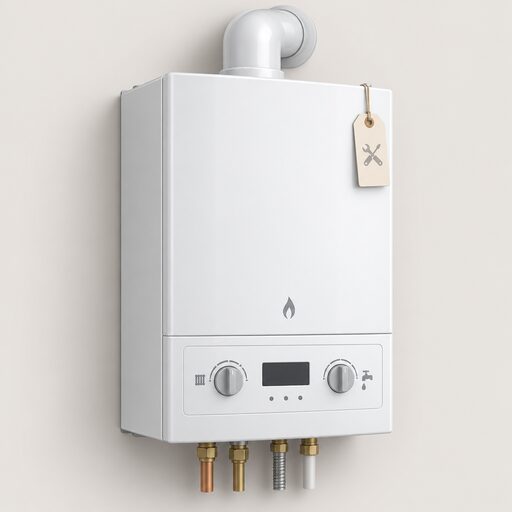 Cover and Service PlansHow manufacturer maintenance plans, insurer boiler cover and independent contracts differ in what they repair, exclude and charge.
 Manufacturer WarrantiesHow long does a boiler, heat pump or solar panel warranty actually last, and what do you have to do to keep it valid?
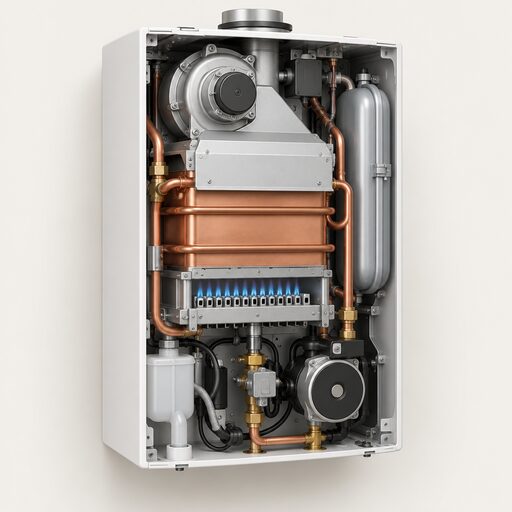 Servicing and MaintenanceWhat an annual gas or oil boiler service covers, the intervals manufacturers specify, the link between servicing records and warranty validity, and what servicing means for a household's energy independence.
 DIY Home Battery BuildsBuilding your own home battery?
 Registering a WarrantyGetting a new boiler covered for longer usually means registering it quickly, often within a month of installation, or the long guarantee drops to a year.