In this guide
Boiler pressure is the reading on the round dial on the front of a sealed heating system, and for most UK homes the number to aim for is between 1 and 1.5 bar when the system is cold. Vaillant gives that cold figure directly, and adds that the needle should not climb higher than about 2.5 bar while the boiler is heating radiators or hot water1. Uswitch puts the working band slightly wider, at 1.0 to 2.0 bar, and treats 0.5 bar or less as too low and 2.75 bar or more as too high2.
The gauge is not a fixed number. Water expands as it warms, so pressure rises whenever the boiler fires, and falls back when the system cools. Uswitch describes the normal working band as 1.0 to 2.0 bar, which means a system set at 1.5 bar cold may sit closer to 2 bar while running2. That movement is normal. What matters is the cold reading, because that is the figure the system is actually charged to, and the direction the needle travels over weeks and months.
Pressure is also the clearest single signal a householder has about the sealed circuit that carries heat around the home. A system that holds its charge is doing its job. A system that needs water repeatedly is telling you it is losing it somewhere, and that is a different problem from a boiler that has simply been set a little low.
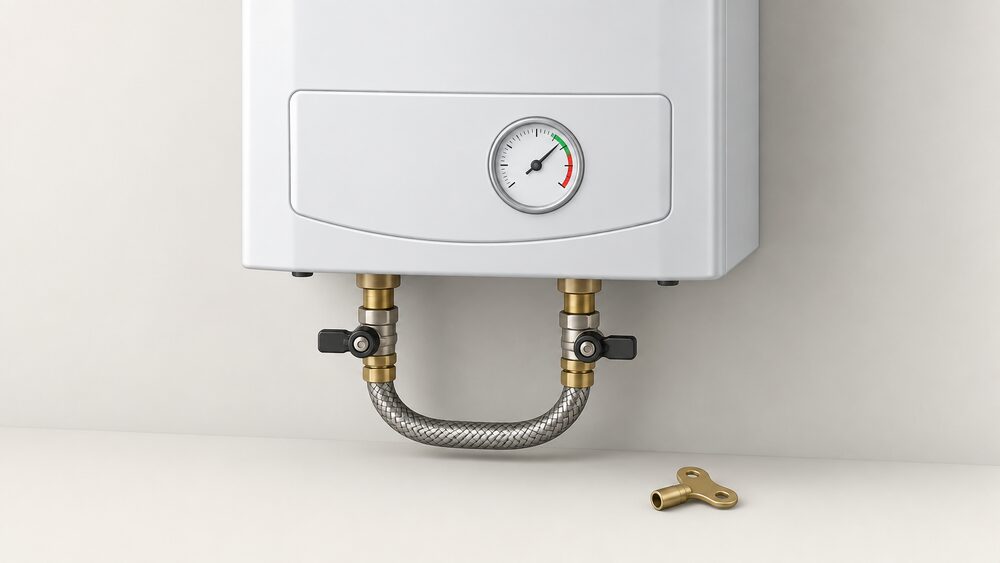
Normal boiler pressure: 1 to 1.5 bar cold, around 2 bar when running
The figure a household should know is the cold one. Vaillant states that when the heating is off, the gauge should read between 1 and 1.5 bar, and that the ideal level is typically around 1.5 bar, though this can vary slightly with the boiler's make and model1. Uswitch gives the same cold target of 1 to 1.5 bar, and notes that the system should be repressurised if it falls below 1 bar when cold2. Viessmann's older guidance puts the cold figure lower, at approximately 0.5 to 1 bar when the heating is off, which shows how much the recommended setting has moved between manufacturers and generations of boiler3.
Once the burner fires, the number climbs. Uswitch describes the working band as 1.0 to 2.0 bar, so a system charged to 1.5 bar cold might sit closer to 2 bar while active2. Vaillant's ceiling is about 2.5 bar while the boiler is heating hot water or radiators1. Baxi's stated range is wider still, between 1 and 2 bar, which is a working band rather than a setting4.
The practical rule that follows is simple: read the gauge cold, and read it consistently. Viessmann advises checking pressure when the heating is on to get an accurate reading, which is the opposite convention, and the two positions are worth understanding rather than reconciling3. A hot reading tells you the system is expanding as expected. A cold reading tells you how much water is actually in it. If the cold figure drifts down over a season, the system is losing water. If the cold figure drifts up, something is adding it.
Low pressure: what causes it and what it does to your boiler
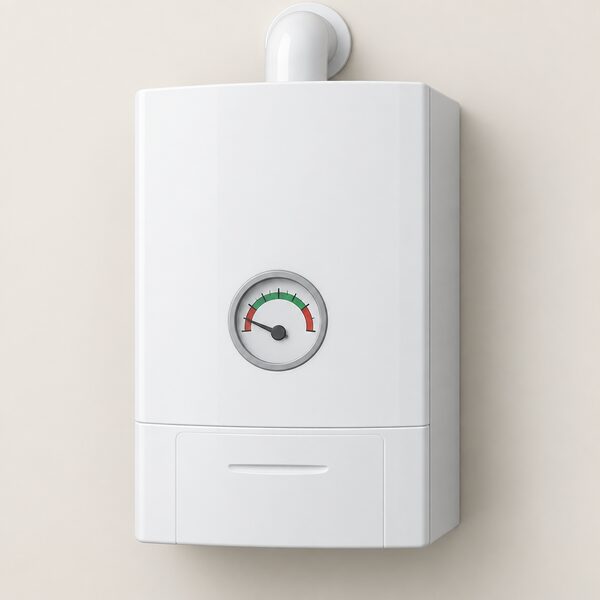
Low pressure means there is not enough water in the sealed circuit. Uswitch attributes it to leaks in the pipes or valves, and to bleeding radiators, which releases air and lowers pressure as a side effect2. Vaillant's list is similar: water escaping through small leaks in pipes, radiators or valves, a faulty expansion vessel or pressure relief valve, and bleeding radiators5. Viessmann adds that the cause is usually a leak, most commonly around the plumbing fixtures3.
The symptoms arrive before the boiler stops. Vaillant describes the first sign as problems with central heating and a shortage of hot water6. Uswitch lists a heating system that will not work properly, difficulty getting hot water, and a boiler running less efficiently, which it links to higher energy bills2. Uswitch is more specific about the cost: low pressure causes the boiler to work harder when trying to heat the home, meaning more energy is used, which could result in energy bills increasing, though it states plainly that this will not damage the boiler or reduce its lifespan2.
On safety, the sources agree. EDF describes low boiler pressure as not dangerous7. Vaillant calls it unlikely to pose a danger and usually the result of a minor leak or fault6. What it does do is stop the appliance. Uswitch notes that if pressure in a modern boiler gets too low, the system will typically shut down as a safety measure2. That is why a boiler can appear to have failed completely when the only fault is a gauge reading below 1 bar.
High pressure: causes, risks and how to bring it down
High pressure is usually self-inflicted. Uswitch names overfilling the system when correcting low pressure, and leaving the filling valves open by accident2. Viessmann describes overestimating how much water the system needed when repressurising as a very common mistake3. Baxi adds a mechanical cause: a filling loop that is not completely closed and is letting more water into the system5. Vaillant's three possibilities are too much pressure added when topping up, a faulty external filling device, or a faulty boiler1.
The risks are to the system rather than to people. Uswitch states that if boiler pressure is too high there is an increased chance of leaks, overheating and damage to pipes and radiators2. EDF describes high pressure as not normally dangerous, because the system is protected by a pressure relief valve and most systems shut down if pressure gets too high7. Viessmann notes that a further sign of excessive pressure is that the system shuts down3.
Bringing it down is a matter of removing water, and the accepted method is bleeding a radiator. Baxi calls bleeding the radiators the best way to reduce the pressure in your boiler, with the central heating switched off first5. Uswitch advises continuing until the gauge reads around 1.2 bar, or is back in the green zone2. Viessmann's threshold for action is a room-temperature reading greater than 2.5 bar, at which point reducing the pressure before operating the appliance is advised; below that, it states no action is required, though bleeding a couple of radiators may still help3.
| Reading (cold) | What it means | Action |
|---|---|---|
| 0.5 bar or less | Too low, in the red2 | Repressurise via the filling loop2 |
| 1 to 1.5 bar | Normal cold setting1 | None |
| 1.0 to 2.0 bar | Normal working band2 | None |
| Greater than 2.5 bar | Reduce before operating3 | Bleed a radiator5 |
| 2.75 bar or more | Too high, in the red2 | Bleed a radiator5 |
How to repressurise your boiler and when to do it
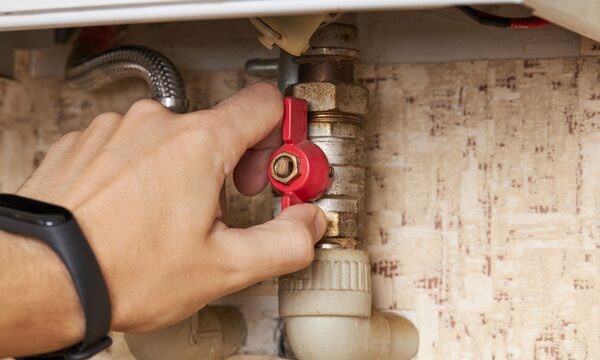
Topping up is a household task on most sealed systems. Baxi states that it is quite simple to top up the water pressure in your boiler and that it should be possible without calling a heating engineer5. Vaillant's instruction is to begin by checking the boiler manual, because filling arrangements differ between models8.
The sequence is consistent across the sources. Turn off the boiler and let it cool completely2. Check the filling loop attachments, open both valves, and watch the gauge until it reaches 1.5 bar, then close the valves and turn the boiler back on2. Uswitch gives the same closing point, advising that once the gauge reaches between 1 and 1.5 bar the valve should be closed2. On a boiler with a filling key, Vaillant describes inserting the key into the keyhole and unlocking it, then turning the valve next to the key until water flows through8.
The trigger for doing it is a cold reading below 1 bar. Uswitch and Baxi both use that threshold2. Citizens Advice gives the same figure and directs householders to the manufacturer's guide for the repressurising procedure9.
Why pressure keeps drifting, and when to call a Gas Safe engineer
Some movement is physics. Vaillant explains that as the boiler heats the water within the central heating system, the increased temperature causes the hot water to expand, which raises pressure1. The component that absorbs that expansion is the expansion vessel, and EDF identifies its failure to absorb extra pressure as water heats up as a cause of persistent high readings7. A filling loop left open does the same job more crudely, by adding water continuously7.
On the low side, the pattern to watch is frequency. EDF advises that if pressure drops more than once or twice a year, all visible pipes should be checked for signs of water leaks7. Uswitch states that if the problem keeps coming back, a Gas Safe registered engineer should be asked to diagnose it, and that most causes are professional jobs not to be attempted by homeowners2. Visible evidence helps: Uswitch notes that puddles or excessive amounts of water around the boiler may indicate a leak inside the system, most commonly at joints and radiator pipework2.
The dividing line is straightforward. Topping up a system that has drifted once is a household task. A system that will not hold its charge, a gauge that will not rise when the filling loop is opened, or pressure that keeps climbing despite bleeding are all engineer territory. Gas work in the UK is reserved to Gas Safe registered engineers, and the gas networks direct households to the register for boiler and appliance faults10. The register can be reached on 0800 408 550013.
Pressure and boiler shutdowns: fault codes and safety cut-outs
A sealed system protects itself. Uswitch states that if pressure in a modern boiler gets too low, the system will typically shut down as a safety measure2. Viessmann describes the same behaviour at the top end, where excessive pressure causes the system to shut down3. EDF notes that most systems shut down if pressure gets too high, with the pressure relief valve as the backstop7.
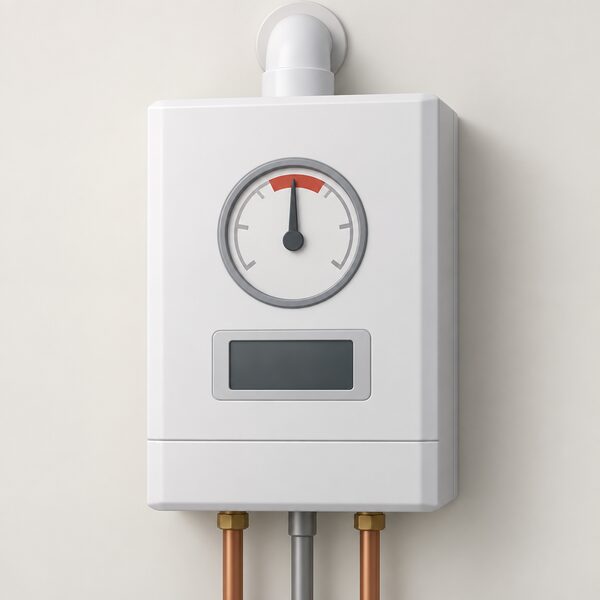
The visible signs are the gauge and the display. EDF describes the pressure gauge dial having increased or gone into the red zone, and the system having shut down7. Baxi notes that some boilers carry an error code to indicate high pressure, and advises checking the user manual to see whether the model has one5. Baxi also points to the needle creeping into the red area as the signal that pressure is rising and needs attention5.
Where a boiler has locked out, OFTEC describes the condition as the boiler's burner having shut itself down due to a fault or suspected fault, sometimes referred to as lock-out15. Pressure is one possible cause among several, which is why the gauge is the first thing to read before assuming a component has failed. A boiler that has shut down with a cold reading below 1 bar is a pressure problem. One that has shut down with a normal gauge reading is not, and the fault lies elsewhere.
| Symptom | Likely pressure cause | Source |
|---|---|---|
| No heating and no hot water, gauge low | System shut down on low pressure | 2 |
| Gauge in the red at the top | Overfilled system or failed expansion vessel | 7 |
| Error code on the display | Some models flag high pressure by code | 5 |
| Boiler locked out | Burner shut down on a fault or suspected fault | 15 |
Checking pressure as part of routine boiler care
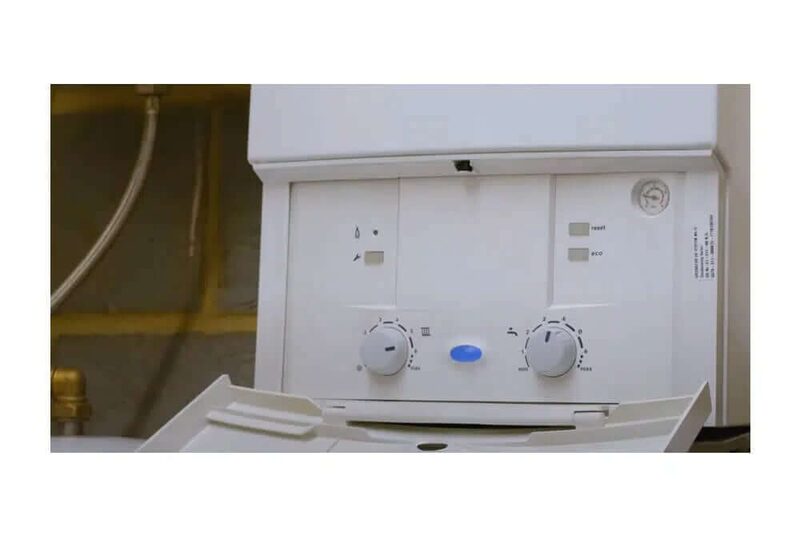
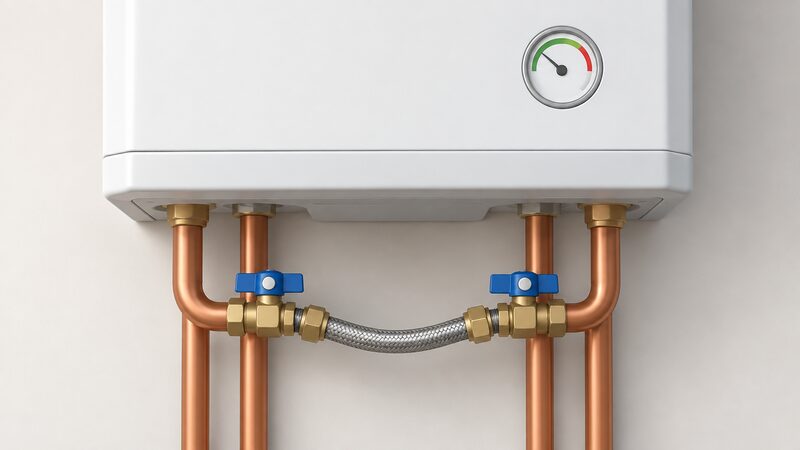
Pressure is a monthly check, not an annual one. Uswitch advises checking boiler pressure at least once a month to make sure it is not too high or too low2. EDF gives the same interval, describing a quick monthly check to confirm the reading stays within the ideal operating range7. The gauge itself is usually a round dial on the front of the boiler or under the control panel, and on older boilers it may sit underneath among the pipes2.
The annual service is where the wider system is examined. Confused.com lists what a service covers: controls and boiler check, inspection of internal components, a corrosion or leak check, flue checks inside and outside, water and gas pipework, and gas and pressure-flow tests16. A Gas Safe registered engineer carries out those checks on the key parts of the boiler16. Annual servicing is the consistent recommendation across the sources, from Energy Saving Trust, Uswitch and SGN17.
Pressure also sits inside the wider economics of a heating system. A boiler's current lifespan is around 15 years, and the average is 10 to 15 years, so a system that is losing water repeatedly is worth weighing against its remaining life20. Understanding how the boiler works and how to set it correctly could help reduce the heating bill, which is the same argument for keeping the gauge in its band22.
What boiler pressure means for a household's energy independence
Pressure is a small, honest indicator of how self-contained a heating system is. A sealed system holds its own water, circulates it, and needs nothing from outside except the gas or oil that fires the burner and a top-up of water once in a while. When the gauge sits in its band, the household is running its own circuit. When it drifts, the system is telling you it is exchanging water with the mains, and that exchange only goes one way.
The dependence that remains is real and worth naming. A gas boiler depends on the gas grid and on a supplier, and pressure faults do not change that. Repressurising draws on mains water. Diagnosis and repair of anything beyond a top-up depends on a Gas Safe registered engineer, and the gas networks direct households to that register for boiler faults10. Nothing about a healthy gauge changes any of it.
What pressure does offer is early warning and a degree of self-sufficiency in the smallest sense. A householder who reads the gauge monthly, knows the cold target, and can operate a filling loop is not dependent on a call-out for the most common and least serious boiler complaint. That is the whole of the independence on offer here: the ability to tell a system that has drifted from a system that has failed, and to act on the first without waiting for an appointment.
"Low boiler pressure will cause your boiler to work harder when trying to heat your home, meaning more energy is used, which could result in energy bills increasing."
Sources22 cited
- What pressure should my boiler be?, Vaillant, 2026
- What pressure should your boiler be?, Uswitch, 2024-11-13
- What to do if your boiler pressure is too high, Viessmann, 2022-03-24
- What should my boiler pressure be set at?, Baxi, 2026-09-17
- How to fix high boiler pressure, Baxi, 2026-09-17
- What do I do if my boiler has no pressure?, Vaillant, 2026
- Boiler pressure: everything you need to know, EDF Energy, 2026-09-17
- How to repressurise a boiler, Vaillant, 2026
- Getting your broken boiler repaired or replaced, Citizens Advice, 2024-08-16
- Energy efficiency, Northern Gas Networks, 2026-06-25
- Winter safety, WW Utilities, 2026-09-20
- Gas supply updates, SGN, 2026
- Boiler not working, Cadent Gas, 2026-09-20
- Boiler insurance, Uswitch, 2022-09-25
- Troubleshooting tips, OFTEC, 2026-09-20
- Boiler servicing, Confused.com, 2025-07-23
- Take control of your heating at home, Energy Saving Trust, 2026-09-11
- Boiler maintenance, Uswitch, 2026-09-03
- My boiler isn't working, SGN, 2026
- Heating and hot water, Planning Portal, 2026
- Tips to improve the EPC rating of your home, Energy Saving Trust, 2026-08-03
- How to bleed a radiator, Uswitch, 2026-09-17
 The Full Boilers and Heating GuideWhich boiler suits your home, and when is it worth swapping the old one?
 Prepayment MetersHow do you top up a prepayment meter for gas or electricity, and what happens when the credit runs out?
 ErP Control Classes I to VIIIWhich boiler control class is yours, and what does the number actually mean?
 Regular and Heat-Only BoilersGot tanks in the loft and a hot water cylinder in the airing cupboard?
 Condensing BoilersCondensing boilers squeeze extra heat out of the gas they burn by turning the steam in their waste gases back into water.
 Backup Power for HeatingWhy gas boilers, heat pumps and storage heaters stop in a power cut, what a portable power station can and cannot carry, how to size one, and what home battery systems do when the mains fails.