In this guide
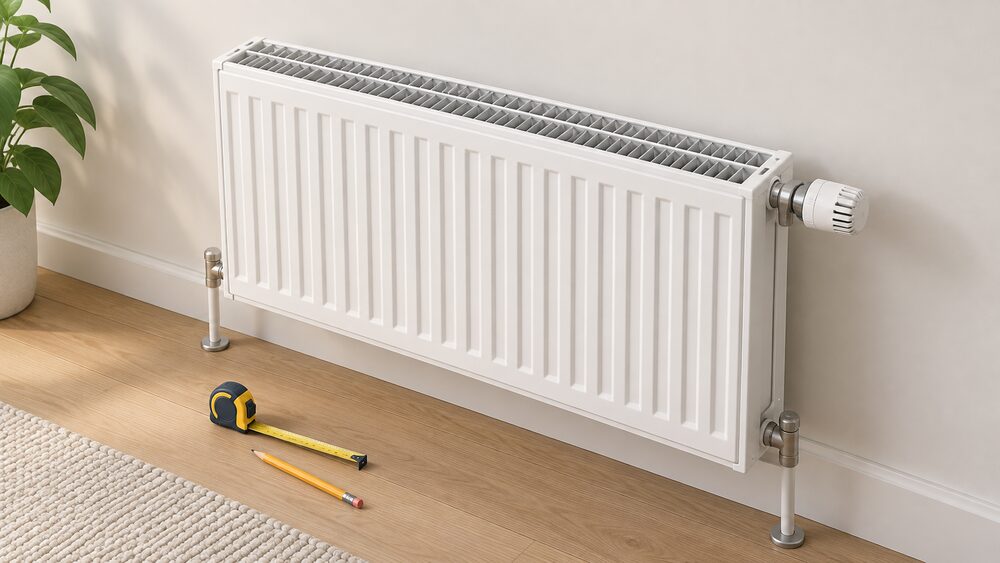
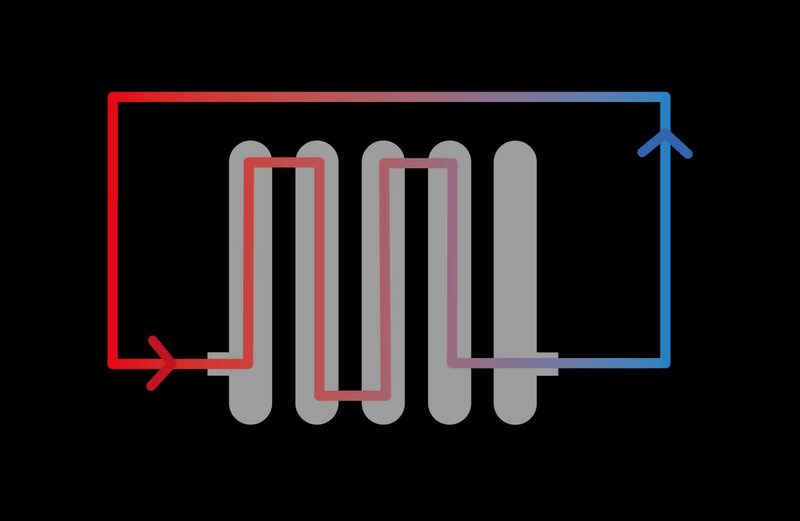
A radiator is a hydronic heat emitter: warm water flows through the radiator body, and heat is transferred to the room1. It does that in two ways at once. Air warms near the surface and circulates around the room by convection, while the hot surface also radiates heat directly to nearby surfaces and people1. The balance between the two depends on the design: a plain panel gives off a larger share as radiant heat, while adding heat transfer fins, as in a double convector, can cut the radiant share to as little as 15%, leaving 85% emitted by convection2.
That matters because sizing is not a matter of picking a radiator that looks big enough. Output depends on the difference between the water temperature inside the radiator and the air temperature in the room, and catalogue figures are usually quoted on generous assumptions. Many radiator outputs in catalogues are based on a difference of 50°C between the mean water temperature and the room1, and the European rating convention behind them assumes a mean water temperature of 70°C2. Run the same radiator at the 45°C flow typical of a heat pump and it will not deliver the number on the label.
For a household, the emitter is where the heating system meets the room, and it is the part most often left undersized. Independent work suggests about seven out of ten properties would need larger radiators to operate at lower flow temperatures3. Getting the sizing right is what allows a home to run cooler water, which is the direction both heat pump installations and efficiency advice point.
What a radiator is and how it heats a room
A radiator is a hydronic heat emitter: warm water flows through the radiator body, and heat is transferred to the room1. The two transfer modes, convection and radiation, work together, and the mix between them is set by the design of the panel rather than by the water temperature alone1.
The practical consequence is that a radiator does not heat a room evenly from its surface outward. It sets up a circulation: air warms at the surface, rises, and moves across the room, which is why a radiator placed in the wrong spot or covered by furniture underperforms even when it is the right size. Keeping radiators completely unblocked lets them radiate their heat into rooms more easily8, and moving furniture away from radiators is standard efficiency advice9.
Control sits alongside the emitter. Thermostatic radiator valves adjust the temperature in different rooms, so unused spaces are not heated more than necessary10, and turning radiators off in unused rooms is a recognised saving9. That combination, a correctly sized emitter plus room-by-room control, is what makes a heating system responsive rather than merely hot.
It is worth separating wet radiators from the electric appliances that share the name. Oil-filled electric radiators use a coil of wire to heat a reservoir of oil which circulates around the appliance to heat metal fins11, and they take a while to heat up but are slow to cool, so the warmth lasts longer12. Those are direct electric heaters, covered on our page on electric radiators and panel heaters, and they are sized on a different basis from a wet emitter connected to a boiler or heat pump.
Radiator sizing: what determines the output you need
Sizing starts with the room, not the radiator. The figure that matters is the room's heat loss at the design condition, the cold outdoor temperature the system is designed against, and the emitter then has to deliver that output at the water temperature the system actually runs at. This is the same logic that governs boiler selection: for a typical 3 to 4 bedroom house with 10 or more radiators, the boiler output needed is 24 to 30 kW13.
The trap is the rating basis. Many radiator outputs in catalogues are based on a difference of 50°C between the mean water temperature and the room1, and the nominal rating convention assumes a mean water temperature of 70°C and a room-to-water difference of 50°C2. A radiator quoted at that basis will give materially less heat when the water is cooler, because the gap between radiator and room has narrowed. For a low-temperature heat pump design with a 45°C flow, the effective difference can be much lower, around 22.5°C in one worked example1.
Several factors then decide what a given radiator actually delivers: the supply temperature required, the return temperature and the difference between them, the flow rate and hydraulic balancing, room-by-room control, and the building's heat loss level1. A radiator that is correctly sized but badly balanced, or one that is oversized on paper but starved of flow, will not perform as the calculation suggests.
For a household, this is the point where independence is won or lost. An emitter sized to the room's real heat loss at the system's real flow temperature is what allows the system to run cooler water, and cooler water is what makes a heat pump, a condensing boiler in its efficient band, and lower running costs possible. An emitter sized on the catalogue headline figure locks the system into high flow temperatures.
Typical radiator outputs: 1 to 2 kW per radiator
Sizing rules of thumb converge on a per-radiator allowance rather than a fixed output by physical size. Guidance for combi sizing suggests allowing around 1 to 2 kW per radiator depending on size, then adding extra capacity for bathrooms or hot water demand13. A second rule of thumb puts it at 1 to 2 kWs of power for each radiator in the home14, and the same allowance is given for regular boilers: 1 to 2 kWs of power for every radiator15.
That per-radiator figure scales into whole-house boiler outputs, which is where the practical range shows. A typical 3 to 4 bedroom house with 10 or more radiators needs an output of 24 to 30 kW16. Homes with up to 10 radiators sit at 12 to 15 kW, 10 to 15 radiators at 18 to 24 kW, and 15 to 20 radiators at 30 to 40 kW for system or regular boilers and 32 to 40 kW for combis17. A separate sizing table gives 9 to 18 kW for 1 to 2 bedrooms with 0 to 10 radiators and one bathroom, 18 to 26 kW for 3 to 4 bedrooms with 10 or more radiators and 2 to 3 bathrooms, and 27 to 40 kW for more than 4 bedrooms with 20 or more radiators and more than 3 bathrooms18. For comparison, small stoves are quoted at typically 3 to 5 kW19.
No published table of radiator outputs by physical size is available here, and it is worth being plain about that rather than inventing one. What the sizing guidance does give is the surrounding scale: a typical 3 to 4 bedroom house with 10 or more radiators needs a boiler output of 24 to 30 kW16, which puts the average emitter in such a home in the region of a couple of kilowatts, and small stoves are quoted at typically 3 to 5 kW for comparison19.
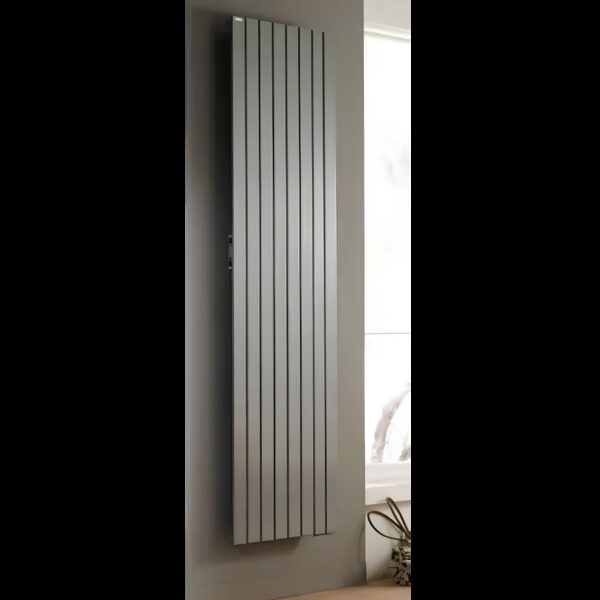
The more useful way to think about output is as a function of surface area and water temperature together. Bigger means more surface area, which can be achieved with a double or triple panel radiator16, and those types do not take up extra wall space17. That is the standard route to more output in a room where the wall run is fixed.
| Route to more output | What changes | Where it helps |
|---|---|---|
| Double or triple panel | More surface area in the same footprint17 | Rooms with limited wall space |
| Longer or taller panel | More surface area | Rooms with free wall run |
| Higher flow temperature | Larger gap between radiator and room1 | Only where the heat source can supply it |
| Fan-assisted emitter | Moves air across the surface | Low-temperature systems, retrofit |
The last row is the one that changes the maths most. A fan-assisted emitter does not rely on natural convection alone, so it can deliver useful output at water temperatures where a plain panel would fall short. That is why fan convectors appear in the product ranges aimed at low-temperature heating, alongside conventional panels.
Panel, convector, towel and fan-assisted: which type fits which room
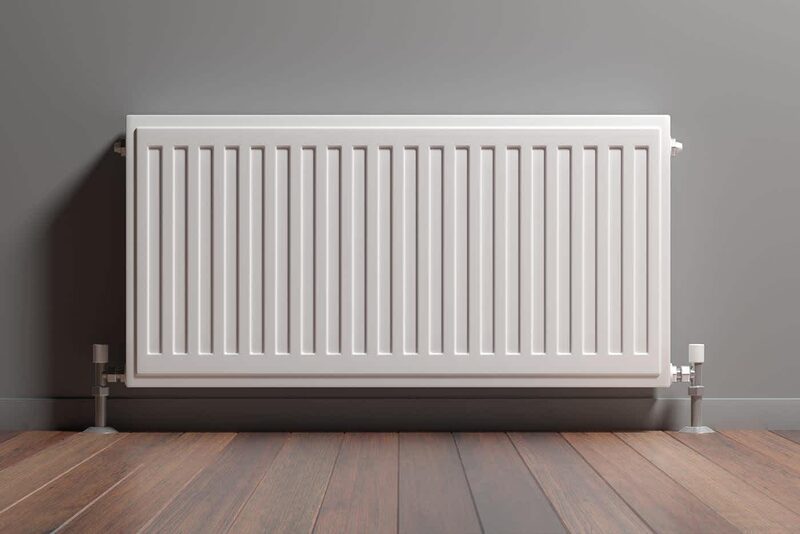
The main wet types are panel radiators, convector-style radiators, towel radiators and fan-assisted emitters, also called fan convectors1. Panel radiators are flat panels, often used in residential buildings1. Convector types add fins to increase the convective share, which is why a double convector can push as much as 85% of its output into the room by convection2.
Towel radiators and warmers serve bathrooms and kitchens, where the job is as much drying as heating. Fan-assisted emitters are the type to consider where flow temperatures are low, because the fan compensates for the smaller temperature difference. One example in the UK market is the Ulow E2, an ultra-low temperature panel radiator with integrated fans supporting natural convection18.
For households weighing a wet radiator against a direct electric appliance, the electric options are panel convector heaters, electric radiators, fan heaters or underfloor heating19. These are sized and controlled differently, and they carry different running costs, which our pages on electric heating running costs and underfloor heating cover.
Myson is one UK manufacturer whose range spans both worlds: hydronic and electric radiators, underfloor heating, designer radiators, column radiators, fan convectors, towel warmers, heating valves and controls18. That breadth is typical of the established UK emitter makers, and it means a household specifying a low-temperature system is not limited to one aesthetic or one mounting arrangement.
Radiators with heat pumps: why 45 to 50°C flow changes the sizing maths
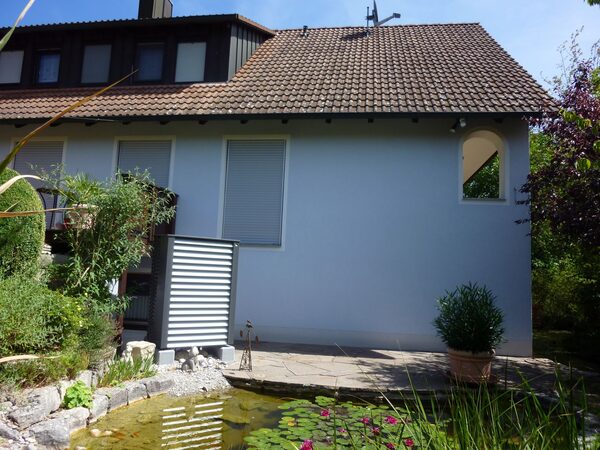
This is the section that decides whether a heat pump works well in an existing home. Heat pumps typically send hot water to radiators at a lower temperature than an equivalent fossil fuel central heating system, often between 35 and 45°C5. Conventional radiators, by contrast, run at about 60 to 70°C6. A radiator that was fine when connected to a boiler running at 75°C may not be big enough at 45°C17.
The design figures cluster tightly. Heat pumps are commonly designed to supply flow temperatures of only 40 to 45 degrees to radiators when it is -3 degrees outside20, and 45°C is the usual design temperature for heat pumps, against a markedly different design temperature for gas systems21. One manufacturer's guidance suggests sizing the radiators to the minimum heat pump flow temperature, with a maximum around 45°C2. A weather compensation example shows a heat pump circulating flows at 50°C to maintain 20°C inside when it is freezing outside, dropping to 40°C when the day warms to 5°C22.
The good news is that most radiators are suitable for low-temperature heating, with a flow temperature of at least 45°C, provided they are sized correctly18. The condition is the whole point: the system must be designed to deliver the required room heat at lower water temperatures1. Where it is, radiators can remain compatible1.
Replacement is not mandatory. Bigger radiators could hugely improve how well a heat pump can heat a home, but it is not a requirement16. In practice, about seven out of ten properties would need larger radiators to operate at lower flow temperatures3, and radiators for low-temperature heating typically need to be around 2.5 times larger than a conventional radiator4. Where radiators are replaced as part of a heat pump installation, they are currently zero-rated for VAT3.
Placement: under windows, external walls and what blocks the heat
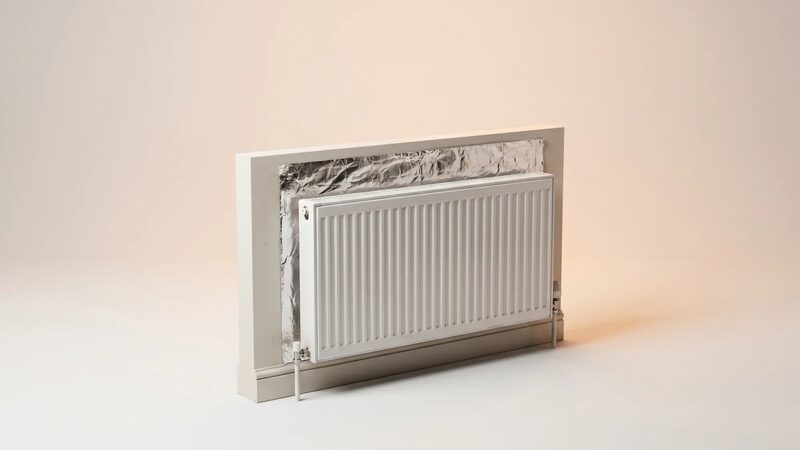
Placement is about air movement and heat loss through the building fabric. A radiator on an uninsulated external wall loses some of its output through that wall, which is the case for a reflector panel: it is placed behind the radiator to reduce heat loss through the outer wall, with heat reflected back into the room25. It is most effective when fitted to radiators on uninsulated external walls7, and it is recommended only for uninsulated external walls, with little benefit on insulated walls or internal walls dividing two heated rooms25.
The cost is modest. Reflector panels cost around £25 for a roll, cut to size to fit behind the radiator7, or around £30 per pack8, and a separate figure puts radiator panels at around £8 to £12 per radiator26. Installation is a matter of measuring radiators on external walls, cutting the foil to size, sliding the panel down the back of the radiator and pressing it against the wall7. Cadent's guidance is narrower still: based on installation behind radiators on uninsulated external walls, and only recommended for uninsulated solid walled or uninsulated cavity walled properties27.
What blocks a radiator matters as much as where it sits. Keeping radiators completely unblocked lets them radiate heat into rooms more easily8, and moving furniture away from radiators is standard advice9. The thermostat has its own placement rules: it should not be blocked by furniture or curtains, should be kept away from heat sources like electric fires or heaters, and should be protected from draughts and placed away from sources of draughts like windows or the front door28. Draught-proofing is the companion measure, and our page on heating controls and thermostats covers the control side in full.
Cost: from around £100 per radiator to the low thousands
No published retail price for a standard wet radiator is available here, so any figure for the radiator itself is installer-quoted. The cost of the accessories and the design assumption behind a whole-house upgrade are documented. Reflector panels run at around £25 for a roll7 or around £30 per pack8, with a separate figure of around £8 to £12 per radiator for panels26. For a low-temperature retrofit, one modelling assumption puts each radiator at £2003.
That £200 figure is the one that scales. A whole-house emitter upgrade across a typical home's radiators is where the low thousands come from, and it is the number to hold alongside the VAT position: radiators are currently zero-rated for VAT if installed alongside a heat pump3. That relief applies to the installation context, not to a standalone radiator swap.
| Item | Figure | Basis |
|---|---|---|
| Reflector panel roll | around £257 | Cut to size behind the radiator |
| Reflector panel pack | around £308 | Sits behind the radiator |
| Radiator panel | around £8 to £12 per radiator26 | Behind radiators on external walls |
| Radiator, low-temperature retrofit | £200 each3 | Modelling assumption |
For a household, the cost question is really a sequencing question. Reflector panels are a low-cost measure with a narrow, well-defined use case. Emitter replacement is a capital cost that buys the ability to run lower flow temperatures, which is what a heat pump needs and what a condensing boiler benefits from. The two are not substitutes, and the second is the one that changes what the system can do.
Bleeding, balancing and the yearly maintenance routine
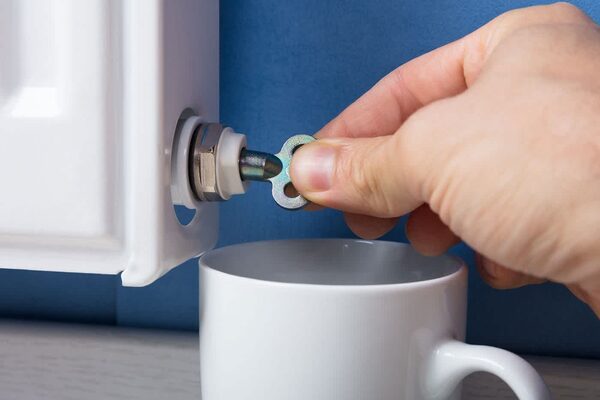
Bleeding a radiator means releasing trapped air so hot water can circulate properly and heat the radiator evenly29. The signs that it is due are a radiator that is cold at the top, slow to warm up or making gurgling noises29, or more broadly radiators not heating up properly, cold patches across the top, gurgling or bubbling noises, increased heating bills, or damp or mouldy patches on walls30.
The frequency advice varies on the interval rather than the principle. One guide puts it at least once a year, but preferably every few months30. Another says about once a year, ideally before winter when the heating is used more regularly29. A third says a couple of times a year, worth checking before the cold hits8. A fourth says to check radiators at least once a year to see if they need bleeding31. The task itself usually takes only a few minutes per radiator29.
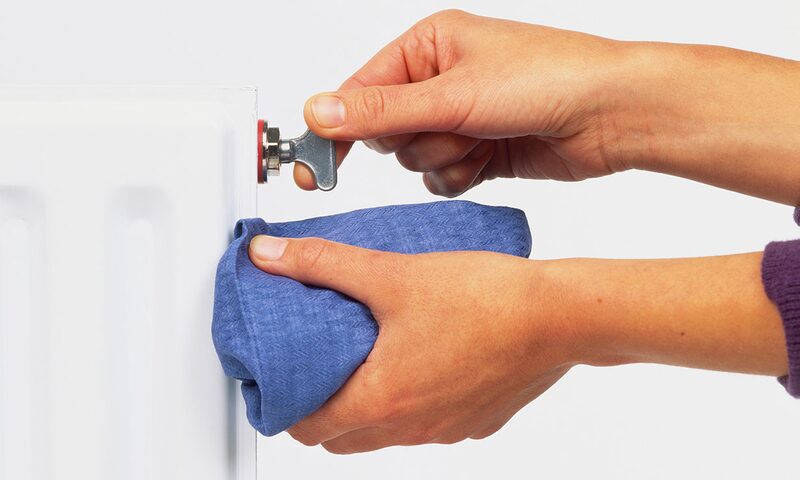
The method is consistent: use a radiator key to open the small valve at the top and to the side of the radiator slightly until water begins to drain out9. Older radiators need care, because radiators over 30 years old use the imperial scale, so newer keys may not fit, and clock-winding keys sized 8 to 12 on a scale from 000 to 16 are most likely to fit older radiator valves30.
Balancing is the other half of the routine, and it is what makes a correctly sized system deliver. Flow rate and hydraulic balancing are among the factors that decide radiator performance1, and a spring plumbing and heating checklist advises bleeding radiators if they are not heating evenly, as trapped air may be to blame32. Our page on heating system design and balancing covers the water treatment and balancing side.
Noises explained: gurgling, clicking and banging
Noises are diagnostic, and the sources separate them clearly. A gurgling sound could mean air trapped in the system, which may mean the radiators need to be bled33. That matches the bleeding guidance: gurgling or bubbling noises are among the signs a radiator needs bleeding30, and gurgling is one of the clearest indicators29.
Banging is a different matter. Banging noises can suggest overheating, which can have a number of causes, including thermostat issues, debris in the boiler, or heat exchanger issues33. That is a boiler-side diagnosis rather than a radiator-side one, and it points to a service rather than a bleed.
Cold distribution across the radiator surface is the third diagnostic. If the top stays cold while the bottom warms up, trapped air is the likely cause29. If the radiator is hot at the top and cold at the bottom, the problem might be sludge or debris in the system, which can be flushed out by a professional29, and a radiator hot at the top and cold at the bottom means it will need a power flush31. A cold middle is a third pattern again: it is probably grime or limescale buildup, which will need descaling33.
| Symptom | Likely cause | Action indicated |
|---|---|---|
| Cold at top, warm at bottom | Trapped air29 | Bleed the radiator |
| Hot at top, cold at bottom | Sludge or debris29 | Power flush by a professional |
| Cold in the middle | Grime or limescale33 | Descaling |
| Gurgling | Air in the system33 | Bleed the radiators |
| Banging | Overheating, thermostat, debris or heat exchanger33 | Boiler service |
Lifespan and when replacement makes sense
The sources do not give a single service life figure for radiators, and it would be wrong to supply one. What they do give is a set of conditions that decide whether replacement is worth considering, and those conditions are about performance rather than age.
The first is low-temperature readiness. About seven out of ten properties would need larger radiators to operate at lower flow temperatures3, and low-temperature radiators typically need to be around 2.5 times larger than a conventional radiator4. Where a household is planning a heat pump, or wants to run a condensing boiler in its efficient band, that sizing gap is the reason to replace rather than repair.
The second is condition. Sludge and debris that cause cold patches at the bottom are a system-wide problem as much as a radiator problem, and a power flush addresses the cause rather than the symptom29. Replacing radiators without treating the water leaves the new ones exposed to the same debris.
The third is fit. Radiators over 30 years old use the imperial valve scale, so newer bleed keys may not fit30, which is a small but real sign of an ageing system. None of this amounts to a rule that old radiators must go. It amounts to this: the emitter is the component that determines what flow temperature a home can run, and that is the question worth asking before replacing anything.
Sources33 cited
- Heat distribution: radiators, IDM Energie, 2026
- Domestic Heat Pump Guide, MCS Certified, 2024
- How to get homes more ready for heat pumps, Nesta, 2026
- Edinburgh Local Heat and Energy Efficiency Strategy, City of Edinburgh Council, 2023
- Heat pump installation: a step by step guide, Energy Saving Trust, 2026
- Low energy buildings, Centre for Alternative Technology, 2025
- Radiator reflector panels, Energy Saving Trust, 2025
- Cold weather energy saving: your top tips, Energy Saving Trust, 2025
- Stay safe, warm and connected this winter, Cadent Gas, 2026
- Maintaining the ideal home temperature, Smart Energy GB, 2026
- Portable heaters, Electrical Safety First, 2026
- Energy efficient heaters, Uswitch, 2026
- Best boilers, Confused.com, 2025
- Building regulations approval, GOV.UK, 2026
- Heat output explained, HETAS, 2026
- Heat pump fact check, Energy Saving Trust, 2026
- How to ensure a heat pump runs efficiently, Energy Saving Trust, 2026
- Low temperature heating, CIBSE, 2024
- Electric space heating, BEAMA, 2026
- Heat pumps, Centre for Alternative Technology, 2025
- Future subsidies for heat pumps, Nesta, 2024
- Living with a heat pump, Home Energy Scotland, 2024
- Approved Document L, Volume 1, HM Government, 2026
- Building Regulations Approved Document L, Volume 1, Welsh Government, 2026
- Radiator panels, Smart Energy GB, 2026
- Draught busting, Low Carbon Hub, 2026
- Energy efficiency, Cadent Gas, 2026
- Turning down thermostats, Smart Energy GB, 2026
- How to bleed a radiator, Smart Energy GB, 2026
- How to bleed a radiator, Uswitch, 2026
- Boiler maintenance, Uswitch, 2026
- Spring into home care, APHC, 2025
- Heat only boiler troubleshooting guide, Ideal Heating, 2026
 Radiators and EmittersWill your radiators still heat the house properly with a heat pump?
 Which Homes Suit a Heat PumpMost UK homes can have a heat pump fitted, so the real question is whether yours makes it easy or expensive.
 Using a Heat Pump for CoolingCan a heat pump cool your home in summer as well as heat it in winter?
 Boiler SizingWhat size boiler does your home actually need, and does the number of bedrooms or radiators decide it?
 High Temperature Heat PumpsHigh-temperature heat pumps deliver flow temperatures of roughly 65 to 80°C, close to boiler levels, so existing radiators can often stay in place.
 Sizing and Heat LossHow do installers work out what size heat pump your home needs, and why can a unit that is too big cost more to run than one that is slightly small?