
In this guide
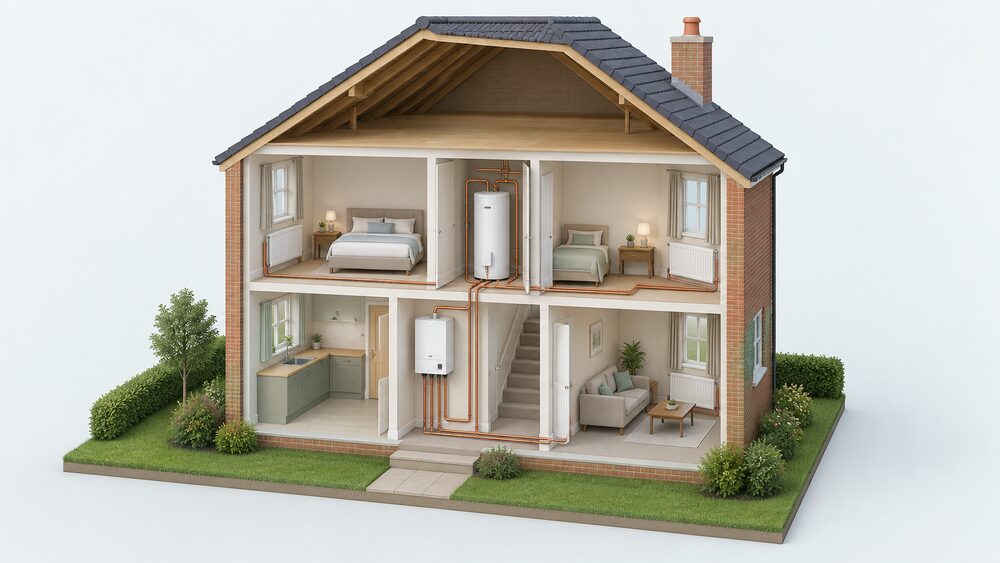
A system boiler provides central heating and hot water through a storage cylinder, which is filled from the mains and is often housed in an airing cupboard1. It is a central heating unit that heats water, stores it in a separate cylinder and delivers hot water to several taps and showers at the same time2. Unlike a combi, it does not heat water on demand: it heats a quantity of water held in a cylinder until it is required3.
The word "system" refers to what is built into the appliance. A sealed system boiler contains a circulating pump, an expansion vessel and the other components a sealed system needs, so no expansion cistern is required in the loft space4. Water is taken directly from the mains rather than from a cold water storage tank5. That is why a system installation usually needs less space than a regular one, and why a loft can be cleared of tanks when a home converts.
Installed costs vary widely with the work involved. Published ranges run from £1,580 to £5,000 including installation6, with a narrower £2,500 to £4,100 quoted for gas system boilers as of September 20267 and £1,700 to £3,500 for a sealed system boiler where the job does not count as a large one8. Boilers of this type typically last 10 to 15 years9.
How a system boiler works: mains-fed water, a cylinder and an internal pump
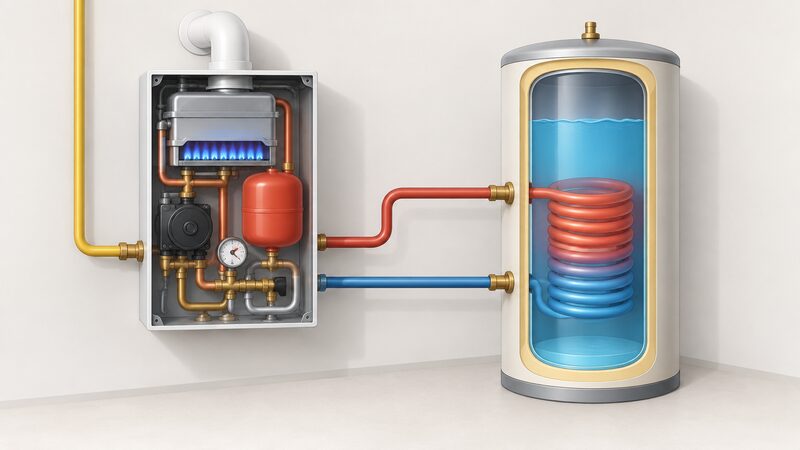
Two separate bodies of water are involved, and keeping them distinct is the key to understanding the type. The heating water is part of a closed loop that continuously circulates through pipes, radiators and sometimes storage cylinders, and does not rely on the mains supply to function12. The domestic hot water, by contrast, is fresh mains water sitting in the cylinder.
In a gas-fired system boiler connected to the mains gas, a flame heats water in an enclosed hot water system, and a coil inside the cylinder carries that heating water at high temperature through the cylinder13. The boiler feeds water through pipes around the hot water cylinder, which warms the fresh water inside1. Heat passes across the coil; the two bodies of water never mix.
The cylinder itself holds the stored water, usually in an airing cupboard or near the boiler, and may also carry an immersion heater connected to the electricity mains14. That immersion gives a fallback if the boiler fails, and a route to use self-generated electricity, but it is a slow and comparatively costly way to heat a full cylinder.
Because the primary circuit is sealed and pressurised, it carries a filling loop and a pressure gauge, and it needs an expansion vessel to absorb the expansion of the water as it heats. In a system boiler those parts sit inside the casing rather than around the house4.
Identifying one: three copper pipes and no cold water tank
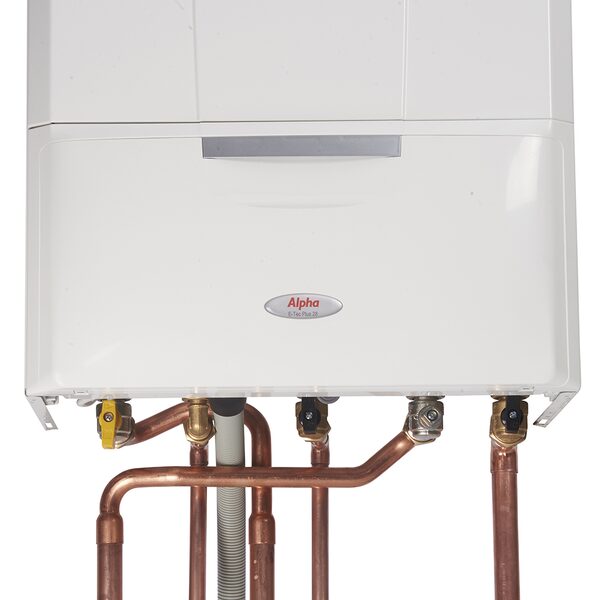
The simplest test is the loft. If there is a hot water cylinder but no external pump and no cold water storage tank, the boiler is a system boiler, and three copper pipes will typically be seen coming out of the base of the appliance15. A regular boiler system is made up of three parts: the boiler, a cold water tank and a hot water tank16, and it needs a cold water storage tank in the loft to feed the hot water cylinder as well as a tank that maintains the water level of the central heating system17.
A system boiler takes its water supply from the mains, not a loft tank, and stores hot water in a cylinder10. A combi has neither tank nor cylinder. If there is no cylinder at all, the appliance is a combi; if there is a cylinder and tanks above it, a regular boiler. Further detail on each type is set out in the guides to combi boilers and regular boilers.
System, combi or regular: which fits which home
There are three condensing boiler types in common domestic use, and the choice is driven by hot water demand, available space and the existing pipework.
| Type | Stored hot water | Loft tanks | Typically specified for |
|---|---|---|---|
| Combi | None | None | Homes with a single bathroom and fewer than 10 radiators18 |
| System | Cylinder, mains fed | None4 | Larger homes with multiple bathrooms6 |
| Regular | Cylinder, tank fed | Cold water tank plus feed and expansion tank17 | Homes already running a traditional system, and areas of low mains pressure16 |
Combis are generally cheaper to run than comparable regular or system boilers, because they only heat what is needed19. A cylinder, by contrast, holds heated water that loses some heat while it waits, which is the running-cost penalty paid for simultaneous supply. Against that, a system boiler is more energy efficient and requires less space than a regular boiler5, and a regular boiler installation can be the cheapest option where a home already uses a traditional system that needs replacing16.
Conversion direction matters to cost. Moving from a conventional system towards a system boiler, and from a system boiler towards a combi, usually allows most of the existing hardware to be reused, giving a lower-cost replacement; going the other way, from a combi to a system boiler, means extra piping and tanks20.
Hot water performance: flow, simultaneous outlets and stored volume
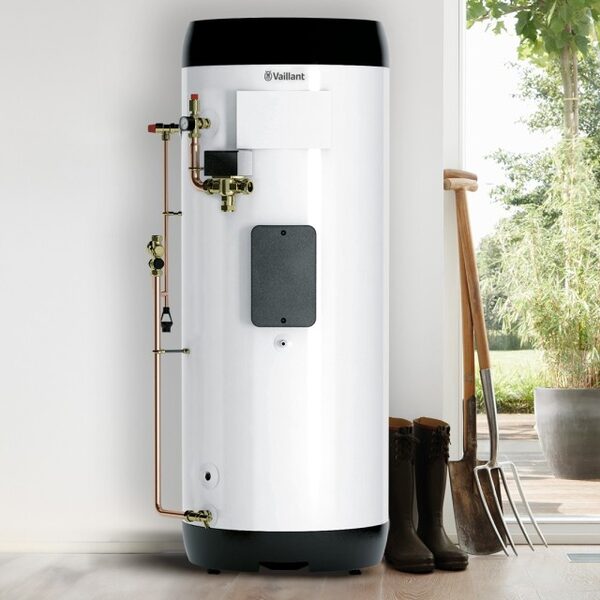
The cylinder is what lets a household run hot water from several taps at once8. A system boiler is described by makers as suiting busier homes with multiple bathrooms, providing high volumes of hot water simultaneously through a dedicated storage cylinder21, and the cylinder is the reason the type is considered ideal for larger homes with multiple bathrooms6.
Performance at the outlet depends on the cylinder rather than the boiler. Unvented cylinders draw water from the mains system, often resulting in higher pressure22, and their high water pressure gives a consistent supply suitable for homes with multiple bathrooms23. Storage volumes vary widely; some system boiler storage tanks hold over 500 litres7.
The limit is finite storage. Stored water can be exhausted, and the boiler then needs time to reheat the cylinder. If the mains water supply is interrupted, a small amount of hot water may still come from the cylinder, but it will quickly run out once the system loses pressure and new water cannot enter to replace it12. Sizing the cylinder to the household's peak demand, not its average, is what avoids that in practice. Cylinder options are compared in more depth under hot water cylinders.
Sizing: output for radiators, plus an allowance for the cylinder
Boiler size means kilowatt output. One published rule of thumb for small to medium homes is to allow around 1.5 kW per radiator, plus roughly 3 kW for hot water10. On that basis six radiators come to 12 kW10, although other guidance puts six radiators at 12 kW to 15 kW and eight radiators at 15 kW to 18 kW24.
| Radiators | Indicative output |
|---|---|
| Up to 10 | 12 to 15 kW25 |
| 10 to 15 | 18 to 24 kW25 |
| 20 | 33 to 35 kW24 |
| 20 plus | 35 to 42 kW8 |
Radiator count is only one input. Sizing should also account for the number of bathrooms, the number of people in the household and the size of the gas and water supplies. Oversizing wastes fuel and undersizing leaves the cylinder reheating slowly at the worst moments. A full treatment of the method is given under boiler sizing.
Unvented cylinders: pressure, safety devices and Part G
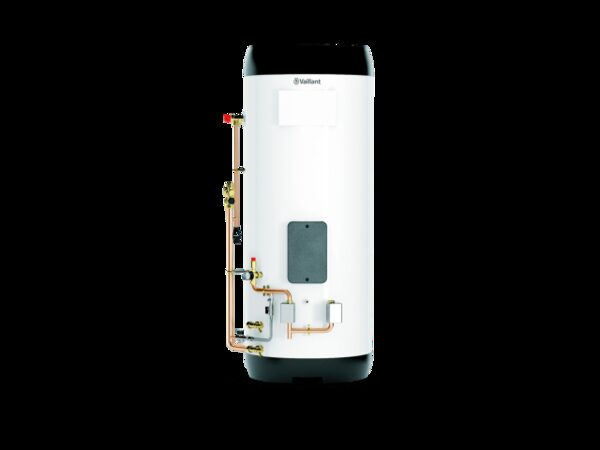
Most system boilers installed today are paired with an unvented cylinder, which receives water from the mains and so removes the need for a storage tank22. That removes the loft tank but introduces stored water under mains pressure, and with it a regulated set of safety requirements.
An unvented cylinder requires safety components including a pressure-reducing valve and a temperature and pressure relief valve26. Unvented systems must include temperature and pressure relief valves, expansion vessels, and discharge pipes for safe pressure release27. An expansion vessel is needed to allow the expansion of water in the system as it heats up, alongside pressure relief valves and twin thermostats26. Space must be found for that vessel23.
"Unvented systems must include: Temperature and pressure relief valves"
Installers of unvented cylinders must carry a qualification to install them, and the work is notifiable under Building Regulations28. All UK unvented cylinders must meet Building Regulations Part G27. Indirect cylinders can be heated via a coil connected to an external heat source such as a boiler, heat pump or solar thermal system, or by an immersion heater26, which is what makes the arrangement adaptable to future low-carbon heat.
The trade-offs are stated plainly by cylinder makers. No cold water storage tank or header tank is required, saving space; the cylinder can take multiple heat sources; and unvented systems are described as more efficient than vented ones, particularly with modern boilers or heat pumps. Against that, installation costs more than a vented system, and the cylinder depends on the mains water supply, so it may be unable to receive water if the supply is interrupted23.
Cost to buy and install: £1,580 to £5,000 and what drives the price
Published UK ranges overlap but do not agree, because they cover different scopes of work. One independent comparison gives £1,580 to £5,000 including installation for a system boiler and £1,600 to £5,000 for a conventional boiler6. Another puts gas system boilers at £2,500 to £4,100 as of September 20267, and a third at £1,700 to £3,500 where the job does not qualify as a large one8.
| Figure | Scope | Date |
|---|---|---|
| £1,580 to £5,000 | System boiler including installation6 | March 2025 |
| £2,500 to £4,100 | System boilers, gas7 | September 2026 |
| £1,700 to £3,500 | Sealed system boiler, standard job8 | November 2025 |
| £2,500 to £3,500 | Including installation, more if a new cylinder is needed29 | December 2025 |
| From £3,093 | Installation including the hot water storage tank30 | September 2026 |
Three things move the price. The first is whether a cylinder is being added: costs are higher if a new hot water cylinder is required29, and one supplier's quoted starting price of £3,093 explicitly includes the hot water storage tank30. The second is the conversion: system boilers are more expensive to install than combis, sometimes by up to £2,00031, because a combi-to-system change means new pipework and a cylinder20. The third is region: labour is generally cheaper in the North, Scotland and Northern Ireland, and more expensive in London and the South East32.
Where no published price is given for a particular job, prices are installer-quoted. Wider cost comparisons are set out under new boiler cost.
Lifespan, servicing and system pressure
The average lifespan of a boiler is 10 to 15 years9. Annual servicing is the standard recommendation: the boiler should be serviced annually to keep it in good working order and maintain its efficiency3. A system boiler service is generally quoted as taking about 1 hour33.
The cylinder is a separate item on the schedule. Unvented cylinders must be serviced annually by a suitably qualified service engineer11, and the safety devices should be checked every 12 months11. That is an ongoing cost a vented system does not carry to the same degree23.
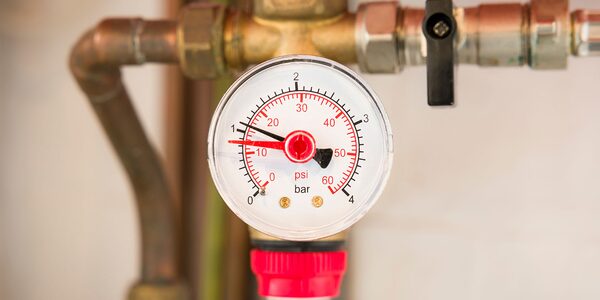
On pressure, a sealed system is expected to read roughly 1 to 1.5 bar when the central heating is cold, with the reading rising as the system warms34. Makers state slightly different target figures for their own appliances, so the value printed on the gauge or in the appliance instructions governs. A reading well below the stated cold range usually indicates a leak or lost air charge in the expansion vessel rather than a fault in the boiler itself. More detail sits under boiler pressure and boiler servicing and maintenance.
Who can install one
Only Gas Safe registered engineers are legally allowed to install gas boilers35. Where the engineer is also on a Competent Person Scheme, they can self-certify that the installation meets Building Regulations3. Unvented cylinder work carries its own qualification requirement and is separately notifiable28. The practical consequence is that a system boiler installation may need two competences in the same visit: gas, and unvented hot water. See boiler installation for the process and the notification routes.
Solar thermal, and running on gas, oil or LPG
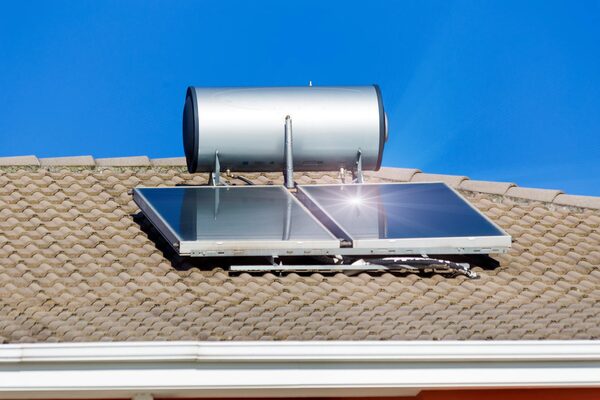
Because the heat arrives at the cylinder through a coil, a system boiler is comparatively easy to combine with another heat source. Solar water heating is easier to work with system boilers, although combi boilers can be adapted too36. Solar water heating systems can be combined with a liquid fuel or gas-fired boiler via a compatible hot water cylinder having two heating coils, a twin-coil cylinder37: one coil takes the solar circuit, the other the boiler. By contrast, few combi models are compatible with solar thermal, since they are not designed to heat water in a cylinder36. This is treated further under solar thermal water heating.
The type is not tied to natural gas. Oil-fired system boilers are made, and are described as more suited to larger homes with more than one bathroom, requiring a cylinder38. LPG system boilers are also produced, and their compatibility with solar panelling is offered as a route to transition later39. Households off the gas grid can read more under oil boilers, LPG boilers and heating and heating a home off the gas grid.
What it means for energy independence
A system boiler improves one kind of resilience and leaves others untouched. Stored hot water is a buffer: a full cylinder holds usable heat even when the boiler is off, and an immersion element connected to the electricity mains14 gives a second route to heating it, including from self-generated electricity. The twin-coil option means solar thermal can supply part of the year's hot water without replacing the appliance37.
The dependencies are real and should be stated as firmly. An unvented cylinder relies on the mains water supply and may be unable to receive water if that supply is interrupted23; once the system loses pressure, the remaining hot water quickly runs out12. The boiler still needs its fuel, whether gas, oil or LPG, and its pump and controls need mains electricity. Annual servicing of both boiler and cylinder is a recurring obligation, and unvented work requires a qualified trade28. The buffer is measured in a cylinder's worth of water, not in days of autonomy. How the type sits in a wider picture is covered under home heating and energy independence and the main guide to boilers and home heating.
Sources39 cited
- Vaillant ecoTEC plus system boiler range, Quiet Mark, 2026-09-17
- What is a system boiler?, Boiler Central, 2026-07-14
- Upgrading and replacing your boiler, Centre for Sustainable Energy, 2026-06
- Your home guide to liquid fuel heating, OFTEC, 2026-09-20
- Open vented boilers, Heatable, 2026-08-05
- New boiler guide, Uswitch, 2025-03-21
- Different boiler types, Uswitch, 2026-09
- Best boilers, Confused.com, 2025-11-03
- Tips to improve the EPC rating of your home, Energy Saving Trust, 2026-08-03
- System boiler guide, Heatable, 2026-03-03
- Unvented cylinders service checklist, Joule, 2026-09-17
- Will turning my water off affect my boiler?, Alpha Innovation, 2026-06-11
- System boilers, E.ON Next, 2026-09-17
- How long does it take to fit a boiler, Ideal Heating, 2026-09-17
- What type of boiler do I have?, Heatable, 2025-10-24
- Regular boilers, Worcester Bosch, 2026-09-17
- Boilers explained, Worcester Bosch, 2026-09-17
- Types of boiler systems, Intergas Heating, 2025-12-18
- Combi boilers, E.ON Next, 2026-09-17
- Back boiler replacement guide, Ideal Heating, 2026-09-17
- How to make a boiler energy efficient, Ideal Heating, 2026-09-17
- What size hot water cylinder for a two or three bedroom house, Baxi, 2026-09-17
- Advantages and disadvantages of unvented cylinders, Newark Cylinders, 2025-05-06
- What size kilowatt boiler do I need for my home?, Boiler Central, 2026-06-27
- What size boiler do I need?, E.ON Next, 2026-09-17
- Vented vs unvented hot water cylinders, Newark Cylinders, 2026-09-04
- Understanding Part G Building Regulations, Rinnai UK, 2025-08-21
- Glossary, Heatrae Sadia, 2026-09-17
- Different types of central heating systems, iHeat, 2025-12-09
- Boiler cost, E.ON Next, 2026-09-17
- Types of boiler, BOXT, 2026-03-05
- System boiler costs, Heatable, 2025-09-19
- How much does a boiler service cost?, Uswitch, 2026-09-03
- How to bleed a radiator, Vaillant, 2026
- How long does it take to fit a boiler, Uswitch, 2026-09-16
- Boilers advice, Energy Saving Trust, 2026-05-20
- Your home guide to solar water heating, OFTEC, 2026-09-20
- Oil boilers, Worcester Bosch, 2026-09-17
- LPG boilers, Worcester Bosch, 2026-09-17
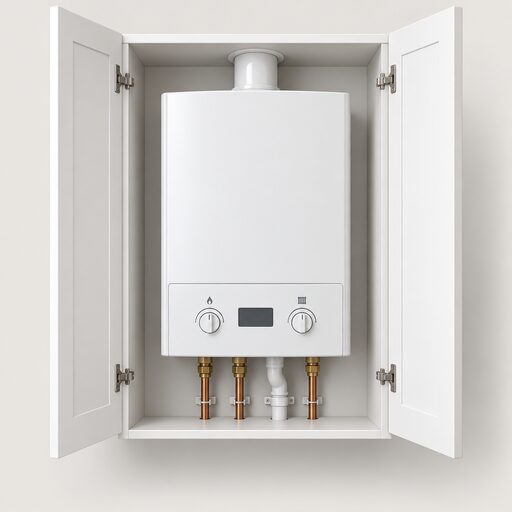 Combi BoilersWhat a combination boiler is, how it produces heating and instantaneous hot water from one unit, and the flow rate and mains pressure it depends on.
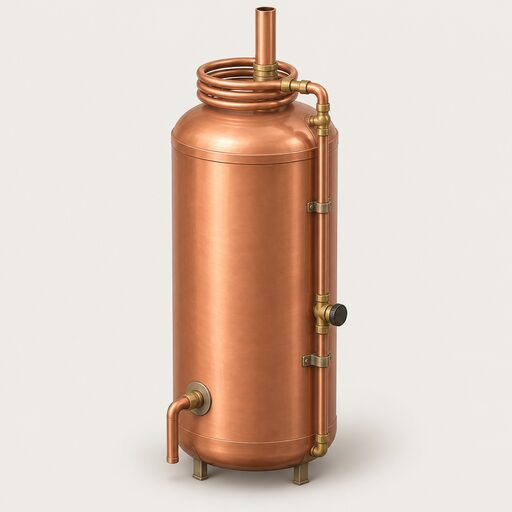 Regular and Heat-Only BoilersGot tanks in the loft and a hot water cylinder in the airing cupboard?
 Hybrid Heat PumpsHow hybrid systems pair a heat pump with a gas, oil or LPG boiler, what decides which appliance runs, what they cost, how much gas they displace, and why the Boiler Upgrade Scheme will not fund them.
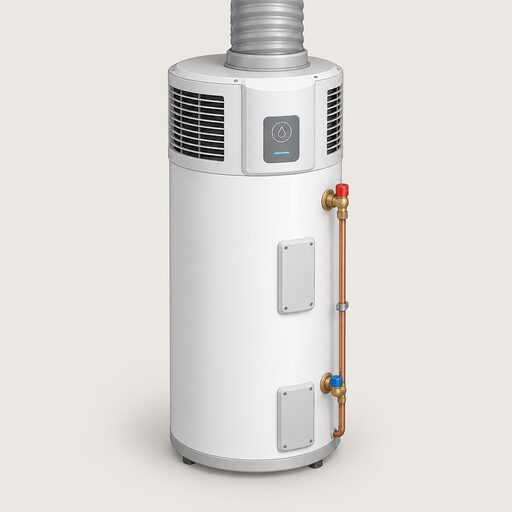 Hot Water Heat PumpsA hot water heat pump heats only the water in your cylinder, using air instead of a boiler flame.
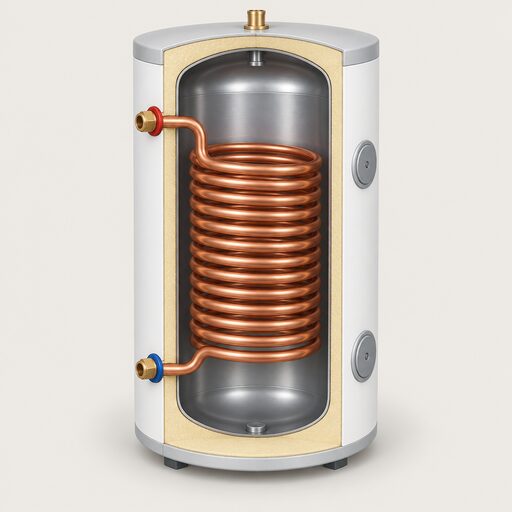 Hot Water CylindersA heat pump needs a cylinder to store hot water, so swapping a combi means getting one.
 Condensing BoilersCondensing boilers squeeze extra heat out of the gas they burn by turning the steam in their waste gases back into water.