
In this guide
Electric heating asks less of a building than a combustion boiler and more of its electrical installation. There is no flue and normally no pipework, and most products need nothing beyond a connection to the electric circuit1. What that connection has to carry is the whole question: a portable heater on a 13 amp plug sits close to the limit of the circuit, while a fixed electric boiler or a bank of storage heaters needs a dedicated supply designed for it.
The safety framework around that supply is settled and mostly statutory. Electrical installation work in homes and gardens should be done by an installer registered with a competent person scheme, who can self-certify that the work meets the required standards2. Landlords must have the electrics in rented properties checked at least every 5 years by a properly qualified person, and must give tenants proof that installations and equipment have been inspected, tested and checked3. Products themselves carry conformity marking, and for heating products sold on the GB market there is a mandate to display the UKCA mark4.
Electric heating is not a niche. Official statistics record that 10% of Scottish households, 258,000 in all, use electricity as their primary heating fuel, and a further 9% of households in England and Wales use electric heating5. Heating accounts for half of our energy bills, so the electrical decisions behind it are financial as well as safety decisions7.
What electric heating needs from your wiring and circuits
The electrical requirement of electric heating is set by the load, and the load is set by the appliance. A portable heater is a plug-in product: all portable heaters must be fitted with a UK 3-pin plug, which fixes the supply at a standard socket outlet9. A fixed electric boiler, a panel heater circuit or a group of storage heaters is a different proposition, because the circuit has to be designed, protected and sized for the connected load rather than plugged into whatever outlet is nearby.
The practical advantage of electric heating at the installation stage is that it avoids the building work combustion appliances demand. Because electric space heating does not normally require a flue or pipework, most products just need a connection to the electric circuit1. In new build projects this means the electric heater can be installed at the second fix wiring stage, alongside the rest of the first-fix services, rather than as a later retrofit1. That is a meaningful difference for a household weighing up independence: the appliance does not depend on a gas connection, a flue route through the building fabric or an oil tank position.
What remains is the supply itself. The circuit has to be capable of the sustained load, and the fixed wiring that feeds it falls under the same inspection regime as the rest of the installation. For a household, the honest summary is that electric heating trades a fuel dependency for an electrical one. The gas boiler depends on a gas network and a flue; the electric boiler depends on the grid connection and the capacity of the consumer unit and supply cable. Neither is free of infrastructure, and the electrical side is the one that has to be assessed before purchase rather than after.
Why a registered electrician should do the connection
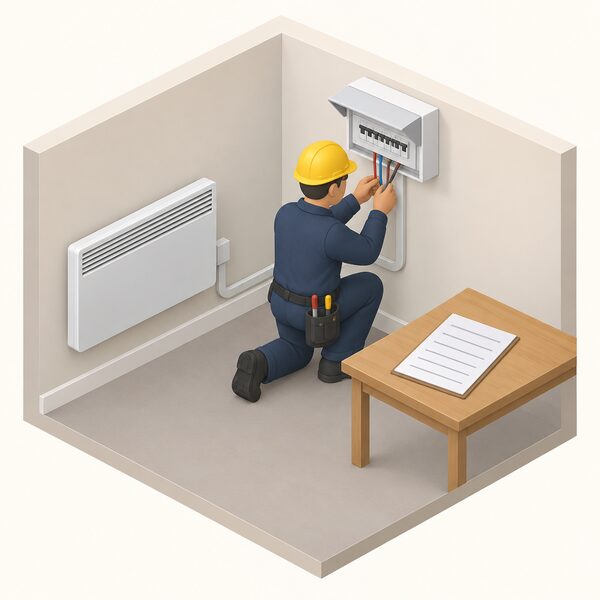
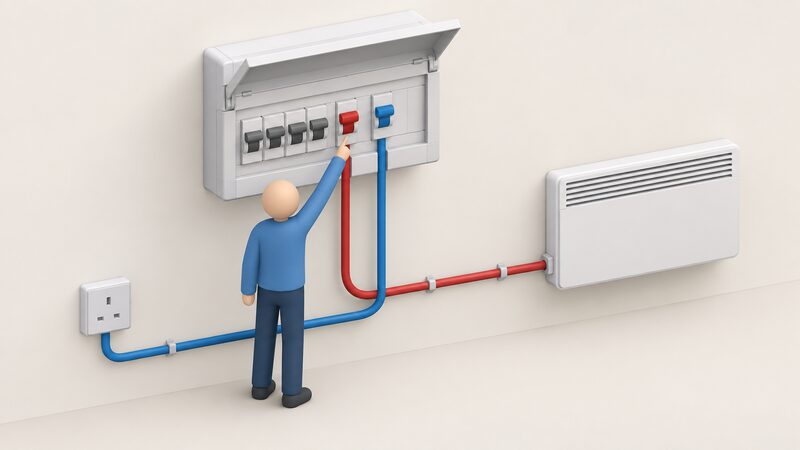
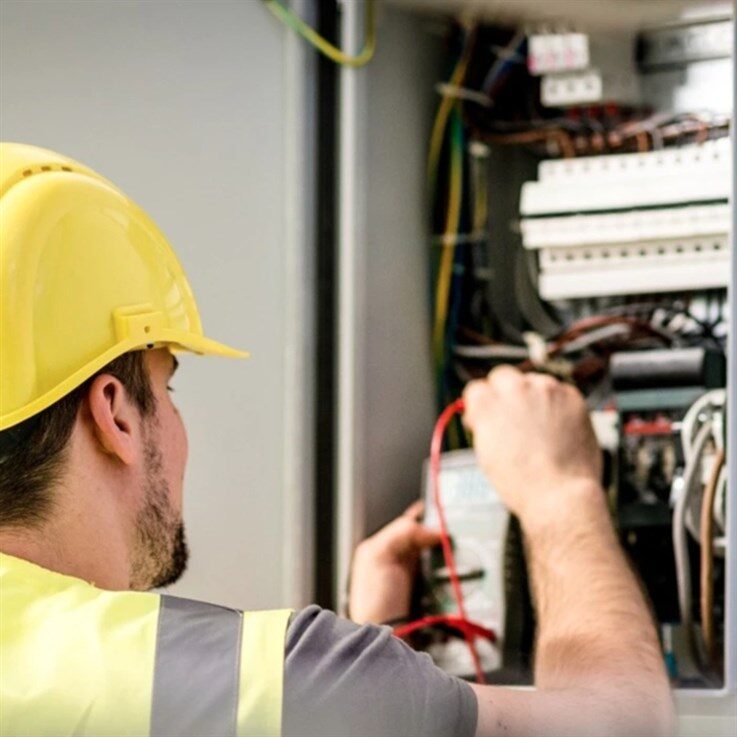
The connection of fixed electric heating is notifiable work in most circumstances, and the route through the rules is well established. Official guidance recommends hiring an installer who is registered with a competent person scheme, a registered competent person, who can self-certify that the work meets the required standards2. Self-certification is the practical benefit: the installer notifies the work through the scheme rather than the household making a separate Building Control application.
Some installations are notifiable in their own right. Adding electrical work or new installations requires notification to Building Control, and electric floor or ceiling heating systems are named among the special locations and installations that fall into that category10. Where a heating system is altered or replaced, the guidance is that a certificate should be issued to show that the necessary checks have been carried out11. That certificate is the household's record that the work was done to standard, and it matters at the point of sale as much as at the point of installation.
In Northern Ireland the process has its own step. An electrical contractor must complete a connection card to certify that installations are safe and meet current regulations before the connection is energised12. The wording is a useful reminder of what the certificate actually represents: it is a declaration by a competent person that the installation is safe, not a receipt for work done.
For a household, the sequence is straightforward. Establish what the appliance needs, have the supply assessed by someone registered to certify the work, and keep the certificate with the appliance paperwork. Where a landlord is involved, the same certificate feeds into the evidence they must give tenants that installations and equipment have been inspected, tested and checked3.
Heater safety in the room: placement, clearance and everyday use
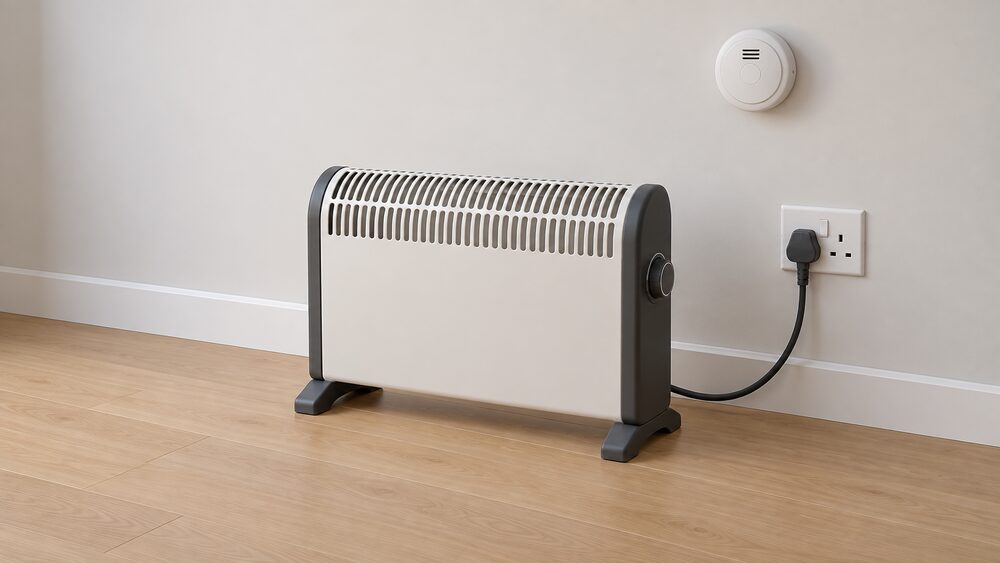
Room-level safety for electric heating is mostly about what surrounds the appliance. Independent safety guidance is direct on the two most common mistakes: avoid powering a heater from an extension lead, and never dry clothes directly on or close to the heater9. Both rules address the same physical problem, which is heat that has nowhere to go. Fabric over a heater traps it, and an extension lead adds a length of cable and a plug connection that were never part of the appliance's design.
The same guidance advises using smoke alarms or heat detectors nearby9. That is a mitigation rather than a prevention, and it is worth reading as such: the alarm reduces the consequences of a fault, it does not reduce the chance of one.
Controls are part of the safety picture as well as the comfort picture. For electric panel heaters, time and temperature control should be provided for separate control of each room or each appliance in new systems or replacement components14. For electric storage heaters, automatic control of input charge should be provided, and the same requirement appears in the Welsh guidance14. Automatic control of input charge and an adjustable heat release rate are the two functions storage heaters are expected to provide14.
Ventilation and clearances belong to the room, not the appliance. The home user guide required for new dwellings is expected to cover ventilation, heating and domestic hot water, on-site electricity generation where applicable, and staying cool in hot weather14. A dwelling is expected to provide efficient heating and effective insulation to give a reasonable degree of thermal comfort15. Electric heating in a well-insulated, well-ventilated room behaves predictably; in a sealed room with an oversized appliance and no control, it does not.

Extension leads and sockets: the overload risk
The extension lead is the single most repeated warning in the guidance on portable electric heating, and it is worth understanding why rather than simply obeying it. A portable heater is designed to draw its rated load continuously for hours at a time. A 13 amp plug and socket is rated for that load, but only when the connection is sound and the cable is the one supplied with the appliance. An extension lead introduces a second plug, a second socket and a length of cable that may be coiled, covered or undersized for sustained draw.
Independent guidance states the rule plainly: avoid powering a heater from an extension lead9. The same logic applies to multi-way adaptors and to daisy-chained leads, which multiply the number of connections carrying the full load.
The socket itself matters too. A heater plugged into a socket that also serves other appliances shares a circuit with them, and the circuit protection is sized for the whole circuit rather than the heater alone. Where a fixed electric heating load is being added, the circuit is designed for it and protected accordingly, which is one reason fixed installations are treated differently from plug-in appliances.
For a household, the practical position is that portable electric heating is safe when used as designed, on its own socket, with clearance around it and nothing draped over it. The failures that appear in fire statistics are overwhelmingly failures of those conditions rather than of the appliance.
UKCA and CE marking: what conformity means for heaters and heat pumps
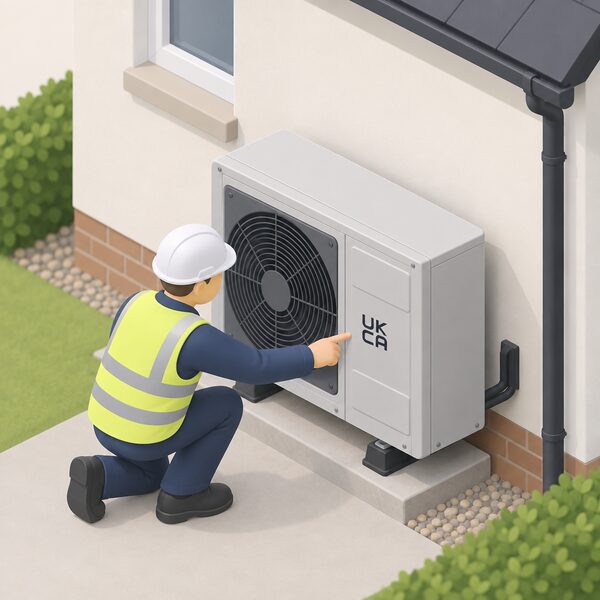
Conformity marking is the mechanism by which a heating appliance is declared fit for the UK market, and the rules around it are specific. For heating products sold on the GB market there is a mandate to display the UKCA mark4. A product must not display a CE or UKCA mark unless a certificate of conformity has been issued for it16. The two statements together describe a system in which the mark is evidence of an assessment, not a decorative label.
The transitional arrangements are worth knowing because they have a date. The temporary provisions allowing certain importer details and UKCA marking to be supplied on packaging, labels or accompanying documents end on 31 December 20274. After that point the marking requirements apply in their full form.
For heat pumps specifically, the standards route is more detailed than the general marking rule. The Boiler Upgrade Scheme regulations name BS EN 14511-2:2018, covering air conditioners, liquid chilling packages and heat pumps with electrically driven compressors for space heating and cooling, as an approved standard17. Air source heat pumps are also expected to comply with the Microgeneration Certification Scheme Planning Standards or an equivalent18. Where a heat pump is part of a scheme-funded installation, the standards are not optional: they are the condition of the funding.
"A person must not display a CE or a UKCA mark on any product covered by this Act unless a certificate of conformity has been issued for the product"
Certification and standards: BSI Kitemark, MCS and IEC 60335-2-40
Certification bodies sit between the manufacturer and the mark. BSI offers a combined MCS and BSI Kitemark Certification for microgeneration products used to produce electricity and heat from renewable sources19. The combination matters because it covers both the product and the process: certification is intended to improve a product and its manufacturing procedures through testing, audit and certification, and to give access to markets through the same route19.
For heat pumps, the product safety standard is IEC 60335-2-40, and its consolidated edition 8.1 was published on 13 August 202620. That is the current version of the standard against which the safety of these appliances is assessed.
The standards picture for electric heating is layered. There is the product safety standard, the conformity marking regime, and, for scheme-funded work, the specific approved standards named in the scheme rules. A household does not need to hold all of this in mind, but it does need to know which layer applies to the work being done. A plug-in panel heater is a marked product. A heat pump installed under a grant scheme is a marked product that also has to meet the scheme's named standards and the MCS Planning Standards17.
Recalls and product registration: checking your heater is safe
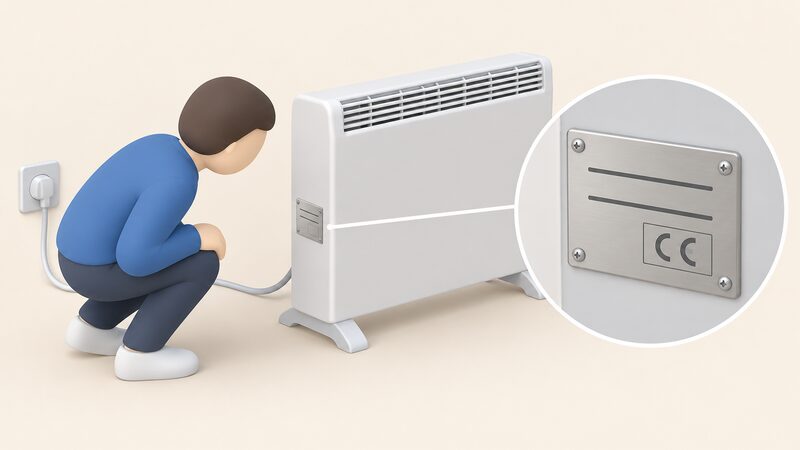
Registration is the mechanism that makes a recall possible. Independent guidance is explicit about the purpose: register the heater so you can be contacted easily if there is a safety recall9. Without registration, a manufacturer has no route to the owner of a specific appliance, and a recall becomes a public announcement rather than a direct warning.
The information needed at registration is the information on the rating plate: make, model and serial number. That is what allows a manufacturer to identify whether a particular unit falls within an affected batch. Keeping the registration confirmation with the appliance paperwork, rather than in a drawer of miscellaneous receipts, is what makes it useful years later.
Where a product is part of a funded installation, registration requirements extend beyond the appliance. Installers under the Energy Company Obligation must be TrustMark accredited and will have a registration number, except in the case of installers of district heating connections21. For plug-in solar devices, manufacturers must register devices on the ENA Type Test Register and obtain confirmation that the device has been assessed and identified as compliant before placing them on the market22. The pattern across schemes is the same: registration is a condition of the product or the installer being allowed to operate, and it is what makes traceability possible.
For a household, the practical steps are to register the appliance at purchase, keep the model and serial number recorded somewhere accessible, and act on any recall notice by stopping use of the appliance rather than continuing with it while a remedy is arranged.
Electrical checks in rented homes: what landlords must do

The rented sector has the clearest electrical safety rules in the UK, and they apply to electric heating as much as to anything else in the installation. Landlords must have the electrics in their rented properties checked at least every 5 years by a properly qualified person, and must give their tenants proof that installations and equipment have been inspected, tested and checked3. Social landlords who provide electrical equipment must also have that equipment tested3.
The statutory duty is set out in the Electrical Safety Standards in the Private Rented Sector (England) Regulations 2020. A landlord must ensure every electrical installation in the residential premises is inspected and tested by a qualified person before a specified tenancy commences, and at regular intervals thereafter, and must ensure that the electrical safety standards are met during any period when the premises are occupied under a specified tenancy8. The same duties are expressed in the made version of the regulations23.
The guidance for all landlords states the inspection interval in the same terms: all landlords are to have the electrical installations in their properties inspected and tested by a qualified person at least every 5 years3. For English social landlords, electrical installations must be inspected and tested before a new tenancy starts from 1 December 20253.
Where a heating appliance has been disconnected, a separate duty applies: the landlord must provide the tenant with emergency heating24. That sits alongside the general rule that if emergency works are necessary, there is no bar on carrying them out straightaway, but they must comply with the requirements and retrospective approval and a completion certificate must be applied for afterwards13.
Half of accidental domestic fires involve electricity: the wider picture
The scale of domestic electrical risk is the reason the rules above exist. Heating accounts for half of our energy bills, which makes it the largest single energy use in most homes and the one where a fault has the longest exposure window7. Electric heating is a substantial part of that picture: 10% of Scottish households, 258,000 in all, use electricity as their primary heating fuel, and a further 9% of households in England and Wales use electric heating5.
Those figures describe a large installed base of electric heating, much of it older storage heating and portable appliances, operating on installations of varying age. The safety framework responds to that with inspection intervals, conformity marking and product registration rather than with a ban on any particular appliance type.
For a household, the wider picture is a reason to treat the electrical installation as part of the heating system rather than as background infrastructure. A new appliance connected to an installation that has never been inspected is a new load on an unknown circuit. The inspection regime exists precisely because the installation, not the appliance, is where age and undetected deterioration accumulate.
Grid capacity: what mass electric heating means for supply
The supply question runs in two directions: the capacity of the individual connection, and the capacity of the network behind it. At the connection level, the rules for changing an incoming power supply are set by the distribution network operator, and the process requires the electrical contractor to certify the installation before it is energised12. That is the point at which a household's electrical capacity is formally established.
At the appliance level, the regulations draw lines around what counts as a significant change. Extending or expanding the capacity of a space heating, comfort cooling or ventilation system by over 25% of its previous capacity is treated as work that may alter energy performance or CO2 emissions performance14. That threshold is a useful marker for households: a modest addition may sit below it, a substantial expansion of electric heating capacity does not.
The network side is where the scale question sits. The Energy Smart Appliance regulations cover heat pumps and other electric heating appliances up to 45kW, and those regulations were subject to final parliamentary approval at the time of the consultation response25. The direction of travel is towards appliances that can respond to network conditions rather than drawing regardless of them.
For heat pumps, the design rules already assume a full-load approach. Primary heating systems containing heat pumps should be selected to meet the full space heating requirement at the design condition chosen for heat loss calculations26. Under the Boiler Upgrade Scheme, the heat pump or biomass boiler must provide both space and hot water heating and be capable of meeting the full space heating and hot water heating demands of the property27. Under the Warm Homes: Local Grant, the heat pump is sized to provide a minimum of 55% of the calculated heat load for retrofit and packaged hybrids28. High-temperature heat pumps are assessed on delivering declared capacity for heating at an indoor heat exchanger outlet temperature of 65 °C4.
The independence question follows from this. Electric heating removes the gas connection and the flue, and in an off-grid setting it can be paired with generation: space and water heating can be supplied when available power exceeds demand29. What it does not remove is the dependence on a supply connection, a distribution network and, for most households, a supplier. The electrical installation is the boundary between the household's own equipment and the system it draws from, and it is the part of the system the household controls.
Sources29 cited
- Benefits of electric space and water heating, BEAMA, 2026-09-17
- Do I need building regulations approval for electrical installation?, Planning Portal, 2026
- Electrical safety standards in the private and social rented sectors: guidance, GOV.UK, 2025-11-01
- Raising minimum energy performance standards for heat pumps: options assessment, GOV.UK, 2024-11-27
- Scottish House Condition Survey 2024: key findings, Scottish Government, 2024
- Energy security and net zero Committee report, UK Parliament, 2025-05-09
- Home and business grants, schemes and advice, East Herts Council, 2026-09-17
- The Electrical Safety Standards in the Private Rented Sector (England) Regulations 2020, regulation 3, legislation.gov.uk, 2026-09-17
- Portable heaters safety advice, Electrical Safety First, 2026-09-17
- Building control application guidance notes, London Borough of Bromley, 2026-09-17
- Building regulations: boilers and heating, Welsh Government, 2026-09-17
- Energising your connection, NI Networks, 2026-09-19
- Building regulations for boilers and heating, Planning Portal, 2026
- Approved Document L, Conservation of fuel and power, Volume 1: Dwellings, GOV.UK, 2026-09-17
- Approved Document L, Volume 1 consultation version, Welsh Government, 2026-09-17
- [Lithium-ion Battery Safety Bill [HL]](https://bills-api.parliament.uk/api/v1/Publications/56005/Documents/4984/Download), UK Parliament, 2024-07-29
- Boiler Upgrade Scheme regulations: approved standards, grant categories and grant levels, GOV.UK, 2026-07-21
- Air source heat pumps fact sheet, Pendle Borough Council, 2026-09-17
- MCS microgeneration certification, BSI, 2026-09-17
- IEC 60335-2-40 consolidated version, IEC, 2026-08-13
- Energy Company Obligation: homeowners and tenants, Ofgem, 2026-09-17
- Plug-in solar: interim product specification, GOV.UK, 2026-07
- The Electrical Safety Standards in the Private Rented Sector (England) Regulations 2020, regulation 3 (made version), legislation.gov.uk, 2026-09-17
- Gas safety in the home: frequently asked questions, Health and Safety Executive, 2026
- Smart Secure Electricity Systems programme: first phase energy smart appliances regulations, interim response, GOV.UK, 2026-09-17
- Approved Document L, Volume 1: Dwellings, GOV.UK, 2026
- Boiler Upgrade Scheme guidance, Ofgem, 2023-09-25
- Warm Homes: Local Grant policy guidance, GOV.UK, 2026-07
- Hydro electricity, Planning Portal, 2026
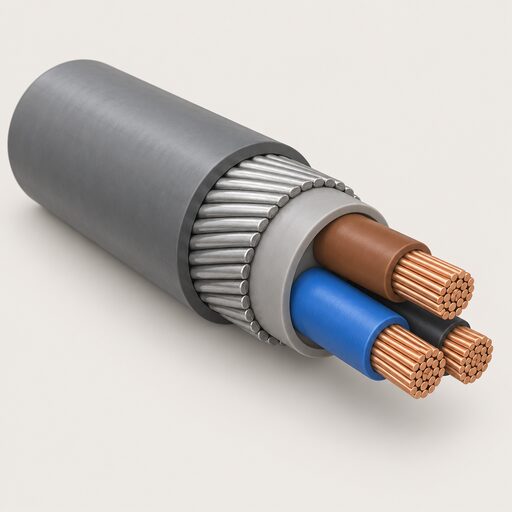 Electricity Supply and WiringWill your fuse box cope with a heat pump, and will the mains supply need upgrading?
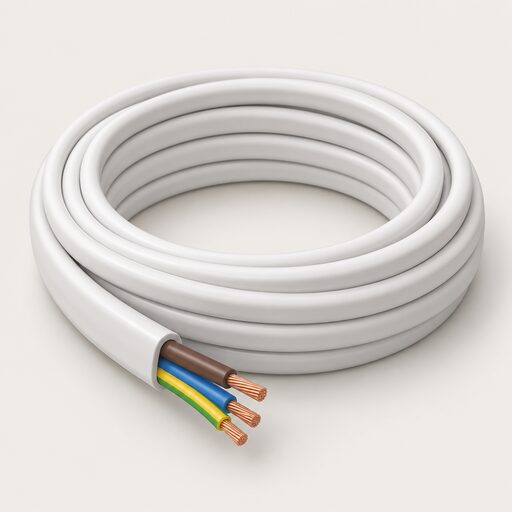 Electrical Safety RegulationElectrical work at home raises real questions about who can do it, what needs signing off, and what paperwork you should keep.
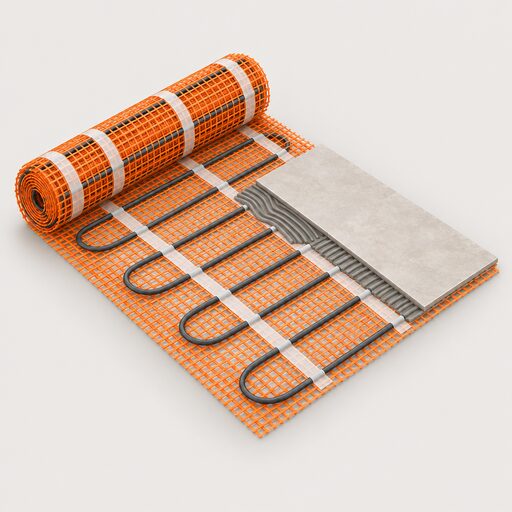 Underfloor Heating SystemsWhich rooms suit electric underfloor heating and which need a wet system?
 Which Homes Suit a Heat PumpMost UK homes can have a heat pump fitted, so the real question is whether yours makes it easy or expensive.
 DIY or ProfessionalLoft insulation and draught-proofing are jobs most people can tackle, but anything electrical near a kitchen, bathroom or outdoors needs a registered electrician.
 Ventilation and TemperatureWhere can you put a home battery so it stays warm enough in winter and cool enough in summer?