
In this answer
Short answer
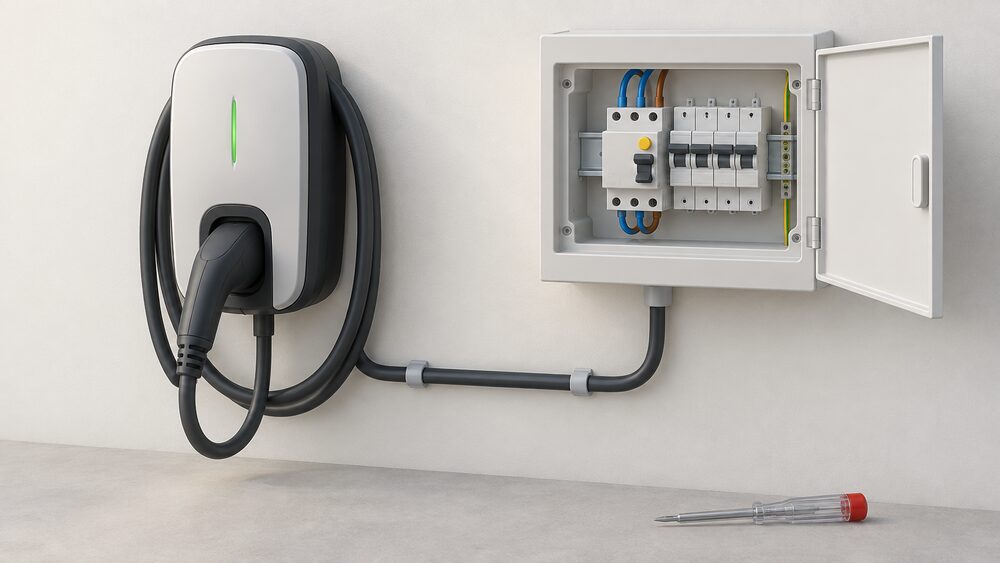
An EV charge point needs its own RCD protection, and the type of device depends on what the charger itself already does. Regulation 722.531.3 requires RCD protection for EV charging circuits, and the charging point must be protected by its own RCD of at least Type A1. Where the charger has no integral DC leakage detection, a Type B RCD is required instead1.
The practical question is where the DC protection sits. If the charger has built-in DC fault current detection to 6mA, a Type A RCD rated at 30mA is sufficient1. Where protection against DC residual current is provided in the charging equipment, a Type A or Type F RCD can be used2. Where it is not, Regulation 722.531.3.101 of BS 7671:2018+A2 points to a Type B device2.
This matters for household energy independence because the charge point is the one part of an EV setup that stays inside the home's own electrical installation. The car can be charged from a home solar array or a home battery, but the safety device protecting that circuit is fixed at installation and cannot be upgraded by firmware. What follows is what the Wiring Regulations require, what the charger makers build in, and what older wiring adds to the job.
What Regulation 722.531.3 requires for EV charging circuits
Section 722 of BS 7671 sets the requirements for electric vehicle charging installations1. Regulation 722.531.3 requires RCD protection for EV charging circuits, and the charging point must be protected by its own RCD of at least Type A1. The requirement applies to the socket-outlet or connector, not necessarily to the circuit supplying the charging equipment2. That distinction is why a charger with an integral device can satisfy the rule without a second RCD at the consumer unit.
Two further rules shape the circuit. Each EV charging point should be supplied by its own dedicated final circuit, with a separate MCB or RCBO at the distribution board for each charger and no other loads sharing it1. Regulation 722.312.2.1 adds that on TN systems the circuit supplying EV charging equipment must not include a PEN conductor1. That is the reason PEN fault protection appears alongside RCD protection in charger specifications and in local authority guidance.
The regulation has been tightened over time. BS 7671:2018 Section 722 now contains further requirements for both Type A and Type B RCDs to take account of DC fault current3. An RCD associated with an EV charging installation should be tested in accordance with BS 7671:2018+Amd1:2020, Regulation 643.84. All EV charging installations must continue to comply with the requirements of BS 7671, the Wiring Regulations governing them5.
For a household, the effect is that the charge point is a separately protected circuit rather than an extra load hung off an existing way. That is a safety gain and a small independence gain: a fault on the car circuit does not take the house down with it, and the circuit can be isolated on its own.
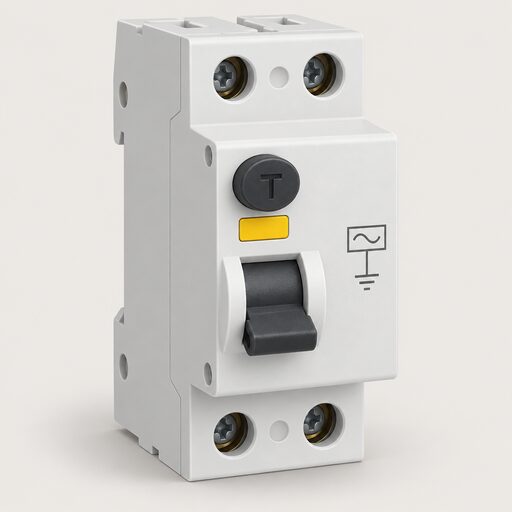
RCD types explained: Type A, Type F and Type B
Regulation 722.531.3.101 requires the charging point to be protected individually by an RCD of Type A, Type F or Type B2. The three differ in what residual current they can tolerate before their ability to detect a fault is compromised.
Type A devices are designed and tested to tolerate moderate levels of DC residual current, up to 6mA6. Type F devices tolerate varying levels of DC residual current above 10mA, and are also suitable for the addition of plug-in solar on the circuits they protect6. Type B devices respond to smooth DC residual current that a Type A device may not detect, which is why they are specified where the charger provides no DC protection of its own1.
| RCD type | DC residual current tolerated | Where it applies |
|---|---|---|
| Type A | up to 6mA6 | Charger with integral DC detection to 6mA1 |
| Type F | above 10mA6 | Charger with integral DC protection; circuits with plug-in solar2 |
| Type B | Smooth DC fault current | Charger without integral DC leakage detection1 |
| Type AC | Not suitable | Must not be used for EV charging circuits1 |
A single-phase charger on a dedicated circuit takes a Type A or Type B RCD depending on the charger specification1. The choice is not a preference: it follows from whether the wallbox detects DC fault current itself. A Type AC RCD must not be used for EV charging circuits at all1.
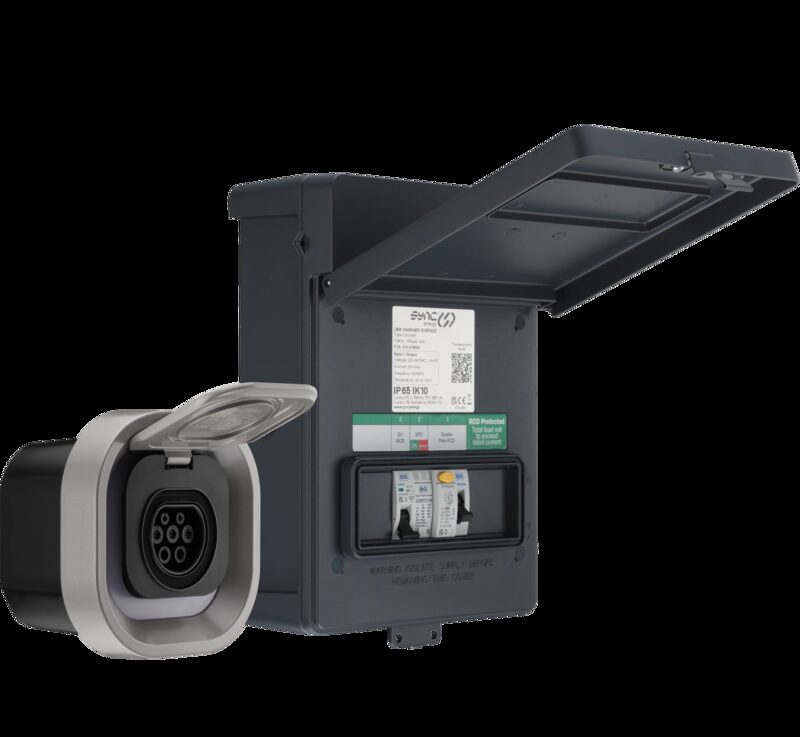
DC fault current protection: RCD-DD to BS IEC 62955 or built into the charger
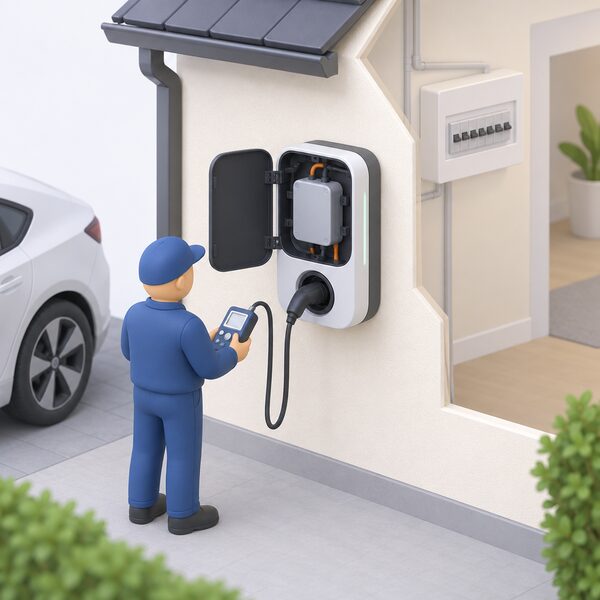
An RDC-DD is a residual direct current detecting device. BS EN 62955:2018 provides requirements for RDC-DDs to be used for Mode 3 charging of electric vehicles2. The same standard is written as BS IEC 62955, and a device complying with it performs the DC detection function that would otherwise fall to a Type B RCD.
Where the equipment includes a built-in RDC-DD to BS IEC 62955:2018, a Type A RCD is permitted on the circuit1. For Mode 3 charging, a Type A or Type F RCD is required where protection against DC residual current in the form of an RDC-DD is provided within the charging equipment2. Where no protection against DC residual current is provided in the equipment, Regulation 722.531.3.101 of BS 7671:2018+A2 requires a Type B RCD2.
Several UK wallboxes now carry the device internally. The Easee Charge Pro has an integrated RCD Type A 30mA AC to IEC 60947-2 and a 6mA residual direct current detecting device complying with IEC 629557. The SolarEdge ONE EV Charger EVN22B lists an RDC-DD of 6mA DC according to IEC 629558. DEFA Power Up models list RCD-DD 6mA DC in accordance with IEC 629559. The Smappee EV Wall integrates 6mA DC and 30mA RCD type A protection11.
"Where the equipment includes a built-in RDC-DD (Residual Direct Current Detecting Device) to BS IEC 62955:2018, a Type A RCD is permitted."
The consequence for a household is that the DC protection may be a sealed component inside the charger rather than a device in the consumer unit. It is tested as part of the installation and cannot be inspected or replaced in the same way as a board-mounted device.
When a Type A RCD with 6mA DC protection is enough
A Type A RCD is sufficient where the charger detects DC fault current itself. If the EV charger has built-in DC fault current detection to 6mA, a Type A RCD rated at 30mA is sufficient1. The RCD must be rated at 30mA for additional protection1.
The 6mA figure is the threshold at which a Type A device's ability to detect an AC fault can be affected by DC residual current. A Type A RCD is designed and tested to tolerate moderate levels of DC residual current, up to 6mA6. Above that, the device may not trip as intended, which is why a charger without its own DC detection needs a Type B RCD instead1.
In practice this is the common arrangement in current UK wallboxes. The Growatt Smart EV Charger Solution lists Type A RCD plus 6mA DC fault current protection, alongside overload, over and under voltage, lightning, over temperature, earth leakage, short circuit and fault current protection13. The Enphase IQ EV Charger 2 lists 6mA DC residual current protection as an RCD-DD14. A Project EV unit lists an RCBO with Type A plus 6mA DC fault current protection15. The Rolec UltraCharge 40 has built-in 30mA Type A RCD protection16.
The pattern is that the wallbox carries the DC detection and the circuit carries a Type A device, or the two are combined in one unit. For the household, the practical point is that the specification sheet, not the age of the consumer unit, determines whether a Type B device is needed.
Do I need a separate RCD if my charger has built-in DC fault protection?
The DC element is covered by the charger, but RCD protection of the charging point is still required. Where protection against DC residual current is provided in the charging equipment, a Type A or Type F RCD can be used2. The requirement for RCD protection applies to the socket-outlet or connector and not the circuit supplying the equipment2.
Some chargers integrate the RCD as well as the DC detection. The Easee Charge lists integrated earth fault protection17. The Sync Energy EV Wall Charger 2 (Tethered) is described as offering quick installation with RCD and PEN protection18. Where the charger provides both, the installer confirms what remains to be provided at the distribution board, which is usually the overcurrent device and the isolation.
PEN fault protection is a separate matter from RCD type and often appears in the same specification. Most local authorities specify that households install a dedicated EV charger with protective earth neutral fault protection19. The Energy Saving Trust states that where a cross-pavement solution is used, a dedicated EV charger with PEN fault protection must be installed19. Regulation 722.312.2.1 is the underlying rule: on TN systems the circuit supplying EV charging equipment must not include a PEN conductor1.
Can my existing consumer unit RCD cover the EV charger circuit?
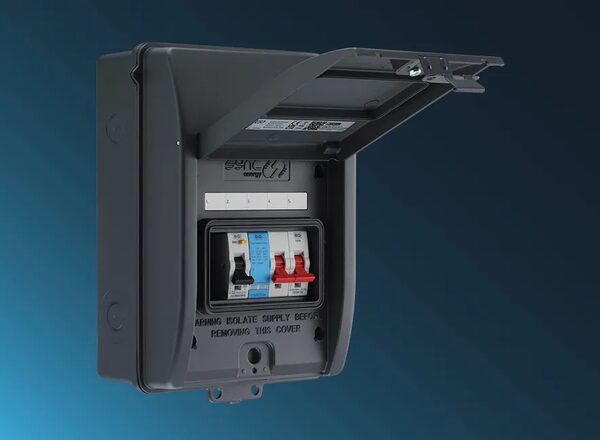
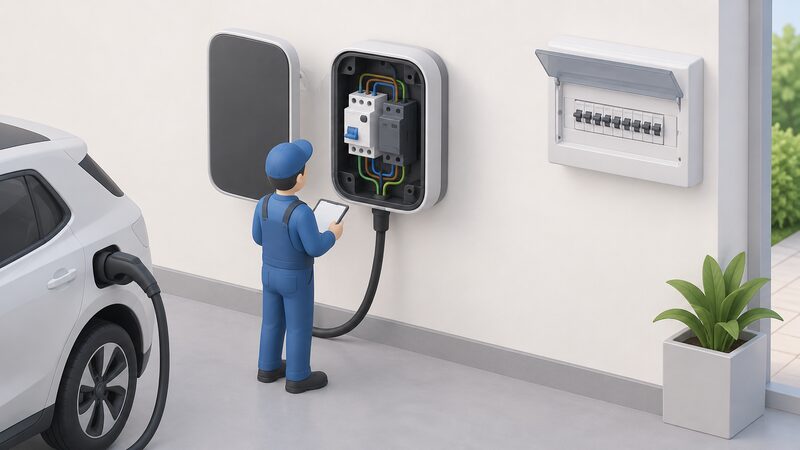
Usually not on its own. The charging point needs its own RCD of at least Type A, and a dedicated final circuit with a separate MCB or RCBO at the distribution board for each charger, with no other loads sharing it1. A shared RCD covering several circuits does not meet the expectation that the charging point is protected individually.
Consumer unit design affects how easily that is achieved. High integrity units provide either circuit breakers or the combined RCD and circuit breaker protection of an RCBO for each connected circuit, without combining circuits under a single RCD20. An RCD main switch unit comes with an RCD main switch that can safely isolate the entire electrical supply of the home, with individual circuit breakers protecting each connected circuit20. The first arrangement isolates faults to one circuit; the second protects the installation as a whole.
An RCD in the consumer unit protects from electric shocks if a product is faulty21. That general function is not the same as the specific requirement for the charging point. Where a circuit has no RCD protection, the general advice for portable equipment is to use an RCD plug on the socket where the product is plugged in21. That is not a route to compliance for a fixed EV charge point, which is a dedicated circuit rather than a plug-in appliance.
For a household, the practical outcome is often a spare way in the consumer unit, an RCBO or RCD plus MCB for the charger, and a separate device inside the wallbox for DC detection. E.ON Next states that its quotes include core safety protections such as surge protection and RCD or RCBO protection where required23.
Installation in older homes: what the wiring adds to the RCD requirement
Older wiring does not change the RCD rule, but it changes how much work the rule implies. Key requirements for an EV charger installation include a dedicated circuit, RCD protection and proper earthing arrangements24. Where the existing board cannot provide those, the installation grows.
The warning signs are well documented. A wooden backing to the consumer unit is a sign of a vintage model, and a board with no test button has no RCD protection25. Nuisance tripping is another indicator that the existing arrangement is not suited to the new load25. The Institution of Engineering and Technology has warned that some older homes may have wiring or protection devices not designed for electricity flowing back into a circuit, and that older consumer units may contain RCDs that may not trip properly, meaning they do not offer shock protection when a fault occurs26.
The RCD for the charging point is likely to be installed within the charging equipment4. That reduces what the consumer unit must provide, but it does not remove the need for a dedicated circuit, correct earthing and a protective device at the board. Where the existing installation cannot support that, the work is a consumer unit change or an additional enclosure rather than a simple extra way.
Two further points sit outside the electrical rules but affect the job. Installing a home charger is classified as development, and it is up to the householder to ensure the correct permissions are in place26. In England, home EV chargers, public charging points and business installations now fall under permitted development rights5. All EV charging installations must continue to comply with BS 7671 regardless5.
For energy independence, the RCD arrangement is the fixed part of the setup. A household that later adds solar, a battery or a smart tariff is changing how the car is supplied, not how the circuit is protected. The protection is set once, at installation, and the evidence for it is the certificate the installer issues.
Sources26 cited
- Section 722 EV charging complete guide, Elec-Mate, 2026-07-02
- RCDs for electric vehicle supply equipment, IET, May 2024
- The impact of the 18th Edition: Sections 722, 753 and new 730, IET, 2026-09-17
- Electric vehicle charging installations FAQs, IET, 2026-09-17
- EV charger regulations in England: what's changed, NICEIC, 2026-08-19
- Plug-in solar consumer guide, Electrical Safety First, August 2026
- Easee Charge Pro, Easee, 2026-09-10
- SolarEdge ONE EV Charger datasheet, SolarEdge, 2026-09-17
- DEFA Power Up 4m cable and docking, DEFA, 2026-04-13
- DEFA Power Up 6m cable, DEFA, 2026-03-27
- Smappee EV Wall Home v3 technical specifications, Smappee, 2026-09-17
- Smappee EV Wall technical specifications, Smappee, 2026-09-17
- Smart EV Charger Solution, Growatt, 2026-09-17
- IQ EV Charger 2, Enphase, 2026-09-17
- EVC-AC22S-DC60D datasheet, Westech Solar, 2026-09-17
- UltraCharge 40, Rolec, 2026-09-17
- Easee Charge, Easee, 2026-03-12
- Home installations, Sync Energy, 2026-09-17
- Cross-pavement charging solutions, Energy Saving Trust, 2025-07-18
- Consumer units and fuse boxes, NICEIC, September 2025
- Patio heaters safety advice, Electrical Safety First, 2026-09-19
- Smart homes safety advice, Electrical Safety First, 2026-09-19
- Is your home EV ready for installation, E.ON Next, 2026-09-17
- Which EV charger, Fuse Energy, 2026-04-25
- EV charger installation in older homes: electrical upgrades explained, E.ON Next, 2026-09-17
- Plug-in solar panels vs rooftop systems, Which?, 2026-04-27
 Electrical RequirementsWill your home need a bigger electricity supply before a charge point can go in?
 Home Charger InstallationWho can fit a home EV charger, and does it need building regulations approval?
 The Full EV Charging GuideCharging an electric car at home usually means a wallbox, but do you need one, and what will it cost to fit and run?
 Charger Cybersecurity and DataWho can control your home charger, and how do you keep it secure?
 Planning Permission for ChargersDo you need planning permission for a home EV charger, and does it change if you live in a listed building, a conservation area or a flat?
 Charging With a Home BatteryHow a home battery and an EV charger share one supply, whether a battery can usefully charge a car, and how combined systems are controlled so the battery is not discharged into the vehicle at a loss.