In this guide
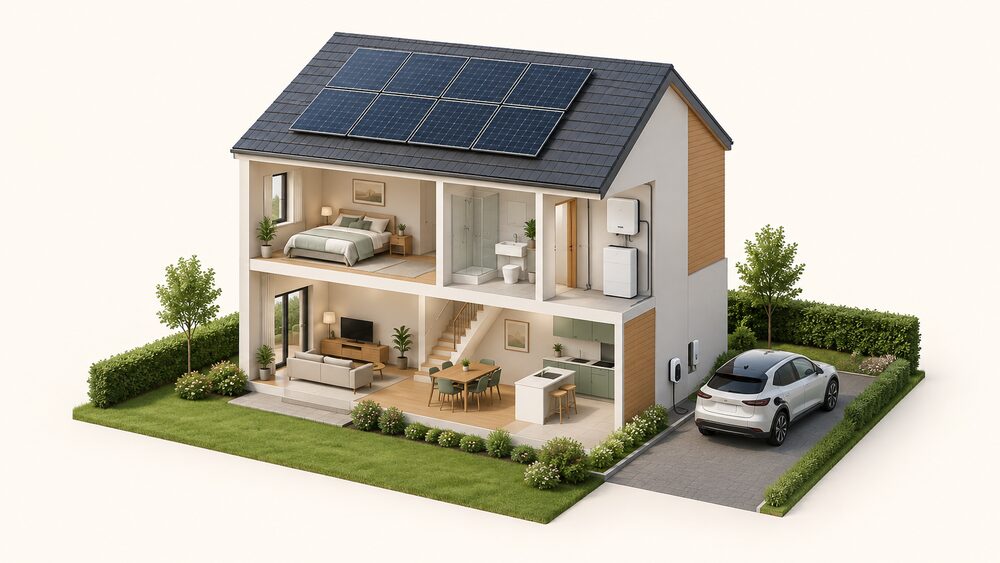
SolarEdge is a solar inverter maker that has built an EV charger into its own home energy ecosystem rather than selling a standalone wallbox. The SolarEdge EV Charger integrates with SolarEdge Home, the company's smart energy platform, and uses available solar power to charge an electric car1. It is sold in socket and tethered versions, supports single-phase and three-phase installations, and is listed for indoor and outdoor use2.
The pitch is coordination. A household with SolarEdge solar, a SolarEdge Home Battery and the charger can run the car on surplus generation first, draw on stored energy second, and fall back to the grid when neither is available. Load balancing protects the main circuit breaker from tripping due to overcurrent, and the charger can be scheduled to off-peak periods to use low-cost energy1. Up to three chargers can run on one site for multi-EV households, though that multi-charger support is only available with SolarEdge residential inverters1.
The dependence is equally clear. Solar-aware behaviour, battery control and multi-charger coordination all assume SolarEdge equipment on site. Remote control runs through the mySolarEdge app, and charging stops in a power cut unless a battery and backup system can supply power independently3. This page sets out what the charger does, what it needs, and what it leaves a household still dependent on.
What the SolarEdge EV charger is and how it fits SolarEdge Home
SolarEdge describes its EV charger as integrating seamlessly with the SolarEdge Home smart energy ecosystem, so that a household has one source for products, warranty, support, training and system management1. SolarEdge Home itself is described as a smart energy ecosystem that puts the household in control of its own solar power production and management, and it includes battery storage, EV chargers and smart energy management devices7.
The company has been in solar since 2006 and reports millions of systems installed in over 140 countries8. Its residential product scope runs from inverters and Power Optimizers to batteries, backup solutions and smart energy devices8. The ecosystem is presented as modular and scalable: a household can start with a basic solar system and later add more panels, batteries or EV charging8.
That modularity is the point of the charger's design. It is not a wallbox that happens to be made by a solar company; it is a component intended to be steered by the same platform as the panels and the battery. The SolarEdge ONE EV Charger can respond to utility signals and work in sync with the solar and battery system, enabling participation in demand response or virtual power plants9. SolarEdge ONE for EV, the management software, works with the SolarEdge ONE EV Charger and with OCPP-compliant chargers from other makers10.
For a household, the practical consequence is that the charger's best behaviour is unlocked by buying into one manufacturer's stack. On its own it is a competent Mode 3 AC charger. Inside the ecosystem it becomes a controllable load that the household's own generation can feed.
Solar-aware charging: solar power for the house first, the car second
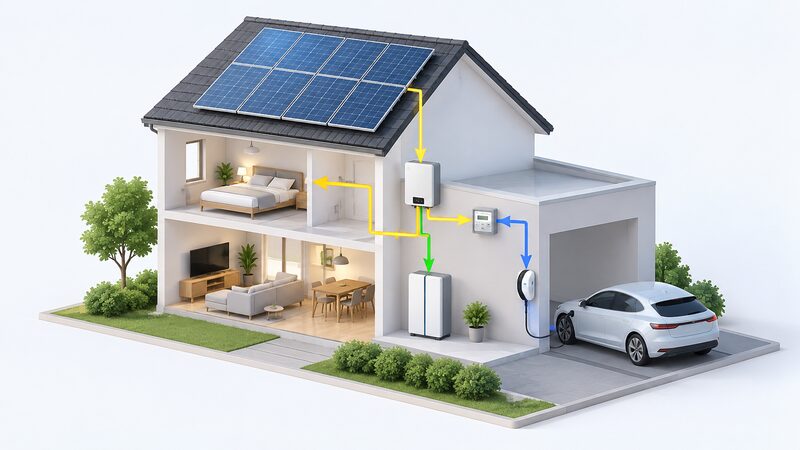
The charger's headline behaviour is that it uses available solar energy for EV charging, giving what SolarEdge calls the convenience of quick charging from clean, free renewable energy1. In practice this means the charger watches generation and adjusts, rather than charging at a fixed rate regardless of what the roof is producing.
Independent guidance describes the same mechanism in general terms: smart chargers monitor real-time solar electricity production, adjust charging speed accordingly, and switch between solar and grid supply depending on availability11. Consumer guidance lists solar diversion, app control and dynamic scheduling as the features that matter in a solar-integrated charger, with solar diversion allowing the charger to prioritise solar power for EV charging and minimise reliance on the grid12.
The ordering matters. SolarEdge's own framing is that the household's energy use comes first and the car takes what is left, which is why the charger is described as prioritising excess PV. The SolarEdge Home Load Controller extends the same logic to other appliances, described as running more appliances on sunshine and reducing grid dependency by maximising solar self-consumption13.
Two limits are worth stating. First, solar-aware charging is slower than a full-rate charge, because it tracks a variable supply; a car that needs a full battery by morning is usually better served by an overnight schedule than by waiting for surplus. Second, the behaviour depends on the charger being able to see the site's generation and consumption, which in the SolarEdge system means SolarEdge metering and inverters. A charger fitted without that visibility cannot prioritise what it cannot measure.
Load balancing: up to 32A charging without tripping the main breaker
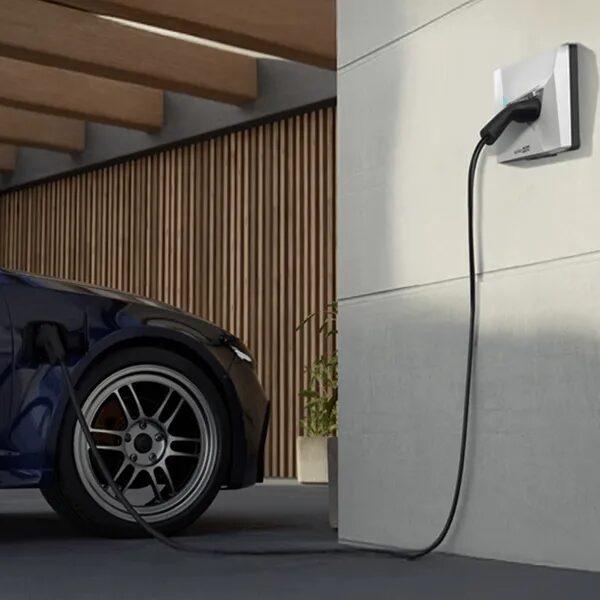
A home charge point draws a serious current, and the risk it creates is a main fuse or circuit breaker tripping when the car, the oven, the shower and the tumble dryer all run at once. SolarEdge addresses this with load balancing, described as protecting the home's main circuit breaker from tripping due to overcurrent1. The charger dynamically modifies its charging power output so the system overall remains in energy balance1.
The rated current per phase on the ONE EV Charger is 6 to 32 A, so the unit can modulate across a wide band rather than switching between full rate and nothing4. SolarEdge ONE for EV is described as leveraging EV-specific smart load balancing to maximise every charge10. An earlier SolarEdge account of the same principle describes the system decreasing consumption of the home's appliance loads and freeing up enough EV charging capacity to protect the home from overloading14.
Independent guidance explains why this matters beyond the household fuse: dynamic load balancing keeps an eye on how much electricity the house is using and changes the charging speed of the EV, stopping electrical circuits from overloading15. The same principle is what allows a charger to be installed on a supply that could not otherwise support a 32 amp load alongside normal domestic demand15.
For UK installations the regulatory layer sits on top. SolarEdge states the Home EV Charger is fully G100 compliant for the UK market, derating itself according to the site limits that are configured, and that this applies to single-phase systems5. A distributor listing records G100 Issue 2 Amendment 2 compliance pending a 4.20 firmware upgrade6. All EV charging installations must continue to comply with BS 7671, the Wiring Regulations governing electrical installations16. G100 compliance is about how the charger behaves at the network connection point; BS 7671 is about how it is wired. Both apply.
One or three chargers per site: multi-EV households
SolarEdge supports up to three SolarEdge EV Chargers on a single site, aimed at households with multiple electric vehicles, so that more of the home's driving can run on solar energy1. The chargers are coordinated rather than independent, which is what allows the site's available solar and import capacity to be shared between them.
The wider market context is that choice is not scarce. More than 50 manufacturers provide charging units suitable for EV charging at home17. ChargeUK, the charging industry body, reports 850,000 home and workplace chargers in the UK, which it describes as close to one charger for every EV when combined with the public network18. A household choosing a SolarEdge unit is therefore choosing an ecosystem rather than the only available option.
For a two-car household the practical question is whether both cars need to charge at full rate simultaneously. Three chargers on one site share a fixed supply, so the load balancing that protects the fuse also means the units will not all run at maximum at once. That is a design consequence, not a fault: the alternative is a supply upgrade. Where a household has one car and one charger, the multi-unit support is simply unused capacity in the platform.
Control through the mySolarEdge app: schedules, history and battery choices
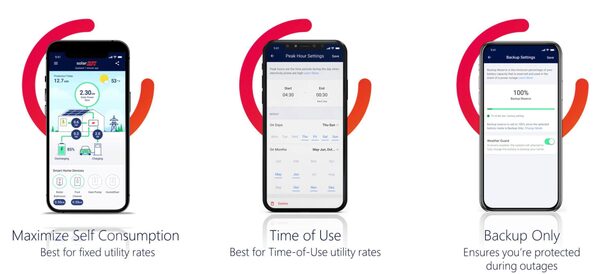
Control and monitoring run through the mySolarEdge app, covering remote operations, charging schedules and charging history6. SolarEdge describes the app as the single place to control and optimise all household energy including EV charging, and to track real-time solar production and home energy use, manage the battery, EV charging and connected devices, and automatically optimise energy use1.
The specific functions that matter to a driver are scheduling and reporting. The charger can be scheduled to charge in off-peak periods to use low-cost energy8. It produces downloadable usage reports tracking energy per session or over time, and supports app-based authorisation to deter misuse3. The app also allows the home battery to be enabled or disabled for charging the EV according to the household's needs, which is the control that decides whether the car runs on stored energy or on live solar9.
On tariffs, the general position is that smart charging tariffs make it cheaper to use electricity at night or at times of low demand19, and that EV tariffs are typically two-rate, cheaper at night so vehicles can be charged more cheaply overnight20. Energy Saving Trust notes one period of very cheap electricity in the early hours of the morning for charging an EV21. Some tariffs are only available with certain equipment installed, such as an EV charger or solar panels22. In Northern Ireland, official guidance states that home charging is the least expensive way to charge an EV because lower home electricity tariffs can be used23.
The dependence here is the clearest one the product creates. Local charging continues without a connection, but scheduling, history, remote diagnostics and battery choices run through the app, the home network and SolarEdge's platform. The ONE EV Charger is described as keeping continuous access to remote diagnostics, software updates and tariff adjustments even if the home network is temporarily offline, which addresses the connection rather than the power supply9.
Compatibility: which inverters and batteries the charger needs
The charger's smart functions are tied to specific SolarEdge hardware. The datasheet states that smart charging applies to sites with a SolarEdge Home Wave or Hub Inverter and the SolarEdge Home Batteries 400V or 48V4. The compatible inverter list covers SolarEdge Home Hub Inverters, SolarEdge Genesis Inverters, SolarEdge Residential Three Phase Inverters and SolarEdge Nexis Inverters4.
| Requirement | Detail |
|---|---|
| Smart charging | SolarEdge Home Wave or Hub Inverter with SolarEdge Home Batteries 400V or 48V4 |
| Compatible inverters | Home Hub, Genesis, Residential Three Phase, Nexis4 |
| Multi-charger sites | SolarEdge residential inverters only1 |
| Charging authentication | Built-in RFID reader, mobile app, ISO 15118, or plug-and-play4 |
| ISO 15118 | Hardware-ready4 |
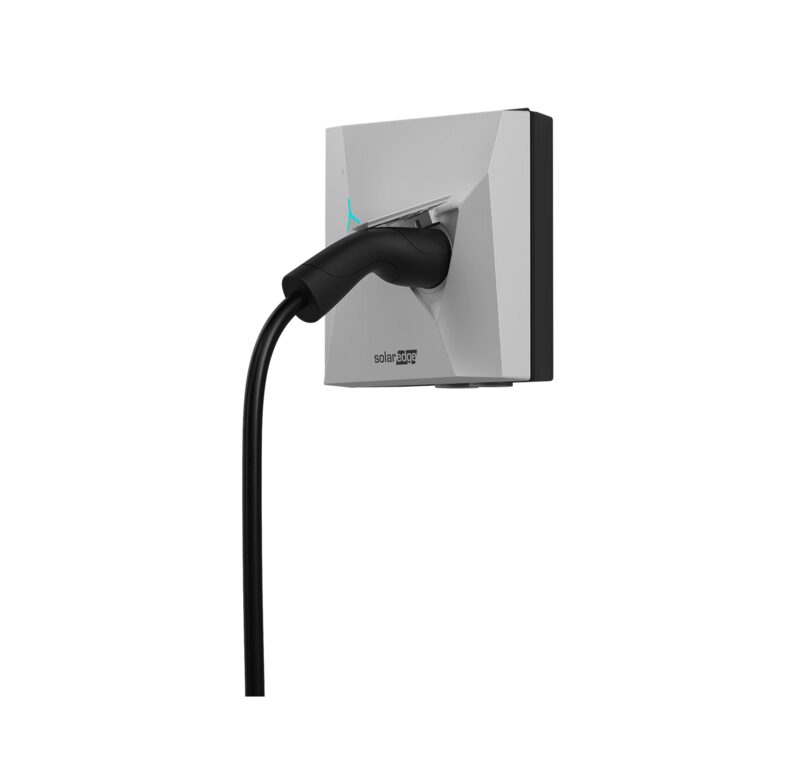
The charger supports both single-phase and three-phase configurations and installations3. On a three-phase supply, SolarEdge notes that minimum charging needs to be higher than 4.2 kW for a charge to get going5. Where a three-phase supply is available, the charger can detect which phase has the most available solar or grid capacity and switch between phases during charging9.
The three-phase inverter range is described as future-proofed for SolarEdge energy storage, with integrated type 2 DC surge protection that is field replaceable, optional RS485 surge protection, RoHS compliance and mounting brackets provided24. That matters for a household planning to add storage later: the inverter side of the ecosystem is built to accept it.
For a household without SolarEdge solar, the position is that the charger can be installed but the solar-aware and battery-aware behaviour has nothing to coordinate with. SolarEdge ONE for EV will work with OCPP-compliant chargers from other makers, so the software layer is not strictly closed, but the hardware-level integration described above is10.
Specifications and options: Type 2 connector, RFID and MID metering
The ONE EV Charger uses a Type 2 connector, compatible with major brands in EMEA, and is available in socket and tethered versions with a cable lock option on the tethered form3. The datasheet records the EV socket type as Type 2, up to 32 A / 400 V AC in accordance with EN 62196-1, and the charging mode as Mode 3 in accordance with IEC 61851-1 AC charging4.
| Specification | Value |
|---|---|
| Charging mode | Mode 3, IEC 61851-1 AC4 |
| Connector | Type 2, up to 32 A / 400 V AC, EN 62196-14 |
| Rated current per phase | 6 to 32 A4 |
| Installation environment | Indoor and outdoor4 |
| RFID reader | ISO / IEC 14443 Type A4 |
| Authentication | RFID, mobile app, ISO 15118, plug-and-play4 |
| MID meter | Optional, Pro model only4 |
| Three-phase RFID and MID variant | PN SE-EVK22URM-016 |
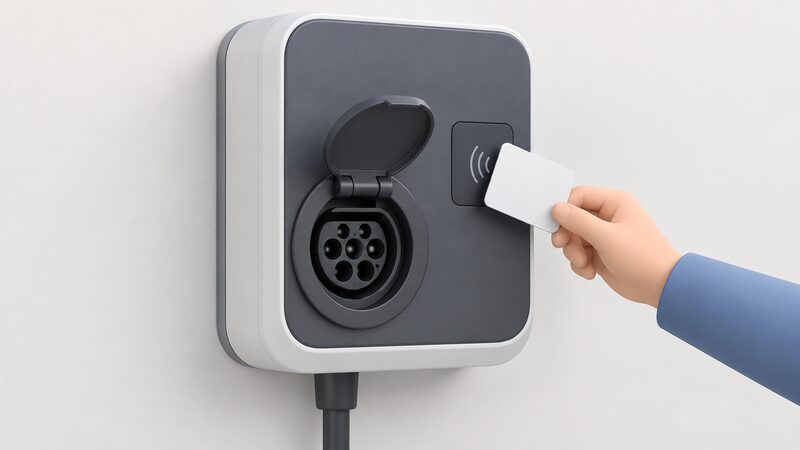
Authentication options are broader than on many domestic units: the charger supports charging authentication using the built-in RFID reader, the mobile app, ISO 15118, or simple plug-and-play4. RFID card authentication and MID metering are optional and, per the distributor listing, available only in the SolarEdge EV Charger for three-phase systems under part number PN SE-EVK22URM-016. The datasheet states the optional MID meter is available with the SolarEdge ONE EV Charger Pro model only4.
MID metering is the feature that matters where charging energy needs to be measured to a billing standard, which is a commercial rather than a typical domestic requirement. SolarEdge lists the ONE EV Charger for both residential and commercial sites, and ONE for EV for commercial installations2. For a domestic buyer the practical specification points are the Type 2 connector, the 6 to 32 A range, indoor and outdoor mounting, and the choice between socket and tethered.
What owning a SolarEdge charger means for household energy independence

The independence case for this charger rests on self-consumption. SolarEdge states that the Home Load Controller increases savings and reduces grid dependency by maximising solar energy self-consumption, and the same logic applies to the car: every kilowatt-hour that goes into the battery from the roof is one not bought from a supplier13. The Home Battery is described as storing energy to power appliances, EVs and provide critical backup during outages8. SolarEdge ONE is described as able to turn off non-essential appliances, store energy in the battery for upcoming weather events, and sell energy to the grid at the right times7.
The dependence that remains is layered. The household stays connected to the grid for import when generation and storage fall short, and to a supplier for whatever it imports. The charger's smart functions depend on SolarEdge inverters, SolarEdge batteries and the mySolarEdge app, so the household's control sits inside one manufacturer's platform. Charging stops in a power cut unless a battery and backup system can supply power independently3. And the charger is one of more than 50 home charging products on the UK market, so the ecosystem is a choice rather than a necessity17.
Two further points bear on reliability. Local network voltage can rise when neighbouring homes all export solar simultaneously, and some EV chargers respond by shutting down; the remedy given in network guidance is to switch the charger off and on at the isolator switch25. SolarEdge also publishes firmware for its residential inverters, which is the route by which charger and inverter behaviour is updated over time5.
For a household already running SolarEdge solar, the charger adds a controllable load that the existing system can feed, which is a genuine gain in self-consumption. For a household starting from nothing, it means adopting an ecosystem to get the solar-aware behaviour, and accepting that the deepest functions are reserved for sites with matching SolarEdge hardware. More on how solar and storage change home charging is at charging an EV from solar panels and EV charging alongside a home battery, with the wider picture at EV charging at home in the UK.
Sources25 cited
- SolarEdge EV Charging, SolarEdge, 2026
- SolarEdge EV Chargers, SolarEdge, 2026
- SolarEdge UK EV Chargers, SolarEdge, 2026
- SolarEdge ONE EV Charger Datasheet, SolarEdge, 2026
- Residential Inverters Firmware, SolarEdge, 2026
- SolarEdge EV Chargers, Midsummer Wholesale, 2026
- SolarEdge Home, SolarEdge, 2024
- SolarEdge Home UK, SolarEdge, 2026
- SolarEdge ONE EV Charger, SolarEdge, 2026
- SolarEdge ONE for EV, SolarEdge, 2026
- Making Home Energy Management Work for Consumers, Energy Systems Catapult, 2026
- Integrating Solar Panels with EV Charging, Uswitch, 2025
- SolarEdge Home Load Controller, SolarEdge, 2026
- EV Charger for Home, SolarEdge, 2022
- EV Chargers for Solar Panel Charging, E.ON Next, 2026
- EV Charger Regulations in England, NICEIC, 2026
- Home Charging, Zapmap, 2025
- Fewer Chargers and Higher Prices if EV Sales Quotas Weakened, ChargeUK, 2025
- EV Charger Installation and Maintenance, NICEIC, 2025
- Energy Flexibility, Smart Energy GB, 2026
- Tariffs for Renewable Technology, Energy Saving Trust, 2026
- Time of Use Tariffs: All You Need to Know, Energy Saving Trust, 2026
- Electric Vehicles, nidirect, 2026
- Three Phase Inverter with SetApp Configuration Datasheet, SolarEdge, 2026
- Voltage Changes in Your Home or Business, UK Power Networks, 2026
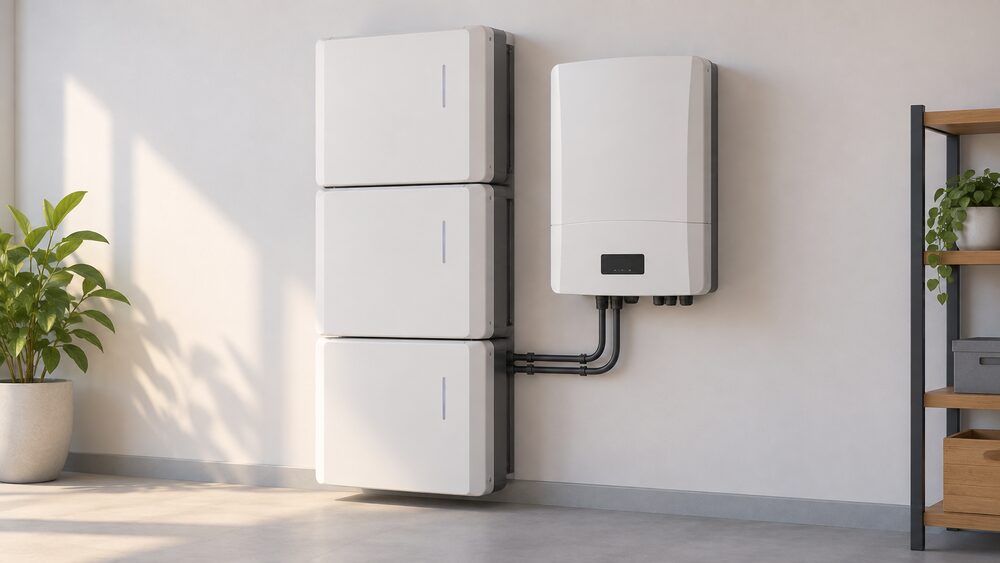 SolarEdge Home Batteries and Home Hub StorageCan you add a SolarEdge battery to panels you already have, and how many modules will fit your inverter?
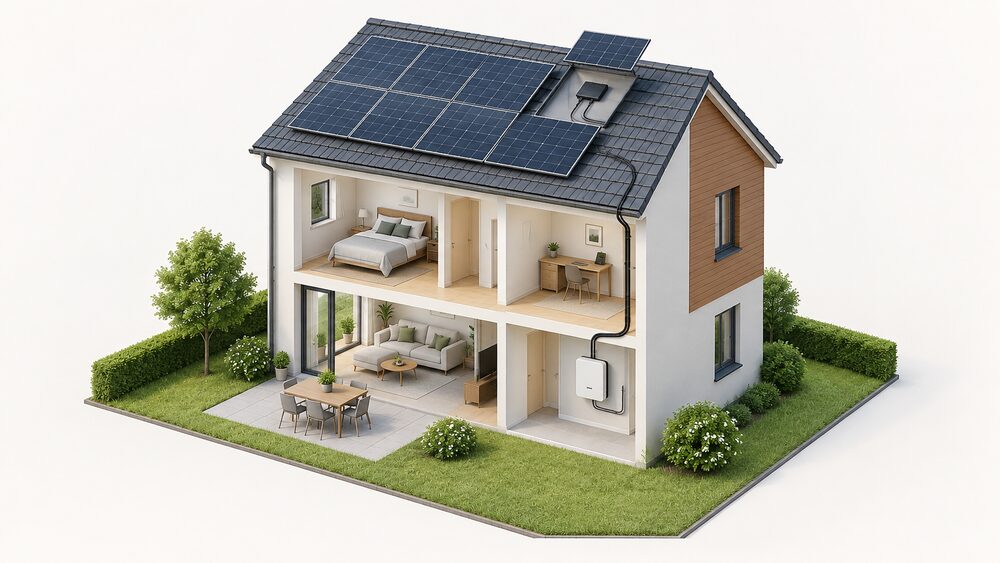 SolarEdge inverters and power optimisersSolarEdge systems pair an inverter with power optimisers on each panel.
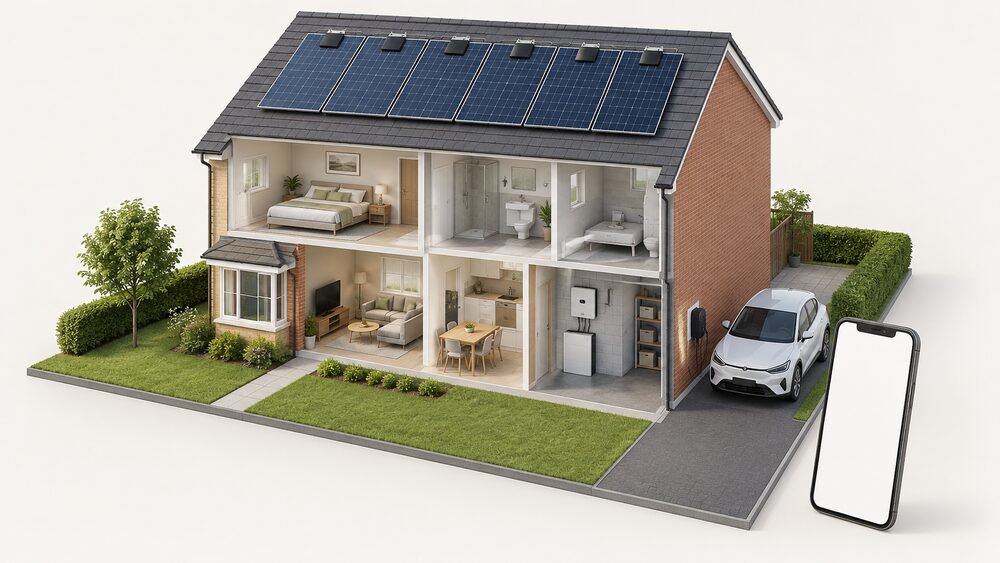 SolarEdgeIf one panel stops working, can you tell which one?
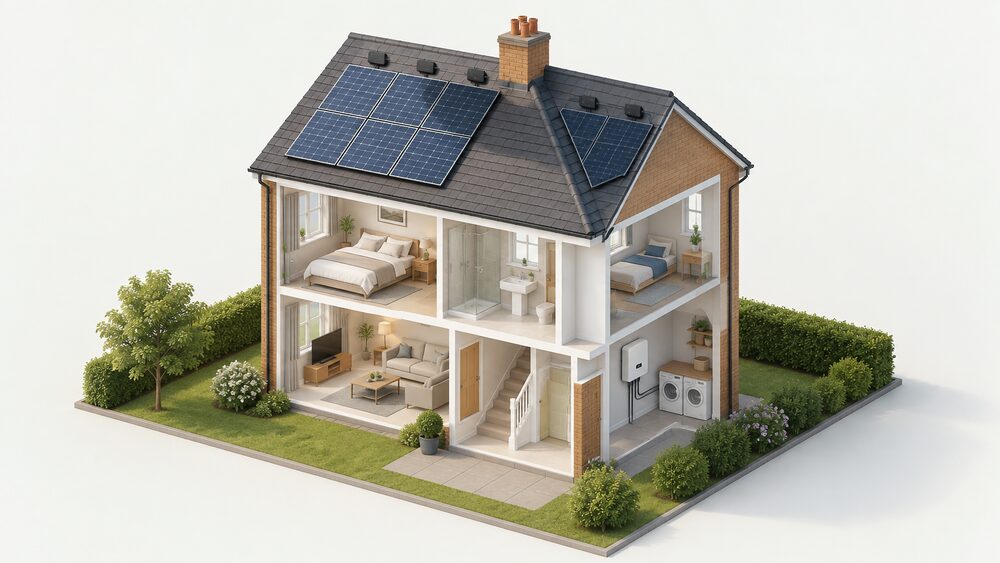 SolarEdgeIf you have been quoted a SolarEdge system, or your roof is shaded or faces two ways, you probably want to know what the black boxes on each panel actually do and what happens if the company behind them wobbles.