
In this comparison
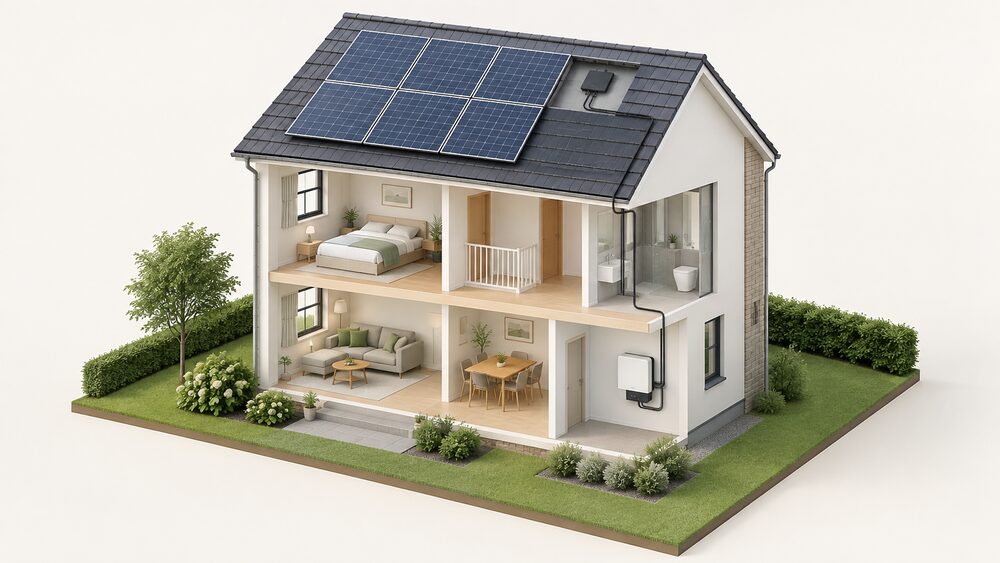
Fronius and SolarEdge both make inverters for UK homes, but they answer the same question in opposite ways. Fronius builds string inverters in Europe, with the GEN24 and GEN24 Plus as its residential hybrid line, and manages shade in software at string level. SolarEdge builds DC-optimised inverters that work with Power Optimizers fitted behind each panel, so every module is managed individually1.
That architectural difference drives almost everything else. A plain string array behaves like a chain: panels in a string system are only as efficient as the lowest performing panel, so one shaded or soiled module holds back the rest2. Panel-level electronics break that link, which is why SolarEdge states its inverters are optimised for complex roofs, including multi-facets and different orientations1. Fronius answers the same problem with the SuperFlex Design on its GEN24, which the maker says ensures easy configuration even on complex roofs, and with integrated software that detects shading on the PV modules and optimises yield at string level3.
The commercial picture matters as much as the engineering. Fronius is a family-owned Austrian business that has been developing solar energy solutions since 1992, with more than 90% of its products manufactured in Austria4. SolarEdge is a listed technology company, and its UK-facing proposition is a smart energy ecosystem that puts the household in control of its own solar power production and management5. For a householder, the practical questions are warranty terms, monitoring, and who supports the system years after commissioning.
Fronius and SolarEdge at a glance: two different answers to the same job
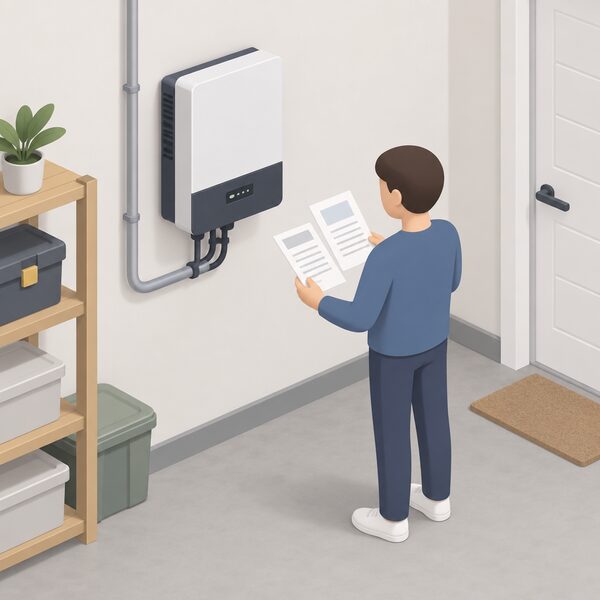
The two ranges are not direct substitutes. Fronius sells string inverters, and its GEN24 is described as a European string inverter for residential solar systems, made in Europe3. The GEN24 and GEN24 Plus differ purely in terms of software and have the same range of functions, with the exception of battery operation and the Full Backup functions11. That means the hardware is shared and the hybrid capability is unlocked in software, which simplifies the range for a householder choosing between a plain PV system and one that will later take a battery.
SolarEdge sells an inverter plus a Power Optimizer on every panel. Its Home Short String Inverter is a DC-optimised inverter enabled with Power Optimizers that individually manage each solar panel1. The optimisers are not optional extras in the way a string inverter's accessories might be: they are the mechanism by which the system works, and they sit on the roof with the panels.
The cost position follows from that. Optimised solar panel systems are more expensive than installing a string inverter system on its own2. That statement comes from a UK energy supplier's guidance rather than from either manufacturer, and it is the clearest published comparison of the two approaches in cost terms. Neither maker publishes a UK retail price for its residential inverters, so prices are installer-quoted, and the difference between the two architectures shows up in the quote rather than in a list price.
For a household, the choice is therefore between a simpler system with fewer components on the roof and a more distributed system with electronics at every panel. The first has fewer things to fail above the roofline; the second is designed to extract more from an awkward roof. Both connect to the grid, and neither removes the household's dependence on a supplier for the hours when the sun is not shining.
Two makers, two histories: family-owned Austria versus a listed tech firm
Fronius is a family-owned enterprise founded more than seven decades ago by Günter Fronius, and the company now employs more than 5,000 people9. Its solar energy division was founded in 1992 and is represented worldwide by 28 subsidiaries12. Production is concentrated in Austria: Fronius states that its quality has always been produced in Austria, that more than 90% of its products are manufactured there, and that all Fronius products are developed in Austria4. The GEN24 is described as made in Europe3.
The maker's own environmental figures are specific. Its Austrian production site runs on 100% green electricity, powered by PV systems with a total output of 4.2 MW, and an ice storage facility in Sattledt cools it in summer with an output of 6.3 MW12. At its Austrian locations it reports 2.3 MWp of installed PV and 100% of electrical energy on site from renewable sources13. These are maker statements about the maker's own operations, and they describe manufacturing rather than the performance of a household system.
SolarEdge is a listed company, which brings a different set of disclosures and risks. Its chief financial officer, Asaf Alperovitz, was scheduled to continue as CFO through 9 June 2026 to support operations and a leadership transition8. That is a corporate event rather than a product one, but it is the kind of information a household would not see from a family-owned maker of comparable size.
The practical difference for a buyer is continuity. A family-owned business and a listed technology firm both carry commercial risk, and neither structure guarantees that spares and support will exist in fifteen years. What the household can control is the paperwork: registration, warranty terms and the identity of the installer, all of which determine what happens if the inverter fails.
Architecture: string inverter versus panel-level optimisation
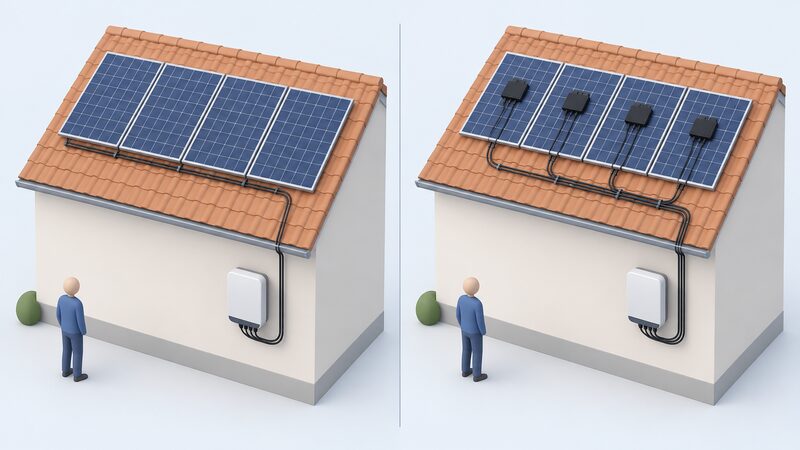
A string inverter takes the DC output of a whole row of panels and converts it in one place. Fronius builds this type, and its GEN24 detects shading on the PV modules and optimises the yield at string level3. The limitation is inherent to the topology: panels in a string system are only as efficient as the lowest performing panel2. A chimney's shadow across one module, or a few dirty panels on a lower roof, pulls the string's output towards the weakest performer.
SolarEdge's answer is to put electronics at each panel. Its DC-optimised inverters, enabled with Power Optimizers, maximise power generation by individually managing each solar panel1. Because each module is managed separately, the array is not limited by its weakest panel in the same way. The maker states that its Power Optimizers and inverters deliver more solar energy and more savings, though it publishes no percentage figure for the gain5.
Fronius also offers a hybrid route. The GEN24 Plus is a hybrid inverter that lets the household connect a battery storage system, and Fronius hybrid inverters can be combined with battery storage units from BYD and LG Chem14. Multi Flow Technology supports both DC and AC coupling, which allows integration into an existing PV system14. That matters for a household adding storage later rather than at the outset.
| Fronius GEN24 / GEN24 Plus | SolarEdge Home Short String Inverter | |
|---|---|---|
| Conversion approach | String inverter, shade handled in software at string level3 | DC-optimised inverter with a Power Optimizer per panel1 |
| Battery connection | Hybrid inverter connects a battery storage system15 | Part of the SolarEdge Home ecosystem5 |
| Complex roofs | SuperFlex Design for easy configuration on complex roofs3 | Optimised for multi-facets and different orientations1 |
| Mixed orientations | String-level optimisation3 | Arrays work together across different orientations16 |
| Cost position | String system on its own is the cheaper architecture2 | Optimised systems are more expensive2 |
Which roofs each suits: shade, mixed orientations and simple arrays
Official guidance sets the baseline. Approved Document L, the building regulations guidance for dwellings in England, describes roof-mounted photovoltaic arrays as orientated south-east to south-west17. The Energy Saving Trust recommends choosing a south-facing roof with little or no shading18. Where a roof meets those conditions, a string inverter has the simplest job and the fewest components.
Where it does not, the case for panel-level electronics strengthens. SolarEdge states that its design flexibility allows users with Power Optimizers and inverters to use an array of panels that combine mixed wattages and orientations, and that two different parts of a roof facing in different directions can be used to expand sun exposure16. That is a maker claim about its own system, and it describes a real design freedom: panels on an east roof and a west roof can sit on one system without one orientation dragging the other down.
Fronius addresses the same territory differently. Its GEN24 uses SuperFlex Design, which the maker says ensures easy configuration even on complex roofs, and the inverter's software optimises yield at string level when it detects shading3. Fronius photovoltaic systems are also described as modularly expandable4. For a roof with two or three planes and modest shading, that combination is often enough.
There is a limit that applies to both brands. Official guidance from a London borough states plainly that if a roof is heavily shaded, solar panels may not be the most suitable option20. No inverter architecture creates energy that never reaches the roof. Panel-level optimisation recovers the difference between a shaded panel and an unshaded one; it does not recover the shaded panel's own lost output. A household with a heavily shaded roof is looking at a siting problem, not an inverter problem, and the roof orientation, pitch and shading page covers how that assessment is made.
Monitoring and data: what you see, where it is stored
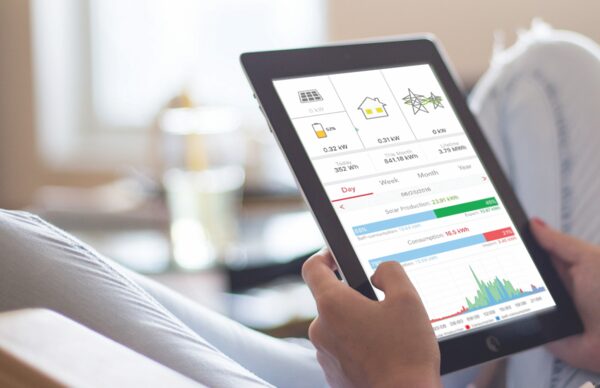
Fronius runs its monitoring through Solar.web, described as a monitoring tool for photovoltaic systems that records all the key data and provides a clear overview of the energy flows21. It monitors energy yield and consumption, so the household can keep an eye on both at all times22. There is a free Fronius Solar.web account, and for those who want to know every detail there is also a paid premium version22. The free Basic version on its own offers a large range of functions10.
The premium tier adds forecasting. Fronius Solar.web Premium provides a seven-day weather forecast and a two-day PV yield forecast, helping the household plan energy use10. The platform is widely used: around 650,000 customers and installers rely on it22. Installers get their own features, including fleet monitoring in real time, remote fault monitoring, and add-on simulations for battery storage or the Ohmpilot10. The inverter transmits its status live on Solar.web23.
SolarEdge monitoring runs through the maker's own platform and app, tied to the SolarEdge Home ecosystem that the company describes as putting the household in control of its own solar power production and management5. Because the optimisers report individually, the monitoring can show performance at panel level rather than at string level, which is useful for spotting a single failing module or a new shadow.
Both approaches share the same dependency. Production and consumption data sits on the manufacturer's cloud, reached through an account, and the household's access depends on that company continuing to run the service and on a working internet connection at home. The monitoring a solar PV system page sets out what can be measured locally. Neither brand offers a system in which the household owns and stores its own generation data independently of the maker.
Warranty and registration: what each maker covers and what you must do
Fronius ties its warranty extension to registration. All the household or installer needs to do is register the inverter on Fronius Solar.web6. Registration is made at www.solarweb.com using the inverter's serial number, after which the warranty option is selected10. The requirement is not optional for new equipment: new Fronius inverters commissioned on or after 1 June 2026 must be registered in Fronius Solar.web to qualify for the free warranty extension24. The limited warranty applies to covered products purchased on or after 1 June 2026, and Fronius may change the conditions at any time for contracts concluded after a change7.
The length of the extension depends on the inverter's size. Fronius publishes 10 years of free and reliable warranty cover for inverters under 50 kW, and 5 years of free cover for inverters of 50 kW and above6. The warranty terms also require that inverters are properly registered at www.solarweb.com within thirty (30) months of the initial delivery by Fronius ex works7. For a household, the practical point is that the free extension is conditional: miss the registration and the cover is not what the marketing implies.
SolarEdge's warranty position is different in kind. An independent review lists SolarEdge product warranty at 25 years8. That figure comes from a consumer organisation's brand review rather than from the maker's own terms, and it should be read alongside the specific product documentation for the model being quoted, since warranty length can vary by component and by whether the optimisers and inverter are counted together.
"the WARRANTY PERIOD is a total of 10 years"
For both brands, the installer is the practical route for a claim. Fronius warranty correspondence can go to support@fronius.com or to Fronius International GmbH, Froniusplatz 1, 4600 Wels, Austria7. Fronius UK Limited also publishes pv-sales-uk@fronius.com12. Registration, firmware and warranty administration all run through trade portals, so a household without an installer relationship has a harder path than one whose installer is still trading.
UK availability and installer support
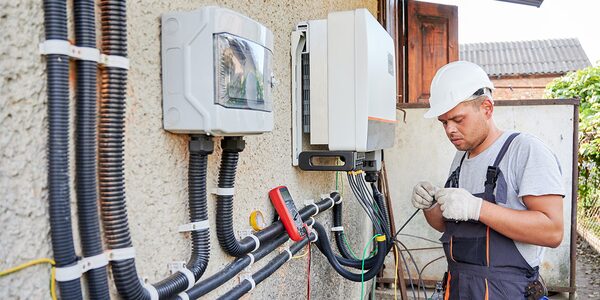
Both brands are sold in the UK through accredited installer networks rather than direct to householders. Fronius works with partner installers who are trained and certified by the company, and its global partner network consists of over 6,000 expert installers3. That certification matters for warranty administration, because the registration and upgrade processes run through the installer's portal. Fronius UP.storage upgrades, for example, are carried out via Solar.web and then in the Fronius online store by the installer11.
Fronius also maintains a firmware release cadence that a household will experience indirectly. Symo GEN24 and Primo GEN24 firmware bundles 1.41.10-1 were released on 13 July 2026, and bundles 1.41.11-1 followed on 10 August 202612. Regular firmware updates are how shade-handling algorithms and battery integration improve after installation, and they depend on the inverter staying connected to the internet.
SolarEdge's UK presence includes a domestic blog covering the Future Homes Standard and the Home Energy Model, with a post dated 14 July 2026 discussing solar becoming a default requirement on new UK homes5. The company also runs installer-facing programmes, including webinars on its MultiRange Concept inverters scheduled for 29 May 20268. For households, the relevant point is that both makers invest in the UK installer channel rather than selling direct.
Product availability changes. One Fronius Primo variant, the Primo 3.6-1 Light, is listed as discontinued by a UK trade distributor12. That is a reminder that a specific model quoted today may be superseded, and that the warranty and spares position attaches to the model rather than to the brand. The Fronius solar inverters page covers the current UK range in more detail, and SolarEdge inverters and optimisers covers the equivalent for the other brand.
What ownership means for energy independence
Neither inverter makes a home independent of the grid. What they change is how much of the household's own generation it can use, and how much control it has over the equipment doing the converting. Fronius states that its photovoltaic systems let a household gain independence from the public grid and benefit from self-generated, renewable energy25. With storage, it claims a household can increase self-sufficiency with solar energy to up to 85%9. That is a maker figure for a system with a battery, not for panels alone.
The industry definition is narrower and worth holding alongside it. Self-sufficiency is the percentage of electricity consumed in the property over a year which is met by either behind the meter solar or electrical energy storage26. On that definition, the remaining share is imported, and the household still depends on a supplier, on the grid, and on whatever fuel mix is generating at the time. Solar Energy UK frames the wider case simply: more homegrown energy means greater energy independence27.
The dependencies specific to these two brands are worth naming. Fronius is a family-owned Austrian manufacturer, so spares and support depend on a single private company continuing in the solar business4. SolarEdge is a listed firm whose leadership has changed, with its CFO scheduled to step down on 9 June 20268. Both makers hold household generation data on their own cloud platforms, reached through an account, so monitoring depends on the maker's servers and on a home internet connection.
There is also a hardware dependency that neither brand removes. A hybrid inverter such as the GEN24 Plus can connect a battery storage system, and Fronius hybrid inverters work with BYD and LG Chem batteries14. Those batteries are third-party products with their own warranty terms, and Fronius states plainly that they cannot be registered for its warranty extension24. The household's independence therefore rests on a chain of companies, not on one box on the wall. The solar panels and household energy independence page sets out where that chain typically breaks.
Sources27 cited
- SolarEdge Home Short String Inverters, SolarEdge, 2026-09-17
- What type of solar panels should I install?, Good Energy, 2026-09-07
- GEN24 UL inverter for PV system backup power, Fronius, 2026-09-17
- Photovoltaics (India), Fronius, 2026-09-17
- SolarEdge Home, SolarEdge, 2026-09-17
- Fronius warranty models, Fronius, 2026-09-17
- Fronius terms of warranties, Fronius, 2026-09-17
- SolarEdge solar panels review, Which?, 2026-08-12
- Store solar power, Fronius, 2026-09-17
- Fronius Solar.web, Fronius, 2026-09-20
- GEN24 support, Fronius, 2026-09-17
- Fronius Solar Energy factsheet, Fronius, 2026-09-17
- Fronius e-mobility, Fronius, 2026-09-17
- Multi Flow Technology, Fronius, 2026-09-17
- GEN24 Plus inverter for PV system backup power (Canada), Fronius, 2026-09-17
- SolarEdge retrofit guidance (UK), SolarEdge, 2023-09-28
- Approved Document L, Volume 1: Dwellings, HM Government, 2026
- Are solar panels worth it?, Uswitch, 2026-09-16
- SolarEdge retrofit guidance, SolarEdge, 2023-09-28
- Solar photovoltaic (PV) panels, London Borough of Bromley, 2026-09-17
- GEN24 Plus inverter for PV system backup power, Fronius, 2026-09-17
- Solar monitoring, Fronius, 2026-09-17
- Solar monitoring (India), Fronius, 2026-09-17
- Solar inverter warranty, Fronius, 2026-09-17
- Fronius photovoltaics, Fronius, 2026-09-17
- MCS 032: Solar PV self-sufficiency, MCS Certified, 2025-01-01
- Solar Energy Scotland manifesto, Solar Energy UK, 2026-09-17
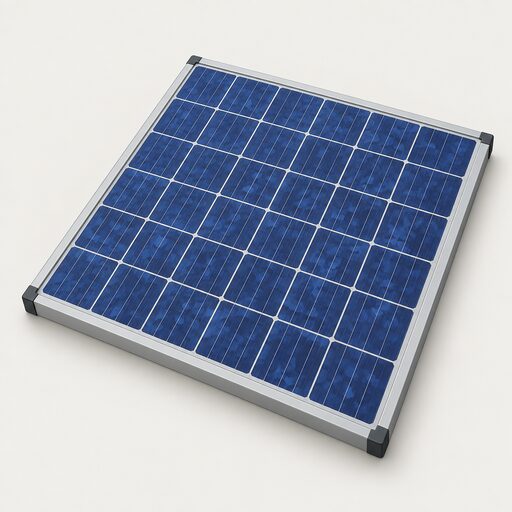 Panel TypesWhich solar panels are best for a UK home, and how much do they cost?
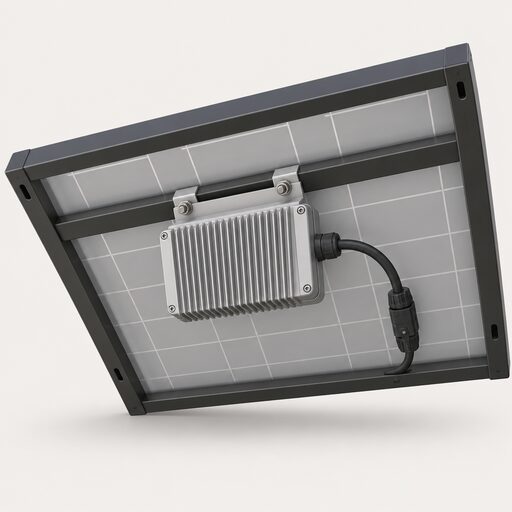 MicroinvertersMicroinverters sit behind each panel and turn its power into household electricity right there on the roof.
 Microgeneration UptakeScotland has more solar panels and heat pumps per household than England, while Wales has built larger solar schemes and Northern Ireland lags behind.
 Roof Orientation and ShadingWhich way should your roof face for solar panels, and does it really matter if it is not south?
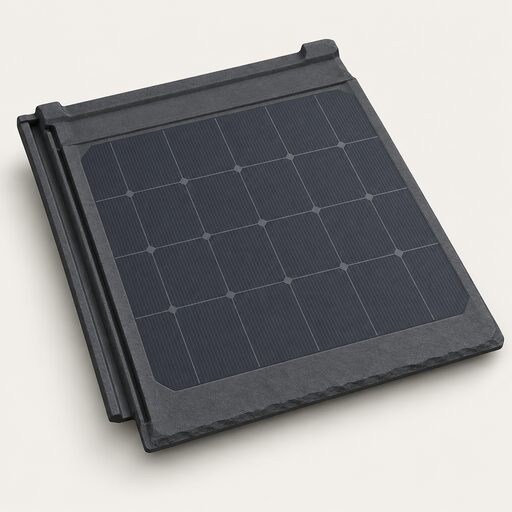 Roof-Integrated SolarSolar tiles replace your roof covering instead of sitting on top of it, so the finished roof looks like a roof.
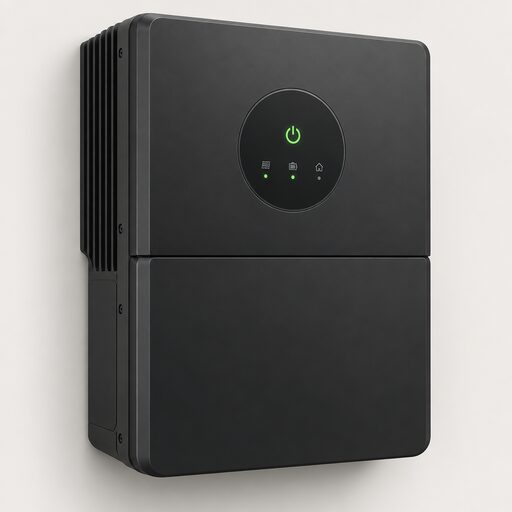 Hybrid InvertersA hybrid inverter lets you store solar power in a battery and use it later, all through one unit instead of two separate boxes.