
In this comparison
Sungrow and Fronius are the two names a UK householder is most likely to meet when an installer quotes a premium string inverter. They are not the same kind of company. Sungrow Power Supply Co., Ltd. was founded in 1997 by University Professor Cao Renxian and now sells across more than 150 nations, with a product range covering on-grid, off-grid and hybrid systems1. Fronius is a family-owned Austrian enterprise with 75 years of experience, a team of more than 5,000 people, and a claim that more than 90% of its products are manufactured in Austria4.
The practical difference for a UK home is where each maker puts its weight. Fronius builds the GEN24 and GEN24 Plus range around open interfaces and integration with components from Fronius or third-party suppliers, and pairs it with the free Fronius Solar.web monitoring platform6. Sungrow builds hybrid inverters that track system performance in real time and offer intelligent monitoring and control, with the same unit marketed for residential and commercial use9.
Neither inverter makes a home independent of the grid on its own. Both sit between the panels and the house, and both depend on a manufacturer's app or portal for monitoring. What differs is the warranty route, the price band, the manufacturing base and the depth of the UK support network behind each brand.
Sungrow and Fronius at a glance
The two ranges overlap in the domestic string inverter market but are built on different design philosophies. Fronius positions the GEN24 and GEN24 Plus as the hub of a home energy system, with open interfaces and the ability to manage components from Fronius or third-party suppliers6. That openness matters to a household that wants to add a battery, a heat pump or an EV charger later without changing the inverter.
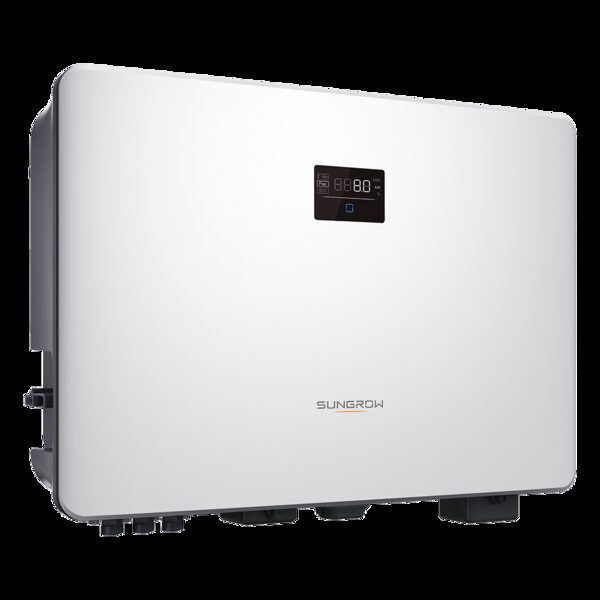
Sungrow's approach is to fold more into the inverter itself. Its off-grid inverters carry robust battery management systems, and its hybrid units combine solar conversion with battery management and monitoring in one box3. The 5kW hybrid inverter is marketed for both residential and commercial applications, with the maker citing reduced electricity bills, energy independence and a smaller carbon footprint as the residential benefits9.
| Sungrow | Fronius | |
|---|---|---|
| Founded | 1997, by Professor Cao Renxian1 | Family-owned; 75 years of experience4 |
| Countries served | More than 150 nations1 | Global partner network of over 6,000 expert installers5 |
| Manufacturing base | Not stated in UK material | More than 90% manufactured in Austria5 |
| Monitoring | Real-time system performance tracking9 | Free Fronius Solar.web8 |
| Warranty type | Self-check warranty lookup15 | Limited, voluntary manufacturer's warranty12 |
| Battery pairing | Hybrid inverter with battery management3 | Reserva, with 10-year warranty13 |
Two very different makers: scale and history
Sungrow's story is one of rapid industrial scale. Founded in 1997 by University Professor Cao Renxian, the company now states that its product range spans 150 countries and that more than 150 nations are powered by Sungrow products1. It reports holding more than 3,000 patents, with over 2,500 researchers and 40% of its team members described as experienced research and development talents1. Its product categories cover on-grid, off-grid and hybrid systems3. The company has collected honours including the China Grand Awards for Industry and Global Top 500 New Energy Enterprises2.
Fronius tells a different story, one of longevity and European manufacturing. Günter Fronius founded the family-owned enterprise more than seven decades ago, and the company now describes itself as having 75 years of experience with a team of more than 5,000 people4. It has been developing solutions for solar energy since 19925. All Fronius products are developed in Austria, more than 90% are manufactured there, and 100% green power is used at its Austrian production facilities7. Its partner network consists of over 6,000 expert installers around the world5.
For a UK household, the scale difference cuts both ways. Sungrow's volume supports competitive pricing and a wide product catalogue. Fronius's smaller, European base supports a shorter supply chain and a manufacturing claim that some buyers weigh heavily. Neither fact settles which inverter suits a given roof; both are context for the warranty and support question that follows.
Efficiency and monitoring: where each inverter earns its keep
Monitoring is where the two brands diverge most clearly in daily use. Fronius Solar.web is a free monitoring tool that lets owners keep an eye on energy yield and consumption at all times8. The maker states that a Fronius inverter monitors the entire photovoltaic system, and that Solar.web tracks both energy yield and consumption for the photovoltaic system16. Combined with a Fronius Smart Meter, the system supports flexible charging management with parallel energy flows, which is what allows self-consumption and export to be distinguished rather than only total generation11.
Sungrow's 5kW hybrid inverter comes equipped with intelligent monitoring and control systems, enabling users to optimise their energy consumption and track system performance in real time9. The same unit is offered for residential use and for commercial applications, with the maker citing cost savings, grid independence and environmental benefits on the commercial side9.
The practical question for a householder is what the monitoring actually shows. Generation alone tells an owner how much the roof produced. Yield and consumption together, with parallel energy flows, tell an owner how much was used on site and how much went to the grid. Fronius documents that second capability explicitly through Solar.web and the Smart Meter11. Sungrow documents real-time performance tracking and consumption optimisation on its hybrid unit9.
"Your Fronius inverter monitors the entire photovoltaic system"
Both platforms are cloud or app based. That is a dependence worth naming: the inverter works without the portal, but the household's view of its own generation and consumption runs through the manufacturer's servers and software.
Warranty, support and getting help
Fronius grants a limited, voluntary manufacturer's warranty, and the terms are explicit that it relates exclusively to the covered product hardware and not to the firmware or the digital services provided by Fronius12. Claims must be notified to Fronius in writing, with email sufficient, immediately after discovery of a covered defect and in any case before the warranty period expires, at support@fronius.com or Fronius International GmbH, Froniusplatz 1, 4600 Wels, Austria12.
Fronius also runs a registration route through Solar.web. Owners register the product, choose between two warranty options, and can extend the warranty free of charge16. The Fronius Warranty offers warranty protection for the material over the entire service life, while Fronius Warranty Plus covers the material, servicing and transport costs14. On the Verto Plus, one documented option is a 2-year Fronius Warranty Plus plus a 5-year Fronius Warranty upon registration for inverters from 13 kW19. Warranty extensions are available up to 20 years on the Verto14. The Reserva battery carries a 10-year warranty13.
Sungrow's warranty route is self-service. The company's warranty terms page allows an owner to self-check the warranty information for their product, and it provides an online chat with experts for one-to-one support plus a global email address for warranty matters15.
Service on both brands runs through trained installers rather than the manufacturer directly. Fronius Service Partners are trained and certified by Fronius, and the company's own route for a householder is to find a sales partner in their area16.
Cost and UK availability
UK pricing for Fronius hardware is published by a UK distributor. The Fronius Symo GEN24 Plus starts from £1,893.16, the Fronius Reserva battery from £1,021.88, the Fronius Verto from £3,064.47, the Fronius Verto Plus from £3,993.08, and the Fronius Tauro Precombined Variant from £4,797.0014. These are distributor list prices; the installed price a household pays includes mounting, cabling, labour and commissioning, and is quoted by the installer.
| Fronius product | UK price from | Date read |
|---|---|---|
| Symo GEN24 Plus | £1,893.1621 | 2026-09-20 |
| Reserva battery | £1,021.8820 | 2026-09-20 |
| Verto | £3,064.4714 | 2026-09-20 |
| Verto Plus | £3,993.0819 | 2026-09-20 |
| Tauro Precombined Variant | £4,797.0014 | 2026-09-20 |
Sungrow does not publish comparable UK list prices in its own material, so Sungrow pricing is installer-quoted and no range is given here. Availability differs by model as well as by brand. The Fronius Primo 3.6-1 Light is listed as discontinued on a UK distributor's page dated 17 September 2026, while the standard Primo 3.6-1 remains documented by the maker with regulated air cooling, indoor and outdoor installation, and zero feed-in as a possibility22. The Primo range is shown with two models available, as is the Reserva battery range20.
Which suits which home
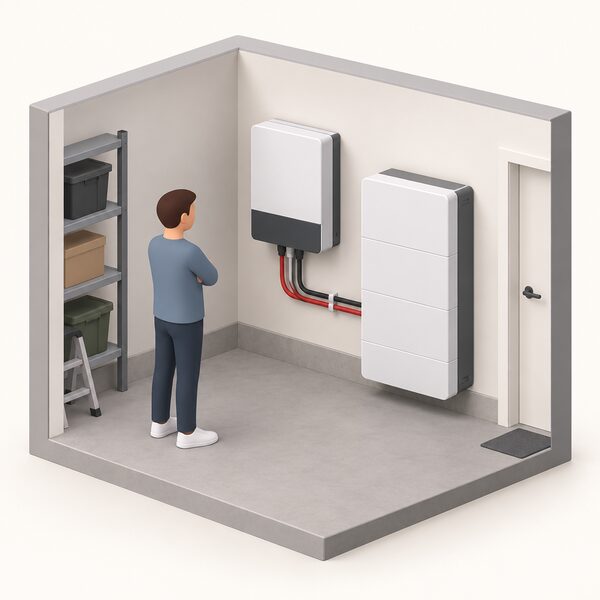
Fronius positions its photovoltaic systems for homes and businesses, and describes the GEN24 as ideal for an efficient, independent energy supply for the home7. The Symo Hybrid is described as the heart of the 24 hours of sun storage solution, and the World of Storage range is presented as the path to maximum self-consumption17. The Reserva battery is compatible with the Primo GEN24 Plus, Symo GEN24 Plus and Verto Plus inverters13.
Sungrow's hybrid inverter is offered for residential use and for commercial applications from the same platform, with battery management built into the off-grid range3. A household that expects to add storage at the same time as the panels is the natural fit for a hybrid unit; a household that wants to add storage later, or to mix components from different suppliers, is the natural fit for an inverter built around open interfaces6.
Three practical conditions shape the choice more than brand preference:
- Roof and array layout. String inverters suit an unshaded roof with panels in one or two orientations. Shaded or split arrays are better served by module-level electronics, which is a separate decision from the brand.
- Battery plans. A hybrid inverter with battery management built in simplifies a single-brand installation. An inverter with open interfaces keeps third-party battery options open6.
- Monitoring expectations. A household that wants to see consumption and export separately needs a meter as well as an inverter, on either brand11.
For the wider picture on how inverters fit into a system, see solar inverters and hybrid solar inverters. Households weighing a battery alongside the inverter can read adding battery storage to solar.
What owning each means for energy independence
Both makers frame their products in terms of independence, and both are careful about how far that goes. Fronius states that its photovoltaic systems let a household gain independence from the public grid and benefit from self-generated, renewable energy7. With storage, the maker states that self-sufficiency with solar energy can rise to up to 85%11. Sungrow cites energy independence among the residential benefits of its 5kW hybrid inverter, alongside reduced electricity bills and a smaller carbon footprint9.
The dependence that remains is worth stating plainly. A grid-connected inverter still relies on the public grid for reference voltage and for export, and a household still buys electricity when generation and storage fall short. Monitoring runs through the manufacturer's platform, so the household's own data sits with the maker. Warranty service runs through an installer network, not the household. And the hardware itself comes from a single manufacturer, whether that is an Austrian family firm or a Chinese listed company.
Where the two differ for independence is in the shape of the system. Fronius builds around open interfaces and third-party integration, which keeps component choices open and supports parallel energy flows between generation, storage and loads6. Sungrow builds hybrid units with battery management and real-time monitoring inside the inverter, which reduces the number of boxes on the wall and the number of suppliers involved3. Neither removes the grid connection, and neither removes the manufacturer from the household's energy system.
For the broader question of what solar can and cannot do for a home's independence, see solar panels and household energy independence. Households comparing the Fronius range in more detail can read Fronius solar inverters and Fronius Symo inverters, while the Sungrow range is covered in Sungrow solar inverters.
Sources22 cited
- Benefits of choosing Sungrow solar power inverter for your home, Sungrow, 2026-09-17
- Solar string inverters vs micro inverters, Sungrow, 2026-09-17
- Inverter technologies compared: off-grid, on-grid and hybrid systems, Sungrow, 2025-01-07
- How to choose smart EV car chargers for home, Sungrow, 2024-11-11
- Heating with PV, Fronius, 2026-09-17
- GEN24 Plus inverter for PV system backup power, Fronius, 2026-09-17
- Photovoltaics, Fronius, 2026-09-17
- Solar monitoring, Fronius, 2026-09-17
- Sungrow 5kW hybrid inverter, Sungrow, 2026-09-17
- Sungrow 5kW hybrid inverter, Sungrow, 2026-09-19
- Store solar power, Fronius, 2026-09-17
- Terms of warranties, Fronius, 2026-09-17
- Fronius Reserva datasheet, Fronius, 2026-09
- Fronius Verto, Wind and Sun, 2026-09-20
- Warranty terms and conditions by country, Sungrow, 2026-09-19
- Photovoltaics for home owners, Fronius, 2026-09-17
- Residential storage solutions, Fronius, 2026-09-17
- Battery terms of warranties, Fronius, 2026-09-17
- Fronius Verto Plus, Wind and Sun, 2026-09-20
- Fronius batteries, Wind and Sun, 2026-09-20
- Fronius string inverters, Wind and Sun, 2026-09-20
- Fronius Primo 3.6-1, Fronius, 2026-09-17
 Solar and Energy IndependenceHow far domestic solar cuts dependence on suppliers and the grid, what self-consumption really looks like across the year, what a battery, diverter or EV adds, and the grid-outage limit of ordinary inverters.
 The Full Brands GuideWhich boiler, heat pump or solar brand can you trust, and who actually owns it?
 The Full Solar Panels GuideHow much do solar panels cost, and what could they save you each year?
 Warranties and DegradationHow long do solar panels actually last, and what do the warranties really cover?
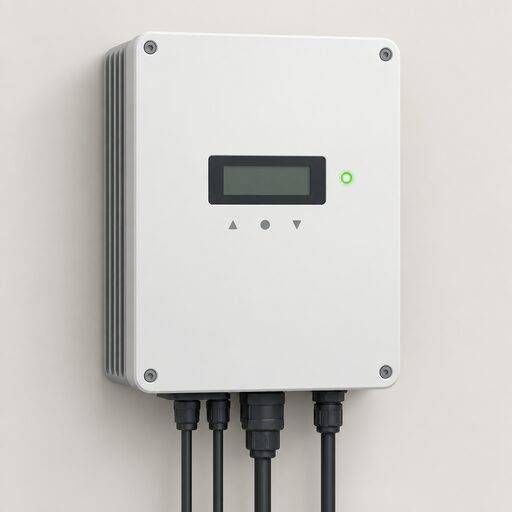 Solar InvertersWhat does the box on the wall next to your solar panels do, and how long will it last?
 Sodium-Ion Home BatteriesSodium-ion cells are being offered for home storage in the UK, but almost all published performance data still comes from makers.