

In this answer
Short answer
Sunsynk warranty registration is a single online form, and for a UK installation it cannot be completed without the MCS certificate number for the job. The form asks for the installation date, the installer's name, company and email, the property owner's email and address, the equipment type and quantity, the date of purchase and an uploaded proof of purchase, plus a clear photograph of the completed installation1. Inverter quantity runs from 1 to 10 and battery quantity from 1 to 16 on one submission1.
Registration is what ties the cover to a date and a named installation. Other manufacturers in the sector show why it matters: SMA states that registration sets the start of the factory warranty at the commissioning date2, SunPower's panel warranty runs 30 years only if registered, otherwise 253, and SolaX calculates an unregistered battery warranty from the production date plus six months4. Sunsynk's own form carries the same weight in a different way: the registrant acknowledges that incomplete or inaccurate information may lead to the rejection of a warranty claim1.
For a household, this is administrative work that protects an asset the grid cannot replace. The inverter and battery are the parts of a solar system that keep lights on during an outage and shift cheap generation to the evening, and the warranty is the only route to a replacement if either fails. What registration does not do is remove dependence on the maker: the cover is only as good as the company behind it, and the system still needs the grid, an installer and, in most cases, a monitoring app to work as designed.
Why warranty registration matters and what it covers
Registration converts a product into a dated, traceable warranty record. The pattern is consistent across the industry. ROINTE describes registration as essential to validate a purchase and guarantee official technical support6. SMA's registration sets the start of the factory warranty at the commissioning date and gives portal access to warranty information2. SunPower's 30-year panel warranty requires registration, otherwise a 25-year warranty applies3. SolaX goes further and states that if a system was not registered within 90 days, the warranty automatically starts six months after the battery left the factory, which shortens cover rather than removing it4.
Sunsynk's registration page does not publish a warranty length in the form itself; it collects the evidence that a claim would rest on. The equipment types listed are Sunsynk Inverter, Lifelynk or Powerlynk, Sunsynk Battery, Sunsynk Inverter plus Sunsynk Battery, Lynks Inverter, Lifelynk or Powerlynk plus Sunsynk Battery, and Other1. The same service is used to register a device or to verify existing warranty details7.
What the cover protects is the hardware that gives a household its independence from a supplier: the hybrid inverter that manages solar, battery and grid, and the battery that stores generation for later. Sunsynk describes its inverter range as offering live data, fault alerts and remote installer access, and states that warranty terms apply as standard across the full inverter range8. The accessories range is described as genuine Sunsynk-approved parts, tested for compatibility and covered under the standard manufacturer warranty9.
The dependence that remains is on the manufacturer's continued operation and on the installer who commissioned the system. A warranty is a promise from a company, not a physical safeguard, and it does not cover the cost of the electricity a household still buys when generation and storage fall short.
What you need before you start: documents, details and the MCS certificate number

The form is short but unforgiving about missing paperwork. For UK-based installations, Sunsynk states that an MCS certificate number must be ready before completing the form1. That number is not something a household generates: the installer is required to register the installation on the Microgeneration Installation Database within 10 days of commissioning and to supply the MCS certificate generated from that database10. A Welsh scheme specification puts the same duty at no later than 10 working days after commissioning11.
The MCS certificate is a record that the installation was done by a certified installer using certified products, and it is required when accessing some grants and incentives12. MCS also advises consumers that they will not be asked to purchase items such as warranties from MCS itself, which matters when a cold call or an email offers a warranty product in the scheme's name13.
Have these to hand before starting:
- The MCS certificate number for the installation1
- The installation date and details of the existing system1
- Installer first name, last name, company name and installer email1
- Property owner email, address line 1, city or district, postal code and country1
- Equipment type and quantity, up to 10 inverters and 16 batteries1
- Date of purchase and an uploaded receipt, invoice or proof of purchase document1
- A clear photograph of the completed installation1
Where the installer has not lodged the installation on the database, the registration stalls at the first field. Chasing the installer for the certificate is the practical step, and MCS's own complaints process exists for cases where an installer will not engage: it asks for details of what went wrong, photographic evidence, supporting documents and a willingness to allow installer access to remediate14.
How to register: the form step by step
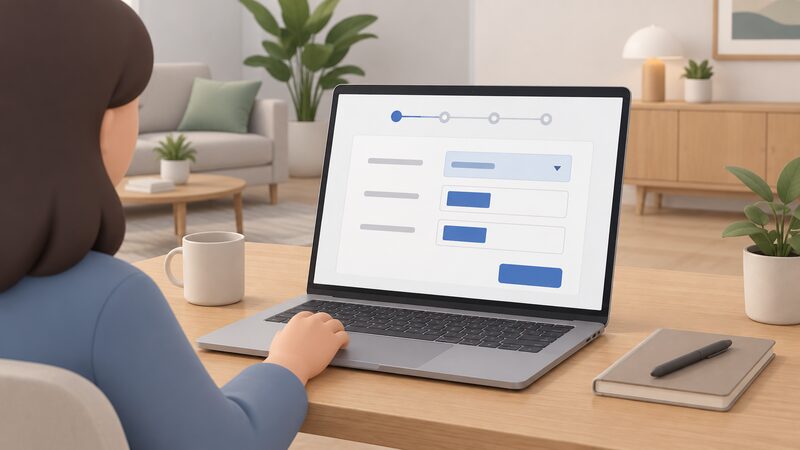
The registration is a single online form with a defined sequence of sections. Sunsynk describes it as covering record details for the existing system and installation date, installer details, property owner details, equipment information, purchase information, and a legal confirmation and signature1.
- Enter the record details: whether there is an existing system and the installation date1.
- Enter the installer details: first name, last name, company name and installer email1.
- Enter the property owner details: email, address line 1, city or district, postal code and country1.
- Select the equipment type from the seven listed options1.
- Set the inverter quantity, from 1 to 10, and the battery quantity, from 1 to 161.
- Enter the date of purchase and upload the proof of purchase document1.
- Upload a clear photograph of the completed installation1.
- Confirm the legal declaration and sign, acknowledging that incomplete or inaccurate information may lead to the rejection of a warranty claim1.
The pattern of a multi-step form that ends in a saved certificate is common. Simpson and Partners runs a seven-step registration process and generates a certificate the owner can save or print15. Worcester Bosch directs owners to a Register Guarantee form16, and Heatrae Sadia requires a product to be registered within 30 days for the warranty to be active17. Sunsynk's own form does not publish a registration deadline in the material reviewed here, so the safe reading is that registration should follow commissioning as closely as the MCS certificate allows.
UK and South Africa installations: different requirements
Sunsynk sells through installers in over 40 countries18, and the warranty position is not identical everywhere. The registration page singles out UK-based installations for the MCS certificate requirement, which is a UK certification artefact rather than a Sunsynk one1. A comparable inverter sold under another brand states plainly that the warranty period varies by installation country and refers buyers to the warranty policy for details15.
The company's own footprint reflects the two markets. Sunsynk lists a United Kingdom office at Unit 8, Total Park, Bennetts Lane, Shell Green, Widnes WA8 0GW, with the telephone number +44 151 832 43005, and the same number appears on the Terra product page19 and the company homepage18. A South African office number, +27 10 100 3589, is published on the hybrid inverter page20. When the Acure series was announced, the company stated that initial availability was in the UK and South Africa, with product availability varying by region21.
For UK households the practical consequence is that the MCS certificate is the gate. For installations elsewhere, the equivalent national certification or the installer's own commissioning record takes its place, and the warranty period itself may differ by country. Sunsynk's high voltage battery collection is described as certified for use in multiple markets worldwide, meeting international standards22, which speaks to product approval rather than to the length or terms of cover in any one country.
Checking an existing registration: search by email, warranty number or installer email

The registration service doubles as a warranty lookup. Sunsynk states that owners can search by warranty number or installer email address1, and the search accepts an email address and warranty number together as the primary route1. Where the confirmation email has been lost, the installer's email address alone can retrieve the record, which is useful because the installer's details are held on the same registration1.
There is a cut-off for older records. Registrations made using the old warranty form on or before 24/04/2024 may not be searchable on the new system1. For those, the registration page directs owners to customerservices@sunsynk.com1. The same address is the route for correcting details already submitted.
Sunsynk's support guidance asks owners to contact their installer first for the quickest help7, and the company operates an installer finder intended to connect households with verified professionals in their area7. Certification documents are also published by product, which helps where a claim or an insurer asks for evidence of approval7.
For a household, the value of a working registration record is that it survives changes of installer, changes of address and the passage of years. A warranty number stored with the MCS certificate and the original invoice is the difference between a claim that can be evidenced and one that depends on memory.
When registration goes wrong: incomplete details and rejected claims
The registration form carries an explicit warning. The registrant acknowledges that incomplete or inaccurate information may lead to the rejection of a warranty claim, and confirms that all fields have been completed correctly and that the Sunsynk warranty terms and conditions are accepted1. That declaration is the point at which most disputes are decided, because a mismatch between the declared equipment and what is installed is a factual matter rather than a matter of interpretation.
Other manufacturers show how strictly registration conditions are read. Intergas states that if its conditions are not met, the warranty will not be valid16. Renac by Rayleigh states that proof may be required of correct commissioning, such as a certificate of compliance, and that claims for failures due to incorrect installation or commissioning are not covered17. SolaX states that failure to follow the official installation manual or safety regulations will immediately invalidate the warranty4.
Firmware is a separate strand. Sunsynk advises that some firmware updates can resolve issues with current transformers not reading properly where the inverter is running incompatible firmware pairings, and that refreshing the firmware can start the CT reading again23. Firmware upgrades are requested by raising a support ticket7. A monitoring fault is not the same as a hardware failure, and resolving it through the support route keeps the warranty record clean.
Where Sunsynk sits among UK inverter and battery makers
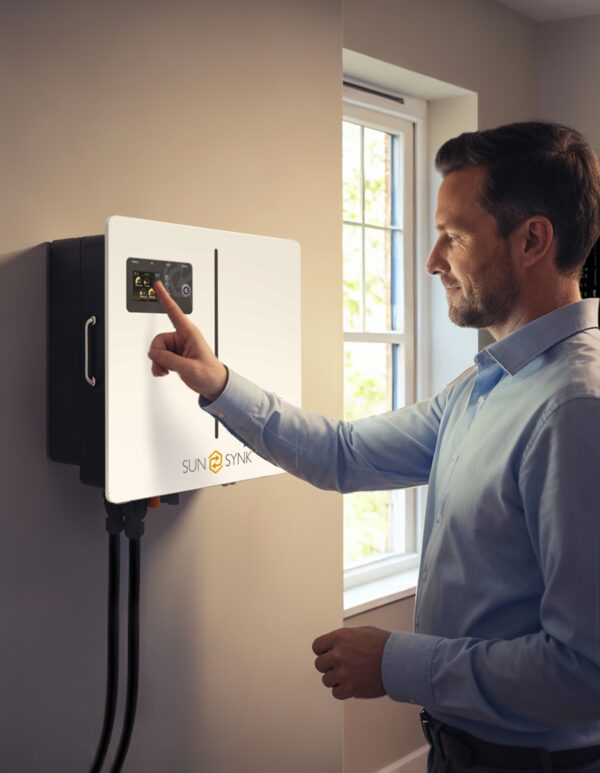
Sunsynk describes itself as drawing on over 20 years of engineering experience to develop hybrid inverters and battery storage systems18. Its UK presence is a Widnes office with a direct telephone line5, and its product range covers hybrid inverters, high voltage batteries and accessories8. The company's own site is at sunsynk.com24.
For households weighing the brand against others, the relevant comparison pages are Sunsynk vs Growatt hybrid inverters compared and the wider solar inverter and microinverter manufacturers in the UK guide. Warranty terms across the sector, including the registration conditions described here, are collected in manufacturer warranties on home energy equipment and registering a warranty and keeping it valid. Owners needing to chase a firmware issue should see how to request a Sunsynk firmware upgrade, and those comparing the brand with the rest of the market can start from the manufacturers pillar.
Sources24 cited
- Sunsynk warranty registration, Sunsynk, 2026-09-17
- Warranty cover, SMA, 2026-09-20
- SunPower Performance solar panel, SunPower, 2026-09-17
- Solar battery warranty guide, SolaX Power, 2026-06-23
- 8kW hybrid inverter, Sunsynk, 2026-09-17
- Registration and warranty extension, ROINTE, 2026-09-09
- Sunsynk support, Sunsynk, 2026-09-17
- Sunsynk inverters, Sunsynk, 2026-09-17
- Sunsynk accessories, Sunsynk, 2026-09-17
- Consumer advice, NAPIT, 2026-09-17
- Barcud Solar Panel Installation Scheme Specification, Sell2Wales, 2026-06-15
- Small wind turbines, MCS Certified, 2026-08-18
- Be scam aware, MCS Certified, 2026-06-09
- What to do if things go wrong, MCS Certified, 2026-09-07
- SUN-3/3.6/5/6K-SG04LP1-EU, Deye, 2026-09-17
- Warranty terms and conditions, Intergas Heating, 2026-09-17
- Renac by Rayleigh inverters warranty, Rayleigh, 2025-08-06
- Sunsynk, Sunsynk, 2026-09-17
- Sunsynk Terra, Sunsynk, 2026-09-17
- 10 to 12kW hybrid inverter, Sunsynk, 2026-09-17
- Introducing the Sunsynk Acure, Sunsynk, 2025-10-06
- High voltage collection, Sunsynk, 2026-09-17
- No grid side load readings, Sunsynk, 2026-09-17
- Sunsynk, Sunsynk, 2026-09-17
 Using an Installer in EnglandHow do you check an installer is registered to sign off their own work, and what happens if they are not?
 Warranties and DegradationHow long do solar panels actually last, and what do the warranties really cover?
 Registering a WarrantyGetting a new boiler covered for longer usually means registering it quickly, often within a month of installation, or the long guarantee drops to a year.
 Boiler WarrantiesHow long does a boiler warranty actually last, and what do you have to do to keep it?
 The Full Brands GuideWhich boiler, heat pump or solar brand can you trust, and who actually owns it?
 Finding an Insulation InstallerHow to find, verify and check an insulation, glazing or ventilation installer in the UK: the registration schemes, trade bodies and guarantee arrangements that cover the work, how to compare quotes, what a written specification should state, and how complaints and disputes are handled.