
In this answer
Short answer
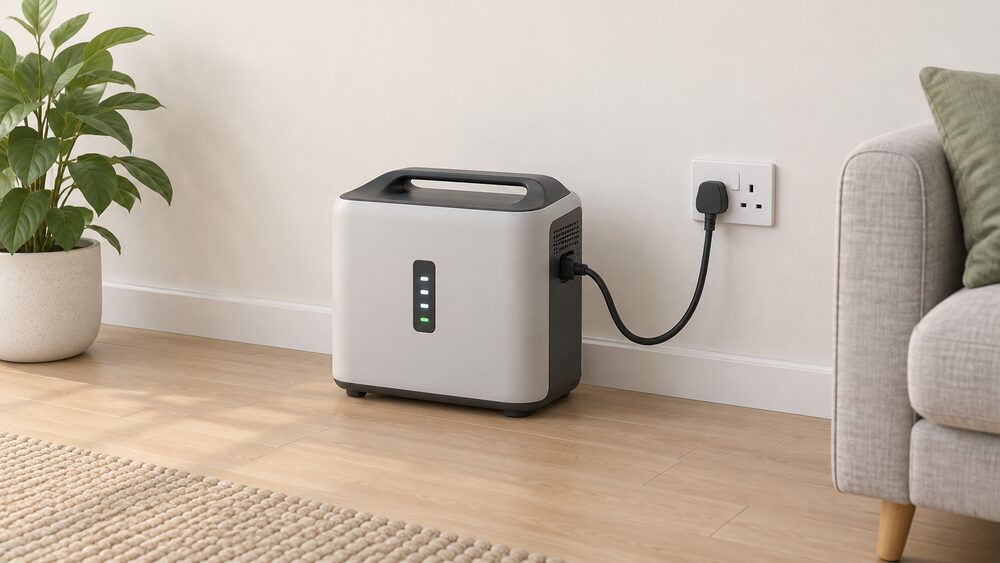
A plug-in battery is a storage product designed to be bought, connected and moved by the householder rather than wired in by a contractor. The industry body for energy storage describes plug-in battery products as units that "may be purchased, connected and relocated by consumers without direct professional involvement"1. That is the whole point of the category, and it is also where the limits begin.
The rules are not permissive in the way buyers often assume. The consumer guide from Electrical Safety First is blunt: "Our advice is: DON'T INSTALL PLUG-IN BATTERY SYSTEMS IN YOUR HOME"2. Plug-in battery storage systems are not permitted to be connected to an electrical installation connected to the electricity network, known as grid-tied2. Notification to the distribution network operator about connection and disconnection is mandatory3, and a plug-in microgenerator must not be installed or operated unless it complies with the Plug-in Solar Device Interim Product Specification4.
So the honest answer is layered. A plug-in battery can be connected without an installer in the sense that no professional involvement is designed into the product. It cannot lawfully be connected to the grid-tied wiring of a home, it cannot power the whole house, and it sits inside a specification regime that most buyers have never read. A conventional home battery is a different proposition entirely: it must be hard-wired into the home circuit by a qualified electrician5.
What a plug-in battery is, and how it differs from a hard-wired home battery
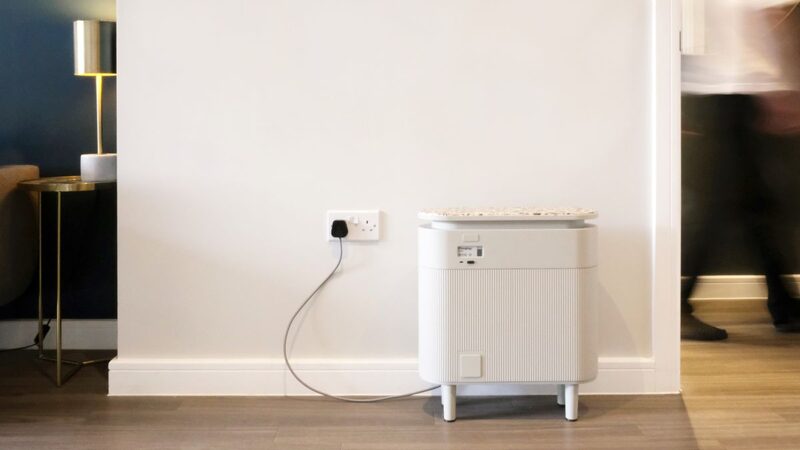
The distinction is not about capacity or chemistry. It is about where the unit connects. A hard-wired home battery becomes part of the fixed electrical installation of the property, alongside the wiring, the socket-outlets, the light fittings and the consumer unit, sometimes called the fuse box6. Because it is part of that installation, the work falls under the rule that electrical installation work must be carried out only by people who have the knowledge, skill and experience needed to avoid danger to themselves and others7.
A plug-in battery never joins the fixed installation. It connects at a socket, which is why the consumer can move it, take it to another property, or sell it on. The trade-off is capability: a unit that connects through a socket cannot energise the circuits of the house, because it is not connected to them.
The legislation draws the line in a specific place. A plug-in microgenerator is defined as equipment that is not designed to import electrical energy from a low voltage consumer's installation for the purpose of storing energy for later supply, other than for control or auxiliary functions permitted by the interim specification8. In other words, the device is not meant to be a grid-charging battery that arbitrages cheap overnight electricity into the home's circuits. It is a small generator-side device with a limited storage role.
That definition matters for anyone comparing a plug-in unit with a conventional system. The conventional system is bought for whole-home cover, tariff shifting and backup, and it is installed by a professional. The plug-in unit is bought for a socket-level function, and the householder does the connecting. The two are not substitutes at different price points; they are different categories of equipment under different rules.
Whether UK rules let you connect one yourself
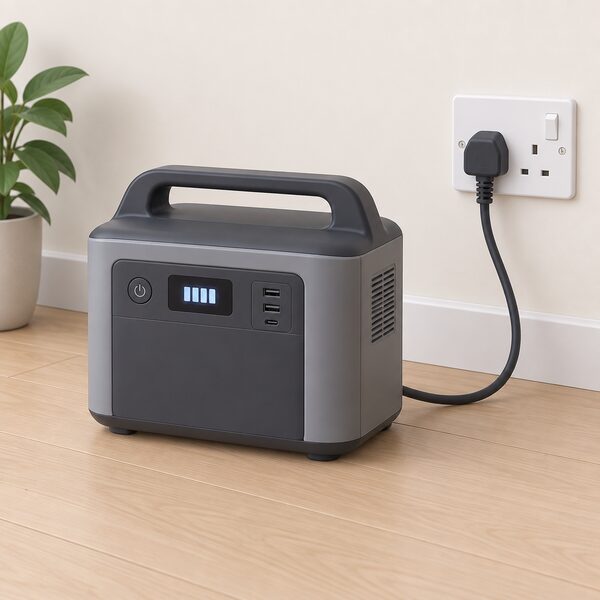
The rules do allow consumer connection, but only for products built to a specification that anticipates it. The interim product specification requires that manufacturers register devices on the ENA Type Test Register through the ENA Direct Connect platform and obtain confirmation that the device has been assessed and identified as compliant before placing it on the market3. The compliance burden sits with the maker, not the buyer, which is what makes a self-connected product possible at all.
The legislation reinforces this. Where the source of energy is a plug-in microgenerator, it must not be installed or operated unless it complies with the Plug-in Solar Device Interim Product Specification4. A unit that has not been through that assessment is not a plug-in battery in the regulated sense, whatever the packaging says.
For comparison, the installer requirement bites hard elsewhere in the home. Only a Gas Safe registered engineer can install a new boiler, and doing it yourself is both dangerous and illegal9. EV charge point installation should always be done by a qualified and certified electrician10, and where a charger is not covered by the simplified route, an accredited installer is needed11. Battery storage systems generally must be hard-wired into the home circuit by a qualified electrician5.
The plug-in category is the exception carved out of that pattern, and it is narrow. It covers the device, not the house. Anything that touches the fixed wiring, the consumer unit or a new circuit remains installer work, and the network operator's own guidance is clear that an electrician cannot work on the main network, only on internal works from the meter to the consumer unit12.
Electrical safety limits: sockets, circuits and what a plug-in unit can carry
The socket is the constraint. The Plugs and Sockets etc. (Safety) Regulations 1994 sit behind a rule that BS 1363 prohibits the use of plugs for connecting electricity-generating devices to socket-outlets13. That prohibition is the reason a plug-in generating device needs its own specification rather than a standard 13 amp plug, and it is why the interim specification exists.
The safety evidence is more reassuring than the prohibition suggests. The government's plug-in solar electrical safety study found no evidence of sustained unsafe energisation14. That is a finding about the studied arrangements, not a blanket clearance of every product on the market, and it does not change the grid-tied prohibition.
What a plug-in unit can carry is therefore bounded by the socket circuit it uses, not by the capacity printed on the box. A unit cannot supply the fixed wiring, cannot feed a circuit that has been isolated, and cannot be used to back up the consumer unit. The householder's own installation also has to be sound: the fixed parts of the installation, including the wiring, socket-outlets, light fittings and consumer unit, are the parts that official guidance treats as the electrical installation of the home6.
For anyone weighing a plug-in unit against a wired system, the practical question is what the socket circuit can support and what the device is certified to do. The plug-in and balcony battery storage page covers the product category in more detail, and the standards governing home battery installation page sets out the framework that applies once a unit is wired in rather than plugged in.
What a plug-in battery can and cannot back up in a power cut

It cannot back up the house. Plug-in battery storage systems are not permitted to be connected to a grid-tied electrical installation2, and whole-home backup depends on exactly that connection. Not all batteries can deliver electricity during a power cut in any case15, and where backup is the goal, the system has to be chosen for it: the installer should be asked whether the battery will work in an outage and for how long16.
The legislative definition closes the door further. A plug-in microgenerator is not designed to import electrical energy from the installation for the purpose of storing energy for later supply, beyond control or auxiliary functions permitted by the specification8. A device built to that definition is not a whole-home energy store waiting for an outage.
What a plug-in unit can do is serve the loads plugged into it or into the socket arrangement it supports, within the limits of its own output. That is a socket-level function, not a household one. Households that need circuits to stay live during an outage are in the territory of battery backup power and EPS, where the changeover arrangement and the backed-up circuits are designed as part of the installation.
The independence question follows from this. A plug-in battery reduces reliance on the grid for whatever it supplies at the socket, and it does nothing for the circuits it cannot reach. A wired battery with a backup interface can keep selected circuits live, but it depends on an installer, a network notification and a system designed for the purpose. Neither route removes the grid connection itself.
Costs, grants and how a plug-in battery compares on price
The headline cost advantage of plug-in equipment is that there is no installation cost. The government's announcement on plug-in solar coming to market states that it comes with no installation cost and without taking any electricity from the grid17. That is the structural saving: no electrician, no scaffold, no commissioning visit.
Where network work is needed, the position is also favourable. UK Power Networks states that if installers can complete their work without needing to upgrade the electricity supply, there will be no costs18, and the same wording appears for solar and storage installations19. For multiple low carbon technology installations at one property, the network operator again states there are no costs which the household needs to pay if no supply upgrade is required20. These are statements about network charges, not about the equipment.
Grants are a separate matter, and no grant listed here applies to plug-in batteries. The Green Homes Wales scheme rules require the installer to be registered with TrustMark and the relevant body for the eligible measure, and the installer must not be the borrower, a member of the borrower's household or immediate family21. That structure assumes professional installation, which a self-connected plug-in unit does not have.
On VAT, batteries are not included on the list of energy saving materials, so they do not qualify if installed as a standalone product22. The home battery VAT rate page covers how that interacts with installation. Prices for plug-in units are installer-quoted or retailer-set, and no published figure is available, so no range is offered here.
| Item | Plug-in route | Hard-wired route |
|---|---|---|
| Installation cost | No installation cost17 | Installer labour, quoted |
| Network charge if no upgrade | No costs to pay18 | No costs to pay19 |
| Grant eligibility | No listed scheme applies | Scheme rules require a registered installer21 |
| VAT treatment | Batteries not on the ESM list as standalone22 | Same list applies22 |
Registration, metering and telling your supplier
Notification is mandatory, and it runs in two directions. The manufacturer registers the device on the ENA Type Test Register and obtains confirmation of compliance before placing it on the market3. The household side is the DNO notification about connection and disconnection, which the interim specification makes mandatory3, and which the consumer guide repeats for plug-in solar panels2.
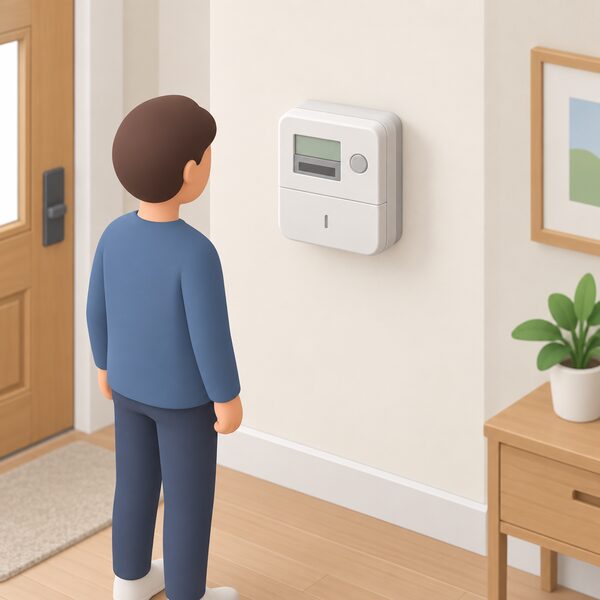
Metering is the second thread. Smart meters are the mechanism through which half-hourly data reaches a supplier, and the process for getting one is set out by Smart Energy GB23. A plug-in unit that shifts when electricity is drawn will show up in that data, and the household should expect the supplier to see the change in consumption pattern.
Export payments are where a plug-in battery can cost money rather than save it. Having a storage battery may render a household ineligible for some Smart Export Guarantee tariffs, and exports, and therefore payments, reduce where a storage battery is present16. An AC-coupled system does not affect feed-in tariff payments, because the generation meter can register total system output16. The batteries and smart tariffs page covers how storage interacts with time-of-use pricing.
The current rules also mean electricity cannot be stored in a battery and unused power cannot be paid for24. That is the position for plug-in solar, and it is the context in which a plug-in battery sits. Anyone with a home can potentially install a battery system25, but the plug-in version of that statement comes with the grid-tied prohibition attached.
Sources25 cited
- Plug-in battery, Energy Storage Association UK, 2026-08-27
- Plug-in solar consumer guide, Electrical Safety First, 2026-08
- Plug-in solar interim product specification, GOV.UK, 2026-07
- The Plug-in Microgenerator Regulations 2026, legislation.gov.uk, 2026-07-16
- Battery storage advice, Centre for Sustainable Energy, 2026-09
- Electrical safety standards in the private and social rented sectors, GOV.UK, 2025-11-01
- Part P of the Building Regulations, Electrical Safety First, 2026-09-17
- The Plug-in Microgenerator Regulations 2026, regulation 2, legislation.gov.uk, 2026-07-16
- Boiler installation and Gas Safe registration, Planning Portal, 2026
- EV charger installation, Uswitch, 2026-09-19
- EV charging for home, Electricity North West, 2026-09-19
- New connections FAQs, SSEN, 2026-09-17
- Plug-in solar consultation, GOV.UK, 2026-06-16
- Plug-in solar electrical safety study, GOV.UK, 2026-06-16
- Plug-in solar panels review, Which?, 2026-09-15
- Solar panel battery storage, Which?, 2026-05-14
- Households can save as plug-in solar panels come to market, GOV.UK, 2026-08-26
- Electric vehicles: cost, time and what's involved, UK Power Networks, 2026-09-17
- Solar and storage: cost, time and what's involved, UK Power Networks, 2026-09-17
- Multiple LCTs at the same property, UK Power Networks, 2026-09-17
- Green Homes Wales loan standard terms and conditions, Development Bank of Wales, 2026-09-17
- VAT on solar and battery storage, Solar Energy UK, 2026-09-17
- How to get a smart meter, Smart Energy GB, 2026-08-03
- Six things to know before plug-in solar panels hit the shelves, Citizens Advice, 2026-08-21
- Batteries in the home, Solar Energy UK, 2026-09-17
 Backup Power Safety RulesWho signs off a battery or backup circuit, and can you legally plug in a power station or a plug-in solar panel in the UK?
 DIY Home Battery BuildsBuilding your own home battery?
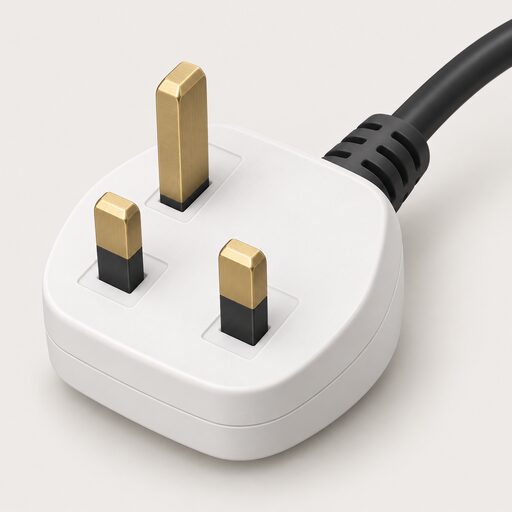 Plug-In Battery StoragePlug-in batteries are not legal in a grid-connected British home, even though plug-in solar panels are.
 Home Battery Fire SafetyHow likely is a home battery to catch fire, and what keeps it safe if it does?
 Planning Permission in EnglandWhen a domestic battery or its enclosure falls within permitted development in England, when an application is needed, and how the position differs for outbuildings, listed buildings and conservation areas.
 Installation StandardsWhich rules must an installer follow when fitting a home battery?