In this guide
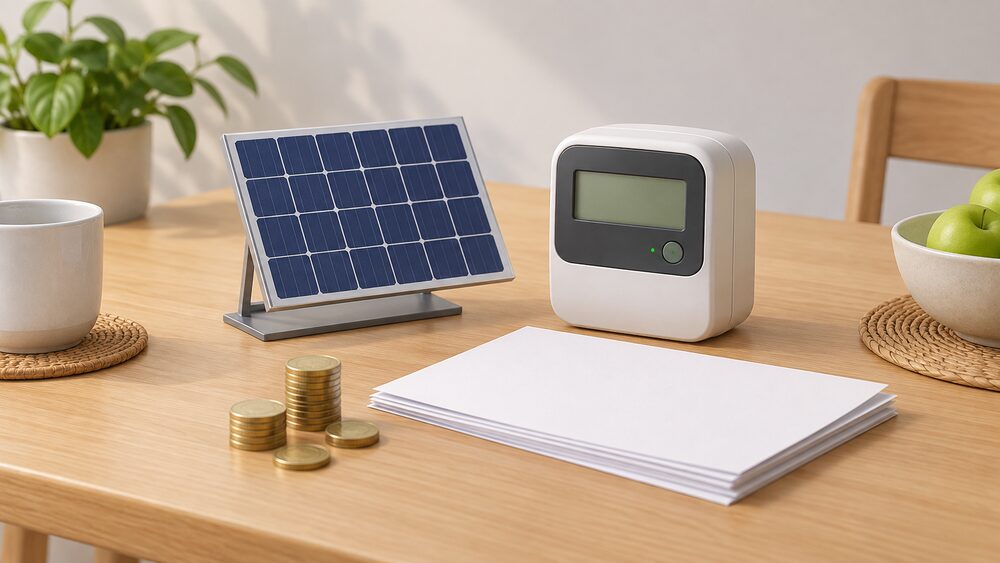
The Smart Export Guarantee is the scheme that pays households for electricity they send to the grid rather than use. It launched on 1 January 2020 and requires certain licensed electricity suppliers, known as SEG Licensees, to offer a tariff and pay eligible generators for electricity exported back to the National Grid1. It is a government-backed initiative, administered by Ofgem on behalf of the Department for Energy Security and Net Zero1.
It is not a grant and it is not automatic. The scheme does not offer upfront payments; households are paid by their energy supplier for each unit of electricity they supply to the grid, calculated from export meter readings3. Rates are set by each supplier separately, and the only floor is that a tariff must pay more than zero4.
The scheme replaced export payments under the Feed-in Tariff, which closed to new applicants. It covers Great Britain only, and it sits alongside, rather than inside, whatever import tariff a household buys. The sections below set out who qualifies, how the metering works, what the rates look like in practice, and where the scheme's limits fall.
What the Smart Export Guarantee is and how it pays you for exported power
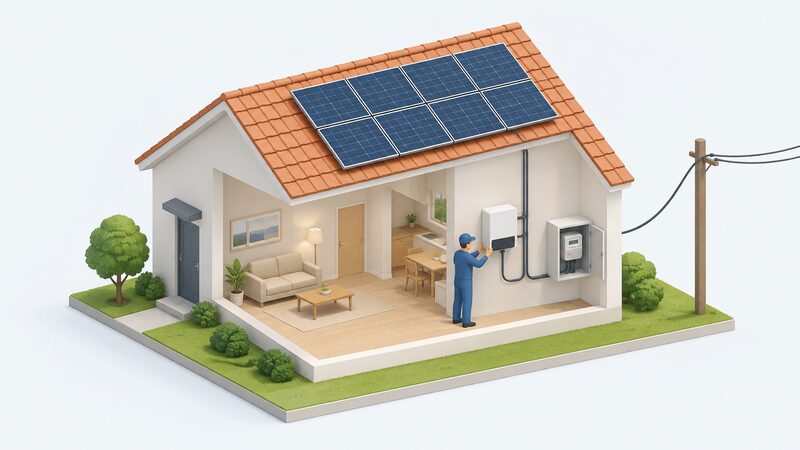
The SEG requires certain licensed electricity suppliers to offer a tariff and pay eligible generators for electricity which they export back to the National Grid5. It supports small scale renewable electricity generation, and it does so through a payment per unit rather than a capital grant6. The scheme came into force on 1 January 2020 under the Smart Export Guarantee Order 2019, and it is governed by that Order together with Conditions 57 and 58 of the Standard Conditions of the Electricity Supply Licence2.
The mechanism is straightforward in principle. A household installs a qualifying generating technology, exports whatever it does not use, and the supplier pays for the exported units as recorded by the meter. Payments are exclusively an export tariff, based solely on how much electricity is exported back to the grid, as recorded by the smart meter7. There is no payment for generation as such, which is the key structural difference from the old Feed-in Tariff.
Suppliers have real discretion within that frame. SEG Licensees choose the rate which they will pay SEG Generators, the contract length, and other terms, but the tariff rate must always be above zero3. That combination, a mandated offer with a supplier-set price, explains almost everything about how the scheme behaves in practice: every large supplier must offer something, and what they offer varies widely.
For a household's energy independence, the effect is partial. The SEG turns an unused output into income and improves the return on a generating installation, but it does not remove dependence on a supplier. A household still needs a licensed supplier to register the export, read the meter and make the payment, and it still needs an import tariff for the electricity it buys at night or in winter. The scheme monetises surplus; it does not make a home self-sufficient.
"The SEG requires certain licensed electricity suppliers known as SEG Licensees to offer a tariff and pay eligible generators for electricity which they export back to the National Grid"
Eligibility: technologies, capacity limits and certification
There are five eligible low-carbon technology types for the SEG: solar photovoltaic, wind, micro combined heat and power, hydro and anaerobic digestion8. The scheme is open to anyone with an installation of one of those technology types up to a capacity of 5MW, or up to 50kW for micro-CHP1. Installations have a maximum permitted capacity of 5 megawatts, with the exception of micro-CHP installations, which must be no more than 50 kW total installed capacity2.
Certification is the second gate. For solar PV, wind and micro-CHP installations up to 50kW, this means presenting a Microgeneration Certification Scheme certificate or equivalent2. Independent guidance puts the same requirement in household terms: the system was installed by an MCS certified installer using certified products9. Having a solar system installed by a non-accredited installer could mean that the household is not eligible to apply for the SEG10.
A third condition sits with the supplier rather than the generator: suppliers must be satisfied that exporters' installations are suitably safe11. Anaerobic digestion carries an extra step, since SEG AD installations are required to submit a SEG AD Compliance Declaration to Ofgem2.
| Requirement | Detail | Applies to |
|---|---|---|
| Eligible technologies | Solar PV, wind, micro-CHP, hydro, anaerobic digestion | All applicants1 |
| Capacity limit | 5MW | All technologies except micro-CHP2 |
| Capacity limit | 50kW total installed capacity | Micro-CHP2 |
| Certification | MCS certificate or equivalent | Solar PV, wind and micro-CHP up to 50kW2 |
| Safety | Supplier must be satisfied the installation is suitably safe | All applicants11 |
| Location | Great Britain | All applicants1 |
Most accredited FIT installations will be eligible for the SEG, provided they have a smart or export meter installed12. That matters because it means the scheme is not closed to households that joined the earlier support regime, only to double payment on the same capacity.
The smart meter requirement: half-hourly export readings
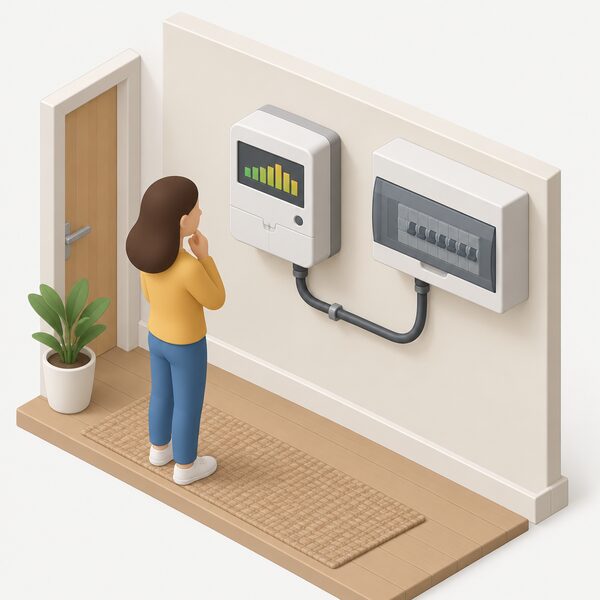
The SEG is a metered scheme, and the metering standard is specific. Generators must have a smart meter to monitor exports, and the installation must be fitted with an export or smart meter capable of taking measurements at half-hourly intervals13. The licence conditions say the same thing in legal language: the meter must be capable of taking measurements at half-hourly intervals in relation to the exported electricity volumes for which the SEG Generator seeks payment14.
Half-hourly measurement is not the same as half-hourly settlement. Exports under the SEG must be metered on a half-hourly basis and registered for settlement, but they are not required to be settled on a half-hourly basis11. That distinction is what allows a simple annual or quarterly export payment to sit on top of a metering standard designed for a smarter grid.
The government's position at design stage was that SMETS-compliant smart meters are compatible with microgeneration and enable measurement of export on a half-hourly basis15. In practice, a household without an eligible meter cannot be paid, because there is no compliant record of what was exported. SEG payments are calculated by using export meter readings1.
This is the point at which the scheme's dependence on infrastructure is clearest. A generating installation on its own earns nothing under the SEG. It needs a meter that records export at the required interval, a supplier willing to register it, and a reading cycle that turns those records into payments. The eligibility and metering requirements page covers the meter and certification detail in more depth, and the readings and payments page covers what happens after registration.
Tariff rates: from 1p to 25p per kWh, and why they vary so much
Rates under the SEG are set by suppliers, and the spread is wide. Independent guidance describes rates typically ranging from around 2p per kWh on basic tariffs to 15p+ in premium tariffs and bundled offers16. The same source notes that rates are set by individual suppliers and can be as low as 0.01p/kWh, and elsewhere that they can run as high as 20 to 40p/kWh7. A parliamentary briefing puts the ceiling at up to 25 pence per kWh as of June 2026, comparable to the unit rate of electricity17.
The official statistics give the clearest picture of what is actually offered. The average tariff rate offered during SEG Year 5 was 10.8p/kWh, a further 30% increase from SEG Year 42. Within that average, tied tariffs offered significantly higher rates at 14.54p/kWh than untied ones at 4.39p/kWh2. The highest untied tariff rate available was 12p/kWh from Scottish Power, while the lowest tied and untied tariffs were 5p/kWh (Octopus) and 1p/kWh (E Energy) respectively2.
| Measure | Rate | Period |
|---|---|---|
| Average tariff rate offered | 10.8p/kWh | SEG Year 52 |
| Average tied tariff | 14.54p/kWh | SEG Year 52 |
| Average untied tariff | 4.39p/kWh | SEG Year 52 |
| Highest untied tariff | 12p/kWh (Scottish Power) | SEG Year 52 |
| Lowest untied tariff | 1p/kWh (E Energy) | SEG Year 52 |
| Lowest tied tariff | 5p/kWh (Octopus) | SEG Year 52 |
| Reported ceiling | up to 25p/kWh | June 202617 |
The variation has three drivers. The first is the tied or untied condition, which is worth roughly ten pence per kWh on the Year 5 averages. The second is contract length and terms, which suppliers set themselves; SEG rates are market-driven and set for a contract term, normally 12 months16. The third is the absence of any indexation: there is no inflation link, because rates are set by suppliers16.
The floor is the only element the scheme fixes. All SEG tariffs must pay a rate greater than 0p/kWh at all times, and any SEG tariff rate offered must always be above zero2. That is a guarantee of payment, not a guarantee of a meaningful rate. A household comparing offers is comparing supplier discretion, and the export rates page sets out what individual suppliers pay per kWh.
Tied or untied tariffs: which pays more and what the conditions are
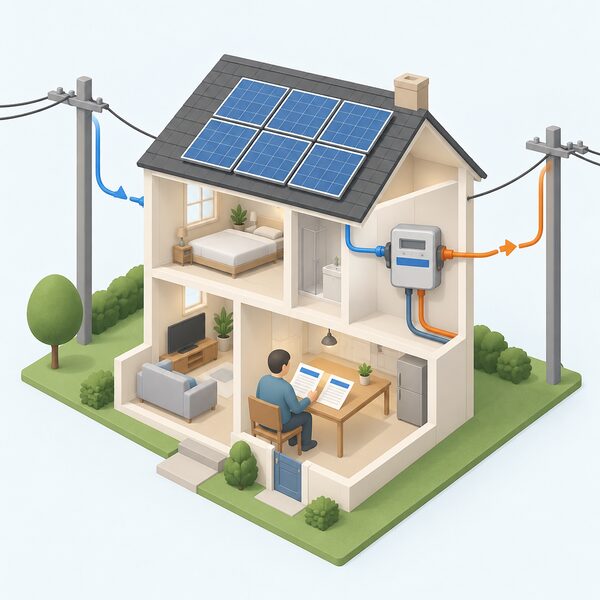
The scheme's own statistics divide tariffs into two kinds. Tied tariffs are only available if specific conditions are met, for example if import electricity is purchased from the same supplier, or the generator purchases or uses certain products2. Untied tariffs carry no such condition. Of the tariffs available during SEG Year 5, 29 were tied and 21 were untied2.
The uptake is heavily skewed. Tied tariffs accounted for £49.24 million (86.4%) of payments compared to £7.73 million (13.6%) for untied tariffs2. On volume, 337.8 GWh (76.2%) was on tied tariffs and the remaining 105.3 GWh (23.8%) was on untied tariffs2. At the end of SEG Year 5, 226,674 installations (83.8%) were on tied tariffs and the remaining 43,721 (16.2%) were on untied tariffs2. Tied tariffs also accounted for 1,284 MW (81.0%) of total installed capacity, compared to 300 MW (19.0%) for untied tariffs2.
The reason is arithmetic. The average tied rate of 14.54p/kWh is more than three times the average untied rate of 4.39p/kWh2. A household that accepts the condition of buying its import electricity from the same supplier, or of buying a particular product, is generally paid more per exported unit.
That trade is the central judgement the scheme asks a household to make, and it is a trade in independence. A tied tariff links the export arrangement to the import supply, so the household's exposure to one company increases: the same supplier sets the import price and the export rate, and the export rate depends on staying. An untied tariff keeps the two separate and pays less. Neither is a recommendation; the conditions are set out in each tariff's terms, and the Feed-in Tariff versus SEG comparison sets the two schemes side by side.
How to apply: documents, suppliers and how long it takes
Application is made to a supplier, not to Ofgem. Certain licensed energy suppliers, called SEG Licensees, are required to offer these tariffs, so a household can choose the one it applies to9. Only energy suppliers with more than 150,000 customers are obliged to offer SEG export tariffs7. Ofgem's list of SEG licensees is the reference point for which companies must offer a tariff5.
The documents are limited. An application is normally made online using the supplier's SEG application form, including smart meter data and an MCS certificate9. For solar PV, wind and micro-CHP installations up to 50kW, that means presenting a Microgeneration Certification Scheme certificate or equivalent2. Anaerobic digestion installations must submit a SEG AD Compliance Declaration to Ofgem2.
Where a household is already on the Feed-in Tariff, there is a step before registration. In order to register for the SEG, a generator must first opt out of FIT export payments for the installation by contacting its FIT Licensee12. That step is not reversible in the way a household might assume, and the section below sets out the consequences.
The process in order:
- Confirm the installation meets the technology, capacity and certification conditions1.
- Confirm the meter can record export at half-hourly intervals4.
- If on the Feed-in Tariff, opt out of FIT export payments with the FIT Licensee12.
- Apply to a chosen SEG Licensee using its form, with smart meter data and the MCS certificate9.
- Register, and receive payment based on export meter readings1.
Timing is not fixed by the scheme. Suppliers set the contract length and other terms, and the tariff rate must always be above zero3. The scheme's own reporting runs on a year from 1 April to 31 March, as in the 2021 to 2022 reporting period18.

Batteries, FIT installations and other cases that complicate eligibility
Storage is the most common complication, and the rules treat it separately. Ofgem's co-location guidance has been updated to include an appendix on the co-location of battery storage with installations receiving a Smart Export Guarantee tariff19. That guidance is the reference point for how a battery sitting behind the same meter as a generating installation is treated. The exporting from a home battery page covers the household side of that question.
The Feed-in Tariff interaction is the second complication, and it has two distinct rules. A generator intending to claim SEG payments must not be in receipt of an FIT export tariff for the same generation capacity20. Separately, SEG payments may be received where FIT export payments are received for a different installation, as long as the installations are completely separate with distinct import and export meters and different import and export MPANs20. Collecting SEG and FIT export payments at the same time for the same generating capacity knowingly could constitute fraud21.
There is also an irreversibility that catches households out. Once a household has switched to a SEG tariff, it will not be able to switch back to FIT export payments, although the generation tariff remains unaffected7. And if a household has a deemed or estimated Feed-in Tariff export rate, it will not be able to go back to that once it has a smart meter16.
Where the SEG applies: Great Britain only, not Northern Ireland
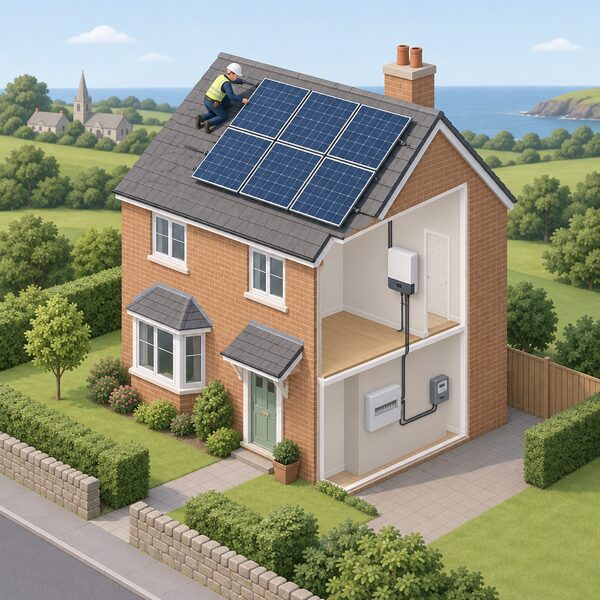
The scheme's territorial extent is Great Britain. Installations must be located in Great Britain and meet the applicable eligibility criteria1. The scheme enables small-scale low-carbon electricity generators in Great Britain, known as SEG generators22. Installations must be located in Great Britain6.
That means Northern Ireland sits outside the SEG. A household there cannot register for a SEG tariff under the scheme as it stands, and the Northern Ireland tariffs page covers what applies instead. Within Great Britain, the scheme applies uniformly across England, Scotland and Wales; the differences that matter to a household are in the tariffs and conditions individual suppliers attach, not in the scheme's geography.
Scotland has its own considerations in the wider support landscape, but the SEG itself is a Great Britain scheme and the eligibility criteria do not vary by nation. The Scotland tariffs page covers the Scottish picture more broadly.
Switching suppliers and what happens to your export tariff
The export tariff and the import tariff are separate arrangements, and switching one does not automatically move the other. In theory, a household can move to another supplier without moving its SEG tariff, but it may find itself moved to a less generous export rate by its old supplier7. Tariff rates are set by each supplier separately7.
The reason is that the export rate belongs to the tariff, not to the household. Suppliers can set their own SEG tariff rates, provided they offer more than £0 per unit of metered exported power23. Contract length and other terms are also set by the supplier, with the rate required to stay above zero3. A household that leaves a supplier while keeping an export arrangement with it should expect the terms of that arrangement to be revisited.
This is where the tied tariff structure bites hardest. A tied tariff is only available if specific conditions are met, for example if import electricity is purchased from the same supplier2. Moving the import supply away from that supplier removes the condition the rate depends on. The switching with solar material and the exit fees and contract terms page cover the contractual side.
For independence, the practical point is that the export income is not portable in the way a household might expect. It is attached to a supplier relationship, a tariff term and a meter registration, and each of those can change the rate.
What the scheme has paid out so far

The scheme's annual reports give the clearest record of scale. Payments totalling £56.97 million were paid out to SEG generators in 2024 to 20252. Over the course of SEG Year 5 there were 405,533 installations registered to a SEG tariff2. A total of 50 tariffs from 11 licensees (10 mandatory and one voluntary) were available for generators to join during SEG Year 5, and at the end of that year 43 tariffs were still available for new registrations2.
Earlier years show the build-up. The first SEG annual report covers scheme activity from its opening in January 2020 to March 202124. By the end of the 2021 to 2022 reporting period, a total of 28,100 installations received payment for their exported electricity18. The scheme has also proved stable at the supplier level: no SEG licensee exited the electricity market due to insolvency during SEG Year 3, though Octopus took over operations for Bulb after the close of that year and supplied the data used in the report22.
| Reporting period | Measure | Figure |
|---|---|---|
| 2020 to 2021 | First annual report period | Scheme activity from January 2020 to March 202124 |
| 2021 to 2022 | Installations receiving payment | 28,10018 |
| SEG Year 3 | Licensee insolvencies | None22 |
| SEG Year 5 | Installations registered | 405,5332 |
| SEG Year 5 | Tariffs available | 50 from 11 licensees2 |
| 2024 to 2025 | Payments | £56.97 million2 |
The trajectory matters for a household weighing whether to register. The scheme is established, widely used and growing, with a mandated supplier base and a published reporting cycle. What it does not offer is price certainty: the average rate rose 30% from Year 4 to Year 5, and it can fall as easily as it rises, because suppliers set it2.
Complaints and escalation
Complaints about a SEG tariff go to the supplier first. Handling any complaints from SEG generators is one of the obligations placed on SEG licensees, alongside offering at least one SEG tariff to eligible installations, assessing eligibility, making payments based on export meter readings, and providing data to Ofgem on tariff offerings, uptake and payments2.
If, after eight weeks, a satisfactory solution has not been agreed between both parties, the complaint may be referred to the Energy Ombudsman17. The Energy Ombudsman provides an independent service, separate to Ofgem, if there is a problem with an energy supplier, an energy broker, a network operator or a heat network supplier25.
Ofgem administers the SEG on behalf of the Department for Energy Security and Net Zero, which is responsible for the policy2. Ofgem's role is scheme administration rather than dispute resolution between a generator and its supplier, which is why the Ombudsman route exists alongside it.
Sources25 cited
- Smart Export Guarantee (SEG), Ofgem, 2026
- Smart Export Guarantee Annual Report Year 5, Ofgem, 2025
- Smart Export Guarantee guidance for generators, Ofgem, 2026
- Feed-in Tariffs: scheme closure, Ofgem, 2026
- Smart Export Guarantee: electricity suppliers, Ofgem, 2026
- The future for small-scale low-carbon generation, House of Commons Library
- Can I switch energy supplier if I have solar panels?, Uswitch, 2026
- Smart Export Guarantee: generators, Ofgem, 2026
- Smart Export Guarantee, MCS Certified
- Solar photovoltaic (PV) panels, London Borough of Bromley
- Explanatory Memorandum to the Smart Export Guarantee Order 2019, legislation.gov.uk, 2019
- Feed-in Tariffs: FIT generators, Ofgem, 2026
- Smart Export Guarantee, Parliamentary Office of Science and Technology
- The Smart Export Guarantee Order 2019, legislation.gov.uk, 2019
- Draft licence conditions, Department for Business, Energy and Industrial Strategy, 2019
- Feed-in Tariff guide, Uswitch, 2026
- The future for small-scale low-carbon generation, House of Commons Library
- SEG 2021-22 Annual Report, Ofgem, 2022
- Co-location of electricity storage and hydrogen production under the RO, FIT, REGO and SEG, Ofgem, 2024
- FIT Guidance for Licensed Electricity Suppliers V17.1, Ofgem, 2024
- Guidance for FIT Generators V18, Ofgem, 2024
- Smart Export Guarantee Annual Report 2022-23, Ofgem, 2023
- The future for small-scale low-carbon generation: consultation, Department for Business, Energy and Industrial Strategy, 2019
- Smart Export Guarantee Annual Report 2020-21, Ofgem
- Complain about your energy supplier or network operator, Ofgem, 2026
 Solar Export PaymentsIf you have solar panels, how do you actually get paid for the electricity you send back to the grid?
 The Full Solar Panels GuideHow much do solar panels cost, and what could they save you each year?
 Export Rates Per kWhHow much will your supplier pay you for the solar power you send to the grid, and why do rates vary so much from one company to another?
 Exporting From a Home BatteryCan you actually get paid for electricity your home battery sends to the grid?
 Solar and Battery Import TariffsWhat does a special import tariff actually get you when you have solar panels or a home battery?
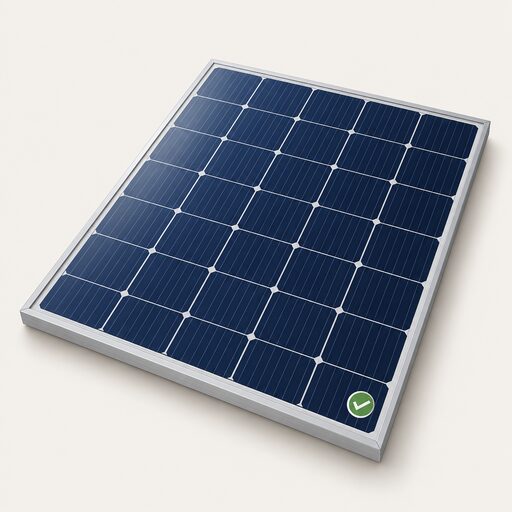 Export Tariff EligibilityTo get paid for solar power you send to the grid, you need a certified installer, your network operator told about the connection, and a meter that records what you export.