

In this answer
Short answer
The Community Energy Export Guarantee is not a standalone statutory scheme. It is the name people use for the export payment arrangements that community energy groups rely on, and those arrangements rest on one legal duty: the Smart Export Guarantee, which requires certain licensed electricity suppliers, known as SEG Licensees, to offer a tariff and pay eligible generators for electricity exported back to the National Grid1. The SEG came into force on 1 January 2020 under the Smart Export Guarantee Order 20192.
The obligation bites on suppliers with more than 150,000 customers, who must offer an export tariff for each unit of electricity sold to the grid as measured by the meter3. Suppliers set their own rates, provided they offer more than zero pounds per unit of metered exported power4. As of June 2026, SEG payments can reach up to 25 pence per kWh, which is comparable to the unit rate of electricity2.
For a household or a community group, the practical meaning is this: export income is available, but it is a supplier product, not a guaranteed national tariff, and the rate, the contract terms and the payment mechanics are set company by company.
What the Community Energy Export Guarantee actually is
Community energy allows people and communities to take democratic control over their energy future, by understanding, generating, using, owning, and saving energy in their communities, as well as working together across regions and nationally7. Export payments are one revenue line inside that wider model, and the phrase "community energy export guarantee" describes the expectation that a community generator will be paid for what it sends to the grid.
The mechanism behind that expectation is the Smart Export Guarantee, an export tariff available in Great Britain that pays people for the electricity they export to the grid8. It ensures small scale renewable energy generators get paid by electricity suppliers for the export of electricity back into the grid9. It supports small scale renewable electricity generation and does not offer upfront payments10.
That last point matters for how a community project is financed. The SEG is a payment for metered export, not a capital grant, so it cannot fund the build. Community groups therefore pair export income with grant funding, share offers or loans, and treat the export tariff as operating revenue rather than seed capital. The guarantee element is the supplier obligation to pay something above zero, not a promise of a particular rate or a particular term.
"Community energy allows people and communities to take democratic control over their energy future, by understanding, generating, using, owning, and saving energy in their communities, as well as working together across regions and nationally"
How it differs from the Smart Export Guarantee
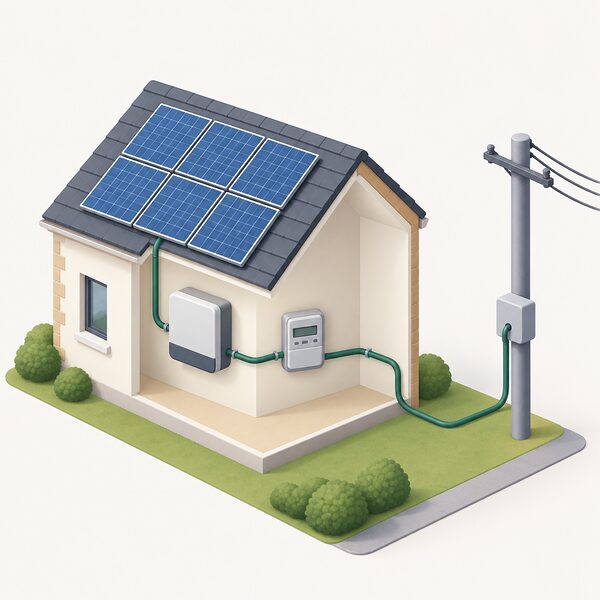
In law, it does not differ. There is no separate community export guarantee statute. What differs is the commercial layer built on top of the SEG, and the scale at which it operates.
The SEG replaced the Feed-in Tariff, and it also pays for electricity exported to the grid11. The FIT scheme has closed to new applicants, which is why the SEG is the live route for new generation12. The SEG is designed to ensure small-scale generators are paid for the renewable electricity they export to the national grid13.
Where community arrangements diverge is in aggregation and in supplier choice. A SEG tariff does not need to come from the same company as the site's standard energy supplier14, and a generator can choose a SEG supplier that is different from its current energy company15. That freedom is what allows a community group to place several sites, or a portfolio of member installations, with a supplier that offers a community-specific product.
| Feature | Smart Export Guarantee | Community export arrangement |
|---|---|---|
| Legal basis | Smart Export Guarantee Order 20192 | Supplier product sitting on the SEG duty |
| Who is obliged | Licensed suppliers with over 150,000 customers3 | No separate statutory obligation |
| Rate setting | Supplier sets rate, above £0 per unit4 | Supplier or intermediary sets rate |
| Upfront payment | None10 | None from the export tariff itself |
| Supplier choice | Can differ from the supply company14 | Often an aggregator or community-focused supplier |
The distinction is worth holding onto, because searches for a "community energy export guarantee" sometimes assume a distinct legal entitlement with its own regulator and its own rate. The entitlement is the SEG; the community element is how groups contract for it.
Who it is designed for: community energy groups
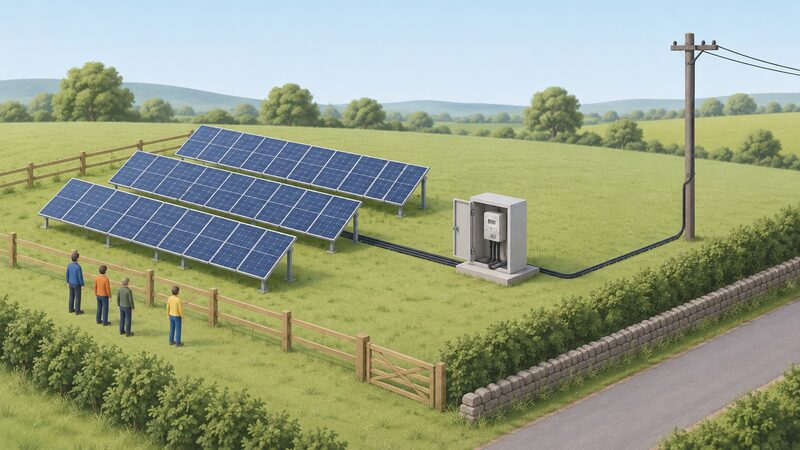
The SEG itself is aimed at small-scale electricity generators, meaning homes and small businesses3. Community energy organisations sit alongside those generators, and several funding and support routes are explicitly built for them.
The Powering Communities Fund requires a community energy group or organisation with a current or upcoming Power Purchase Agreement with Younity, a site on their Community Smart Export Guarantee, or use of their Kickstart Loan facility16. That is the clearest example of a community-specific export product: a named Community Smart Export Guarantee offered through a commercial arrangement rather than a statutory one.
Welsh support has been directed at the same constituency. The Ynni Cymru capital grants scheme provides financial support to community energy organisations, social enterprises, public sector bodies, and SMEs17, and a separate Welsh programme supports community-led energy projects18. Smart Local Energy Systems funding can be delivered by community energy organisations, social enterprises, public sector bodies, and SMEs developing innovative approaches19.
The Great British Energy Community Fund is a government initiative aimed at funding community energy projects, such as small-scale wind farms, across the UK20, and it is directed at community energy groups21. The Community Energy Fund is open to anyone21.
For a household, the relevance is indirect but real. Joining a community energy organisation is a route to part-ownership of generation without owning a roof array, and it is a different proposition from installing your own system. The trade-offs are set out in joining a community energy scheme versus installing your own solar, and the wider model is described in how local projects work.
How export payments work in practice
Export payment is per unit, measured at the meter. Under the Smart Export Guarantee, electricity suppliers offer payment for each unit of power exported to the grid6. Households with installed renewables can get paid for the electricity they export to the National Grid22, and if registered for the SEG, they can receive payments for any excess energy generated and sent back to the grid22. In England, Scotland or Wales, surplus energy exported to the grid can be paid for through the SEG23, and solar installations receive a payment known as the Smart Export Guarantee in return24.
The conditions are where most applications stall.
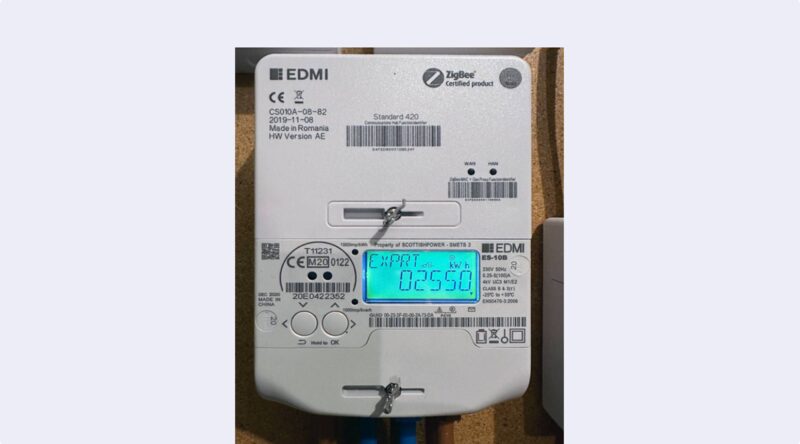
- Smart meter: generators must have a smart meter to monitor exports in order to qualify for the SEG5.
- Accreditation: residential solar systems in the UK must be accredited by the Microgeneration Certification Scheme to be eligible for the SEG6.
- Technology: solar panels, a small wind turbine, or micro CHP are the eligible generation types, and the household must live in England, Scotland, or Wales15.
- FIT opt-out: a generator intending to claim SEG payments must not be receiving an export tariff under the FIT scheme for the same installation and generation capacity, and must first opt out of FIT export payments by contacting the FIT Licensee25.
- FIT export condition: where a site is on FIT export payments, the FIT generator must have the ability to export and have opted in to receive export payment from the FIT licensee26.
Applications go directly to a SEG tariff supplier, and the Ofgem website lists the energy suppliers that provide SEG tariffs20. There is no central application portal and no queue: the contract is between the generator and the supplier.
Where the scheme sits in UK energy policy
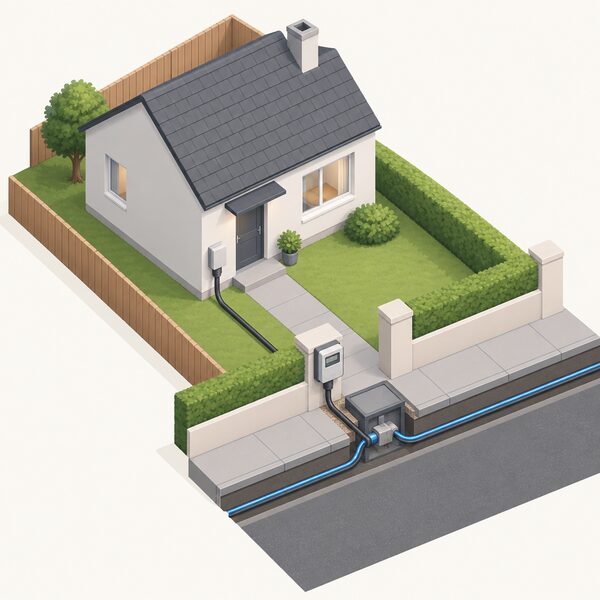
Export payment policy sits inside a wider settlement that is devolved in parts and reserved in others, and the differences matter for community groups working across borders.
The Energy Company Obligation is a government energy efficiency scheme in Great Britain27, so it does not extend to Northern Ireland. The Energy Price Guarantee operated, for the most part, in the same way for households across the whole of the UK, with differences for Northern Ireland28, and its regional rates applied to England, Scotland and Wales29. The UK Emissions Trading Scheme is jointly administered by the Scottish Government, UK Government, Welsh Government and Northern Ireland Executive30.
The SEG's own territorial reach follows the same pattern as the electricity market: it is available in Great Britain, and the eligibility guidance for households names England, Scotland, or Wales15. Northern Ireland sits outside it, which is why community energy in Northern Ireland develops under different funding and regulatory conditions, covered in community energy in Northern Ireland.
The direction of travel in policy is toward more local generation and more local control. The grid edge, the boundary where a site connects to the network, is changing in ways that let households and communities support a fair energy transition21, and proposals for a local power plan set out a larger role for community generation21. Funding routes for community projects are collected in funding for community energy projects, and the national picture is in community energy in the UK.
What this means for independence is bounded. Export income reduces the net cost of generation a household or group already owns, and it turns a surplus into revenue rather than waste. It does not remove dependence on the grid, on a licensed supplier, or on that supplier's willingness to keep offering a competitive rate. The connection itself remains the network operator's, and the payment remains a contract with a company.
If payments are not made
Contact the energy supplier first. Ofgem's guidance directs consumers to their supplier for late, incorrect, or missing bills, back billing, being overcharged, a faulty meter, poor customer service, and refusing to refund credit from your account31. The same list applies to export payment disputes, because the payment obligation runs from the supplier to the generator.
Where a supplier does not resolve the complaint, it can be escalated through the established redress route. Separately, in cases where the installer that fitted the faulty installation is no longer trading and the guarantee is missing, fraudulent or cancelled, the National Energy Foundation can be relevant32.
Sources32 cited
- Smart Export Guarantee: electricity suppliers, Ofgem, 2026
- Smart Export Guarantee Annual Report Year 5, Ofgem, 2025-12
- Export payments, Electricity North West, 2026-09-19
- Smart Export Guarantee briefing, House of Commons Library, 2026-05-13
- Smart Export Guarantee and small-scale generation, Parliamentary Office of Science and Technology, 2026-06-25
- Solar energy, Solar Energy UK, 2026-09-17
- What is community energy?, Community Energy England, 2026-09-20
- Energy jargon buster, Energy Saving Trust, 2026-03-20
- Export payments, UK Power Networks
- Smart Export Guarantee, House of Commons Library, 2026-09-17
- Buying a house with solar panels, Energy Saving Trust, 2026-08-13
- Feed-in Tariffs: scheme closure, Ofgem
- Energy incentives and schemes, South Cambridgeshire District Council, 2026-09-17
- Smart Export Guarantee, Energy Helpline, 2026-09-20
- Smart Export Guarantee, MCS Certified, 2026-04-27
- Powering Communities Fund, Community Energy England, 2026-05-19
- The Local Power Plan, Environmental Services Association, 2026-02-11
- £10 million support for community-led energy projects across Wales, Welsh Government, 2025-05-01
- £129 million support for Welsh communities transitioning to renewable energy, Welsh Government, 2025-09-17
- Small wind turbines, MCS Certified, 2026-08-18
- What is the grid edge?, Low Carbon Hub, 2025-03-10
- Solar panels, Home Energy Scotland, 2026-09-20
- Top energy saving ideas for your home improvement project, Energy Saving Trust, 2026-08-03
- Solar panels, Oxfordshire County Council, 2026-09-17
- Guidance for FIT Generators V18, Ofgem, 2026-04-01
- Feed-in Tariffs: guidance for licensed electricity suppliers, Ofgem, 2023-04-03
- Energy Company Obligation, Ofgem, 2026-09-17
- Energy Price Guarantee, GOV.UK, 2026-09-17
- Energy Price Guarantee regional rates, April to June 2023, GOV.UK, 2026-09-17
- Climate change, Scottish Government, 2026-09-17
- Complain about your energy supplier or network operator, Ofgem, 2026
- Energy Market Consumer Protection, Hansard, 2026-06-17
 Community Energy in EnglandCommunity energy lets neighbours own their own power together, often through solar panels, and share the money it makes.
 Solar Export PaymentsIf you have solar panels, how do you actually get paid for the electricity you send back to the grid?
 Community Energy in NICan a community group in Northern Ireland sell power to its neighbours, and is there funding to get a project off the ground?
 Community Energy Share OffersHow community energy share offers work in community benefit societies and co-operatives, what returns and risks are stated, how withdrawal works, and how owning shares differs from owning generation on your own roof.
 Exporting From a Home BatteryCan you actually get paid for electricity your home battery sends to the grid?
 Export Rates Per kWhHow much will your supplier pay you for the solar power you send to the grid, and why do rates vary so much from one company to another?