
In this answer
Short answer
Solar Together is a group-buying scheme for solar panels and battery storage, offered by some local councils to make installation more affordable1. Households register an interest for free, a reverse auction is held in which pre-vetted installers bid for the work, and each registered household then receives a personal recommendation setting out the costs and specification for a complete installation2. Registration carries no obligation to install1.
The headline figure is a reported saving of 10 to 25 per cent off the cost of a solar installation4. That range is repeated across the scheme's own documentation and in third-party guides, and it is the number to hold on to when weighing the scheme against quotes gathered independently. One maker guide puts group-buying discounts higher, at 20 to 35 per cent compared with standard market rates, so the two figures do not agree5.
The scheme is not a single national programme. Each council commissions its own round, under its own name, so participation depends on where you live and on whether a round is open at the time. Rounds have run as Solar Together Wirral, Solar Together Cheshire, Solar Together Hertfordshire and Switch Together Norfolk, with Switch Together Birmingham operating on the same model6.
What Solar Together is: a council-backed group-buying scheme
Solar Together is a group-buying scheme that secures savings on installation costs, offered by some local councils1. The mechanics are simple in principle: households that would otherwise buy individually are pooled, and the pooled demand is put out to installers who compete for it. Wiltshire Council describes it as a group-buying scheme for solar panels and battery storage2, and Wirral Council describes it as bringing households together to get high-quality solar panels at a competitive price6.
The council's role is to lend the scheme its backing and its local reach. Wirral Council is working with Liverpool City Region Combined Authority through the Climate Emergency initiative6. Switch Together Birmingham, which runs on the same model, offers high-quality solar photovoltaic panels and battery storage and is described as bringing Birmingham households together9. Switch Together Norfolk offers high-quality solar photovoltaic panels and battery storage on the same basis3.
The administration is usually handled by a specialist. Broadland District and South Norfolk Councils have partnered with iChoosr Ltd, described in the scheme's own rules as independent experts in group-buying3. iChoosr was founded in 2008 and is privately owned by two co-founders, and it works with community leaders helping households select energy and solar power suppliers9. Cheshire's round partners Cheshire West and Chester Council, Cheshire East Council and Warrington Borough Council with the Dutch company iChoosr7.
For a household, the significance is straightforward. The scheme is a route to a professionally installed system with a council's name attached to the procurement, rather than a route to independence from the grid. The electricity still comes through the same connection, the installer is still a private company, and the auction is still run by a commercial partner. What the scheme changes is how the price is arrived at, not what the system does.
How the group-buying model works, from registration to installation
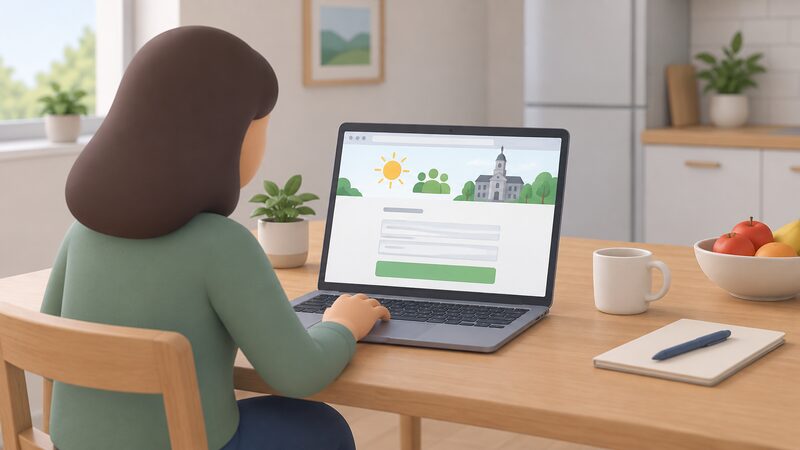
Group buying brings households together to unlock better deals on sustainable upgrades8. The category is wider than solar: schemes of this kind cover solar panels and battery storage, heat pumps and EV chargers8. Solar Together is the solar-specific version, and its sequence runs in a fixed order.
- Register your interest. Registration is free and carries no obligation to install1.
- The reverse auction. A reverse auction is held where pre-vetted solar installers submit bids for the work3. The lowest compliant bid sets the price for the round.
- The personal recommendation. Each registered household receives the costs and specification for a complete solar panel installation3.
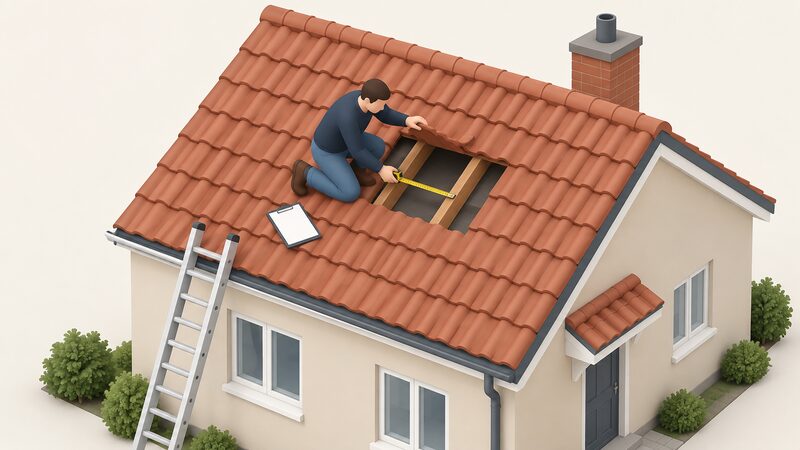
- Acceptance and survey. Once you accept your offer, a surveyor visits your property to assess whether your roof is suitable for a solar installation and confirm the number of panels, their location and other details such as cabling locations and colour12.
- Documentation. The contractor provides a basic panel design for the roof and descriptions of the installation, including a basic drawing of the proposed layout12.
- Planning and connection. You will still need to check planning requirements if you join the scheme2, and the installation must be registered with your distribution network operator, usually done by your installer14.
The installer side is where the scheme's quality control sits. Switch Together Norfolk uses pre-vetted solar installers3, and the Microgeneration Certification Scheme notes that to qualify for any government scheme including the Smart Export Guarantee and the Warm Homes Plan, the solar installer and installation must be certified15. That certification requirement is what makes the export payments available afterwards, and it applies to the scheme's installations as much as to any other.
The step that catches households out is the survey. It happens after acceptance, not before, so the panel count and layout are confirmed only once a commitment has been made. The contractor supplies the basic design, but it is the resident's responsibility to provide any drawings or information required for a submission via the Planning Portal12.
Savings: 10 to 25% below typical installation costs
The saving is the reason the scheme exists, and the figures reported for it cluster in one band. Solar Together material reports between 10 and 25 per cent off the cost of your solar panels4, and the same range appears in a scheme explainer, which puts participant savings at 10% to 25% of the costs associated with a solar installation16. A battery manufacturer's guide repeats savings of 10% to 25%17, and a further guide gives 10% to 25%18.
One source sits outside that band. A maker guide states that group-buying schemes leverage bulk buying to secure discounts of 20 to 35% compared to standard market rates5. That is a wider and more generous range than the scheme's own documentation gives, and the two do not reconcile. The 10 to 25 per cent figure is the one repeated across the scheme's own material and should be treated as the working assumption.
To judge what a percentage means in cash, the underlying cost matters. The average solar system costs £10,270, while half of UK households have less than £5,000 in savings11. A 10 to 25 per cent saving on a system of that size is a meaningful sum, but it does not close the gap between the average installation price and the savings of a typical household on its own.
The comparison that matters is against your own quotes. The standard advice is to get various quotes to compare prices of different installers19, and the scheme's own framing is that you can register to participate for free and without an obligation to install1. Registration therefore costs nothing and forecloses nothing: it produces a priced offer that can be set against whatever else you have gathered.
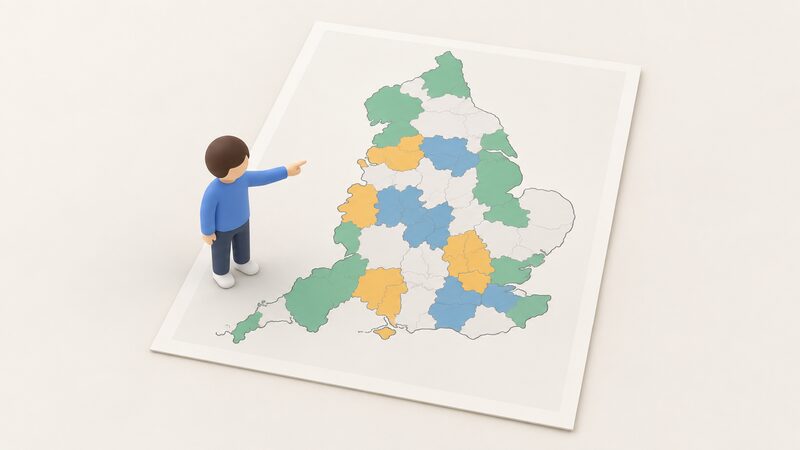
Where schemes run: London, Manchester, Suffolk, Norfolk and beyond
Coverage is patchy by design, because each round is a separate council decision. Group buying of this kind is backed by local councils and trusted partners and has already helped thousands of UK households8, and the Solar Together scheme has installed 79,500 solar panels in the UK since 201810. Those are national totals built from many separate local rounds.
The named rounds in the scheme's own documentation give a sense of the spread. Solar Together Wirral operates with Liverpool City Region Combined Authority6. Solar Together Cheshire partners Cheshire West and Chester Council, Cheshire East Council and Warrington Borough Council7. Solar Together Hertfordshire is cited as an example of a council-facilitated group-buying scheme20. Switch Together Norfolk covers Broadland District and South Norfolk3, and Switch Together Birmingham covers Birmingham9.
Elsewhere the picture is a mix of council schemes and independent ones. East Anglia solar installation work covers Norfolk, Suffolk, and parts of Cambridgeshire and Essex21. Good Energy installs solar panels and batteries in multiple places across the south of England22. A community energy project was initiated in Ambleside and is already being introduced to Kendal, Arnside, Levens, Duddon and Keswick, expanding to at least two new communities23. Richmond residents have a separate arrangement with a trusted installer offering a £600 discount on solar and battery installations24.
The practical consequence is that a householder cannot assume a round is open. A council that ran a round in one year may not run one the next, and the scheme's name changes with the council: Solar Together in most places, Switch Together in Birmingham and Norfolk. Checking the council's own energy pages is the only reliable way to establish whether a round is live.
Who can take part and when schemes open
Eligibility is set by the individual round rather than by a national rule, and the scheme's own material describes participation as ongoing rather than tied to a fixed national window4. In practice a round opens, runs for a registration period, holds its auction, issues recommendations, and then closes. Households with existing solar panels are not excluded: Switch Together Norfolk invites households that already have solar panels to register to have battery storage added to their existing system to maximise its benefits3, and the same offer appears in the Birmingham scheme9.
Battery storage is a standard part of the offer rather than an optional extra in most rounds. Switch Together Birmingham offers high-quality solar photovoltaic panels and battery storage9, and Switch Together Norfolk offers the same3. The technical case is well established: a solar PV system can be paired with a battery storage system to store excess electricity that your panels generate for when you most need it1.
Two conditions apply to anyone joining. First, planning. You will still need to check planning requirements if you join the Solar Together scheme2, and the contractor will provide a basic panel design for the roof and descriptions of the installation, including a basic drawing of the proposed layout, to support that12. Second, grid registration. The installation must be registered with your distribution network operator, usually done by your installer14.
On the question of what the scheme does for independence, the answer is partial. A scheme-installed system generates electricity on your own roof and reduces the amount bought from a supplier, and a battery shifts that generation into the evening. What remains is the grid connection, the supplier relationship, the export arrangement and the installer's own company. The scheme changes the procurement, not the underlying dependence.
Sources24 cited
- Solar photovoltaic (PV), MCS Certified, 2026
- Common queries about planning permission, Wiltshire Council, 2026
- Solar Together Norfolk, South Norfolk and Broadland Council, 2026
- Solar panels costs in UK, Jackery UK, 2026
- Are solar panels worth it, EcoFlow UK, 2025
- Solar panels, Wirral Council, 2026
- Solar panel installation Cheshire, Fuse Energy, 2026
- Group buying, Switch Together, 2026
- Switch Together Birmingham, Birmingham City Council, 2026
- Group purchasing for heat pumps, Nesta, 2026
- How to decide if solar panels are right for your home, IVIE, 2026
- Solar Together domestic planning guidance, Southampton City Council, 2026
- Installing solar panels at your home, Brighton and Hove City Council, 2026
- Solar panels, London Borough of Hammersmith and Fulham, 2026
- UK solar roadmap, Parliamentary Office of Science and Technology, 2025
- Solar panels grants and schemes explained, So Energy, 2024
- Government grants for battery storage systems, Duracell Energy, 2024
- Are photovoltaic panels worth it, EcoFlow UK, 2025
- Solar photovoltaic (PV) panels, London Borough of Bromley, 2026
- Solar panel installation Hertfordshire, Fuse Energy, 2026
- Solar panel installation East Anglia, Fuse Energy, 2026
- Solar panel costs, Which?, 2026
- Community and local energy case studies, Electricity North West, 2026
- Solar panels and permitted development, London Borough of Richmond upon Thames, 2026
 Solar Export PaymentsIf you have solar panels, how do you actually get paid for the electricity you send back to the grid?
 Panel RecyclingWhat actually happens to a solar panel when it stops working, and what can a household do with one?
 Peer-to-Peer Energy TradingSharing power with your neighbours sounds simple, so why does it need a supplier in the middle?
 Solar and Battery Import TariffsWhat does a special import tariff actually get you when you have solar panels or a home battery?
 The Full Solar Panels GuideHow much do solar panels cost, and what could they save you each year?
 Community Energy in EnglandCommunity energy lets neighbours own their own power together, often through solar panels, and share the money it makes.