
In this answer
Short answer
A free solar panel offer is not automatically a scam, but the word "free" is doing a great deal of work in most of them. There is no dedicated UK Government grant for solar panels1. What exists instead is a small number of genuine funded routes, chiefly ECO4, a government-backed scheme regulated by Ofgem that funds solar PV and other measures for low-income and poorly insulated homes2, and a much larger number of commercial arrangements in which a company pays for the hardware and takes something back, usually the roof space, the export income, or both.
The commercial model is the one householders most often meet. Companies have offered to pay to lease a roof for 20 to 25 years, keeping the system and the income it generates1. Others offer free panels on condition that the householder returns any income made through selling the energy back4. Neither is fraudulent in itself. Both leave the household with less than full ownership of what is on its roof, and both can complicate a sale, because the lease stays with the property1.
The dividing line between a poor deal and a scam is rarely the price. It is the paperwork, the ownership terms and the conduct of the seller. Consumer bodies put promises of "free" solar panels, unrealistically low prices and guaranteed outcomes used without caveats at the top of the warning list5, and doorstep approaches that cannot produce a verifiable business address, landline number or written quote are a recognised red flag6.
The models behind the offers: lease, PPA and funded schemes
Three arrangements sit behind most offers, and they differ in who owns what.
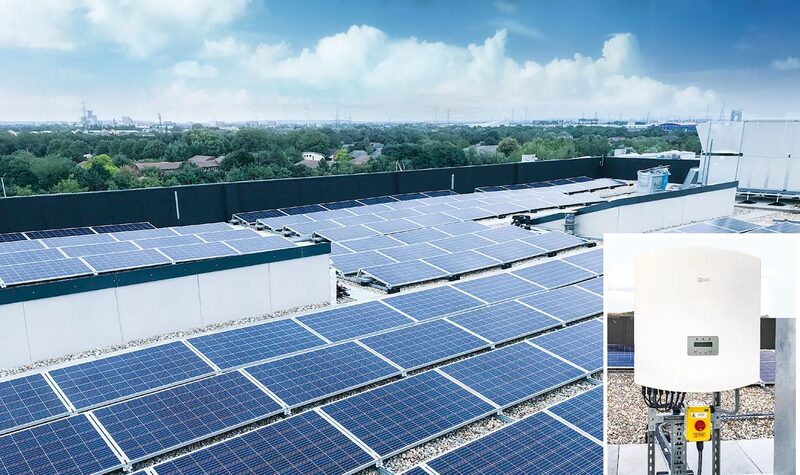
Under a rent-a-roof or lease model, the company installs and owns the system and leases the roof from the householder for 20 to 25 years1. The household typically uses some of the electricity generated and the company keeps the rest of the benefit. The lease is registered against the property, so it stays with the property rather than with the person who signed it1.
Under a power purchase agreement, the household buys the electricity the system generates at an agreed rate rather than paying for the hardware. The system remains the company's asset.
Under a buyback arrangement, the company offers a lump sum to a householder who already has solar PV installed, in exchange for receiving the remainder of their feed-in tariff1. This is a sale of future income, not an installation, and it is worth understanding that the household is trading a long stream of payments for a single one.
A fourth route is genuinely different: group-buying. Solar Together is a group-buying scheme for solar panels and battery storage, run through councils, in which households buy rather than lease9. Ownership stays with the householder.
The independence question follows directly from the model. A leased system reduces a household's exposure to grid prices for the electricity it uses, but the household does not own the generating asset, cannot freely alter it, and may need the company's consent to sell the house1. A purchased system, whether through a group scheme or an installer, leaves the asset and the decisions with the householder.
Red flags that separate a poor deal from a scam
The Consumer Protection Association lists promises of "free" solar panels, unrealistically low prices, or guaranteed outcomes used without caveats as lures aimed at homeowners5. Each of those is a claim about the future that no installer can honestly guarantee.
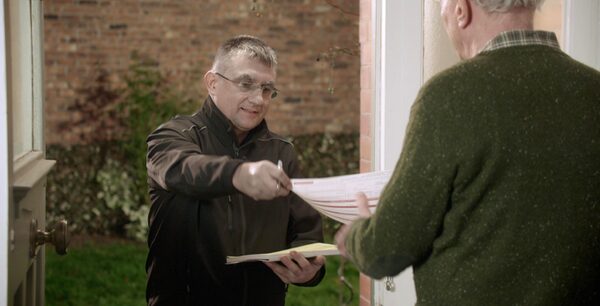
Conduct matters as much as claims. Which? describes a doorstep scam in which a so-called professional arrives without prior contact and offers to carry out work straight away; a visitor who cannot provide a verifiable business address, landline number or written quote is a red flag6. The same guidance identifies contractors who refuse to provide written documentation, who offer today-only discounts or use pressure tactics, who suggest avoiding Building Control or skipping paperwork, and who have no insurance or verifiable scheme membership10.
There is also a technical risk that follows bad work rather than bad intent. The risk of fire from solar panels is low, but known problems occur through bad installations, poor quality connections, and cable damage through vermin and weathering13. A cheap installation that cuts corners on mounting, cabling or isolation is where that risk concentrates.
Phishing is a separate strand. Emails claiming to be from the Energy Ombudsman have used the Ombudsman's or a broker's name and logo without permission, referenced a complaint the recipient never raised, contained links to fake forms or websites, pressured the recipient to act quickly, come from a free email service such as Gmail, and used a misspelling of a company name14. None of those characteristics belongs to a legitimate scheme administrator.
What a genuinely free scheme looks like: ECO4 and grant-funded routes
ECO4 is a UK Government scheme offering free renewable energy installations, such as heat pumps and solar PV, to low-income and poorly insulated homes3. It is government-backed and regulated by Ofgem3. The scheme helps cover the costs of solar panels and other energy efficiency improvements15, and solar PV panels are among the measures funded16.
Two features distinguish it from a commercial free offer. First, eligibility is assessed on the household and the property, not on a sales conversation. Second, nothing is leased: the measures are installed as improvements to the home.
Scotland runs its own support through Home Energy Scotland, and the SME Loan and Cashback Scheme provides unsecured, interest free loans of up to £100,000 for eligible work17. That is a loan rather than a grant, and it is aimed at small and medium businesses, so it is not a household route to free panels.
Planning costs can also be avoided legitimately. Some councils offer a free pre-application service where the application is specifically related to promoting sustainable development, which includes installing solar panels18. Where a household wants certainty that an installation does not need planning permission, a Lawful Development Certificate can be applied for to prove that an existing or proposed solar panel complies with the permitted development limitations and conditions18.
The honest summary is that genuinely free solar exists, it is narrow, and it is administered rather than sold. Anything offered at a kitchen table with a signature on the day is a commercial arrangement wearing the language of a grant.
Your rights and the checks to make before signing
The Renewable Energy Consumer Code sets out what a free-system contract should contain. Members offering free systems in return for assigning Feed-in Tariff benefits must give the consumer full information in writing about the value and conditions of the arrangement before the consumer signs a contract2. The contract should comply with the Code in all respects2.
That written information should cover the legal ownership of the system, whether the consumer can opt to purchase the system at a later date, the arrangements for maintaining and insuring the system, the status of the relevant manufacturers' and installers' guarantees, who will be responsible for removing the system at the end of its useful life, and the arrangements for terminating the agreement2. In the case of a hire purchase agreement, it should also give details of the consumer credit licence2.
Certification is the second check. Solar PV companies should be MCS certified or Flexi-Orb certified, which is often required for government support schemes or to obtain Smart Export Guarantee payments8. Which? advises checking that the company is MCS certified or equivalent and a member of the Renewable Energy Consumer Code19. The Energy Saving Trust's advice is the same: make sure the installers being considered are MCS-certified1. Building regulations guidance names an MCS certified installer as the best way to avoid problems with the fitting12, and a Welsh Government scheme specification requires the installing company to carry a valid Trustmark and be MCS certified20.
On price, the advice is consistent. Get quotes from at least three installers1, and get at least three quotes so that prices for the specific system and home can be compared21. Solar panels in the UK are sold through installers rather than direct to consumers, which is why Which? does not name individual best buys22.
Planning is the third check. Permitted development rights for roof and wall-mounted solar panels apply to houses; residents of flats should contact their local planning authority for guidance24. Information on permitted development rights and how to apply for permission where it is needed is published by councils9, and the position is set out separately for Wales24. Building regulations will normally apply to a roof installation11.
If you have already signed: cooling-off periods and next steps
Energy contracts carry a 14-day cooling-off period from sign-up, during which cancellation is free and no reason is needed7. The same two-week window applies to fixed energy deals25, and to energy switches generally26. That protection belongs to energy supply contracts, and a solar installation contract is not one, so the cooling-off right does not transfer automatically.
What a solar contract should contain is the termination clause. The Renewable Energy Consumer Code requires the arrangements for terminating the agreement to be set out2, which means the answer to "can I get out of this" is in the document that was signed. If that clause is absent or vague, that is itself a problem with the contract.
Where a household believes it has been misled, the Solar Energy UK consumer protection guidance covers red flags and things to avoid, what to do if something goes wrong, and how to maintain a solar panel system28. The Energy Ombudsman has published guidance on scam emails claiming to be from it, which is the right reference point if contact has come from someone using its name14.
If the panels are already on the roof and the household is unsure who owns them, the check is straightforward. The Energy Saving Trust's moving-home checklist advises checking whether you now own the panels or whether they belong to a private company, and finding out whether the system has a certificate from the Microgeneration Certification Scheme29. It also advises checking that the system is properly registered with MCS and any export tariffs29. Where the installation's safety is in doubt, an MCS-certified specialist can check the panels to confirm safe installation in line with safety standards29.
For a household that has bought a house with panels already fitted, the same checklist applies, and the lease question is the one that matters most: a lease stays with the property1, so a buyer inherits the arrangement whether or not they were told about it clearly.
What this means for a household's energy independence
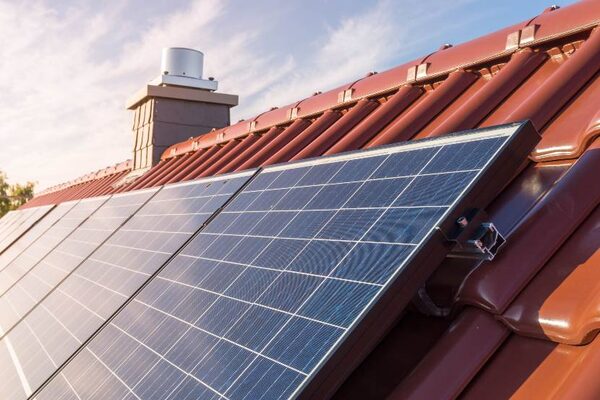
A purchased solar array moves a household some way towards generating its own electricity, though it remains connected to the grid, dependent on a supplier for import and export payments, and dependent on the manufacturer for warranty service. A leased array moves the household much less far. The electricity generated from the sun is free and 100% renewable30, but under a lease the generating asset belongs to someone else, the roof is committed for 20 to 25 years, and consent may be needed to sell the house1.
The dependence that remains under any model is worth stating plainly: the grid connection, the supplier, the Smart Export Guarantee arrangement that pays for exported electricity31, and the company that holds the warranty. Where that company is a small installer, the household's warranty is only as durable as the business behind it. That is why certification, written terms and a clear ownership clause matter more than the headline price of a "free" system.
Sources31 cited
- Free solar panels and solar buyback, Which?, 2026-03-26
- Information regarding free solar PV systems, Renewable Energy Consumer Code, 2026-09-17
- ECO4, MCS Certified, 2026-09-07
- Make your home more energy efficient, Confused.com, 2026-07-06
- Spotting rogue traders, Consumer Protection Association, 2025-12-09
- Rogue traders: 5 red flags to look out for, Which?, 2026-02-16
- Energy your questions answered, Confused.com, 2026-07-03
- Buying advice for solar panels, Which?, 2026-08-12
- Common queries about planning permission, Wiltshire Council, 2026-09-17
- Compare contractors fairly, Consumer Protection Association, 2025-11-27
- Solar panels guidance, Islington Council, 2026-09-17
- Building regulations renewables guidance, Bedford Borough Council, 2026-09-17
- Solar panels, Electrical Safety First, 2026-09-17
- Guidance on scam emails claiming to be from Energy Ombudsman, Energy Ombudsman, 2026-02-09
- Solar panel installation, maintenance and repair, NICEIC, 2026-09-17
- ECO4 Flex open, South Cambridgeshire District Council, 2026-09-17
- Local and small scale renewables, Scottish Government, 2026-09-17
- Solar panels and permitted development, Richmond upon Thames Council, 2026-07-06
- Solar panel installation, Which?, 2026-08-12
- Barcud Solar Panel Installation Scheme Specification, Sell2Wales, 2026-06-15
- Solar panel costs, Which?, 2026-08-03
- How we test solar panels, Which?, 2026-08-12
- Plug-in solar panels, Energy Saving Trust, 2026-09-17
- Planning permission for solar panels, Welsh Government, 2026-09-17
- Fixed energy, Uswitch, 2026-09-07
- How do I avoid exit fees when switching energy, Energy Helpline, 2026-09-20
- The great energy savings switch: FAQs, Uswitch, 2026-09-19
- Consumer protection guidance, Solar Energy UK, 2026-09-17
- Moving home energy checklist, Energy Saving Trust, 2026-05-01
- Solar panels, Oxfordshire County Council, 2026-09-17
- Smart Export Guarantee, Solar Energy UK, 2026-05-12
 Free Solar Panels vs Rent-a-RoofOffers of free panels usually mean a company owns the system and keeps the generation income or charges a monthly fee.
 Spot and Report an Energy ScamThe common approaches used in rebate texts, grant cold calls, doorstep sales and fake supplier emails, and the checks that confirm whether contact is genuine.
 Grant ScamsGrant schemes attract cold callers, doorstep sellers and fake approval letters using real scheme names.
 Selling a Home With Energy KitCovers the paperwork a sale requires when a home has solar panels, a heat pump, insulation or a leased roof, and how warranties, export payments and guarantees transfer.
 Solar Export PaymentsIf you have solar panels, how do you actually get paid for the electricity you send back to the grid?
 Solar Panel InstallationHow long will the panels actually take to fit, and what happens on the day?