
In this answer
Short answer
Genuinely free solar panels no longer exist in the UK. Independent consumer guidance states plainly that there are very few free solar panel schemes available now, and the same body of advice confirms there are no dedicated government grants for solar panels in the UK at the moment1. What is advertised as "free solar" is almost always one of three things: a subscription with a fixed monthly payment, a rent-a-roof lease, or a means-tested grant that funds panels as part of a wider home-improvement package.
The distinction matters because the money does not disappear, it moves. A subscription spreads the capital cost over years and keeps the provider in the picture as owner or operator. A lease hands a third party the roof space and the income from it. A grant is genuinely free to the household but is rationed, targeted and, in England, currently oversubscribed.
Solar is now mainstream: more than a million UK homes have solar panels according to one independent guide, and more than 1.5 million according to another3. That scale is exactly why the "free" framing has become a marketing device rather than a description. This page sets out what each offer actually is, what it costs, what grants remain, and how to check whether an approach is genuine.
What "free solar" offers actually are
The phrase covers three quite different arrangements, and only one of them is free in the ordinary sense of the word.
A subscription is a service contract. The household pays a fixed monthly amount and no lump sum, and the provider installs and retains an interest in the equipment. Sunsave Plus is described as a solar and battery subscription with a fixed monthly payment and £0 upfront cost, and as the UK's first solar subscription option for customers who do not want to invest in permanent panels7.
A rent-a-roof arrangement is a lease. The installer owns the panels, the householder receives free electricity or a rent, and the lease stays with the property when it is sold1. Which? examined one such contract and found that the householder would have to get consent during the term of the lease to sell the house, or to make any alterations or additions to the building near the solar PV system1. That consent requirement is the drawback that catches people at the worst moment, during a sale.
A grant is public money. The Warm Homes: Local Grant can fund solar panels for some low-income households in private housing in England, including off-grid homes, and it may also fund an air source heat pump, smart controls, or wall, loft and underfloor insulation6. It is not a free-panels-for-everyone scheme.
"But there are very few free solar panel schemes available now"
Sunsave Plus: the UK's main no-upfront-cost subscription
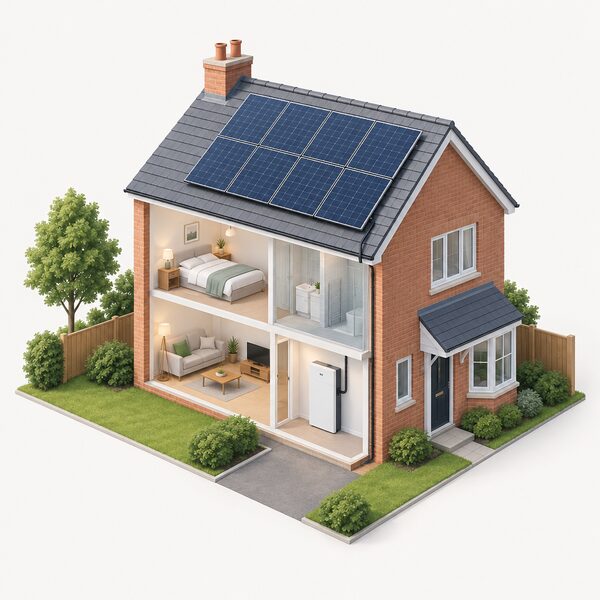
Sunsave Plus is the arrangement most often mistaken for free solar. It is described as a solar and battery subscription with a fixed monthly payment and £0 upfront cost, created as the UK's first solar and battery subscription7. The provider states it has created a 20-year Sunsave Guarantee, with 24/7 monitoring and free replacement parts7.
Read that carefully. The guarantee is the provider's own commitment, not a statutory protection, and its practical value depends on the company still trading when a claim arises. That is the structural weakness of every subscription model: the household's exposure to the provider's solvency lasts as long as the contract, which here is two decades.
The independence question is the one to press. Under a subscription the household is not buying an asset, it is buying a service, and the system may remain the provider's property. Independent guidance on free solar PV systems lists the questions a householder needs answered before signing: legal ownership of the system, the status of the relevant manufacturers' and installers' guarantees, and whether the consumer will receive the Feed-in Tariff income once the capital cost of the system has been repaid2. Those three questions apply to Sunsave Plus and to every comparable offer.
What a subscription does buy is certainty of cash flow. There is no £6,100 capital outlay, and the monthly figure is fixed5. What it does not buy is the asset, the export income in every case, or control over who maintains the system. A household that wants the panels to be its own property, and to keep the export payments, is buying outright, not subscribing.
What a subscription costs and saves compared with buying outright
The comparison is not between free and paid. It is between paying monthly for a service and paying once for an asset.
Buying outright carries an average upfront cost of £6,100, a figure attributed to the Energy Saving Trust5. Against that, a typical home without electrical heating or an electric vehicle is reported to save between £530 and £650 a year on electricity bills6. Savings vary enormously with how the household uses its own generation, and independent modelling shows the spread.
| Scenario (London, 4.6kWp ten-panel, 35-degree pitched roof) | Export benefit | Bill saving | Total annual benefit | Payback |
|---|---|---|---|---|
| South-facing, no shading | £285 | £370 | £655 | 11 years 3 months |
| East-facing, modest shading | £225 | £235 | £460 | 16 years 1 month |
Both rows are independent modelling as of 1 June 202513. The gap between them, £655 against £460 a year, is the single clearest illustration of why orientation and shading matter more than the headline price of a system. A subscription that quotes a fixed monthly payment is quoting against an assumed performance, and the household carries the risk if the roof underperforms that assumption.
Other independent figures are lower and more cautious. One source gives £360 a year in Great Britain, and another gives around £0 a year in GB and £180 in Northern Ireland for a typical installation with occupants at home from 6pm14. Those figures are not wrong; they describe households that are out during the day and therefore export rather than consume their own generation. The lesson is that self-consumption, not panel count, drives the saving.
Where grants still help: ECO4, the Warm Homes Local Grant and their limits
Two schemes are relevant, and both are narrower than the "free solar" advertising suggests.
The Warm Homes: Local Grant can fund solar panels for low-income households in private housing in England, including off-grid homes12. Homes qualifying under ECO4 Flex (Route 2) are also eligible under route D of the scheme16. The grant can also cover an air source heat pump, smart controls, and wall, loft or underfloor insulation, so solar is one option within a package rather than a standalone entitlement6. It applies to England only17.
The ECO4 scheme is the older obligation on energy suppliers. Official guidance states it will run until 31 December 20269. A council scheme page states that the government has granted an extension to the ECO4 scheme until 31 December 202610. What is consistent is that ECO4 ends in 2026 and that its eligibility criteria are described as restrictive.
The direction of travel is toward consolidation rather than expansion. The government plans to more than double the combined funding of the Warm Homes: Local Grant and the Warm Homes: Social Housing Fund from £462 million per year in 2025/26 to £1 billion per year in 2027/28, when the two are set to merge. That is a future commitment, not a present entitlement.
Rent-a-roof: what the lease actually commits you to
Rent-a-roof was the original "free solar" model, and its terms are the reason the phrase now carries suspicion.
The structure is simple. A company installs and owns the panels at no cost to the householder, and the householder receives either free electricity or a rent. The lease stays with the property1. That last point is the one that matters most, because it means the arrangement outlives the householder's ownership of the home.
The contract Which? examined stipulated that the householder would have to get consent during the term of the lease if they wanted to sell their house, or make any alterations or additions to the building near the solar PV system1. In practice that means a buyer's solicitor will ask about the lease, the buyer's mortgage lender will want to understand it, and any planned loft conversion, extension or re-roofing near the array needs the leaseholder's permission.
There is also the question of who receives the Feed-in Tariff income. Independent guidance on free solar PV systems flags whether the consumer will receive that income once the capital cost of the system has been repaid as a term to check2. Feed-in Tariff accreditation for solar installations before 1 August 2012 carries a maximum eligibility period of 25 years18. Under a lease, that income generally belongs to the system owner, not the householder.
For a household weighing energy independence, rent-a-roof is the weakest of the three options. The roof is occupied by someone else's asset, the export income is not the household's, and the exit route runs through a third party's consent.
How to check an offer is genuine
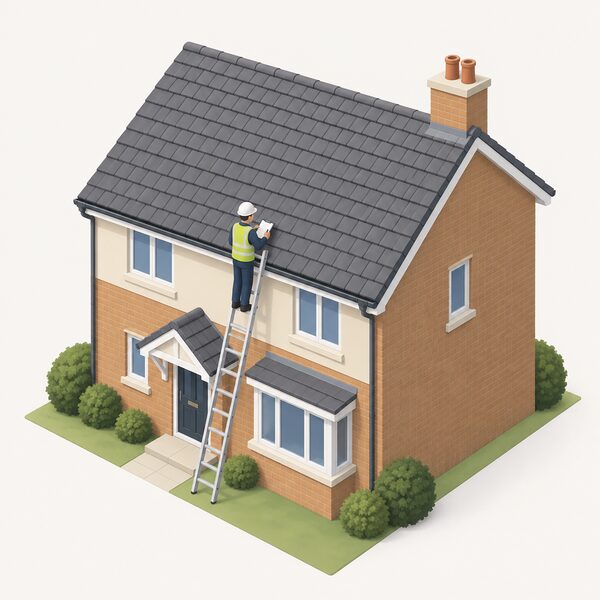
The checks are unglamorous and they work.
Certification. Independent guidance says to make sure the installers you look at are MCS-certified, which ensures the work meets recognised standards4. MCS, the Microgeneration Certification Scheme, certifies solar PV installers19. Certification is not a badge of quality on its own, but its absence is a hard stop: it underpins grid connection, export payments and many warranty terms.
Ownership and guarantees in writing. Independent guidance on free solar PV systems lists legal ownership of the system, the status of the relevant manufacturers' and installers' guarantees, and the Feed-in Tariff position after capital repayment as the terms to establish before signing2. If a salesperson cannot answer those three in writing, the offer is not ready to be accepted.
A survey before commitment. Under the Solar Together group-buying model, once an offer is accepted a surveyor visits the property to assess whether the roof is suitable and to confirm the number of panels, their location, and details such as cabling locations and colour20. A genuine offer includes a survey; a pressure sale does not.
Company status. A subscription or lease is only as good as the company behind it. Where a provider has failed or entered administration, its guarantee is not something a buyer can rely on, and the household's position depends on who takes over the contract.
The wider market. Solar panels are sold in the UK through installers rather than direct to consumers, which is why consumer bodies do not name individual best buys in the way they do for appliances22. That makes installer vetting, not panel brand selection, the decisive check. For the underlying technology and standards, see MCS certification for solar PV installations and solar panel warranties and degradation.
Plug-in solar: the genuinely low-cost alternative
One route to solar without a five-figure outlay is not a scam at all, and it is worth separating from the offers above.
Freestanding and portable panels are available to buy in the UK already, but they are only legal for off-grid use23. The government has announced that plug-in solar panels are coming to market, following rigorous, independent safety testing covering all key electrical elements, which shows that compliant panels are safe and compatible with UK wiring24. The specific model must be on the list of devices that meet UK standards, checkable on the ENA Connect Direct LCT device register25.
That is a materially different proposition from a subscription. The household buys the equipment outright, owns it, and takes the output directly. The limits are equally clear: the output is small compared with a roof array, the panels are legal only for off-grid use under the current rules, and the model must appear on the standards register. For households in flats or rented accommodation, see plug-in solar kits in the UK and balcony solar systems.
What this means for a household's energy independence
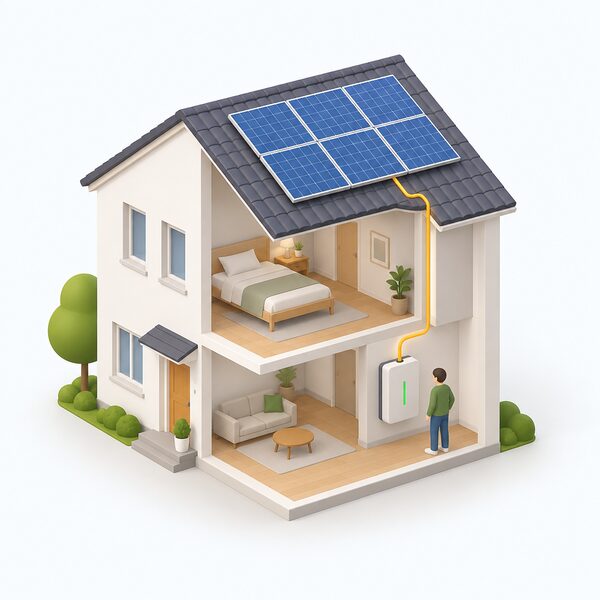
A subscription reduces the capital barrier to solar but does not deliver independence. The household still buys electricity from a supplier, still depends on the grid for the hours the panels and battery cannot cover, and now also depends on a provider's continued solvency for the life of a 20-year guarantee7. That is a different dependency, not the removal of one.
Buying outright transfers the asset to the household. The panels, the export income and the warranty claims are the householder's, and the residual dependence is on the grid and on the weather, which is the irreducible part of any solar installation. The average £6,100 upfront cost is the price of that transfer5.
A grant, where one is available, is the only genuinely free route, and it is rationed, means-tested and, in England, currently closed to new applications. For the wider picture of what solar can and cannot do for a household's position, see solar panels and household energy independence and the full guide to solar PV for UK homes.
Sources25 cited
- Free solar panels and solar buyback, Which?, 2026-03-26
- Information regarding free solar PV systems, RECC, 2026-09-17
- Solar panel installation guide: costs, planning and savings, IAA, 2026-09-20
- Solar panel installation, Energy Saving Trust, 2026-09-07
- Are solar panels worth it?, Uswitch, 2026-09-16
- Solar panels, London Borough of Hammersmith & Fulham, 2025-10
- How to decide if solar panels are right for your home, ivie, 2026-09-20
- How to decide if solar panels are right for your home, ivie, 2026-09-20
- ECO4 supplier administration guidance, Ofgem, 2026-07-06
- ECO flexibility funding, Ceredigion County Council, 2026-09-17
- Solar calculator, ivie, 2026-03-17
- Research briefing CBP-9585, House of Commons Library, 2026-09-17
- Are solar panels worth it?, Which?, 2025
- Energy saving upgrades for home renovation, Energy Saving Trust, 2026-05-05
- Top energy saving ideas for your home improvement project, Energy Saving Trust, 2026-08-03
- Warm Homes Local Grant 2025 to 2028, Birmingham City Council, 2026-09-20
- Warm Homes Local Grant statistics, May 2026, GOV.UK, 2026-05-28
- Feed-in Tariff annual report, Ofgem, 2026-09-17
- Solar panel myths: five common concerns about solar PV debunked, Which?, 2026-06-09
- Solar Together domestic planning guidance, Southampton City Council, 2026-09-17
- Installing solar panels at your home, Brighton & Hove City Council, 2026-09-17
- How we test solar panels, Which?, 2026-08-12
- Plug-in solar panels vs rooftop systems, Which?, 2026-04-27
- Households can save as plug-in solar panels come to market, GOV.UK, 2026-08-26
- Plug-in solar, Electricity North West, 2026-09-20
 Free Solar Panels vs Rent-a-RoofOffers of free panels usually mean a company owns the system and keeps the generation income or charges a monthly fee.
 Panel TypesWhich solar panels are best for a UK home, and how much do they cost?
 Solar PV Deployment StatisticsHow much solar power does the UK actually have, and how much of it sits on people's roofs?
 Panel RecyclingWhat actually happens to a solar panel when it stops working, and what can a household do with one?
 Planning Permission EnglandMost homes in England can have solar panels fitted without planning permission, but does yours count as one of the exceptions?
 Warranties and DegradationHow long do solar panels actually last, and what do the warranties really cover?