In this guide
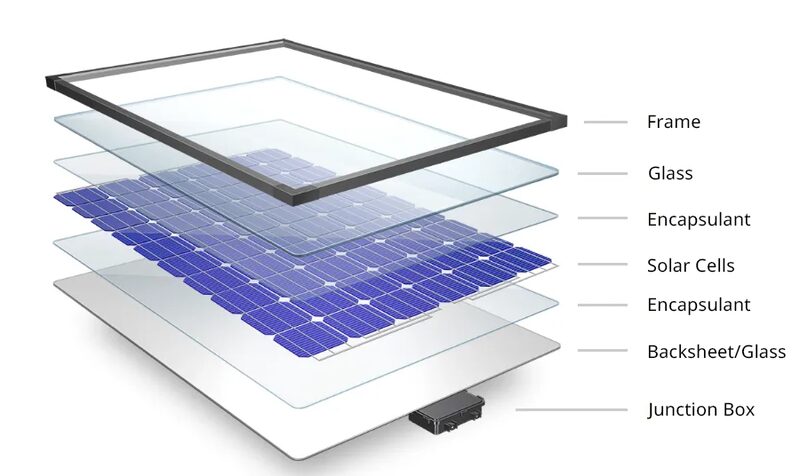
A solar panel manufacturer builds the module: the laminated sandwich of semiconducting cells, glass, encapsulant, backsheet and aluminium frame that turns daylight into direct current. Photovoltaic panels capture energy from the sun and turn it into electricity for the home to use, producing a direct current that must pass through a solar inverter to become the alternating current a house can run on. The average domestic system is around 3.5 kilowatt peak, using between six and 12 panels1.
The money involved is set out in official guidance: a typical installation costs around £6,100 and saves between £530 and £650 a year on electricity bills, depending on whether someone is home during the day, giving a payback of 10 to 12 years (figures read as of October 2025)1. That payback depends heavily on using the electricity at home, because rates for selling power to the grid are much lower than the tariffs charged for buying it1. Uptake is now substantial but still a minority position: more than a million UK homes have solar panels2, one estimate puts it at 1.88 million households with domestic solar photovoltaic as of June 20263, another at around 1.65 million as of June 20264, and a fourth source notes that under 5 per cent of the UK's 29 million homes have solar5. These counts disagree and are not reconciled.
For the buyer, the name on the module matters less than it does with a boiler or a heat pump, because in the UK solar panels are sold through installers rather than direct to consumers, so householders rarely choose a brand from a shelf6. What the manufacturer determines is the cell technology, the efficiency of the module, the certification it carries and, above all, the length and structure of the warranty, which is the only part of the purchase that stretches over the 25-year life of the array.
What a panel maker actually controls
A photovoltaic panel consists of one or two layers of semiconducting material, normally packaged together into panels or other modular forms, and requires only daylight rather than direct sunlight to generate9. The manufacturer's decisions are the cell type and its wafer quality, the module efficiency, the glass and frame construction, the factory testing regime and the warranty terms that follow from confidence in all of the above.
Some makers extend that scope. Panels can be supplied with power optimisers already integrated: UKSOL monocrystalline modules are listed with optimiser units factory fitted during the manufacturer's assembly process, which moves a component normally added by the installer into the factory10. Others make products that are not conventional roof modules at all: Polysolar Ltd supplies transparent solar photovoltaic glazing, where the module is also the building element11.
Government has recognised that the manufacturing side of the market is hard to see from the outside. The UK Solar Roadmap commits that "UK Government will work with industry to create an online directory for solar manufacturing businesses"12. Solar Energy UK represents the solar and energy storage industry in the UK13.
Nothing about a panel's brand changes the rest of the chain. The inverter, the mounting system, the consumer unit and any battery come from other manufacturers, and each carries its own warranty and its own support life. That is covered on solar inverter manufacturers and solar mounting system manufacturers.
Who makes the panels sold in the UK
Around 80 per cent of panels available in the UK are made in China7. That includes the modules of Trina Solar, one of the brands widely installed here14. JA Solar panels are sold and installed in the UK by a number of installers15. Aiko is another brand reviewed for the UK market7. European certification schemes are also present in the market: the Solar Keymark is described as widely spread across the European market and beyond16.
British module manufacturing exists but is small. UKSOL is described as an award winning British owned solar technology company supplying solar products in the UK and internationally to almost 50 countries in five continents17, and as a British solar PV module producer based in Gerrards Cross, Buckinghamshire18. Solar Energy UK has noted that beyond modules "there is potential for producing transformers, inverters and other components"19, and that glass, readily manufactured by British firms, accounts for most of the panels' weight20.
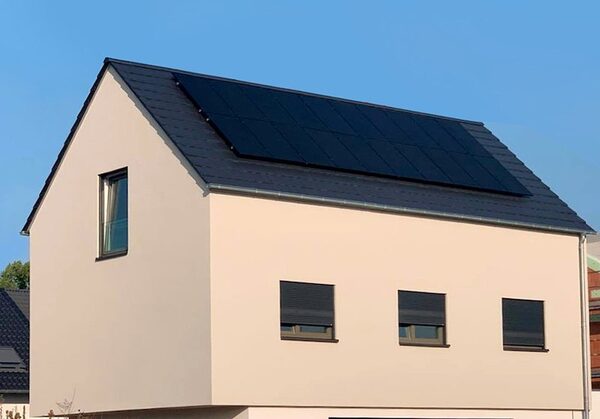
For a household thinking about energy independence, the balance is plain. The generation happens on the roof and cannot be switched off by a supplier, but the hardware is overwhelmingly imported, the warranty depends on a manufacturer continuing to trade for two to three decades, and the array still needs an inverter and, in most installations, a grid connection to work at all.
| Where the module comes from | What the market shows |
|---|---|
| China | Around 80% of panels available in the UK, including Trina Solar7 |
| UK | UKSOL, a British owned module producer based in Gerrards Cross, Buckinghamshire17 |
| Specialist glazing | Polysolar Ltd, transparent photovoltaic glazing11 |
| Route to the householder | Sold via installers rather than direct to consumers6 |
Cell technology: monocrystalline, thin-film and TOPCon
Official guidance groups photovoltaic products into crystalline cells, thin-film and hybrid types9. In UK domestic work the crystalline family dominates, and within it one variant has effectively won.
Monocrystalline cells take their efficiency from the single-crystal silicon which makes up the photovoltaic cells21. Module efficiency for monocrystalline panels is quoted at up to 25 per cent22. The trade-off is price: monocrystalline modules are more expensive to install8 and are described as very pricey22. Polycrystalline panels, the older and cheaper alternative, are being phased out in the UK, and few installers still offer them22. A householder commissioning a system in 2026 is therefore unlikely to be offered a genuine choice between the two.
The current generation of cells is described on manufacturers' own product data by its doping and passivation. The Trina Solar TSM-450NEG9R.25 is listed as Mono N-type (TOPCon)14. N-type TOPCon construction is the successor to earlier p-type designs across most volume manufacturers' residential ranges.
Thin-film remains a recognised category in official guidance9, and plastic backed PV panels are treated separately in fire testing, where they are classified class C under IEC 61730-223. That is a construction difference, not a brand one, and it matters for roof specification rather than for output.
Efficiency, output and what the roof can hold
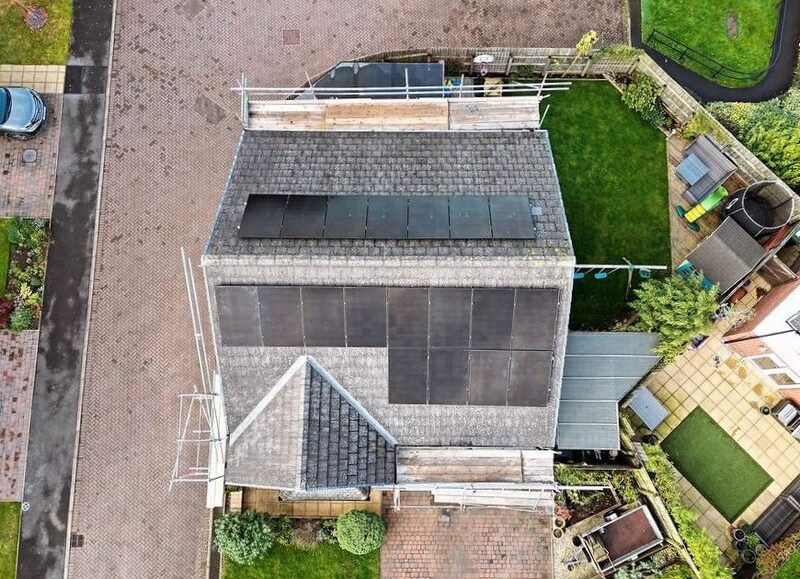
Module efficiency of up to 25 per cent for monocrystalline panels22 is the headline number, but the figure a household experiences is set by the roof. Orientation is the largest single variable: a system facing east or west tends to get around 15 to 20 per cent less energy than one facing directly south1. Panels can be installed on both pitched and flat roofs, and on a flat roof they need to be tilted and spaced to avoid shading1. The average UK home's roof slopes at 30 degrees24.
Space requirements scale with system size, and the published figures differ because they describe different system sizes:
| System size | Roof area | Source position |
|---|---|---|
| 3.5 kWp | 10 to 20 m², six to 12 panels | official guidance1 |
| 4 kWp (average) | at least 20 m² | independent guidance24 |
| 4.5 kWp | 20 to 30 m², around 12 panels | independent guidance25 |
Panel count per home follows the same logic: an average one-bedroom house needs around six panels and a standard three-bedroom house around 1026.
Panels work during daylight even when it is cloudy or overcast, because they use light rather than heat27, and official guidance is that good generation can be achieved even on a cloudy day9. Solar panels are described as suitable for anywhere in the UK28. Shading, though, is a hard limit: if a roof is heavily shaded, solar panels may not be the most suitable option, and the roof must be in good condition with sufficient space and ample sunlight through the day29.
A separate class of product has now entered the market. Plug-in solar panels, also known as balcony solar, are available to buy and self-install in the UK, and UK-compliant devices are limited to a maximum output of 800W on average30. They became legal across Great Britain in August 202631, and retailers including Amazon, Argos, Currys and Wickes committed to stocking them32.
Certification: the standards behind a datasheet
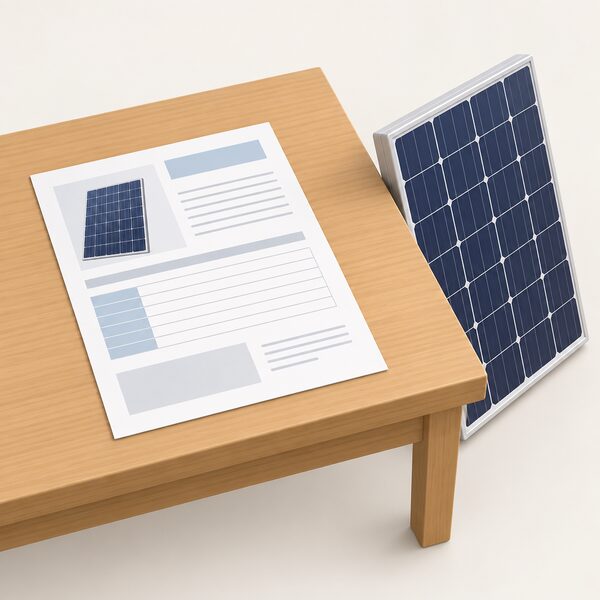
A module's datasheet figures are only as good as the standards they were measured against. Independent testing of panels for the UK market is based on the international standards for photovoltaic modules, EN50380:2003 and IEC61215:20056. IEC 61215 is the design qualification and type approval standard, covering the thermal cycling, humidity, mechanical load and hail sequences a module must survive. IEC 61730 is the safety standard, and its second part is the basis of the class C fire classification applied to plastic backed panels23.
Certification on the installation side is separate and is where UK rules bite hardest. BS 7671, the British Standard for electrical installations, sets out requirements that solar panel installations must meet to be considered safe and compliant21. MCS certification is normally required by grant and scheme rules; one Welsh social housing scheme specification requires installers to hold a current and valid MCS Certificate issued by Certsure LLP trading as NICEIC, Napit Certification Ltd, Simply Certification, The IAA (Installation Assurance Authority) or Amtivo Group trading as British Assessment Bureau33. Installing panels may also require approval under the Building Regulations, because of the additional loading on the roof structure and the associated electrical works29.
"BS 7671, the British Standard for electrical installations, sets out requirements that solar panel installations must meet to be considered safe and compliant"
Product-level certification and how to read it across brands is covered at manufacturer certification: MCS product listing, Kitemark and Keymark and how energy products are tested.
Warranties: 12 to 25 years, in two separate parts
Panel warranties come in two layers and the distinction is the single most useful thing to understand when comparing manufacturers. Solar panels usually come with a 25-year performance warranty and a five to 10-year product warranty34. The performance warranty promises that output will not fall below a stated percentage of the original rating; the product warranty covers the physical module against defect, and it is the shorter of the two.
Across the market, product warranty length is reported as ranging from around 12 to 25 years4. Panels can have warranties of up to 20 or 25 years35, and guidance for buyers is that solar panels should come with a 20 to 25-year warranty on performance36. The best-known manufacturers are reported to offer warranties of 25 to 30 years, which is presented as a sign of confidence in the longevity of the product26. One UK example on an official register: UKSOL monocrystalline panels with built-in Tigo optimisers are recorded with a manufacturer warranty registered for the solar PV array covering at least a 25-year period37.
Plug-in solar products sit well below this. The typical warranty on a plug-in system is 10 years38.
Registration matters too. For plug-in systems, consumer safety guidance states that the system should be registered with the manufacturer to activate any warranty and to be contacted about any problem or safety recall39. The same principle applies across home energy equipment: see registering a warranty and keeping it valid.
What a system costs, and what the panels are part of
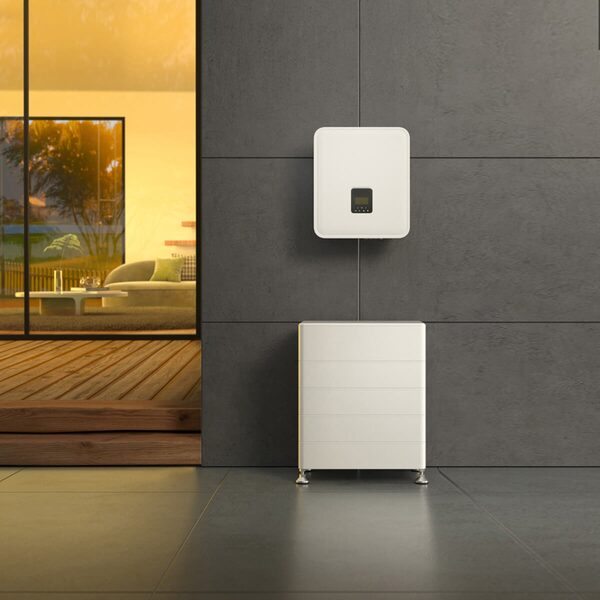
Official guidance puts a typical installation at around £6,100 as of October 20251. Independent comparison figures are lower and are quoted as a range: solar panel prices currently range from around £4,600 to £8,000 based on panel quality and system size (September 2026)2, with the same £4,600 to £8,000 given as the average cost among suppliers one comparison service works with40. These sets of figures were compiled on different bases and different dates, and they do not agree. Prices for individual modules are installer-quoted rather than published, because of the installer route to market6.
Plug-in systems are a different order of expenditure: a plug-in solar panel system costs from around £450 to install30. The inverter is the significant mid-life cost on a full system, reported at about £500 to £1,000 to replace8.
Payback is reported as 10 to 12 years in official guidance1, while one independent figure puts the average UK break-even period at 9.5 years26. Both assume savings depend on self-consumption, since export rates are much lower than import tariffs1.
How long panels last, and what wears out first
Panels outlive nearly everything else in the system. Official guidance states panels will last 25 years or more1, and independent guidance agrees on over 25 years41, often lasting 25 years or more and up to 30 years when properly maintained40. The average lifespan before significant degradation is given as about 25 years26.
Degradation is where the manufacturer's quality shows. After 25 years, many solar panels will have experienced degradation rates of anything between 12.5 per cent and 75 per cent26. That is an enormous spread, and it is the reason a performance warranty, which sets a floor under output, is more informative than a headline efficiency figure.
The inverter is the first component to need replacing. Official guidance states inverters usually need replacing after around 12 years1; other guidance gives 10 to 12 years21 and around 12 years34. The documents differ slightly and the difference is not material for planning purposes: one replacement, at about £500 to £1,0008, should be expected within the life of the array.
Registration, permissions and the grid connection that remains
A domestic solar system must be registered with the Distribution Network Operator for the area, and the installer will usually do it as an important safety process43. In some regions that operator is UK Power Networks1. Plug-in devices carry a separate duty: registration of any plug-in solar device is legally required before use in the UK, and is done via the UK plug-in solar website44.
Planning is usually straightforward. For most homes solar panels are considered permitted development and do not usually need planning permission45. That can hold even in conservation areas46. The exceptions are listed buildings, conservation areas, World Heritage Sites and other designated areas, where permission may be required27, along with conditions attached to the original planning permission, an Article 4 Direction, or restrictions listed in the property's deeds29. Where permitted development rights do not apply, planning permission will be required29. Rules and local practice vary between England, Scotland, Wales and Northern Ireland, and a householder should check the position for their own nation and authority.
That registration duty is the clearest statement of what solar does and does not deliver for independence. Panels make a household a producer of its own electricity, and the most common domestic renewable energy source in the UK47. But the array remains tied to the network operator's records, to an inverter that will need replacing, to a manufacturer whose warranty runs for decades, and, on most roofs without storage, to the grid for every hour the sun is not shining. Adding a battery shifts that balance rather than removing it: see home battery storage manufacturers and manufacturers and household energy independence.
Sources47 cited
- Solar panels, Hammersmith and Fulham Council, 2026-09-17
- Solar panels, Uswitch, 2026-09-20
- Britain's homes with solar panels reap £40 million during the heatwave, Uswitch, 2026-06-28
- Could solar panels save you £500 a year?, Which?, 2026-06-17
- Solar Wizard calculator, Centre for Sustainable Energy, 2026-05-06
- How we test solar panels, Which?, 2026-08-12
- Aiko solar panels review, Which?, 2026-08-12
- A complete guide to solar PV, Centre for Sustainable Energy, 2025-11
- Generating your own energy: solar electricity, Welsh Government, 2026-09-17
- ECO4 Approved Innovation Measures v1.6, Ofgem, 2024-01
- Transparent solar photovoltaic glazing, UK Green Building Council, 2024-05-15
- UK Solar Roadmap, DESNZ, 2025-06
- Setting the standard: product certification and the future of UK solar, MCS, 2025-12-08
- Trina Solar panels review, Which?, 2026-08-12
- JA Solar panels review, Which?, 2026-08-12
- The origin and composition of the Solar Keymark, Solar Keymark, 2026-09-17
- UKSOL Plug-in Solar Pro first to reach key UK compliance, Solar Energy UK, 2026-08-20
- Smith Bros becomes UKSOL's distributor for the United Kingdom, Flexi-Orb, 2021-07-13
- Ignore the doubters: the UK is seizing the solar opportunity, Solar Energy UK, 2025-07-01
- Solar power must be mainstay for new building regulations, MCS, 2023-01-12
- Solar panel installation, maintenance and repair, NICEIC, 2026-09-17
- Are solar panels worth it?, Which?, 2026-05-15
- Fire spread over pitched roofs fitted with solar panels: summary, GOV.UK, 2025-12-22
- Buying advice for solar panels, Which?, 2026-08-12
- Solar panels advice, Energy Saving Trust, 2026-08-27
- How long do solar panels last?, Uswitch, 2026-07-13
- Solar panel myths: five common concerns debunked, Which?, 2026-06-09
- UK solar panel hotspots, Energy Saving Trust, 2026-08-13
- Solar photovoltaic (PV) panels, London Borough of Bromley, 2026-09-17
- Plug-in solar panels, Energy Saving Trust, 2026-09-17
- First regional solar breakdown as installations hit record highs, GOV.UK, 2026-08-27
- Households can save as plug-in solar panels come to market, GOV.UK, 2026-08-26
- Barcud Solar Panel Installation Scheme Specification, Sell2Wales, 2026-06-15
- Buying a house with solar panels, Energy Saving Trust, 2026-08-13
- Solar panel problems and how to solve them, Which?, 2026-03-26
- How to choose a good solar installer, Low Carbon Hub, 2025-10-20
- ECO4 Approved Innovation Measures v1.10, Ofgem, 2024-07
- Plug-in solar panels vs rooftop systems, Which?, 2026-04-27
- Plug-in solar consumer guide, Electrical Safety First, 2026-08
- Are solar panels worth it?, Uswitch, 2026-09-16
- Solar photovoltaic (PV), MCS, 2026-07-30
- Solar power facts, Energy Saving Trust, 2026-08-13
- Solar panel installation, Energy Saving Trust, 2026-09-07
- Plug-in solar, Electricity North West, 2026-09-20
- Switch Together Birmingham: buying solar panels and battery storage, Birmingham City Council, 2026-01-27
- Solar panels and permitted development, London Borough of Richmond upon Thames, 2026-07-06
- Generating renewable electricity, Energy Saving Trust, 2025-12-11
 Panel TypesWhich solar panels are best for a UK home, and how much do they cost?
 Solar Panel CostsA typical UK home pays somewhere between four and eleven thousand pounds for solar panels fitted, with most landing in the middle.
 The Full Solar Panels GuideHow much do solar panels cost, and what could they save you each year?
 Where Energy Products Are MadeWhere are solar panels and heat pumps actually made, and does it matter where yours comes from?
 Tier 1 and Bankability RatingsDoes a Tier 1 badge mean better panels, or just a bigger company?
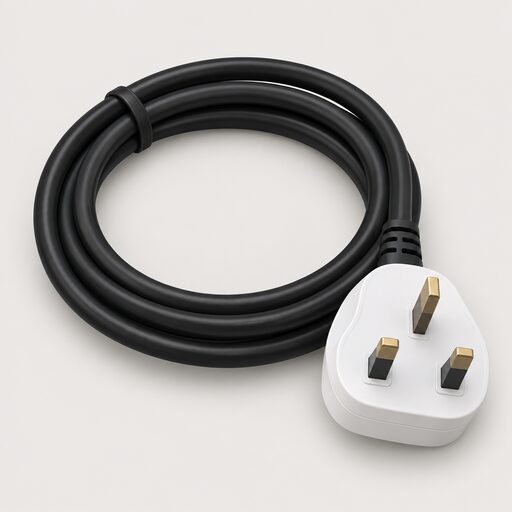 Plug-In Solar KitsCan you really plug solar panels into a normal wall socket in the UK, and is it legal now?