
In this answer
Short answer
For most UK homes, a light clean every 12 to 24 months is enough, and rain does the routine work in between. Independent guidance from the Energy Saving Trust puts the recommended light clean at that interval, and describes routine cleaning as not essential in most cases because rainfall keeps panels clean1. A separate consumer body recommendation, reported by Uswitch, puts the figure at every 12 to 18 months2.
The interval is not fixed because the things that soil a panel are local: trees, pollen, coastal salt, bird droppings and the angle the panels are mounted at. Panels tilted at 15 degrees or more get enough of a rinse from UK rain to stay largely self-cleaning, while flatter arrays do not3. Where a clean is needed, it is a low-risk job on a pitched roof and a more awkward one on a shallow or sheltered mounting.
Why rain does most of the work
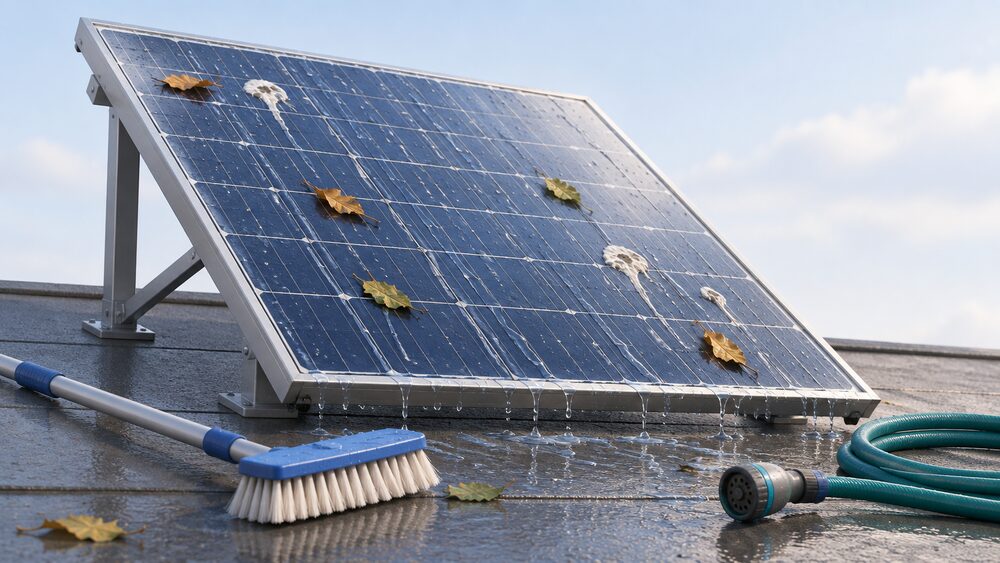
The reason the interval is measured in years rather than months is the coating on the glass. Most panels are self-cleaning, with a special coating that allows rainwater to wash away dirt and debris, and the effect depends on the roof having the right incline7. Independent guidance is consistent on this: a heavy rain storm should usually be enough to wash off most dirt on solar panels8, and most panels have a self-cleaning coating which, when installed at a suitable angle, allows rain to clear dirt and debris9.
The threshold that matters is pitch. In the UK, rain will clean panels if they are tilted at 15 degrees or more3. Below that, the water does not sheet off with enough force to carry debris away, and the maker guidance is explicit that panels mounted at less than 15 degrees should be cleaned more often for exactly that reason3. Rain also clears small amounts of snow or leaves that have blown onto the array, though it will not shift heavy snow, which should be cleared by a professional rather than by the householder10.
What rain cannot deal with is anything sticky or persistent. Bird droppings, lichen and a build-up of debris under the frame survive a rinse, and these are the cases where the visible state of the glass, not the calendar, should set the timing. Independent guidance notes that rain can wash away much of the dirt and debris unless panels are very heavily soiled11.
Typical intervals: every 12 to 24 months in most cases
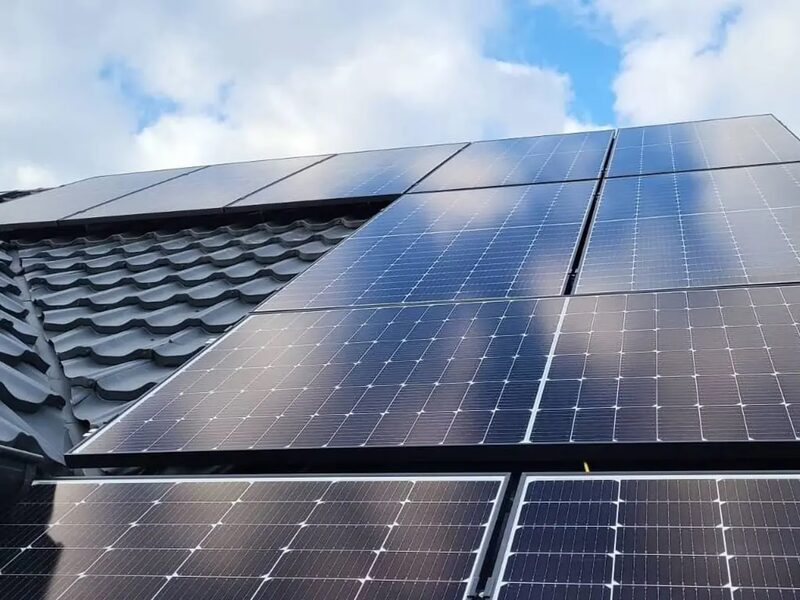
The headline figure comes from the Energy Saving Trust: a light clean every 12 to 24 months can help a system operate at its best by removing dirt, dust and other build-up1. The same guidance suggests checking panels every 12 to 18 months and cleaning them if there is visible dirt, and inspecting the panels, mounting system and any visible wiring every one to two years, either yourself or through a professional1. Uswitch reports a consumer body recommendation of every 12 to 18 months2.
Maker guidance sits in a similar band but spreads wider. One manufacturer suggests professional cleaning and system inspections one to two times per year12, another puts annual cleaning as sufficient in most cases13, and a third suggests a professional clean every one to two years, especially where panels are near trees or exposed to heavy pollen5. At the other end, one maker states that professional cleaning is usually only needed about every five years14, and another that once or twice a year is usually enough4.
The spread is not a contradiction so much as a difference in what is being described. A light clean of a well-pitched roof array in a clean area is a different job from a professional clean of a ground-mounted or coastal array, and the sources use the same word for both. Where a household wants a single planning figure, the independent range of 12 to 24 months is the one to work from, with the shorter end applying to panels near trees, pollen or the coast.
| Situation | Suggested interval | Source type |
|---|---|---|
| Pitched roof, 15 degrees or more, clean area | 12 to 24 months, light clean | Independent1 |
| General domestic array | 12 to 18 months check, clean if visibly dirty | Independent1 |
| Near trees or heavy pollen | Professional clean every 1 to 2 years | Maker5 |
| Coastal salt or moss, Edinburgh example | Every 1 to 2 years, spring or autumn | Maker15 |
| Panels below 15 degrees | More often than a pitched array | Maker3 |
| Balcony panels | Every 3 to 4 months | Maker6 |
Regional conditions shift the timing more than the rules do. Coastal salt and moss are named as the reason a Scottish installer recommends cleaning every one to two years, preferably in spring or autumn15. A domestic system in a particularly dusty area or by the beach is the exception to the general rule that panels need little maintenance16. There is no separate cleaning requirement in England, Scotland, Wales or Northern Ireland: the differences are environmental, not regulatory.
Cleaning as part of wider maintenance and checking
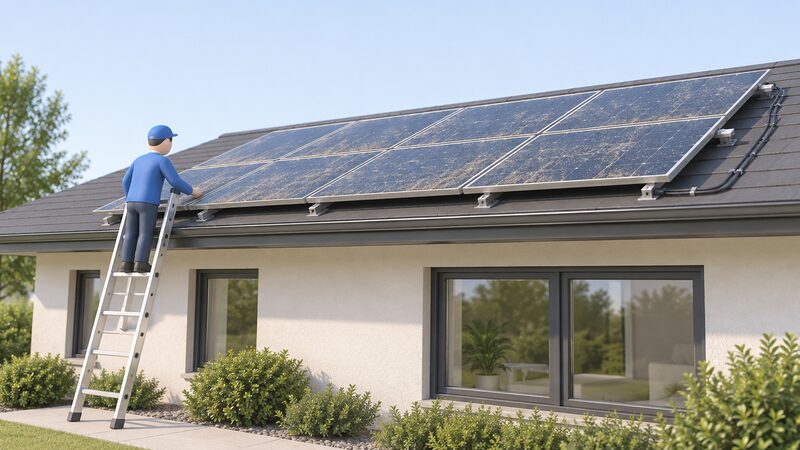
Cleaning is best treated as one item in an annual routine rather than a job in isolation. Independent guidance recommends getting panels checked on an annual basis to confirm there is no debris build-up and that cables and connectors are still working as they should be10. The same guidance lists the things to look for: signs of wear and tear, damage, water ingress, dirt build-up, bird droppings or lichen growth, with repairs arranged and panels cleaned if needed1. Regular visual checks for cracks, breaks, loose connections and cable damage from vermin and weathering are part of the same habit9.
A fuller professional service is a separate, less frequent event. Every three to five years, independent guidance suggests a full professional service to inspect for small cracks or inverter issues1. That is also the point at which the inverter's own lifespan comes into view: inverters usually need replacing after around 12 years, a figure repeated across official and independent guidance17. Cleaning visits are a natural moment to note whether the inverter is nearing that point.
"The maintenance of the solar system should be conducted by either a licenced electrician or the installer at least once a year"
Some of the routine work is seasonal rather than scheduled. Checking panels after rough or stormy weather, watching for animals nesting near the panels and scheduling annual inspections are the tasks independent guidance groups together21. Nesting birds are a recurring theme in UK solar maintenance, and the practical answer is usually a mesh guard rather than more frequent cleaning.
Maintenance also has a financial dimension. Solar panels typically pay for themselves in around 8 to 12 years depending on how well they are maintained, according to Home Energy Scotland22. That is a modelled figure rather than a guarantee, and it is the clearest statement in the guidance that upkeep and payback are connected.
Cleaning safely, and when to call someone in
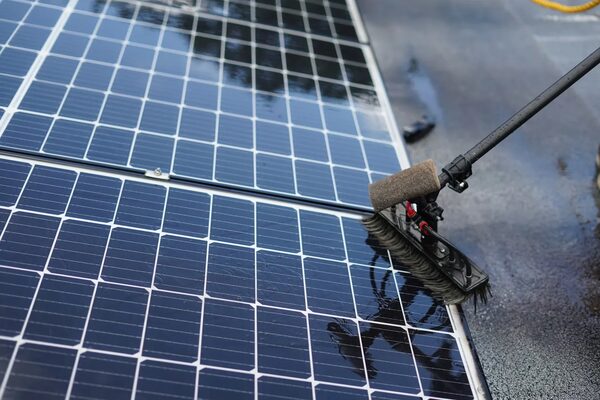
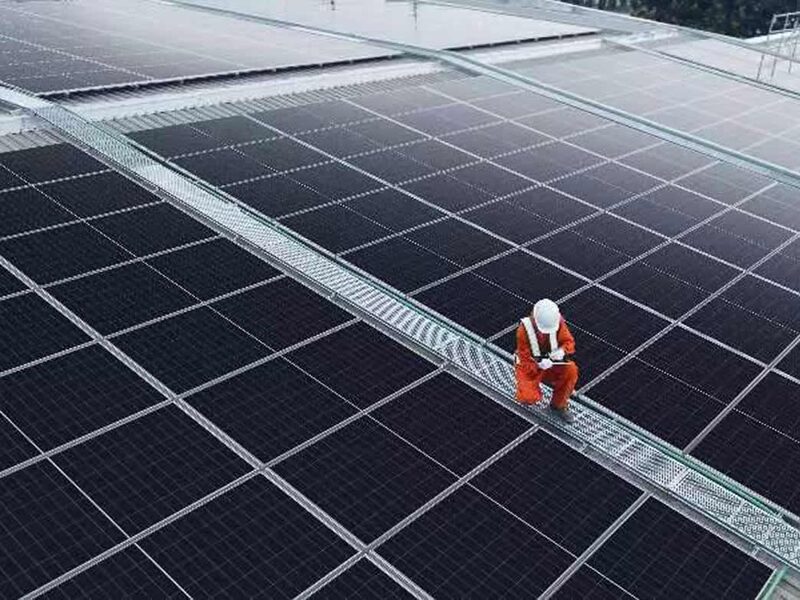
Independent guidance is direct about the safety hierarchy: it is always safer to avoid working at heights without the right training or equipment, and where that is not possible, a professional should be used1. Cleaning should be done in cool weather to avoid streaks, and the system turned off first1. The recommended method is water from a hose pipe and a soft, long-handled brush or sponge to lightly wipe the surface1. A consumer body suggestion is to get a window cleaner to clean the panels, using only water23.
The system needs to be switched off for the duration. Cleaning usually takes around one to two hours, and the panels need to remain switched off for that time24. The cost of a professional clean depends on the number of panels, their location and whether specialist access equipment is needed1. No published UK price is given in the guidance, so cleaning is installer-quoted rather than a fixed rate.
For anyone weighing up whether to do the job themselves, the practical dividing line is access. A ground-floor or single-storey array reached safely from the ground is a different proposition from a two-storey roof, and the guidance does not encourage the latter without training and equipment1. There is more detail on safe methods in how to clean solar panels from the ground.
Does dirty glass actually cost you output?
It can, and the range is wide. Maker guidance puts the loss for panels covered in dust, bird droppings or leaves at 10% to 30% of output, sometimes more4. Independent guidance confirms the mechanism rather than the number: dirty solar panels can reduce how much electricity they generate because dirt affects how much sunlight reaches the panels1. The two statements are consistent, and the independent source does not put a figure on the loss.
The practical question is what is on the glass. A uniform film of dust is a mild, gradual effect. Bird droppings, lichen and a line of leaves at the bottom edge of a panel are concentrated and can affect a whole string, which is why the guidance treats visible soiling as the trigger rather than the calendar1. Panels near trees or exposed to heavy pollen are named as the ones needing a professional clean sooner5.
For a household, the independence question is straightforward. Cleaning is one of the few maintenance tasks that needs no supplier, no subscription and no app: a hose, a soft brush and an hour of time, or a local window cleaner. What it protects is the output the array was bought for. The dependence that remains is the same as on any sunny day, the grid takes the surplus and supplies the shortfall, and the inverter is the component most likely to need replacing first, at around 12 years17.
Cleaning, warranties and maintenance plans

Cleaning itself is not normally a warranty item, but the maintenance terms attached to a warranty can be. Independent guidance advises checking the warranty policy, because some installers require a full service within a specific period to keep the warranty valid1. That is the single most important reason to read the paperwork before skipping a service: a missed service interval can affect a claim that has nothing to do with dirt.
Where a fault is caused by poor workmanship, independent guidance states that it should be covered free of charge by the installation warranty while the system is still within its installation warranty period23. Panel warranties are separate and longer: solar panels usually come with a 25-year performance warranty and a five to 10-year product warranty19. Plug-in solar panels carry a typical warranty of 10 years25.
Some maintenance is sold as a subscription rather than a one-off visit. One supplier's Solar Care service includes visual inspection of the modules for cell rust and glass cracks, surface cleaning, inspection of erosion and corrosion on the support structure, and an overall visual inspection of the mounting system, with panel cleaning scheduled and performed once during the subscription period26. That is a maker's own description of its own product, and the interval it implies is longer than the 12 to 24 months of independent guidance.
For a household, the warranty position reinforces the maintenance position: the annual check is the thing that keeps both the paperwork and the hardware in order, and cleaning is the visible part of it. More on the wider schedule is in solar panel maintenance and cleaning, and on what the warranties actually cover in solar panel warranties and degradation.
Balcony and plug-in panels: a shorter interval
Balcony panels are the clear exception to the 12 to 24 month rule. They sit at a shallow angle, are often sheltered by the building above and are handled at close range, so maker guidance suggests cleaning them gently with a soft cloth and soapy water every three to four months6. That is a much shorter interval than a pitched roof array, and it follows from the mounting angle rather than from any difference in the panels.
The same logic applies to other shallow or horizontal mountings. Solar shingles, which sit flush with the roof surface, should have their surfaces washed once or twice yearly to remove dust and debris that affects performance27. Panels mounted at less than 15 degrees should be cleaned more often because flatter angles do not take full advantage of the cleansing effect of rainfall3. The pattern across all three cases is the same: the flatter the glass, the more the household has to do.
For balcony systems specifically, the cleaning job is small and needs no access equipment, which is why the interval can be short without becoming a burden. There is more on how these systems are mounted and where they are allowed in balcony solar systems and plug-in solar kits.
What this means for household energy independence
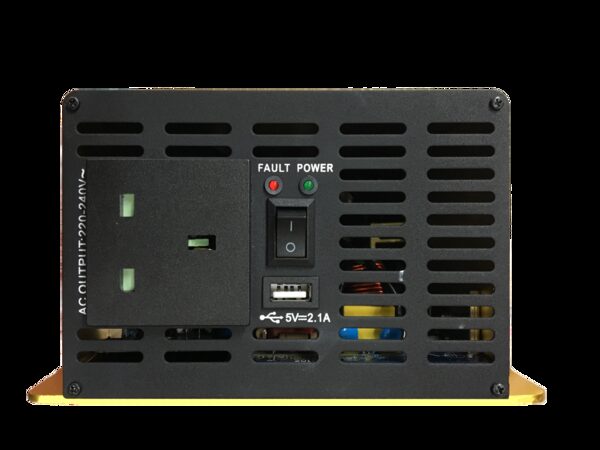
Cleaning is the cheapest form of energy independence a solar household has. It needs no installer, no supplier and no subscription, and it protects the generation the array was bought to provide. The dependence that remains is unchanged by a clean: the grid still takes the export and covers the shortfall, the inverter is still the component most likely to fail first at around 12 years17, and the panels themselves are expected to operate for 25 to 30 years before needing replacement28.
The maintenance picture overall is light. Most systems require little or no maintenance and the panels should last for decades, though it is worth checking that they are not too dirty every year as this can reduce performance29. MCS-certified guidance frames the same point as keeping panels reasonably clean and minimising shading, with a maintenance guide provided at installation30. A domestic system outside a dusty area or the coast should need little maintenance at all16.
The practical summary for a UK household is a check every 12 to 18 months, a light clean every 12 to 24 months, a full professional service every three to five years, and a shorter interval for balcony or shallow-mounted panels. Everything beyond that is driven by what is visible on the glass and what the monitoring shows. For the wider context, see solar PV for UK homes and solar panels and household energy independence.
Sources30 cited
- Solar panel cleaning and maintenance, Energy Saving Trust, 2026-08-25
- Are solar panels worth it?, Uswitch, 2026-09-16
- Solar power explained, Marlec, 2026-09-20
- A guide to solar panel maintenance, So Energy, 2026
- How many solar panels do I need?, EcoFlow, 2025-08-26
- Balcony solar panels, EcoFlow, 2025-06-27
- Make the most of your solar panels, Which?, 2026-08-12
- Solar panel myths: five common concerns debunked, Which?, 2026-06-09
- Solar panels safety advice, Electrical Safety First, 2026-09-17
- Do solar panels work in winter?, Uswitch, 2026-09-15
- The most common solar panel problems, Which?, 2024-07-25
- How much electricity does solar power produce, Jackery UK, 2026-07-10
- How solar panel efficiency impacts your savings, SunPower, 2026-07-28
- Cleaning solar panels, Hive, 2025-08-21
- Solar panels Edinburgh 2026, Jackery UK, 2026-07-09
- Solar PV technologies, Flexi-Orb, 2025-04-22
- Solar panels, London Borough of Hammersmith and Fulham, 2026-09-17
- Solar panels advice, Energy Saving Trust, 2026-08-27
- Buying a house with solar panels, Energy Saving Trust, 2026-08-13
- Clifton local listed building consent order guidance, Bristol City Council, 2025-02
- How do solar panels work?, Smart Energy GB, 2026-03-16
- Solar panels, Home Energy Scotland, 2026-09-20
- Most common solar panel problems, Which?, 2018-08
- Solar panel maintenance and cleaning, E.ON Next, 2026-09-17
- Plug-in solar panels vs rooftop systems, Which?, 2026-04-27
- Solar Care maintenance service guide, Good Energy, 2026-06-19
- Photovoltaic shingles: pros, cons and options, EcoFlow, 2025-06-16
- How much energy does a solar panel produce, EcoFlow, 2025-06-16
- A complete guide to solar PV, Centre for Sustainable Energy, 2025-11
- Solar photovoltaic (PV), MCS, 2026-07-30
 Panel Maintenance and CleaningWhat upkeep a domestic solar array actually needs: inspection intervals, cleaning, bird and debris protection, and checking fixings after storms, with the costs and the safety rules.
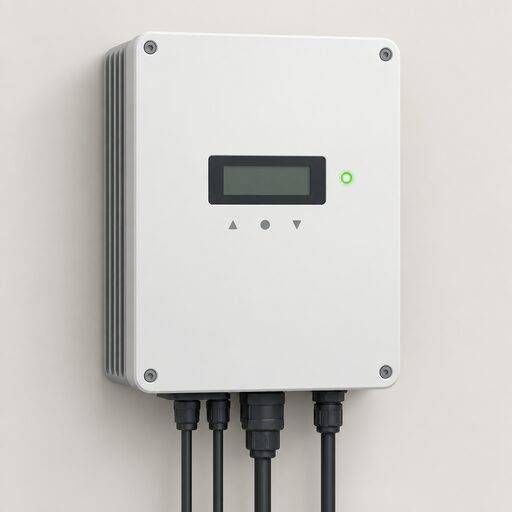 Solar InvertersWhat does the box on the wall next to your solar panels do, and how long will it last?
 System SizingMost UK homes need a solar system of around four kilowatts, which takes up roughly twenty square metres of roof.
 Solar Panel CostsA typical UK home pays somewhere between four and eleven thousand pounds for solar panels fitted, with most landing in the middle.
 Solar Mounting SystemsWill your roof take the extra weight of solar panels, and will it still keep the rain out afterwards?
 The Full Solar Panels GuideHow much do solar panels cost, and what could they save you each year?