In this guide
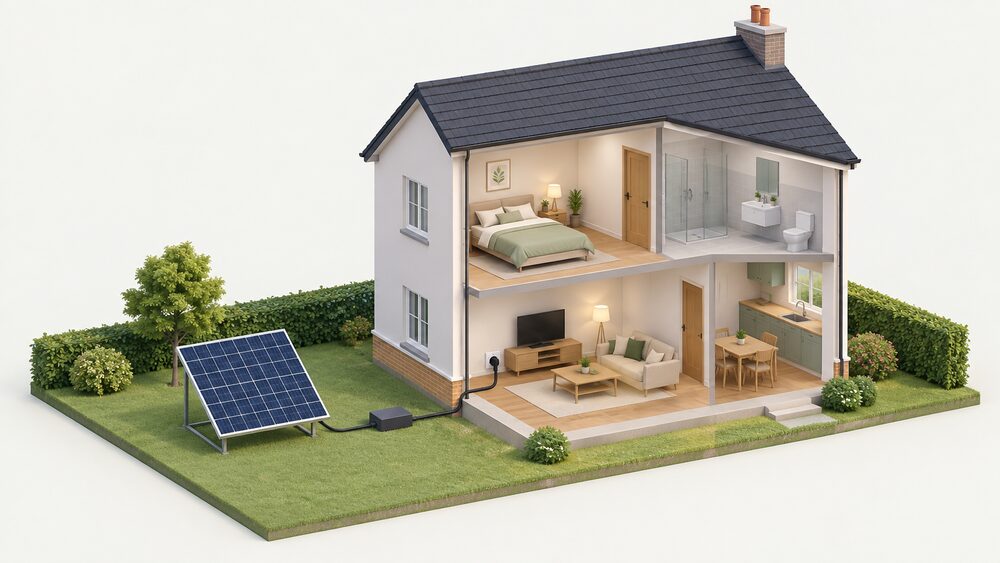
A plug-in solar kit is a small solar array that connects to a home's wiring through an ordinary wall socket rather than a dedicated circuit. The government's consultation defines them as "plug-in solar systems (without batteries) that are designed to be connected directly to a standard UK mains socket and operate alongside the electricity network"1. Kits typically include one or two panels, a microinverter, mounting brackets, cable and a lead fitted with a standard three-pin plug, plus an app for monitoring2.
The legal position changed on 27 August 2026, when plug-in solar panels became legal across Great Britain3. The government states each kit produces up to 800W of power, enough to provide up to 20% of an average home's electricity use, and that plug-in solar saves money, up to £100 a year4. Carbon Brief's cost-benefit analysis puts an 800W system at 400 kWh a year for a typical household, about 15% of demand, and £110 a year saved against a typical upfront cost of around £5005.
This page covers what is in a kit, the standards a compliant device must meet, the G98 registration route, what the kits cost in the UK, and what a plug-in kit does and does not do for a household's energy independence. It applies to Great Britain; the position in Northern Ireland is not covered by the same change.
What a plug-in solar kit is and what is in the box
The defining feature is the connection method. A compliant device is intended for connection to an existing low-voltage electrical installation using a standard UK mains plug and socket, without requiring installation of a separate electrical circuit for export6. That is what separates it from a rooftop system, which is wired in permanently.
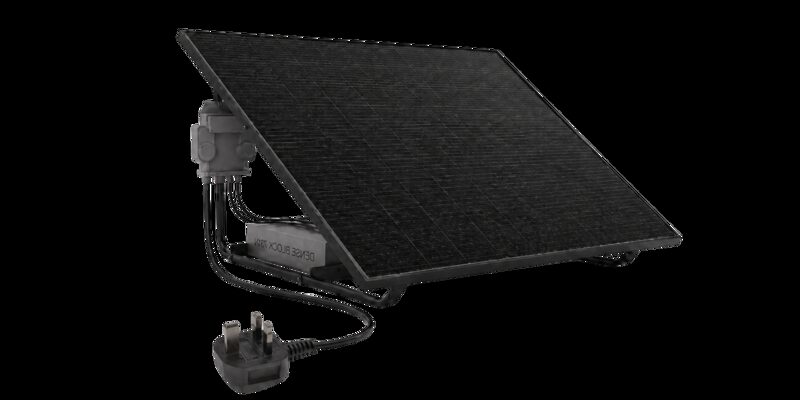
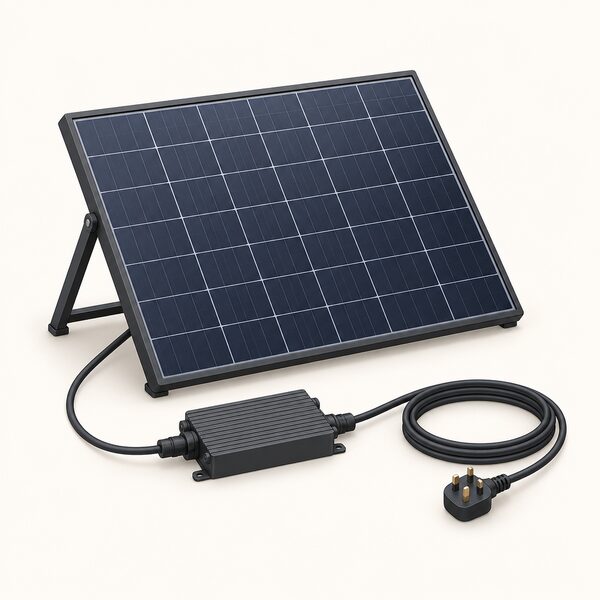
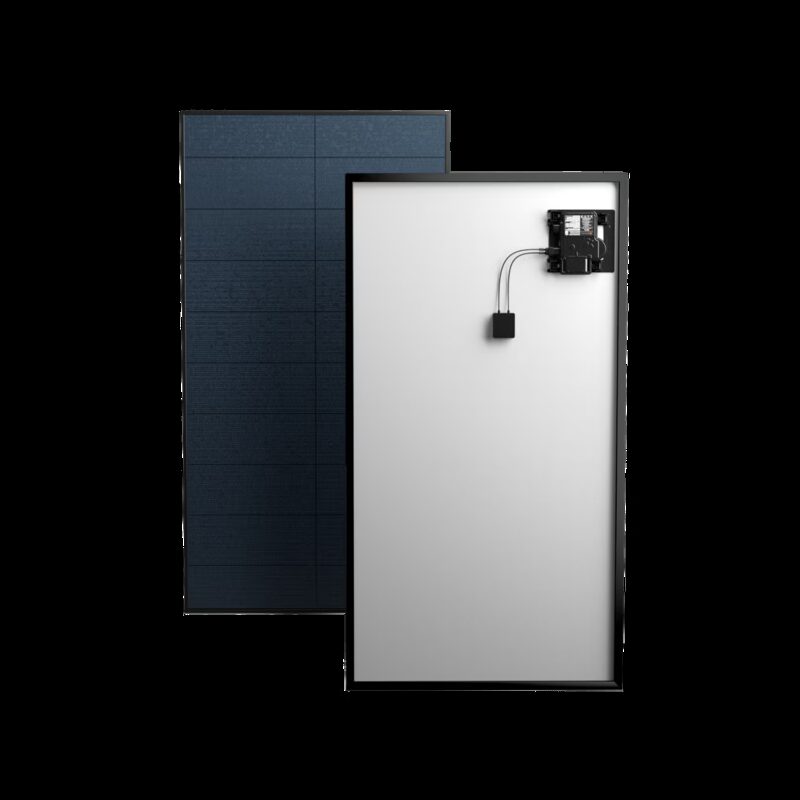
A typical kit contains one or two solar panels, a microinverter that converts direct current to usable alternating current, a lead fitted with a standard three-pin plug, mounting brackets and an app for monitoring2. Independent guidance describes the same package: one or two panels, an inverter, mounting equipment, cable and a standard three-pin plug7. Systems typically include one or two panels with a microinverter that converts sunlight to usable AC power8.
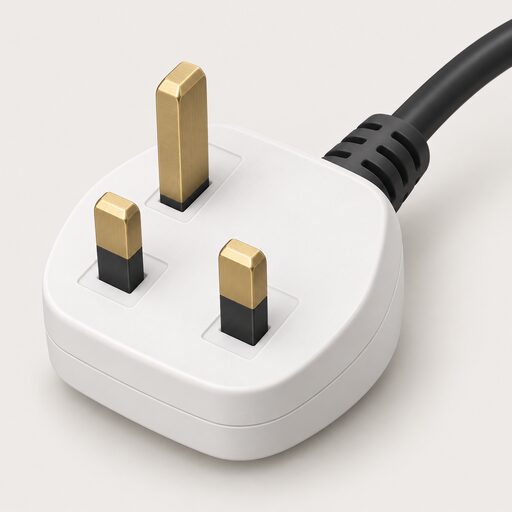
The plug itself is specified. Plug-in solar intended for connection to UK sockets shall use plugs designed to BS 1363-16. The device is designed to be connected to a UK mains socket solely by the manufacturer-supplied plug9. Citizens Advice puts the consumer-facing version of this plainly: buy an all-in-one kit that features a 3-pin UK plug and a UKCA (UK Conformity Assessed) mark10.
Two limits sit inside the definition. The specification applies to single-phase plug-in solar6, and current network requirements under Engineering Recommendation G98 Issue 2 Amendment 1 restrict connection to one device per household6. Only one plug-in solar kit is allowed per home, so a second kit cannot simply be plugged into another socket2.
Plug-in solar is legal in Great Britain: what changed
Before 27 August 2026, UK standards only permitted solar power generation that was permanently connected, meaning wired in to the mains11. The government's own roadmap had recorded that UK regulations did not allow plug-in solar to be used in the UK12. The change was announced in March 2026, when the government said it would make plug-in solar available for the first time in Britain so that families could buy a low-cost panel straight from a supermarket and set it up on a balcony or in a garden13.
Since 27 August 2026, plug-in solar panels that meet certain standards are legal to use in Great Britain14. The government confirmed that from that date the easy-to-install panels can be plugged into homes across the country4. Guidance from Energy Saving Trust states that you are legally required to register any plug-in solar panel devices before you use them in the UK14.
Three qualifications matter. First, the change covers Great Britain, not the whole UK: the legal position is described as applying across Great Britain3. Second, compliance is conditional on the product meeting standards, not on the category alone14. Third, product safety coverage differs by nation: plug-in solar products are covered by the General Product Safety Regulations (GPSR) 2005 in Great Britain1.
Planning is a separate question from product legality. In England, 'Solar PV' expressly includes plug-in solar, as defined in Paragraph P of the Town and Country Planning (General Permitted Development) (England) (Amendment) Order 202615. Cornwall Council's planning guidance on solar panels and planning permission sets out the general position for domestic installations15. For the wider picture on permitted development, see solar panel planning permission in England.
Where to buy: retailers, suppliers and the UKSOL range
Plug-in solar kits have been available to buy online and on the high street since the end of August 20262. Major retailers, such as Currys, B&Q, Screwfix and Amazon, have worked with government on the rollout of plug-in solar and will soon have them available in stores and online4. Retailers including Amazon, Argos, Curry's and Wickes have all committed to stocking plug-in solar panels4. Earlier reporting had named Lidl, Amazon, B&Q, Currys and Screwfix as the expected retail channels16, and panels were expected at Lidl and Sainsbury's within months according to the government5.
UKSOL is a British owned solar technology company supplying solar products in the UK and internationally to almost 50 countries in five continents17. Its Plug-In Solar Pro range is described as a plug-in solar system designed to give households small-scale solar generation without a traditional rooftop installation, sold as an all-in-one consumer package, aimed at renters and households with balconies, terraces, gardens or other suitable outdoor areas who cannot install a conventional rooftop solar system17. The company reported that the range was first to reach key UK compliance ahead of consumer launch, and that it was developing its retail and distribution strategy ahead of the wider UK rollout17. UKSOL plug-in solar kits are also available online at Argos, with hybrid mount kits coming soon2. A Hybrid Mount range with wall or ground mounting and four power options from 515W to 1260W is listed as coming on 1 October 20262.
| Maker or range | Kit | Price | Notes |
|---|---|---|---|
| UKSOL | Compact 460W Plug-In Solar Pro Kit | from £599.00 | Ground mount only2 |
| UKSOL | Duo 890W Plug-In Solar Pro Kit | from £899.00 | Ground mount only2 |
| Bolt | 460W plug-in solar kit | £549.99 | 2 |
| Bolt | 920W plug-in solar kit | £749.99 | 2 |
| PatioSun | PatioSun Lite 445W to 2x465W PatioSun Max Plus | £449 to £779 | Five kits listed2 |
| PowerXpress | plug-in solar kit | £669 | Available from Screwfix2 |
| InstaGen | plug-in solar kit | £549 RRP | Available by the end of September2 |
| The Solar Centre | rigid 430W and lightweight 200W semi-flexi starter kits | £330 planned base kit price | Both kits2 |
Prices are as read in September 2026 and are retail prices; the VAT position is not stated in the published listings. For a comparison of what a plug-in kit buys against a full installation, see plug-in solar vs professionally installed solar.
How much a kit costs and what it can generate
Published UK prices cluster between roughly £330 and £899 depending on panel count and mounting2. Independent guidance puts solar panel kits typically between £500 and £1,0007, and suggests costs could start around £400 for a basic set up, based on products available in the UK and Europe11. Entry-level single-panel kits were not officially priced for the UK at the time of that estimate, with Europe-based figures around £200 to £30016.
Generation is where the numbers need care, because the published modelling is for 800W systems rather than the smaller kits. Carbon Brief's cost-benefit analysis found that plug-in solar could provide 400 kWh of electricity each year for a typical household, about 15% of demand, saving £110 on electricity bills annually against a typical upfront cost of around £500 for an 800W system5. Optimally placed panels, south-facing and tilted at around 40 degrees, would generate around 820 kWh each year in London5. If 3m households took up plug-in solar, comparable to Germany's current deployment, this would generate 1.2 TWh a year5.
The gap between 400 kWh and 820 kWh is placement, not product. The lower figure reflects a typical household installation; the higher figure assumes an optimal south-facing tilt in London. The government's own framing is consistent with the lower end: each kit produces up to 800W, enough for up to 20% of an average home's electricity use, saving up to £100 a year4. Citizens Advice reports the government estimate of up to £110 a year10.
"A cost-benefit analysis by Carbon Brief finds that plug-in solar could provide 400 kilowatt hours (kWh) of electricity each year"
For the cost of full rooftop systems as a comparison, see how much do solar panels cost in the UK.
The microinverter: how it works and what it does for each panel
A microinverter is the interface between the panels and the plug socket. The electricity generated is converted into AC, the current homes use, via a micro-inverter usually attached to the back of the solar panel or panels14. Systems typically include one or two panels with a microinverter that converts sunlight to usable AC power8.
The rating that matters is the inverter output, not the panel nameplate. The interim specification describes power emitted through the micro-inverter, the interface between the solar panels and the plug socket, and the UK-compliant ceiling is around 800W18. The government states each plug-in solar kit produces up to 800W of power4.
Two safety behaviours are built into the specification. The inverter shall automatically disconnect from the mains supply within 100 ms following disconnection from the mains supply6. That matters because a plug-in device is connected to the same wiring as everything else in the home, and it must not attempt to energise a dead circuit. The device is also restricted to socket circuits: a plug-in solar device shall only be connected to socket circuits and not to circuits supplying lighting or other fixed equipment9.
Because each panel has its own conversion electronics in a one-panel-per-inverter layout, shading on one panel does not drag the other down in the way a single string inverter can. For the wider technology, see microinverters for home solar and microinverters vs string inverters.
Where a plug-in kit fits: balconies, flats and limited roof access
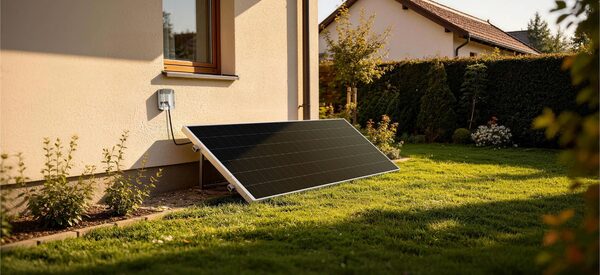
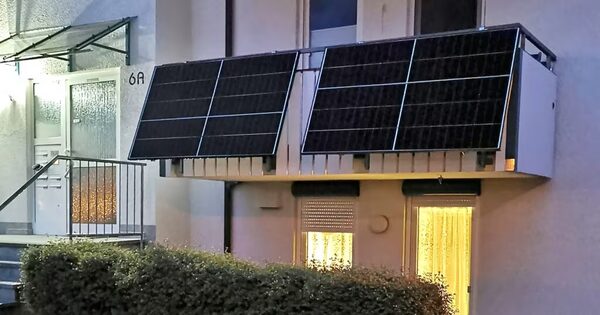
The technology can be deployed quickly on walls or on the balconies of flats, where conventional rooftop installations would be impossible19. Plug-in photovoltaic solar panels, also known as balcony solar, are now available to buy and self-install in the UK18. They are common in places such as Germany, where people already hang them on balconies, in gardens or on terraces8.
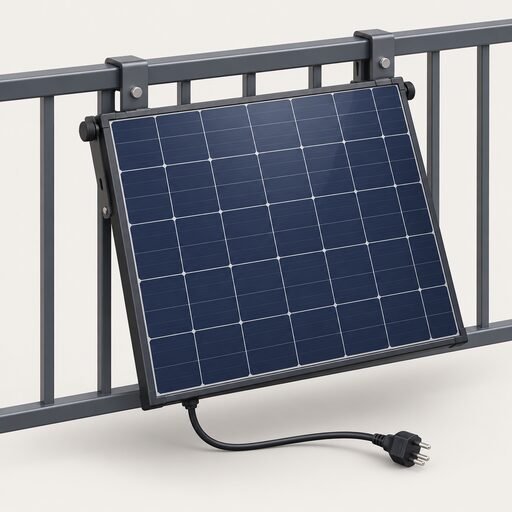
The UK reality is narrower than the balcony label suggests. Current devices available in the UK are more suitable to garden locations rather than balconies, and permission plus an appropriate frame, fixing or anchors are needed14. The same caution appears in Scottish guidance: current devices available in the UK are generally more suitable for garden locations than balconies20. A balcony installation therefore depends on the structure, the fixing method and any permission required from the building owner.
Demand is not in doubt. A quarter of UK households, 26%, about seven million, want to get plug-in solar panels as rules change21. A government funding pilot specifically designed to put plug-in kits into low-income households, delivered through local authorities, has been described in independent guidance16.
Suitability guidance recommends plug-in solar for people who rent their home, people in smaller homes such as flats, and those unable to afford full roof system installation costs14. It can work well for renters and those living in flats with outdoor spaces10. For the detail, see can renters use plug-in solar panels and balcony solar systems.
Grid connection rules: G98 and what the standards require
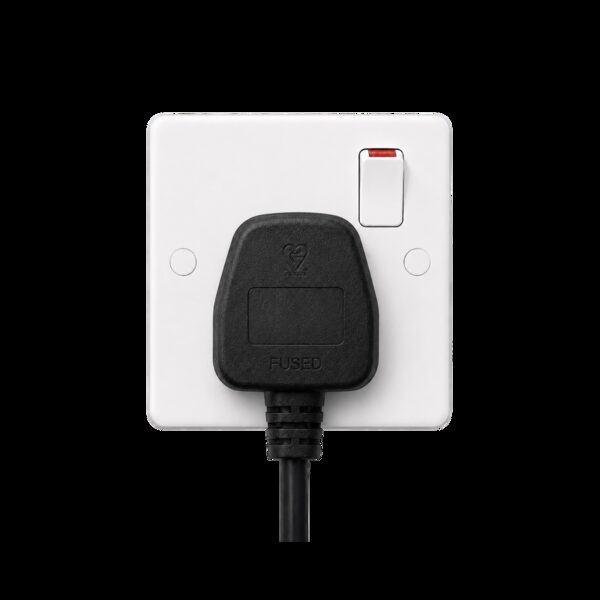
G98 is a UK engineering standard written by ENA, previously known as G8323. It covers small-scale electricity generation such as solar panels or wind turbines with a capacity of 3.68kW or less per phase24. Plug-in solar shall comply with the technical requirements for connection and parallel operation with low-voltage distribution networks in Great Britain6, and the interim specification names Engineering Recommendation G98 Issue 2 Amendment 1 as the applicable standard9.
Registration is the household's responsibility. Registration of plug-in solar devices is done via the UK plug-in solar website25. Guidance states you are legally required to register any plug-in solar panel devices before you use them in the UK, via the UK Plug-in Solar Registration website14. One earlier description of the process said systems up to 800W are registered at energynetworks.org via a quick online form, noting at the time that the form was not live yet16.
The general microgeneration route still applies alongside this. Systems with the ability to export up to 3.68kWp can be notified to the distribution network operator within 28 days of being installed26. For a conventional installation, the registration is usually done by the installer: you must register it with UK Power Networks, usually done by your installer27. A plug-in kit has no installer, which is why the registration falls to the household.
Before buying, check the model. Make sure the specific model you are looking at is on the list of devices that meet UK standards, checked via the ENA Connect Direct LCT Device Register20. More than 50 compliant plug-in kits were listed on the type test register as of 16 September 20262.
| Requirement | What it says |
|---|---|
| Network standard | Engineering Recommendation G98 Issue 2 Amendment 19 |
| Scope | Small-scale generation of 3.68kW or less per phase24 |
| Devices per household | One, under current network requirements6 |
| Plug standard | BS 1363-16 |
| Circuit | Socket circuits only, not lighting or fixed equipment9 |
| Disconnection | Within 100 ms of mains loss6 |
| Notification window | Within 28 days of installation for systems exporting up to 3.68kWp26 |
For the full framework, see connecting solar to the grid: G98 and G99 explained.
Installing and maintaining a kit yourself
Plug-in solar panels are solar kits that you can install yourself and plug into a standard mains socket8. The connection method is intended to work without installation of a separate electrical circuit for export6, and the device is designed to be connected to a UK mains socket solely by the manufacturer-supplied plug9. Extension cables are not permitted25.
That self-install position is what makes the category different from rooftop solar, where the work is done by qualified installers. Scottish Power installs solar panels and batteries throughout Great Britain, and Good Energy installs solar panels and batteries in multiple places across the south of England28, but neither is required for a plug-in kit.
Maintenance is limited to the physical installation and the electronics. Panels need to be kept clear of shading and debris, and the mounting must be secure against wind loading, which is why the guidance stresses an appropriate frame, fixing or anchors14. The microinverter is the component most likely to need attention, and its behaviour on mains loss is specified rather than optional6.
For related practical questions, see can I plug a solar panel into a normal socket, can I use an extension lead with plug-in solar and can I install plug-in solar on a fence.
What owning a plug-in kit means for household energy independence
A plug-in kit shifts a defined slice of a household's electricity supply onto its own roof, wall or garden. The government's figure is up to 20% of an average home's electricity use from an 800W kit4, and Carbon Brief's modelling puts a typical household at 400 kWh a year, about 15% of demand5. That is real but partial: the majority of demand still comes from the grid, and higher-use appliances will still need grid electricity because UK-compliant devices are limited to a maximum output of around 800W14.
The dependence that remains is structural. The kit operates alongside the electricity network rather than instead of it1, so the home stays connected to a supplier and to the distribution network. Output is capped at 800W, one device per household6, and the system cannot be expanded by adding a second kit to another socket2. There is no stored energy unless a battery is added, and that battery must be permanently wired by a qualified electrician rather than plugged in2.
What the kit does change is portability and access. It plugs into a standard UK socket, powers everyday appliances, and can be taken when the household moves25. That makes it one of the few generation options available to renters and flat dwellers with outdoor space10, and it removes the need for a rooftop installation, an installer visit and the associated cost.
For the wider picture of what self-generation does and does not deliver, see solar panels and household energy independence and the pillar guide at Solar PV for UK Homes.
Sources28 cited
- Plug-in solar consultation document, GOV.UK, 16 June 2026
- Plug-in solar panels, Which?, 15 September 2026
- First regional solar breakdown as installations hit record highs, GOV.UK, 27 August 2026
- Households can save as plug-in solar panels come to market, GOV.UK, 26 August 2026
- How plug-in solar can save UK homes £110 on energy bills, Carbon Brief, 2 April 2026
- Plug-in solar interim product specification, DESNZ, July 2026
- Plug-in solar advice, Centre for Sustainable Energy, September 2026
- Plug-in solar to become legal in the UK, Which?, 24 April 2026
- Plug-in solar interim product specification (withdrawn), DESNZ, June 2026
- Six things to know before plug-in solar panels hit the shelves, Citizens Advice, 21 August 2026
- Plug-in solar panels vs rooftop systems, Which?, 27 April 2026
- UK Solar Roadmap, DESNZ, June 2025
- Heating oil support debate, Hansard, 16 March 2026
- Plug-in solar panels, Uswitch, 17 September 2026
- Solar panels and planning permission, Cornwall Council, 17 September 2026
- Plug-in solar explained, Low Carbon Hub, 9 July 2026
- UKSOL Plug-In Solar Pro first to reach key UK compliance, Solar Energy UK, 20 August 2026
- Plug-in solar consumer guide, Electrical Safety First, August 2026
- Solar put at heart of response to energy crisis, Solar Energy UK, 15 March 2026
- What to know about plug-in solar panels, Home Energy Scotland, September 2026
- Seven million want plug-in balcony solar as law changes, Uswitch, August 2026
- ECA welcomes government's Future Homes Standard but warns safety could be compromised, ECA, 25 March 2026
- Micro generation and storage connections, Electricity North West, 19 September 2026
- Installations up to 3.68kW per phase at a single premises, SSEN, 17 September 2026
- Plug-in solar, Electricity North West, 19 September 2026
- Solar panels safety advice, Electrical Safety First, 17 September 2026
- Solar panels, London Borough of Hammersmith and Fulham, 17 September 2026
- Solar panel costs, Which?, 3 August 2026
 Balcony Solar SystemsCan you really plug solar panels into a normal socket, and what will it save you?
 Solar Panel CostsA typical UK home pays somewhere between four and eleven thousand pounds for solar panels fitted, with most landing in the middle.
 The Full Solar Panels GuideHow much do solar panels cost, and what could they save you each year?
 Plug-In Battery StoragePlug-in batteries are not legal in a grid-connected British home, even though plug-in solar panels are.
 Solar Panel Manufacturers UKWhich solar panel brands are actually worth buying in the UK, and who really makes them?
 Panel TypesWhich solar panels are best for a UK home, and how much do they cost?