
In this comparison
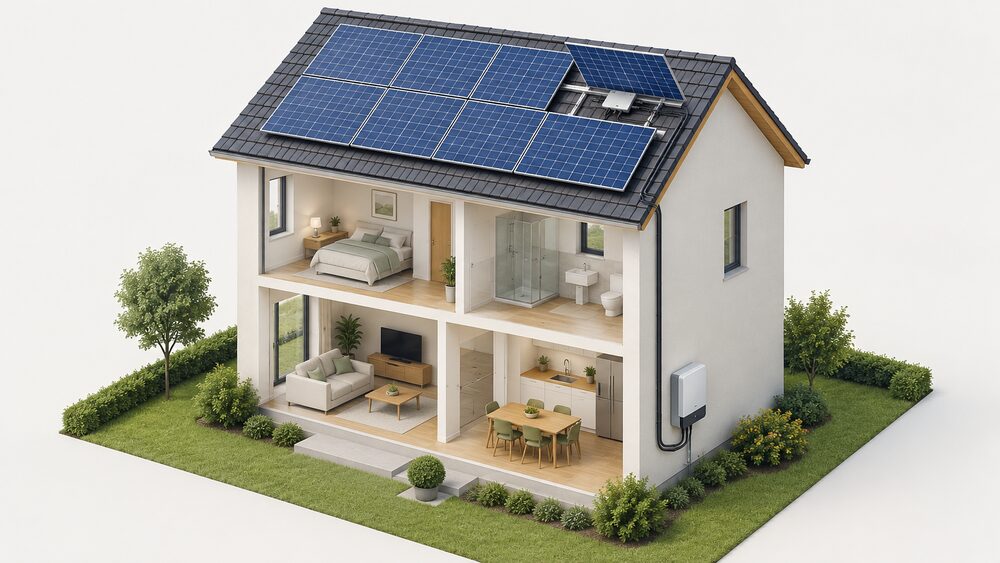
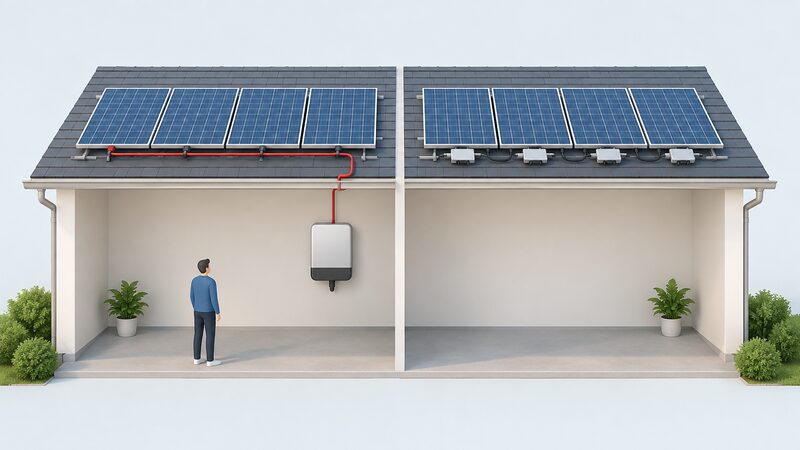
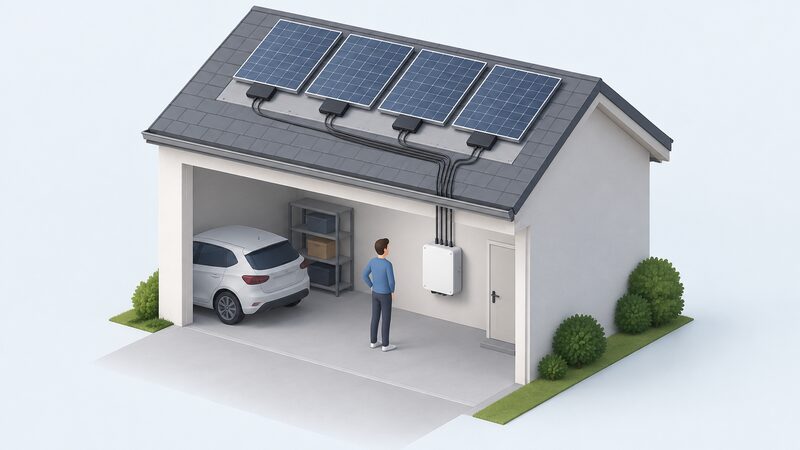
A string inverter takes the direct current from a whole row of panels, converts it to mains alternating current in one box, and usually sits on a wall at ground level. Microinverters do the same conversion at each panel, so every module has its own small inverter bolted to the mounting rail behind it. That single architectural difference drives everything else: cost, shading behaviour, safety voltage, monitoring detail and where a failure lands.
The cost gap is the first thing a householder meets. String inverters are the most common and cheapest option, and usually cost less upfront1. Microinverter systems often have a higher initial equipment cost than a basic string inverter system because each panel requires an inverter3. On a large, unshaded, consistently oriented roof with identical modules, a string inverter system may offer a lower upfront cost3.
Where microinverters earn their premium is on awkward roofs. Microinverters may produce more energy under uneven shade or mixed panel orientations because each input has its own Maximum Power Point Tracker1. The Energy Saving Trust notes that where shading is unavoidable, an installer might recommend microinverters or power optimisers, which let each panel work independently4.
Microinverters vs string inverters: the core difference
A string inverter is a single central unit. Panels are wired in series, and the inverter tracks one operating point for the whole array, or one per MPPT input where several are provided. Multiple Maximum Power Point Tracking inputs allow for independent optimisation of different solar panel strings, accommodating variations in shading and orientation8. That is the string architecture's main defence against mixed conditions, and it works at string granularity rather than panel granularity.
A microinverter is a panel-level device. Each microinverter tracks the operating point of its connected solar panel using Maximum Power Point Tracking, commonly called MPPT3. Unlike string inverters, which handle multiple panels at once, microinverters work on a panel-by-panel basis9. The conversion from DC to AC happens on the roof, and the array's output is already mains voltage by the time it reaches the consumer unit.
The efficiency question is often framed wrongly. Microinverters are not necessarily better in terms of peak DC-to-AC conversion efficiency, but they can produce more usable energy over time when panels experience different shading, orientations or operating conditions1. Peak efficiency and harvest under real roof conditions are different measures, and the second is where the architecture shows.
Scalability differs too. Microinverters are more adaptable for future expansion or maintenance without replacing the entire inverter system10. Adding two panels to a string array can mean re-checking string voltage limits and possibly changing the inverter; adding two panels to a microinverter array means adding two microinverters.
Cost: string inverters are cheaper, microinverters pay more per panel
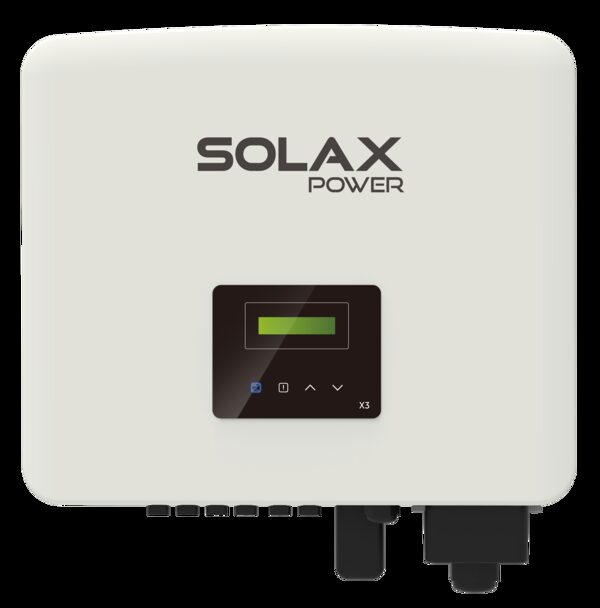
String inverters usually cost less upfront1. They are the most common and cheapest option as they connect solar panels in series2, and string inverter solar panels are some of the cheapest options available11. For a straightforward roof, that is the baseline against which everything else is judged.
Microinverter systems often have a higher initial equipment cost than a basic string inverter system because each panel requires an inverter3. The cost position is described plainly: higher upfront equipment cost since you are buying an inverter for every single panel5. Solar string inverters usually come with a lower initial price tag when compared to the cumulative cost of micro inverters for the same capacity4.
The gap narrows or widens depending on the roof. If a roof is large, unshaded, consistently oriented, and uses identical modules, a string inverter system may offer a lower upfront cost3. Where the roof is broken up, shaded or multi-faceted, the comparison changes, because the string system may need optimisers or additional MPPT capacity to perform, and those add cost of their own.
Replacement economics matter as much as purchase price. Microinverters and power optimisers separate panels so a single panel failure does not impact the whole system, but may be more expensive to replace2. Repairing a microinverter may require roof access and panel removal, while string inverters are easier to service at ground level1. A string inverter failure may stop the entire array1, so the household trades a larger single loss against a harder-to-reach smaller one.
For context on what a replacement can cost at the larger end, independent guidance on small wind turbine inverters gives a replacement figure of between £1,000 and £2,000 for a larger system12. That is a wind turbine figure, not a solar one, and solar inverter prices are installer-quoted, but it shows the order of magnitude a central unit replacement can reach.
Shading and mixed roof orientations: where panel-level electronics win
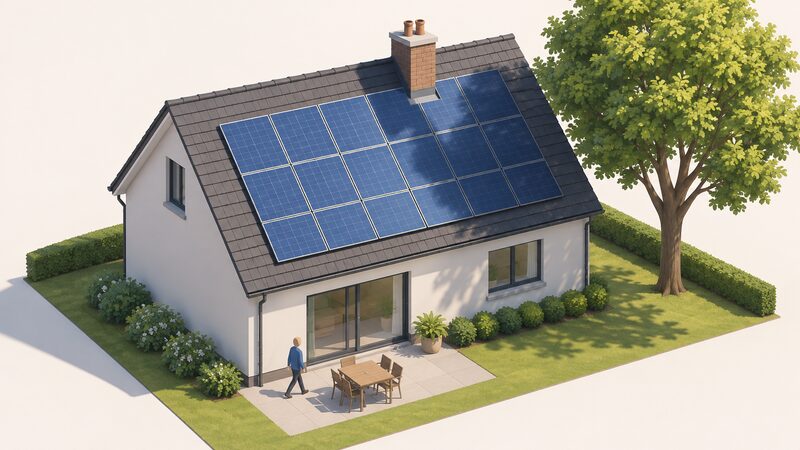
Shading is the clearest dividing line. Panels in a string system are only as efficient as the lowest performing panel11. A single underperforming panel reduces the output of the entire string7. On a roof with a chimney, a dormer, a neighbouring tree or a satellite dish, that is a real and recurring loss.
Microinverters are fitted to each panel individually and are better for partially shaded roofs, since one shaded panel will not drag down the rest13. Their shade performance is described as excellent because the panels are independent5. Microinverters may produce more energy under uneven shade or mixed panel orientations because each input has its own MPPT1.
Mixed orientation is the second case. A roof with an east-facing slope and a west-facing slope, or a main roof plus a garage, puts panels in genuinely different irradiance conditions at different times of day. The SolarEdge Home Short String Inverter is optimised for installations with complex roofs, including multi-facets and different orientations14, which shows that the string-plus-optimiser route is aimed at exactly this problem.
The Energy Saving Trust's position is that where shading is unavoidable, an installer might recommend microinverters or power optimisers, which let each panel work independently, alongside trimming trees causing partial shade4. That is the practical sequence: reduce the shade first, then choose electronics that tolerate what remains.
Safety: lower DC voltage and rapid shutdown
Microinverters operate at a lower DC voltage than string inverters, reducing the risk of electrical hazards, such as arc faults or fire risks7. The voltage level is given as 60V or below, described as low and safer5. Because microinverters operate at a lower voltage, they are safer to install and maintain15.
String systems carry the opposite characteristic. On a standard string inverter solar system, when the inverter is switched off, the DC wiring from the solar system to the inverter remains live as long as the sun is shining16. That is the core of the firefighter safety concern: isolating the inverter does not de-energise the roof.
Rapid shutdown devices address it. Adding a Rapid Shutdown Device to a string inverter boosts protection by lowering the DC voltage after shutdown12. String inverters also lack module-level shutdown capabilities12. Where optimisers are used, when Rapid Shutdown is initiated, each optimizer puts out 1 volt DC, but failed optimizers can pass DC voltage from multiple PV panels16. That caveat matters: the safety case for optimiser-based rapid shutdown depends on the optimisers working.
"when the inverter is switched off, the DC wiring from the solar system to the inverter remains live as long as the sun is shining"
The practical consequence for a household is what happens on the roof during a fault or a fire. A microinverter array has no high-voltage DC run to isolate, because the conversion happens at each panel. A string array needs either a rapid shutdown device, optimisers, or a documented isolation procedure that the fire service can follow. This is a safety architecture question, not a performance one, and it is worth raising with an installer before the design is fixed.
Monitoring: panel-level data vs whole-system figures
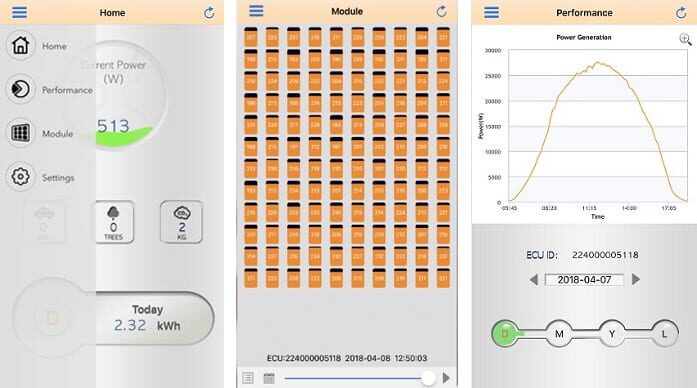
Microinverters usually provide panel-level monitoring, making underperforming panels easier to identify1. Microinverters often include panel-level monitoring, enabling users to identify issues with individual panels rather than the system as a whole17. Smart micro inverter systems can provide production data for each panel3, and microinverters allow real-time performance monitoring for each panel15.
String inverters typically provide system-, string- or MPPT-level data unless power optimisers are added1. Solar string inverters provide monitoring at the string level4. That is enough to spot a whole-string fault, a blown fuse or a broad drop in output, but it will not tell a householder which of ten panels has failed or is soiled.
The difference shows up in diagnosis. With panel-level data, a single underperforming module is visible as a dip against its neighbours, and the cause can be narrowed to shading, soiling, a failed bypass diode or a failing connector. With string-level data, the same fault appears as a modest reduction across the whole array, which is easy to miss and hard to attribute.
Monitoring depends on a communications path. The APsystems EZ1 Series microinverter has built-in Wi-Fi and Bluetooth and does not need a gateway for monitoring18. That is a maker statement about one product line, but it illustrates the general point: panel-level monitoring needs either a gateway, a built-in radio, or a powerline link, and that hardware is part of the system's dependence on the maker's platform.
Reliability and maintenance: more components, more failure points
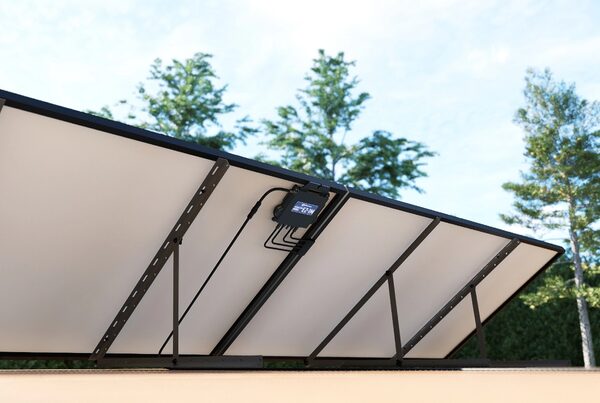
The case against microinverters on reliability is straightforward: they are more likely to have failure points and require maintenance, and more costly than central string inverters because they need to be affixed to the back of every solar panel10. More devices on a roof means more places for something to go wrong, and each one sits in the harshest environment on the property.
The case for them is that a failure is contained. Microinverters and power optimisers separate panels so a single panel failure does not impact the whole system2. Solar string inverters are reliable, but a failure in the inverter will halt the entire string's operation; if one fails, the others continue to operate, preventing a total system shutdown4. A maker reports a 0.055% microinverter failure rate, against about 1 in 100 string inverters7. That is a maker's own comparison and should be read as such.
Access is the practical issue. Microinverter maintenance requires roof access5. Repairing a microinverter may require roof access and panel removal, while string inverters are easier to service at ground level1. A ground-level replacement is a short job; a roof-level one involves scaffolding or a tower, and the cost of access can exceed the cost of the part.
String inverter sizing also affects reliability. Undersized or oversized inverters can lead to efficiency losses19. String inverters are lightweight and compact with integrated mounting hardware, and pre-wired and plug-and-play systems reduce the complexity of on-site assembly8. That simplicity is part of why the architecture dominates: fewer components, easier commissioning, easier service.
The makers: SolarEdge, APsystems and Tigo
SolarEdge was founded in 2006 and describes itself as having led the way in smart energy since then, with millions of systems installed in over 140 countries20. Its residential scope covers inverters, Power Optimizers, batteries, backup solutions, and smart energy devices21. The SolarEdge Home Short String Inverter is a three-phase PV inverter for low power residential systems, described as the optimised solution for small-scale residential projects14. It is a DC-optimised inverter enabled with Power Optimizers that individually manage each solar panel14, and the company offers a single source solution with products, warranty, support, training, and system management all provided by one vendor14.
Power optimisers work similarly to microinverters but are used with a string inverter, enhancing the performance of individual panels22. That is the key distinction: the panel-level electronics are there, but the DC-to-AC conversion still happens centrally. SolarEdge's own warranty is described as industry-leading23, and Which? records a product warranty of 25 years and a power output warranty of 30 years at 89.4%24. Which? has not yet lab-tested any SolarEdge solar panels24, and notes that SolarEdge products are manufactured in various locations around the world including Israel, China and the USA, with around 80% of those sold in the UK made in China24. Owner feedback is mixed: many owners were positive, finding them reliable, maintenance-free and efficient, while some owners feel their return is poor and their panels have become less efficient over time25. Nearly half of those who owned SolarEdge panels said they chose them because they were the only brand their installer fitted25.
APsystems describes itself as a global leader in module-level power electronics, covering micro-site (DIY), residential, and commercial and industrial applications18. Its range includes dual-module residential models and native three-phase products for commercial installations6. The company has launched seven new product lines spanning four energy storage solution categories, covering AC coupling, hybrid AC-DC coupling, off-grid and string-type energy storage26, with dynamic charge-discharge optimisation and virtual power plant compatibility18. It develops core technologies in-house across battery management, power conversion, and energy management systems18.
Tigo is a module-level power electronics maker whose published material covers rapid shutdown approaches and inverter replacement guidance. Its optimiser products sit in the same category as SolarEdge's, working with a string inverter rather than replacing it.
What this means for household energy independence
Neither architecture changes the fundamental position of a grid-connected home. Both convert the same sunlight into the same mains electricity, and both stop producing when the grid goes down unless there is battery backup and islanding capability. The choice affects how much of the roof's potential is captured, how visible a fault is, and where the household's dependence sits.
String inverters are the most common type of inverter for domestic applications and have been used for decades22. They connect multiple solar panels in a series, making them cost-effective and easy to install22. They are best suited to mid to large residential or commercial roofs5, and residential models are available in single phase at 5kW and 7 to 9 kW27. That is the mainstream, well-understood option.
Microinverters suit residential, shaded, small-scale solar5. They reduce the impact of a single shaded or failed panel, which supports self-consumption on awkward roofs, and they remove the high-voltage DC run from the roof. The dependence they introduce is different in kind: panel-level monitoring runs through the maker's app and cloud platform, and the electronics on the roof are the maker's, not a commodity part a local electrician can swap.
The dependence that remains in both cases is the grid itself, the supplier, and the inverter maker's continued support for monitoring and firmware. For a household weighing the two, the honest summary is that string inverters are cheaper and easier to service, microinverters capture more from a difficult roof and localise faults, and the right answer depends on the roof rather than on the technology being newer. For the wider picture, see solar inverters explained and microinverters for home solar.
Sources27 cited
- Microinverter vs string inverter, SolaX Power
- Buying advice for solar panels, Which?
- A comprehensive guide of micro inverter solar system, SolaX Power
- Solar string inverters vs micro inverters: what's the difference, Sungrow
- Microinverter vs hybrid inverter, SolaX Power
- Best microinverters for solar panels, SolaX Power
- The UK's missing microinverter market, Midsummer Wholesale
- Everything you should know about solar string inverters, Sungrow
- Microinverter complete guide, Sungrow
- What is a microinverter, Deye
- What type of solar panels should I install, Good Energy
- Small wind turbines, MCS Certified
- Solar power for your home, Bluetti UK
- SolarEdge Home Short String Inverters, SolarEdge
- Solar microinverter: everything you need to know, Sungrow
- Why an AC system is safer, Midsummer Wholesale
- Microinverter complete guide, Sungrow
- APsystems, APsystems
- How efficient is a solar string inverter, SolaX Power
- SolarEdge Home, SolarEdge
- SolarEdge UK residential products, SolarEdge
- What type of inverter is best for solar, Marley
- Solar energy primer, SolarEdge
- SolarEdge solar panels review, Which?
- SolarEdge solar panels, Which?
- APsystems unveils new hybrid off-grid energy storage solutions at SNEC 2026, APsystems
- Inverter range, Canadian Solar
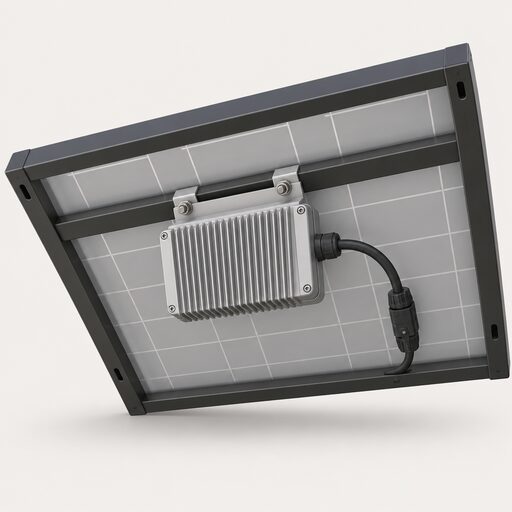 MicroinvertersMicroinverters sit behind each panel and turn its power into household electricity right there on the roof.
 Building-Mounted Wind TurbinesWill a wind turbine on your roof actually make enough electricity to be worth it?
 Microgeneration by Home TypeA stream running through your land, a windy exposed spot, or a gas boiler that runs almost all day: each points to a different technology.
 Inverters and Inverter-ChargersIf the power goes off, what actually keeps your fridge and boiler running?
 Domestic Wind TurbinesCan a wind turbine really power a home, and is your site windy enough?
 Solar Mounting SystemsWill your roof take the extra weight of solar panels, and will it still keep the rain out afterwards?