In this guide
SolarEdge is an inverter manufacturer whose household proposition rests on one architectural choice: every panel in the array gets its own Power Optimizer, and that optimiser reports back. The result is a monitoring platform that shows production and consumption in real time and tracks each individual module, rather than treating the roof as a single block1. For a UK household, that is the difference between knowing the system has stopped and knowing which panel has stopped.
The monitoring itself is not a separate purchase. It comes with the inverter, and the householder reaches it through the mySolarEdge app, which tracks real-time solar production and home energy use, manages the battery, EV charging and connected devices, and automatically optimises energy use3. Panel-level visibility is the headline capability, and it is the reason the brand is often named alongside complex or shaded roofs4.
What the platform cannot do is work without the internet. Data travels from the inverter to SolarEdge's servers, and the app reads it back. That is a real dependence: on broadband or a cellular data plan, on the manufacturer's cloud, and on an app that the manufacturer controls. Local generation continues regardless, but the monitoring stops being visible from a phone.
What the SolarEdge Monitoring Platform shows
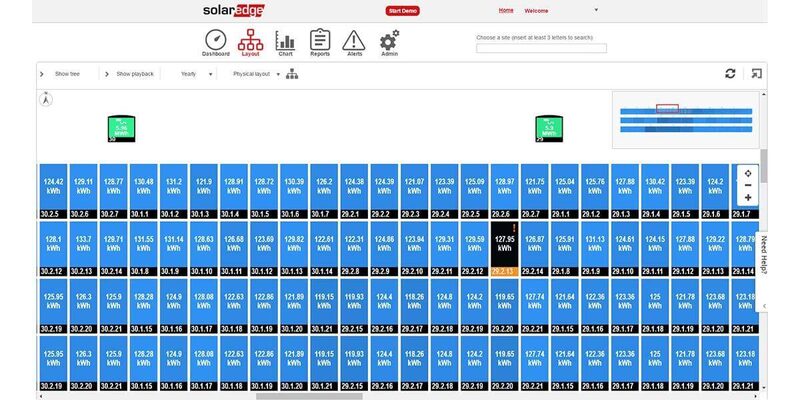
The platform's core view is module by module. SolarEdge describes the capability simply as tracking each individual module, and the same phrase appears across the inverter pages, including the Home Wave and the Home Short String ranges2. Alongside that, the mySolarEdge app monitors real-time production and consumption, so a household can see what the array is generating and what the building is drawing at the same moment2.
The app also handles the practical side of ownership. It connects to home Wi-Fi, shows connection status, and allows the inverter's communication settings to be viewed and configured6. Where the system includes a battery, EV charger or other connected devices, the same app is the control surface: track real-time solar production and home energy use, manage the battery, EV charging and connected devices, and let the system automatically optimise energy use3.
For fault finding, the platform is more than a dashboard. Additional app connectivity features give a virtual layout of the system to aid fault detection and remediation, remote system monitoring and automatic fault notifications10. That virtual layout is what turns a per-panel reading into something an installer can act on without a site visit: a single underperforming module shows up in its position on the roof plan.
Independent commentary places SolarEdge among the strongest monitoring offerings available, at a higher cost than average inverters8. That is a fair summary of the trade: the visibility is unusually granular, and the hardware that delivers it sits at the top of the price band rather than the middle.
Panel-level monitoring: how the optimiser architecture makes it possible
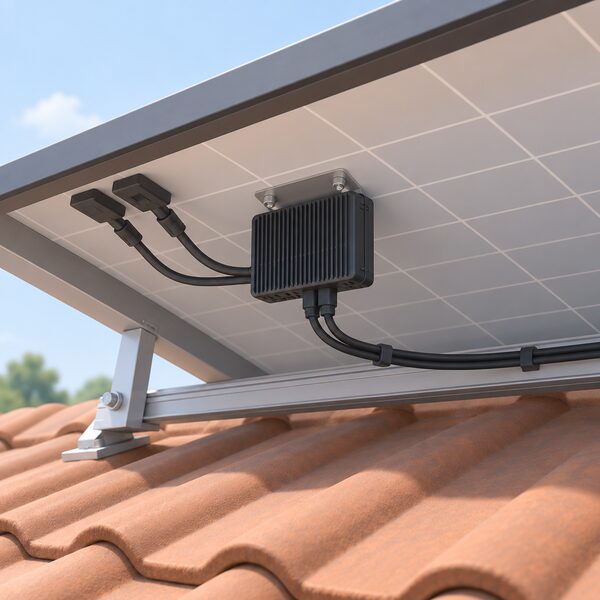
Panel-level data is not a software feature bolted onto a conventional string inverter. It follows from the hardware. SolarEdge's DC-optimised inverters are enabled with Power Optimizers that individually manage each solar panel, maximising power generation panel by panel1. Because each optimiser is attached to one module, each module has its own measurement point, and the platform can report on it.
The same architecture is what makes the system tolerant of awkward roofs. The Home Short String Inverter is described as optimised for installations with complex roofs, including multi-facets and different orientations1. In practice that means two parts of a roof facing different directions can be used together to expand sun exposure, rather than one being written off as unproductive11.
Optimisers also carry safety functions. Panel-level shutdown isolates individual panels in the event of a fault on some models, and SolarEdge systems incorporate SafeDC, Rapid Shutdown and Sense Connect as part of a holistic safety approach12. For an installer working on a roof, module-level shutdown reduces the live DC risk during maintenance.
"Lastly, they enable panel-level monitoring, which means that you and your installer can see how each panel is performing"
No figure for the extra yield from panel-level optimisation appears in the material available here, so none is given. The benefit is largest where shading or mixed orientation would otherwise drag a whole string down, and smallest on a single unshaded plane at one pitch.
Alerts, export versus consumption, and the extra meter
The platform distinguishes between what the array produces and what the home consumes, but separating export from on-site use needs an additional device. The SolarEdge Energy Meter with Modbus Connection enables production, consumption, or import and export monitoring, and supplies meter readings to the inverter for export limitation5. Without it, a household sees generation and consumption, not a discrete export figure.
Export limitation is the second function of that meter, and it matters more than it sounds. Where a network operator caps what a site may export, the inverter needs a live measurement to hold within the cap, and the meter provides it5. The single-phase inverter datasheet lists utility monitoring and islanding protection as standard features across the SE2200 to SE6000 range13.
Export itself has a value. Independent guidance notes that an export tariff lets a household sell any extra electricity generated with solar panels14. Independent monitoring work has lagged on this point: the Energy Systems Catapult Living Lab stated in August 2025 that it would be adding the capability to capture export meter data in the near future15. Households wanting a clear export figure should therefore expect to need the meter rather than assume the inverter reports it.
SolarEdge Home: the wider smart energy ecosystem
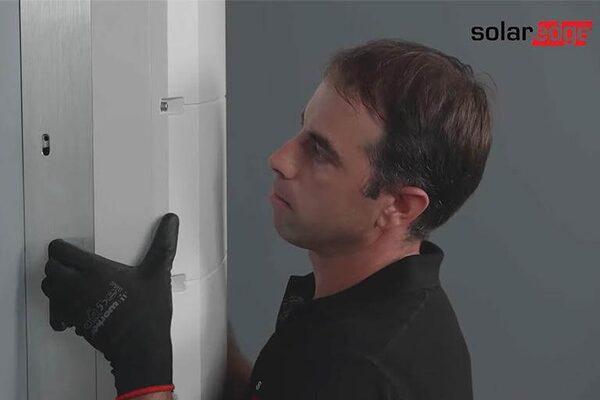
SolarEdge Home is the umbrella for the residential range: inverters, Power Optimizers, batteries, backup solutions and smart energy devices, described as a complete portfolio that optimises a home's energy production, consumption, storage and backup16. The ecosystem is orchestrated by SolarEdge ONE, and SolarEdge describes it as modular and scalable, so a household can start with a basic solar system and later add batteries, EV charging or smart energy devices16.
The SolarEdge ONE Controller is the integration point. Integrated devices can be managed through mySolarEdge, and the controller is compatible with the SolarEdge Monitoring Platform, which tracks each individual module17. The Home Load Controller integrates into the ecosystem over the SolarEdge Home Network, and is sold through distributors rather than direct18.
| Device | Function in the ecosystem | Source |
|---|---|---|
| Power Optimizers | Manage each panel individually; enable panel-level monitoring | 1 |
| Home Wave Inverter | Module-level monitoring with pinpointed fault detection | 9 |
| Home Short String Inverter | Tracks each individual module via the Monitoring Platform | 1 |
| Energy Meter with Modbus | Production, consumption, import/export monitoring and export limitation | 5 |
| ONE Controller | Manages integrated devices via mySolarEdge | 17 |
| Home Load Controller | Integrates over the SolarEdge Home Network | 18 |
| Cellular Plug-in | Wireless link to the Monitoring Platform; remote troubleshooting | 7 |
The dependence here is worth stating plainly. Every device in that table reports through the same platform and is controlled through the same app. A household that builds out the full ecosystem gains coordinated control of generation, storage and loads, and takes on a single point of software dependence in exchange.
EV charging and load management
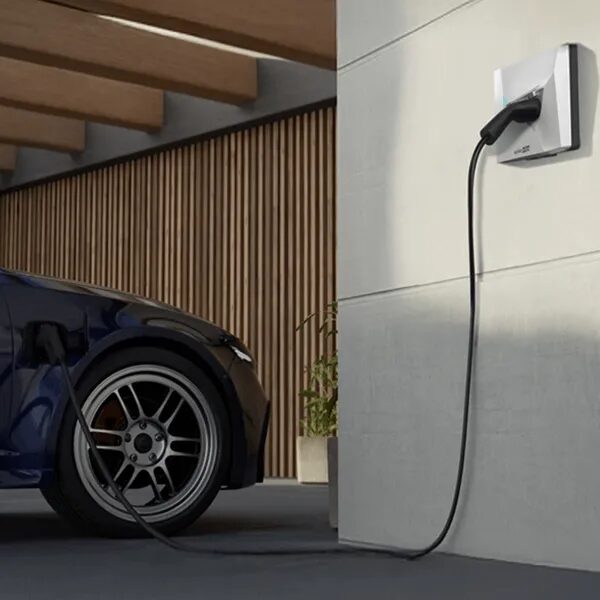
SolarEdge's domestic charging products are the SolarEdge EV Charger and the SolarEdge ONE EV Charger. The smart features listed for the ONE unit include excess PV charging that prioritises solar energy use, load balancing, a smart schedule supporting dynamic time-of-use tariffs, automatic phase switching, MID metering and ISO15118 readiness19. The wider EV charging range uses available solar energy for EV charging and can charge when utility rates are low20.
Load management is the part that matters for a household's supply. SolarEdge states that its home EV chargers dynamically modify the EV charging power output, ensuring the system overall remains in energy balance20. Working with the mySolarEdge Home app, the ONE EV Charger implements dynamic load management, and offers downloadable usage reports tracking energy per session or over time21.
Control sits in the same app as everything else: the ONE EV Charger allows control and optimisation of all household energy, including EV charging, directly from mySolarEdge19. A household with more than one electric vehicle can run up to three SolarEdge EV Chargers on a single site20. The app also allows the home battery to be enabled or disabled for charging the EV, according to need19.
Vehicle-to-grid is not offered. A 2022 SolarEdge interview with its EV charging product manager discussed future V2G and V2H development, which is a roadmap statement rather than a shipping function, and the current product pages describe solar charging, rate-based charging and load management only20.
API access and data storage
SolarEdge publishes monitoring API documentation, and independent comparison work lists SolarEdge as offering an API with documentation available8. That matters for households running their own analysis or feeding data into a home energy management system, and it is the route by which third-party tools read SolarEdge site data.
The API changed in March 2026. Deprecated endpoints including Site Image, Installer Logo Image, Equipment Change Log, Account List, Sensors and API Versions were removed, along with CSV and XML response formats, leaving JSON only8. Anything built on the older endpoints or formats needs updating, and this is a reminder that an API is a manufacturer's service rather than a household's property.
Data storage is cloud-side. The inverter communicates with the SolarEdge Monitoring Platform either over home Wi-Fi or through the Cellular Plug-in with Data Plan, which enables wireless communication between the inverter and the platform, ensuring panel-level insight and control, and is installed inside the inverter with an external antenna7. The same plug-in enables remote analysis and troubleshooting7.
For households weighing how much of their energy data stays at home, the relevant comparison is with local data routes such as Modbus and direct APIs, covered in local data access, and with the wider question of app subscriptions and cloud dependence in energy devices.
Who SolarEdge are and what they make
SolarEdge was founded in 2006 and states that it has led the way in smart energy since then, with millions of systems installed in over 140 countries3. The company describes itself as a company that has been innovating in solar technology for almost 20 years, with industry-leading warranties16. It was named one of the Top 100 Most Sustainable Corporations by Corporate Knights3.
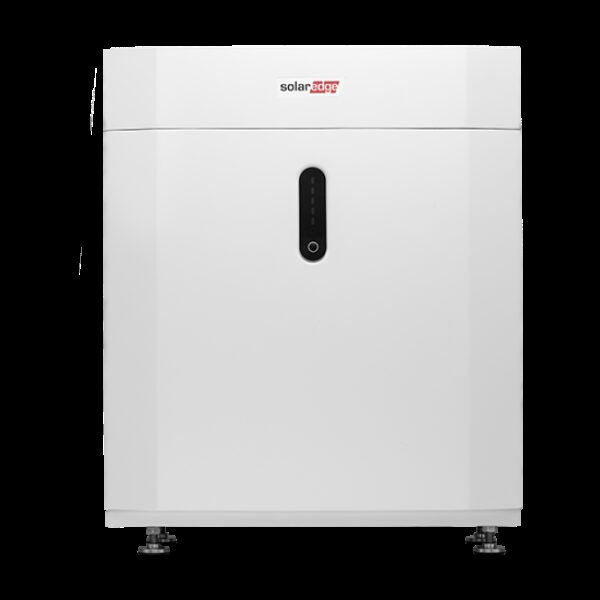
The residential range covers inverters, Power Optimizers, batteries, backup solutions and smart energy devices16. SolarEdge Home includes battery storage, EV chargers and smart energy management devices, and is designed so the ecosystem can grow with the household16. The company also describes its ecosystem as built to simplify installations, maximise system uptime and deliver more value16.
On manufacturing, Which? reports that SolarEdge products are manufactured in various locations around the world including Israel, China and the USA, and notes that around 80% of panels sold in the UK are made in China12. Which? began lab testing solar panels in 2026 and states that it has not tested any SolarEdge solar panels yet12. Its owner survey found many owners positive about their SolarEdge panels, finding them reliable, maintenance-free and efficient, with some producing more electricity than expected, while some owners reported difficulty contacting the manufacturer, felt their return was poor, and said panels had become less efficient over time22.
Warranty terms are described by SolarEdge as industry-leading, and Which? lists a 25 year product warranty with a 30 year power output warranty at 89.4%16. Module figures given by Which? are 440W maximum power output at 22.53% efficiency12.
Where SolarEdge fits a UK home: complex roofs and shading
The architecture suits roofs that a conventional string inverter handles badly. The Home Short String Inverter is optimised for complex roofs including multi-facets and different orientations, and the Home Wave Inverter can be installed indoors or outdoors1. Independent commentary describes SolarEdge as often favoured for complex roofs with mixed orientation or partial shade, and notes its strong reputation for panel-level optimisation and monitoring4.
The UK roof profile makes that relevant. The ideal for maximum output in the UK is described as a large, south-facing, 30 to 40 degree pitched roof in the south of England, free from shading23. Most roofs are not that, which is where per-panel management earns its place.
Installation and registration follow the standard UK route. The installer registers the solar panel system and any battery storage with the Distribution Network Operator as an important safety process, and the system must be registered with the DNO, usually done by the installer24. In some areas this is done with the local operator, such as UK Power Networks26. The SolarEdge Home Backup Interface, Single Phase complies with the G100 regulation in the UK27.
For a household, the independence position is mixed. The system generates and stores its own electricity, and the optimiser architecture means a shaded or awkward roof can still produce usefully. What remains is dependence on the grid for import and export, on a supplier for any export payment, on broadband or a cellular plan for monitoring, on SolarEdge's cloud and app for visibility and control, and on the manufacturer for firmware and API continuity. The SolarEdge and Enphase monitoring comparison sets out how the two panel-level platforms differ, and monitoring a solar and battery system at home covers the wider picture.
Sources27 cited
- SolarEdge Home Short String Inverters, SolarEdge, 2026-09-17
- SolarEdge Home Battery 400V, SolarEdge, 2026-09-17
- SolarEdge Home, SolarEdge, 2026-09-17
- Which Hybrid Inverter Should I Buy for UK Homes, Solax Power, 2026-07-31
- Energy Meter with Modbus Connection, SolarEdge, 2026-09-17
- mySolarEdge, SolarEdge, 2026-09-17
- Cellular Plug-in with Data Plan, SolarEdge, 2026-09-17
- Solar PV Monitoring Solutions, Spirit Energy, 2021-04-01
- SolarEdge Home Wave Inverters, SolarEdge, 2026-09-17
- Solar Panels, London Borough of Hammersmith and Fulham, 2026-09-17
- Retrofit, SolarEdge, 2023-09-28
- SolarEdge Solar Panels Review, Which?, 2026-08-12
- Single Phase Inverter Datasheet, SolarEdge, 2026-09-17
- Grid Impacts of Heat Pumps, EVs and Solar Revealed, Energy Systems Catapult, 2025-08-18
- ECO4 Innovation Approved Innovation Measures, Ofgem, 2024-01
- Solar Energy Primer, SolarEdge, 2024-03-14
- SolarEdge ONE Controller, SolarEdge, 2026-09-17
- SolarEdge Home Load Controller, SolarEdge, 2026-09-17
- SolarEdge ONE EV Charger, SolarEdge, 2026-09-17
- EV Charging, SolarEdge, 2026-09-17
- Home EV Charger Installation, SolarEdge, 2025-08-19
- SolarEdge Solar Panels, Which?, 2026
- Could Solar Panels Save You £500 a Year, Which?, 2026-06-17
- Solar Panel Installation, Energy Saving Trust, 2026-09-07
- Solar Power Facts, Energy Saving Trust, 2026-08-13
- Solar PV Panels, AgilityEco, 2026-09-20
- Residential Inverters Firmware, SolarEdge, 2026-09-17
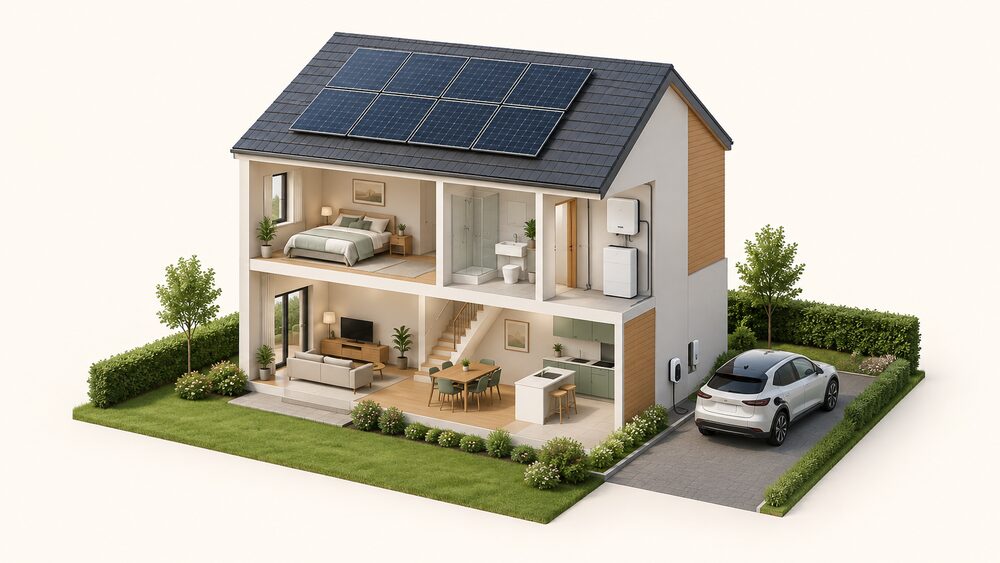 SolarEdge home EV chargersDoes a SolarEdge EV charger work better with your existing SolarEdge solar panels than other brands?
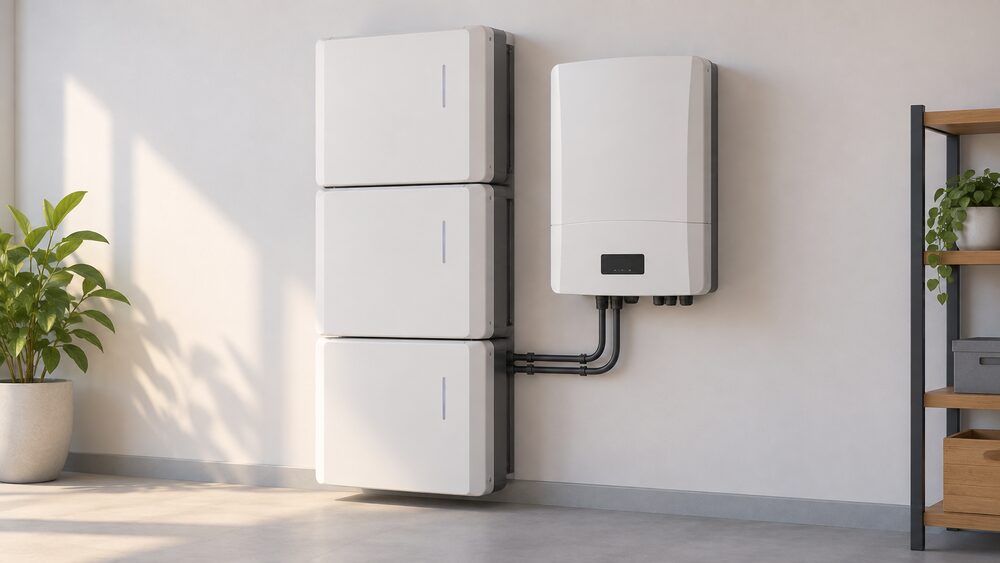 SolarEdge Home Batteries and Home Hub StorageCan you add a SolarEdge battery to panels you already have, and how many modules will fit your inverter?
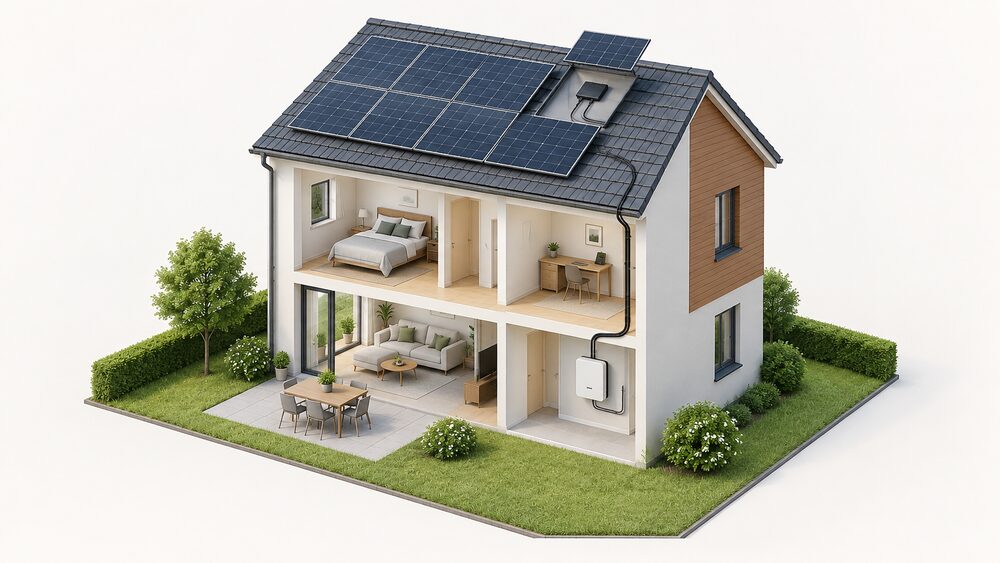 SolarEdge inverters and power optimisersSolarEdge systems pair an inverter with power optimisers on each panel.
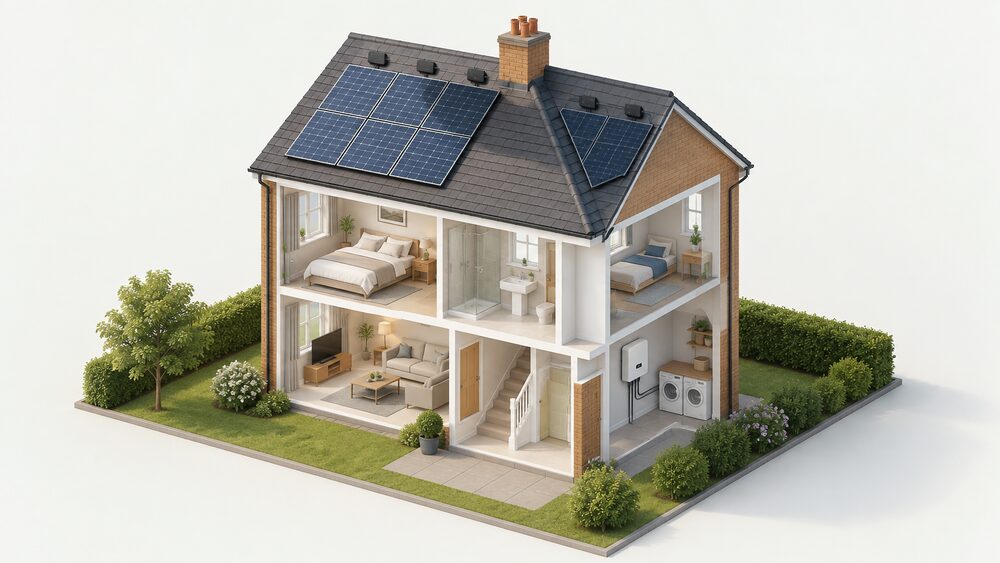 SolarEdgeIf you have been quoted a SolarEdge system, or your roof is shaded or faces two ways, you probably want to know what the black boxes on each panel actually do and what happens if the company behind them wobbles.