In this guide
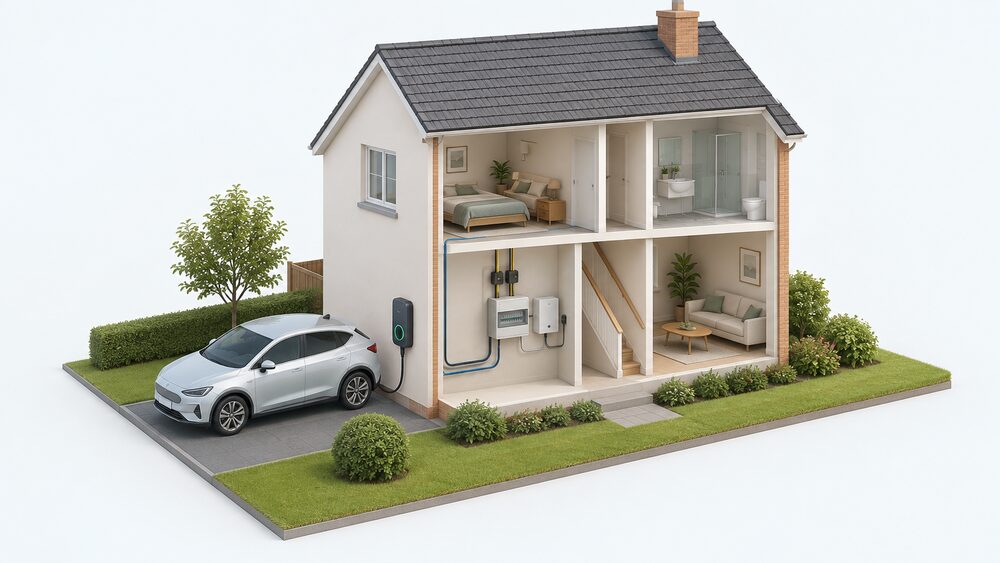
EV charger load balancing keeps a home within the limit of its electricity supply by slowing, or briefly pausing, the car's charge whenever the rest of the house is drawing heavily. Switch on a tumble dryer and a charger with load balancing automatically slows the car's charge for a moment, so the home's limit is not exceeded1. Ohme describes the same feature on its Home Pro: if the load exceeds the maximum the house can handle, the charger's power is temporarily reduced2. When household demand falls again, more power is diverted back to the car3.
This matters because home charging is where most EV energy goes: around 85% of all EV charging happens at home, according to Zapmap4. A home charger is one of the largest single loads a house will carry, and it often runs for hours at the same time as cooking, heating and hot water. Load balancing lets that load fit inside an existing supply rather than forcing a bigger one.
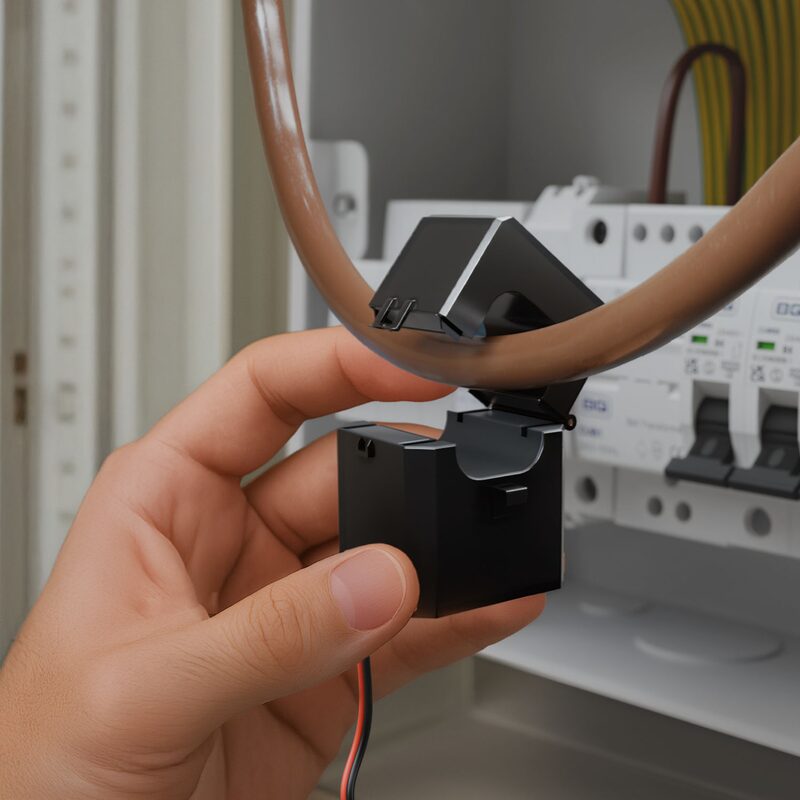
There are two broad approaches. Static load management puts the chargers on a dedicated supply with a known, fixed capacity and shares it out between them. Dynamic load management adds hardware that measures the building and raises or lowers the power available to the chargers as consumption changes5. The measuring is usually done by current transformer clamps (CT clamps) around the incoming cables, by a meter, or by an energy hub. What that means for speed, for two cars, for solar and for a household's independence is set out below.
What load balancing does: it caps charging at what the home can spare
Every home has a fixed supply, protected by the main fuse. Load balancing treats the car as the flexible load: the charger takes whatever headroom is left after the rest of the house has taken its share. DEFA states that with its eRange chargers efficient charging is possible even where the electrical installation has limited available capacity10. ScottishPower describes dynamic load balancing as taking the electricity available in the home and constantly optimising charging, so that if many appliances run at once it will stop or slow the charging process, and when use falls it diverts more energy to the charger3.
The behaviour is not always visible to the driver, which can cause confusion. Ohme lists several reasons a charge may be slower than expected: the car itself may limit charge speed, load balancing may reduce charging to protect the home's electrical supply, and charging may pause if voltage levels are too high or too low, a protection it says is built into all its chargers11.
Makers phrase the same idea in different ways:
- Easee's Equalizer balances the available energy between the home and the charger to distribute it where needed12.
- Homey's peak-shaving approach sets a power threshold, lets the EV charger scale down, delays the dishwasher and can optionally let a home battery assist13.
- SolarEdge describes a system that reduces the home's appliance loads and frees up enough EV charging capacity to protect the home from overloading14.
- Eaton, writing for housing associations with many chargers, notes that managing them all through one interface lets loads be balanced across active chargers, protecting the building's electrical infrastructure15.
Not every household needs it. Polestar, which offers Zaptec home chargers, says the Zaptec team can determine whether a household will benefit from load balancing16. For energy independence, load balancing is a way to live within the supply a home already has rather than asking the network for more. The dependence on the grid connection does not change, and the balancing is only as good as the sensor, software and, in some cases, network link behind it.
Static or dynamic: which setup suits which home
Static and dynamic management solve different problems. Ratio, a UK charger maker, describes static load management as installing EV charging equipment on a dedicated supply with a known fixed capacity, with the load shared evenly between chargers as more sockets come into use. Dynamic load management adds hardware that increases or decreases the power available to the chargers as the building's consumption changes5.
| Static | Dynamic | |
|---|---|---|
| What it knows | A fixed capacity set at installation | Live household or building consumption |
| How it shares | Evenly between chargers in use | Charger gets what the house is not using |
| Extra hardware | Often none beyond the chargers | A sensor, meter or energy hub |
| Suits | A dedicated circuit with spare capacity | A shared domestic supply with variable demand |
Both approaches appear in UK products. The Project EV Pro App offers static load balancing for multiple chargers17. go-e states that static load balancing across several of its chargers needs no additional hardware: the stations are grouped in the app and exchange data via the cloud, which requires an internet connection. Dynamic balancing on a go-e charger, by contrast, requires the go-e Controller or another energy management system from a go-e integration partner18.
The trade-off is between simplicity and use of capacity. A static limit is predictable but has to be set conservatively, because it cannot see a kettle or a shower coming on; in a typical house where the charger shares the supply with everything else, that means either a low cap or a risk of overload. Dynamic balancing lets the charger use the full spare capacity at quiet times, which is most of the night, and backs off only when needed. The cost is extra equipment and, in some systems, reliance on a network or cloud service that the static approach does not always need. A static group run over the cloud, as in the go-e example, is itself dependent on the internet connection staying up.
How dynamic load balancing works in real time
A dynamic system has three parts: a measurement of what the house is drawing, a controller that compares it with the supply limit, and a charger that can accept a changing current instruction. Homey describes the charger dynamically adjusting its charging current based on real-time household consumption to avoid tripping the main fuse19. Smappee puts it as keeping the home and EV charger in sync, with no tripped circuits20. Growatt's smart charger solution adjusts its charging power dynamically according to the home's power21.
The measurement can come from different places:
- CT clamps on the incoming supply cables, read by the charger or a separate balancer. Ohme's installation guidance describes its Home Pro reducing power when load exceeds the maximum the house can handle2. More detail is on the CT clamps and sensors page.
- A meter connection. Homey's Energy Dongle uses a splitter on the meter's data port so the charger shares that connection and receives live household consumption data, adjusting its speed to prevent overloads on the main fuse19.
- An energy management hub. Smappee Infinity collects real-time production and consumption data down to the appliance level22.
The loop runs continuously. When the kettle goes on, measured current rises, the controller works out the new headroom and the charger's current is turned down; when the kettle switches off, the charger is allowed back up. A balancer does not add capacity; it only reallocates what the supply already provides.
On three-phase supplies, measurement is more involved. OpenEnergyMonitor explains that a balanced three-phase load may need only one CT, with total power three times the measured power, and that three CTs and three channels are needed only where line voltages are significantly out of balance23. A household balancer, however, is protecting each phase of the incoming supply rather than measuring an appliance, which is why units such as the DEFA Balancer meter current on L1, L2 and L36. How a charger is instructed to change current is covered on the smart EV chargers page.
When one charger is enough and when a meter or balancer is needed
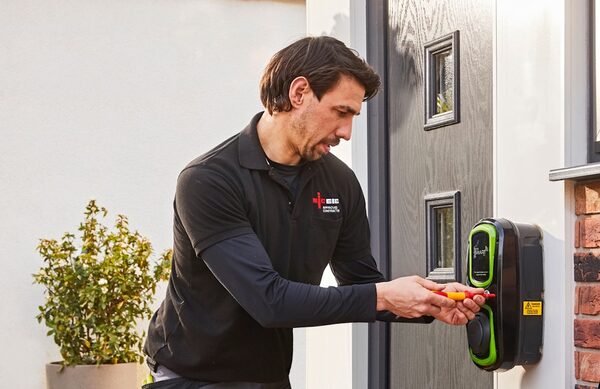
For a single charger, the question is whether the supply has room for it on top of existing demand. Zapmap notes that although slow charging can be done from a standard 3-pin socket, a dedicated unit is strongly recommended for regular charging because of the higher current demands24. Once a dedicated unit is fitted, the installer has to assess whether the supply capacity is adequate for the new EV load plus existing load; that is where load balancing enters the discussion.
Several routes lead to the same result:
- Balancing built into the charger with its own sensor. ScottishPower states that all its home EV chargers come equipped with a dynamic load balancing device as standard3.
- Balancing that needs a separate meter or storage system. Anker states that its SOLIX V1 smart charger must be paired with a compatible smart meter or integrated with a supported Anker energy storage system to use these features25.
- A dedicated balancer or hub serving one or more chargers, covered in the hardware section below.
The practical line is less about the number of chargers than about the headroom. A home with a large supply and modest other loads may never see the balancer act. A home with electric heating, an electric shower or a heat pump will see it act often, and in homes near the limit it is what makes a charger possible at all without a supply upgrade. Where the network operator has to be asked first, the installer's assessment and the operator's decision set what is allowed; see telling the network operator about a home EV charger and the electrical requirements for a home EV charge point.
One limit of a single-charger setup is worth knowing: a balancer that only knows about one charger cannot coordinate a second. Anker states that the V1 does not support coordination between multiple EV chargers or the automatic distribution of power among multiple units25.
Charging two EVs at home: sharing power safely
Power NI, the Northern Ireland supplier, puts the requirement plainly for a two-car household: two chargers and a way to share power safely between them, which is load balancing. It states all its smart EV chargers come with load balancing26. E.ON Next describes dual chargers splitting the electricity between the cars when two are charging so the home electrical system is not overloaded, and notes that home wiring is likely to need some adjustment, primarily to help with the load balancing, with circuit breaker work possibly needed27.
How the split is made varies. Zapmap notes that some chargers with multiple connectors split power 50:50 between the two vehicles, even if this is not the most efficient approach28. Its public rapid charging example shows why: a car able to take 250kW and one able to take 50kW sharing a 150kW device receive 75kW and 50kW, a total of 125kW, so part of the device's capacity goes unused29. That example is from public rapid charging, but the principle carries to home chargers: a fixed even split can leave power unused when one car is near full or charges slowly. The effect on journey planning is covered on why EV charging is slower when two cars are plugged in.
Space and scale also count. Uswitch gives the wall space for two chargers as typically around 1-2 square metres, depending on the charger models and installation method30. On scale, E.ON Next notes that dual chargers are self-contained units, so for a third or fourth EV adding another charge point may be better than replacing the unit27. A ScottishPower guide notes that a dynamic load balancer can allow multiple chargers on the same electrical circuit3, and some systems go well beyond domestic needs: Easee states its load and phase balancing handles up to 101 chargers on a single circuit31, and a Sync Energy balancer hub supports up to 168.
For a two-car household the independence picture is unchanged in kind but larger in scale: two cars double the flexible load, and balancing lets both share one grid connection. Tariff choices for two cars are covered in EV tariffs for households with two electric cars.
Solar and load balancing: charging around household use
The same measurement that protects the main fuse can also steer charging towards home-generated electricity. SolarEdge states its home chargers dynamically modify charging output so the system overall remains in energy balance, and that the owner can enable or disable the home battery for charging the car32. Easee describes charging with renewable energy while balancing supply and demand on the grid33. Smappee Infinity integrates with the Smappee EV Line of chargers, offering features from dynamic load balancing to solar optimisation22.
The logic changes direction with solar. Protecting the fuse means capping the charger when import is too high; solar charging means raising the charger when export would otherwise happen. Both depend on knowing what is flowing at the supply point. E.ON Next notes that a solar panel system can charge EVs with renewable energy, but compatibility between the charger and the panels needs checking27. The Solar Energy UK body (the Clean Power Association) states EV chargers should be installed by a qualified electrician with relevant experience, with compatibility between the charger, solar system and any battery storage considered from the outset34.
A home battery adds another layer. Homey's peak-shaving approach can let a home battery assist when demand crosses a threshold13. Going further, using the car itself to power the house is a separate technology: the Centre for Sustainable Energy notes that for EV-to-home power, the EV and charger both need to be bi-directional charging compatible35.
This is where load balancing does most for independence: a solar-aware, balanced charger lets a household put more of its own generation into the car and less through the meter. The grid still covers winter, night charging and any shortfall. More is on charging an EV from solar panels, EV charging alongside a home battery and vehicle-to-grid and vehicle-to-home.
Balancers, meters and energy hubs compared
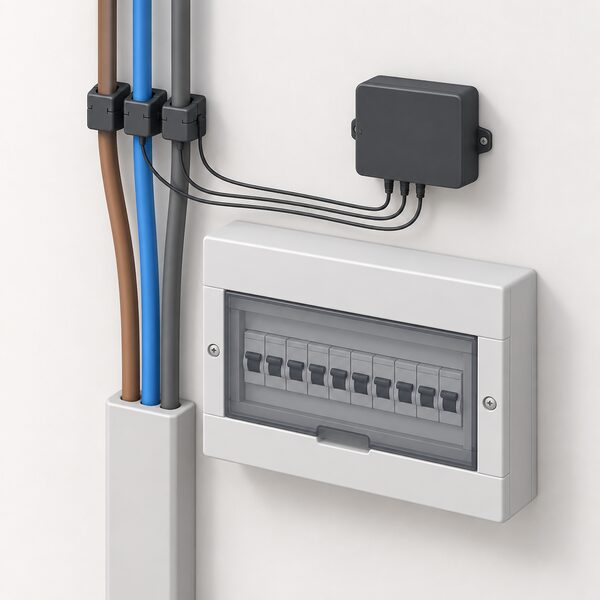
Load management hardware comes in three broad forms: a stand-alone balancer, a meter-based link, and a whole-home energy management system. The table describes examples sold or supported in the UK market; it does not rank them.
| Product | Type | What the maker states |
|---|---|---|
| Sync Energy EV Dynamic Load Balancer | Stand-alone balancer hub | Compatible with Sync Energy chargers and most other smart chargers that support dynamic load balancing; operates locally without a yearly subscription or ongoing network connection36. Single-phase hub supporting up to 16 chargers8 |
| DEFA Balancer | DIN rail current sensor with CT clamps | Load monitoring of current on L1, L2 and L36; works with DEFA Power chargers37 |
| Homey Energy Dongle | Meter data link | Shares a connection with the utility meter to supply live consumption data for dynamic balancing19 |
| Smappee Infinity | Modular energy management system | Tracks all energy flows38; real-time and historical insights through the Smappee App and Dashboard39 |
| go-e Controller | Energy controller | Required for dynamic load balancing on the go-e Charger18 |
| Project EV chargers | Charger with built-in features | App control, load balancing and OCPP compatibility17 |
Beyond balancing, the hub-type products serve wider household monitoring. Smappee lists uses including identifying inefficiencies, understanding consumption over time, preparing for EV charging, increasing self-consumption and reducing unnecessary peaks, for an end user or a professional39. It states Infinity integrates with IoT and open API ecosystems38 and can pair with platforms such as Google Assistant, Siri and Home Assistant, and describes installation as a two-step process: physical installation in the distribution panel, then configuration through the installation wizard in the Smappee App22.
The main difference for a household is where the dependence sits. A local balancer such as the Sync Energy unit keeps working without the internet36, and Easee states its load and phase balancing works offline31. Hub and app-based systems give richer data but may rely on a network, an app and the maker's continued support. Compatibility is the other question: a balancer tied to one maker's chargers locks the household to that maker for any future charger. Maker pages are at Sync Energy, DEFA, Smappee, go-e and Project EV.
Installation and network requirements
Installing load management is electrical work at the consumer unit, and the rules are the same as for the charger. The IET Code of Practice sets the installer's duties. Electricity North West summarises them as assessing the adequacy of the supply capacity for the new EV's consumption plus existing demand, assessing the adequacy of the earthing, and notifying the Distribution Network Operator once the charge point is installed40. In Northern Ireland, NIE Networks sets out the same duties, with notification to NIE Networks41.
"Assess the adequacy of the supply capacity for the new Electric Vehicle load plus any existing load, before installing the charging equipment"
Load balancing is often how that assessment is met. Where it is not enough, the network operator decides. SSEN requires a Load Check where total property demand is more than 60 amps or does not qualify for Connect and Notify, and the installer must apply and wait for permission before installing the charger7. For a new supply in Northern Ireland, NIE Networks asks the electrician to complete a load details section listing EV chargers, PV panels and heat pumps by make and model42.
On standards and competence:
- Chargers must be installed in line with the current edition of BS 7671, and NICEIC advises using an electrician registered with a recognised certification body43.
- For installations funded by the EV chargepoint grant for renters and flat owners, the government lists BS EN 61851, BS 7671, the IET Code of Practice and the Electricity Safety, Quality and Continuity Regulations44.
- Installers need competence in the IET Code of Practice for EV charging45; DEFA states its charging stations always have to be installed by certified electricians37.
Network requirements depend on the product. DEFA states its network must support IPv4 multicast between the balancer and the chargers, recommends mDNS, and says load balancing is not supported if the balancer and charger do not share a network; they cannot be linked over two separate internet connections46. go-e states its controller and charger must be on the same layer 2 network (same subnet), and that repeaters which assign new IP addresses or perform NAT prevent PV optimisation and load balancing18.
More on process is on home EV charge point installation and installing an EV charger yourself.
Status, faults and firmware: when balancing stops working
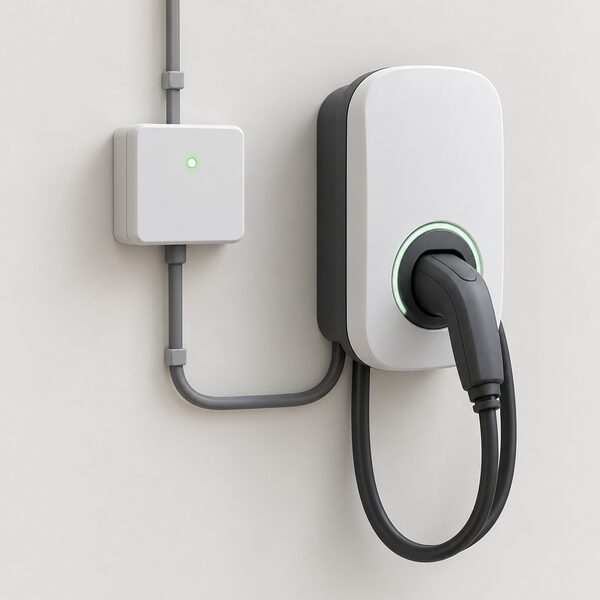
Status checks are maker-specific. DEFA states its Balancer status is shown in the app under Settings and Load Balancing48, and the unit's LED flashes in different colours and intervals depending on its state37.
Firmware keeps these systems working. myenergi explains that a smart charger's connection exists mainly so the device can be updated with firmware as new software and technologies are released49. DEFA updates the Balancer's firmware through the DEFA Power Setup app37, and its DEFA Power firmware 4.13.15, released on 25 August 2026, included bug fixes for load balancer calculation of uncontrollable loads.
Not every pause is the balancer. Electricity North West notes that if the voltage goes outside the allowed range, the charger will stop working and show an error, a safety feature protecting the charger and vehicle50. More is on EV charge point faults and troubleshooting and EV charger apps, Wi-Fi, 4G and firmware.
Specifications and warranty of a typical balancing unit
The DEFA Balancer gives an example of what a dedicated balancer looks like on paper. It is a DIN rail current sensor for load monitoring, with an LED interface and Wi-Fi or Ethernet communication6.
| DEFA Balancer | Specification6 |
|---|---|
| Product type | Current sensor, load monitoring |
| Metering | Current L1, L2 and L3 |
| Accuracy | +- 2% |
| CT clamps | 80A maximum current, 0.333V output, approx. 100cm cable |
| Communications | Wi-Fi (2.4GHz or 5GHz) or Ethernet |
| Antenna | SMA male, 90°, 1 m cable |
| Supply voltage | 230 V AC, +/- 10 % |
| Grid types | TN / IT / TT |
| Mounting | DIN rail, 2 modular spacings |
| Protection | IP20, IK06, Class II, overvoltage category II |
| Operating temperature | -25°C to +60C° |
| Storage temperature | -30°C to +70°C |
| Humidity | 0 to 95 % at 55 °C |
| Operating altitude | 0 to 2000m |
| Standards | IEC 61010-1 (safety), 2014/53/EU RED (radio and EMC) |
IP20 is an indoor rating, consistent with a unit that lives inside a consumer unit or enclosure; outdoor ratings are explained on what IP54 means for EV charging equipment.
Warranty terms for balancers themselves are set by each maker; where a balancer is supplied as part of a charger package, the charger warranty usually governs. evec gives an example of how such terms are structured. It states a 3-year parts and labour guarantee, falling to a 12-month parts and labour guarantee only for products registered outside the 30-day period9. Its exclusions include damage from misuse or improper installation, installation faults, use of parts not recommended by evec, second-hand or refurbished chargers, and accidental damage9. A warranty depends on the maker remaining in business; the wider picture is on EV charge point warranties and aftercare and evec chargers.
What load balancing means for household independence
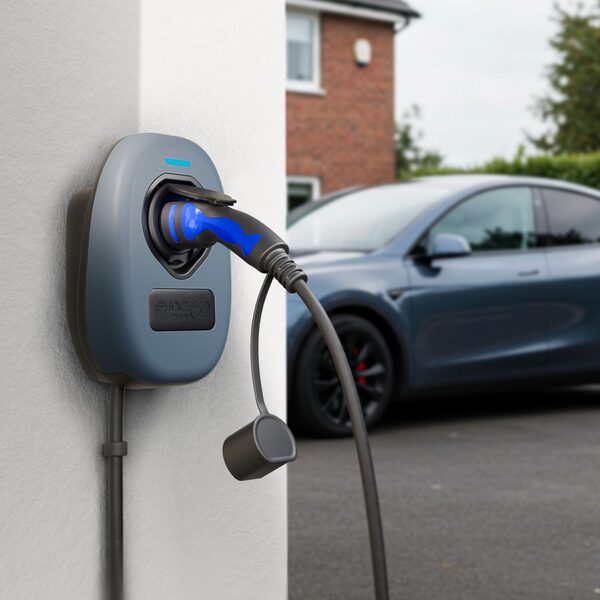
Load balancing lets a household run a large new load within the grid connection it already has, and, with solar-aware control, steer that load towards its own generation. That is a real gain: it can avoid waiting for a network upgrade and can raise the share of home-generated power in the car. What it does not do is remove reliance on the grid connection, which still sets the ceiling. Many systems add further dependencies: a home network with the right settings, an app, cloud services for some static groups, and a maker that keeps issuing firmware. Systems that balance locally and offline carry fewer of those links. The wider picture is on EV charging and household energy independence and the EV charging guide.
Sources50 cited
- EV chargers in older homes: electrical upgrades explained, E.ON Next
- How do I install a CT clamp, Ohme, 2025-02-18
- Home EV charger load balancing, ScottishPower, 2023-10
- Electric car charging costs, Zapmap, 2026-09-04
- Load management, Ratio, 2025-10-13
- DEFA Balancer product page, DEFA, 2024-06-20
- EV connections, SSEN
- EV Balancer load management hub, Sync Energy
- Warranty information, evec
- eRange home chargers, DEFA, 2024-06-19
- Intelligent Octopus Go smart charging FAQs, Ohme
- Equalizer energy management, Easee, 2026-08-10
- Heat pumps and energy use in a smart home, Homey, 2026-09-20
- EV charger for home, SolarEdge, 2022-02-28
- Housing associations' guide to operating EV charging stations, Eaton
- Home charging, Polestar UK, 2026
- Project EV chargers, Westech Solar, 2025-07-09
- Support FAQs, go-e
- EV chargers and energy use in a smart home, Homey, 2026-09-20
- Smappee App, Smappee
- Smart EV charger solution, Growatt
- Smappee Infinity brochure, Smappee, 2025-02
- 3-phase power, OpenEnergyMonitor
- EV buying guide, Zapmap, 2024-12-06
- SOLIX V1 Smart EV Charger (Cable Version), Anker SOLIX
- How to charge your electric car at home, Power NI, 2025-08-05
- Dual EV chargers, E.ON Next
- How long does it take to charge an electric car, Zapmap, 2026-04-15
- How long does it take to charge an electric car, Zapmap
- Best EV tariffs for multi-car families, Uswitch, 2025-07-02
- Apartment blocks, Easee, 2026-03-13
- Residential EV charging, SolarEdge
- EV chargers, Easee, 2026-08-10
- Can solar panels charge electric cars?, Clean Power Association, 2026-04-15
- Battery storage advice, Centre for Sustainable Energy, 2025-10
- EV Dynamic Load Balancer range, Sync Energy
- DEFA Balancer support, DEFA, 2026-08-26
- Smappee Infinity, Smappee
- Metering, Smappee
- Connecting a single EV, Electricity North West
- EVs and heat pumps FAQs, NIE Networks
- What you need to start your application, NIE Networks
- EV charger installation and maintenance, NICEIC, 2025-08
- Electric vehicle chargepoint and infrastructure specifications, GOV.UK, 2023-10-10
- Section 722 EV charging guide, Elec-Mate, 2026-07-02
- DEFA Power network requirements, DEFA, 2025-06-03
- Response to the smart EV consultation, Citizens Advice, 2018-05-04
- DEFA Power owners, DEFA, 2026-08-28
- What is a smart EV charger, myenergi, 2026-04-10
- Managing voltage changes in your property, Electricity North West
 Charging With a Home BatteryHow a home battery and an EV charger share one supply, whether a battery can usefully charge a car, and how combined systems are controlled so the battery is not discharged into the vehicle at a loss.
 Charger Apps and ConnectivityHow a home charge point connects: Wi-Fi, Ethernet, 4G and Bluetooth, what the app controls, what happens when the network drops, and how much of the charger depends on the maker's cloud.
 EV Tariffs and Home ChargingHow EV-specific import tariffs and charging bolt-ons work, including supplier-controlled charging where the energy company decides when the car draws power, which charge points each scheme supports, and what a household needs in place.
 Inverters and Inverter-ChargersIf the power goes off, what actually keeps your fridge and boiler running?
 Charging and Energy IndependenceCharging an electric car at home can cut your fuel costs, but how much does it really free you from the grid?
 Types of Home EV ChargerWhich home charger suits your car and your driveway?