
In this guide
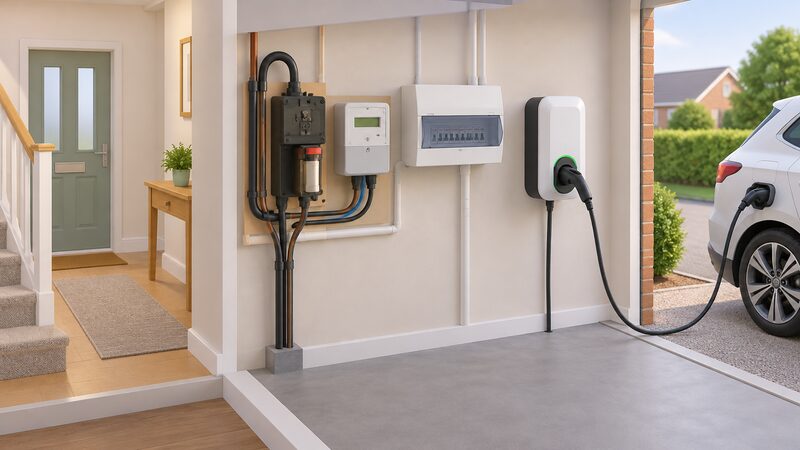
Every home EV charge point has to reach the distribution network operator's records, either before it is installed or shortly afterwards. The Energy Networks Association's low carbon technology guidance states plainly that property owners are required to apply to their distribution network operator to install an EV charge point1. Which route applies depends on one number: where the maximum demand of the premises including the new load is 60A or less per phase, and the adequacy of the connection is known, the installation can go ahead and the operator is notified afterwards2. Above that, or where any of a defined list of complications applies, the operator must be contacted before connection.
The deadline for retrospective notification is 28 days. UK Power Networks describes installers as having 28 days to notify on the customer's behalf through its Smart Connect portal, and SSEN sets the same window once the charger is installed. The IET's Code of Practice phrases it as within one calendar month of the installation, and the ENA's own EV notification inbox exists for exactly that purpose. The notification is the installer's to make: only installers can notify on behalf of customers, though the energy device owner carries the responsibility for ensuring the notification has been received.
This matters more than the paperwork suggests. Electrical Safety First has reported that approximately a third of home EV charge point installations are not notified to the network operator3. Each unrecorded 7kW load on a street sits outside the operator's picture of what that circuit is carrying, and the cost of that invisibility falls on whoever asks for a supply upgrade next.
Who the network operator is and what it is responsible for
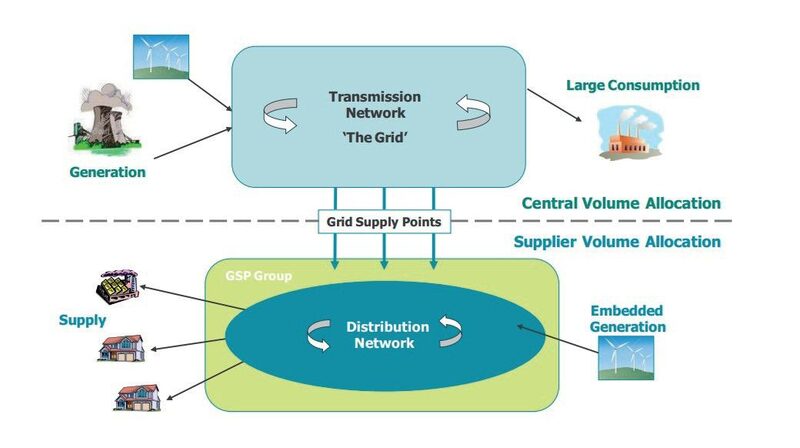
The distribution network operator owns and operates the distribution network of towers and cables that brings electricity from the national transmission network to homes and businesses, and is responsible for maintaining physical electricity supplies to a property7. It is not the company on the bill. Distribution network operators do not sell electricity to consumers: that is done by the electricity retailers whose name appears on the bill7. Ofgem's own description is briefer still, that a network operator is responsible for the pipes and wires that move energy, and is the body to contact about power cuts or connection issues in an area8.
The distinction matters for a household thinking about independence. A supplier can be switched in weeks; the network operator cannot be changed at all. It is a regional monopoly, and every decision about whether a driveway can take a 7kW charger, whether the cut-out is adequate, and whether the street cable needs reinforcing, rests with that one company. Even where smart metering arrangements change how a charger is metered, the operator remains responsible for energy availability9.
Finding the operator for an address is straightforward. The Energy Networks Association runs a postcode lookup that names the electricity distribution network operator for a given postcode10, and both the Met Office and the Energy Ombudsman direct householders to the same source7. Suppliers also pass Priority Services Register details to the relevant operator, since it is the operator that delivers electricity to the area.
Connect and notify: the route most installations take

Connect and notify is the default for a straightforward single charge point on an adequate domestic supply. The Energy Networks Association's position is that if the proposed addition or alteration is assessed by the installer to be within the existing rating of the supply equipment and the maximum demand is 60A or less, it can be installed and the network operator notified retrospectively within 28 days2.
The mechanics vary slightly by operator but not the principle. UK Power Networks states that where the route applies, "all they need to do is simply notify us of the installation within 28 days", using its Smart Connect portal4. SSEN sets out that if the total demand of the property is 60 amps or less and has no safety concerns, the installer does not need to apply in advance, and should submit the notification within 28 days once the charger is installed12. The IET's position, expressed through the ENA, is that the installer shall ensure the appropriate network operator has been notified within one calendar month of the installation2. The ENA also maintains an email address for EV notifications, EV-notifications@energynetworks.org, for installations where the maximum demand of the whole customer connection is less than 13.8 kVA5.
In Northern Ireland, installers submit all applications through the ENA's Connect Direct website13. Across Great Britain and Northern Ireland alike the effect is the same: the customer chooses the equipment, nominates an installer, and the installer carries the application.
The 60A per phase threshold that decides the route
The figure that separates the two routes is 60A per phase of maximum demand for the premises, counting the new charge point. The ENA's position is that post-installation notification is permitted where the maximum demand of the premises including the new load is 60A or less per phase and the adequacy of the connection is known2. SSEN applies the same number and calls the alternative a load check: where total demand exceeds 60 amps, or the property does not qualify against any other criterion, the installer must apply and wait for permission before installing the charger12.
There is a route above 60A too, and it is easy to miss. Where the existing maximum demand of a premises is above 60A, connect and notify is still permitted for a new EV chargepoint or heat pump if there are no issues with the existing connection and the new device has a curtailment scheme that limits overall property maximum demand to 60A or less whenever the device is activated2. That applies to residential, import-only cases. In practice this is what load management buys a household: a charger that throttles itself to keep the whole property inside the threshold.
Two other numbers appear in the same territory. The IET's guidance puts the pre-connection trigger in kVA rather than amps: where the maximum demand of the whole customer connection exceeds 13.8 kVA, the operator must be contacted prior to connection5. And Electricity North West sets out a three-phase trigger: a single phase supply rated between 60 and 100A which, after maximum demand and diversity calculations, now requires more than 100A14.
| Situation | Route | Timing |
|---|---|---|
| Maximum demand 60A or less per phase, adequacy known | Connect and notify | Notify within 28 days2 |
| Existing demand above 60A, device curtails property to 60A | Connect and notify | Notify within 28 days2 |
| Total demand above 60A, or other criteria unmet | Load check / apply to connect | Permission first12 |
| Whole-connection maximum demand above 13.8 kVA | Contact operator | Before connection5 |
| Single phase 60 to 100A now needing more than 100A | Three-phase assessment | Before connection14 |
One installer-facing account puts the practical bands differently, describing connect and notify as suited to small-scale, low-impact chargers typically up to 3.68kW single-phase, with larger systems or those above roughly 13.8kW single-phase requiring an apply-to-connect route, and notification within 28 days of commissioning16. That is a cautious reading of the same rules rather than a contradiction, but the ENA and operator figures are the ones the network works to.
When the operator must be contacted first
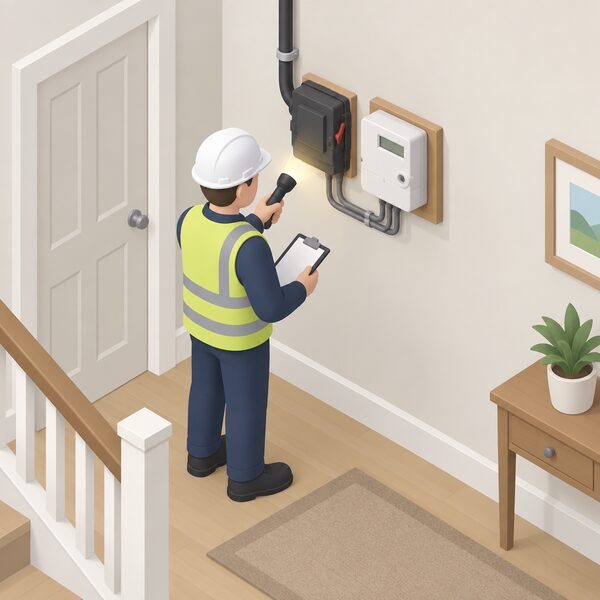
Network operators have agreed a specific list of circumstances in which the customer or installer must contact the operator directly rather than proceeding. These are:
- The installer's maximum demand calculations indicate the property's maximum demand is greater than the known supply capacity
- There are safety concerns over the cut-out, cut-out fuse or other existing equipment
- There is uncertainty over supply capacity or adequacy
- An upgrade is certain to be required
- There is a looped supply
- It is an unmetered supply
That list is from the ENA's guidance on existing-property installations of EV charge points and heat pumps2. The looped supply case is the one most likely to catch a terraced or semi-detached home by surprise: where two properties share a single service cable, installing a home EV charger typically requires a fuse upgrade to 80 to 100 amps, which often cannot be done on a looped supply without overloading the shared cable17.
Generation follows a parallel logic. The G99 route exists because the operator needs to check whether the grid can take the extra electricity load before the system is running18, and for a heat pump the operator must be notified either before installation through apply to connect, or within 28 days once complete through connect and notify, in either case by the installer18.
What the operator checks and the possible outcomes
The assessment is about the local circuit as much as the individual house. NIE Networks describes reviewing the capacity available at the premises and determining whether the existing supply can safely accommodate the increased loading, and using the information in the application to assess and monitor the local network19. Its stated purpose is to check how much electricity the area uses and whether it can handle the new equipment, to avoid power cuts and keep the supply safe and steady19. Where many properties on the same circuit add heat pumps or electric cars, it may need to upgrade cables or equipment.
The outcomes are binary at first pass. If the assessment shows the existing supply can cope, the customer and installer are told and the equipment can be installed safely. If it cannot, the customer is told the equipment cannot be installed and the operator advises how to proceed13.
Waiting is not always part of it. The ENA's low carbon technology strategy describes automated checks, based on local operator thresholds, offering installers immediate application decisions1. For behind-the-meter systems, Welsh Government guidance notes that small systems usually only need the network operator to be notified20. And for new-build housing, operator upgrades are generally not required in respect of EV charge points, because increased capacity requirements are likely to have been considered as part of the development21, which is one of the ways new build requirements shift the burden upstream.
When a supply upgrade is needed and what it costs
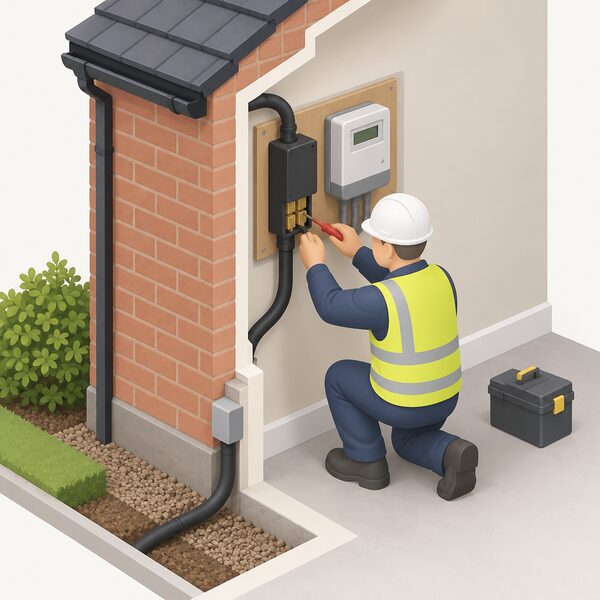
Two things commonly need changing. The first is the main fuse. NIE Networks states that if the main fuse is below 80 amps, such as a 60A fuse in older properties, the fuse may need upgrading to 80A to support the charger22, and that older properties may have a 60A fuse which may not safely handle the extra power an EV charger needs23. The second is the cut-out itself: certain older cut-outs would not be capable of the increased supply required following the connection of an EV charger or heat pump, and will need to be upgraded by the operator24.
Where the existing supply cannot support the additional load, the operator assesses whether an upgrade to the connection is required, and in Northern Ireland will assess the work and provide costs before proceeding22. No published price list applies to a domestic EV charger supply upgrade: costs are quoted case by case. NIE Networks offers a budget quote tool giving a provisional cost for a new connection, though it cannot cost complex work such as housing developments, and a Statement of Charges giving typical costs for the main items of expenditure, excluding VAT. A detailed cost proposal requires an application through a connections account for work the customer will definitely proceed with25.
The corresponding cost lens in Great Britain is different in kind. Scottish Government guidance on charge points in new non-residential buildings undergoing major renovation caps the cost of recharging and ducting infrastructure at 7% of total major renovation cost21 for the buildings covered, which is a construction cap rather than a domestic connection charge. For what a charge point itself costs once fitted, see home EV charger cost.
Northern Ireland: the NIE Networks process
Northern Ireland has one operator, NIE Networks, and a process set out explicitly for EV chargers and heat pumps. The sequence is:
- The customer chooses the equipment to be installed.
- The customer nominates an EV charge point or heat pump installer, who carries out checks at the property, submits the application and manages the whole application on the customer's behalf13.
- The installer submits through the ENA's Connect Direct website13.
- NIE Networks assesses the new equipment and the existing supply.
- Customer and installer are told whether the supply can cope, or are advised how to proceed if it cannot13.
The installer's responsibility to inform NIE Networks is met by submitting that online application22. Commercial installs, or installers needing help with the process, are directed to email13. General connections enquiries, including upgrades to an existing supply and new supplies, run through the operator's connections service on 03457 643 643, with support available from 7.30am to 11.30pm seven days a week including public and bank holidays27.
The reasons NIE Networks gives for notifying are worth quoting as it puts them.
"Letting us know helps make sure your home has a reliable supply of electricity now and in the future."
Against that it sets the cost of silence: delays or extra costs if you, or someone on the same supply circuit, want to install more electric upgrades later28.
Solar, batteries and generation: the parallel notification
The same machinery covers generation and storage, and a household adding a charger alongside panels will meet it twice. A solar installer must contact the distribution network operator through connect and notify or apply to connect, and where a battery storage system is installed alongside solar PV a separate application is needed, following the same process, which the installer can complete18. MCS guidance puts the timing before work starts: the operator is notified before the installer begins, with details of the type and capacity of the system29. Energy Saving Trust describes the installer registering the system and any battery storage with the operator as an important safety process30, and Which? states that a household installing a storage system should notify its local operator31.
Even the smallest plug-in generation is covered: the interim product specification for plug-in solar requires a statement that notification to the distribution network operator about connection and disconnection is mandatory32. Under the G98 procedure for generation, notification must reach the operator within 28 days of commissioning33, the same window as a charge point.
The practical consequence for anyone building an integrated system is that the operator ends up holding a record of the whole set: generation, storage and charging. That is the point at which EV charging alongside a home battery and charging from solar stop being separate projects in the operator's eyes.
G98 and G99: the standards behind the notification
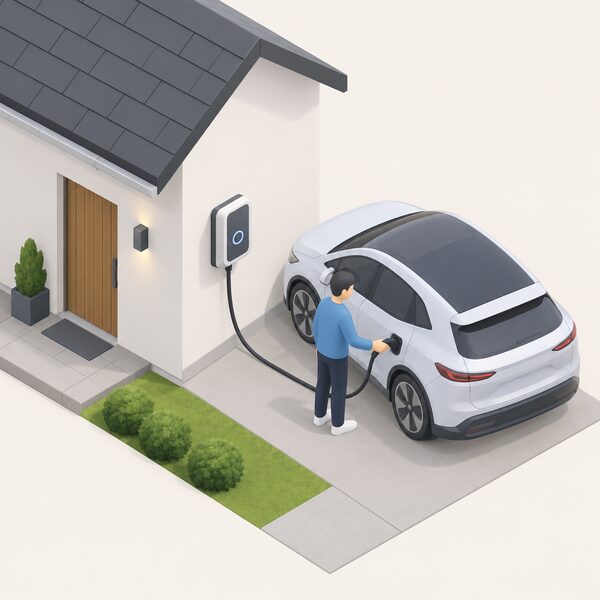
The notification routes are not ad hoc: they sit on engineering recommendations. G98 governs the small-scale, notify-afterwards case, and G99 the larger, apply-first case. Under the G98 connection procedure, the generation installation must be notified to the operator within 28 days of commissioning33. Under G99, the reason for applying first is that the operator needs to check whether the grid can take the extra electricity load before the system is running18.
For EV equipment the standard bites at the product level. Chargers with vehicle-to-grid capability must be type tested to EREC G98 specifications to be eligible for connect and notify15, and manufacturers of compliant equipment declare against EREC G98/NI:2019 type approval with a manufacturer declaration. That is the mechanism by which a network operator can accept a bidirectional unit on the simple route without assessing each installation individually, and it is why vehicle-to-grid hardware choice has a connections consequence as well as a tariff one.
Product compliance is policed separately from connections. Charging equipment sold in the UK can be the subject of a product safety report notified by Local Authority Trading Standards, as happened with a charger and cable withdrawn in September 2026. Connection notification and product safety and standards are distinct processes, and clearing one does not clear the other.
What this means for household energy independence
A home charge point moves a household's transport energy off the forecourt and onto its own meter, and combined with solar or a battery it can move a large share of it off the grid at peak. The notification process is the reminder of what does not move. The connection itself remains a regional monopoly's asset: the household cannot switch operator, cannot choose its cut-out rating, and cannot energise a load the operator has assessed as beyond the supply. Where a supply upgrade is needed, the timetable and the cost are the operator's to set, quoted case by case.
There is a compensating point. The Energy Networks Association is explicit that operators will not refuse the installation of an EV charge point or heat pump, and are obliged to facilitate the installation or connection of new loads as part of their licence condition2. The obligation runs towards the household. What is being assessed is the physical adequacy of the supply, not whether the household is permitted an electric car. Citizens Advice has argued separately that operators are not the right bodies to be owning and managing EV charge points, which keeps the hardware in the householder's hands and the wires in the operator's.
The one thing entirely within the household's control is that the notification is made. The installer submits it, but the energy device owner is responsible for ensuring the operator has received it and, where apply to connect applies, granted authorisation before the work is carried out9. With around a third of home installations unnotified3, that check is the difference between a recorded load and an invisible one, and between a neighbour's future upgrade being routine or being charged for reinforcement nobody anticipated.
Sources33 cited
- Low carbon technology connections strategy, Energy Networks Association, 2026-09-17
- Frequently asked questions about connecting to the networks, Energy Networks Association, 2026-09-17
- The EV charging landscape, Electrical Safety First, 2026-09-19
- Electric vehicles: cost, time and what's involved, UK Power Networks, 2026-09-17
- Electric vehicle charging installations FAQs, IET, 2026-09-17
- Low carbon technology, domestic, UK Power Networks, 2026-09-17
- What to do in a power cut, Met Office, 2026-09-20
- Complain about your energy supplier, Ofgem, 2026
- Register energy devices in homes or small businesses, GOV.UK, 2021-03-31
- Find my network operator, Energy Networks Association, 2026-09-17
- Network operators, Energy Ombudsman, 2026-09-20
- EV connections, SSEN, 2026-09-19
- Your connections process, NIE Networks, 2026-09-19
- Single EV connections, Electricity North West, 2026-09-20
- EV connections guidance, Electricity North West, 2026-09-19
- EV charger installation guidance, Fuse Energy, 2026-08-03
- Looped services, NIE Networks, 2026-09-19
- Building regulations and renewables guidance, Bedford Borough Council, 2026-09-17
- What we do with your application, NIE Networks, 2026-09-19
- Behind the meter energy systems guidance, Welsh Government, 2026-06-29
- Electric vehicle enabled buildings: installation costs review, ClimateXChange, 2022-06-30
- EVs and heat pumps connections, NIE Networks, 2026-09-19
- If your electricity supply can't cope with the new equipment, NIE Networks, 2026-09-19
- EVs and heat pumps FAQs, NIE Networks, 2026-09-19
- Cost of a new electricity connection), NIE Networks, 2026-09-19
- Fairer connection costs: what has changed, NIE Networks, 2026-09-19
- Connections, NIE Networks, 2026-09-19
- Why you need to inform NIE Networks, NIE Networks, 2026-09-19
- Solar photovoltaic PV for consumers, MCS, 2026-07-30
- Solar panel installation, Energy Saving Trust, 2026-09-07
- Solar panel battery storage, Which?, 2026-05-14
- Plug-in solar interim product specification, GOV.UK, 2026-07
- G98 connection procedure scheme rules, Sell2Wales, 2026-06-15
 G98 and G99 NotificationAdding a home battery usually means telling your network operator first, but sometimes you can just let them know afterwards.
 Telling the Network OperatorFitting a generator, solar panels or a battery that works alongside the grid usually means telling your network operator.
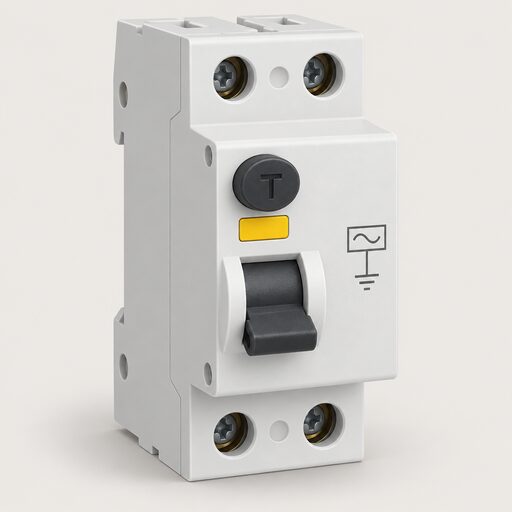 Electrical RequirementsWill your home need a bigger electricity supply before a charge point can go in?
 Home Charger InstallationWho can fit a home EV charger, and does it need building regulations approval?
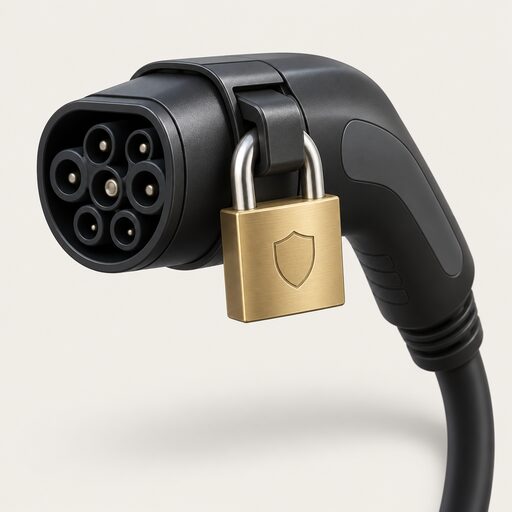 Charger Cybersecurity and DataWho can control your home charger, and how do you keep it secure?
 Charger Apps and ConnectivityHow a home charge point connects: Wi-Fi, Ethernet, 4G and Bluetooth, what the app controls, what happens when the network drops, and how much of the charger depends on the maker's cloud.