
In this guide
For a household with no driveway, the barrier to home charging is not the charger but the pavement. Two separate funding routes carry the name "cross-pavement charging grant", and they work in opposite directions. In England, the Electric Vehicle (EV) Pavement Channels Grant is a £25 million capital fund for local authorities, not for residents: Tier 1 councils, meaning unitary, county or combined authorities, apply to the LEVI support body, and the money pays for channels cut into the pavement so a cable can run safely beneath it1. In Scotland, a cross-pavement charging grant pilot worth up to £3,500 per household is available to enable access to the lower costs of charging at home3.
Alongside both sits the grant most households can actually claim themselves. The Electric Vehicle Chargepoint Grant for Households with On-Street Parking pays 75% off the cost to buy and install a socket, up to a maximum of £500, and funding is confirmed until 31 March 20274. It requires adequate on-street parking, permission from the local highways authority for the cross-pavement solution, and an OZEV approved installer6.
The distinction matters because the two pots are not interchangeable. A council can win channel funding and still leave residents to claim the chargepoint grant separately, and a resident cannot apply for the channel fund at all. What follows sets out who applies for what, what each scheme pays, what it rules out, and what a cross-pavement setup does and does not do for a household's energy independence.
Two schemes share the name, and only one is open to households
The phrase "cross-pavement charging grant" covers a local authority capital fund and a household chargepoint grant, and the confusion is understandable because both address the same problem. The Electric Vehicle (EV) Pavement Channels Grant is a £25 million capital fund for local authorities in England, with the stated objective of empowering councils to adopt pavement channels in their EV strategies as a local charging solution1. It opened to eligible local authorities in August 2025, with proposals submitted to the LEVI support body and the Office for Zero Emission Vehicles approving applications2.
The household grant is a different instrument entirely. The Electric Vehicle Chargepoint Grant for Households with On-Street Parking exists to accelerate the uptake of chargepoints for users with accessible on-street parking, and it pays the installer rather than the resident4. It is not a channel grant: it funds the socket, while the channel itself is a separate civil works item that the household must arrange and pay for unless its council has secured channel funding.
A third route exists in Northern Ireland, where the Department for Infrastructure operates a cross-pavement channel process directly for residents rather than through a grant to councils. Owners who live in Northern Ireland, own an electric vehicle and need a way to charge it at home across a pavement can apply online, either to use a specifically designed cable protector or to enquire about getting a cross-pavement channel7. That is a consent route rather than a subsidy, and it is worth separating from the two grant schemes in the reader's mind.
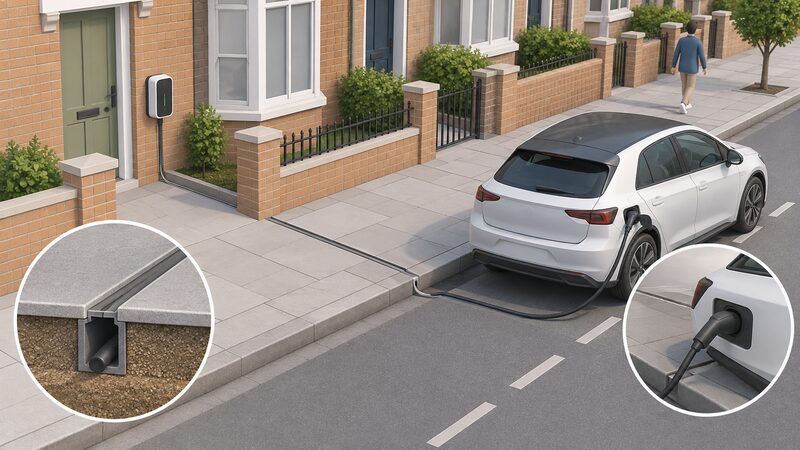
Why cross-pavement charging matters: charging without a driveway
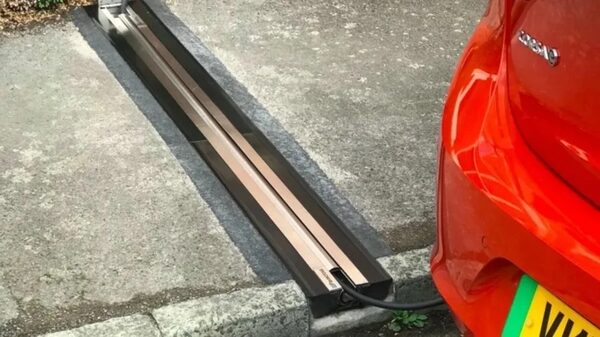
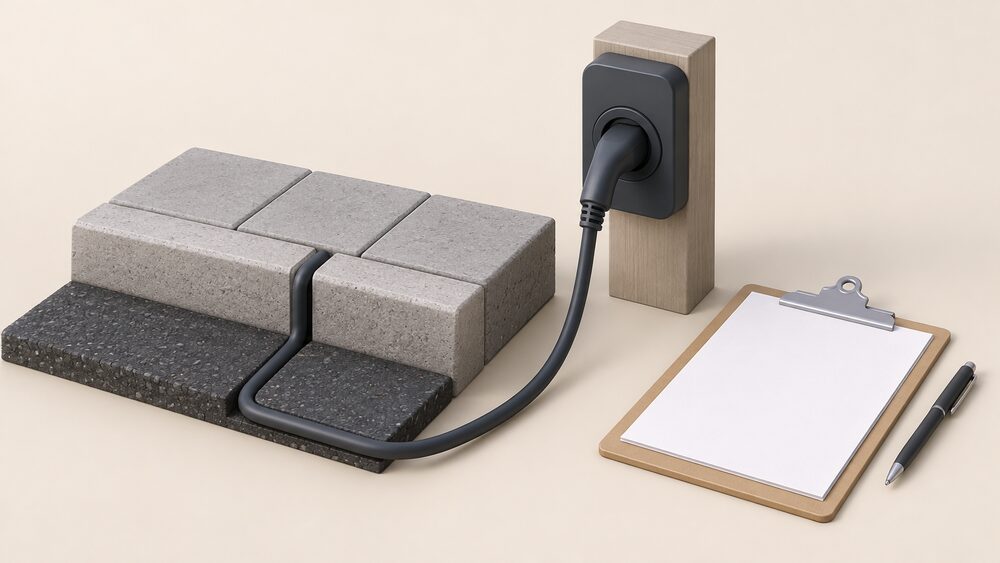
Cross-pavement channels allow cables to run safely beneath pavements, removing hazards from trailing charging cables, and are used to temporarily house a charging cable while a vehicle is being charged2. That is the whole point: they convert a trip hazard into a piece of street furniture, and they make home charging possible for the large share of UK households whose only parking is on the street.
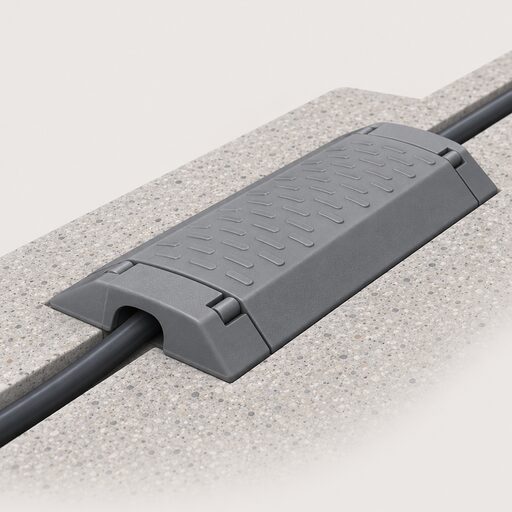
The alternative, a cable protector laid over the pavement, is a temporary solution. Northern Ireland's guidance frames the choice directly: applicants can apply online to use a specifically designed cable protector or to enquire about getting a cross-pavement channel7. A cable protector is cheaper and removable; a channel is a permanent alteration to the public footway and therefore attracts more scrutiny.
That scrutiny is the main practical obstacle. Permission from the Highways Authority is required, and separate planning permission may be needed for the pavement crossing solution8. The Planning Portal is blunter still: an application to the Highways Authority to lay an EV charging cable across the pavement can be made but will not always be accepted9. Where the crossing is not owned by the Highways Authority, separate planning permission is needed, and pavement cable crossings are unlikely to be covered by householder permission for the charging point where they fall outside the curtilage of the building on highway pavement9.
For a household, the consequence is that cross-pavement charging is a consent process before it is a purchase. The channel, the chargepoint and the permission are three separate items, and only one of them is grant-funded in the ordinary case.
The EV pavement channels grant in England: £25 million for local authorities
The English fund is a fixed pot with a fixed window. The £25 million capital fund was made available to all Tier 1 local authorities, meaning unitary, county or combined authorities, for the financial year 2025 to 2026, and it applies to England1. Eligible authorities were invited to submit project proposals to the LEVI support body from August 2025, and the deadline for applications was Friday, 31 October 20252.
Allocation was not first come, first served. The fund was distributed on the basis of the estimated number of vehicles without off-street parking, the availability of chargepoints per 100,000 population, and deprivation levels2. That formula favours dense urban authorities with high car ownership and little off-street parking, which is where the pavement channel problem is sharpest.
Delivery is deliberately flexible. Project completion, the date by which all infrastructure is deployed, is flexible, and local authorities do not need to use their funding in the financial year it was awarded, though progress against the delivery plan must be evidenced through reporting2. Reporting is updated as necessary each quarter and covers the pavement channel supplier, the channels installed and associated costs including hardware and civils, ownership and maintenance arrangements, top project risks, and the project timeline2.
Funding flows to the council, not the household. Local authorities receive 100% of their allocated funding following OZEV approval of their application2. Combined authorities are allocated and issued funding on behalf of authorities in their region, and in London funding is delivered directly to boroughs1.
For a resident, the practical question is whether their council bid. The scheme rules state plainly that residents will need to contact their local authorities for access to this grant2. There is no resident-facing application form for the channel fund, and no route to claim it retrospectively.
Who can apply in England: Tier 1 local authorities, not households
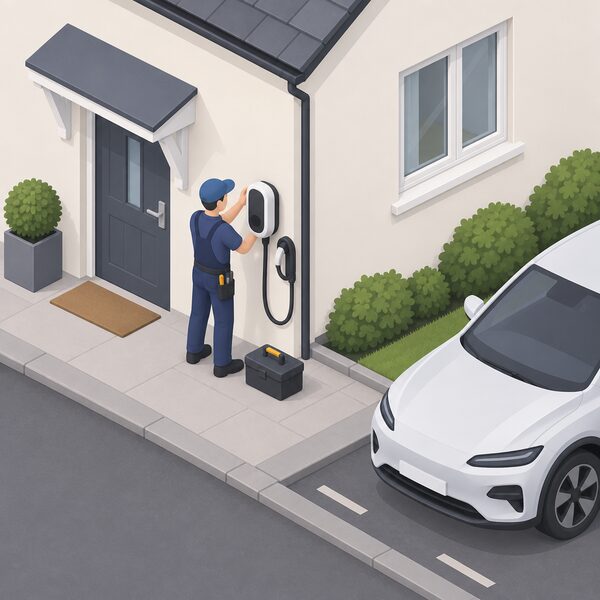
The applicant for the pavement channels grant is a council. Capital funding is available to all Tier 1 local authorities, including unitary, county or combined authorities in England, and eligible authorities must demonstrate that they meet the criteria1. The administrator is the LEVI support body, which invites proposals, while OZEV approves applications2.
Households sit at the other end of the chain. The household chargepoint grant has its own eligibility list, and it is a different list. Applicants must own or rent the residential property they live in, must not have private and exclusive access to off-street parking, must have adequate on-street parking that is generally available outside or near the home and is lawful and does not prejudice the safety and free flow of vehicular and pedestrian traffic, must have permission from the local highways authority, and must declare that they will obtain any necessary planning permissions6. They must also own or be responsible for an eligible vehicle, and the grant is only for people who have vehicles on the list of OZEV-approved electric vehicles5.
The property must be located in England, Wales, Scotland or Northern Ireland, and it must be a domestic property where the applicant owns or rents and is a resident5. The Channel Islands and the Isle of Man are excluded5.
Two further conditions catch people out. The chargepoint must be an eligible model installed by an OZEV approved installer, and OZEV will select some installations to be audited, with audits possible before or after a claim is paid and potentially including an on-site visit5. The grant is paid to the installer, not to the household: if a claim is approved, OZEV will pay the grant to the chargepoint installer5.
What the pavement channels grant funds, and what it rules out
The English fund is broad on capital and narrow on everything else. It covers buying and installing eligible EV pavement channels, including hardware costs, installation costs, S50 licences, and planning applications2. The stated purpose is to fund local authorities to install cross-pavement channels in England for residents without access to off-street parking1.
The exclusions are specific and worth reading before assuming a scheme will cover a given design. Permanent under-pavement cables, where a permanent charging cable is laid below the pavement, are not funded. Nor are charging bridges and arms, temporary solutions such as cable mats, non-capital costs such as resource costs, and channels which have already been funded2. The distinction between a channel that temporarily houses a cable and a cable permanently buried in the pavement is the line the fund draws.
Double funding is prohibited. Double-funding for the same channel is not permitted, though LEVI funding for cross-pavement solutions can be used in conjunction with this funding to extend LEVI projects or add additional pavement channels2. Projects may also be supported with additional funding, such as resident contributions, but this is not a requirement2.
| Item | Funded by the pavement channels grant? |
|---|---|
| Channel hardware and installation | Yes2 |
| S50 licence and planning application costs | Yes2 |
| Permanent under-pavement cable | No2 |
| Charging bridges and arms | No2 |
| Temporary solutions such as cable mats | No2 |
| Channels already funded elsewhere | No2 |
The shape of that list tells a household what to expect. A council that wins funding will install channels, not chargers, and not permanent cabling. The chargepoint at the end of the cable remains the household's own purchase, which is where the separate grant comes in.
Costs per channel: an average cap of £1,200
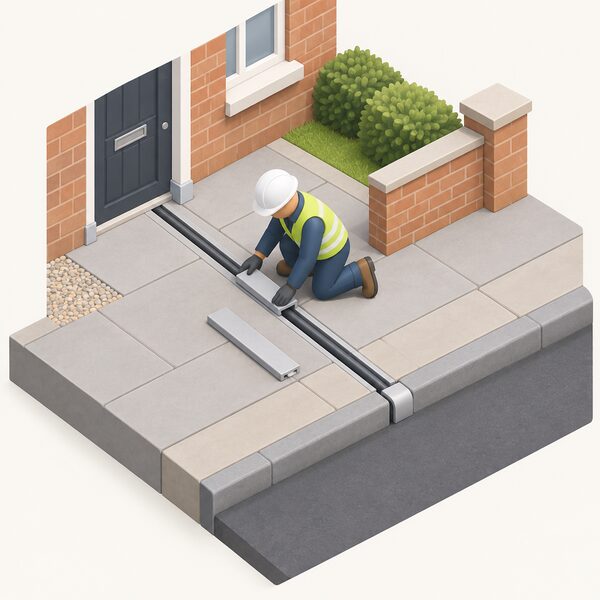
The English fund works to an average, not a fixed price. The fund will cover all capital costs to install pavement channels, up to an average of £1,200 per channel2. That is an average across a council's programme, so an authority can spend more on a difficult crossing and less on a straightforward one provided the programme averages out.
For households paying their own way, Northern Ireland's guidance gives the clearest published figures. The cost of buying and installing a channel can be up to £1,000, and with the Streets Work Licence, EV charger and channel combined, the total bill could be around £2,392.6812. Those are the only published per-household figures in this area, and they are Northern Ireland figures; comparable English costs are installer-quoted and not published.
The wider cost of connecting chargepoints to the network is a separate matter and much larger. Approved Document S works to a cost cap of £3,600 for the average connection cost per electric vehicle charge point connection, and Regulation 44D sets the same £3,600 average connection cost per charge point for new residential buildings13. That figure governs how many chargepoints a new development must provide, and it is not a household cost.
| Cost item | Figure | Territory |
|---|---|---|
| Channel, average cap under the grant | up to £1,200 per channel2 | England |
| Channel, buying and installing | up to £1,00012 | Northern Ireland |
| Total bill including licence, charger and channel | around £2,392.6812 | Northern Ireland |
| Average connection cost cap, new build | £3,60013 | England |
The gap between the £1,200 average cap and the £2,392.68 total bill is explained by what each covers. The cap applies to the channel and its capital costs; the total bill includes the Streets Work Licence, the chargepoint itself and the channel together2.
The household grant: 75% off a chargepoint, up to £500
This is the grant a resident can actually claim. The Electric Vehicle Chargepoint Grant for Households with On-Street Parking provides 75% off the cost to buy and install a socket, up to a maximum of £5004. Funding is confirmed until 31 March 20275.
It sits within a wider family of schemes. Five chargepoint grant schemes are available until 31 March 2027 with new grant rates, and the same extension applies across the group15. The household grant is the one aimed at on-street parking; the renters and flat owners grant pays 75% off the cost to buy and install a socket up to a maximum of £500 for households with private off-street parking, and the residential landlords grant pays 75% off the cost of buying and installing chargepoints up to a maximum of £500 per socket4.
Take-up of the on-street parking grant has been modest. Official statistics record 59 socket installations under the scheme, of which there were 31 in the last 12 months, with a total grant value of £20,681 for socket installations18. By contrast, public charging grant schemes have funded 24,945 EV charger installations since 2017 on provisional estimates18. The comparison suggests the on-street grant is not yet reaching the households it was designed for.
The conditions are the reason. The grant cannot be backdated, and the chargepoint must not be installed before OZEV confirms eligibility5. Applicants must not have already claimed a grant for the same residence under the renters and flat owners grant, the Electric Vehicle Homecharge Scheme or the Domestic Recharge Scheme5. The renters and flat owners grant carries the same predecessor exclusion11. OZEV aims to provide four weeks' notice if a grant ends or the grant amount changes, and claims made before any public announcement are honoured subject to the grant criteria5.
Scotland's cross-pavement charging grant: up to £3,500 per household
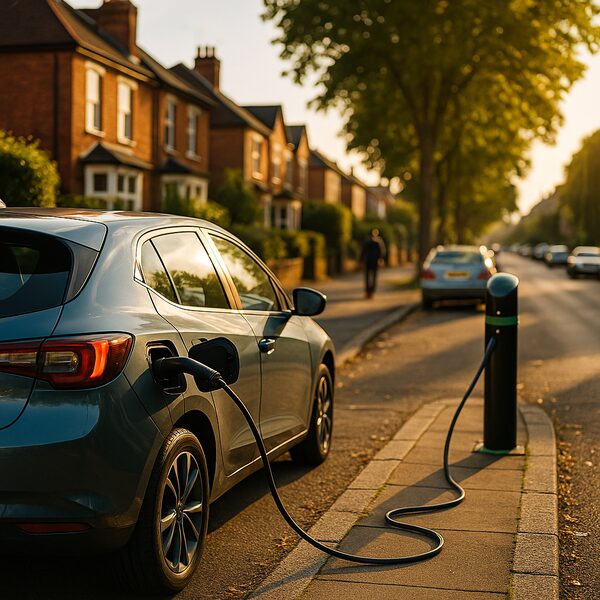
Scotland runs the only household-facing cross-pavement grant in the UK. A cross-pavement charging grant pilot worth up to £3,500 per household is available to enable access to the lower costs of charging at home3. That is a household payment, not a council capital allocation, and it is an order of magnitude larger than the £500 chargepoint grant because it is intended to cover the crossing works as well as the charger.
The pilot sits inside a much larger programme. Since 2011 the Scottish Government has provided over £65 million to support the development of public EV charging infrastructure, including £30 million for the EV Infrastructure Fund3. The Climate Change Committee's progress report on Scotland is the independent check on that programme, and it is the source to read for how the wider charging rollout is performing against targets19.
Processing times for Scottish grant support are published for the Home Energy Scotland scheme rather than for the cross-pavement pilot specifically. Home Energy Scotland aims to process all applications and claims within 10 working days of receiving all required documents, and that target applies to processing time only, meaning the time spent reviewing and making a decision20. It does not cover the time taken to gather documents or complete installation.
The published material does not name the participating councils in the cross-pavement pilot. Households in Scotland therefore need to ask their own local authority whether it is taking part, and whether the pilot is open in their area. The £3,500 figure is the ceiling per household, not a guaranteed award.
| Scheme | Who applies | Maximum | Territory |
|---|---|---|---|
| Pavement channels grant | Local authority | £25 million fund, £1,200 average per channel1 | England |
| Household chargepoint grant | Household | £500, or 75% of cost4 | England, Wales, Scotland, NI |
| Cross-pavement charging pilot | Household | £3,5003 | Scotland |
| Cross-pavement channel consent | Household | No grant, consent only7 | Northern Ireland |
How to apply: council permission first, then the application
The order of operations is fixed, and getting it wrong forfeits the grant. Permission comes first. The household grant requires evidence including local highways authority consent for installation of the cross-pavement solution and a declaration that the applicant will obtain the necessary planning permissions5. Without that consent, the application cannot be made.
In Northern Ireland the process is a direct application to the Department for Infrastructure. Applicants are encouraged to apply online, but can also apply by filling out the forms at the relevant links, and the enquiry form is aimed at owners who have an electric vehicle and are interested in getting a cross-pavement channel so they can charge it at home7. A separate consent application exists for using an electric vehicle cable protector when charging across a footway22.
The sequence for a household grant claim runs as follows.
- Confirm the property has adequate on-street parking that is generally available outside or near the home, is lawful and does not prejudice the safety and free flow of vehicular and pedestrian traffic5.
- Obtain permission from the local highways authority for the cross-pavement solution, and establish whether separate planning permission is needed5.
- Confirm the vehicle is on the list of OZEV-approved electric vehicles5.
- Select an OZEV approved installer and an eligible chargepoint model5.
- Apply and wait for OZEV to confirm eligibility before any installation takes place, because the grant cannot be backdated5.
- Complete the installation, after which OZEV pays the grant to the installer5.
For the English channel fund, the applicant is the council, and the sequence is different: eligible authorities are contacted and invited to submit project proposals via a simple application form, and local authorities receive their funding upon successful approval of their application1. Residents have no application to make, only an enquiry to their council.
What owning a cross-pavement charging setup means for energy independence
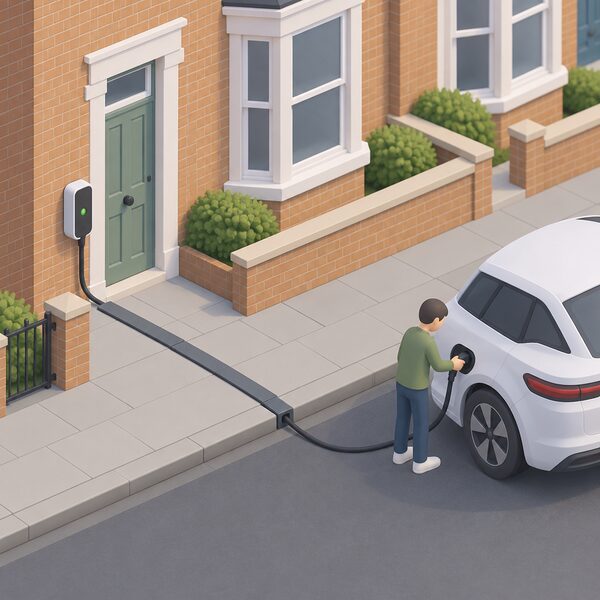
A cross-pavement channel changes where a household's electricity comes from for transport, and it does so more completely than almost any other home energy measure. Charging at home on a domestic tariff replaces forecourt fuel with grid electricity bought at domestic rates, and it removes the routine dependence on public charging networks, their pricing and their availability. For a household with no driveway, the channel is the piece of infrastructure that makes that substitution possible at all.
The dependence that remains is worth stating plainly. The channel does not confer ownership over, exclusive use of, or reserved access to any on-street parking space outside the property5. A household can pay for a channel and still find the space outside occupied. The cable runs to a chargepoint that is connected to the grid, supplied by an energy supplier, and controlled by a manufacturer's app and firmware, so the household's independence extends to the fuel source and the location of charging, not to the supply itself.
There is also a consent dependence. The channel exists because a highways authority permitted it, and the crossing sits on public land. Planning permission is required to install any cross-pavement solution and associated private EV chargepoint unless a local development order is in place10. That permission can be refused: an application to the Highways Authority can be made but will not always be accepted9.
The grant structure reinforces the point. In England the channel money goes to councils, so a household's access depends on its local authority having bid and delivered1. In Scotland the pilot pays households directly, up to £3,5003. In Northern Ireland there is a consent route but no equivalent household subsidy for the channel7. Where a household wants to go further, pairing home charging with solar generation or a home battery is the route to reducing reliance on the grid itself, and the site's guides to charging an EV from solar panels and EV charging alongside a home battery set out how that works. For the wider picture of what home charging does and does not deliver, see EV charging and household energy independence.
Sources22 cited
- Apply for the electric vehicle (EV) pavement channels grant, GOV.UK, 2025-08-15
- Electric vehicle pavement channels grant, Energy Saving Trust, 2025-11-03
- Scotland's Climate Change Plan 2026-2040, Scottish Government, 2026-02-25
- Electric vehicle chargepoint grant, GOV.UK, 2026-09-17
- Electric vehicle chargepoint grant for households with on-street parking, Find government grants, 2026-09-17
- Electric vehicle chargepoint grant: eligibility, GOV.UK, 2026-09-18
- Apply for electric vehicle cross-pavement charging, nidirect, 2026-09-17
- Electric vehicle chargers, Planning Portal, 2026
- Approved pavement crossings, Planning Portal, 2026
- Solar carparks and EV charging: call for evidence, GOV.UK, 2025-05
- Electric vehicle chargepoint grant for renters and flat owners, Find government grants, 2026-09-18
- Electric vehicles, nidirect, 2026-09-17
- Approved Document S: infrastructure for charging electric vehicles, frequently asked questions, GOV.UK, 2023-04-17
- Approved Document S, GOV.UK, 2021
- Electric vehicle chargepoint grants, GOV.UK, 2026-04-01
- Government grants for low emission vehicles, GOV.UK, 2026-04-01
- Electric vehicle chargepoint grant for residential landlords, GOV.UK, 2026-09-17
- Grant schemes for electric vehicle charging infrastructure statistics, 1 July 2026, GOV.UK, 2026-07-01
- Progress in reducing emissions in Scotland 2025, Climate Change Committee, 2025
- Home Energy Scotland grant and loan scheme: application and claim processing times, Scottish Government, 2026-03-12
- Electric vehicle charging cross-pavement channel form, nidirect, 2025-10-03
- Apply to use an electric vehicle cross-pavement cable protector, nidirect, 2025-10-16
 Planning Permission for ChargersDo you need planning permission for a home EV charger, and does it change if you live in a listed building, a conservation area or a flat?
 Charging Without a DrivewayParking on the street makes charging an electric car at home tricky.
 New Build Charger RequirementsExplains the requirement for charge points and cable routes in new and materially altered homes, set by Part S in England and equivalent rules elsewhere in the UK.
 Apply for a Home Energy GrantThe application sequence common to funded schemes: the checker, the survey or assessment, the installer, the paperwork and the sign-off.
 Home Charger InstallationWho can fit a home EV charger, and does it need building regulations approval?
 The Full Grants and Schemes GuideWhich grants can you actually get right now, and how do you apply for them?