

In this guide
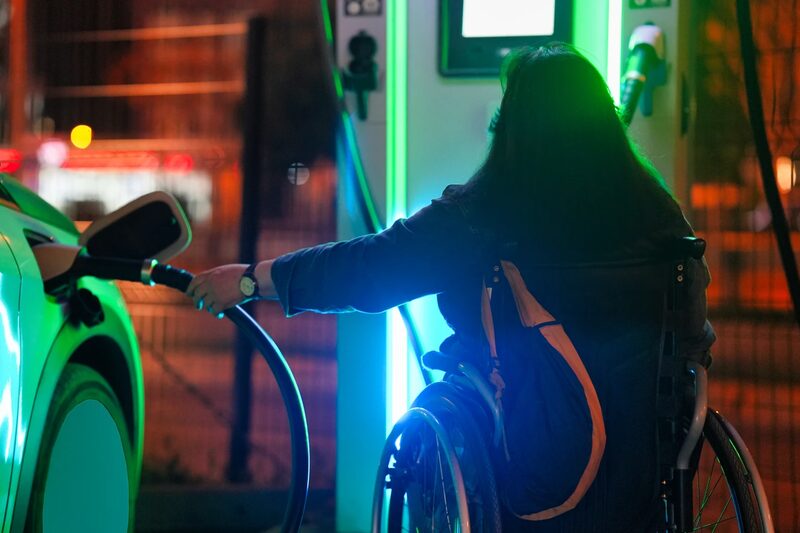
PAS 1899:2022 is the British specification for accessible public charge points. It was first published in October 2022, came into effect on 31 October 2022, and was sponsored by the charity Motability and the Office for Zero Emission Vehicles1. Its development involved physically disabled people at every stage2. It is a Publicly Available Specification, published by BSI Standards Limited, and it is voluntary on implementation1.
The specification exists because a charge point that a driver cannot reach, grip or operate is not a charge point for that driver. It sets out dimensions and layouts for low-powered and high-powered units, for on-street and off-street locations, and for the approach space, kerbs and protection around them. It draws on legal duties that do apply, including the Equality Act 2010 and the building regulations of all four nations, but the charge point requirements themselves are a specification rather than a statute1.
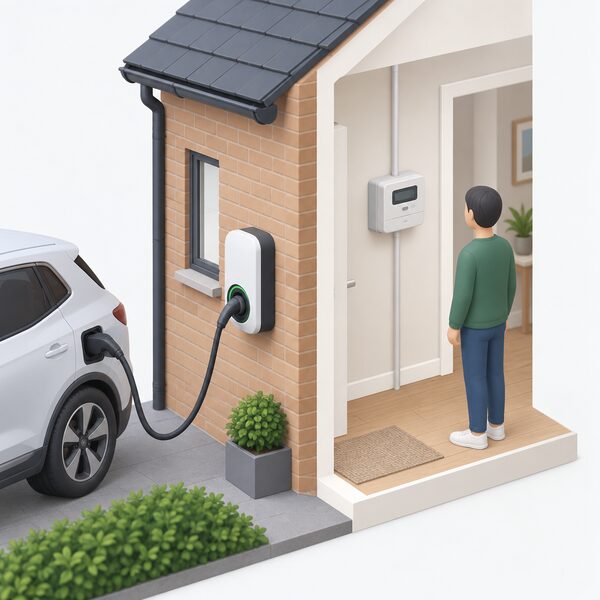
For a household, the practical point is the scope. PAS 1899 explicitly excludes electric chargepoints and charging systems used within domestic or private environments1. A charge point on a private driveway is outside it. What remains is the public network a household uses when it cannot charge at home, and the accessibility of that network is what determines whether near-home charging is a real option.
What the specification covers, and what it leaves out
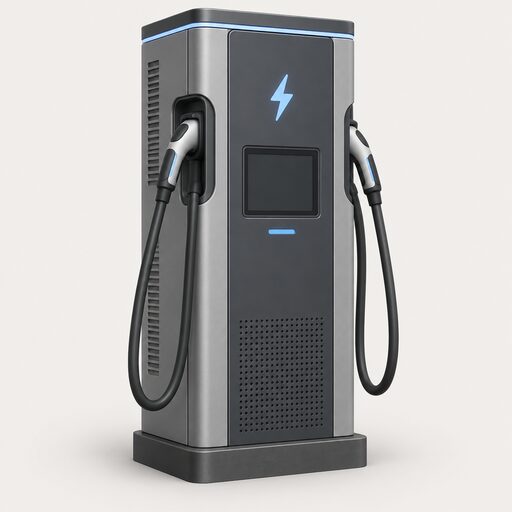
PAS 1899 is built around four definitions that decide which requirements apply to a given charge point. Low-powered refers to chargepoints with a power rating of 22 kW and below; high-powered refers to chargepoints with a power rating above 22 kW1. On-street refers to any chargepoint location that is on the public highway, such as in residential areas and on high streets; off-street refers to any chargepoint location that is not on the public highway, such as car parks, charging hubs and service areas1. Almost every home charge point in the UK sits in the low-powered band, and a driveway is neither on-street nor a public car park, so the specification's requirements do not reach it.
The exclusions are stated plainly. The PAS does not cover electric chargepoints and charging systems used within domestic or private environments1. That is the line that matters most for a householder reading about accessible charging: the standard is about the public network, not the wall of a private garage.
The legal basis the specification draws on is broader than the charge point rules themselves. It lists the Equality Act 2010, the Building Regulations 2010 and subsequent amendments, the Building (Amendment) (Wales) Regulations 2014, the Building (Scotland) Regulations 2004 and subsequent amendments, the Building Regulations (Northern Ireland) 2012 and subsequent amendments, and the Traffic Signs Regulations and General Directions 20021. Those instruments apply across the four nations in different ways, which is why the accessibility picture is not uniform.
The specification also carries an identity that makes it traceable: ISBN 978 0 539 18508 9 and ICS code 43.1201. It is reviewed at intervals not exceeding two years, a cycle that reflects how quickly charge point hardware, cable handling and payment methods change1.
What drives the requirements
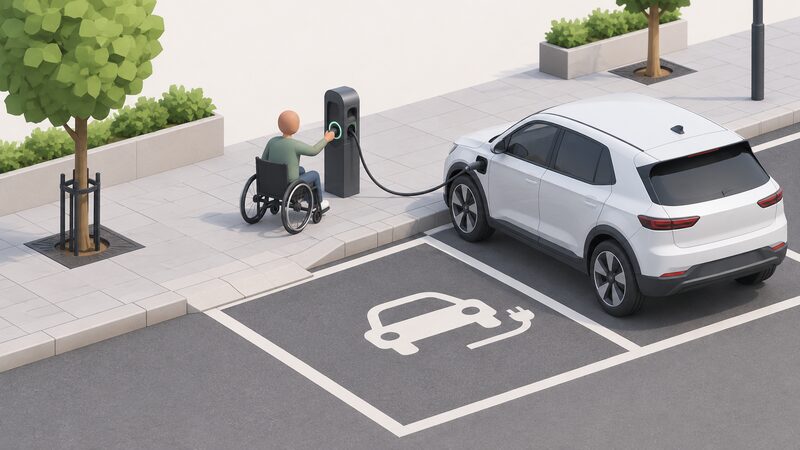
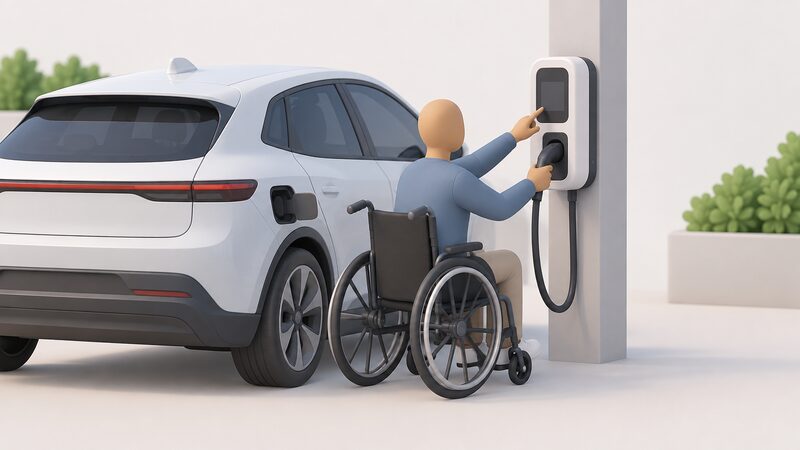
The requirements are driven by the physical facts of using a charge point rather than by a car. A driver has to reach the unit, see the display, grip the connector, lift the cable and return it. Each of those steps sets a constraint on height, approach space and cable handling, and the specification groups its requirements around them.
Protection measures sit alongside the accessibility ones, and the specification defines them precisely. A bollard is a post of minimum 1,000 mm height installed adjacent to a chargepoint to protect the chargepoint from vehicle collision1. An impact protection barrier is a low-level barrier of maximum 600 mm height placed immediately in front of or surrounding a chargepoint to protect against vehicle impact1. These are not accessibility features, but they shape the space around a unit and therefore how close a vehicle can park and how much room a driver has to manoeuvre.
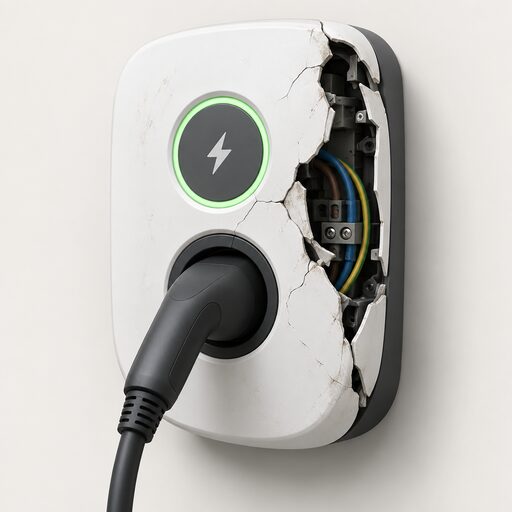
Electrical protection is a separate layer. Equipment installed in public areas and car park sites where mechanical protection is provided by the equipment must comply with a minimum degree of protection against external mechanical impact of IK084. That is an impact rating, not an accessibility one, but it governs what can be installed in the open.
The wider network context explains why the specification matters. Public charge point availability is now rising faster than the number of new EVs coming onto the market5. A network growing at that pace is being built now, and the accessibility of what is built now is decided at the point of specification rather than retrofitted later.
The figures: 174.9 chargers per 100,000 and the shape of the network
The headline accessibility figure is not a dimension but a density. At 1 July 2026 there were 174.9 public EV chargers per 100,000 of the population across the United Kingdom3. In England and Wales, 83.3% of public EV chargers were located in urban areas, compared with 82.4% of the population that lives in them3. The network is therefore broadly where people are, which is the precondition for accessible charging being a realistic option rather than a theoretical one.
The rapid end of the network is thinner. At 1 July 2025, 24.7 devices rated 50kW and above existed per 100,000 population across the UK6. In the East of England, 48.8 rapid or above chargers per 100,000 population were recorded at 1 July 2026, with the total per 100,000 for that region not given3. The highest power rating band, 150kW and above, accounted for 11% of charging devices at 1 July 20256.
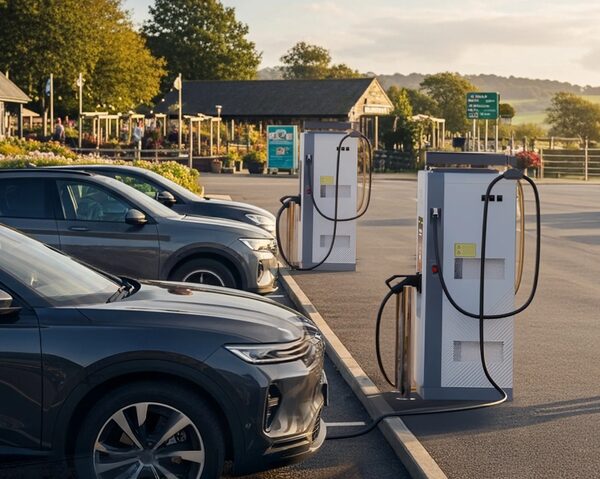
The destination and en route categories show how the network is organised. Destination charging devices are located at the end of a journey or where a driver may typically stop for an extended period, in retail car parks, car parks, leisure and education areas and transport, in addition to devices rated 49kW and below at hotels and restaurants6. En route charging devices are located for charging to continue a journey, in motorway service areas, service stations, electric forecourts and ferry terminals, plus 50kW and above charging devices in hotels and restaurants6. Accessibility requirements bite differently in each: a destination charger has time and space around it, an en route charger often does not.
| Measure | Figure | Date | Source |
|---|---|---|---|
| Public EV chargers per 100,000 population, UK | 174.9 | 1 July 2026 | 3 |
| Public EV chargers in urban areas, England and Wales | 83.3% | 1 July 2026 | 3 |
| Rapid or above chargers per 100,000, East of England | 48.8 | 1 July 2026 | 3 |
| 50kW and above devices per 100,000, UK | 24.7 | 1 July 2025 | 6 |
| Share of devices at 150kW and above, UK | 11% | 1 July 2025 | 6 |
The Department for Transport publishes the underlying tables, with historic tables updated quarterly and the latest monthly public EV chargers by country and region tables on the developing faster indicators of transport activity page7. The EVCI0101 series covers public EV chargers by country and region for the United Kingdom7.
How it differs across the UK nations
The accessibility picture is not the same in each nation, and the differences are structural rather than cosmetic. The public charging experience in Scotland is significantly different to the rest of Britain, with a greater variety of charge point operators and processes in Great Britain outside Scotland8. That finding dates from 2021, but it describes a fragmentation that accessibility requirements have to work around: a driver relying on the public network in Scotland is dealing with a different set of operators and processes from a driver elsewhere.
Wales sits close to the UK average on density. The number of public EV charge points per capita in Wales is similar to the UK average, but will need to continue to increase9. The Climate Change Committee has separately recommended expanding affordable charging infrastructure as a way to enable a more rapid transition to EVs10.
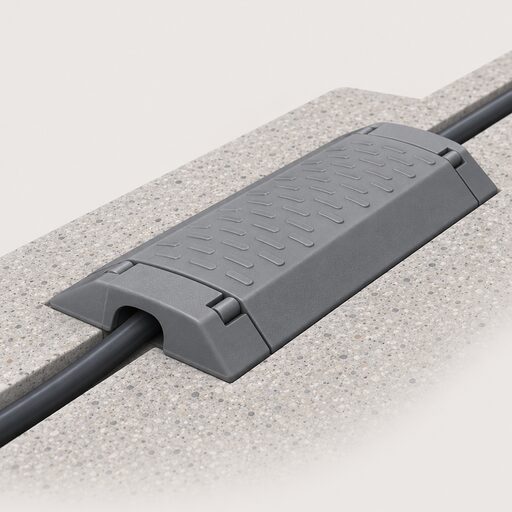
Northern Ireland has its own route for households without off-street parking. The cross-pavement charging service is administered through nidirect, with an online application encouraged and forms available for those who prefer them11. The Department for Infrastructure in Northern Ireland publishes the chargepoint and infrastructure grants that apply there12. A cross-pavement channel exists so that an electric vehicle owner can charge at home13.
The building regulations that PAS 1899 lists as its legal basis differ by nation: the Building Regulations 2010 for England, the Building (Amendment) (Wales) Regulations 2014, the Building (Scotland) Regulations 2004, and the Building Regulations (Northern Ireland) 20121. Approved Document S provides technical guidance on the installation and charge point requirements for electric vehicles in Part S to the Building Regulations14. Scotland has consulted on proposed changes to its energy standards, and the analysis of that consultation records that only four responses specified that the suggested ratio of 1 in 4 accessible parking spaces to have an EV charge point was15. That is a consultation finding, not a settled rule, and it shows how far the accessible-parking ratio question is from uniform adoption.
The rules that do apply
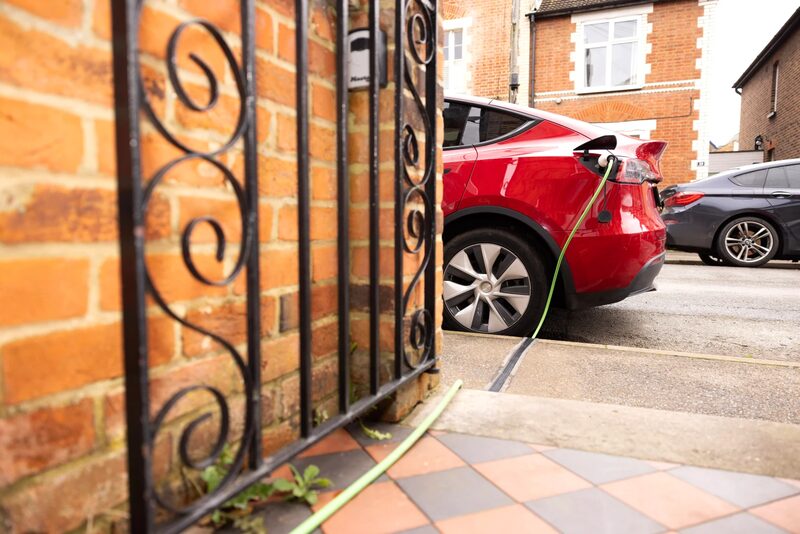
PAS 1899 is voluntary, but several rules around charge point installation are not. The grant specifications state that chargepoints must meet the needs of EV owners with disabilities or mobility issues16. That is a condition attached to funded installations rather than a general legal duty, and it is the clearest point at which accessibility enters the domestic and near-domestic picture.
Installation standards are mandatory in their own right. Chargepoint installations must be carried out in accordance with BS EN 61851, the IET wiring regulations BS 7671, the IET Code of Practice for Electric Vehicle Charging Equipment Installations, and the Electricity Safety, Quality and Continuity Regulations16. A vehicle-to-grid enabled chargepoint must be installed and commissioned in accordance with ENA's EREC G98 or G99 depending on the capacity17.
The grant schemes carry their own conditions. The Electric Vehicle Chargepoint Grant for households with on-street parking requires that the applicant has not already installed the chargepoint, since the grant cannot be backdated; owns or rents the residential property they live in; is installing a non-temporary cross-pavement charging solution alongside the chargepoint; does not have private and exclusive access to off-street parking; has adequate on-street parking; has permission from the local highways authority; declares they will obtain planning permissions; and owns or is responsible for an eligible vehicle18. The grant for renters or flat owners requires that the parking space is accessible to the applicant at all times19. The on-street grant also requires the household to be installing a cross-pavement solution, for example a charging gully18.
Payment rules apply to the public network rather than to homes. The rules mandate a minimum payment method, such as contactless payment, for new 7.1 kW and above charging devices, including rapid devices20. Those rules were announced in December 2021 with the intention to introduce them the following year20.
What it means for energy independence
Accessible charging is the point at which a household can actually use the infrastructure it has paid for. Around 930,000 dwellings in England had access to a charge point for exclusive use in 2023, while 135,000 dwellings had a charge point for communal use21. The gap between those two figures is the population for whom charging depends on shared or public infrastructure, and accessibility decides whether that infrastructure is usable.
The direction of policy is towards flexibility rather than more generation. The Electric Vehicle Smart Charging Action Plan sets out the steps that government and Ofgem will take to deliver energy flexibility from electric vehicle charging, providing affordable, green power22. One of its strands is an energy system ready for electric vehicle smart charging: accessible tariffs and flexibility services that incentivise smart charging, plus energy system data and tools to plan, incentivise and manage risks arising from EV flexibility, in the context of wider energy retail, network and market changes22. The word accessible appears there in a commercial sense, about tariffs, but the physical sense matters just as much: a driver who cannot reach a charge point cannot respond to a tariff signal either.
Domestic charging has already been used for system balancing. Domestic households offered real-time flexibility to the ESO balancing activities through EV charging for the first time in a trial announced in September 202323. The policy framing is explicit that charging infrastructure sits inside wider energy security: the government's call for evidence on solar on car parks and electric vehicle charging focuses on electric vehicle charging infrastructure, planning and the UK's wider energy security and net-zero commitments24.
The dependence that remains is the public network itself. A household without off-street parking depends on kerbside or forecourt charging, on the operators that provide it, and on the tariffs those operators set. ChargeUK has asked the government to make charging and owning an EV as easy and affordable as possible, by equalising VAT on charging and encouraging lower costs5. Until that changes, the household without a usable charge point is buying electricity at public rates rather than domestic ones, and accessibility is what decides whether that is a choice or a necessity.
Where the specification is heading
The Electric Vehicle Energy Taskforce was jointly established by energy and transport ministers at the Prime Minister's Zero Emission Vehicle Summit in September 2018, and the Low Carbon Vehicle Partnership was asked to convene and facilitate its work25. It was chaired by Energy Systems Catapult chief executive Philip New, with LowCVP providing secretariat functions, and it was part of the Road to Zero strategy announced by Government26. Its objective was to put the electric vehicle user at the heart of preparing the electricity system for the mass take up of electric vehicles26.
The taskforce's final report carried 21 proposals for government and industry and was published at an event in Westminster with a keynote address from the Minister for Transport George Freeman MP27. A key proposal was to agree common standards by 2025, particularly on interoperability, data sharing and security27. The taskforce took the position that smart charging should be the default option, not opt-in, and proposed that Government and Ofgem should take positive steps to encourage consumers to install a smart meter with every domestic chargepoint27. On standards governance it held that, given the level of innovation in the sector, this should be industry-led rather than set by government27.
The taskforce ran to four reports in its second phase, with input and contributions from over 350 leading UK organisations28. Its three key priorities were developing standards and codes of practice for interoperability and data sharing, effective local and national planning and coordination, and smart EV charging underpinned by a resilient network and clear market signals25. Those priorities are the same ones that accessible charging depends on: a standard that is agreed, a planning system that applies it, and a network that can deliver the power.
The taskforce is complete, and its work is now a reference point rather than a live programme26. The specification it helped to frame continues to be reviewed at intervals not exceeding two years1, and the network it was written for continues to grow.
Sources28 cited
- PAS 1899:2022 Accessible EV Charging Specification, BSI Standards Limited, 2022
- People with mental health issues left behind in the EV transition, Energy Systems Catapult, 2023
- Public electric vehicle charging infrastructure statistics, 1 July 2026, Department for Transport, 2026
- Electric vehicle charging installations guidance, NICEIC, 2018
- EV charging network can deliver half a billion miles of motoring every day, ChargeUK, 2024
- Electric vehicle public charging infrastructure statistics, July 2025, Department for Transport, 2025
- Electric vehicle charging infrastructure statistics data tables, Department for Transport, 2026
- Phase 1 EV publication, Ofgem, 2021
- Modern electric technologies offer Wales a bright future, Climate Change Committee, 2025
- Faster electrification would cut UK household bills, say climate advisers, Climate Change Committee, 2026
- Apply for electric vehicle cross-pavement charging, nidirect, 2026
- Electric vehicle chargepoint and infrastructure grants, Department for Infrastructure Northern Ireland
- Electric vehicle charging cross-pavement channel form, nidirect, 2025
- Approved Document S: Infrastructure for charging electric vehicles, Planning Portal, 2021
- Scottish building regulations proposed changes to energy standards consultation analysis, Scottish Government, 2022
- Electric vehicle chargepoint and infrastructure specifications, GOV.UK, 2023
- Register energy devices in homes or small businesses, GOV.UK, 2021
- Electric vehicle chargepoint grants, GOV.UK, 2026
- Electric vehicle chargepoint grant for household eligibility, GOV.UK, 2026
- Government cuts plug-in grant scheme, Zapmap, 2021
- English Housing Survey 2023 to 2024: low carbon technologies in English homes, GOV.UK, 2024
- Electric vehicle smart charging action plan, GOV.UK, 2023
- Domestic electric vehicle charging helps ESO balance energy system for first time, NESO, 2023
- Solar on car parks and electric vehicle charging call for evidence, GOV.UK, 2025
- Energising our electric vehicle transition, Energy Systems Catapult, 2020
- EV Energy Taskforce: the road to electric vehicles, Energy Systems Catapult, 2021
- Consumers must be in the driving seat of the electric vehicle revolution, Energy UK, 2020
- EV Energy Taskforce phase two reports, Energy Systems Catapult, 2021
 Electrical RequirementsWill your home need a bigger electricity supply before a charge point can go in?
 New Build Charger RequirementsExplains the requirement for charge points and cable routes in new and materially altered homes, set by Part S in England and equivalent rules elsewhere in the UK.
 Charging Without a DrivewayParking on the street makes charging an electric car at home tricky.
 EV Charging Device StatisticsHow many public charging points are there in the UK, and why do different sources give different totals?
 Home Charger InstallationWho can fit a home EV charger, and does it need building regulations approval?
 EV Charger Safety and StandardsHow do you know a home charge point is safe to use?