
In this guide
An electric car battery does not fail suddenly. It loses capacity slowly, and the rate depends far more on how the car is charged and stored than on how hard it is driven. Independent guidance from the Energy Saving Trust puts the expected life of an EV battery at 10 to 20 years1, and the same body notes that batteries can last for hundreds of thousands of miles, so most owners never replace a pack2.
The single most useful habit is to keep the state of charge in the middle of the range. Independent guidance recommends keeping the charge between 20% and 80% most days3, and ending a charging session once it reaches 80%4. Rapid charging is best treated as a tool for long journeys rather than a daily routine2.
What follows sets out what degradation is, how much capacity is lost over time, what the warranty guarantees, which habits slow the process, and what happens at the end of a pack's life in a car. It also covers the limits: a home charger ties a household to the grid, and the car's own software and the manufacturer's servers sit between the owner and the battery.
What EV battery degradation is, and why it happens
Degradation is the loss of usable capacity in a lithium-ion pack over time. It comes from two directions at once. Cycle ageing accumulates with each charge and discharge, and calendar ageing accumulates simply with time, whether the car is driven or not. A pack that sits at a high state of charge in warm conditions ages faster on the calendar side than one kept in the middle of its range.
The mechanisms are the same ones that make lithium-ion batteries a fire risk when abused. Electrical Safety First identifies overcharging, over-discharging, or charging the battery too quickly as some of the main causes of fires from lithium-ion batteries8, and notes that fires can occur from poor design, incorrect charging, or from damage to the battery8. The same three stresses, applied gently and repeatedly rather than in one incident, are what wear a pack down. This is why the 20% to 80% window appears in so much guidance: it avoids both extremes at once.
For a household, degradation is the difference between the range the car had when it was bought and the range it has five years later. It is not a fault and it is not covered as one unless it crosses the warranty threshold. It is a slow reduction in the car's usefulness, and it is the main reason a used electric car is priced against its battery's state of health rather than its mileage alone.
How much capacity batteries lose over time

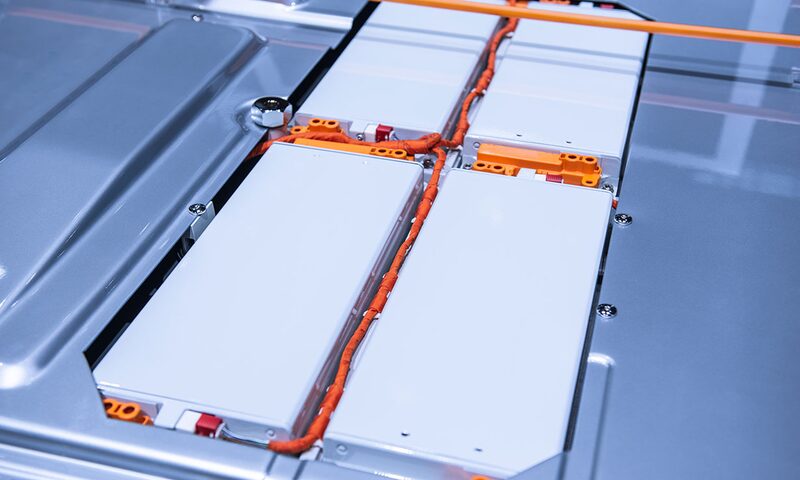
The rate of loss is modest and roughly predictable. Independent guidance from the Energy Saving Trust puts the expected life of an EV battery at 10 to 20 years1, which implies a slow decline rather than a cliff edge. The same body's advice on used electric cars uses a battery lasting 2,000 full cycles as its modelling assumption7, and a full cycle is a complete discharge and recharge, so a week of commuting that never drops below the middle of the range adds up to well under one cycle.
The figure that matters most for a household is the warranty floor rather than an annual percentage. Government consultation on the zero emission vehicle mandate describes a commitment to replace the battery if it drops below 70% capacity within the battery or drivetrain warranty window5.
Where sources differ is on the shape of the curve rather than the direction. Some of the loss happens early and then flattens; some accumulates steadily. The practical consequence is the same: a car bought at three years old will have already taken the steepest part of the decline, and its remaining life is longer than the first owner's experience would suggest.
Lifespan: 10 to 20 years, with a 70% capacity floor
The headline lifespan figure comes from the Energy Saving Trust, which states that EV batteries are expected to last 10 to 20 years1. The same organisation notes that EVs do not usually need to have their batteries replaced, as they can last for hundreds of thousands of miles2.
For comparison, a stationary home battery has a shorter working life. Independent guidance puts the typical lifespan of a home battery at about 10 to 12 years9, and Home Energy Scotland gives a range of 10 to 15 years10. A car pack is built to tougher tolerances and is managed more aggressively, which is part of why its expected life is longer than the box on the wall.
The 70% capacity figure and the high mileage figure belong together. A pack that reaches 70% of its original capacity after a very high mileage has done what the warranty promised and more. A pack that reaches 70% at a low mileage has not, and that is the case the capacity guarantee exists to catch.
Warranty: eight years or 100,000 miles, with a 70% capacity guarantee
The warranty is the household's main protection, and its terms are consistent across the industry. The Society of Motor Manufacturers and Traders states that manufacturers provide warranties on EV batteries lasting at least eight years or 100,000 miles6. Independent guidance agrees: most electric car batteries are guaranteed by manufacturers to last for eight years or around 100,000 miles11, and battery warranties tend to be set at around eight years or around 100,000 miles12.
There is some variation at the edges. Independent guidance notes that most manufacturers offer battery warranties of seven or eight years13, and a separate source describes most manufacturers offering an 8-year or 10-year guarantee on electric cars, or 100,000 to 150,000 miles, which will cover repair or replacement of the battery if its performance falls below a certain level14.
The capacity element is what distinguishes a battery warranty from an ordinary defects warranty. Government consultation on the zero emission vehicle mandate describes a commitment to replace the battery if it drops below 70% capacity within the battery or drivetrain warranty window5. That is a performance guarantee, not just a promise to fix manufacturing faults.
| Warranty element | Typical term | Source |
|---|---|---|
| Duration | At least eight years | SMMT6 |
| Mileage | 100,000 miles | SMMT6 |
| Capacity floor | 70% of original | Government consultation5 |
| Outer range reported | 8 to 10 years, 100,000 to 150,000 miles | Independent guidance14 |
Charging habits that slow degradation: the 20 to 80% rule
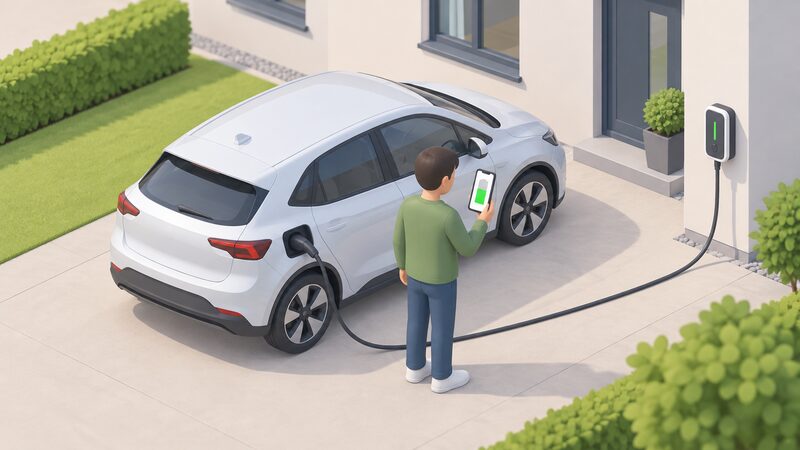
The advice on daily charging is unusually consistent. Independent guidance recommends keeping the charge between 20% and 80% most days3, and ending charging sessions once they reach 80%4. The same body advises keeping the car charged to about 80% to keep the battery in a good state of health15. On the lower end, guidance suggests avoiding letting the charge get too low, partly because running low tends to push the driver towards more expensive public charging11.
The Energy Saving Trust's summary of habits that extend battery life is to use rapid charging only when needed, not to fully charge the battery, and not to let it get too low on charge2. Those three rules cover most of what a household can control.
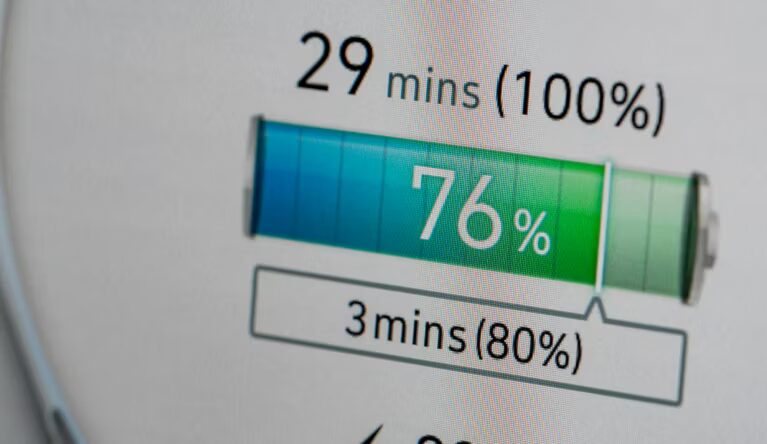
Charging from 20% to 80% takes between 30 and 90 minutes on a rapid charger16, and the same source notes that it can take as long to charge from 80% to 100% as it does from 20% to 80%4.
Why charging slows after 80%
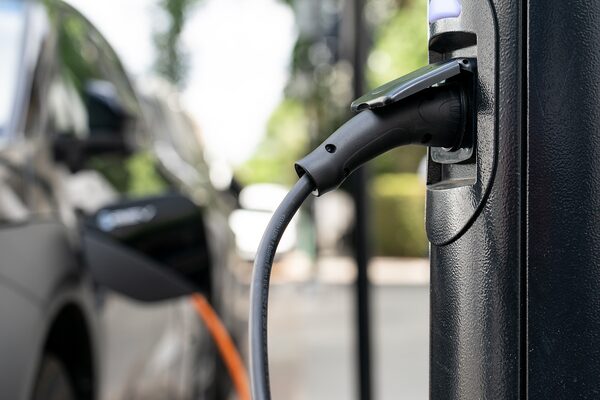
The taper is deliberate. Most EVs slow down charging after around 80%17, and charging slows significantly after about 80% to protect the battery and prolong its lifespan16. The SMMT describes the same behaviour from the manufacturer's side: a rapid or ultra-rapid charger will safeguard battery life by slowing charging once the battery reaches 80 percent18.
The reason is that a lithium-ion cell accepts charge quickly in the middle of its range and slowly at the top. Pushing current into a nearly full cell risks plating lithium onto the anode rather than storing it, which permanently reduces capacity. The car's battery management system therefore reduces the current as the state of charge climbs, and the last portion of the charge takes disproportionately long.
For a household, this changes how a journey is planned rather than whether the car is usable. A rapid charger will deliver 80% of an EV battery in 30 to 60 minutes19, which is enough for most onward legs. Waiting for 100% on a public charger is slow and, on a per-minute tariff, expensive.
The UK network reflects the same split between fast and slow. As of July 2025, more than 46,000 UK EV charging devices had a power rating below 8 kWh, which is 55% of all devices20. Those are the chargers suited to overnight or long-stay charging, where the taper costs nothing because the car is parked anyway.
Rapid charging vs slow AC charging: the degradation trade-off
Rapid charging is not the villain it is often made out to be, but it is not neutral either. The Energy Saving Trust's guidance is to use rapid charging only when needed2, which places it as a tool for long journeys rather than a daily routine.
The evidence on managed charging is more reassuring than the folklore. On vehicle-to-grid, independent guidance notes that there are concerns that frequent charging and discharging could shorten EV battery life, but that the impact should be relatively minimal within recommended guidelines21. If managed bidirectional cycling within guidelines is expected to have minimal impact, ordinary rapid charging within the manufacturer's limits is unlikely to be catastrophic.
There is a separate constraint for plug-in hybrids. Independent guidance notes that rapid chargers offer little benefit to most hybrids because most hybrid batteries do not support high-speed charging22. A plug-in hybrid owner is therefore mostly on AC charging, at home or on a fast charger, and the rapid-charging question does not arise.
The trade-off for a household is between time and pack life. Slow AC charging at home is gentler and cheaper; rapid charging is faster and, on a per-mile basis, more expensive. Neither is prohibited, and the manufacturer's battery management system enforces the limits that matter.
Battery replacement, repair and cost outside warranty
Replacement is possible but rarely simple. Independent guidance states that EV batteries can usually be replaced, but that it is complicated and often expensive to do2. The same source notes that EVs do not usually need to have their batteries replaced, as they can last for hundreds of thousands of miles2, which is why replacement is an exception rather than a scheduled event.
On cost, one independent figure puts the replacement cost at £179 per kWh7. That is a rate per unit of capacity rather than a quoted price for a particular car. Labour, diagnostics, disposal of the old pack and any software work sit outside it. Prices are dealer or specialist quoted, and no published range covers every model.
Repair at module level is the middle path. For a household, the practical protection is the warranty rather than the repair route: the capacity guarantee is what stands between a degraded pack and a large bill.
Second life: old EV batteries as home energy storage
A car pack that is no longer good enough for driving still holds useful capacity. The research body Cenex states that use of electric vehicle batteries in principle offers a very large potential to contribute to home energy storage and electricity system balancing23. That is the second-life case: a pack removed from a car and installed as a stationary battery, where weight and volume matter less than they do on the road.
What is not yet available is using the car itself as the home battery. Independent guidance states that you generally cannot use your EV as a battery, and that bidirectional charging is being trialled in some places but is not widely available9. The same position is repeated in the Energy Saving Trust's battery storage advice, which describes bidirectional charging as currently being trialled in some places but not widely available24.
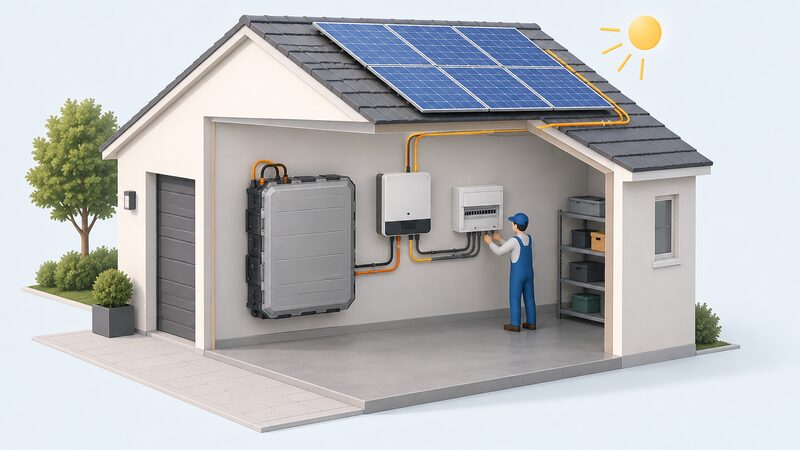
The stationary alternative is well established. A home battery stores excess solar electricity or charges when the tariff is cheap, then uses the stored energy at night or when prices are high9. For a household, that is the route to using a second-life pack: as a fixed battery, wired into the home, not as the car on the drive.
There is a tax and regulatory frame around it. HMRC guidance describes an electrical storage battery as storing energy in the form of chemical energy which is then converted back to electrical energy when the battery is discharged25, and treats the installation of a battery for storing electricity from one or more qualifying energy-saving materials and from the grid as an eligible use25. Legislation defines a qualifying battery as one intended for use solely for storing energy converted from electricity supplied to the residential accommodation in question, or generated by a microgeneration system. A second-life pack installed on that basis sits inside the same rules as a new home battery.
Recycling and environmental impact

The claim that an EV battery simply goes to landfill at the end of its life is the origin of much of the criticism aimed at electric cars. Independent guidance notes that a lot of the conversation around EVs being as bad for the environment as petrol cars comes from the idea that, once the battery has given up the ghost, it will just end up in a landfill somewhere13.
The position on recycling is improving but not complete. Independent guidance states that around 80% of electric batteries are fully recyclable, but that there are parts of the battery that are difficult to recycle. The same source notes that there is lots of research into the efficient recycling of electric batteries, and that recyclability and environmental credentials will have to improve as the EV market grows. That is an honest statement of where the industry stands: most of a pack can be recovered, and the remainder is an active problem.
Charging from a home solar array or on a low-carbon tariff changes the arithmetic; charging from a high-carbon grid at peak times changes it the other way. The battery is the store, not the source.
The dependence that remains is worth stating plainly. A home charger draws from the grid, so the car is only as independent as the supply behind it. The car's charging behaviour is governed by software, often linked to a manufacturer's servers and an app, so some control sits outside the household. The independence an electric car offers is real but partial: it moves the fuel spend from a forecourt to a meter, and it keeps the household tied to the network that supplies it.
Sources25 cited
- Electric vehicle battery basics, Energy Saving Trust, 2025-09-16
- Electric vehicles: debunking the myths, Energy Saving Trust, 2025-09-22
- Best EV charging tariff, Uswitch, 2025-07-02
- Guide to EV charging, Zapmap, 2026-09-04
- Government response to the ZEV mandate technical consultation, Department for Transport, 2023-03-30
- EVs: the facts, Society of Motor Manufacturers and Traders, 2025-09-22
- Making home energy management work for consumers, Energy Systems Catapult, 2026-02-12
- E-scooter safety, Electrical Safety First, 2026-09-17
- Battery storage, Home Energy Scotland, 2026-09-20
- Demand flexibility, Centre for Research into Energy Demand Solutions, 2026
- What is the lifetime cost of an electric vehicle?, Uswitch, 2024-11-26
- Electric car myths busted, Uswitch, 2024-11-26
- Should you buy a used electric car, Energy Saving Trust, 2022-06-08
- Driving an electric car: top tips, Zapmap, 2024-12-06
- How to find the best charging stations without home charging, Carwow, 2026-06-21
- Electric car charging guide, Carwow, 2025-07-16
- Electric vehicle charging, Society of Motor Manufacturers and Traders, 2025-06-25
- Electric vehicles for home charging, Electricity North West, 2026-09-19
- EV charging statistics, Uswitch, 2025-07
- Vehicle-to-grid charging, Uswitch, 2025-07-02
- Does a hybrid car need an EV tariff?, Uswitch, 2025-07-02
- V2G Britain, Cenex, 2026-09-17
- Battery storage, Energy Saving Trust, 2026-08-19
- VAT on energy-saving materials and grant-funded heating supplies, HM Revenue and Customs, 2026-09-17
- Social Security Contributions and Benefits Act 1992, Schedule 7A, legislation.gov.uk, 2026-09-17
 V2G Battery DegradationDoes letting your electric car send power back to the grid wear the battery out faster?
 Home Battery WarrantiesHow long does a home battery warranty really last, and what does it actually promise?
 Warranties and DegradationHow long do solar panels actually last, and what do the warranties really cover?
 EV Charger WarrantiesCovers typical warranty lengths on UK home charge points, what parts and labour are included, registration conditions and extended warranty options.
 EV Charging Speeds and TimesHow long an electric car takes to charge depends on the charger and the car together, so a faster charge point will not always speed things up.
 Cycle Life and DegradationHow long will a home battery actually last, and what decides that?