

In this guide
The Workplace Charging Scheme (WCS) is a UK government voucher scheme that pays up to 75% of the cost of buying and installing electric vehicle chargepoints at workplaces, capped at £500 per socket1. The maximum grant rate rose from £350 to £500 per socket on 1 April 20262. Each applicant can claim for up to 40 sockets across all sites, and funding is available until 31 March 20272.
The scheme has funded 72,388 socket installations since it began in late 2016, with £26.9 million committed to socket installations and supporting infrastructure3. A separate, larger grant for state-funded education institutions has funded 6,219 socket installations since 2024, backed by £14.5 million3.
For a household that cannot charge at home, workplace charging is often the practical alternative to a driveway chargepoint. It shifts the energy source from the home's own supply to the employer's, which changes both the cost and the independence picture. The sections below set out what the scheme covers, who can claim, how the application works, and where the limits fall.
What the Workplace Charging Scheme is
The Workplace Charging Scheme provides funding to employers for EV charging facilities4. It launched in 2016 and has since become the main government route for subsidising chargepoints at commercial premises5. The scheme is currently running, and the government's grant statistics treat it alongside the domestic grants as part of the same family of chargepoint subsidies6.
The scheme's purpose is to widen charging access beyond the home. For households without off-street parking, workplace charging can serve as the primary charging location, and the government's market study identifies workplace charging as one of the main alternatives to domestic charging5. The Carbon Budget Delivery Plan lists the Workplace Charging Scheme among the grants for EV chargepoints for employees and fleets7.
The scheme operates as a voucher scheme rather than a rebate paid after the fact. An OZEV-authorised installation contractor claims the grant on the applicant's behalf, which means the employer does not pay the full cost and then reclaim it8. The authorisation is what allows the contractor to claim the EVHS or WCS grant8.
Uptake has been substantial. By 2021 the scheme had provided funding for over 4,000 businesses, with over 13,000 sockets installed through the grant5. The total spend figure has been revised: official statistics from November 2021 give a revised total spend of £7,927,714, revised down from £7,930,7149. The two figures differ by £3,000; the later revision is the lower figure.
What the grant covers: 75% of costs, capped per socket
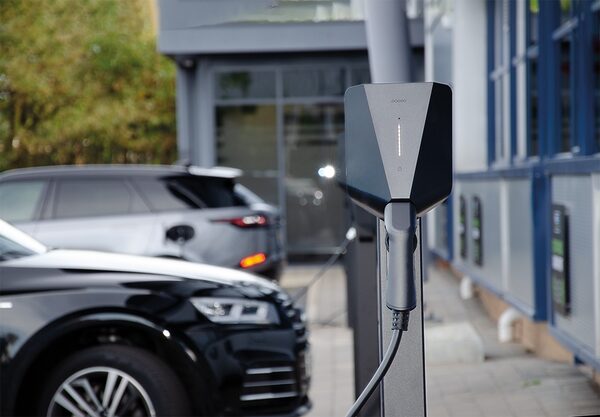
The scheme covers up to 75% of the total costs of the purchase and installation of EV chargepoints, including VAT, capped at £500 per socket1. The same 75% coverage figure appears in local authority guidance, which states that it covers up to 75% of the total costs of the purchase and installation of EV chargepoints including VAT10.
The cap is the figure that matters most in practice. Before 1 April 2026 the maximum grant rate was £350 per socket; from that date it rose to £500 per socket2. For a workplace installing a single 7kW chargepoint costing £1,000 including installation, 75% would be £750, but the cap limits the grant to £500. For a cheaper installation, the 75% rule bites first.
The grant is not the only workplace-facing subsidy. The staff and fleets grant, which runs alongside the WCS, covers 75% of the cost of the work up to a maximum of £350 per chargepoint socket installed and up to £500 per parking space enabled with supporting infrastructure, with an overall cap of £15,000 per installation2. The commercial landlord chargepoint grant covers 75% of the cost of the work up to a maximum of £350 per chargepoint socket2. These are separate schemes with separate caps, and the WCS cap of £500 per socket is the highest of the per-socket figures.
| Scheme | Cost coverage | Per-socket cap | Overall cap |
|---|---|---|---|
| Workplace Charging Scheme | 75% including VAT | £500 per socket | 40 sockets across all sites1 |
| Staff and fleets grant | 75% | £350 per socket, £500 per parking space | £15,000 per installation2 |
| Commercial landlord chargepoint grant | 75% | £350 per socket | Not stated2 |
| Schools grant (state-funded) | 75% | £2,000 per socket | 40 sockets across all sites1 |
The VAT position matters for how the 75% is calculated. The WCS figure is expressed as including VAT, so the grant is calculated on the VAT-inclusive cost1. A workplace that can recover VAT may find the effective subsidy lower than the headline percentage suggests, because the grant is capped in cash terms regardless.
How much you can claim: the 40-socket limit and total caps
The 40-socket limit applies across all sites per applicant, not per site1. The guidance is explicit that an applicant wanting to install at 40 sites would have one socket available at each1. The limit was increased from 20 sockets previously, so organisations that claimed under the earlier cap may have headroom remaining11.
The limit is per applicant, which means the structure of the claiming organisation matters. A business entity may receive the incentive for the installation of a maximum of 40 sockets11. A group with multiple trading entities may be able to claim more than a single entity, depending on how the applicant is defined, but the published guidance does not address group structures directly.
The schools grant treats academy trusts differently. Academy trusts can apply for up to the maximum of 40 sockets for each institution within the academy trust1. A multi-academy trust with ten schools could therefore claim for up to 400 sockets in total, subject to the per-socket cap of £2,000 under that grant1. The 40-socket limit for the schools grant is expressed as 40 sockets across all sites including any applications made previously via the Workplace Charging Scheme, so previous WCS claims count against the schools allocation1.
For comparison, the domestic grants have different limits. Residents can apply for one socket and landlords for up to 200 sockets across their sites2. The landlord infrastructure grant allows multiple chargepoint sockets at the same address in the same application12. The electric vehicle chargepoint grant for landlords allows grants for up to 200 sockets across all sites13. These figures show how much more restrictive the workplace limit is relative to the landlord route, though the workplace limit is per organisation rather than per property.
Who is eligible: businesses, charities, public sector and small accommodation providers
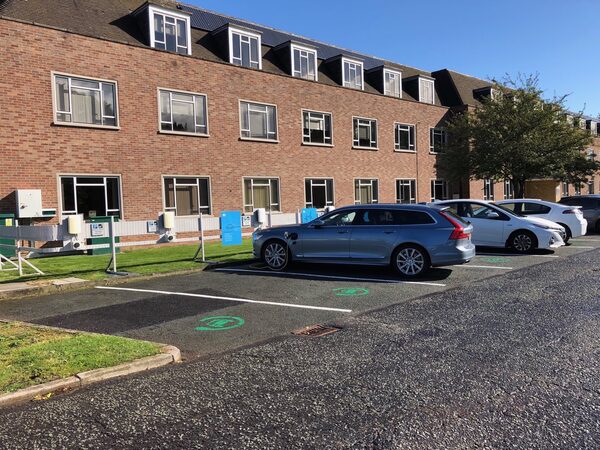
The scheme is open to eligible businesses, charities, public sector organisations and small accommodation businesses1. The breadth of that list is notable: it is not restricted to commercial employers, and charities and public sector bodies can claim on the same terms as businesses.
The eligibility requirement for the wider family of chargepoint grants covers individuals, landlords, businesses, the public sector, charities and education institutions13. The WCS sits within that structure as the workplace-facing route, while the domestic grants cover households and landlords.
Small accommodation businesses are specifically named, which brings hotels, guesthouses and similar premises within scope1. For a small accommodation provider, workplace charging serves guests rather than employees, but the scheme does not distinguish between the two in its eligibility wording.
The scheme does not require the workplace to have electric vehicles already in its fleet. The schools grant requires an existing or future need for charging an electric vehicle, designated off-street parking facilities clearly associated with the premises, and the authority to apply on behalf of the organisation1. The parallel requirement for the main WCS is not stated in the same terms in the published guidance, but the practical requirement is a workplace with parking where chargepoints can be installed.
Public sector bodies more broadly have access to other decarbonisation funding. The Public Sector Decarbonisation Scheme offers grants to public sector bodies, including schools and hospitals14. That scheme is separate from the WCS and addresses building decarbonisation rather than chargepoints, but it illustrates that public sector organisations have multiple funding routes.
Charities and public sector organisations claiming under the WCS face the same 40-socket limit and the same 75% cost coverage as businesses1. There is no enhanced rate for the public sector under the main WCS; the enhanced rate applies only to state-funded education institutions under the separate schools grant.
A separate, larger grant for state-funded schools and education institutions
The Workplace Charging Scheme for state-funded education institutions is a distinct grant with a much higher per-socket cap. It offers 75% off the cost to buy and install chargepoints up to a maximum of £2,000 per socket1. That is four times the £500 cap under the main WCS.
The grant is for state-funded schools and other state-funded education institutions1. Independent schools are not eligible under this grant1. The institution must have an existing or future need for charging an electric vehicle, designated off-street parking facilities clearly associated with the premises, and the authority to apply on behalf of the organisation1.
The funding behind the schools grant is £14.5 million for socket installations across the United Kingdom3. It has funded 6,219 socket installations since the grant started in 20243. The scheme allows multiple claims up to the allocation of 40 sockets, and academy trusts can apply for up to the maximum of 40 sockets for each institution within the trust1.
The schools grant limit is expressed as 40 sockets across all sites including any applications made previously via the Workplace Charging Scheme1. A school that has already claimed WCS sockets therefore has a reduced allocation under the schools grant. The interaction between the two schemes means schools that claimed early under the WCS may have less headroom now than schools that did not.
The higher per-socket cap reflects the different cost profile of school installations. Schools may need chargepoints in staff car parks, visitor parking and service areas, and the £2,000 cap allows a larger share of a more complex installation to be covered. The 75% coverage rule still applies, so the grant never exceeds three-quarters of the actual cost.
How to apply: vouchers, authorised installers and approved chargepoints
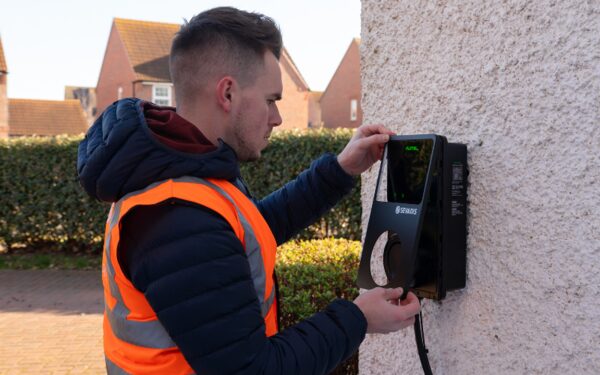
The application route runs through an OZEV-authorised installer. The parallel domestic process is set out in the landlord grant guidance: contact an OZEV-authorised installer to get a quote, then select the start new application button, create an account and apply using the form provided to submit details of the property and vehicle to OZEV15. The WCS follows the same authorised-installer model, with the contractor claiming the grant on the applicant's behalf8.
The requirement to use an authorised installer is consistent across the chargepoint grants. The Electric Vehicle Chargepoint Grant for Households with On-Street Parking requires an OZEV approved installer to complete the installation16. The residential landlord grant requires an OZEV-authorised installer and an eligible residential chargepoint15. The renters and flat owners grant requires an OZEV-authorised installer and an eligible residential chargepoint15. The WCS is claimed by OZEV-authorised installation contractors8.
The chargepoint itself must meet the scheme's specifications. The specifications guidance requires a minimum supply of 3.5kW to each chargepoint socket when sockets are being used for charging at the same time12. Scottish building standards consultation proposed Mode 3 AC charging with a power output of 7kW at each connector socket as the preferred minimum standard for EV charge point sockets and ducting infrastructure, with 3.6kW as a lower figure and a minimum 7kW output power rating for new residential buildings17. The legislation covering charge points under Part 9B and Part S requires that a charge point must be capable of providing a reasonable power output for each parking space for which it is intended to be used18.
The application process in order:
- Confirm the organisation is eligible under one of the categories: business, charity, public sector organisation or small accommodation business1.
- Contact an OZEV-authorised installer to obtain a quote for the proposed installation15.
- The installer submits the voucher application to OZEV on the organisation's behalf8.
- Once the voucher is issued, the installation is carried out using an eligible chargepoint meeting the 3.5kW per socket specification12.
- The installer claims the grant against the voucher8.
The voucher validity period for the WCS is not stated in the published guidance available here. Voucher validity periods vary across government grant schemes: Boiler Upgrade Scheme vouchers for ground source heat pumps are valid for six months from issue19. The Continuous cruisers scheme requires redemption by the expiry date shown on the voucher21. Northern Ireland energy bill support vouchers were valid until 31 March 202322, and Energy Bills Support Scheme vouchers had to be redeemed by 30 June 202323. These examples show that voucher expiry dates are enforced, and applicants should check the expiry date shown on their own voucher.
Where the scheme runs and how uptake varies across the UK
The scheme operates across the United Kingdom with the exclusion of the Channel Islands and the Isle of Man. The schools grant is available in England, Wales, Scotland and Northern Ireland, and institutions in the Channel Islands or the Isle of Man are not eligible1. The same territorial exclusion applies to the domestic grants: the renters and flat owners grant states that you cannot apply if you live in the Channel Islands or Isle of Man24, and the landlord grant states that a property in the Channel Islands or the Isle of Man is not eligible15.
Uptake varies sharply by region. The East Midlands has the highest number of WCS-funded charging socket installations per 100,000 population, at 135.83. London has the lowest, at 49.9 per 100,000 people3. Across the UK as a whole, the scheme has funded a total of 72,388 socket installations since it began in late 20163.
The regional variation is striking because London has the highest concentration of workplaces in the UK. The low rate in London may reflect the greater availability of public charging and the lower proportion of workplaces with off-street parking, though the published statistics do not explain the cause. The East Midlands rate is nearly three times the London rate.
Workplace charging grant schemes overall have funded 85,547 installations since 2016, of which 12,489 were in the last 12 months3. The WCS accounts for 72,388 of the total, with the schools grant accounting for 6,219 since 20243. The remaining installations fall under the other workplace-facing grants.
The scheme's reach extends beyond the workplace itself. For a household without a driveway, a workplace chargepoint can be the difference between running an electric vehicle on cheap electricity and relying on public charging. The government's market study notes that there are over 13,000 sockets for workplace charging installed through the Government grant scheme5. The SMMT position paper records that each organisation is now eligible to apply for funding for up to 40 sockets, an increase from 20 sockets previously, and that the WCS had funded the installation of 19,054 sockets worth £7,930,714 as of October 202111.
How long the scheme runs and what happens after it closes
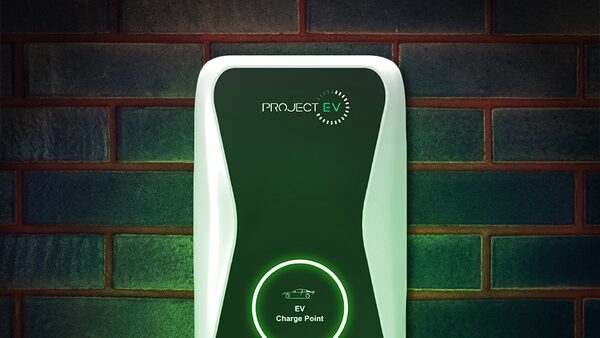
Funding for the Workplace Charging Scheme is available until 31 March 20272. That is the deadline for the scheme as it currently stands, and it sits alongside the closure dates of other chargepoint grants.
The Depot Charging Scheme, which is the larger workplace-adjacent programme, has two application windows. The first opened on 25 March 2026 and closes on 30 June 2026, or sooner if funding has been exhausted, with projects having until 31 March 2027 to complete works1. The second window closes on 29 January 2027 for projects starting from April 2027, to be delivered by 31 March 20281. The Depot Charging Scheme follows a successful 2025/2026 pilot and is a £170 million multi-year funding programme from April 2026, covering 70% of chargepoint and civil costs incurred up to a maximum of £1 million across all sites in the 2026/27 application cycle1.
Other schemes have already closed. The On-Street Residential Chargepoint Scheme closed to new applications in March 2024, though local authorities continue to provide data for ongoing projects3. The Domestic Recharge Scheme is closed to new applications; it provided funding from 2013 to 2014 and was replaced by the EVHS, and the published statistics are final3. The Great British Insulation Scheme runs until 31 March 202625.
What happens after a scheme closes depends on the scheme. The Domestic RHI provides a precedent: participants already on the scheme who meet ongoing obligations receive payments as usual until their seven-year membership ends26. That model of honouring existing commitments after closure is the pattern for grant schemes that pay over time. The WCS pays on installation rather than over a period, so the relevant question is whether installations completed before the deadline are honoured, which the published guidance does not address.
For a household, the practical implication is that workplace charging availability depends on the employer's decision to install, which in turn depends on the scheme's funding window. An employer that installs before 31 March 2027 can claim the grant; one that waits may find the scheme closed. The household's access to workplace charging is therefore tied to a funding deadline it does not control.
What workplace charging means for household energy independence
Workplace charging changes where a household's transport energy comes from. Instead of drawing from the home's electricity supply, the vehicle draws from the employer's. That shifts the cost and the carbon accounting, and it removes the need for a home chargepoint entirely.
The independence gain is real but conditional. A household that can charge at work does not need a driveway, does not need a home chargepoint installation, and does not need to negotiate the electrical requirements that a home installation involves. The workplace chargepoint is maintained by the employer, and the electricity is bought by the employer. For a household in a flat or a terraced house without off-street parking, that is a meaningful reduction in the infrastructure barrier to running an electric vehicle.
The dependence that remains is on the employer. The chargepoint exists because the employer chose to install it, and it remains available only while the employer maintains it and the employment relationship continues. A change of job removes the charging location. A change of employer policy on charging, or a decision to introduce charging fees, changes the cost. The household has no control over any of these.
There is also a dependence on the grid and on the employer's electricity supply. Workplace charging does not make a household self-sufficient in transport energy; it relocates the draw from one grid connection to another. The household's energy independence is improved only in the sense that it no longer needs its own charging infrastructure, not in the sense that it generates or stores its own transport fuel.
The scheme's structure reinforces that dependence. The grant is claimed by the employer, the chargepoint is owned by the employer, and the 40-socket limit is the employer's limit. The household is a beneficiary of the employer's claim, not a participant in it. For a household weighing up whether to rely on workplace charging, the honest position is that it works well while the employment and the employer's charging policy both hold, and it offers no fallback if either changes.
The alternative routes for a household without off-street parking are covered in charging without off-street parking and the Electric Vehicle Chargepoint Grant for Renters and Flat Owners. The wider context of how charging choices affect a household's energy position is set out in EV Charging and Household Energy Independence.
Sources26 cited
- Electric vehicle chargepoint grants, GOV.UK, 2025-04-08
- Changes to electric vehicle chargepoint grant schemes from 1 April 2026, GOV.UK, 2026-02-25
- Grant schemes for electric vehicle charging infrastructure statistics, GOV.UK, 2026-07-01
- Electric vehicle charging, SMMT, 2025-06-25
- Electric vehicle charging market study final report, GOV.UK, 2021-07-23
- Electric vehicle charging device grant scheme statistics July 2021, GOV.UK, 2021-08-19
- Carbon Budget Delivery Plan, GOV.UK, 2023-03-30
- Register energy devices in homes or small businesses, GOV.UK, 2021-03-31
- Electric vehicle charging device grant scheme statistics October 2021, GOV.UK, 2021-11-11
- Home and business grants schemes and advice, East Hertfordshire District Council, 2026-09-17
- SMMT EV infrastructure position paper, SMMT, 2022-02
- Electric vehicle chargepoint and infrastructure specifications, GOV.UK, 2023-10-10
- Electric vehicle chargepoint grant for renters and flat owners, Find government grants, 2026-09-18
- Heat Pump Association reacts to Chancellor's summer statement, Heat Pump Association, 2020-07-08
- Electric vehicle chargepoint grant for residential landlords, Find government grants, 2026-09-18
- Electric vehicle chargepoint grant for households with on-street parking, Find government grants, 2026-09-17
- Scottish building regulations proposed changes energy standards, Scottish Government, 2021-07-23
- The Building Regulations etc. (Amendment) (England) Regulations 2021, legislation.gov.uk, 2021-12-13
- Boiler Upgrade Scheme installer guidance, Ofgem, 2023-09-25
- Administration of the Boiler Upgrade Scheme consultation, Ofgem, 2021-12-16
- Energy bill support if you do not get it automatically, GOV.UK, 2023-08-17
- Northern Ireland households to receive voucher support for energy bills, GOV.UK, 2022-12-30
- Increased flexibility of alternative fuel payments, GOV.UK, 2023-04-12
- Electric vehicle chargepoint grant for renters and flat owners eligibility, GOV.UK, 2026-09-17
- ECO4 Flex and GBIS Flex information document, Ceredigion County Council, 2025-11
- Domestic RHI essential guide, Ofgem, 2022-03
 Home EV Charger CostA home charge point usually costs between seven hundred and fifteen hundred pounds fitted, with most people paying around a thousand.
 The Full EV Charging GuideCharging an electric car at home usually means a wallbox, but do you need one, and what will it cost to fit and run?
 Cost to Charge an EV at HomeHow home charging cost is worked out from battery size, efficiency, the unit rate paid and the tariff behind it, with full-charge costs of about £8 to £17, cost per mile, annual running costs and what changes for EV owners from April 2028.
 Home Charger InstallationWho can fit a home EV charger, and does it need building regulations approval?
 Smart Charging RewardsCovers the schemes that pay or reward households for shifting car charging, including the Demand Flexibility Service, app-based reward programmes and supplier incentives.
 Public EV ChargingWhat does public charging really cost when you cannot plug in at home, and how do you pay for it?