

In this answer
Short answer
There is no published per-metre rate for laying new electrical cable in the UK. The distribution network operator prices each job after a surveyor has visited the property, and the price reflects the distance from the nearest viable main, the ground conditions, the capacity requested and whether the household or the operator does the digging. UK Power Networks states plainly that following the visit it will send a detailed price for the work to be completed1. The surveyor appointment is the next step in the process, not a chargeable extra2.
What can be pinned down is the shape of the job and the parts of it that carry no charge. The site visit is free3. Where the household digs the trench, the operator supplies the black ducting that goes inside it2. Where the operator digs, it returns within 48 hours to backfill the trench to its original condition2. The meter is installed by a supplier, not the network operator, and a smart meter installation arranged through a supplier is free of charge4.
The practical answer to the per-metre question is therefore that the metre is one input among several, and the operator's quote is the only figure that binds. A household can shorten the process and reduce what it pays for by digging its own trench on its own land, but it cannot obtain a rate card in advance.
What determines the cost of laying new electrical cable per metre
The distance from the nearest viable main is the first driver, and it is the reason no operator publishes a rate. A property close to an existing main needs a short excavation; a property at the end of a long track needs the same cable over a far greater distance, plus the reinstatement that follows. The type of property being connected, the position of the nearest viable main and how much pipework is required are the stated determinants of connection cost in the gas network's equivalent process, and the same logic of distance and ground applies to electricity8.
Capacity is the second driver. A household that does not state its power need on a new connection application is assumed to need 15kVA, and UK Power Networks warns that it is important to get this right5. The assumed figure sets the equipment installed, so an understated requirement can mean a second job later. A stated requirement for a heat pump, an electric vehicle charger or a workshop changes the cable and the connection point.
Ground conditions and access are the third. Digging across a paved drive, a lawn, a public footpath or a road each carries different cost and different permissions, and the operator's own digging is priced accordingly. Where the household digs, that element of the cost moves to the household in labour and plant rather than in money paid to the operator.
The fourth driver is what happens at the boundary. The meter box must be installed where the meter is to be connected, and the trench must be ready for cable installation before the operator arrives1. Work that is not ready when the crew attends is work that has to be rescheduled.
For a household's energy independence, this is the moment when the property's connection to the grid is fixed in size. The cable laid now sets the capacity available for everything added later, from a heat pump to vehicle charging, and upgrading afterwards means a second excavation. Getting the stated requirement right at application is the cheapest point at which to do it.
How you get a price: the surveyor visit and quote
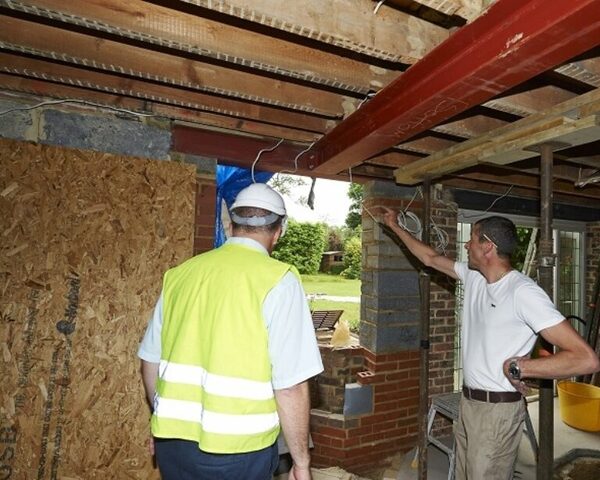
The route to a figure runs through a surveyor. UK Power Networks states that the next step is booking an appointment with one of its surveyors so they can visit the property and give a price, and the same wording appears across its new connection, supply move and upgrade pages2. The visit is not a quotation service in the ordinary sense: it is the point at which the operator sees the ground, the route and the connection point, and prices the work from what it finds.
For a temporary connection, the sequence is tighter. Following the visit a detailed price is sent, and if the customer is happy to go ahead, full payment is needed before the work is booked10. That is a different payment profile from a permanent connection, where the price follows the survey and the work is scheduled afterwards.
Before any of that, the online cost tool gives an indication. UK Power Networks describes answering its questions as taking about five minutes, and the same five-minute figure applies to the supply move cost indication1. The tool is a screening step, not a quote, and the detailed price that follows the surveyor visit is the figure that governs the job.
Response times are stated in two forms that have not been reconciled. The domestic connection team states it will get back to you within 48 hours11. A separate figure of five working days also appears in the operator's material. A household working to a builder's programme should plan around the longer figure and treat 48 hours as the aim.
Digging the trench yourself: what you provide and what UK Power Networks provides
The division of labour is set out clearly. If the household decides to do the digging, the trench needs to be dug on its own land, and the operator provides the necessary black tubing, or ducting, to place inside the trench2. The operator can also take care of the digging instead, and the choice sits with the household11.
What the household must deliver is readiness. If the trench is dug by the household, it must be ready for the operator to install the cable, and the meter box must be installed where the meter is to be connected1. The same requirement applies to a supply move: the trench must be ready for cable installation and the meter box installed where the meter is to be moved to and connected6.
The backfill commitment is the clearest figure in the whole process. Where UK Power Networks handled the digging, it states it will return within 48 hours to fill the trench back to its original condition2. That commitment is tied to the operator's own excavation. Where the household dug the trench, reinstatement is the household's, and the 48-hour figure does not apply.

For independence, digging the trench is the one part of a new connection a household can genuinely take on. It converts a priced element of the operator's quote into the household's own labour, and it leaves the cable, the connection and the energised supply in the operator's hands. The dependence that remains is the same as before: the cable, the fuse and the supply point belong to the network, and the household cannot energise anything itself.
The installation process step by step, from digging to meter connection
The sequence runs from application to energised supply, and each stage has a condition attached.
- Apply through the operator's online route, stating the power requirement rather than accepting the 15kVA default5.
- Book the surveyor visit, which is free, and receive the detailed price for the work afterwards1.
- Decide who digs. The household can dig its own trench on its own land and receive the ducting from the operator, or the operator can dig11.
- Prepare the site: trench ready for cable installation, meter box installed where the meter will connect1.
- Cable installation. Where the operator is digging, it states it might take a few days to complete that first, after which it can install the cable10.
- Backfill. Where the operator dug, it returns within 48 hours to fill the trench back to its original condition2.
- Meter and supply. The household chooses a supplier, who installs the meter and applies for the MPAN12.
The timescales that attach to each stage are the operator's own, and they are stated as aims rather than guarantees. The one firm commitment in the sequence is the 48-hour backfill where the operator dug the trench2.
For a household, the process is a reminder of where the boundary sits. Everything up to and including the cable is the network's; the meter and the account are the supplier's; the trench, the meter box position and the readiness of the site are the household's. Independence here means controlling the preparation and the capacity requested, not the energised connection itself.
New connections: meter box, MPAN and your supplier's role
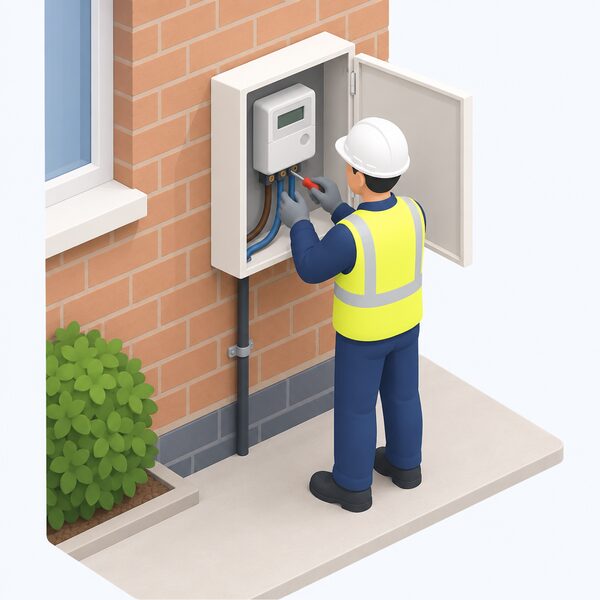
A new connection produces a Meter Point Administration Number, and the route to it depends on who is doing what. Where UK Power Networks installs a new connection, it states it will automatically provide the MPAN13. Where the connection is arranged through a generation route, the household chooses an electricity supplier who then installs the meter and applies for the MPAN12.
The MPAN is the identifier that ties the property to the supply, and it appears on the electricity bill14. Without it, no supplier can bill the property and no meter can be registered against it. A household that has just had a cable laid but has not chosen a supplier is a household with a connection and no account.
The meter itself is the supplier's responsibility. Smart meter installation arranged through a supplier is free of charge and typically takes about 90 minutes4. That is the domestic route. For a prepayment meter, the supplier should try to move the meter to somewhere the household can get to, and there may be a charge for moving it15.
"To set up your supply, you need to choose an electricity supplier who will then install your meter and apply for a Meter Point Administration Number (MPAN)."
The dependence that remains after a new connection is the supplier relationship. The cable and the fuse belong to the network; the meter and the billing belong to a supplier the household chooses and can change. The MPAN is what makes that choice possible, and it is issued as part of the connection rather than applied for separately.
Where UK Power Networks operates and how to start an application
UK Power Networks covers London, the South East and the East of England, and it states it has thousands of electricity substations across that area16. Its connection service covers one to four properties, which is the domestic and small business band, and the application route is its online portal1.
The operator's own guidance sets out the starting point: the online cost tool takes about five minutes to answer, and the surveyor visit follows1. For a supply move rather than a new connection, the same five-minute indication applies4. For a fuse upgrade, the operator states it can upgrade a main fuse from a 30 or 60amp fuse up to either an 80amp or a 100amp fuse, and its support material repeats the 80 or 100amp options with a request-a-visit route6. An electrician's recommendation for a 100amp fuse is the usual reason for asking17.
Outside UK Power Networks' area, the operator differs. Electricity North West, which covers the North West, states that prices start from £1300 for single domestic supplies18. That figure is a starting price for its own area and is not a per-metre rate; it is the nearest thing to a published connection price in the material, and it applies to one operator's territory only.
For a power cut, customers who live in London, the South East and East of England can call UK Power Networks on 0800 31 63 1057. The national 105 number also appears in the operator's material as a route to report a power cut or a dangerous situation19. The two numbers appear in the operator's own guidance and the documents do not settle which is preferred.
Sources19 cited
- New electricity connection: cost and time, UK Power Networks, 2026-09-17
- New electricity connection: what's involved, UK Power Networks, 2026-09-17
- Replace power cable or power line, UK Power Networks, 2026-09-17
- Smart meters, Welsh Government, 2026
- What are watts, kilowatts and kilovolt amps, UK Power Networks, 2026-09-17
- Fuse upgrade, UK Power Networks, 2026-09-17
- What is 105, UK Power Networks, 2026-09-17
- New connection, Northern Gas Networks, 2025-10-30
- Move: cost and time, UK Power Networks, 2026-09-17
- Temporary electricity connection: what happens after I apply, UK Power Networks, 2026-09-17
- Adding more power: what's involved, UK Power Networks, 2026-09-17
- Generation and storage up to 50kW, Electricity North West, 2026-09-19
- MPAN only, UK Power Networks, 2026-09-17
- Who is my gas and electricity supplier, Confused.com, 2026-07-03
- Problems getting to or topping up your prepayment meter, Citizens Advice, 2026-09-17
- What is an electrical substation, UK Power Networks, 2026-09-17
- What do you need to upgrade, UK Power Networks, 2026-09-17
- What to expect when planning your connection, Electricity North West, 2026-09-20
- Help and contact, UK Power Networks, 2026-09-17
 New Electricity ConnectionWho do you contact for a new or upgraded electricity connection, and what will it cost?
 Move, Exchange or Remove a MeterMoving a meter is not a DIY job and it is illegal to do it yourself.
 Home EV Charger CostA home charge point usually costs between seven hundred and fifteen hundred pounds fitted, with most people paying around a thousand.
 What Does a Smart Meter Cost?There is no upfront charge for a smart meter or a standard installation: the cost is recovered indirectly through energy bills.
 Cost to Charge an EV at HomeHow home charging cost is worked out from battery size, efficiency, the unit rate paid and the tariff behind it, with full-charge costs of about £8 to £17, cost per mile, annual running costs and what changes for EV owners from April 2028.
 Unit Rates by RegionWhy do electricity and gas prices differ depending on where you live?