
In this guide
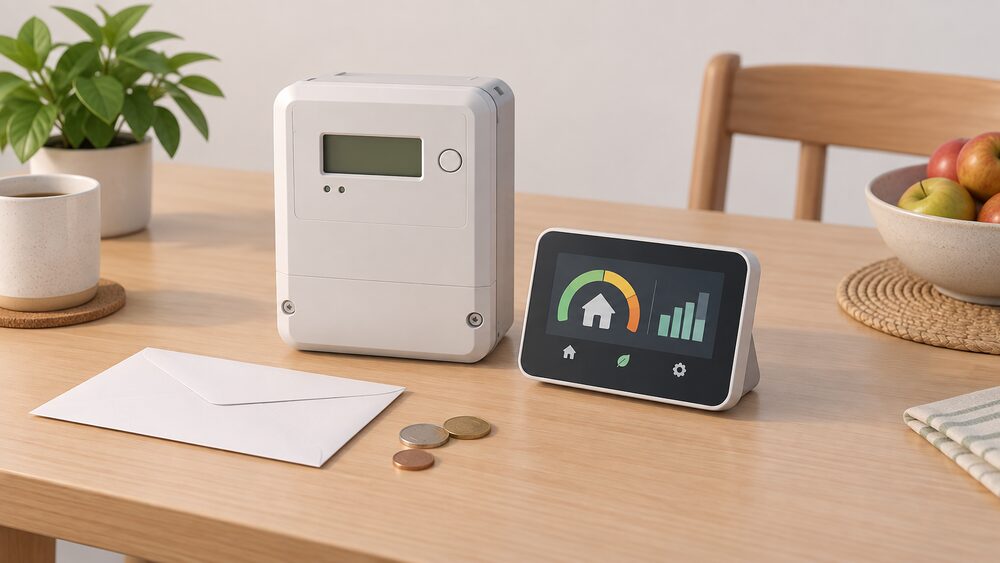
A smart meter carries no upfront charge. Energy Saving Trust states that smart meters are "completely free, and there's no upfront charge for the installation"1, and Which? advises that a household should not pay anything upfront either for the meters or for the in-home display that comes with them2. Ofgem's own line to consumers is to contact your supplier to get a smart meter for free3. Citizens Advice puts it as plainly: you will not have to pay to get a smart meter installed4.
That is not the same as saying nobody pays. The Welsh Government's climate action guidance is explicit that there is no direct cost for a smart meter, and that any expenses are recouped through energy bills over time5. Which? makes the same point from the consumer side, that energy companies should not describe smart meters as "free", because customers ultimately pay for them indirectly through bills2. Smart Energy GB, meanwhile, states that there is no extra cost to get a smart meter and the display screen, and that you will not have an extra amount on your bill6, so the language used across the sector differs even where the underlying arrangement does not. What is consistent is that there is no separate line item, no invoice and no installation fee.
The second distinction matters just as much. Citizens Advice notes that a smart meter will not automatically save money4: it measures and reports, and any saving depends on what the household then does. The meter itself costs nothing to run, because smart meters do not use your electricity supply6.
What a smart meter is and what it does
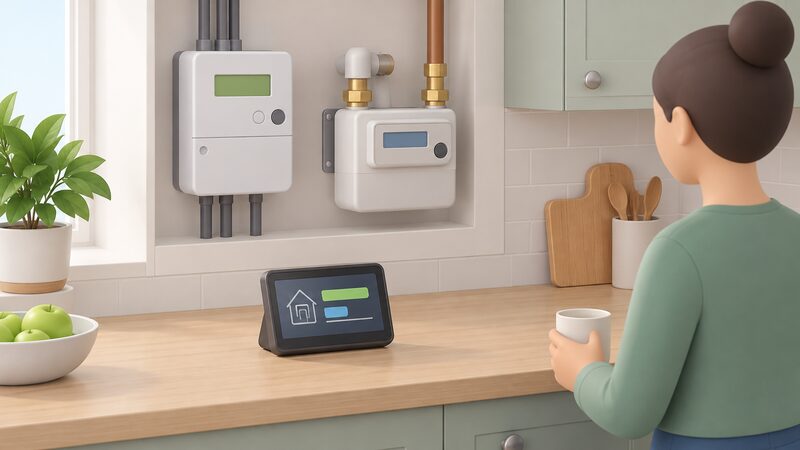
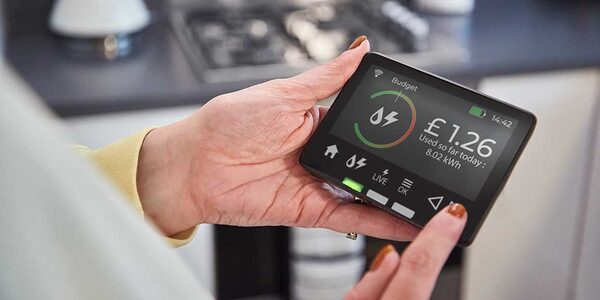
Smart meters are devices installed by an energy supplier that measure how much gas and electricity a home is using, with readings then sent automatically to the supplier9. Ofgem describes the same function: a smart meter automatically sends electricity and gas meter readings to the supplier, and the meter's in-home display shows how much energy is being used during the day3. The Data Communications Company, which operates the network the meters use, states that readings are sent automatically via the DCC's secure network10, and that smart meters are digital devices recording electricity and gas usage in real time11.
The in-home display is part of the package and is not billed separately2. Smart Energy GB is clear about what it is for: the display is for information only, and households still receive regular energy bills in the same way as before12. It is an information device, not a control device. Smart meters are also different from smart heating controls, and one can be used without the other1. Households wanting more granular data than the display gives can look at consumer access devices or a home energy monitor, which are separate purchases.
Two generations exist in Great Britain, and the difference matters for what happens when a household switches supplier. That distinction is covered in detail on SMETS1 and SMETS2 meters, and the network side on how smart meters communicate.
How the rollout works and who installs the meters
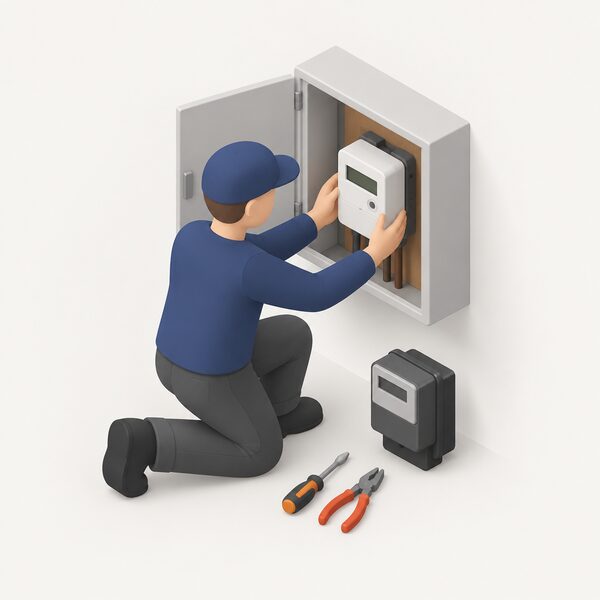
The rollout is delivered by energy suppliers, not by the government or the network companies. Ofgem states that the smart meter roll-out is being implemented by energy suppliers across the country, who are installing millions each year13, and the distribution network operator National Grid confirms that the roll out is being led by energy suppliers14. Energy suppliers have been rolling out smart meters since 201215, and Ofgem notes that the rollout has been underway for over 12 years16. The Data Communications Company describes the aim as completing the rollout by the end of 20308. The Consumer Council for Northern Ireland describes the full roll out there as taking place over several years7.
The obligations on suppliers are set in frameworks. The Rollout Framework covering 2022 to 2025 ran as a four-year obligation from 1 January 202213. Smart Energy GB states that every home in England, Scotland and Wales will be offered the opportunity to upgrade to a smart meter by their energy supplier before the end of the rollout17. Once government considers the rollout complete, responsibility for smart metering is to pass to Ofgem and the Smart Energy Code governance15.
Being offered a meter is not the same as being able to get one. Smart Energy GB lists among the reasons a household may be turned away that its supplier is not currently installing smart meters in its area18. Citizens Advice has recommended that the government's forthcoming new rollout framework should incentivise suppliers to install smart meters for all consumers who want one and tackle barriers for consumers less likely to have a meter, including those in the private rented sector19. The nation-by-nation picture is set out on smart meters in Scotland, in Wales and in Northern Ireland, and the broader programme on the UK smart meter rollout.
Nothing upfront, but no automatic savings
The two halves of the cost question need holding together. On the charge side, the sources are unanimous. The Consumer Council for Northern Ireland states there will be no separate fee for a smart electricity meter installation7. Age UK notes that energy suppliers must install smart meters at no extra cost, so a household should not be asked to pay to have one installed20. Smart Energy GB states the smart meter installer does not have to be paid on the day21. The DCC states that getting a smart meter installed is free for UK energy customers22.
On the saving side, the position is more careful. A smart meter will not automatically save money4. The DCC frames the mechanism honestly: except by switching, a household does not control the tariff its supplier sets, but it can change how much energy it uses10. Ofgem's summary of the benefit is that a household could find ways to save money using up-to-date information on its energy use3. The saving, in other words, is behavioural and tariff-driven rather than mechanical.
| What it costs | Position |
|---|---|
| The meter itself | No upfront charge1 |
| Standard installation | No separate fee, no additional cost7 |
| In-home display | No upfront cost for the monitor2 |
| Electricity to run the meter | None, it does not use your supply6 |
| Replacing a non-smart prepayment meter with a smart one | No cost added to existing debt when the supplier switches modes23 |
| How the programme is funded | Recouped through energy bills over time5 |
Because the money sits in bills rather than on an invoice, it sits alongside the other components of a regulated price. Ofgem sets maximum prices for a unit of energy and daily standing charges, with separate caps for gas and electricity, and the cap does not limit annual bills24. The cap is revised each quarter24, applies where a customer has not signed up for a fixed-term contract24, and a separate cap is set for each of the 14 regions of Great Britain24. Network costs alone make up almost 30% of the total24.
Accurate bills and the end of the estimate
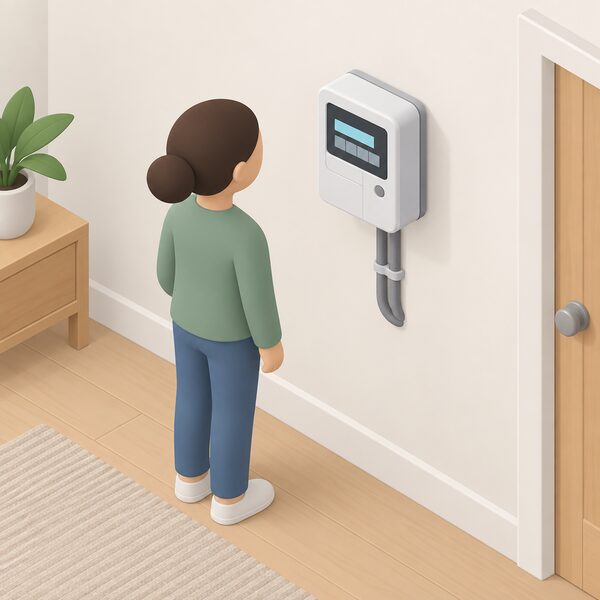
The clearest return on a working smart meter is billing accuracy. Ofgem states that a household with one will get bills based on accurate meter readings and not estimates, and does not need to submit meter readings itself25. The government's statement of consumer rights describes smart meters as enabling accurate billing by automatically recording energy use in half-hour periods26. SSEN puts the practical effect as accurate bills, with no more estimated bills or meter reader visits to the home27. National Energy Action states that the supplier will no longer send estimated bills and there is no need to provide meter readings yourself28.
For households who find meter reading difficult, that is more than convenience. Smart Energy GB notes the benefit for carers, who no longer need to take readings on behalf of the person they care for29. Readings are sent automatically and securely, so manual readings are not required in normal operation30.
Manual reading remains possible and occasionally necessary. A smart meter usually sends readings automatically, but there are still times when a reading is needed: switching supplier, checking usage, or resolving an account issue31. Some electricity smart meters show separate readings for day and night tariffs, for Economy 7 pricing, and for peak and off-peak usage31. Meters not operating in smart mode can still be read by hand32. Where estimates keep arriving despite a smart meter, the page on estimated bills with a smart meter covers the causes.
Tariffs, dual rates and time of use
Ofgem lists access to more flexible tariffs, including dual-rate tariffs, among the benefits of a smart meter25. The Energy Ombudsman states that all smart meters can support tariffs which charge different prices at different times throughout the day and night, including Economy 7, and that Economy 10 meters are also available33. Which? describes smart meters as enabling time-of-use tariffs, where different amounts are charged for electricity used at different times34.
Economy 7 is a dual rate tariff with two distinct electricity rates35, a two-tier system where day and night usage are charged differently and the night rate is less expensive36. Economy 7 and Economy 10 are older time-of-use tariffs that need compatible meters, using fixed cheaper periods, while newer electric vehicle and tracker tariffs can be more dynamic and usually work best with a smart meter37. Smart Energy GB states that a household on Economy 7 or Economy 10 can get a smart meter18, though Uswitch notes that not all suppliers can offer this38. Smart meters are compatible with Economy 7 tariffs and fixed rate tariffs, and allow a household to change tariff without changing the meter39.
Households that have come off an Economy 7 or Economy 10 tariff are under no rush: the Centre for Sustainable Energy states the meter will continue to function normally and, providing all electricity is on one circuit, there should be no difference40. Refusing a meter has a tariff consequence, though: Citizens Advice notes that if you refuse a smart meter, you might find it hard to access all tariffs4. More detail sits on smart meters and time-of-use tariffs.
Prepayment: topping up without a shop visit
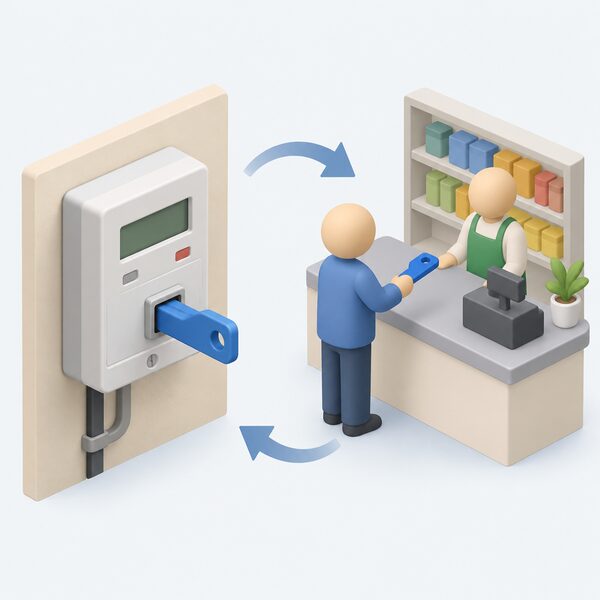
For prepayment households the smart meter changes the mechanics of paying. Ofgem lists among its benefits that a household can add credit automatically or without having to visit a shop in prepayment mode25. Smart Energy GB states that prepay customers can top up online, by telephone or text message, or with a smartphone app, with no gas card or electricity key necessary41. National Energy Action describes topping up more easily via an app, online or still in the local shop42. With a smart meter in prepayment mode, credit can be added remotely from a mobile device at any time43. A traditional prepayment meter, by contrast, needs a card or key topped up at PayPoint locations44, and Ofgem describes topping up at a local Paypoint store or Post Office using the meter's key or card, or a barcode for smart prepayment meters45.
There is a cost point specific to prepayment. With smart meters, suppliers can switch consumers from credit to prepayment mode without the cost of a new meter being added to their existing debt18. Where a household has a non-smart prepay meter and the supplier offers to fit a smart meter in its place, that should again be free23. The DCC notes the meters are free to use and available for payment-on-account or prepay customers46. See also smart prepayment meters and switching prepay to credit.
Where smart meters fall short: faults and dumb mode
A meter that has stopped communicating delivers none of the benefits above, and this is the largest practical qualification on the whole proposition. Ofgem states that a smart meter may stop recording the energy used, or may no longer send readings to the supplier25. It lists the causes as losing connection with the supplier, losing connection after a change of supplier, or having been installed without being connected to the national communication system32. Citizens Advice adds that this might happen if you have an older type of smart meter and you switched supplier, or if your supplier has gone bust47. Smart Energy GB notes that a first-generation SMETS1 meter may not be working in smart mode if the household switched supplier after installation41. Which? notes that smart meters can go dumb, particularly in older models48.
The scale is significant. The Centre for Sustainable Energy states that around 10% of smart meters are in 'dumb' mode49. Ofgem's own performance data for large suppliers showed a range between 2.6% and 16.3% of smart meters not operating in smart mode as at 30 June 202450.
Citizens Advice has recommended that suppliers be held accountable when smart metering equipment does not work, closing the accountability gap between energy suppliers and the DCC, including changes to DCC contracts if required19. Recovery is sometimes straightforward: Ofgem notes that a meter may work in smart mode again if a household changes tariffs or suppliers52. On switching generally, having a smart meter does not stop a household switching, and smart meters should make switching quicker as they can send information to a new supplier instantly2; with a SMETS2 meter the switch should happen without changes to readings, bill payments or supply53. Only under exceptional circumstances would a supplier be expected to change a smart meter back to a traditional meter, and it may charge the costs if it agrees33. Further detail sits on smart meter faults and troubleshooting and why a smart meter is in dumb mode.
Data, privacy and the right to say no
Smart meters are optional5, and it is a household's right to refuse installation33. Which? confirms the right to refuse if you do not want one54, as does Citizens Advice4. Where a traditional meter needs replacing because it is faulty or unsafe, replacement options may be limited33. Where a household cannot have or does not want a fully functioning smart meter, a supplier may offer to install smart meter technology with the communications function disabled, so it will not send readings automatically55.
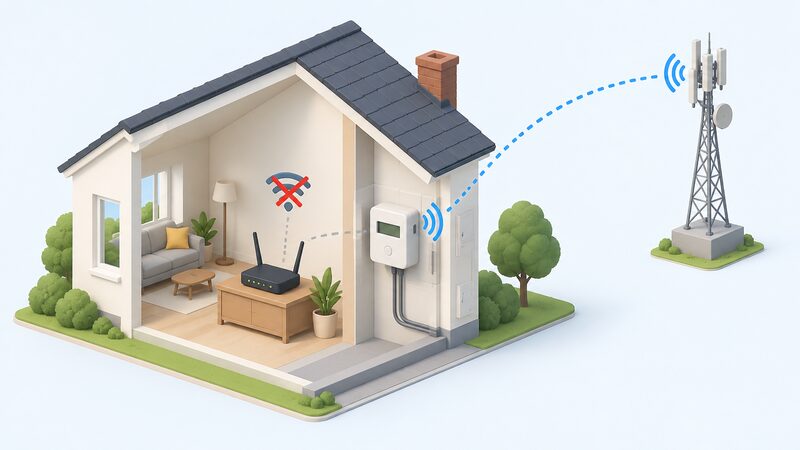
On data, the position is narrower than many assume. Smart meters do not hold data that could be used to identify you, such as your name, address or bank account details56. The DCC states that personal information such as name, address and bank details is not stored on the smart meter57. Which? reaches the same conclusion independently: smart meters do not store or transmit personal information that could identify you58. Smart meters do not use Wi-Fi to send data; they use their own secure data network59, which is also why they do not affect broadband speed. What the meter does give the household is information: the DCC frames the data as putting you in control of your energy usage so you can take energy-saving steps60. The detail is on smart meter data and smart meter security.
On health, Public Health England carried out an extensive programme of research and found that smart meters are safe and pose no risk to public health59. Radio wave exposure is many times lower than from Wi-Fi and mobile phones and well within guideline levels61, and smart meters are built under UK and EU safety standards62.
What a smart meter does, and does not do, for independence
A smart meter does not generate, store or reduce energy. It does not disconnect a household from the grid or from a supplier. What it changes is visibility and optionality, and both matter to a household trying to take more control.
Visibility comes first. The in-home display shows how much energy is being used during the day3, and the meter's data lets a household take energy-saving steps60. That information is the raw material for sizing solar, battery or a heat pump. Optionality comes second: access to dual-rate and time-of-use tariffs25 is what lets a household shift load to cheaper or cleaner periods, and Smart Energy GB notes that smart meters allow suppliers to offer incentives to households that reduce energy use during peak hours, helping balance supply and demand and reduce pressure on the grid63. Smart Energy GB describes smart meters as the foundation of a smarter energy system, helping integrate renewable power such as wind, solar and hydropower and reduce reliance on fossil fuels64.
For generating households the interaction is specific. Smart meters are designed to work with solar panels, and a supplier should be able to offer one as part of the rollout18, though some suppliers are not yet ready to supply smart meters to customers with solar panels59. Households claiming the feed-in tariff without a smart meter cannot take the readings required to calculate payments65. See smart meters with solar panels and export metering.
The dependencies that remain are real and worth naming. The meter belongs to the supply relationship, not to the household: the supplier installs it, owns the billing, and sets the tariff, and except by switching a household does not control the tariff its supplier sets10. The communications sit on a national network operated by the DCC10, and when that link fails the household is back to manual readings32. The cost sits inside bills rather than outside them5. A smart meter is an enabling device for the wider picture set out across smart meters and home energy management, not a route out of the grid.
Sources65 cited
- Guide to smart meters, Energy Saving Trust, 2026-07-15
- What is a smart meter?, Which?, 2026-04-07
- Getting a smart meter, Ofgem, 2026
- Getting a smart meter installed, Citizens Advice, 2026-09-17
- Smart meters, Welsh Government Climate Action, 2026
- Do smart meters cost more?, Smart Energy GB, 2026-03-16
- Smart electricity meters fact sheet, Consumer Council for Northern Ireland, 2026-04
- Supporting customers with non-communicating smart meters, Data Communications Company, 2026
- Smart plugs and energy saving, Smart Energy GB, 2026-08-19
- How do smart meters reduce my bills?, Data Communications Company, 2025
- How do smart meters save energy?, Data Communications Company, 2026
- Switching supplier, tariffs and bills, Smart Energy GB, 2026-03-16
- Supplier smart metering installation targets, Ofgem, 2026-09-17
- Smart meters, National Grid, 2026-09-17
- Update on the Smart Metering Implementation Programme, Public Accounts Committee, 2023-10-20
- Final decision on smart meter guaranteed standards, Ofgem, 2026-01-30
- Help me decide, Smart Energy GB, 2026-03-16
- Can I get a smart meter?, Smart Energy GB, 2026-03-16
- The state of smart: consumer experiences of smart meters, Citizens Advice, 2026-02-03
- A guide to smart meters, Age UK, 2026-08-24
- The installation process, Smart Energy GB, 2026-04-01
- Does a smart meter save money?, Data Communications Company, 2024
- Changing a prepayment meter to a credit meter, Confused.com, 2026-04-20
- Domestic energy prices and the price cap, House of Commons Library, 2026-09-20
- Get help with your smart meter, Ofgem, 2026-09-17
- Smart meters: your rights and expectations, GOV.UK, 2025-08-08
- Smart meters, SSEN, 2026-09-19
- Frequently asked questions about smart meters, National Energy Action, 2024-05-03
- Smart meters and carers, Smart Energy GB, 2026-08-19
- Understanding smart meters, National Energy Action, 2026-06-12
- How can I read a smart meter?, Smart Energy GB, 2026-08-17
- Smart meter performance, Ofgem, 2026
- Smart meters, Energy Ombudsman, 2026-09-20
- Gas meters and electricity meters: what you need to know, Which?, 2026-01-16
- Electric storage heaters, Energy Saving Trust, 2026-05-20
- Moving house gas and electricity guide, Uswitch, 2026-08-26
- Energy flexibility, Smart Energy GB, 2026-08-17
- Economy 7 explained, Uswitch, 2026-09-08
- What is Economy 7?, Smart Energy GB, 2026-04-07
- Important reminder for Economy 7 and 10 meters, Centre for Sustainable Energy, 2026-06
- Do I already have a smart meter?, Smart Energy GB, 2026-03-16
- Our view on smart meters, National Energy Action, 2026-06-12
- The Priority Services Register, Smart Energy GB, 2026-08-17
- Using a smart meter in prepay mode to save money, Smart Energy GB, 2026-08-17
- Prepayment meters: consumer guidance, Ofgem, 2026
- How do you know if you have a smart meter?, Data Communications Company, 2026
- Fixing problems with your smart meter's in-home display, Citizens Advice, 2026-09-17
- How to read your gas and electricity meter, Confused.com, 2025-12-15
- Smart meters advice, Centre for Sustainable Energy, 2025-05
- Smart meter guaranteed standards of performance, Ofgem, 2025-03-28
- Smart meter guaranteed standard statutory consultation, Ofgem, 2025-08-08
- What happens if your energy supplier goes out of business, Ofgem, 2026
- What is a smart meter? Easy read, Smart Energy GB, 2026-03-16
- Do I have to accept a smart meter?, Which?, 2026-05-12
- RTS meter switch-off, Energy Saving Trust, 2026-05-08
- Data access and privacy, Smart Energy GB, 2026-03-16
- Protecting data on the smart meter network, Data Communications Company, 2026
- How to use your smart meter data, Which?, 2026-07-14
- Myth-busting smart meter problems, Smart Energy GB, 2026-09-17
- Smart meters and decarbonisation, Data Communications Company, 2026
- How do smart meters work?, Smart Energy GB, 2026-08-27
- Smart meter disadvantages, Smart Energy GB, 2026-03-16
- How tidal energy works and how it could affect your energy use, Smart Energy GB, 2026-08-19
- How to get the bill payer where you live to get a smart meter, Smart Energy GB, 2026-03-16
- Most common solar panel problems, Which?, 2026-09-20
 Meters and Energy IndependenceDo smart meters really save you money, and can you still get one fitted for free?
 The Full Smart Meters GuideDo smart meters really save you money, and how do you use one to cut your bills?
 HEMS and Monitoring CostsWhat does a home energy monitor cost to buy and run?
 Smart Thermostat SubscriptionsDo you have to pay a monthly fee to use your smart thermostat, and what do you actually get for it?
 Smart Meter Faults and FixesYour smart meter has stopped working.
 In-Home DisplaysWhat does the little screen that came with a smart meter actually tell you, and what can you do when it stops working?