
In this answer
Short answer
A smart meter does not, by itself, cut a bill. It measures gas and electricity, shows what the home is using and what it is costing on an in-home display, and sends readings to the supplier automatically1. Every saving figure attached to smart meters is a figure for what households do with that information, or for what the energy system saves because the data exists.
The headline number is £47 a year, on average, off a dual-fuel bill by 2030, according to the government figure reported when an advertisement was banned for overstating the case2. The government's own 2025 impact assessment models a smaller £45.80 a year for a dual-fuel domestic customer, based on the latest price cap unit costs3. Trials cited by the Public Accounts Committee found reductions of 3.3% to 3.6% for electricity and 2.9% to 3.1% for gas4.
So the honest answer has two parts. A household that watches the display and changes behaviour can expect a modest reduction, in the region of a few per cent of consumption. A household that installs a meter and changes nothing saves nothing, because smart meters do not directly reduce electricity or gas prices5.
What a smart meter actually does in the home
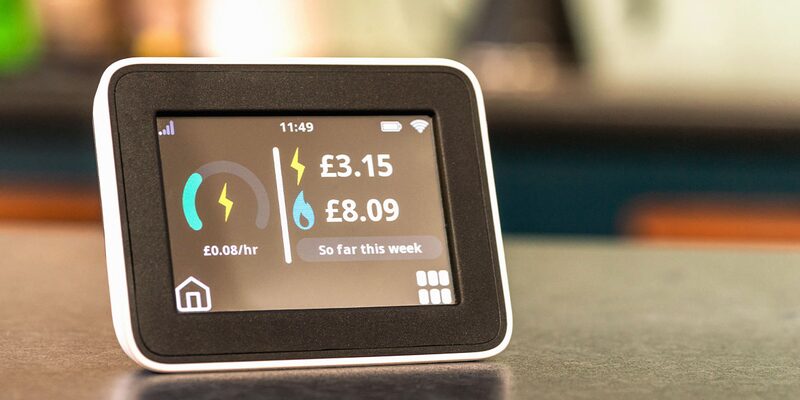
The device itself is a meter, not a saving. It measures how much gas and electricity the home is using and what that costs, displays the figures on an in-home display, and sends usage information securely to the energy supplier1. It tracks consumption across a day, a week, a month or a year, and the readings go to the supplier without anyone reading a dial8.
That automatic recording has a billing consequence. Smart meters record energy use in half-hour periods, which allows suppliers to bill on actual rather than estimated usage9. The data is used to bill for the energy used, to offer new products and tariffs where permission has been given, and to help make the energy system more efficient by recording demand more accurately10.
What the meter does not do is tell a household which appliance is responsible. Smart meters only measure household energy use and do not know when individual appliances are turned on or off8. Appliance-level detail needs separate monitoring equipment, which is a different purchase with a different cost.
For energy independence, the gain is informational rather than structural. The home still buys gas and electricity from a supplier, still depends on the grid, and still depends on the supplier's app or the in-home display to see the data. What changes is that the household can see its own consumption in near real time and in pounds, rather than waiting for a quarterly estimate. That is the foundation for every saving discussed below, and it is also the limit of it.
The savings figures: £47 a year on average, up to £110
The most quoted figure is £47 a year, on average, off a dual-fuel bill by 20302. It is an average across the rollout and a projection to the end of the decade, not a per-household entitlement. The government's 2025 consultation modelling puts the figure at £45.80 a year for a dual-fuel domestic customer using the latest price cap unit costs3. The two figures are close, and the difference is a matter of method and date rather than a contradiction.
The larger numbers that circulate usually belong to other measures. A smart thermostat and controls can cut up to £110 a year from bills, which is a heating control saving rather than a meter saving11. Energy efficient LED lighting saves £45 a year in Great Britain and £55 in Northern Ireland on electricity bills12. An efficient shower head saves £35 a year for households with a water meter, or £60 a year in total when combined with the water saving13. None of these require a smart meter, and none should be attributed to one.
| Measure | Stated annual saving | Source |
|---|---|---|
| Smart meter, dual-fuel bill by 2030 | £47 on average | 2 |
| Smart meter, modelled per dual-fuel customer | £45.80 | 3 |
| Smart thermostat and controls | up to £110 | 11 |
| LED lighting (GB / NI) | £45 / £55 | 12 |
| Efficient shower head with water meter | £35, or £60 in total | 13 |
The pattern matters more than any single row. The meter's own contribution is the smallest of these figures, and it is the one that depends most on what the household does next. The others are equipment changes with a predictable effect.
How awareness of energy use turns into lower bills
The mechanism is straightforward: the meter provides real-time information about the energy use in a household, which helps customers avoid wasting energy and avoid estimated readings and bills1. Smart Energy GB's own framing is that smart meters provide valuable information that could help save money on energy bills, and that they can help reduce bills by making the household aware of its energy use14.
The word "could" is doing real work. Smart meters do not reduce energy bills automatically, though they can help a carer understand usage patterns more clearly16. A smart meter can help with utility bills by sending automatic meter readings, but it does not automatically save energy or money, and practical changes are needed to save energy7. The Energy Saving Trust's position is the same in substance: the meter is a tool, and the saving comes from what is done with it.
Where the awareness pays most reliably is in tariff access. Smart meters operating in smart mode provide real-time information, enable more accurate bills and give access to more flexible tariffs17. One customer account cited by Smart Energy GB describes using cheaper rates to charge a car and run the washing machine for less18. Time-of-use tariffs and reward schemes are the route by which a smart meter can produce a saving larger than the behavioural few per cent, and they depend on half-hourly consumption data that only a smart meter supplies.
For independence, this is the meaningful shift. A household on a flat tariff has one lever: use less. A household with half-hourly data and a flexible tariff has two: use less, and use it when it is cheaper. The second lever is the one that connects a smart meter to solar, batteries and electric vehicle charging, and it is unavailable without the meter.
Gas savings of 2.9% to 3.1%: what the trials show
Gas is the harder case, because a smart meter cannot change how a boiler burns. What it can do is make gas consumption and its cost visible on the in-home display, which is where heating behaviour becomes a decision rather than a habit1.
The trial evidence is modest and consistent. The Public Accounts Committee cited energy reductions of 3.3% to 3.6% for electricity and 2.9% to 3.1% for gas4. The government's 2025 impact assessment assumes an average household will save 3.45% on electricity consumption and 3% on gas consumption3. The two sets of figures sit inside each other, and the gas range is narrow: roughly three per cent, whichever document is used.
Three per cent of a gas bill is not nothing, but it is not a transformation either. The trials show energy reductions of 3.3% to 3.6% for electricity and 2.9% to 3.1% for gas4. A meta-analysis puts the average household saving at 3.45% on electricity consumption and 3% on gas consumption3. A further study attributes a 3.0% cut in gas consumption to behavioural changes in households with smart meters17.
The cash value of any percentage depends entirely on the unit price at the time, and no unit price is given here, so no pound figure can be attached to the gas percentage. What the evidence supports is the direction and rough size of the effect, not a household-specific sum.
"These show energy reductions of 3.3% to 3.6% for electricity and 2.9% to 3.1% for gas"
The practical expectation is that gas savings arrive through the same route as electricity savings: shorter heating periods, lower flow temperatures, hot water timed to actual use, and an end to heating an empty house. The meter makes each of those visible in pounds. It does not perform any of them.
National totals: £5.6 billion to £19.5 billion across the rollout
The household figures scale up into national ones, and the national figures disagree with each other. Smart Energy GB states that smart meters could save households a total of £5.6 billion on energy bills, and separately that the rollout will lead to a £6 billion saving for Britain by 20345. The same organisation publishes a £19.5 billion savings figure against a £13.5 billion investment19. A further government prediction of £650 million of savings is also published20.
The £13.5 billion investment figure has a longer history. In 2019 the Department estimated the rollout would cost £13.5 billion from 2013 to 2034, in 2011 prices4. The £19.5 billion savings figure is presented as far outweighing that investment19. The £5.6 billion and £6 billion figures are smaller and later. These are not reconcilable from the published material, and the figures disagree; all of them are estimates produced at different dates on different assumptions.
| National figure | Value | Source |
|---|---|---|
| Household bill savings across rollout | £5.6 billion | 5 |
| Saving for Great Britain by 2034 | £6 billion | 5 |
| Savings against investment | £19.5 billion | 19 |
| Rollout investment, 2013 to 2034 (2011 prices) | £13.5 billion | 4 |
| Government predicted saving | £650 million | 20 |
The regulatory side of the rollout also carries a cost. The Guaranteed Standards of Performance consultation estimates redress at £117 million, with total year-one benefits of £105 million in bill savings and carbon emissions3. Those are system-level numbers about supplier performance, not household savings, and they belong in a different column from the bill figures above.
Where a smart meter falls short as a saving measure
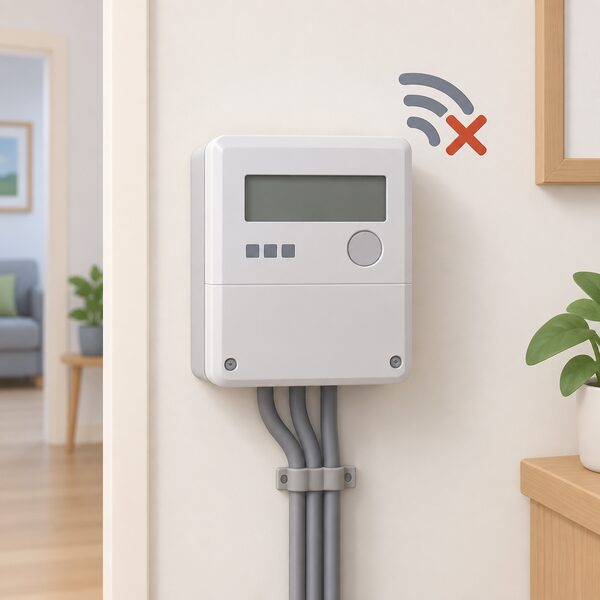
The first limit is that the meter is passive. Smart meters themselves do not directly reduce electricity or gas prices, though they can help people make more informed energy decisions5. A smart meter can help with utility bills by sending automatic meter readings, but it does not automatically save energy or money, and practical changes are needed7. Any expectation of an automatic reduction is misplaced.
The second limit is technical. Around 10% of smart meters are in "dumb" mode, meaning they have lost the communications link that makes them smart7. Ofgem's performance data for large suppliers shows a range of 2.6% to 16.3% of smart meters not operating in smart mode as at 30 June 202421. A meter in that state still measures, but the automatic readings, the remote tariff access and the display data that drive the savings are degraded or absent. The consultation models a £105 million benefit from a four percentage point reduction in meters not operating in smart mode3.
The third limit is behavioural, and it is the largest. Every pound figure in this article assumes a household that looks at the display and acts. Where that does not happen, the meter delivers accurate bills and no saving, which is still worth having but is not the same claim. The rollout's stated purpose was putting households in control of their energy use by helping them to save money22, and control is the part that is guaranteed.
Cost, prepay and switching: the practical conditions
Installation carries no charge to the household. Energy suppliers must install smart meters at no extra cost, so a householder should not be asked to pay to have one installed6. The cost has been covered through everyone's bills, which is why the meter arrives without a charge on the day23. A supplier can install a smart meter at no extra cost to the customer24.
For prepayment households, the picture is more favourable than for credit customers in one respect: smart meters in prepay mode can help a household save25. Prepay mode also removes the need to travel to top up, and the display shows credit in pounds. On switching, guidance for prepay customers states that many customers can switch supplier while keeping their smart meter25. Older SMETS1 meters may need enrolment into the national network before they retain full functionality after a switch, which is a separate question from the savings themselves.
The distinction between a smart meter and a standalone energy monitor matters here. A smart meter measures the whole home and reports to the supplier. A monitor typically clamps a cable and reports consumption, sometimes per circuit. Smart meters only measure household energy use and do not know when individual appliances are turned on or off8, so a household wanting appliance-level detail is buying something the meter does not provide.
Sources25 cited
- Smart meters, Energy Systems Catapult, 2025-08-19
- Smart meter advert banned for misleading consumers, Which?, 2030
- Smart meter Guaranteed Standards of Performance Draft Impact Assessment, Ofgem, 2025-08
- Smart meter rollout inquiry report, Public Accounts Committee, 2023-10-20
- Benefits for you, Smart Energy GB, 2026-08-18
- A guide to smart meters, Age UK, 2026-08-24
- Smart meters advice, Centre for Sustainable Energy, 2025-05
- Automatic meter readings, Smart Energy GB, 2026-04-07
- Smart meters: your rights and expectations, GOV.UK, 2025-08-08
- Get help with your smart meter, Ofgem, 2026-09-17
- Energy saving tips for the home, Confused.com, 2025-10-14
- Top energy saving ideas for your home improvement project, Energy Saving Trust, 2026-08-03
- Energy efficiency advice, Cadent Gas, 2026-09-20
- Saving money with a smart meter, Smart Energy GB, 2026-03-16
- Bills, Smart Energy GB, 2026-03-16
- Smart meters and carers, Smart Energy GB, 2026-08-19
- Smart meter performance, Ofgem, 2026
- Benefits, Smart Energy GB, 2026-03-16
- About the rollout, Smart Energy GB, 2026-03-16
- Do I have to get a smart meter, Smart Energy GB, 2026-04-01
- Smart Meter Guaranteed Standards of Performance, Ofgem, 2024
- Best practice guidance for energy efficiency advice during smart meter installation visits, GOV.UK, 2017-02-01
- Smart meters for landlords, Smart Energy GB, 2026-03-16
- How to get a smart meter, Smart DCC, 2026
- How to use a smart meter in prepay mode to save money, Smart Energy GB, 2026-03-16
 Do Smart Controls Save Money?Do smart heating controls really cut your bills, and by how much?
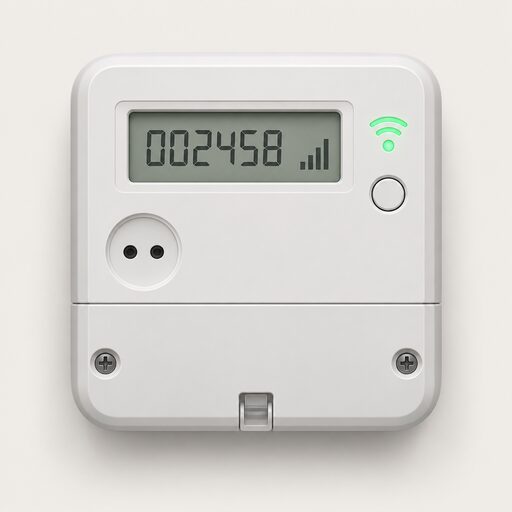 The Full Smart Meters GuideDo smart meters really save you money, and how do you use one to cut your bills?
 What Does a Smart Meter Cost?There is no upfront charge for a smart meter or a standard installation: the cost is recovered indirectly through energy bills.
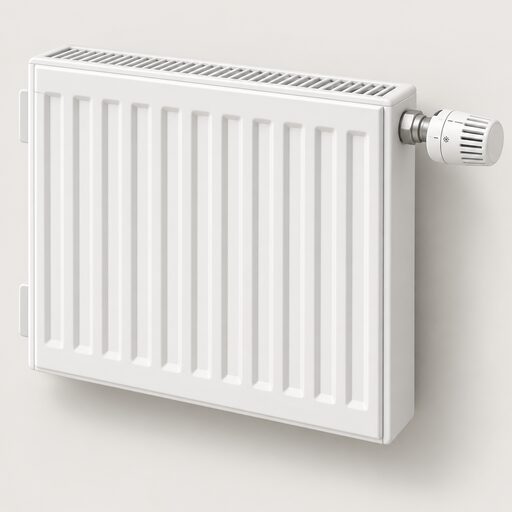 Changing Habits SavingsWhat the evidence says behavioural change saves: around £90 to £120 a year for one degree off the thermostat, £100 to £110 a year for using a full set of heating controls, and £304 to £351 a year for a bundle of small changes.
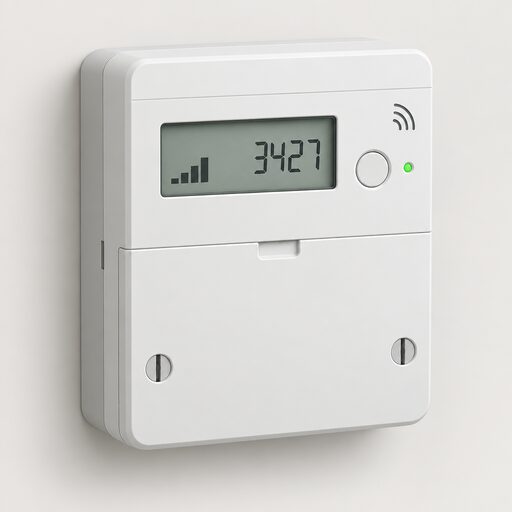 How a Smart Meter WorksHow a British smart meter measures gas and electricity, how the in-home display and the DCC's secure network fit together, what data leaves the house, what it costs, and where smart mode goes wrong.
 Meters and Energy IndependenceDo smart meters really save you money, and can you still get one fitted for free?