
In this answer
Short answer
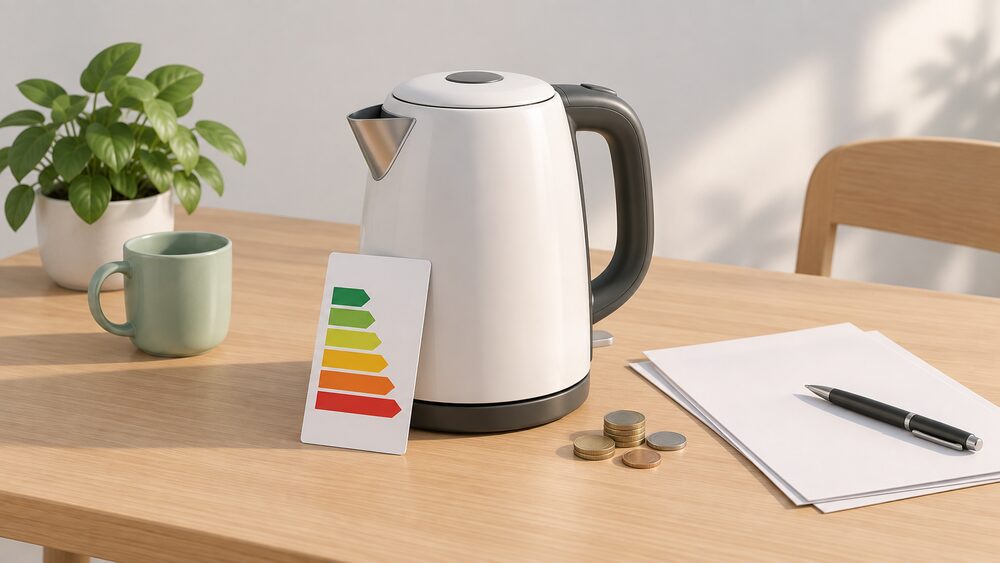
The headline figure for upgrading to more efficient appliances is modest: appliances carrying the Energy Saving Recommended logo could save as much as £37 a year1. That is the number to hold on to when weighing a replacement, because it is the only published annual saving in the UK sources that is attributed specifically to efficient appliances rather than to a whole package of home measures.
The larger savings come from combining technologies, not from swapping one appliance. Savings of up to around £800 a year are reported for households combining heat pumps, solar panels and battery storage with the right smart tariff2, and a typical household could save around £1,200 a year today by combining an EV, a heat pump, solar panels and a time-of-use tariff3. Appliance efficiency is a real but small lever; the tariff and the heating system are the big ones.
This page sets out what the figures cover, how the UK label works, how to estimate a saving for a particular household, and where appliance upgrades sit against fabric and heating work.
What the figures say: typical annual savings from efficient appliances
The £37-a-year figure is the anchor for appliance replacement, and it is worth being precise about what it is and is not. It is described as the saving available from more efficient appliances carrying the Energy Saving Recommended logo1. It is not a per-appliance figure, it is not tied to a particular model, and it is not a guarantee: it is the upper end of what the sources attribute to efficient appliances.
Alongside it sits a second, differently framed number. Appliances with a high energy efficiency rating (Grade A) are described as more efficient in the long run6. That is a statement about direction rather than amount, and it matters because it is the basis on which a household can reason about a purchase even when no pound figure is published for the specific model.
The two figures do different jobs. The £37 is a planning number for a household deciding whether an appliance swap is worth doing for energy reasons. The Grade A statement is a selection rule: when a replacement is needed anyway, the efficient model is the one that costs less to run over its life.
For context on scale, a Welsh Government page puts the total available from a set of energy saving tips at up to £351 a year7, and a supplier's winter guidance cites an average saving of £110 a year on the energy bill for users of an energy efficiency tool8. Both are broader than appliances alone, and both show that appliance efficiency is one component of a household's saving rather than the whole of it.
Where the £37-a-year figure comes from and what it covers
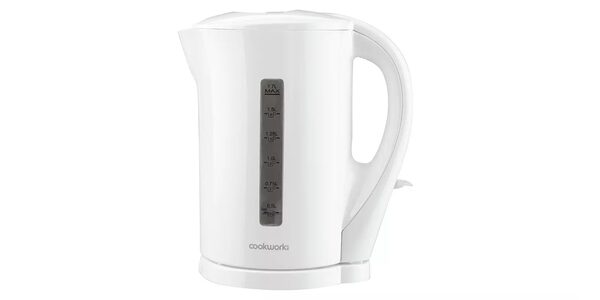
The £37 figure is best understood by contrast with a number that looks identical but means something entirely different. Several Smart Energy GB calculator pages use £37 as an example monthly cost, based on the current energy price cap, for a set of appliances that includes a kettle, TV, air fryer, laptop, games console, electric oven, electric shower, LED lighting and an energy panel heater9. That is a cost per month for running a bundle of appliances, not a saving per year from upgrading them.
The two figures are not interchangeable and the sources do not reconcile them. One is an annual saving attributed to efficient appliances1; the others are monthly running costs for an example appliance set under the price cap9. A household reading £37 in both places could easily conflate them, and the distinction matters: one is money not spent because of efficiency, the other is money spent because of usage.
What the £37 saving covers is also narrower than it first appears. It is attached to the Energy Saving Recommended logo, an endorsement mark, rather than to the statutory label. The sources do not break the figure down by appliance type, do not say whether it assumes replacement of one appliance or several, and do not give the baseline appliance it is measured against. Treat it as an indicative ceiling for a household that replaces appliances with logo-carrying efficient models.
The standby figure is the one appliance-related saving with a clear method and a clear regional split: around £45 a year in Great Britain and £55 in Northern Ireland just by remembering to turn appliances off standby mode4. That is behaviour rather than purchase, it requires no capital, and it is larger than the £37 attributed to buying efficient appliances. For a household weighing where to start, the ordering is instructive.
"You can save around £45 a year in GB and £55 in NI just by remembering to turn your appliances off standby mode."
Why some upgrades save far more: the £800-a-year combination
The reason appliance savings look small next to whole-home figures is that the large numbers come from combining measures and changing when energy is used, not from making individual devices more efficient. The Energy Saving Trust's findings report savings of up to around £800 a year2, and its accompanying release describes households reducing annual energy bills by around £800 by combining clean technologies such as heat pumps, solar panels and battery storage with the right smart tariff10.
The Climate Change Committee's figure is larger again: a typical household could save around £1,200 a year today by combining an EV, a heat pump, solar panels and a time-of-use tariff3. The Energy Saving Trust's house of the future estimate puts the saving at around £1,378 a year compared with a typical gas-fuelled home with none of these upgrades11. These are modelled or estimated figures for packages, and they are reported as such.
The mechanism behind them is worth stating plainly, because it is not efficiency in the appliance sense. A smart meter allows access to more flexible tariffs, including dual-rate tariffs12. Households with heat pumps could save more than £250 annually by shifting to a smart tariff and using their heat pump flexibly5. That saving comes from moving load to cheaper periods, which is a different lever from a better energy rating.
For a household's independence, the distinction is the whole point. An efficient appliance reduces the units drawn from the grid but leaves the household dependent on the grid, a supplier and whatever the tariff of the day is. A heat pump, solar panels, a battery and a time-of-use tariff change the relationship: some generation is on the roof, some storage is in the house, and the timing of demand becomes something the household controls. The appliance is a smaller, simpler improvement.
How appliance efficiency is labelled and verified in the UK
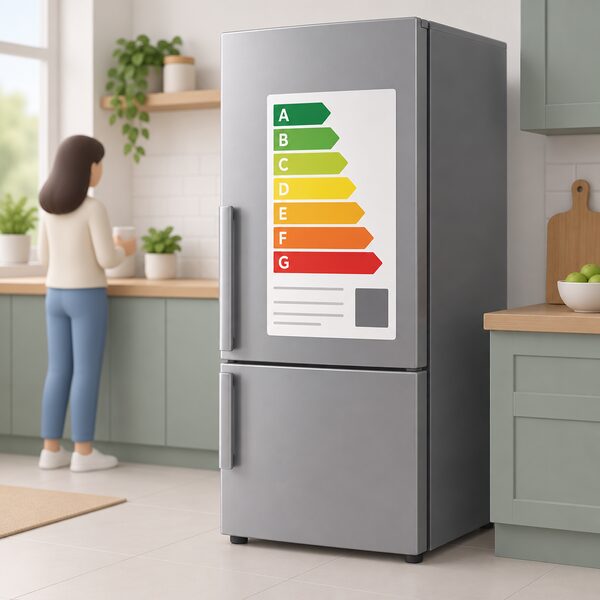
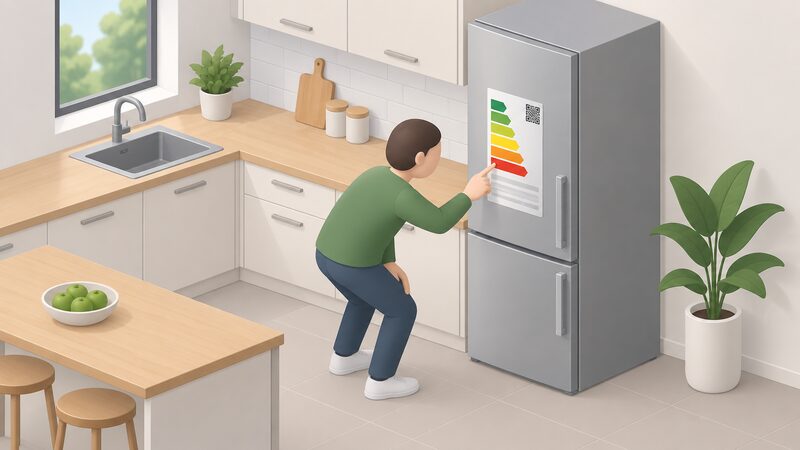
The statutory label is the A to G scale, with A the most energy efficient and G the least13. The scale was reset back to A to G to make it a more accurate reflection of a product's performance at home, which means an A under the current label is not equivalent to an A under the old one13. All labels include the product's energy efficiency rating alongside product-specific data, and a QR code to scan for more information13.
The label also carries running-cost information. Energy labels rate appliances A as most efficient for their size and print suggested kWh usage per annum for each appliance, which is the figure that allows comparison between differently sized appliances14. That is the practical answer to the question of how to compare a small efficient model with a large one: the letter is size-relative, the annual kWh figure is not.
Coverage is not yet complete. For other products like ovens and tumble dryers, the new label should be introduced when new or revised UK regulations come into force15. Until then, those categories sit outside the reset scale, so a household comparing an oven against a fridge is comparing two different labelling regimes.
Official guidance on choosing is straightforward: look out for the energy ratings label and think about the size of the appliance needed16. Size matters because an oversized appliance uses more than a correctly sized one regardless of its rating. Self-build guidance makes the same point in passing, advising energy-efficient appliances and lighting such as LED bulbs17.
How to work out the saving for your own household
There is no single published method for converting an appliance's label into a household-specific saving, but the sources offer the components. The label's suggested kWh usage per annum gives the annual consumption figure14; the household's own tariff gives the price per unit; and the difference between the old and new appliance's annual kWh gives the units saved. The sources do not supply a worked example, so the arithmetic is the household's own.
Two official tools exist for the wider picture. The Home Renewables Selector checks which improvements could work for a property and assesses carbon and money savings from specific technologies18. A home energy saving tool is available to help understand how energy efficient a home is and what changes could help reduce energy use19. Neither is appliance-specific, but both frame the decision.
For homes with high-demand electrical appliances, the Energy Saving Trust notes that savings could be higher than a solar calculator's estimate because more energy would be used from the solar panels and less from the grid20. That is the interaction to watch: an appliance upgrade and a solar installation are not independent, because shifting consumption to self-generated electricity changes the value of both.
The Energy Saving Trust also offers advice on energy at home and a guide to green renovation to help put energy efficiency first room by room21, which is the closest thing in the sources to a structured method for working through a home. Its kitchen guidance is published as a blog post22.
Where appliance savings fit alongside bigger home upgrades
Appliance replacement is one line in a larger plan, and the sources place it accordingly. The economic feasibility test used in official guidance treats a measure as viable where it achieves payback of its initial cost within 15 years through energy savings23. On a £37-a-year saving1, that test is difficult to meet on a like-for-like replacement, which is why the sensible framing is replacement at end of life rather than replacement for savings.
Support exists for households that cannot afford the upfront cost. The EDF Customer Support Fund offers debt support and energy efficient appliances such as cookers, fridges and washing machines, plus smaller products to keep customers warmer during colder months24. Large energy-efficient appliances including cookers, fridges and washing machines are available to enable replacement of old or broken models and reduce energy bills24. That is a fund for households in difficulty, not a general grant.
Other schemes address the fabric and heating rather than appliances. A local energy advice programme refers households for further energy efficiency improvements such as loft or cavity wall insulation and in some instances a new boiler25. Grants for householders cover loft and cavity wall insulation and a new boiler or heating system26. In Northern Ireland, the Housing Executive's energy pages and Belfast City Council's home heating guidance set out the local routes19.
The pattern across the four nations is that appliance help is targeted at fuel-poor households through supplier funds, while insulation and heating grants are the mainstream offer. Scotland's Home Energy Scotland service covers home energy upgrades18, and Edinburgh City Council signposts financial help for energy efficiency and low-carbon heating improvements21. For a household planning work, the sequence that the sources support is: reduce demand through behaviour and standby first4, replace appliances at end of life with efficient models1, then address fabric and heating where the larger savings sit2.
Sources26 cited
- 10 ways to go green with electricity, Electrical Safety First, 2026-09-19
- Flexible futures: integrating smart tariffs with low-carbon home technologies, Energy Saving Trust, 2026-07-10
- Faster electrification would cut UK household bills, say climate advisers, Climate Change Committee, 2026-06-24
- Quick tips to save energy, Energy Saving Trust, 2026-08-21
- Smart meter Guaranteed Standards of Performance draft impact assessment, Ofgem, 2025-08
- What are smart plugs and do energy saving plugs work, Smart Energy GB, 2026-08-19
- Energy price cap explained, Welsh Government, 2026-03-04
- Be winter ready, SGN, 2026
- Turning down thermostats, Smart Energy GB, 2026-04-01
- Clean tech combo could help households beat rising energy bills, Energy Saving Trust, 2026-07-15
- House of the future, Energy Saving Trust, 2026-07-15
- Get help with your smart meter, Ofgem, 2026
- Home appliances, Energy Saving Trust, 2026-05-20
- How much electricity am I using?, Centre for Sustainable Energy, 2026-07
- Appliances: how much do yours cost to run, Confused.com, 2025-12-18
- Choosing energy efficient products, nidirect, 2025-04-09
- Self-build homes sustainability, Planning Portal, 2026
- Home energy upgrades, Home Energy Scotland, 2026-09-20
- Energy, Northern Ireland Housing Executive, 2026-09-17
- New calculator shines a light on solar panels, Energy Saving Trust, 2026-08-17
- Financial help for energy efficiency and low carbon heating improvements, City of Edinburgh Council, 2026-09-20
- Top five tips to save energy in the kitchen, Energy Saving Trust, 2026-05-20
- Approved Document L Volume 1 consultation version, Welsh Government, 2026-09-17
- EDF Customer Support Fund, Charis Grants, 2026-09-17
- Energy saving grants and funding, Tameside Council, 2026-09-17
- Home heating, Belfast City Council, 2026-09-20
 Do Smart Controls Save Money?Do smart heating controls really cut your bills, and by how much?
 Insulation Savings and PaybackHow much can you really save by adding insulation, and does it depend on your home, your heating and how you use it?
 Changing Habits SavingsWhat the evidence says behavioural change saves: around £90 to £120 a year for one degree off the thermostat, £100 to £110 a year for using a full set of heating controls, and £304 to £351 a year for a bundle of small changes.
 Heat Pump Electricity TariffsA heat pump tariff gives you cheaper electricity for part of the day, so running your heating costs less than on a standard rate.
 Cost of Energy IndependenceA heat pump and better insulation are the usual starting point, but what does the whole job really cost, and what help is there with the bill?
 Planning Energy IndependenceCutting what you use, moving heating off gas, putting solar on the roof and adding a battery all help, but none of them takes you off the grid completely.