

In this answer
Short answer
The Find Ways to Save Energy in Your Home tool is a government-backed online service that helps a household understand how energy efficient its home is and what changes could reduce energy use. It is owned by the Department for Energy Security and Net Zero (DESNZ)1. The tool guides users through a short series of questions to generate a bespoke energy-saving plan, rather than issuing a certificate or a rating2.
Its output is an action plan. The Housing Executive's equivalent tool in Northern Ireland is described as creating a tailored action plan for your home and highlighting changes that could save money3, and the same logic applies to the DESNZ tool: a short set of questions in, a personalised list of measures out. It is a starting point for planning, not an assessment of the building.
The tool sits in a crowded landscape of advice, grants and certificates. England has the GOV.UK tool, Northern Ireland has its own Housing Executive tool, Scotland has Home Energy Scotland, and Wales has its own schemes. Knowing which service applies, what each one actually produces, and where the advice stops is the difference between a useful plan and a wasted afternoon.
What the Find Ways to Save Energy in Your Home tool is
The tool is a question-led planner. It asks about the home and returns a set of suggested changes, ordered around reducing energy use. The Northern Ireland version states its purpose plainly: it can help you understand how energy efficient your home is and what changes could help reduce energy use6. The Housing Executive tool does the same job in its jurisdiction, creating a tailored action plan and highlighting changes that could save money3.
The distinction that matters is between a plan and a certificate. An Energy Performance Certificate provides an assessment of your home's energy efficiency7, and its ratings are used to define standards and targets for reducing emissions from homes8. The Climate Change Committee has said those ratings are poorly suited to that role9. A tool that generates a bespoke action plan is doing something different: it is not scoring the home against a national band, it is listing measures.
The tool is also distinct from a paid assessment. A whole-house plan or a retrofit assessment involves a visit and a written specification; the online tool is a self-service questionnaire. That makes it cheap and fast, and it also makes it only as good as the answers put into it. A household that does not know its wall type, loft depth or heating system will get a plan built on assumptions.
For energy independence, the tool's value is orientation. It tells a household which measures are worth investigating, in what order, before money is committed. It does not install anything, does not verify anything, and does not replace a surveyor. The dependence it leaves in place is the same as any online service: a working internet connection, and a household willing to act on the output.

Who the tool is for: households and those advising them

The primary audience is the household itself. The Home Energy Saver tool, a comparable service, gives households simple, personalised tips to help them use less energy and pay less on their bills2. That is the register: plain, actionable, aimed at the person paying the bill rather than at a contractor.
The second audience is the advice sector. Community schemes such as Action on Energy provide communities with advice and support for improving home energy efficiency10, and advisers working with households need a fast way to produce a first-pass plan. The tool serves that role. The Climate Change Committee has recommended creating a public energy advice service to provide households with guidance on decarbonising and adapting their homes to climate change, as committed in the Energy Security Strategy11. The online tool is one component of that wider advice infrastructure rather than the whole of it.
There is also a policy audience. The Committee has said there is a need for a UK Government public engagement campaign that focuses on reducing energy demand, aimed at both businesses and households12. A tool that households actually use is a form of engagement, and its reach depends on how well it is signposted by councils, charities and installers.
In practice, the tool suits three situations: a household at the very start of planning, an adviser triaging a client before a fuller assessment, and a household checking whether a measure it has already heard about is relevant. It suits less well anyone who needs a documented specification for a grant application or an installer quote, because those require a survey and a certificate, not a questionnaire.
What the tool covers: advice, schemes and signposting
The tool's coverage falls into three layers. The first is behavioural and low-cost advice: the changes a household can make without spending. The second is fabric and heating measures, the insulation and system changes that need a survey and a budget. The third is signposting to grants and schemes, which is where the tool's usefulness is most time-limited.
The advice layer is well established. NI Energy Advice offers free advice on saving energy in the home, energy efficiency grants, and oil buying clubs13, and its advice line offers free comprehensive advice on saving energy in the home, energy efficiency grants and more help that may be available to you14. That combination, practical tips plus a route to funding, is the model the GOV.UK tool follows.
The scheme layer is where the detail matters. Energy supplier schemes and grants fund making energy-saving improvements to your home15. The Home Energy Scotland Scheme provides grants and loans to help people install clean heat and energy efficiency measures in their homes16, and the Home Energy Scotland Grant and Loan Scheme helps eligible homeowners pay for energy efficiency improvements17. Green Homes Wales offers access to grant funding alongside loans for specific energy efficiency measures, reducing your out-of-pocket expenses18.
The signposting layer is the weakest link over time. A tool that links to a scheme which has closed is worse than no link, because it sends a household down a dead end. The practical response is to treat any scheme link as a starting point and confirm eligibility with the scheme administrator.
Where it applies: England, and the wider UK picture
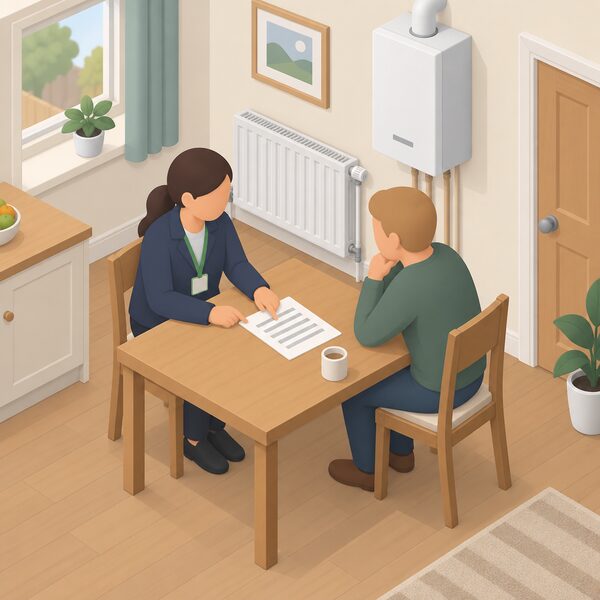
The GOV.UK tool is owned by DESNZ and applies to England1. The other three nations run their own arrangements, and the differences are not cosmetic.
Northern Ireland has the Housing Executive home energy saving tool, which is available to all households in Northern Ireland3. The same organisation's tool can be used to create an action plan to make your home more energy efficient20. Northern Ireland also has NI Energy Advice, which offers free independent and impartial energy advice to domestic householders in Northern Ireland21, and its own guidance on generating your own electricity22 and on heating technologies suited to a home23.
Scotland routes households to Home Energy Scotland, which can give free impartial advice on energy efficiency and renewable energy24. The Energy Saving Trust manages these schemes on behalf of the Scottish Government through Home Energy Scotland, in partnership with advice providers and energy companies25. Scotland also has its own grant and loan scheme for eligible homeowners17.
Wales has Green Homes Wales, offering grant funding alongside loans for specific energy efficiency measures18. The Energy Company Obligation applies to domestic households in Great Britain26, which means England, Scotland and Wales but not Northern Ireland, a distinction that matters for anyone comparing grant routes across the UK.
The practical consequence is that a household in Belfast, Glasgow or Cardiff should not expect the GOV.UK tool to be the right entry point. Each nation's service is the correct first stop, and the advice pages for each are linked below.
How the Energy Saving Trust shaped the advice
The Energy Saving Trust is the delivery body behind much of the UK's home energy advice, and its fingerprints are on the tool's approach. It offers free and impartial advice on how to reduce carbon emissions, how to use water more sustainably and how to save money on energy bills28. It is also described as a grant-awarding body29, which places it on both sides of the advice and funding divide.
In Scotland its role is formal. The Energy Saving Trust, in partnership with advice providers and energy companies, manages these schemes on behalf of the Scottish Government25. That is a delivery role, not an advisory one, and it means the Scottish schemes and the Trust's advice are run by the same organisation.
The Trust also produces guidance that feeds into household planning. It offers advice on energy at home and a guide to green renovation to help you put energy efficiency first room by room13. That room-by-room framing is close to how the online tools structure their output: a sequence of measures rather than a single verdict.
The independence question follows from this. The Trust is described as giving free and impartial advice28, and the Northern Ireland services are described as independent and impartial21. Homeowners are directed to seek independent advice on solar panels, heat pumps and other energy efficiency measures from organisations such as NI Energy Advice22. The advice is independent of energy suppliers, but it is not independent of government, because government funds and in some cases manages it. That is a distinction worth holding in mind when reading any recommendation.
Using the tool alongside EPCs and grant schemes
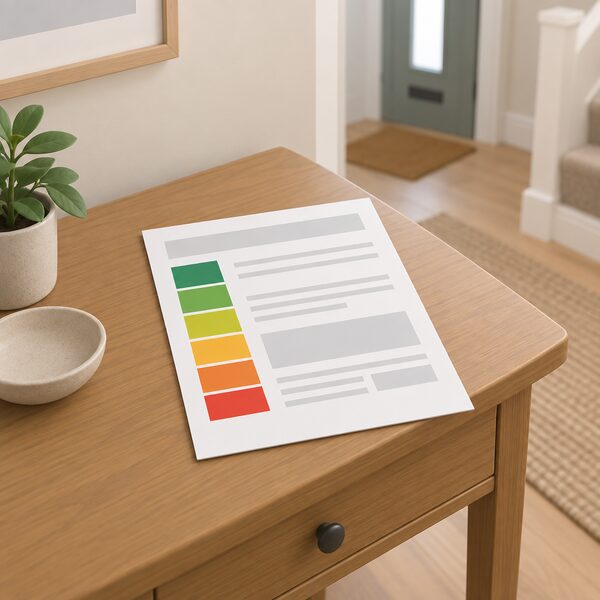
The tool works best as the first step in a sequence, not as a substitute for the later ones. The sequence runs: online plan, then an EPC or assessment, then a specification, then grant applications, then installation.
An EPC provides an assessment of your home's energy efficiency7, and it is the document that grant schemes and landlords' obligations are built around. Its ratings are used to define standards and targets for reducing emissions from homes8, though the Climate Change Committee has said they are poorly suited to that role9. The tool and the EPC answer different questions: the tool says what might be worth doing, the EPC says how the home scores against a national band.
Grant schemes then sit on top. Energy supplier schemes and grants fund making energy-saving improvements to your home15. ECO4 Flexible Eligibility is a household referral mechanism within the wider ECO4 Scheme for households not in receipt of a means tested benefit29, and the ECO4 Measures table provides information on energy efficiency measures which can be installed under the fourth Energy Company Obligation scheme, ECO430. Those two documents define what can be funded and who can be referred.
For households in Scotland, the parallel route is the Home Energy Scotland Grant and Loan Scheme, which helps eligible homeowners pay for energy efficiency improvements17. In Wales, Green Homes Wales offers grant funding alongside loans for specific energy efficiency measures18. In Northern Ireland, the Housing Executive tool and NI Energy Advice are the entry points3.
The tool's role in all of this is to turn a vague intention into a list. What it cannot do is confirm eligibility, certify a measure or guarantee a saving. Those steps need the scheme administrator, an assessor and an installer respectively. Used in that order, the tool saves time; used as a substitute for any of them, it creates false confidence.
Sources30 cited
- Potential for interactive EPCs for Scotland, ClimateXChange, 2025
- New website from UK Power Networks turns a few clicks into big savings, UK Power Networks, 2025
- Energy grants Northern Ireland, Energy Saving Trust, 2026
- Reduce energy bills and stay warm this winter, Home Energy Scotland, 2026
- ECO4 supplier administration guidance, Ofgem, 2025
- Home energy, Northern Ireland Housing Executive, 2026
- Solar photovoltaic (PV) panels, London Borough of Bromley, 2026
- Letter: reform of domestic EPC rating metrics to Patrick Harvie MSP, Climate Change Committee, 2026
- Letter: reform of domestic EPC rating metrics to Lee Rowley MP, Climate Change Committee, 2026
- Energy incentives and schemes, South Cambridgeshire District Council, 2026
- Risks to health, wellbeing and productivity from overheating in buildings, Climate Change Committee, 2026
- Climate policy that cuts costs: international policy comparison, Climate Change Committee, 2026
- Energy advice, Belfast City Council, 2026
- Advice if you're struggling to pay your energy bills, nidirect, 2026
- Get help with your energy bills, Ofgem, 2026
- The Heat in Buildings Programme, Scottish Government, 2026
- Home Energy Scotland Grant and Loan Scheme: application and claim processing times, Scottish Government, 2026
- Green Homes Wales, Development Bank of Wales, 2026
- Domestic Energy Tariff Reductions 2026: guidance for energy suppliers, Department for Energy Security and Net Zero, 2026
- Home energy saving tool, Northern Ireland Housing Executive, 2026
- Energy efficiency tips, nidirect, 2026
- Support to generate your own electricity, nidirect, 2025
- Heating technologies to suit your home, nidirect, 2026
- Domestic Renewable Heat Incentive: who to contact, Ofgem, 2026
- Energy saving home improvements, Scottish Government, 2026
- Domestic electricity consumption indicator, Office for National Statistics, 2025
- Heat pump deployment quarterly statistics, United Kingdom 2025 Q2, Department for Energy Security and Net Zero, 2025
- Energy efficiency advice, Torridge District Council, 2026
- ECO flexibility funding, Ceredigion County Council, 2026
- ECO4 Measures Table v4.0, Ofgem, 2025
 The Full Where to Start GuideWhich home improvements actually cut your bills, and which should you do first?
 The Full New Technology GuideWhich new home energy ideas can you actually buy in the UK right now, and which are still stuck in trials?
 The Full Grants and Schemes GuideWhich grants can you actually get right now, and how do you apply for them?
 The Full Smart Meters GuideDo smart meters really save you money, and how do you use one to cut your bills?
 The Full Energy Independence GuideCan you really run your home on your own power in the UK, and how far can that go before the grid still matters?
 Taking Part in a Home TrialJoining a home energy trial can mean getting new kit fitted for free or at a lower price, but places are limited and close quickly.