

In this guide
A home energy technology trial is a structured project in which a household agrees to have equipment installed, monitored and assessed, usually at little or no cost, in exchange for data and feedback. The largest recent example in Great Britain was the Electrification of Heat demonstration project, which had a target to install heat pumps in up to 750 homes across Great Britain and completed its participant recruitment in summer 20211. Its stated aim was to better understand the feasibility of a large-scale rollout of heat pumps across the UK1.
That single project explains both the appeal and the limit of trials as a route to home energy technology. The appeal is that the equipment, the design work and the monitoring are funded by the programme rather than the household. The limit is that recruitment windows close, and once they close they do not reopen. A household that wants to join a trial is therefore not choosing from a catalogue; it is watching for a window and meeting the criteria attached to it.
This page sets out what trials are, who runs them, how recruitment has worked in practice, what participation involves, what the evidence has shown, and where trials sit alongside grants, loans and advice. It also states plainly what a trial does not give a household: it does not make a home independent of the grid, and it does not transfer the running of the equipment to anyone but the household.
What a home energy technology trial is, and why households take part
A trial is a project with a research question attached. The Electrification of Heat demonstration project is the clearest example: it set out to better understand the feasibility of a large-scale rollout of heat pumps across the UK, and it did so by installing real systems in real homes and studying what happened1. The household supplies the property, the occupancy pattern and the willingness to live with the equipment; the programme supplies the capital, the design and the measurement.
Households take part for a mixture of reasons. The most immediate is that the cost of the technology is carried by the programme rather than the occupant. The second is that a trial usually brings a level of technical attention that a routine installation does not: monitoring, follow-up and a named contact. The third is that the household ends up with a system it would otherwise have waited years to buy.
There is also a wider context that makes trials matter. The Climate Change Committee has recorded that emissions reductions from the UK's 29 million homes have stalled, and that energy use in homes, which accounts for 14% of total UK emissions, increased between 2016 and 20176. Trials are one of the instruments used to work out what actually performs in occupied housing rather than in a laboratory.
Appetite among homeowners is measurable. Just under half, 43%, of homeowners were actively considering installing energy-efficiency measures in their homes, according to the Chartered Trading Standards Institute in May 20245. That figure describes intention rather than action, but it explains why recruitment for well-publicised trials can fill quickly.
For a household, the independence question is worth stating at the outset. A trial gives a home a technology it did not have, and the monitoring that comes with it. It does not disconnect the home from the grid, from a supplier, or from the manufacturer of the equipment. What it changes is the household's own stock of equipment and its knowledge of how that equipment behaves.
Who runs the trials: Energy Saving Trust, Energy Systems Catapult and delivery contractors

Trials are run by a small set of organisations, and knowing which one is behind a project tells a household a good deal about how it will be administered.
Energy Systems Catapult is a research organisation that has produced official guidance for government. It completed the report behind the Home Energy Advice work, which is described as a single-entry point for consumer home energy advice on GOV.UK, helping homeowners, landlords and tenants find tailored, impartial and trusted advice on how to heat their homes and make them more energy efficient7. That combination, a research body producing the evidence and a government service delivering the advice, is typical of how the sector is organised.
Energy Saving Trust administers Scottish Government schemes under contract. It was awarded a new contract as part of a competitive tender exercise to administer and manage Scottish Government Heat and Energy Efficiency live and closed grant and loan schemes, with a contract start of 01 December 2023 and an initial term running until November 20262. The amount paid to Energy Saving Trust for the administration of the Home Energy Scotland Grant and Loan schemes from December 2023 onwards was withheld under Regulation 10(5)(e) of the Environmental Information Regulations, covering the confidentiality of commercial or industrial information2. Energy Saving Trust also provides free and impartial advice on how to reduce carbon emissions, how to use water more sustainably and how to save money on energy bills, and runs a helpline on 0300 123 12349.
Delivery contractors sit beneath these bodies. In Northern Ireland, the current scheme list names O'Kane Plumbing and Electrics Ltd as scheme manager for both Better Energy Homes Plus and Better Energy Homes Cashback, with a telephone number and email address published alongside10. That is the level at which a household usually makes first contact for a local scheme.
The Electrification of Heat Demonstration Project: 742 heat pumps across three regions
The Electrification of Heat demonstration project is the reference point for anyone asking how a UK heat pump trial works. It had a target to install heat pumps in up to 750 homes across Great Britain, and its participant recruitment stage was completed in summer 20211. The project's purpose was to better understand the feasibility of a large-scale rollout of heat pumps across the UK1.
The design of the project is what makes it instructive. Rather than selecting the easiest properties, it sought a spread of housing across Great Britain so that the findings would speak to the national stock rather than to a favourable subset. That is why the recruitment report exists as a document in its own right: getting a representative sample of households to accept a new heating system is itself a research problem, and the project treated it as one1.
For a household reading this now, the practical point is the timeline. Recruitment completed in summer 2021, which means the project is closed to new participants. Anyone searching for a way to join it will find only the published material. The value of the project to a household today is as a template: it shows what a well-run trial asks of a participant, and it shows how long the gap is between recruitment and published findings.
The scale is worth holding on to. A target of up to 750 homes is large for a demonstration project and small against the 29 million homes in the UK1. That ratio is the honest measure of what trials can do. They generate evidence at a scale that can inform policy, and they deliver equipment to a number of households that is a rounding error against the national stock.
Who was eligible and how recruitment worked
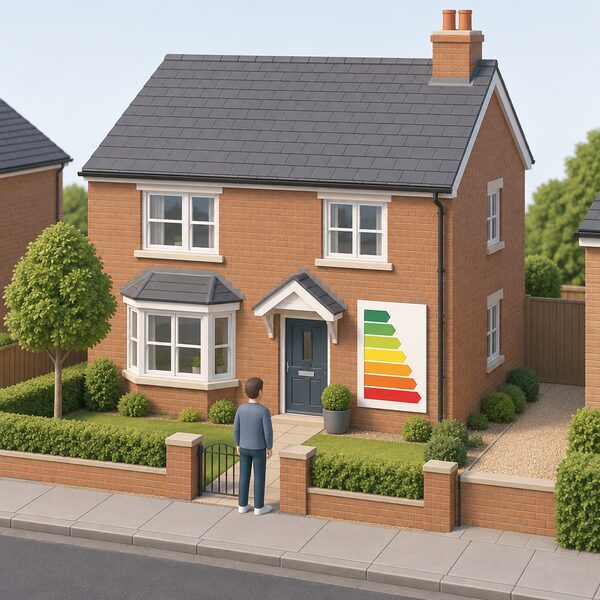
Eligibility in trials is set project by project, and the recruitment report for the Electrification of Heat project treats recruitment as a designed process rather than an open call1. The pattern across UK schemes is that eligibility is defined by tenure, by property type, by the existing heating system and by the household's circumstances.
Tenure matters in the wider support landscape. Around two-thirds of Council or Housing Association houses have EPC ratings A to C, compared to around 40% of houses in other tenure types, according to official statistics for England and Wales11. That gap is one reason why privately rented and owner-occupied homes are often the target of retrofit trials and grant schemes: they are the part of the stock that lags.
Some schemes are explicit about the property condition required. Privately rented properties with an EPC rating of Band D or E are named as eligible for the Warm Homes: Local Grant12. That is a narrow band, and it illustrates how precisely eligibility can be drawn.
Other schemes are deliberately broad. The Home Energy Scotland Grant and Loan Scheme states that no eligibility criteria to access the scheme are based on age or any other protected characteristic, and that homeowners access the scheme on an equal basis as funds last13. The phrase "as funds last" is the operative limit: breadth of eligibility does not mean availability.
The Domestic Renewable Heat Incentive, the payment scheme that preceded the current grant landscape, was available to any household off and on the gas grid that could meet the eligibility criteria, and covered single domestic properties, open to owner-occupiers, private landlords, social landlords and self-builders14. Its territorial extent was England, Scotland and Wales16. That is a useful reminder that even a scheme described as open carries a territorial boundary, and Northern Ireland sits outside several of these arrangements.
What taking part involved: installation, monitoring and user feedback
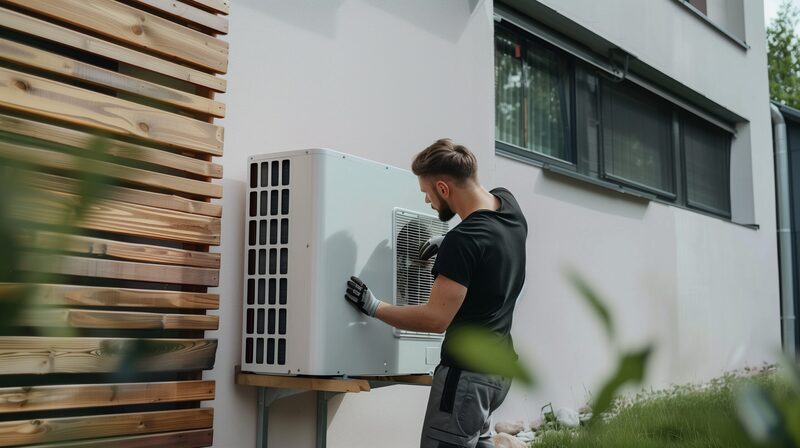
Participation has three phases: installation, monitoring and feedback. The installation phase is the most visible. A heat pump, a set of heating controls or a monitoring package is fitted by contractors working to the programme's specification, and the household lives with the result.
Monitoring is the phase that distinguishes a trial from an ordinary purchase. Government delivery schemes publish data to monitor the installation of energy efficiency measures in domestic properties, which is the same principle at scheme level: the measures are recorded and reported18. In a trial, that reporting is extended to performance data from the specific home.
Feedback is the third phase and the one households most often underestimate. Trials ask occupants about comfort, usability, running costs and whether they would recommend the system. The Home Energy Efficiency Equity Loan pilot, run in Scotland, funded heating controls among its eligible measures, and the homeowner feedback survey analysis is published as a separate document, which shows how seriously participant experience is treated in scheme design20.
The scale of consumer research in this sector is substantial. The Energy Consumer Satisfaction Survey conducted fieldwork between 5 January and 3 February 2026 with 3,911 domestic energy consumers taking part, and an earlier wave recorded 3,854 domestic energy consumers taking part in January 202521. Those are surveys rather than trials, but they show the volume of household-level data collection that sits behind energy policy.
For the household, the practical expectation is this: tradespeople in the home, a period of adjustment while the system is tuned, and a continuing relationship with the programme for as long as monitoring lasts. The equipment is real and permanent; the monitoring is time-limited.
What the trials found so far
The findings from UK housing research point in a consistent direction, and they are not comfortable. The Climate Change Committee recorded that emissions reductions from the UK's 29 million homes have stalled, and that energy use in homes, which accounts for 14% of total UK emissions, increased between 2016 and 20176. Those two statements together describe a stock that is not improving at the rate policy assumes.
The tenure split is part of the explanation. Around two-thirds of Council or Housing Association houses have EPC ratings A to C, compared to around 40% of houses in other tenure types11. Social housing has been brought up to standard more effectively than the private stock, which means the remaining work is concentrated in homes where the household carries the decision and the disruption.
The Scottish Government has commissioned work specifically to address the assessment problem. In November 2024 it commissioned a team led by Glasgow Caledonian University, Robert Gordon University and others to carry out a Home Energy Efficiency Technical Suitability Assessment23. The existence of that commission is itself a finding: establishing whether a given property is technically suitable for a given measure is a research task, not a box-ticking exercise.
Consumer confidence is the other recurring theme. The Chartered Trading Standards Institute reported in May 2024 that just under half, 43%, of homeowners were actively considering installing energy-efficiency measures5. The same body has documented concern that energy efficiency pledges are undermined by a lack of consumer confidence, which is the risk that trials are partly designed to address5.
What the evidence does not show is a technology that removes a household from the grid. Every measure studied, from heat pumps to heating controls, changes how a home uses energy, not whether it depends on a network. Trials improve the evidence base and the household's equipment; they do not change the underlying structure of supply.
Other trials and projects a household might join
Beyond heat pumps, the trial landscape includes hydrogen, retrofit assessment and local delivery programmes, and each has its own recruitment route.
Hydrogen has been the subject of explicit government commitments. The draft Heat in Buildings Strategy records UK Government support for industry to begin a Neighbourhood trial by 2023 and a large Hydrogen Village trial by 2025, as well as a Hydrogen Town before the end of the decade24. Those are commitments with dates attached, and the neighbourhood scale is what makes them relevant to households: a hydrogen trial is offered to a street or an area, not to an individual property.
Retrofit assessment is the other growth area. The Home Energy Efficiency Technical Suitability Assessment commissioned in November 2024 is a Scottish programme, and it sits alongside the Home Energy Scotland Grant and Loan Scheme, which offers free, impartial advice to help households reduce energy use, manage bills and make homes more comfortable23.
Local delivery programmes are where most households will actually find an opening. The Warm Homes: Social Housing Fund Wave 3 allows applicants to use funding from other government schemes, such as the Energy Company Obligation, to support works on the same home, and sets out a self-assessment route through riseretrofit.org.uk or by email26. That stacking of funding is a practical feature of current schemes: a single home can draw on more than one pot.
The Green Homes Grant Local Authority Delivery and Home Upgrade Grant streams have published monitoring data on the installation of energy efficiency measures in domestic properties, which is the record of what these programmes delivered18. For a household, the relevant point is that these are delivery schemes with published outcomes rather than open research projects, and their recruitment runs through councils and their contractors.

Where trials fit in the wider support landscape: grants, loans and advice
Trials are one instrument among several, and a household is more likely to be helped by a grant or an advice service than by a research project. Understanding the landscape prevents wasted effort.
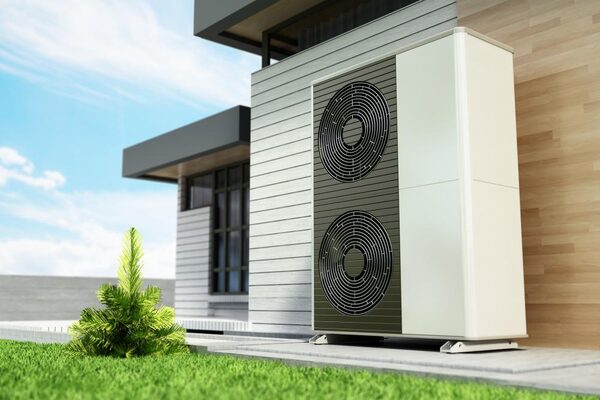
The payment schemes are the most established. Under the Domestic Renewable Heat Incentive, eligible households in England, Scotland and Wales that installed air source or ground source heat pumps, biomass boilers or solar thermal systems could apply to receive quarterly payments over 7 years for the low-carbon heat their systems were expected to produce4. The eligible technologies were air source heat pumps, ground source heat pumps, biomass boilers or solar thermal heating systems17. That scheme is closed to new applicants, but its structure explains the shape of current support.
The Warm Home Discount is the main bill-reduction scheme. The high-cost-to-heat eligibility threshold that applied in England and Wales was removed from October 2025, allowing all households in receipt of specified means-tested benefits to qualify27. The change means that all households where the means-tested benefit recipient, or their partner or legal appointee, is named on the energy bill are covered3. For 2025/26, eligibility ran through Core Group 1, receipt of the Guarantee Credit element of Pension Credit, and Core Group 2, receipt of a qualifying means-tested benefit by the person named on the bill, their partner or legal representative, on the qualifying date28. The Energy Saving Trust, which delivers the Home Energy Scotland Grant and Loan via Home Energy Scotland on behalf of the Scottish Government, also offers free and impartial advice on reducing carbon emissions, using water more sustainably and saving money on energy bills, with a helpline on 0300 123 12343.
Advice is free and worth using before any application. Home Energy Advice is described as a single-entry point for consumer home energy advice on GOV.UK, helping homeowners, landlords and tenants find tailored, impartial and trusted advice8. Local services add eligibility checking and referral: East Herts Home Energy Support Service offers information on grants and help with checking eligibility, benefits support, supplier switching advice, energy saving advice, debt advice and referral to other organisations or contractors29.
How to find and apply for an open trial
There is no national register of open trials. Finding one means watching the channels through which recruitment is announced, and moving quickly when a window opens.
The first channel is government advice. Home Energy Advice on GOV.UK is the single-entry point for consumer home energy advice, and it is where current offers are signposted8. For heat pump grants specifically, the guidance is to find out whether one is available using the Clean Energy website30.
The second channel is the national advice bodies. Energy Saving Trust provides free and impartial advice on reducing carbon emissions, using water more sustainably and saving money on energy bills, and can be reached on 0300 123 12349. Home Energy Scotland offers free, impartial advice to help households reduce energy use, manage bills and make their home more comfortable25.
The third channel is local government. Councils run their own energy teams and grant schemes. Argyll and Bute Council's Home Energy Efficiency Team is committed to helping homeowners and private-rented landlords and tenants in Argyll and Bute improve the energy efficiency of their homes by offering non means tested grants for insulation measures31. That is a specific local offer, and it illustrates why checking the council website matters more than checking a national list.
The fourth channel is the delivery contractor. In Northern Ireland, the current scheme list names O'Kane Plumbing and Electrics Ltd as scheme manager for Better Energy Homes Plus and Better Energy Homes Cashback, with contact details published10. Where a scheme names a manager, that is the correct first point of contact.
A practical sequence for a household:
- Check the national advice service for current schemes and eligibility8.
- Check the local council energy team for area-based programmes and non-means-tested grants31.
- Check whether the property's EPC band matches a scheme's criteria, since some are drawn narrowly, for example Band D or E for privately rented homes under the Warm Homes: Local Grant12.
- Establish, before consenting, who owns the equipment at the end of the trial and what happens to the monitoring data.
- Confirm the territorial position, since several schemes cover England, Scotland and Wales only16.
What a trial does for energy independence, and what it does not
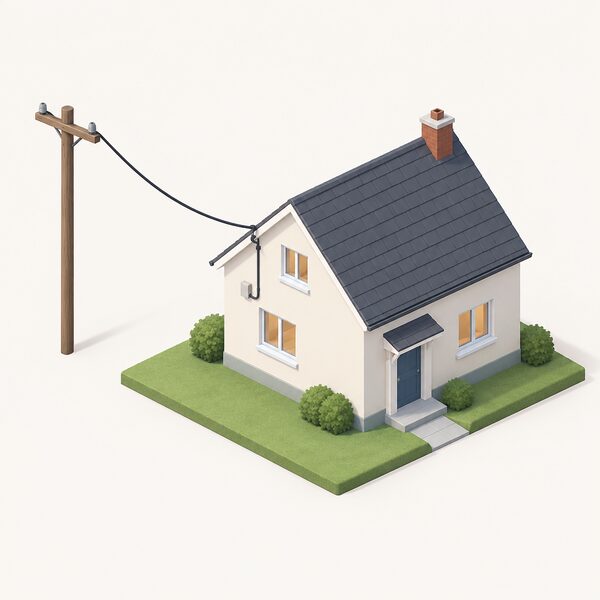
A trial changes a household's equipment and its knowledge. It does not change its dependence on the grid, on a supplier, or on the manufacturer of whatever is installed.
What it does give is real. A household that takes part ends up with a system it did not pay the full cost of, installed to a specification, and monitored by people who will tell it whether the system is performing. The evidence generated feeds into national policy, which is the point of the exercise: the Electrification of Heat project existed to test the feasibility of a large-scale rollout1.
What it does not give is autonomy. The home remains connected to the gas or electricity network, supplied by a company it did not choose to depend on, and reliant on a manufacturer for parts and support. The monitoring phase ends, and when it does the household is left with the equipment and whatever warranty and service arrangements were agreed.
The wider landscape reinforces the point. The Warm Home Discount reduces a bill; it does not reduce dependence3. The Domestic Renewable Heat Incentive paid quarterly over 7 years for heat a system was expected to produce; it did not remove the system's need for electricity or fuel4. Trials and grants improve the terms on which a household buys energy. They do not remove the purchase.
For a household weighing participation, the honest framing is this: a trial is a good way to get a technology earlier and cheaper than the market would otherwise allow, in exchange for data, disruption and a defined period of scrutiny. It is not a route to being off the grid, and no scheme in this landscape offers that.
Sources31 cited
- Electrification of Heat: Participant Recruitment Report, Energy Systems Catapult, 2022-12-20
- FOI 202500462873: Energy Saving Trust contract, Scottish Government, 2025-07-22
- Millions more families to get £150 off energy bills this winter, GOV.UK, 2025-06-19
- Domestic Renewable Heat Incentive Annual Report, April 2025 to March 2026, Ofgem, 2026-07-17
- Home Energy Efficiency Equity Loan Pilot: homeowner feedback survey, Scottish Government, 2022-03-14
- UK Housing: Fit for the Future?, Climate Change Committee, 2019-02
- Home energy information, advice and guidance, GOV.UK, 2026-03-11
- Reforming consumer protection for home upgrade schemes, GOV.UK, 2026-06-17
- Energy Efficiency Advice, Torridge District Council, 2026-09-17
- NISEP List of Schemes 2026-27, Utility Regulator Northern Ireland, 2026-04
- National Energy Efficiency Data-Framework: Need report summary of analysis 2026, GOV.UK, 2026-06-11
- Warm Homes: Local Grant, Greater Manchester Combined Authority, 2026-09-17
- Home Energy Scotland Grant and Loan Scheme: FOI 202300391064, Scottish Government, 2024-05-15
- Domestic Renewable Heat Incentive: applicants, Ofgem, 2026
- Home Energy Efficiency Statistics, Detailed Release, March 2023, GOV.UK, 2023-03-30
- Domestic Renewable Heat Incentive Annual Report, Scheme Year 11, Ofgem, 2025-07
- Domestic Renewable Heat Incentive Annual Report, April 2023 to March 2024, Ofgem, 2024-07-31
- Green Homes Grant LAD and Home Upgrade Grant release, July 2025, GOV.UK, 2025-07-31
- Green Homes Grant LAD and Home Upgrade Grant release, August 2025, GOV.UK, 2025-08-28
- Home Energy Efficiency Equity Loan Pilot: call for evidence, Scottish Government, 2022-03-14
- Customers' satisfaction with their supplier: supplier level findings, January 2026, Ofgem, 2026-01
- Customers' satisfaction with their supplier: supplier level findings, January 2025, Ofgem, 2025
- Review of Retrofit Assessment in Scotland, Scottish Government, 2024-11
- Draft Heat in Buildings Strategy, Scottish Government, 2021-02
- Reduce energy bills and stay warm this winter, Home Energy Scotland, 2026-09-20
- Warm Homes: Social Housing Fund Wave 3 scheme guidance addendum, GOV.UK, 2026-06
- Warm Home Discount Scheme: eligibility change, House of Commons Library, 2026-02-26
- Continuing the Warm Home Discount Scheme: government response, GOV.UK, 2026-01-30
- Home and Business Grants, Schemes and Advice, East Hertfordshire District Council, 2026-09-17
- Homes and Energy, Manchester City Council, 2026-09-20
- Home Energy Efficiency, Argyll and Bute Council, 2026-09-17
 Local Energy Supply ClubsJoining a local energy club means your area's wind or hydro power is matched to your home's use, so you pay less for the electricity you use when it is being generated nearby.
 Community Energy in ScotlandCommunity energy in Scotland lets you join a local scheme for cheaper, greener heat and power, or get advice and funding to make your own home warmer and cheaper to run.
 The Full Your Type of Home GuideLiving in a flat, an old listed house or somewhere off the gas grid changes what energy help you can get and what you are allowed to install.
 The Full Grants and Schemes GuideWhich grants can you actually get right now, and how do you apply for them?
 The Full Where to Start GuideWhich home improvements actually cut your bills, and which should you do first?
 The Full New Technology GuideWhich new home energy ideas can you actually buy in the UK right now, and which are still stuck in trials?