In this guide
Scotland has more home energy trials running per head of population than anywhere else in the UK, and a handful of them are already heating real houses rather than sitting in a laboratory. The most visible is H100 Fife, a hydrogen heat network in Levenmouth built to serve around 300 houses, described by the Scottish Government as "a world-first demonstration of an end to end 100% hydrogen energy system"1. Alongside it sits a heat battery trial covering 100 homes across the UK, funded with £9.25 million through the Longer Duration Energy Storage Demonstration programme2, and a community energy funding landscape that now includes the Local Power Plan, backed by up to £1bn from Great British Energy3.
The scale of what is actually installed is smaller than the publicity suggests. Only around 11% of Scottish households currently have a renewable or very low emissions heating system, such as a heat pump, biomass boiler or electric storage heating4. Recent years have seen around 3,000 renewable heating systems installed in Scotland's homes annually5. The Scottish Government's own pathway expects that by 2035, 40% of existing homes are heated by low-carbon electric systems, with around a quarter of existing homes on a heat pump, either standalone or communal6.
What follows is what is running, what is funded, and what each route does for a household's independence, including the parts that leave you as dependent as before.
New energy technology in Scotland: what is actually running in homes today
The honest answer is that most Scottish homes are still heated the way they were a decade ago, and the emerging technology sits in a small number of properties. Around 11% of households have a renewable or very low emissions heating system4. Homes account for around 30% of Scotland's total energy consumption, some 44 TWh5.
Where change is happening fastest is in new build rather than retrofit. An increasing proportion of new houses in Scotland are built with solar PV, around 10% in 2015 rising to around 80% in 20239. Of new homes with low-carbon heating in 2024, 62% were heat pumps, with 22% being less efficient direct electric technologies10. That split matters: direct electric heating is low carbon on paper but expensive to run, and it is not the same proposition as a heat pump.
The Scottish Government's pathway to 2045 assumes 92% of existing homes have low-carbon heat by then, reaching all homes by 20506. An interim target set out in consultation is over 1 million homes and around 50,000 non-domestic buildings converted to zero emissions heating systems by 20308. The gap between those numbers and the roughly 3,000 renewable heating systems installed annually in recent years5 is the central fact about Scottish home energy technology: the ambition is set, the installation rate is not yet near it.
| Measure | Figure | Period |
|---|---|---|
| Households with renewable or very low emissions heating | around 11% | current4 |
| Renewable heating systems installed annually | around 3,000 | recent years5 |
| New houses built with solar PV | around 10% rising to around 80% | 2015 to 20239 |
| New homes with low-carbon heating that are heat pumps | 62% | 202410 |
| New homes on direct electric heating | 22% | 202410 |
| Existing homes on low-carbon heat | 92% | by 20456 |
| Homes converted to zero emissions heating | over 1 million | by 20308 |
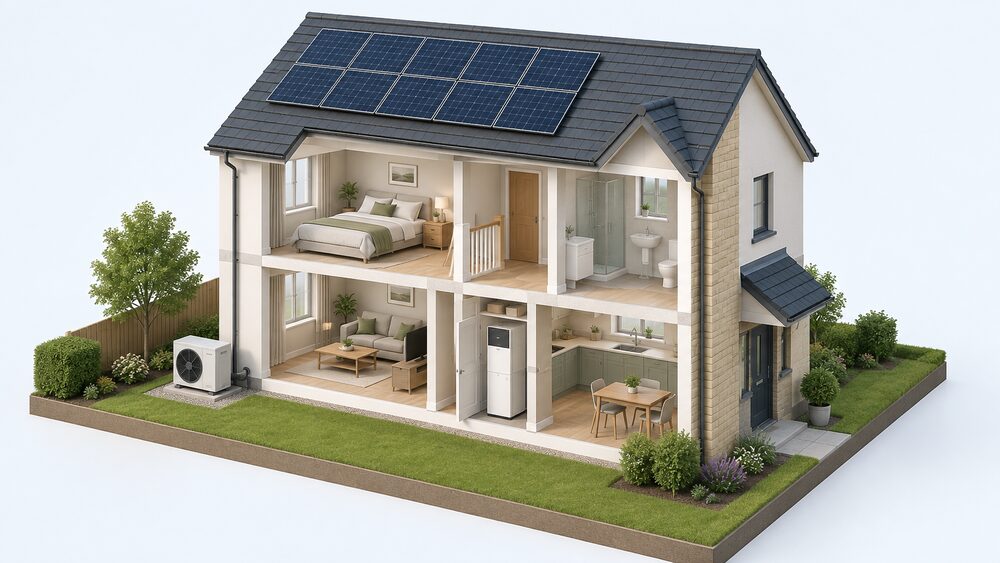
For a household, this means the technology you can actually buy and run today is a heat pump, solar PV, a battery or a thermal store, installed by a competent installer. The hydrogen network, the Living Lab and the community battery schemes are things happening around you, not products on a shelf.
H100 Fife: 300 homes heating with green hydrogen in Levenmouth
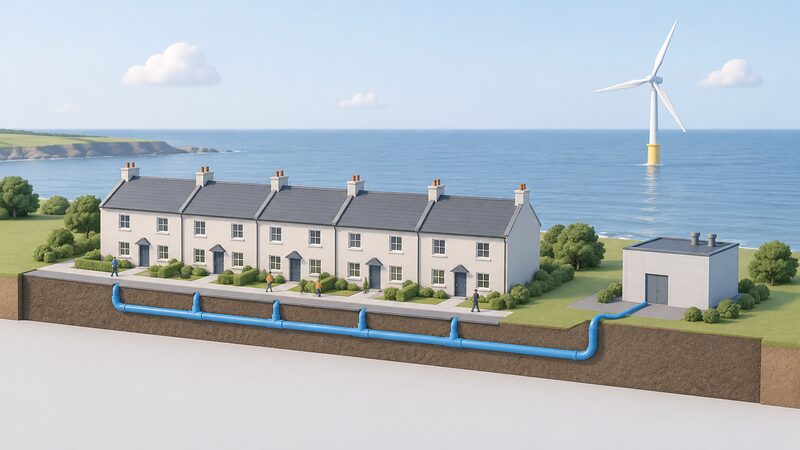
H100 Fife is the project most people mean when they ask about hydrogen homes in Scotland. The Scottish Government's hydrogen policy statement describes it as constructing and operating a hydrogen heat network system in Fife able to service around 300 houses1. The project is a demonstration of an end to end 100% hydrogen energy system1, and the draft heat buildings strategy repeats the same figure of around 300 houses on a hydrogen network in Fife7.
The supply side is what makes it a green hydrogen project rather than a fossil one. The project connects with an existing 7MW wind turbine situated off the coast of Leven in Fife to directly supply power7. That is an electrolyser fed by a dedicated offshore turbine, which is a different proposition from hydrogen produced from natural gas.
The wider policy context is that new heat networks consented from 2023 need to use heat from low or zero emissions sources7. Scotland's Heat Network Fund, launched in February 2022, funds the expansion and decarbonisation of existing heat networks across Scotland and the rollout of new zero-emission heat networks and communal heating systems11. The Heat Network Support Unit is sponsored by the Scottish Government and delivered in partnership with Scottish Futures Trust and Zero Waste Scotland11. The Heat Network (Scotland) Act sets a target of 6 TWh of thermal energy via heat networks by 203012.
For household independence, hydrogen on a network is the opposite of self-sufficiency. A home on H100 Fife is connected to a piped supply it does not own and cannot store, exactly as it was with natural gas, with the fuel source changed. What it does offer is a route to low-carbon heat without a heat pump, a cylinder or an electrical upgrade, which matters for older properties where those are difficult.
Hydrogen safety in the home: valves, odourant, meters and ventilation
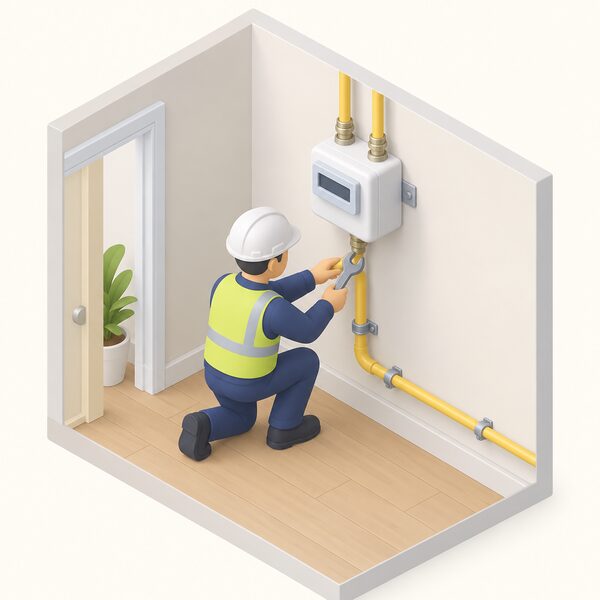
Hydrogen safety in homes is regulated through the same building standards framework as other heating, and the New Build Heat Standard is being introduced through building regulations in Scotland12. That is the legal basis rather than a separate hydrogen code.
The technical questions a householder tends to ask are about smell, detection and ventilation. Natural gas is odorised so leaks are noticeable; hydrogen is naturally odourless and burns with a nearly invisible flame, which is why appliance testing and certification matter more than they do for a like-for-like boiler swap. The Hy4Heat programme carried out the safety assessment work that sits behind hydrogen appliance standards, and the H100 Fife project operates under its own regulatory approvals.
The Scottish Government's position is that hydrogen has a role alongside electrification rather than instead of it. The hydrogen policy statement frames H100 Fife as a demonstration, not a rollout commitment1. For a household, the practical position is that no hydrogen boiler is available to buy for a normal home, and the safety framework for domestic hydrogen is still being established through demonstration projects.
Thermal batteries: Sunamp's compact heat storage and the £9.25 million Living Lab trial
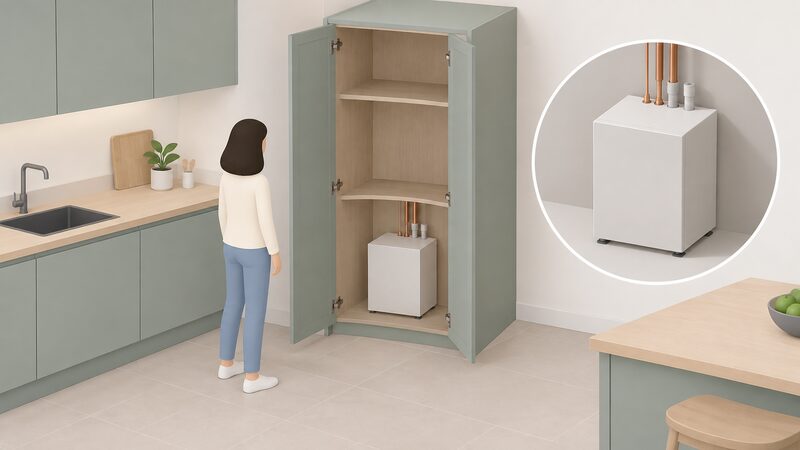
A thermal battery stores heat rather than electricity. Sunamp's system is being trialled in 100 homes across the UK through a Living Lab, funded by a £9.25 million award through the Longer Duration Energy Storage Demonstration programme, part of the Net Zero Innovation Portfolio from the Department for Business, Energy and Industrial Strategy2. The award covers developing and trialling the advanced thermal storage system in those 100 homes2.
The appeal for a Scottish household is space and hot water without a cylinder. A thermal store using phase change material holds heat in a much smaller footprint than a tank of water, which suits flats and tenements where a cylinder cupboard does not exist. The technology is not new to the UK market: Sunamp heat batteries have been documented in consumer guidance on thermal energy storage since 2020, and the company's phase change material work with the University of Edinburgh's School of Chemistry won a Royal Society of Chemistry industry-academia collaboration award in 2022.
An independent case study shows the retrofit pattern. A cottage in Cornwall moved from an oil-fired heating and hot water system to a Daikin Altherma high temperature heat pump linked to a Sunamp heat battery13. That combination, a high temperature heat pump plus a thermal store, is the configuration most likely to suit a Scottish property that is not well insulated enough for a low temperature system.
For independence, a thermal battery shifts when you buy energy rather than how much you buy. It lets a heat pump run when electricity is cheap or when your own solar is generating, and it removes the standing loss of a hot water cylinder. It does not remove your dependence on the grid or on a heat pump to charge it.
How the Sunamp trial works: heat pump charging, myenergi controls and a stake in a wind farm
The Living Lab design is specific. A heat pump charges renewable heat into large capacity time-shifting thermal storage, delivering space heating and hot water on demand2. That is the whole architecture: the heat pump is the source, the thermal store is the buffer, and the household draws heat when it wants it rather than when the heat pump runs.
The trial also includes an ownership element. Customers will have the option of part ownership of a wind farm through Ripple Energy2. That is unusual in a technology trial, and it is the part that speaks most directly to independence: part ownership of generation is a different relationship with the energy system than buying units from a supplier.
Controls come from myenergi, whose hardware is used to manage when the system charges. The logic is the same as any time-shifting setup: charge the store when electricity is cheapest or when local generation is available, then release heat when the house needs it. For a household with a heat pump and a time of use tariff, that is the mechanism that turns a thermal store from a convenience into a running cost saving.
The limits are worth stating. A thermal battery does not generate anything. It stores heat made by a heat pump, and the heat pump runs on electricity from the grid unless you have your own generation. Part ownership of a wind farm through Ripple Energy gives a household a stake in generation, but it is a financial interest in a project, not a wire into your house.
Community batteries and the Local Power Plan: up to £1bn from Great British Energy
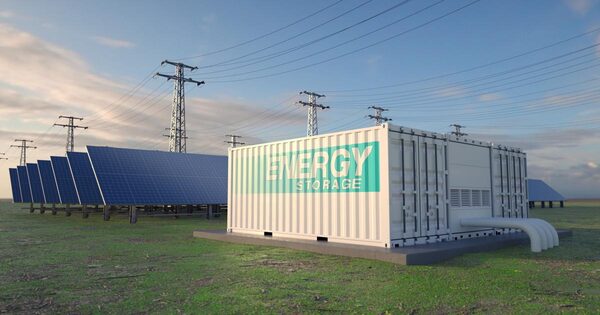
Community batteries are the part of the Scottish energy landscape most likely to change what a household can do without owning equipment. The Local Power Plan is backed by funding of up to £1bn3, and Great British Energy and Great British Energy - Nuclear together account for £8.3bn3. The plan funds locally-owned community energy schemes to 2028/29, with grant funds, loans, capacity building and regulatory reform, and explicitly aims to boost community battery schemes.
The Scottish route into this is the Community and Renewable Energy Scheme, known as CARES. It encourages community ownership of renewable energy projects across Scotland, helping to maximise the benefits of renewable energy systems, and ensuring that the delivery of community energy comes with benefits for people in Scotland14. It also supports progress towards a target of two GW of community and locally owned energy in Scotland14. CARES provides advice and funding to communities across Scotland looking to develop renewable energy, heat decarbonisation and energy efficiency projects, including shared ownership projects14, and it has a network of development officers across Scotland providing free, expert and impartial advice and support to community groups, charities and other eligible organisations14.
Battery storage is the largest contributor to the potential increase in capacity in Scotland's renewable energy planning pipeline as at the end of March 202615. A call for evidence on community batteries was expected in 2026 to assess their role in the energy transition.
For a household, a community battery is a shared asset rather than a personal one. It can store generation from a shared solar array or wind turbine and release it locally, which reduces what the community imports. It does not give an individual home backup power or a private store, and it depends on a community group having the capacity to develop and run it.
Orkney as a testbed: ReFLEX carbon calculator, EV access and the hydrogen debate
Orkney has been the UK's most consistent testbed for local energy systems, largely because it has more renewable generation than its grid connection can export. The ReFLEX Orkney project launched a carbon calculator on Earth Day 2021 to help the Orkney community estimate its carbon footprint and monitor it over time.
Transport has been part of the same work. Community Energy Scotland set out routes to electric vehicle access in Orkney in November 2021, describing community transport eNV200s, the Co-wheels car club at £4.13 per hour in Orkney, and leasing as ways to access low carbon vehicles. That is a model where access to a vehicle is shared rather than owned, which suits islands where charging infrastructure and vehicle cost are both barriers.
Hydrogen has been contested in Orkney. Community Energy Scotland published a position paper on hydrogen in Scotland in October 2022, forming the organisation's opinion at the time of writing and supporting the HI-ACT centre. The debate matters because Orkney is exactly the kind of place where curtailed renewable generation could feed electrolysis, and equally the kind of place where a community might prefer direct electrification.
The Scottish Government's own view of international comparison is that models to follow include Norway and Denmark on the roll out of EVs, and Sweden and Finland on the roll out of heat pumps16. Those are comparable northern European markets with similar housing stock and climate, which is why they are cited rather than warmer countries with easier heat pump economics.
For a household on an island, the independence question is different from the mainland. Local generation, shared transport and community storage reduce reliance on a constrained grid connection. They do not remove it, and the grid connection remains the thing that limits how much of the local generation can be used.
Support routes: Home Energy Scotland and the Community Heat Development Programme
Home Energy Scotland is the main route for a Scottish household wanting to act. It is delivered by Energy Saving Trust17 and gives free impartial advice on energy efficiency and renewable energy in Scotland18. The Home Energy Scotland Grant and Loan Scheme supports clean heating systems and energy efficiency measures14, offers grants to homeowners to install heat pumps19, and provides grants and loans to help people install clean heat and energy efficiency measures in their homes19. The scheme launched in December 202220, and the contact address for the grant and loan scheme is heesgl@gov.scot21.
There is a quality condition attached. Applicants must use approved suppliers through Scotland's TrustMark scheme for energy efficiency work22. That is a consumer protection measure as much as a quality one, and it means the installer route is not open to any competent tradesperson who happens to be available.
The Community Heat Development Programme is the community-level route. It is funded by the Scottish Government25 through the Community and Renewable Energy Scheme26, and is open to communities and groups of householders across Scotland25. Information sessions are run by Local Energy Scotland, and places are booked by emailing info@localenergy.scot26.
Warmer Homes Scotland funds the installation of a range of heating measures, including renewable and micro-renewable heating, and insulation measures to improve the energy efficiency of the property27. New renewable measures including ground source heat pumps, micro-wind, micro-hydro and micro central heating programmes were introduced to the scheme in 201828.
Tenement owners have a separate route. Guidance published in March 2025 covers owners of tenement property in Scotland thinking about installing solar panels, heat pumps or insulation in common parts29. That is the practical barrier for a large share of Scottish flats, where the roof and the external walls are shared.
What these technologies mean for household independence
The pattern across all of these is that Scotland's emerging home energy technology is strong on shared infrastructure and weaker on individual self-sufficiency. A home on H100 Fife is connected to a piped network it does not own. A home with a thermal battery still buys electricity to charge it. A home in a community battery scheme benefits from a shared asset it does not control.
What genuinely shifts independence is generation you own and storage you control. Solar PV on a new build is now the norm rather than the exception, rising from around 10% of new houses in 2015 to around 80% in 20239. A heat pump with a thermal store lets a household shift when it buys power. Part ownership of a wind farm through Ripple Energy, offered in the Living Lab trial, is a stake in generation rather than a supply relationship2.
The dependence that remains is consistent. The grid connection, the electricity supplier, the installer and the manufacturer are all still in the chain. A thermal battery is charged by a heat pump that runs on grid electricity. A community battery is owned by a group, not a household. Hydrogen on a network is a fuel supply like any other.
The Scottish targets are the clearest signal of direction. Over 1 million homes converted to zero emissions heating systems by 20308, 92% of existing homes on low-carbon heat by 20456, and 6 TWh of thermal energy through heat networks by 203012. Whether those are met depends on installation rates that are currently far below what the pathway assumes.
Sources29 cited
- Scottish Government hydrogen policy statement, gov.scot, 2020-12-21
- Our homes net zero toolkit, Energy Systems Catapult, 2025-07-31
- DESNZ annual report and accounts 2025 to 2026, gov.uk, 2026-09-17
- Changing the way we heat homes and buildings, gov.scot, 2023-11-28
- Heat buildings strategy, gov.scot, 2021-10-07
- Scotland's carbon budgets, Climate Change Committee
- Draft heat buildings strategy consultation, gov.scot, 2021-02
- Heat buildings strategy consultation, gov.scot
- Progress in reducing emissions in Scotland 2025, Climate Change Committee, 2024
- Electric technologies will help Scotland decarbonise, Climate Change Committee, 2025-05-21
- The heat in buildings programme, gov.scot, 2026-09-17
- Heat networks, gov.scot, 2026-09-17
- Daikin Classic Cottage case study, Heat Pump Association, 2026-02-17
- New support for communities to develop ideas on transforming heat, Local Energy Scotland, 2026-09-20
- Energy statistics for Scotland Q1 2026, gov.scot, 2026-03-31
- New Build Heat Standard part two consultation, gov.scot, 2026-09-20
- Heat buildings strategy, gov.scot, 2021-10-07
- Introduction to the Community Heat Development Programme, Local Energy Scotland, 2026-09-20
- Home Energy Scotland grant and loan scheme awards, gov.scot, 2025-05-12
- Research briefing on community energy, House of Commons Library
- Domestic Renewable Heat Incentive contacts, Ofgem
- Heat buildings quality assurance statement, gov.scot, 2022-06-07
- Domestic quality assurance heat buildings programme, gov.scot, 2023-02-10
- Heat pump sector deal expert advisory group interim report, gov.scot, 2021-06-14
- Tackling fuel poverty in Scotland, gov.scot, 2021-12-23
- Guidance for owners on installation in common parts of tenements, Local Energy Scotland, 2025-03
- Warmer Homes Scotland annual review 2017-2018, gov.scot, 2019-06-28
- Building standards technical handbook: water efficiency, gov.scot, 2022-06-01
- Local and small scale renewables, gov.scot, 2026-09-17
 The Full New Technology GuideWhich new home energy ideas can you actually buy in the UK right now, and which are still stuck in trials?
 Community Energy in ScotlandCommunity energy in Scotland lets you join a local scheme for cheaper, greener heat and power, or get advice and funding to make your own home warmer and cheaper to run.
 Home HeatingMost Scottish homes are heated by mains gas, so what happens to the rest?
 Tariffs in ScotlandWhy do Scottish electricity bills differ from the rest of Great Britain, and why do standing charges cost more in the north?
 The Full Scotland, Wales and Northern Ireland GuideWhy a householder in Glasgow, Cardiff or Belfast faces different schemes, standards, targets and markets from one in England.
 Housing Stock Data for ScotlandScotland's housing is measured differently from England's, so the numbers you see may not compare directly.