
In this answer
Short answer
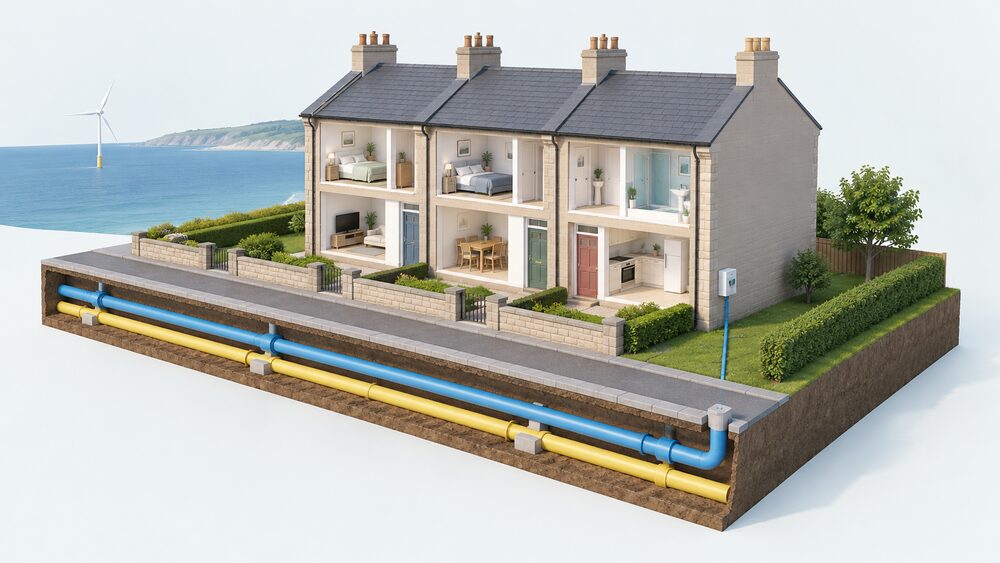
H100 Fife is a world-first green hydrogen heating trial in Levenmouth, Fife, where up to 300 homes will use green hydrogen for heating and cooking1. The project is led by SGN, with Providence Policy as partner lead, and is funded by Ofgem, SGN themselves, Cadent, Northern Gas Networks, Wales and West Utilities2. The Scottish Government described the project as constructing and operating a hydrogen heat network system in Fife able to service around 300 houses3.
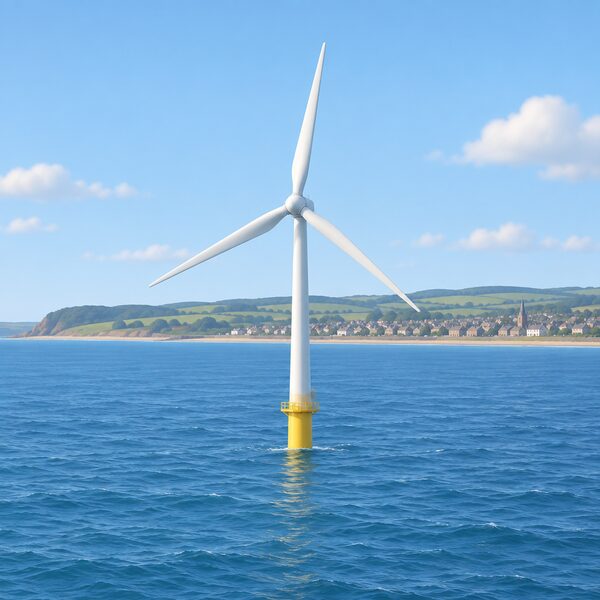
The trial matters for household energy independence because it tests whether a dedicated hydrogen network can heat and cook for homes without natural gas. The hydrogen is produced using the existing 7MW wind turbine situated off the coast of Leven in Fife, which directly supplies power to the electrolyser4. That links the trial to a local renewable source rather than imported gas. What remains is dependence on a gas distribution company, a dedicated network, and a safety case approved by regulators.
What H100 Fife is: a world-first hydrogen heating trial in Levenmouth
H100 Fife is described as a world-first green hydrogen heating trial in Levenmouth, Fife, where up to 300 homes will use green hydrogen for heating and cooking1. The Scottish Government set out that the project will construct and operate a hydrogen heat network system in Fife able to service around 300 houses3. A parliamentary briefing noted a gas distribution company plans to start a neighbourhood trial, originally planned for 2023, in 2024 with around 300 interested participants in domestic properties in Fife6.
The trial sits within a wider policy context. The UK government's Heat and Buildings Strategy referred to a village scale trial by 20257, and a later briefing noted the Government is considering Redcar, Teeside as a potential location for the hydrogen heating trial8. H100 Fife is therefore one of several strands of hydrogen heating work, not the only one.
For a household, the significance is that the trial uses 100% hydrogen rather than a blend. That distinguishes it from projects that add hydrogen to the existing natural gas supply. The Cartrefi Hydrogen Homes project in Wales is described as making it Wales' first hydrogen home, and the first retrofit project of its kind in the UK9, showing that hydrogen home trials are taking different forms across the UK.
The dependence that remains is clear: participants rely on a dedicated network built and operated for the trial, on a gas distribution company, and on a safety framework agreed with regulators. The trial does not make a home self-sustaining. It tests whether hydrogen can substitute for natural gas in heating and cooking at neighbourhood scale.
How the site was chosen: Aberdeen, Levenmouth and Machrihanish
The first stage of the H100 Fife project examined the technical and commercial feasibility of constructing a new, dedicated local distribution network capable of providing 100% hydrogen to several hundred homes and businesses2. That work included specific engineering design work at three sites in different parts of Scotland: Aberdeen, Levenmouth and Machrihanish2. Levenmouth was the site taken forward.
The choice of Levenmouth connects to the local renewable supply. The project will connect with the existing 7MW wind turbine situated off the coast of Leven in Fife to directly supply power to the electrolyser4. That gives the trial a green hydrogen source close to the homes it serves, rather than hydrogen transported from elsewhere.
Site selection is not only an engineering question. Engagement aims to ensure that local residents and businesses have the chance to understand and comment on the location and nature of the development, to allow local people to highlight challenges or opportunities, to set out the importance of decarbonising heat and the role hydrogen could play, to explain the benefits of and the safety case for the project, and to detail the next steps in project development2. Engagement to date has included meetings with the site owners, local and national political representatives, and local councils2. Stakeholder involvement is described as key to the success of H100 Fife, focused through a Stakeholder Strategy project2.
For households in the area, the practical effect of site selection is that the trial is concentrated in one community rather than spread thinly. That makes the network, the appliance conversions and the safety measures a neighbourhood-scale exercise, and it means local comment is directed at a specific location and a specific set of streets.
The new hydrogen-ready network: PE pipes built alongside the gas grid
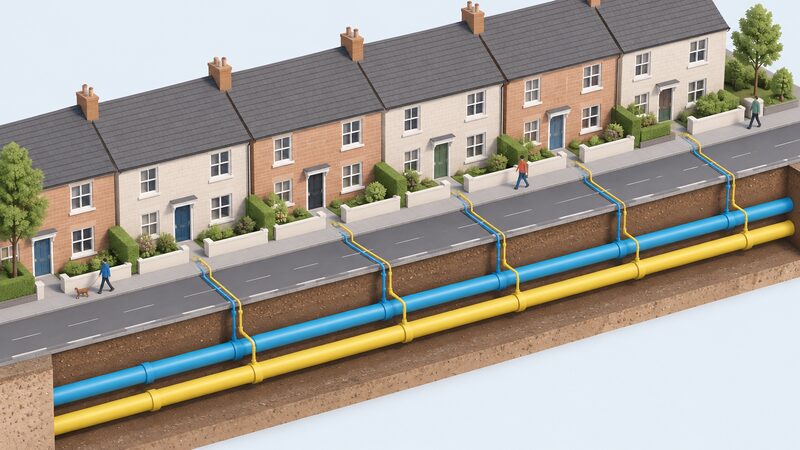
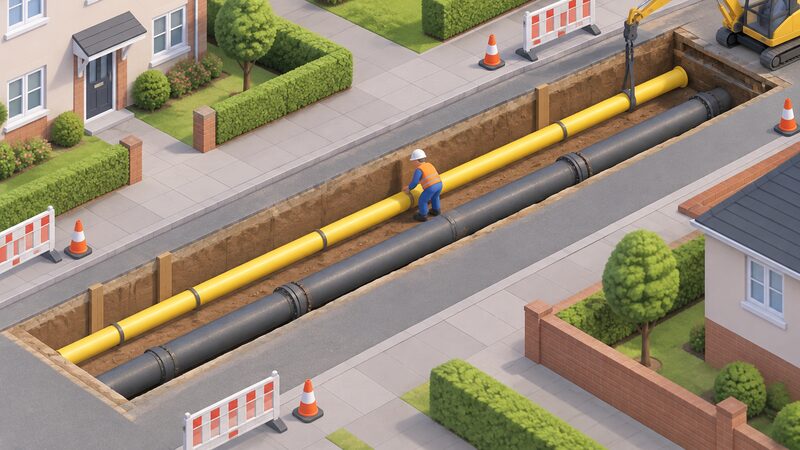
The new hydrogen gas network for the H100 Fife project has been constructed alongside the existing natural gas network in these streets1. That is a deliberate design choice: the hydrogen network is separate from the natural gas mains, so homes on the trial receive 100% hydrogen rather than a blend, while neighbouring properties can remain on natural gas.
The wider UK gas network is close to fully modernised following an extensive replacement programme over the last 20-25 years, the Iron Mains Risk Reduction Programme10. That programme replaced older iron mains with polyethylene pipes. The H100 Fife network follows the same material direction, using pipes suited to hydrogen service.
Industry bodies have set out their position on the role of gas networks. IGEM has been championing the growth of biomethane and integration of hydrogen into the gas networks11. It has also responded to the Stonehaven Powering Homes, Powering Growth report12, reflecting continuing debate about how gas networks fit into energy security. Our industry partners National Gas are delivering the FutureGrid project, described as the first of many steps towards a full-scale conversion of the existing National Transmission System (NTS) to transport hydrogen1.
For a household, the network question is the central one for independence. A dedicated hydrogen network means a home is not self-sufficient: it still depends on a distribution company, a supply of hydrogen, and the equipment that produces it. What the trial tests is whether that dependence can be shifted from natural gas, much of it imported, to hydrogen produced locally from renewable power. The network is the physical link in that chain, and its separation from the gas grid is what makes a 100% hydrogen test possible.
Safety: HSE approval, the Safety Dossier and the Letter of Assistance
Before H100 Fife can go ahead, the Health and Safety Executive (HSE) needs to be satisfied that the trial will be run safely5. That is the gate the project must pass, and it is a regulatory condition rather than a project preference.
SGN received a Letter of Assistance (LoA) for H100 Fife from the Health and Safety Executive, following independent assessment of the Safety Dossier5. The Safety Dossier details how 100% hydrogen will be produced, stored, distributed, and used safely in homes for the trial5. The dossier therefore covers the whole chain, from production through the network to the appliance in the home.
The HSE's involvement extends beyond this trial. The Health and Safety Executive has independently reviewed the Hy4Heat Safety Assessment and has written a letter of assistance to BEIS confirming its relevance to gas network operator future duty holders for trials13. That review gives the H100 Fife safety case a wider foundation, because it addresses the generic question of hydrogen safety for network operators, not only this one site.
"SGN is pleased to announce the receipt of a Letter of Assistance (LoA) for H100 Fife from the Health and Safety Executive"
For a household, the practical meaning is that the trial cannot proceed on the strength of the operator's own judgement alone. An independent regulator must be satisfied, and the safety case must be documented in a dossier that covers production, storage, distribution and use in homes. That is a stronger position than a purely voluntary scheme, but it is also a reminder that hydrogen heating carries safety questions serious enough to require this level of scrutiny.
Safety measures in the home: excess flow valves, odourant, ventilation and meters
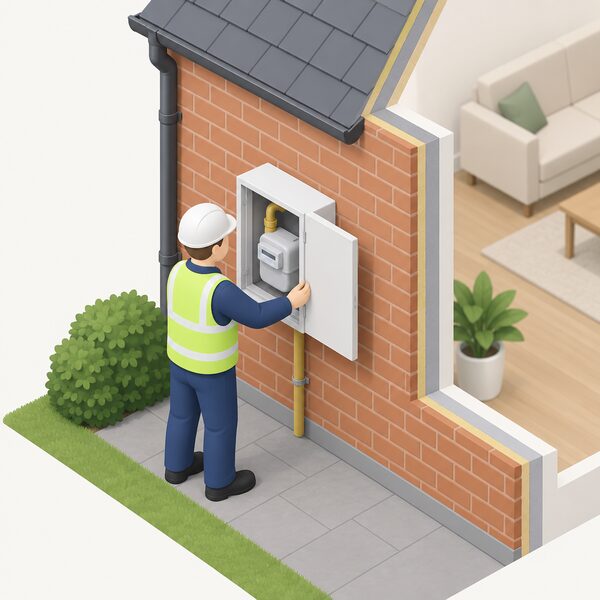
Several measures apply inside and around trial homes. Odour will be added to the hydrogen, so that it has the same familiar smell of natural gas5. That matters because hydrogen itself is odourless, and smell is one of the ways residents detect a leak. Carbon monoxide, by contrast, is a poisonous gas that has no smell or taste14, which is why carbon monoxide alarms are a separate safeguard in any home with combustion appliances.
Ventilation may need to be added to homes in the H100 Fife trial to allow potential small leaks to disperse safely5. Building regulations guidance sets out that rooms where steam will be produced, such as kitchens, bathrooms and utility rooms, should be provided with higher levels of ventilation, normally mechanical fans and windows, than other rooms where suitably sized window openings and background trickle ventilators may suffice15. Background ventilation testing can provide evidence as to whether additional background ventilation is required, and this may negate the need to install trickle vents or under door cuts16.
Hydrogen meter boxes will be installed outside5. Placing the meter outside keeps it out of the living space, consistent with the approach taken for the wider safety case.
For a household, these measures are the visible part of the safety case. Odourant, ventilation, external meters and regular inspection together form the in-home layer that sits beneath the network and the regulator's approval. They also mean participation is not passive: a home may need physical changes before it can join the trial.
Who fits and inspects the hydrogen appliances: Gas Safe engineers trained at Fife College
Competent Gas Safe Registered engineers trained specifically for hydrogen locally at Fife College will inspect homes regularly throughout the project5. That local training element matters because hydrogen appliances and their installation are not yet part of the standard domestic gas engineer's routine.
The wider rule for gas work is well established. Always use a Gas Safe registered engineer to fit, fix and check your appliances17. Engineers who fit gas appliances must be Gas Safe registered18. The HSE strongly advises that all gas appliances, flues and pipework should be installed, regularly maintained and serviced at least annually by a Gas Safe registered engineer19.
"HSE strongly advises that all gas appliances, flues and pipework should be installed, regularly maintained and serviced at least annually by a Gas Safe registered engineer"
For a household, the inspection regime is part of what participation involves. Homes in the trial are inspected regularly throughout the project, not only at installation5. That is a continuing relationship with the operator and its engineers, and it is a condition of taking part rather than an optional extra. The training at Fife College also means the skills for hydrogen work are being built locally, which is relevant to whether hydrogen heating could be serviced at scale if it were ever rolled out more widely.
Where a hydrogen trial home still depends on others
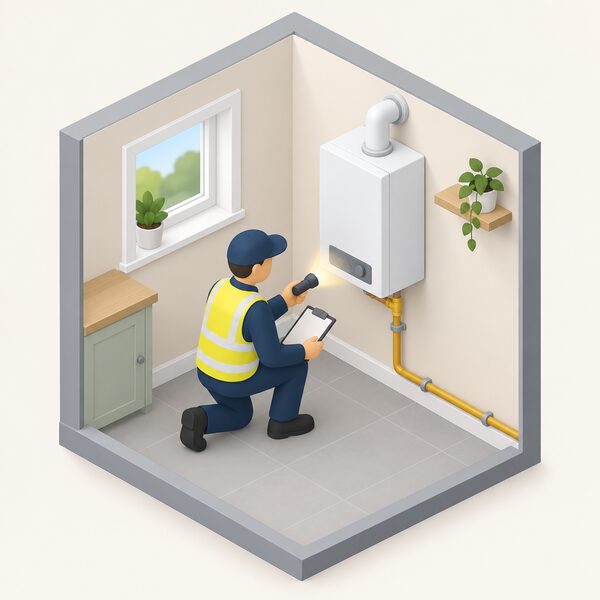
A home on H100 Fife is not energy independent in the sense of generating and storing all its own heat. It depends on a dedicated hydrogen network built and operated by a gas distribution company1, on hydrogen produced using the existing 7MW wind turbine off the coast of Leven4, and on a safety framework agreed with the HSE5. It also depends on Gas Safe registered engineers trained for hydrogen to inspect the appliances regularly5.
What the trial changes is the fuel and the network, not the underlying structure of dependence. The household still receives energy through a pipe, still relies on an operator, and still relies on a regulator's approval for the system to run at all. The independence question the trial addresses is narrower: whether a home's heating and cooking can be shifted off natural gas and onto hydrogen produced from local renewable power.
That distinction is worth holding on to when reading claims about hydrogen homes. The trial is a test of a network and a safety case, run at neighbourhood scale with up to 300 homes1. It is not a route to a home that heats itself. For households weighing emerging heating options, the relevant comparison is with other technologies that change the same underlying dependence, covered in Hydrogen Home Heating Trials in the UK and Hydrogen Safety in the Home.
Sources20 cited
- Ensuring a safe hydrogen gas network, SGN, 2026
- H100 NIA Stakeholder and Customer Strategy, SGN, 2026
- Scottish Government Hydrogen Policy Statement, Scottish Government, 2020
- Draft Heat and Buildings Strategy for Scotland, Scottish Government, 2021
- Safety in our homes, SGN, 2026
- The Government's hydrogen heating trials, UK Parliament, 2024
- Heat and Buildings Strategy, UK Government, 2025
- Research briefing on hydrogen heating, House of Commons Library, 2026
- Cartrefi Hydrogen Homes project, Wales and West Utilities, 2026
- Why gas networks remain central to the UK's energy security, IGEM, 2026
- IGEM responds to Stonehaven report, IGEM, 2025
- Emerging Home Energy Technology: The Full UK Guide, Energy Security
- Hy4Heat Safety, Hy4Heat, 2026
- Carbon monoxide poisoning, nidirect, 2026
- Building regulations for doors and windows, Planning Portal, 2026
- FAQ and myth buster, IAA, 2026
- Keeping gas safe: carbon monoxide, SGN, 2026
- Rogue traders, CIPHE, 2026
- Gas safety in the home: owner occupiers, Health and Safety Executive, 2026
- Gas safety FAQs, Health and Safety Executive, 2026
 Hydrogen Home Heating TrialsHydrogen home heating is still being tested, not sold.
 Demonstration and Test HomesBefore new heating systems reach your home, they get tested in real houses with real people living in them.
 Hydrogen Safety in the HomeCan hydrogen actually be used to heat UK homes, and is it safe?
 The Full New Technology GuideWhich new home energy ideas can you actually buy in the UK right now, and which are still stuck in trials?
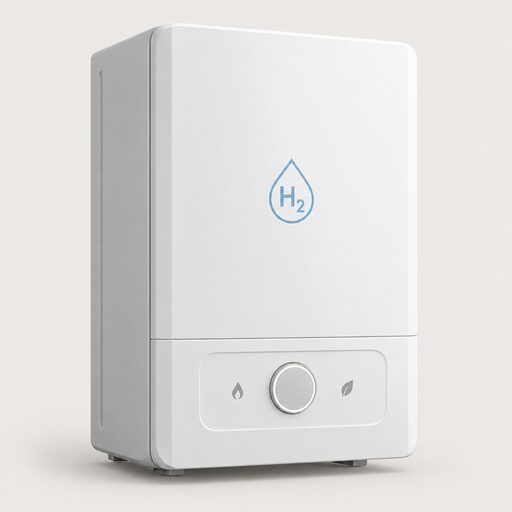 Hydrogen Heating PolicyWill hydrogen ever heat your home, and when will the government decide?
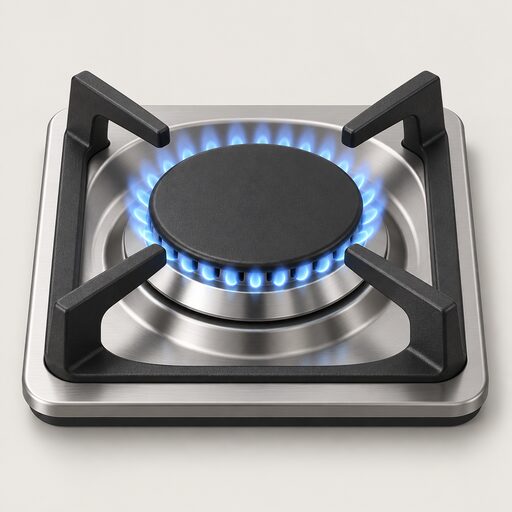 Hydrogen Appliance TestingHow domestic hydrogen boilers, hobs and fires are tested and certified in the UK, the hydrogen content covered, the bodies involved, and the standards work still outstanding before general sale.