
In this guide
Hydrogen is not currently available as a domestic heating fuel anywhere in the UK, and the safety case for it is still being assembled rather than settled. The Hy4Heat programme, administered by BEIS, was set up with the mission "to establish whether it is technically possible, safe, and efficient to use hydrogen for heating homes and commercial buildings", and its published finding is that hydrogen boilers can operate safely within a test environment1. That is a laboratory and test-house result, not a statement about a street.
The wider policy picture has moved against domestic hydrogen. The Climate Change Committee states that it sees "no role for hydrogen in heating for buildings", and repeats the position in its seventh carbon budget, describing only a very niche role, if any, in surface transport2. A parliamentary consultation cites 18 independent studies since 2019, including by the IEA, IPCC and McKinsey, that rule out hydrogen playing a major role in heating buildings4. The government's own strategic decision on the role of hydrogen in heating buildings is intended for 20265.
For a household, the practical answer is that hydrogen safety is a live engineering and regulatory question, not a product decision. Nothing can be bought, no installer can convert a home, and the fuel is not in the network. What follows sets out what the safety evidence actually covers, where the gaps are, and what remains unresolved.
How hydrogen heating works and what it burns
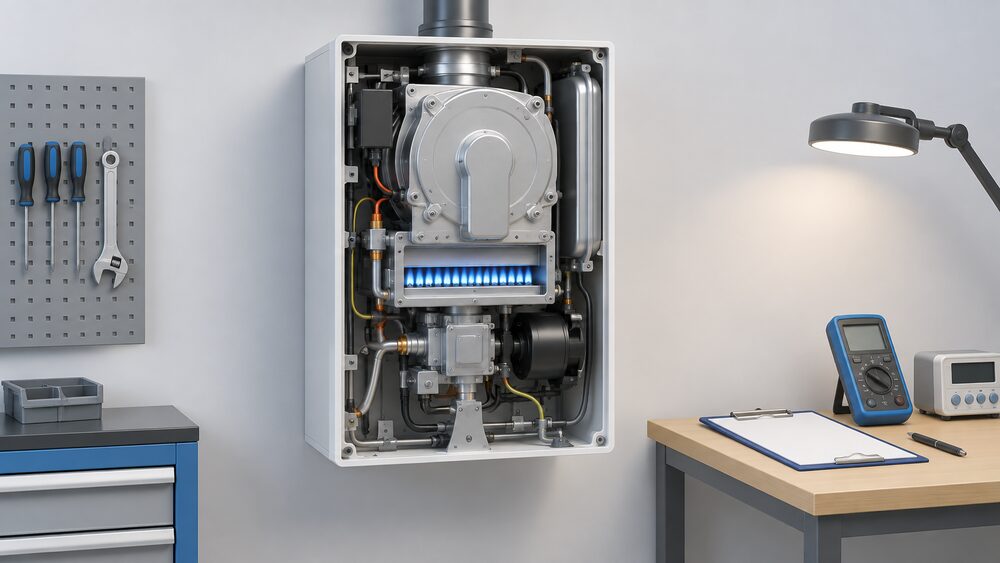
A hydrogen heating system burns hydrogen instead of methane. In the demonstration properties built for the Hy4Heat programme, semi-detached houses were used to show hydrogen fuelled appliances working in a real-world setting, with 100% hydrogen supplying domestic heating and cooking1. There is no blend, no top-up with natural gas and no cylinder: the appliance takes hydrogen from the network and burns it for heat and hot water, in the same way a gas boiler takes methane.
That matters for safety because the physical behaviour of the fuel changes. Hydrogen is the lightest gas, and the appliance, the pipework and the meter all have to be designed around it rather than adapted to it after the fact. The Hy4Heat programme's purpose was precisely this: heating appliance manufacturers were supported to develop domestic hydrogen appliances to demonstrate the safe use of hydrogen as a fuel for domestic heating, hot water and cooking requirements9. The programme then supported the development of prototype appliances with the necessary safety approvals and certification for use in community trials9.
Hydrogen is not the only low carbon route being considered. A parliamentary committee report sets out that heating in UK homes is expected to be decarbonised by one of three low carbon technologies: heat pumps, hydrogen and/or heat networks, alongside energy efficiency through insulation upgrades10. The Sixth Carbon Budget allows for hydrogen "potentially in some buildings, as a replacement for natural gas for heating", which is a narrower framing than a general domestic fuel11.
The distinction between a test environment and a live network is the whole safety question. A boiler that burns hydrogen cleanly in a laboratory tells you the combustion is controllable. It does not tell you what happens when a joint weeps in a terrace, when a contractor strikes a service pipe, or when a leak accumulates in a loft. Those are the questions the trials exist to answer, and they are the reason the strategic decision has been pushed to 2026 rather than taken on the strength of the appliance testing alone.
The safety picture: flammability, leaks and detection
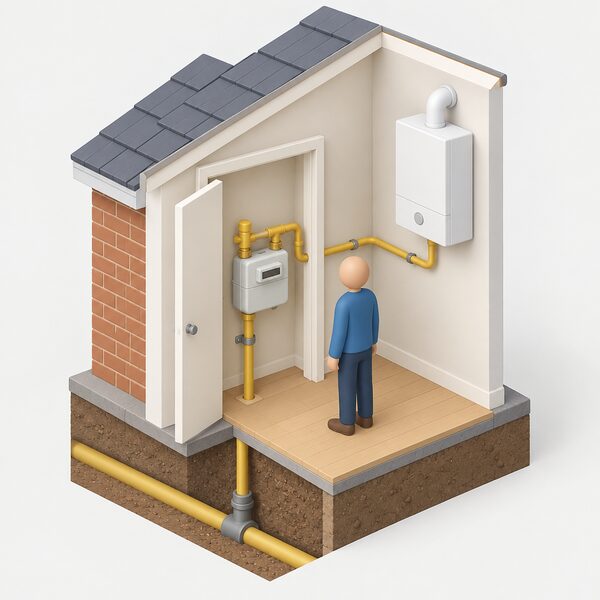
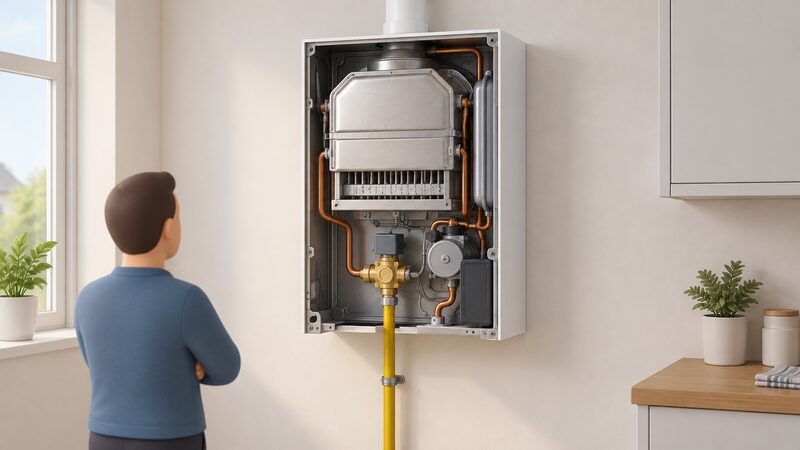
Hydrogen's safety profile differs from natural gas in ways that cut both directions. It is buoyant, so a release disperses upwards rather than pooling at floor level, which is generally favourable in a ventilated space. It also has a wider flammable range and a lower ignition energy than methane, which is why detection and ventilation design carry more weight than they do for natural gas.
Detection is a network-level and appliance-level discipline rather than a household one. The Hy4Heat programme's remit covered the safe use of hydrogen as a fuel, and the prototype appliances it supported carried the safety approvals and certification required for community trials9. The H100 Fife project, run in Scotland, is described by the Scottish Government as "offering an important validation of the evidence base carried out by the UK Government in their Hy4Heat Programme"12. That is the mechanism: a real network, real homes, and a safety case tested against both.
The timeline for network hydrogen is set out in the Heat in Buildings Bill consultation, which states that "subject to the safety and commercial case being established we may see 100% hydrogen becoming available in parts of the gas network towards the end of the decade"8. The safety case and the commercial case are named together, and both have to be satisfied.
For a household, the dependence that remains is total. A hydrogen-heated home would still rely on a gas network, a supplier, a meter and an appliance manufacturer, exactly as a natural gas home does today. The fuel changes; the structure of dependence does not. That is worth stating plainly, because hydrogen is sometimes presented as a route to household energy independence when it is a route to a different centralised supply.
Safety features built into hydrogen appliances
The safety architecture of a hydrogen appliance is not a set of add-ons. It is the certification that allows the appliance to be connected at all. The Hy4Heat programme supported the development of prototype appliances with the necessary safety approvals and certification for use in community trials, and its stated finding is that hydrogen boilers can operate safely within a test environment9. Those approvals are what a manufacturer has to obtain before an appliance can be installed in a trial home, let alone sold.
The programme's overarching mission was to establish whether hydrogen use for heating homes and commercial buildings is technically possible, safe and efficient, and it was administered by BEIS1. That framing matters: safety was one of three tests, and it was tested alongside technical feasibility and efficiency rather than in isolation.
Where hydrogen appliances sit in building standards is a separate question, and the answer is currently restrictive. The Future Homes Standard consultation states that "gas boilers, including hybrid and hydrogen-ready boilers, will not meet the proposed standards"13. A hydrogen-ready boiler, which is a natural gas appliance built to be convertible later, is therefore not a route into a new home under the proposed standard. Scotland's New Build Heat Standard takes a comparable line, with research confirming that compliant technologies producing no direct in-building greenhouse emissions from normal operation include heat pumps, heat networks, solar thermal and solar thermal storage systems, electric storage heaters, electric boilers, fuel cells and direct electric heaters14.
"The Hy4Heat programme has successfully proven that Hydrogen boilers can operate safely within a test environment"
The limit of that statement is the phrase "within a test environment". It is a genuine finding and it is the strongest safety claim the published evidence supports. It is not a finding about a distribution network, a housing estate or a converted terrace.
The carbon monoxide advantage: no CO at all
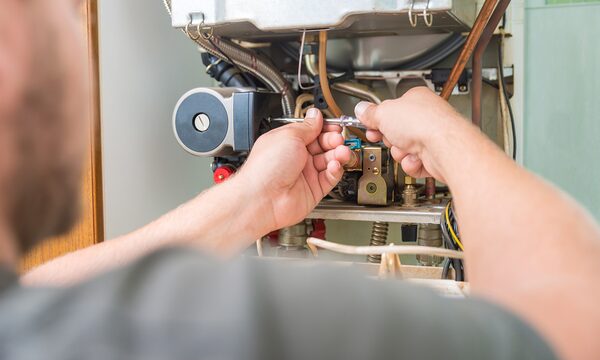
This is the clearest safety gain hydrogen offers, and it is worth being precise about why. Carbon monoxide is "a colourless, odourless, tasteless, poisonous gas produced by incomplete burning of carbon-based fuels, including gas, oil, wood and coal", as the Health and Safety Executive defines it15. Hydrogen is not a carbon-based fuel. The mechanism that produces carbon monoxide in a faulty gas appliance does not exist in the same form in a hydrogen appliance.
The scale of the problem being avoided is not trivial. Incorrectly installed, poorly maintained or poorly ventilated household appliances, such as cookers, heaters and central heating boilers, are the most common causes of accidental exposure to carbon monoxide17. Carbon monoxide has no smell or taste, and carbon monoxide poisoning does not cause a high temperature, which is one of the ways it is distinguished from flu17. Incidents and fatalities also occur away from home, in holiday homes, caravans and on board boats, where faulty gas cookers, appliances or petrol-powered generators have led to poisoning18.
Northern Ireland has its own guidance arrangements. The Health and Safety Executive for Northern Ireland publishes information for gas users on how to manage gas appliances and equipment safely, and the Northern Ireland guidance on gas safety and carbon monoxide sits alongside it19. Domestic gas installation in Northern Ireland is covered by separate guidance again19. Any move to hydrogen in Northern Ireland would run through those arrangements rather than the GB ones.
The carbon monoxide advantage is real but narrow. It removes one class of risk from the appliance. It does not remove the risk of a gas release, a fire or an explosion, and it does not change the fact that a hydrogen-heated home depends on a network and a supplier.
Regulatory oversight: the HSE's role and the Hy4Heat safety assessment
The Health and Safety Executive is the regulator for gas safety in Great Britain, and the Health and Safety Executive for Northern Ireland covers Northern Ireland19. The HSE's published material on domestic gas and carbon monoxide is the reference point for what a gas appliance is required to do, and its gas safety FAQs set out the framework that any new fuel would have to fit into15.
The Hy4Heat programme was the government's vehicle for building the safety evidence. It was administered by BEIS, and its mission was to establish whether hydrogen use for heating homes and commercial buildings is technically possible, safe and efficient1. Its purpose was to support heating appliance manufacturers in developing domestic hydrogen appliances to demonstrate the safe use of hydrogen as a fuel in providing domestic heating, hot water and cooking requirements9. The programme then supported prototype appliances with the necessary safety approvals and certification for use in community trials9.
The HSE's wider remit includes electrical installation safety in industrial and commercial buildings, which is a reminder that the regulator's interest in a fuel transition extends beyond the appliance itself20. A hydrogen rollout would touch pipework, meters, ventilation and building services, and each of those sits somewhere in the regulatory map.
Scotland's position is set out separately. The Scottish Government's hydrogen policy statement and its Heat in Buildings Strategy describe the devolved framework, and consumer protection in this area is controlled by the UK Government rather than Holyrood21. That split matters for a Scottish household trying to work out who would be accountable if hydrogen arrived in the local network.
The Heat and Buildings Strategy sets the decision timetable: the government intends to take strategic decisions on the role of hydrogen in heating buildings in 20265. A Public Accounts Committee report records the same commitment in the form of "developing the evidence base to inform strategic decisions in 2026 on the future role of hydrogen in home heating"22. Until that decision is taken, the safety assessment is a body of evidence rather than a regulatory approval for domestic supply.
Safety versus availability: why hydrogen heating is still at least 10 years away
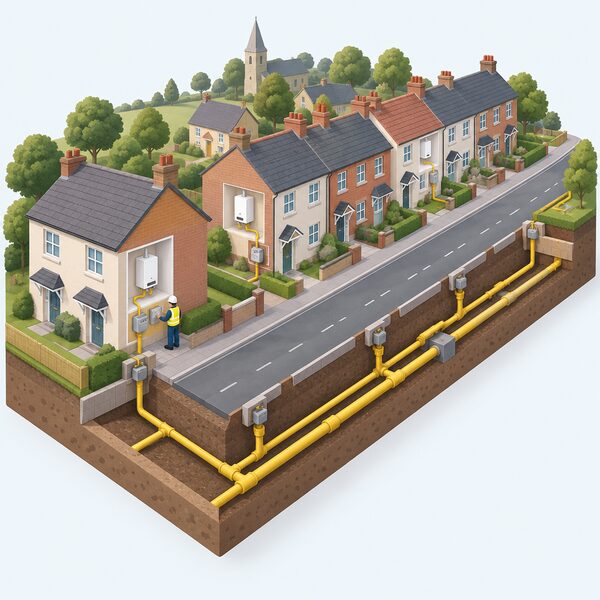
The gap between a proven appliance and an available fuel is the central fact about domestic hydrogen. The Heat and Buildings Strategy commits to strategic decisions on the role of hydrogen in heating buildings in 20265. The Heat in Buildings Bill consultation then places network availability "towards the end of the decade", and only subject to the safety and commercial case being established8. Those two statements together put any general domestic availability well beyond the current decade.
The trial programme was designed to close the evidence gap in stages. The Scottish Government's hydrogen policy statement describes a neighbourhood trial by 2023 and a village scale trial by 202512. The village trial as planned involved 1,000 to 2,000 properties, and the government was considering Redcar, Teesside as a potential location7. That is the scale at which a safety case can be tested against real pipework, real weather and real households.
The commercial case is the harder constraint. A parliamentary consultation cites 18 independent studies since 2019, including by the IEA, IPCC and McKinsey, that rule out hydrogen playing a major role in heating buildings4. The same consultation records that heating UK homes using blue and grey hydrogen methods would require 45% more fossil gas than today4. That is a supply-chain argument as much as a cost one, and it bears directly on whether a hydrogen network would ever be built at domestic scale.
For a household, the practical reading is that hydrogen is not a technology to plan a heating system around. The decision that would make it one has not been taken, the network does not exist, and the independent evidence points away from a widespread domestic role. The dependence a household would take on, if it ever arrived, would be on a gas network and a supplier, with no gain in self-sufficiency.
Trials that test safety in practice: neighbourhood, village and town scale
Trials are where the safety case meets real homes. The Scottish Government's policy statement set out a staged programme: a neighbourhood trial by 2023 and a village scale trial by 202512. The village trial as scoped involved 1,000 to 2,000 properties, with Redcar, Teesside under consideration as a location7. The H100 Fife project in Scotland is described as offering an important validation of the evidence base carried out under Hy4Heat12.
The demonstration homes built under Hy4Heat used semi-detached houses to show hydrogen fuelled appliances in a real-world setting, with 100% hydrogen supplying domestic heating and cooking1. Those are controlled demonstrations rather than occupied trials, and the distinction matters: a show home proves the appliance works in a house, while a village trial tests the network, the metering and the household behaviour around it.
The evidence base for the trials themselves is documented. The technical feasibility work on low carbon heating in domestic buildings was published by the Scottish Government with an ISBN recorded as 978180004495125. The Heat and Energy Efficiency Technical Suitability Assessment consultation describes how assessment results could be used by consumers to support eligibility for government funding programmes, compliance with or exemption from regulation, or by lenders seeking consistent information for making loans26. That is the machinery that would sit around any future heating technology, hydrogen included.
The trials also carry a limit that is easy to miss. A trial that runs for a defined period, in a defined area, with monitoring in place, tests the safety case under supervision. A national rollout would remove the supervision. That gap is one of the reasons the strategic decision sits with government rather than with the network operators, and it is why the safety evidence is described as informing a decision rather than settling one.
Where hydrogen heating falls short today: cost, fuel supply and retrofit limits

Three constraints hold hydrogen back from domestic use, and none of them is an appliance problem.
Cost. Imperial College London modelled that hydrogen would be three times more expensive than natural gas for heating6. That figure is the modelling output of an independent institution, and it sits alongside the finding that heating UK homes using blue and grey hydrogen methods would require 45% more fossil gas than today4. A fuel that costs three times as much and consumes more primary gas is a difficult proposition for a household bill.
Fuel supply. The Climate Change Committee's position is that there is no role for hydrogen in heating for buildings, and its seventh carbon budget describes only a very niche role, if any, in surface transport2. Nesta's evidence to a parliamentary committee is that hydrogen should play a small role in home heating, targeted at harder to decarbonise areas instead27. The Sixth Carbon Budget allows for hydrogen potentially in some buildings as a replacement for natural gas for heating, which is a narrower allowance than a general domestic fuel11.
Retrofit. Independent guidance states that converting a home to hydrogen would require swapping out existing gas pipes for new ones6. That is a fabric intervention, not a boiler swap. It sits alongside the Future Homes Standard position that gas boilers, including hybrid and hydrogen-ready boilers, will not meet the proposed standards13.
| Constraint | Published figure | Source type |
|---|---|---|
| Cost versus natural gas | Three times more expensive | Independent modelling6 |
| Fossil gas required, blue and grey hydrogen | 45% more than today | Official consultation4 |
| Independent studies ruling out a major heating role | 18 since 2019 | Official consultation4 |
| Pipework | Existing gas pipes would need replacing | Independent guidance6 |
The retrofit point is the one that touches a household most directly. A hydrogen-ready boiler is a natural gas appliance designed to be convertible, and the Future Homes Standard consultation states it will not meet the proposed standards for new homes13. Scotland's New Build Heat Standard research lists compliant technologies, and hydrogen boilers are not among them14. For an existing home, the pipework question would have to be answered before any appliance could be connected.
Hydrogen or heat pump: what the trade-offs mean for your home
The comparison that matters for a household is not hydrogen against natural gas. It is hydrogen against the alternatives that are actually available, and on the published evidence the alternatives are further ahead.
Heat pumps are described in parliamentary research as technically suitable for most UK homes if installed appropriately28. The same briefing notes that reducing the price of electricity relative to gas would make heat pumps more competitive, which is a statement about running costs rather than suitability28. The government's own announcement on the heat pump scheme frames the running cost question in similar terms24. Scotland's New Build Heat Standard research confirms heat pumps, heat networks, solar thermal, electric storage heaters, electric boilers, fuel cells and direct electric heaters as technologies producing no direct in-building greenhouse emissions from normal operation14.
Hydrogen's position is different in kind. It is not available, it is not priced, and the independent evidence points away from a widespread domestic role2. The Climate Change Committee's recommendation is explicit: "This should include confirming that there will be no role for hydrogen in home heating"2. A government report on the role of hydrogen in achieving net zero concluded that hydrogen could play a role in domestic heating, but that the extent of its potential is still uncertain and looks likely to be limited rather than widespread6.
"However, we see no role for hydrogen in heating for buildings."
On hybrid systems, the Scottish Government's draft heat strategy notes that increased availability of hydrogen for heat would have implications for the suitability of hybrid heat pump systems, which may be cost-effective solutions in conjunction with hydrogen, and that this would be kept under review29. That is a conditional statement, not a plan.
For household energy independence, the trade-off is stark. A heat pump runs on electricity, which a household can increasingly generate and store itself, and it removes the gas connection entirely. Hydrogen heating would keep the household on a gas network and a supplier, with the same structural dependence as today and a fuel that independent modelling prices at three times natural gas6. The safety case for hydrogen may yet be made; the independence case is harder to make at all.
Sources29 cited
- The role of hydrogen in achieving net zero (written evidence), UK Parliament, 2026
- Scotland's Carbon Budgets, Climate Change Committee, 2025
- The Seventh Carbon Budget, Climate Change Committee, 2025
- Hydrogen heating evidence (written evidence), UK Parliament, 2023
- Heat and Buildings Strategy, Department for Energy Security and Net Zero, 2026
- Hydrogen boilers: what you need to know, Which?, 2026
- Hydrogen heating village trial, UK Parliament, 2022
- Heat in Buildings Bill consultation, Scottish Government, 2023
- Hy4Heat programme evidence, UK Parliament, 2020
- Decarbonising heat in homes, Business, Energy and Industrial Strategy Committee, 2022
- Sixth Carbon Budget, Climate Change Committee, 2020
- Scottish Government hydrogen policy statement, Scottish Government, 2020
- The Future Homes and Buildings Standards consultation, Department for Levelling Up, Housing and Communities, 2026
- New Build Heat Standard consultation part II, Scottish Government, 2022
- Carbon monoxide, Health and Safety Executive, 2026
- Gas safety FAQs, Health and Safety Executive, 2026
- Carbon monoxide poisoning, nidirect, 2026
- Gas safety and carbon monoxide, nidirect, 2025
- Domestic gas installation and health and safety, nidirect, 2025
- Building Regulations general information, Planning Portal, 2026
- Heat in Buildings Strategy, Scottish Government, 2022
- The role of hydrogen in achieving net zero, Public Accounts Committee, 2021
- Hydrogen heating trial location, House of Commons Library, 2026
- Ditching costly gas and oil is cheaper thanks to heat pump scheme, Department for Energy Security and Net Zero, 2035
- Technical feasibility of low carbon heating in domestic buildings, Scottish Government, 2020
- Heat and Energy Efficiency Technical Suitability Assessment consultation, Scottish Government, 2025
- Hydrogen role in home heating (written evidence), UK Parliament, 2023
- Heat pumps and the role of hydrogen, UK Parliament, 2026
- Draft Heat in Buildings Strategy, Scottish Government, 2021
 Hydrogen Home Heating TrialsHydrogen home heating is still being tested, not sold.
 Fuel Cell Cars as Home PowerCan you really run your home from a hydrogen car?
 Hydrogen Heating PolicyWill hydrogen ever heat your home, and when will the government decide?
 Hydrogen Appliance TestingHow domestic hydrogen boilers, hobs and fires are tested and certified in the UK, the hydrogen content covered, the bodies involved, and the standards work still outstanding before general sale.
 Which Homes Suit a Heat PumpMost UK homes can have a heat pump fitted, so the real question is whether yours makes it easy or expensive.
 The Full New Technology GuideWhich new home energy ideas can you actually buy in the UK right now, and which are still stuck in trials?