

In this answer
Short answer
The Cartrefi Hydrogen Homes project is a single retrofitted terraced home in Wales, heated with green hydrogen produced by electrolysis from renewable electricity and water. It is described by the project as Wales' first hydrogen home and the first retrofit project of its kind in the UK1. The home underwent a deep retrofit to address existing energy efficiency needs, with a hydrogen boiler and cooker installed afterwards as low-carbon gas alternatives1.
The project is a partnership between the housing association Codi Group and Wales & West Utilities, supported by British Gas, Vaillant, IGEM, Steer Energy and Kiwa, and part-funded by the Welsh Government's Optimised Retrofit Programme1. It is explicitly not part of a wider plan to convert local homes to hydrogen: the project describes itself as an evidence gathering exercise to test how hydrogen works in a real life home, with minimal disruption to the local community and no change to their gas supply1.
That distinction matters for any householder who has heard the name and wondered whether a conversion is coming. Hydrogen boilers are not currently available in the UK2, and the Climate Change Committee estimates there will be no role for hydrogen in home heating3. The Cartrefi home is a demonstration, not the first step of a national rollout.
What the Cartrefi Hydrogen Homes project is
The subject is a traditional terraced home that has undergone a deep retrofit1. The retrofit came first, addressing the fabric and energy efficiency of the property, and the hydrogen appliances were added afterwards as low-carbon gas alternatives1. That ordering is the point: the project tests hydrogen as a replacement for the gas used in heating, hot water and cooking, in a building that has already been brought up to a reasonable standard rather than one where hydrogen is asked to compensate for poor insulation.
The fuel is green hydrogen, a gas produced by using electrolysis from renewable electricity and water1. It is not natural gas blended with hydrogen, and it is not hydrogen reformed from fossil gas. The home is therefore running on a supply chain that begins with electricity and water rather than with a gas field.
The project has also offered training and upskilling opportunities for Wales & West Utilities' workforce and beyond1. That is a recurring feature of hydrogen demonstration work: the appliance and network skills have to exist somewhere before any wider deployment could be contemplated.
For a household's energy independence, the picture is mixed and worth stating plainly. A hydrogen home still depends on a piped supply, a network operator and an appliance manufacturer, so it does not remove the household from an external supply chain in the way that a rooftop solar array with a battery does. What it changes is the origin of the gas: green hydrogen from renewable electricity displaces a fossil fuel, but the household remains connected to a pipe and to whoever operates it. The Cartrefi home is a research property, not a template that a householder can currently buy into.

A test and learn project: its purpose
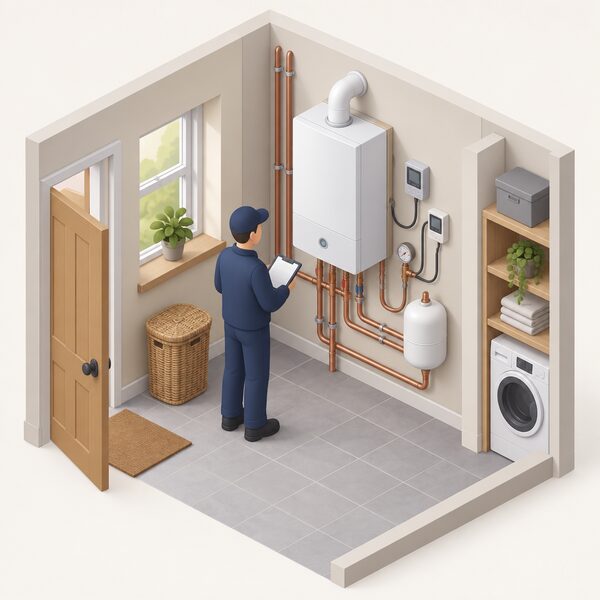
The Cartrefi project sits inside a wider Welsh approach. The Optimised Retrofit Programme, which part-funded it, embraces a test and learn approach to decarbonising homes5. That phrase is not marketing: it describes a method in which a small number of properties are used to find out what actually works before any commitment to scale.
The same logic runs through the UK's hydrogen appliance work. Work Package 4 of the Hy4Heat programme had the objective of producing prototype appliances which can demonstrate safe use of hydrogen as a fuel in providing domestic heating, hot water and cooking requirements6. Hy4Heat Work Package 7 focused on assessing the safe use of hydrogen gas in certain types of domestic properties and buildings7. The Cartrefi home is a downstream step from that laboratory and test-house work: the same questions about safety and performance, asked in a dwelling that someone actually lives in.
The Heat and Buildings Strategy set out the Government's intention to develop the evidence base to inform strategic decisions in 2026 on the future role of hydrogen in home heating8. A village scale trial was envisaged by 20258. The evidence gathering is therefore time-limited and decision-oriented rather than open-ended.
Independent research programmes have taken a comparable approach to retrofit more generally. The Homes for Net Zero programme aims to identify options for homeowners to decarbonise their homes by testing practical solutions9. Trials of hydrogen-based heating are underway to assess the safety and performance of the technology10. The pattern across all of these is the same: small numbers of real homes, instrumented, with the findings feeding a policy decision rather than a product launch.
"The objective of WP4 is to produce prototype appliances which can demonstrate safe use of hydrogen as a fuel in providing domestic heating, hot water and cooking requirements"
What it is not: no wider plan to convert local homes to hydrogen
The most important sentence about the Cartrefi project is the one that limits it. The project states that it is not part of a wider plan to convert local homes to hydrogen, describing itself instead as an evidence gathering project to test how hydrogen works in a real life home1. It also reports minimal disruption to the local community and no change to their gas supply1. Neighbours on the same street are not on hydrogen, and there is no programme to put them on it.
That position is consistent with how other authorities have treated the fuel. Bristol's Warm Homes Plan does not plan for hydrogen as a future heat source because there is not yet a clear national approach11. Where a national decision is outstanding, local strategies have tended to leave hydrogen out rather than plan around it.
The legal position reinforces the point. There is currently no legal requirement for existing homes to be retrofitted or for low-carbon heating technologies to be installed in existing homes, with exceptions for privately rented homes and homes owned by local authorities and housing associations in some parts of the UK12. A demonstration project cannot create such a requirement, and the Cartrefi project does not purport to.
There are also unresolved questions about how existing homes would even be assessed under newer modelling. At present there is no approved Home Energy Model methodology for existing homes13. Scotland's stock modelling work on the 2025 building regulations sits alongside that gap rather than filling it13. In other words, the measurement framework for a mass retrofit is itself still being built.
Evidence gathering: how hydrogen works in a real home
The technical case for hydrogen in homes rests on work that predates Cartrefi. The Hy4Heat programme has successfully proven that hydrogen boilers can operate safely within a test environment14. That is a test environment finding, and the wording is careful: safe operation under controlled conditions is not the same as safe operation across a housing stock.
The safety work has been structured accordingly. Hy4Heat Work Package 7 assessed the safe use of hydrogen gas in certain types of domestic properties and buildings7. The qualification matters, because domestic properties vary enormously in age, construction, ventilation and pipework, and a finding for certain types is not a finding for all.
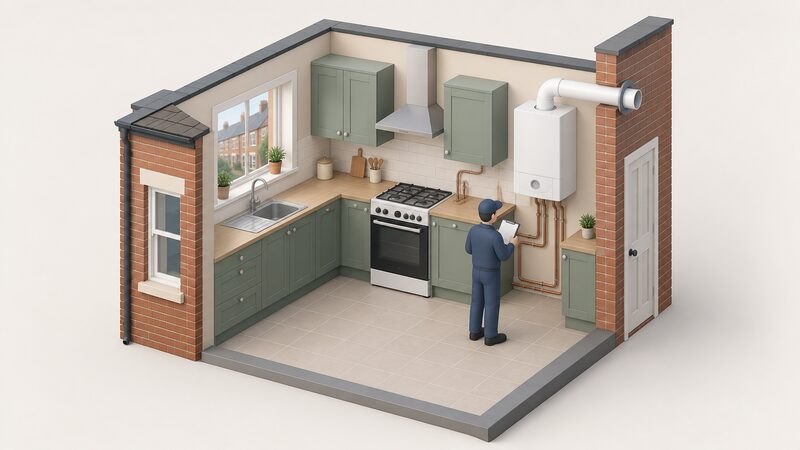
The Cartrefi home adds a retrofit dimension that a new-build test house cannot. A traditional terraced home has existing pipework, existing flues, existing kitchen layouts and existing thermal performance. Running hydrogen through that fabric, after a deep retrofit, produces evidence about the interaction between the building and the fuel rather than about the appliance alone.
Independent validation work has run in parallel. Home Energy Dynamics has been tested on a number of homes to date, demonstrating a very strong correlation between predicted and measured energy performance, which supports validation work undertaken with Salford University's Energy House15. That kind of measured-versus-predicted comparison is what turns a demonstration into evidence.
The Climate Change Committee's assessment remains the counterweight. It estimates that there will be no role for hydrogen in home heating3. A household reading about Cartrefi should hold both facts at once: the demonstration is real and is producing data, and the UK's statutory climate adviser does not expect the technology to be deployed in homes at scale.
Where the hydrogen home sits among UK trials
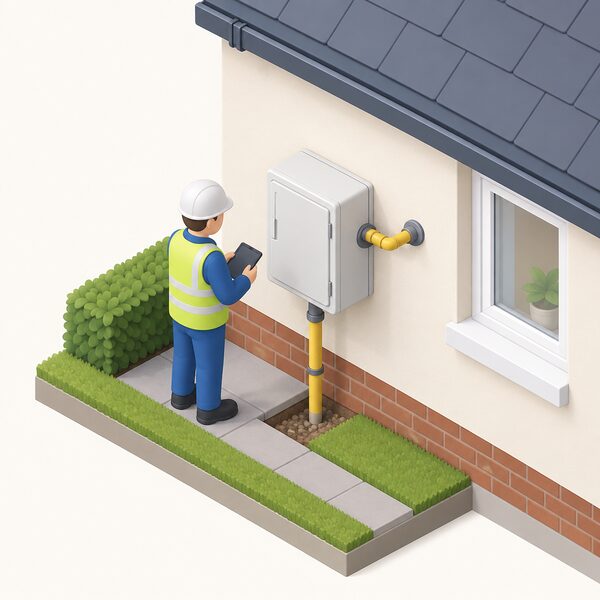
Cartrefi is one of several hydrogen domestic projects, and the differences between them are instructive. H100 Fife is described as a world-first green hydrogen heating trial in Levenmouth, Fife, where up to 300 homes will use green hydrogen for heating and cooking16. Hydrogen meter boxes in that trial will be installed outside17. That is a new-build hydrogen network serving existing homes, which is a different proposition from a single retrofitted property.
The Government's larger hydrogen heating trial has been consulted on at a scale of 1,000 to 2,000 properties4. Redcar in Teesside has been considered as a potential location for the hydrogen heating trial18. Two showhomes have been built in Gateshead with hydrogen appliances on display6. A boiler manufacturer's guidance refers to two show homes built in Gateshead20, and the location of hydrogen show homes has been given as Gateshead20. These are display and demonstration properties rather than occupied trials.
| Project | Scale | Location | Status |
|---|---|---|---|
| Cartrefi Hydrogen Homes | One retrofitted terraced home | Wales | Evidence gathering, no change to local gas supply1 |
| H100 Fife | Up to 300 homes | Levenmouth, Fife | Green hydrogen for heating and cooking16 |
| Government hydrogen heating trial | 1,000 to 2,000 properties | Redcar, Teesside considered | Consulted on, not confirmed18 |
| Hydrogen showhomes | Two showhomes | Gateshead | Appliances on display6 |
The comparison shows how small the occupied evidence base still is. A single home in Wales, up to 300 in Fife, and a trial of 1,000 to 2,000 properties that has not been confirmed. Against a UK housing stock measured in tens of millions, these are pilot numbers.
For a household's independence, the trial structure itself is the relevant fact. Participation in these projects is arranged through the network operator and the housing provider, not through an open application. The Cartrefi home belongs to a housing association, and the Fife trial is run by a gas distribution network. A householder outside those arrangements has no route into either.
Does the project mean hydrogen boilers will replace gas boilers?
No decision has been taken, and the current policy signals point away from a straightforward replacement. The proposed Future Homes Standard states that gas boilers, including hybrid and hydrogen-ready boilers, will not meet the proposed standards21. That is a consultation position covering new homes, and it treats hydrogen-ready appliances as non-compliant alongside conventional gas boilers.
The counter-argument has been put by manufacturers. Baxi Heating UK Ltd has recommended a mandate that all boiler installations from 2025 are hydrogen ready, on the basis that this would mean a significant proportion of the existing stock could later run on hydrogen14. That is a recommendation from a maker, not a rule, and it has not been adopted as described.
The Heat and Buildings Strategy set a different kind of milestone: by 2035, all new heating systems installed in UK homes will either be low-carbon technologies or support new technologies like hydrogen-ready boilers22. That wording keeps hydrogen-ready appliances inside the tent for 2035 while leaving the fuel question open.
Meanwhile the practical position for a householder is simple. Hydrogen boilers are not currently available in the UK2. A consultation on the role of hydrogen in home heating was due in 202511. The strategic decisions that would determine whether hydrogen has a domestic heating role were scheduled to be informed by the evidence base in 20268. Until those decisions land, no household can buy a hydrogen boiler, and no network is converting streets.
What the demonstration means for householders
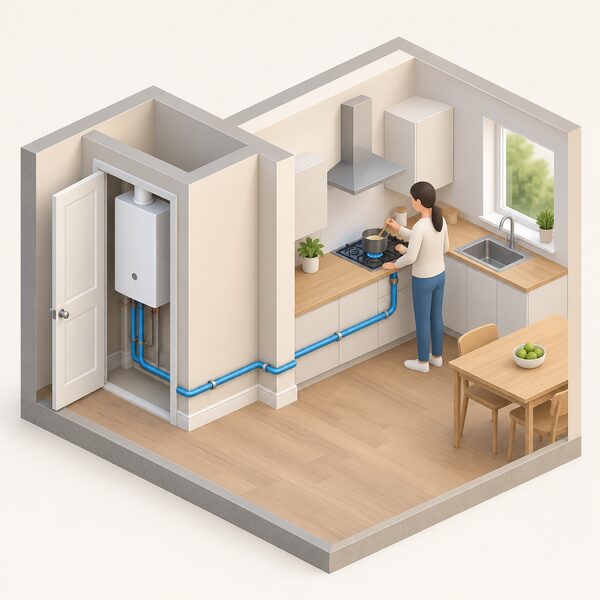
The honest summary is that Cartrefi is evidence for policymakers rather than an option for homeowners. The project tests how hydrogen works in a real life home1, and the findings feed a decision about the fuel's future role. Nothing in the project changes what a householder can install, buy or connect to.
The wider retrofit evidence base is more immediately useful. The Social Housing Decarbonisation Fund Demonstrator saw up to 2,000 homes improved to at least EPC band C23. Around 150 homes have demonstrated hydrotreated vegetable oil over the past three years24. The Electrification of Heat Demonstration Project published case studies reflecting the first-hand experiences of 7 households taking part in the programme25. These are the demonstration projects whose findings bear on what a household can actually do now.
The Climate Change Committee's recommendation was that Government must support the early demonstration of the everyday uses of hydrogen in order to establish the practicality of switching from natural gas to hydrogen26. That is precisely what Cartrefi is: an early demonstration of everyday use, in a kitchen and a boiler cupboard, rather than a deployment.
For energy independence, the distinction between a demonstration and a deployment is the whole story. A home on a hydrogen demonstration still relies on a piped supply, a network operator and an appliance maker, and it adds a dependence on electrolytic production capacity that does not yet exist at domestic scale. A household looking for independence today is looking at fabric improvements, on-site generation and storage, and the schemes that support them, not at a hydrogen connection.
Sources28 cited
- Cartrefi Hydrogen Homes project, Wales & West Utilities, 2026-09-20
- DESNZ public attitudes tracker: heat and energy use in the home, winter 2025, GOV.UK, 2026-03-12
- Hydrogen in a low-carbon economy, Climate Change Committee, 2025-04-15
- Hydrogen heating village trial, UK Parliament, 2022-07
- Optimised Retrofit Programme, Welsh Government, 2021-11-04
- Hy4Heat appliances, Hy4Heat, 2026-09-20
- Hy4Heat safety, Hy4Heat, 2026-09-20
- Heat and Buildings Strategy, GOV.UK, 2021-10
- Pathways to net zero ready home retrofit scrutinised by government funded research programme, Energy Systems Catapult, 2024-02-19
- Hydrogen heat: could it be the future of home heating?, Elmhurst Energy, 2025-07-04
- Bristol Warm Homes Plan, Bristol City Council, 2025-04
- Retrofit requirements for existing homes, House of Commons Library, 2026-09-17
- Energy Performance of Buildings Scotland regulations 2025 stock model research, Scottish Government, 2025-10-10
- Written evidence on hydrogen heating, UK Parliament, 2026
- Our Homes Net Zero toolkit, Energy Systems Catapult, 2025-07-31
- Ensuring a safe hydrogen gas network, SGN, 2026
- Safety in homes, SGN, 2026
- Hydrogen heating trial locations, House of Commons Library, 2026-09-20
- Hydrogen heating trial locations (PDF), House of Commons Library, 2023-09-26
- How do hydrogen boilers work?, Viessmann, 2022-04-05
- The Future Homes and Buildings Standards 2023 consultation, GOV.UK, 2026-09-17
- Ditching costly gas and oil is cheaper thanks to heat pump scheme, GOV.UK, 2035
- Social Housing Decarbonisation Fund, GOV.UK, 2024-05-13
- Government launches consultation on the future of heating for oil heated homes, UKIFDA, 2025-12-22
- Mass rollout of heat pumps feasible but innovation needed, Energy Systems Catapult, 2022-12-20
- The role of gas heating in homes, Energy UK, 2019-07-01
- Energy saving grants in your area, nidirect, 2026-09-17
- Boiler Upgrade Scheme annual report, April 2024 to March 2025, Ofgem, 2025-07-31
 Hydrogen Home Heating TrialsHydrogen home heating is still being tested, not sold.
 Demonstration and Test HomesBefore new heating systems reach your home, they get tested in real houses with real people living in them.
 Hydrogen Heating PolicyWill hydrogen ever heat your home, and when will the government decide?
 Hydrogen Safety in the HomeCan hydrogen actually be used to heat UK homes, and is it safe?
 Fuel Cell Cars as Home PowerCan you really run your home from a hydrogen car?
 The Full New Technology GuideWhich new home energy ideas can you actually buy in the UK right now, and which are still stuck in trials?