
In this answer
Short answer
Most gas boilers in UK homes can already run on a blend of hydrogen and natural gas, but not on pure hydrogen. Existing boilers and cooking appliances can run on a blend of up to 20% hydrogen with natural gas with no disruption to the home, and all existing gas appliances are certified to run on a 23% hydrogen blend, which sits above that level1. That is the practical answer for a household on the mains gas network today.
The harder answer is that 100% hydrogen is a different proposition. A hydrogen-ready boiler is an appliance that has the ability to burn both natural gas and hydrogen, and it is designed so that a technician can swap a few minor components to move it from one fuel to the other3. A standard boiler is not built that way, and there is no approved route to convert one in the field.
What follows sets out what a hydrogen-ready boiler can burn, what would have to change before a home runs on pure hydrogen, where blending in the UK gas grid actually stands, and what any of it does for a household's energy independence.
The short answer: a blend, not pure hydrogen
For the great majority of households the question resolves into two very different numbers. The first is 20%. Hydrogen blending in gas networks offers a reduction in carbon emissions without the cost and disruption to customers of changing their appliances, and Cadent states that existing boilers and cooking appliances can run on a blend of up to 20% hydrogen with natural gas with no disruption to the home2. The second is 100%, and nothing about a standard boiler supports it.
The certification position is slightly more generous than the network position. All existing gas appliances are certified to run on a 23% hydrogen blend, so the appliances in UK homes already carry headroom above the 20% by volume being assessed for the network1. That gap is deliberate: it means a blend can be introduced without a nationwide appliance replacement programme.
It is worth being clear about what a blend is and is not. A 20% blend is still four fifths natural gas by volume, so it reduces the carbon intensity of the gas burned rather than removing it. It does not make a home hydrogen heated, and it does not remove the home's dependence on the gas network. What it does is cut emissions from existing appliances without a change to the boiler, the hob or the meter.
What a hydrogen-ready boiler is and what it can burn
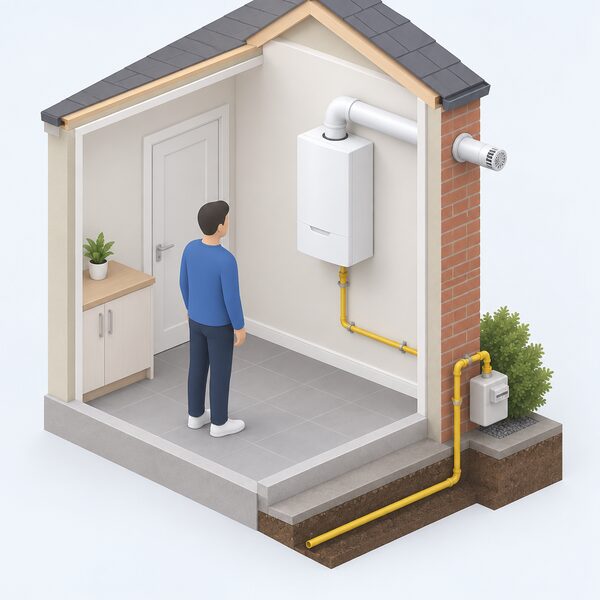
A hydrogen-ready boiler is an appliance that has the ability to burn both natural gas and hydrogen4. Which? describes hydrogen-ready boilers as able to cope with being powered by either traditional methane gas or hydrogen, and many boiler manufacturers already offer hydrogen-ready models that can run on natural gas and a blend of up to 20% hydrogen3. The design intent is that the appliance is installed now, runs on natural gas for as long as that is what the network supplies, and is converted later if the network switches.
That fallback matters. Hydrogen-ready boilers can be connected to the natural gas grid and run on natural gas throughout their life if necessary, so the appliance is not stranded if hydrogen never arrives in that area5. The hydrogen, when it comes, would come from the main gas supply rather than a cylinder or a separate connection4.
Hydrogen itself, as a fuel, burns without carbon dioxide: when burned, it releases only water vapour unlike fossil fuels, which emit carbon dioxide10. That is the attraction. The complication is that hydrogen combustion still produces some NOx emissions, so the flue and ventilation design of a hydrogen appliance is not identical to a natural gas one4. Hydrogen boilers are expected to operate with similar levels to modern natural gas boilers on efficiency, and one report describes a hydrogen boiler as equally efficient to a methane gas boiler3.
| Appliance | Natural gas | 20% hydrogen blend | 100% hydrogen |
|---|---|---|---|
| Existing gas boiler | Yes | Yes, certified to 23% blend1 | No |
| Hydrogen-ready boiler | Yes | Yes, up to 20%3 | Yes, after conversion3 |
| Vaillant ecoTEC Plus | Yes | Yes, up to 20% mix12 | Not stated |
What would have to change before a boiler runs on pure hydrogen
Three things have to line up: the appliance, the pipework in the home, and the gas in the street. Only the first is close to being solved.
On the appliance, the conversion of a hydrogen-ready boiler from natural gas to 100% hydrogen is designed to be a straightforward process, typically involving a visit from a technician to swap a few minor components3. One independent report describes the same step as taking under an hour, after which the boiler is running on 100% carbon free hydrogen5. A standard boiler has no equivalent route.
On the pipework, the position is more disruptive. Which? states plainly that a home converting to pure hydrogen would need to swap out its gas pipes for new ones1. That is a property-level change, not an appliance swap, and it sits alongside the wider question of whether the local network is converted at all.
On the gas itself, the hydrogen would come from the main gas supply when this is an option, which means the household is dependent on a network conversion decision taken well above its level4. The Hy4Heat programme has successfully proven that hydrogen boilers can operate safely within a test environment, but a test environment is not a street13. Baxi Heating UK Ltd told a parliamentary committee that the next phase in the UK's development of 100% hydrogen heating must take place over the next five years, which is a statement about how much work remains rather than a timetable13.
"Specifically, you'd need to swap out your gas pipes for new ones."
Hydrogen blending in the UK gas grid: where it stands
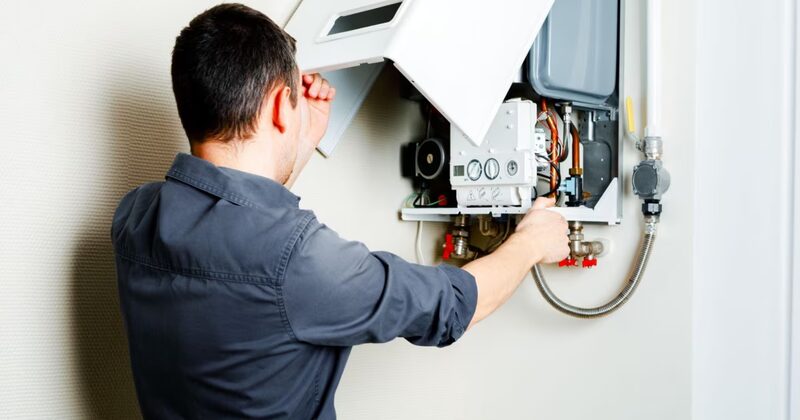
Blending is the part of the picture with a live policy position. The Heat and Buildings Strategy set out blending up to 20% hydrogen (by volume) into the existing gas network as an option under assessment14. The government has also been exploring a requirement for all new natural gas boilers to be hydrogen compatible by 202615.
The proposed mandate is the most concrete element. A consultation proposed that from 2026 onwards all new domestic-scale gas boilers sold are to be hydrogen-ready, and Citizens Advice records the same policy to require all domestic newly installed natural gas boilers to be hydrogen-ready from 202616. The government consultation on improving boiler standards and efficiency covered proposals to mandate that from 2026 all newly-installed gas boilers are hydrogen-ready, alongside the potential role of gas boiler and electric heat pump hybrids in the 2020s and 2030s18.
Two caveats sit over all of this. First, truly hydrogen ready boilers are not something consumers can readily buy at the moment, so the mandate describes a future market rather than the current one1. Second, the government has been due to consult on the role of hydrogen in home heating, which means the policy is not settled19. On timing, one manufacturer states that a 20% hydrogen blend could be introduced into the gas supply as early as 2028, while a full switch to 100% hydrogen is not imminent3. The Department for Energy Security and Net Zero's own tracker records that hydrogen heating technology is not currently available in the UK6.
There is a separate and important limit on where hydrogen heating can be installed at all. Under the proposed Future Homes Standard, gas boilers, including hybrid and hydrogen-ready boilers, will not meet the proposed standards, so new build properties would need an alternative heating source10. Hydrogen-ready appliances are therefore a retrofit answer for existing homes, not a route into new ones.
Where a hydrogen-ready boiler falls short

The case against treating hydrogen as the default answer for a gas-heated home rests on cost, import dependency and the alternatives.
On running cost, analysis for the End Fuel Poverty Coalition found that to run a boiler on hydrogen from renewable electricity compared to a heat pump could cost twice or even six times as much21. That is a comparison of running costs, not purchase prices, and it turns on how the hydrogen is made and what electricity costs at the time.
On security of supply, the Energy and Climate Intelligence Unit found that if the UK were to try to pursue hydrogen boilers for home heating at scale, the dependency on gas imports could rise significantly22. That is the sharpest point against the technology as an independence measure: hydrogen made from fossil gas with carbon capture keeps the import chain intact, and hydrogen made from renewable electricity competes for the same electrons a heat pump would use far more efficiently.
On the alternatives, the practical position is that in many cases a gas, oil, LPG, electric or biomass boiler can be swapped out and replaced with a heat pump, and both a new gas boiler and an air source heat pump can provide heating and hot water within 24 to 48 hours23. Cost and electricity prices are often leading people to favour gas boilers, and households replacing previously functioning gas boilers typically expressed a preference for a new boiler over the heat pump25. For homes where a full switch is not straightforward, a hybrid system keeps the boiler in a supporting role during colder weather or when extra heat or hot water is needed, with the heat pump providing the majority of the home's heating demand and switching to the gas boiler when outdoor temperatures are very low or electricity prices are high27.
What this means for household energy independence
A hydrogen-ready boiler does very little for a household's independence today, and the honest framing is that it is an option preserved rather than a capability delivered.
The appliance itself is a hedge. It runs on natural gas now, can take a blend of up to 20% hydrogen without modification, and can be converted to pure hydrogen later if the network in that area is converted3. Until that happens, the household remains dependent on the gas grid, on a supplier, and on imported gas. The blend reduces the carbon intensity of what is burned but does not change where it comes from or who controls it.
The deeper independence question is whether hydrogen at scale would reduce import dependency or increase it. The evidence in this area points the other way: pursuing hydrogen boilers for home heating at scale could raise the dependency on gas imports significantly22. A household that wants to cut its exposure to gas has a different set of options, and the comparison between a hydrogen-ready boiler and a heat pump is set out in hydrogen-ready boiler or heat pump.
What a household can rely on is narrower and more useful. A hydrogen-ready boiler will not be stranded if hydrogen never arrives, because it can run on natural gas throughout its life5. The blend, if it comes, needs no change to the boiler or the hob2. And the conversion to pure hydrogen, if it ever happens, is a technician's visit plus new pipework rather than a new appliance1. For the wider picture of where these technologies sit, see Emerging Home Energy Technology and Emerging Technology and Household Energy Independence.
Sources29 cited
- Hydrogen boilers: what you need to know, Which?, 2026-09-17
- Hydrogen blending, Cadent Gas, 2026-09-20
- Hydrogen boiler, Fuse Energy, 2026-06-27
- How do hydrogen boilers work?, Viessmann, 2022-04-05
- What type of boiler should your next one be?, Which?, 2023-09-05
- DESNZ public attitudes tracker: heat and energy use in the home, winter 2025, Department for Energy Security and Net Zero, 2026-03-12
- Kiwa 20% hydrogen blend mark, Kiwa, 2026-09-17
- Upgrading and replacing your boiler, Centre for Sustainable Energy, 2026-06
- Hydrogen heat: could it be the future of home heating?, Elmhurst Energy, 2025-07-04
- Hydrogen for heat, Hydrogen UK, 2024-07-29
- How to pay for energy, Cadent Gas, 2026-09-20
- Vaillant ecoTEC Plus Combi Boiler 2023, Quiet Mark, 2026-09-17
- Written evidence to the Science and Technology Committee, Baxi Heating UK Ltd, 2026
- Heat and Buildings Strategy, Department for Energy Security and Net Zero, 2021-10
- Heat and Building Strategy: gas boilers phase-out, International Energy Agency, 2026-04-11
- UKGBC responds to hydrogen boiler consultation, UK Green Building Council, 2023-03-23
- Citizens Advice response to the DESNZ consultation on improving boiler standards and efficiency, Citizens Advice, 2023-03-30
- Boiler consultation, Chartered Institute of Plumbing and Heating Engineering, 2026-09-17
- Bristol Warm Homes Plan, Bristol City Council, 2025-04
- The Future Homes and Buildings Standards 2023 consultation, Department for Levelling Up, Housing and Communities, 2026-09-17
- Is hydrogen the solution to high energy bills?, End Fuel Poverty Coalition, 2023-10-27
- Getting off gas, Energy and Climate Intelligence Unit, 2023-04-24
- The best heating for your home, Which?, 2025-09-22
- Three steps to unlocking heat pumps as an option to replace broken boilers, Nesta, 2026-07-27
- The potential impact of heat pump readiness, Nesta, 2026-02-12
- Engaging homeowners: messaging that drives earlier boiler replacement planning, Which?, 2026-01-28
- Hybrid heating, Cadent Gas, 2026-09-20
- Hybrid heat pumps, Nesta, 2025-02-03
- Boiler statistics, Uswitch, 2024-01-04
 Hydrogen in the Gas GridHydrogen might be mixed into the gas you already use, but what would that actually mean for your bills, your boiler and your safety?
 Gas Boilers GuideMains gas boilers heat around 23 million UK homes.
 Hybrid Heat PumpsHow hybrid systems pair a heat pump with a gas, oil or LPG boiler, what decides which appliance runs, what they cost, how much gas they displace, and why the Boiler Upgrade Scheme will not fund them.
 Fuel Cell Cars as Home PowerCan you really run your home from a hydrogen car?
 Domestic Fuel CellsA fuel cell boiler makes electricity and heat at the same time, usually from mains gas.
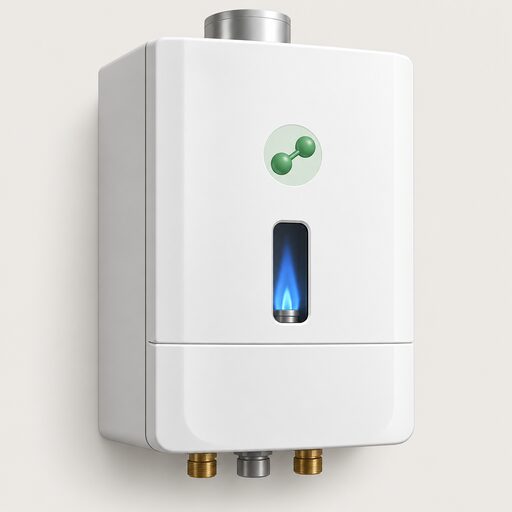 Hydrogen-Ready BoilersWhat manufacturers mean by hydrogen-ready and hydrogen-blend-capable, what conversion would require, and the state of UK hydrogen heating trials and decisions.