
In this answer
Short answer
Scotland has not banned gas boilers in existing homes. The Heat in Buildings Bill would prohibit the use of polluting heating systems, like gas boilers, in all privately owned and privately rented homes and non-domestic properties after 2045, and would require some building owners to act earlier than that1. The Scottish Government's commitment to decarbonising heat in buildings by 2045 remains firm2.
The dates that matter most to householders are earlier than 2045. The Scottish Government has proposed phasing out the need to install new or replacement fossil fuel boilers in off-gas areas from 2025 and in on-gas areas from 20303. A separate independent source records a proposed phase out of new installations from June 20274.
What is already in force is narrower. Since April 2024, new homes in Scotland cannot have oil or gas boilers and must have a low-carbon heating system such as a heat pump5. That rule applies to new builds, not to the boiler already in an existing home.
What the Scottish rules actually say
The legal position rests on a Bill that has not completed its passage. The Heat in Buildings Bill would prohibit the use of polluting heating systems, like gas boilers, in all privately owned and privately rented homes and non-domestic properties after 2045, and require some building owners to do so earlier than 20451. The Scottish Government has stated that its commitment to decarbonising heat in buildings by 2045 remains firm2, and separately that it is committed to decarbonising heat in buildings by 20459.
The earlier dates come from the Bute House Agreement, which set out phasing out the need to install new or replacement fossil fuel boilers in off-gas areas from 2025 and in on-gas areas from 20303. The Climate Change Committee recorded the same two dates in its 2022 progress report: phase out replacement fossil fuel boilers in 2025 for off-gas buildings, and 2030 for on-gas buildings10. These are phase-out dates for installation, not removal dates for boilers already in place.
A third figure appears in independent guidance, which describes a phase out of new installations from June 20274. That does not match the 2025 and 2030 dates in the official documents. Both figures stand: the official position is 2025 for off-gas and 2030 for on-gas, and the June 2027 date is reported separately.
Scotland's wider climate framework sets the context. Scotland has committed to reaching net zero by 204511, and the Climate Change Plan sets a target date for net zero emissions of all greenhouse gases by 204512. The Heat in Buildings Strategy set a target to decarbonise heating systems by 2045, so far as reasonably practicable13.
Who the rules apply to
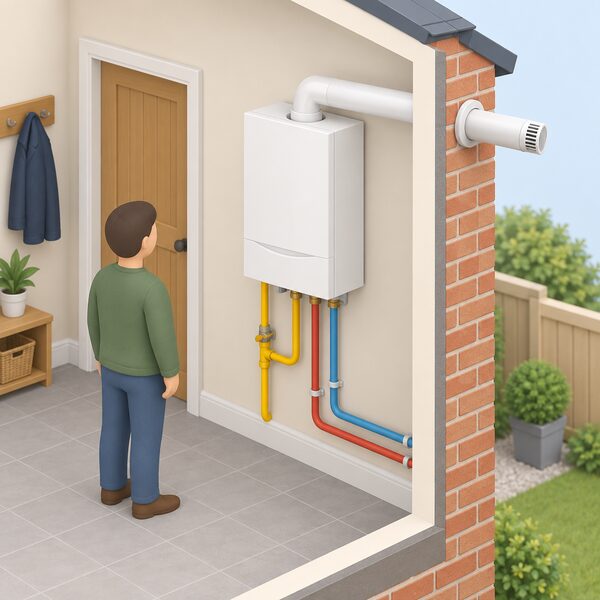
The proposed prohibition is broad in scope. It would cover all privately owned and privately rented homes and non-domestic properties in Scotland1. That includes owner-occupiers, private landlords and commercial premises, not just social housing.
Private landlords already carry duties regardless of the phase-out. Under the Gas Safety (Installation and Use) Regulations 1998, landlords must repair and maintain gas pipework, flues and appliances in safe condition, ensure an annual gas safety check on each appliance and flue, and keep a record of each gas safety check14. Those duties apply now and are unaffected by the proposed heating rules.
The private rented sector is also moving on energy efficiency. In Scotland, 74% of private rented sector homes currently use gas boilers and 7% use oil boilers7. The Repairing Standard is being extended, with provisions including a minimum standard for safe kitchens, a fixed heating system, safe access and use of common facilities including secure common doors, residual current devices, and all fuel types supplying the property to be in a reasonable state of repair and in proper working order15.
New build homes are a separate category and are already covered. The New Build Heat Standard prohibits mains gas and oil boilers as a main heating system6, and its main effect is to proscribe the burning of fuel for heat, so that no new home in Scotland may have a gas boiler or fireplace16. The ban includes all fossil and biofuel combustion boilers17.
| Group | Position |
|---|---|
| Owner-occupiers, existing homes | No prohibition in force; 2045 proposal1 |
| Private rented homes | Covered by the 2045 proposal; gas safety duties apply now1 |
| New build homes | Gas and oil boilers prohibited as main heating since April 20246 |
| Off-gas properties | Proposed phase out of new or replacement fossil fuel boilers from 20253 |
| On-gas properties | Proposed phase out of new or replacement fossil fuel boilers from 20303 |
Conditions and exceptions
Several carve-outs matter. The Scottish Government has stated that it does not propose to apply the legislation and prohibition to other systems, such as gas cookers or to portable heaters used in emergencies18. A gas hob is therefore not treated as a heating system under the proposals.
Owner-occupiers get a specific exemption route. Owner occupied homes that have ended their use of polluting heating by 2033 will not be required to meet the minimum energy efficiency standard18. Acting early removes a separate obligation.
The New Build Heat Standard has its own limits. Independent solid fuel boilers are not exempt under the caveat of emergency heating, so they are not a viable installation option in new builds constructed after 1 April 202419. The gas boiler plus PV specification still applies to homes with direct electric heating20.
Support schemes have their own eligibility rules. Home Energy Scotland grants and loans are available to all domestic owner-occupiers in Scotland to install clean heat and energy efficiency measures1. The Emergency Heating Oil Scheme excludes households using mains gas, electricity, biomass, coal or other fuels21. New applications for oil and LPG boilers through Warmer Homes Scotland, Area Based Schemes and Home Energy Scotland Loans closed on 6 September 202122.
How a household replaces a gas boiler
Replacement is a staged process, and the first step is knowing which category the property falls into. Off-gas properties face the earlier proposed date of 2025, on-gas properties 20303. A property's connection status determines which applies.
The measures installed under support schemes show what replacement has looked like in practice. The most common measure installed under Warmer Homes Scotland between September 2015 and June 2016 was a gas fired condensing boiler23. In 2024-25, gas boiler (condensing) accounted for 1,343 of 4,958 measures installed under the current scheme24. That pattern reflects a period when gas boilers were still the default replacement, before the oil and LPG application route closed in 202122.
For a household, the practical sequence is: establish whether the property is on or off the gas grid; check what the building standards require for the work; and check eligibility for Home Energy Scotland grants and loans, which are open to all domestic owner-occupiers in Scotland1. The Emergency Heating Oil Scheme is not available to mains gas users21.
Energy Performance Certificate reform runs alongside this. The Scottish Government has consulted three times on EPC reform prior to laying the new Regulations, in 2021, 2023 and 202525. EPCs will matter for rented homes and for anyone selling or letting.
What this means for energy independence
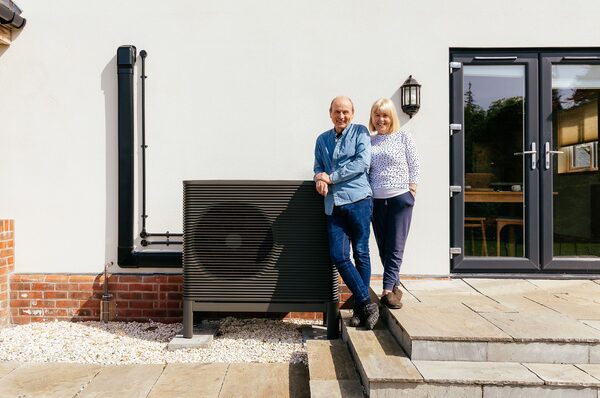
The direction of Scottish policy reduces direct gas dependence in new homes and, over time, in existing ones. New homes are required to install clean heating9, and the New Build Heat Standard prohibits mains gas and oil boilers as a main heating system6. A household that moves to a heat pump or other clean heating system stops buying gas for heat, which removes exposure to gas prices and to the gas network.
The dependence that remains is different, not absent. A heat pump runs on electricity, so the household depends on the electricity grid and a supplier rather than a gas connection. The Supplier of Last Resort arrangements apply to both gas and electricity suppliers to residential users in the UK, excluding Northern Ireland27, so supplier failure is a risk in either case. Off-gas households that currently use oil or LPG depend on deliveries and on a fuel market rather than a pipe.
Scotland's wider targets frame the transition. Scotland has committed to reaching net zero by 204511, and the fuel poverty targets aim for no more than 5% of households being fuel poor by 2040, no more than 1% in extreme fuel poverty, and a fuel poverty gap of no more than £250 in 2015 prices28. The National Planning Framework includes reducing car kilometres travelled by 20% by 203029.
For a householder, the honest position is that no rule currently requires removal of a working gas boiler. The 2045 prohibition is proposed, the 2025 and 2030 dates are installation phase-outs, and the only prohibition in force applies to new builds. The Scottish Government's commitment to decarbonising heat in buildings by 2045 remains firm2, and the direction of travel is clear, but the timing for existing homes is not settled.
Sources29 cited
- Heat in Buildings progress report 2024, Scottish Government, 2024-10-10
- Heat in Buildings Bill consultation analysis and response, Scottish Parliament, 2026-01-29
- Delivering net zero for Scotland's buildings: Heat in Buildings Bill consultation, Scottish Government, 2023-11-28
- Accelerating zero carbon heat in Scotland, MCS Foundation, 2026-09-20
- Research briefing CBP-8830, House of Commons Library, 2024-04
- Wood burning stoves to be permitted in new homes, Scottish Government, 2026-09-17
- Energy efficiency of domestic private rented property in Scotland: BRIA, Scottish Government, 2025-06-06
- Scottish House Condition Survey 2024: key findings, Scottish Government, 2024
- Heat in Buildings plans, Scottish Government, 2026-09-17
- Scottish emission targets: progress in reducing emissions in Scotland, Climate Change Committee, 2022-12-07
- Scotland's climate change plan 2026-2040, Scottish Government, 2026-09-17
- Climate change policy, Scottish Government, 2026-09-17
- Scottish Government response to the Green Heat Finance Taskforce, Scottish Government, 2025-12-17
- Carbon monoxide alarms in private rented properties: guidance, Scottish Government, 2016-12-01
- Energy efficiency programme consultation, Scottish Government, 2026-09-20
- Solar sector concerned over outdated Scottish building regulations plan, Solar Energy UK, 2024-08-02
- Building regulations discussion document, Northern Ireland Department of Finance, 2024-04
- Delivering net zero for Scotland's buildings: consultation proposals, Scottish Government, 2023-11
- Scotland's New Build Heat Standard 2024 explained, HETAS, 2024-11-08
- New Scottish building regulations torpedo a solar success story, Solar Energy UK, 2024-01-30
- Home Heating Advice Scotland FAQs, Home Heating Advice Scotland, 2026-09-17
- Update on renewable heat target and action, Scottish Government, 2021-09-06
- Warmer Homes Scotland first annual review, Scottish Government, 2016-11-03
- Heat in Buildings progress report 2025, Scottish Government, 2024-25
- Energy Performance of Buildings Scotland regulations 2025 update, Scottish Government, 2025-10-10
- Energy Performance of Buildings Scotland regulations 2025 update: page 1, Scottish Government, 2025-10-10
- Supplier of Last Resort information, Energy Ombudsman, 2026-09-20
- Heat in Buildings Strategy summary document, Scottish Government, 2040
- National Planning Framework 4, Scottish Government, 2030
 Will Gas Boilers Be Banned?What has actually been legislated, proposed or dropped on gas and oil boiler phase-out across the four UK nations, and the difference between new build rules and replacement in existing homes.
 New Build Heat StandardScotland's New Build Heat Standard means gas and oil boilers are no longer allowed in new homes from April.
 Boiler InstallationGetting a new boiler means following building rules, and the person fitting it must be registered to sign the work off.
 Planning Permission in ScotlandDo you need planning permission for a heat pump in Scotland?
 Climate TargetsScotland aims to stop adding greenhouse gases by 2045, five years before the rest of the UK.
 Heating Controls Building RulesWhat heating controls must you fit by law when you replace a boiler?