
In this guide
Gas safety in UK homes rests on one central rule: work on gas appliances and fittings carried out as part of a business must be done by someone who is competent and registered with the Gas Safe Register. That applies to installation, repair and servicing, and it applies whether the property is owned, rented or occupied under a lease. The Gas Safety (Installation and Use) Regulations 1998 sit underneath that registration requirement, and they extend to buildings that are exempt under the Building Regulations1.
For a householder, the practical duties are narrower than the law's reach. The Health and Safety Executive strongly advises that all gas appliances, flues and pipework are installed, regularly maintained and serviced at least annually by a Gas Safe registered engineer, and that gas appliances and flues are checked for safety at least once every 12 months4. Landlords carry a stricter, non-optional version of the same duty: a gas safety check every year on each appliance and flue, with a record kept6.
Carbon monoxide is the risk that ties the whole framework together. Faulty or badly serviced gas and other fossil fuel burning appliances and systems such as coal, oil or wood cause carbon monoxide poisoning, and poorly maintained, badly installed or faulty gas appliances can also cause gas leaks, fire and explosions7. Alarms are the household's own line of defence, and the rules on them now differ by nation.
What the Gas Safety Regulations require of UK households
The Gas Safety (Installation and Use) Regulations 1998 are the backbone of domestic gas law, and their reach is wider than many householders assume. They apply to buildings exempt under the Building Regulations, so a structure that escapes building control does not escape gas safety law9. The registration requirement that sits alongside them is absolute in its terms: you must be on the Gas Safe Register to carry out gas work legally2.
For an owner-occupier, the duties are framed as strong advice rather than a licensing condition. The Health and Safety Executive states that all gas appliances, flues and pipework should be installed, regularly maintained and serviced at least annually by a Gas Safe registered engineer, and that gas appliances and flues should be regularly checked for safety at least once every 12 months4. Homeowners are advised to have a safety check carried out annually, or at any other time if there is a safety doubt, by a Gas Safe registered installer10.
One rule is a prohibition rather than a recommendation. Regulation 34(1) provides that a responsible person shall not use a gas appliance, or permit a gas appliance to be used, if at any time they know or have reason to suspect that it constitutes a danger1. The Health and Safety Executive puts the same point plainly: it is illegal for anyone to use a gas appliance if they suspect it is unsafe4.
What this means for independence is straightforward. A household can own its boiler outright, but it cannot lawfully maintain, repair or replace the gas side of it without buying in a registered engineer. The competence requirement is a permanent dependency on a licensed trade, and no amount of self-sufficiency changes it. The one thing a household controls is the choice of engineer and the frequency of checks.
Gas Safe registration: who may legally fit, fix and service gas appliances
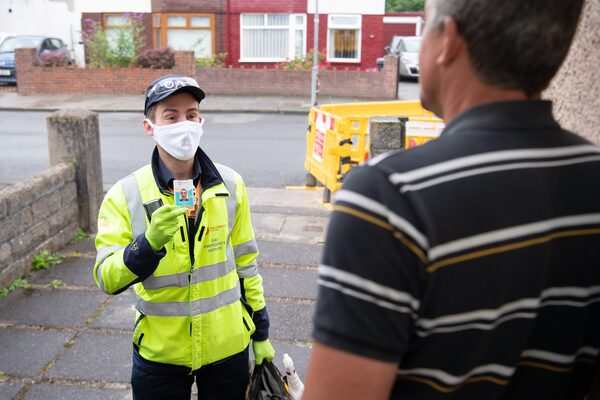
By law, anyone carrying out work on gas appliances or fittings as part of their business must be competent and registered with the Gas Safe Register3. The register is the official registration for all gas engineers in Northern Ireland, and the same body covers the rest of the UK8. Registration is not a one-off: engineers must hold current qualifications to install, repair or maintain domestic gas appliances8.
Checking an engineer is a two-part process. The register can be checked online, or by ringing its freephone helpline on 0800 408 55005. The card itself matters as much as the name on the register, because registration covers categories of work rather than gas in general. A householder can ask to see the ID card and check the back of it for the specific work the engineer is qualified to do.
Registration also carries administrative requirements. An applicant registering engineers must supply National Insurance numbers for each engineer they want to register2. That is a detail of the scheme rather than something a household needs to police, but it illustrates that registration attaches to named individuals with verified identities, not to a company trading name alone.
Where a building project involves a gas appliance, the Building Regulations add a second layer. Guidance for Wales states that a Gas Safe registered installer with the relevant competencies must be employed, and that the Gas Safety (Installation and Use) Regulations will also apply11. The two regimes run in parallel: building control approval does not substitute for registration, and registration does not substitute for building control.
The annual service and safety check: what it covers and why it is required
A service and a safety check are related but distinct. The Health and Safety Executive strongly advises that all gas appliances, flues and pipework are installed, regularly maintained and serviced at least annually by a Gas Safe registered engineer4. Independent consumer guidance gives the same interval for a boiler service: at least once a year, in other words every 12 months12.
For landlords, the check is a legal duty with a defined clock. A landlord must arrange an annual gas safety check within 12 months of the installation of a new appliance or flue they provide, and annually thereafter, carried out by a Gas Safe registered engineer4. The check must be done every year on each gas appliance and flue6. Under the 2018 Amendment Regulations, the check can be carried out up to 2 months before the date it needs to be carried out while retaining the original deadline date, which lets a landlord align visits without losing the anniversary4.
Landlord duties for LPG appliances are the same as for natural gas, with a safety check at least once every 12 months4. Tenants who own their own appliances or flues carry a parallel duty: those appliances should be regularly maintained, with a safety check carried out at least once every 12 months by a Gas Safe registered installer10.
There is one notable carve-out. If a lease is for longer than seven years and is for life, the landlord is not responsible for gas safety checks and maintenance4. In that arrangement the duties sit with the occupying leaseholder, which is why long-lease flats often fall outside the annual landlord check regime that tenants in shorter lets rely on.
| Duty | Who carries it | Interval |
|---|---|---|
| Service and maintenance of appliances, flues and pipework | Owner-occupier, advised | At least annually4 |
| Safety check on appliances and flues | Owner-occupier, advised | At least once every 12 months5 |
| Gas safety check on each appliance and flue | Landlord | Every year6 |
| Safety check on tenant-owned appliances or flues | Tenant | At least once every 12 months10 |
| LPG appliance safety check | Landlord | At least once every 12 months4 |
Warning signs that a gas appliance is unsafe
Some warning signs are visible without instruments. Black marks and stains around the appliance, lazy orange or yellow flames instead of crisp blue ones, and high levels of condensation in the accommodation are all listed as indicators13. Official guidance adds yellow or orange flames, except for fuel-effect fires which display that colour flame by design, soot or stains around the appliance, and pilot lights which frequently blow out14.
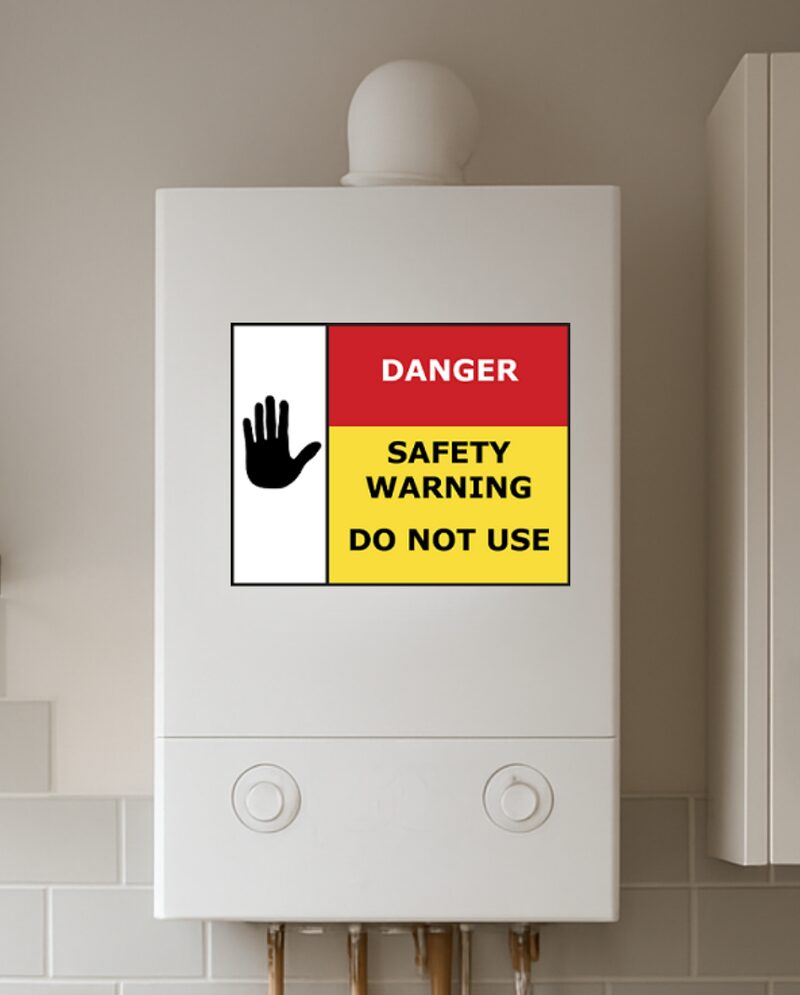
When an engineer finds a problem, the classification matters less than the label. Under the Gas Industry Unsafe Situations Procedure, both "at risk" and "immediately dangerous" carry the same message on the warning label: "Danger Do Not Use"4. The distinction between the two categories is technical; the instruction to the household is identical.
"shall not use a gas appliance or permit a gas appliance to be used if at any time he knows or has reason to suspect that"
The legal consequence of ignoring that label is on the occupier. It is illegal for anyone to use a gas appliance if they suspect it is unsafe4. A condemned appliance is not a matter of judgement for the household, and a warning label is not a suggestion to be weighed against the inconvenience of a cold house.
Carbon monoxide: the risk, the alarm standard and where to place it
Carbon monoxide poisoning is caused by faulty or badly serviced gas and other fossil fuel burning appliances and systems such as coal, oil or wood7. Poorly maintained, badly installed or faulty gas appliances can cause gas leaks, fire, explosions and carbon monoxide poisoning8. The risk is not confined to the home: incidents and fatalities because of CO can also occur in holiday homes, caravans and on board boats where faulty gas cookers, appliances or petrol-powered generators have led to carbon monoxide poisoning7.
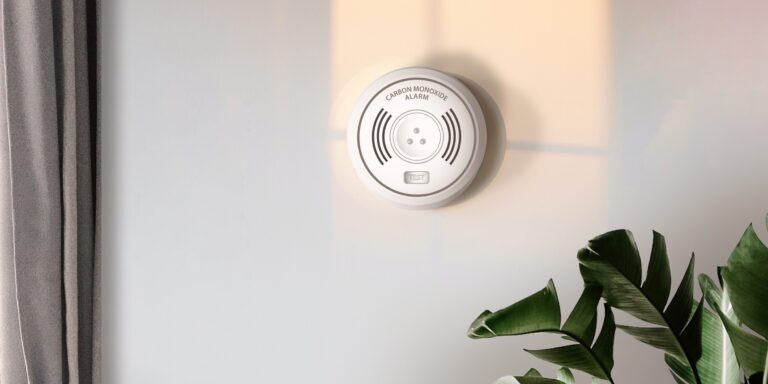
The alarm standard is consistent across the guidance. Carbon monoxide alarms should comply with BS EN 50291:2001, and where a new or replacement fixed solid fuel appliance is installed in a dwelling, a carbon monoxide alarm should be provided in the room where the appliance is located9. Approved Document J has been amended to include guidance that where a new or replacement fixed flued combustion appliance of any fuel, oil, gas including LPG, and solid fuel, is installed in a dwelling, including fixed flued cookers, a carbon monoxide alarm should be provided15. The newer standard reference is BS EN 50291-1:201815.
Placement rules are set out in the Welsh building regulations guidance, and they are the most specific published figures available. An alarm located on the ceiling should be at least 300mm from any wall. An alarm located on a wall should not be within 150mm of the ceiling. Either way it should be between 1m and 3m horizontally from the appliance9. Further guidance on installation is available in BS EN 50292 and from manufacturers' instructions16.
The Met Office advises that a carbon monoxide alarm meeting European Standards EN 5029 should be fitted in any room that contains a gas fuel burning appliance, like a boiler and gas fire, and a solid fuel burning appliance17. One further interaction is worth knowing: where a kitchen contains an open-flued appliance, the extract rate of the kitchen extract fan should not exceed 20 litres per second, or 72m³ per hour9. A fan that pulls harder than that can affect how the appliance draws.
Carbon monoxide alarms in rented homes: landlord duties and tenancy scope

The four nations have converged on similar duties by different routes, and the dates matter.
In England, the law changed on 1 October 2022. All relevant landlords must provide a carbon monoxide alarm in any room used as living accommodation which contains a fixed combustion appliance, excluding gas cookers4. The exclusion of gas cookers is a specific and easily missed limit of the English duty.
In Wales, the Fitness for Human Habitation Regulations require a landlord to ensure that a carbon monoxide alarm is present in any room which has a gas, oil or solid fuel burning appliance installed18. That requirement does not replace duties under existing legislation, including the Management of Houses in Multiple Occupation (Wales) Regulations 2006 and the Gas Safety (Installation and Use) Regulations 199818.
In Scotland, the position moved from a private rented sector rule to a universal one. The standards for provision in private rented housing were extended to all tenures, and from 1 February 2022 this element of the repairing standard was incorporated into the tolerable standard and applies to all houses in Scotland regardless of tenure19. The earlier private rented guidance ceased to have effect on 1 February 2022, after which landlords should refer to the Scottish Government's guidance on the tolerable standard, Chapter 17: Satisfactory Carbon Monoxide Detection19. A house meets the Tolerable Standard if it complies with the relevant requirements in relation to satisfactory carbon monoxide alarms21. The underlying order introduced new requirements for fire and carbon monoxide detection and warning equipment, and the statutory requirement is that a house has satisfactory equipment installed for detecting, and for giving warning of, carbon monoxide present in a concentration that is hazardous to health22. Fire and smoke alarms and carbon monoxide detectors were removed from the Repairing Standard because this became part of the tolerable standard24.
Northern Ireland has its own instrument, the Gas Safety (Installation and Use) Regulations (Northern Ireland) 202425. Smoke and heat alarms must be installed and maintained in accordance with British Standard BS 5839-6, and carbon monoxide alarms must be installed and maintained in accordance with British Standard BS EN 5029225. BS 5839-6 is the standard for planning, design, installation, commissioning and maintenance of fire detection and fire alarm systems in domestic premises25.
| Nation | Duty | Date |
|---|---|---|
| England | Alarm in any living accommodation room with a fixed combustion appliance, excluding gas cookers | From 1 October 20224 |
| Wales | Alarm in any room with a gas, oil or solid fuel burning appliance | Regulations in force 202218 |
| Scotland | Satisfactory CO detection under the Tolerable Standard, all tenures | From 1 February 202219 |
| Northern Ireland | Alarms installed and maintained to BS EN 50292 | 2024 Regulations25 |
Choosing a compliant alarm: standards, certification and cost
Before purchasing a CO alarm, the Health and Safety Executive advises always ensuring it complies with British Standard EN 50291 and carries a British or European approval mark, such as a Kitemark4. Northern Ireland guidance gives the same test in slightly different words: an alarm should meet British or European standards, BS Kitemark or EN 502917.
Cost is modest and published. The Health and Safety Executive states that CO alarms cost from £15 and can be purchased in most hardware shops4. Northern Ireland guidance puts an audible carbon monoxide alarm at from as little as £20, meeting British or European standards7. Both are purchase prices; no installation cost is published, and fitting is within the scope of ordinary DIY for a battery unit.
There is a route by which alarm costs can be bundled into a wider grant-funded package. Under the Home Improvement loan rules, safety certification such as gas, electric and fire alarm work sits in the eligible works category of Compliance26. The Great British Insulation Scheme lists heating sources for scores including condensing and non-condensing gas boilers, non-condensing and condensing LPG boilers, non-condensing and condensing oil boilers, electric boilers, solid fossil boilers, air to water ASHP, ground source heat pump, district heating systems with and without CHP, and bottled LPG boilers27. Those are scheme categories rather than alarm rules, but they show where alarm and safety certification sits in the wider funding landscape.
How condensing boiler rules fit into the wider gas safety framework
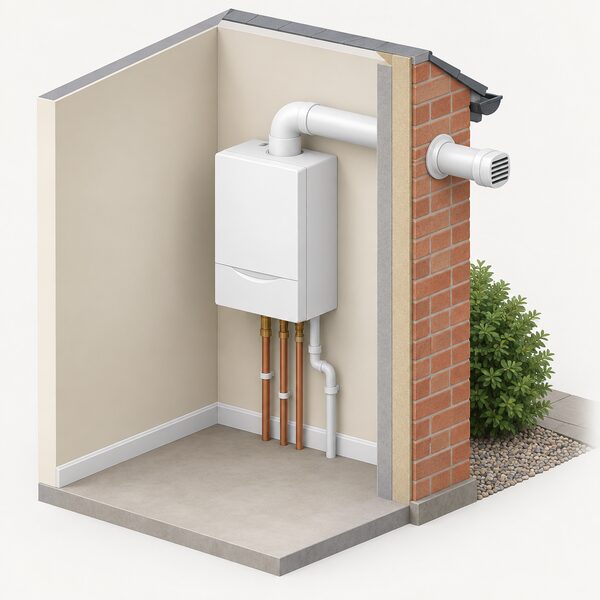
Condensing rules and gas safety rules are separate regimes that meet at the appliance. New boilers in the UK are all required to be condensing boilers, which are at least 90% energy efficient28. Independent guidance describes condensing boilers as the most common type of new boiler and puts them at 10 to 20% more efficient than regular ones12.
Welsh building guidance sets a performance expectation rather than a bare requirement: a condensing boiler with a SEDBUK rating of A or B should be installed unless an assessment carried out by a Gas Safe registered engineer concludes otherwise29. That is the clearest point of contact between the two frameworks, because the exemption route runs through a registered engineer's judgement.
Efficiency figures depend on how the system is designed to run. The default efficiency data for boilers in SAP 2012 and individual PCDB boiler records are based on the design flow temperature of the water in the heat distribution system being 55°C or higher30. Where the system has been designed to operate at a lower temperature, the space heating efficiency of a condensing boiler is increased by the applicable efficiency adjustment given in Table 4c of the SAP 2012 specification30. The lower temperature thresholds are a design flow temperature of 45°C or 35°C stated on the commissioning certificate, rounded to the nearest whole number30.
The safety framework does not change with boiler type. A condensing boiler still needs an annual service, still needs a registered engineer for any gas work, and still falls under the same prohibition on use if it is suspected to be dangerous. What changes is the efficiency of the heat produced, not the legal status of the appliance or who may touch it.
What happens if your alarm sounds
The published actions are consistent and can be summarised as: stop the source, ventilate, leave, and get medical advice.
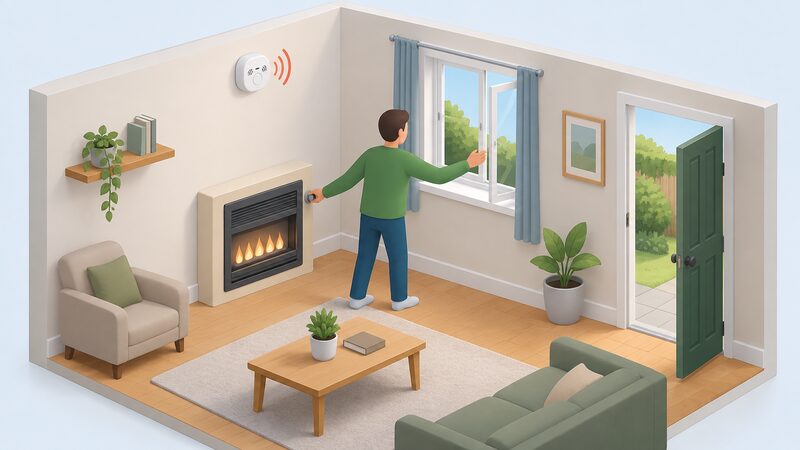
Official guidance says to switch off the appliance and shut off the gas supply at the meter control valve, open all doors and windows to ventilate the room, and visit a GP to say that you believe you may have been exposed to carbon monoxide31. Other official guidance says to turn appliances off, open windows and get out of the house to breathe in fresh air7. Independent guidance lists opening all doors and windows, moving outside into fresh air, seeking immediate medical attention if unwell, alerting the landlord or hotel representative, and calling the National Gas Emergency number if in the UK13. For suspected poisoning, official guidance says to immediately turn off all appliances if it is safe to do so32.
One warning sign is social rather than physical: other people in your house, flat or workplace falling ill with similar symptoms32. That pattern is a recognised indicator of carbon monoxide exposure, and it is the reason a household illness that affects several people at once is treated differently from an individual one.
How long gas safety duties last: servicing, alarms and appliance lifespan
The servicing duty has no end date. The Health and Safety Executive strongly advises that all gas appliances, flues and pipework are installed, regularly maintained and serviced at least annually by a Gas Safe registered engineer, and that gas appliances and flues are regularly checked for safety at least once every 12 months4. That advice applies for as long as the appliance is in use, not for a fixed term after installation.
Alarms have a defined working life, signalled by the unit itself. The alarm should incorporate a warning device to alert users when the working life of the alarm is due to pass15. The guidance accompanying carbon monoxide alarms should always be followed carefully, including noting the expiry date18. No service life in years is stated in the published guidance, so the expiry date on the unit and its instructions is the reference point.
Landlord duties run with the tenancy and the appliance. A landlord must arrange an annual gas safety check within 12 months of the installation of a new appliance or flue they provide, and annually thereafter4. The 2 month early window lets the check be brought forward without moving the deadline4. Where a lease is for longer than seven years and is for life, the landlord is not responsible for gas safety checks and maintenance, and the duty sits with the leaseholder4.
For a household's independence, the picture is mixed. Servicing and gas work are permanently outsourced to registered engineers, and that dependency cannot be designed away while a gas appliance remains in the home. What a household can control is the record: keeping the service history, noting alarm expiry dates, and knowing the warning signs. Those are the parts of gas safety that stay in the occupier's hands.
Sources32 cited
- The Gas Safety (Installation and Use) Regulations 1998, legislation.gov.uk, 1998
- Registration to carry out gas work, GOV.UK, 2026
- Gas safety in the home (INDG238), Health and Safety Executive, 2011
- Gas safety: frequently asked questions, Health and Safety Executive, 2026
- Gas safety advice for owner-occupiers, Health and Safety Executive, 2026
- Landlords: what a gas safety check involves, Health and Safety Executive, 2026
- Gas safety and carbon monoxide, nidirect, 2025
- Gas Safe Register, nidirect, 2025
- Building Regulations guidance, Part J: heat producing appliances, Welsh Government, 2025
- Domestic gas installation and health and safety, nidirect, 2025
- Quick guide to the Building Regulations: questions and answers, Welsh Government, 2021
- Boiler maintenance guide, Uswitch, 2026
- Summer carbon monoxide awareness, Cadent Gas, 2026
- Gas safety in the home (INDG238), Health and Safety Executive, 2011
- Approved Document J: combustion appliances and fuel storage systems, Welsh Government, 2024
- Technical Booklet L: combustion appliances and fuel storage systems, Building Control Northern Ireland, 2012
- Keeping your home warm in winter, Met Office, 2026
- Fitness for Human Habitation: guidance for landlords, Welsh Government, 2022
- Carbon monoxide alarms in private rented properties: guidance, Scottish Government, 2022
- Regulations to modify the Repairing Standard: summary, Scottish Government, 2022
- Tolerable Standard guidance: satisfactory fire and carbon monoxide detection, Scottish Government, 2023
- The Housing (Scotland) Act 1987 (Tolerable Standard) (Extension of Criteria) Order 2021, legislation.gov.uk, 2021
- The Housing (Scotland) Act 1987 (Tolerable Standard) (Extension of Criteria) Order 2019, legislation.gov.uk, 2019
- Tackling fuel poverty in Scotland: periodic report 2021 to 2024, Scottish Government, 2024
- The Gas Safety (Installation and Use) Regulations (Northern Ireland) 2024, legislation.gov.uk, 2024
- Eligible and non-eligible works, Cornwall Council, 2025
- Great British Insulation Scheme delivery guidance, Ofgem, 2023
- Boilers and heating: sustainability, Planning Portal, 2026
- Building Regulations: boilers and heating, Welsh Government, 2026
- Low temperature heating and SAP efficiency data, NCM PCDB, 2026
- Carbon monoxide, Health and Safety Executive, 2026
- Carbon monoxide poisoning, nidirect, 2026
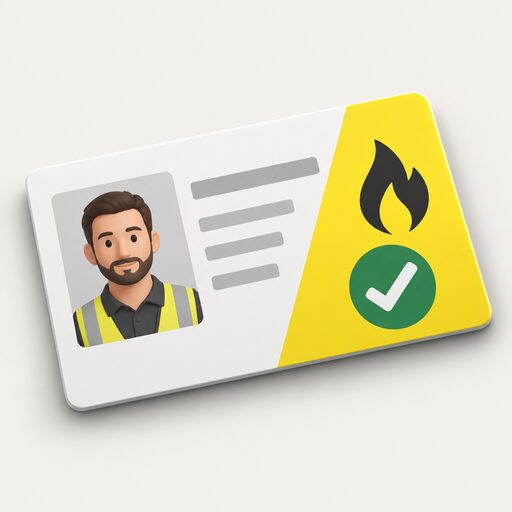 Gas Safety in the HomeYour landlord has to arrange a yearly gas safety check by a Gas Safe registered engineer and give you the record if you rent.
 F-Gas RulesWho is legally allowed to work on the gas in your home air conditioning?
 Landlord Electrical ChecksWho is responsible for checking the electrics are safe in your rented home, and how often should it happen?
 Electrical Safety RegulationElectrical work at home raises real questions about who can do it, what needs signing off, and what paperwork you should keep.
 Using an Installer in EnglandHow do you check an installer is registered to sign off their own work, and what happens if they are not?
 HMOs and Shared HousesWho is responsible for the electrics, the gas and the fire alarms when you rent a room in a shared house?