
In this answer
Short answer
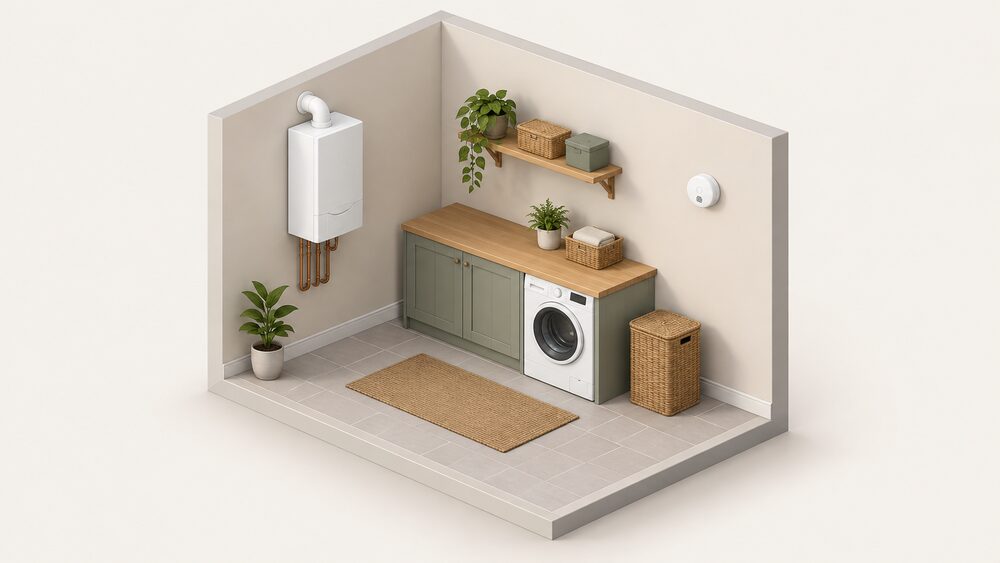
A carbon monoxide detector belongs in the same room as any fuel-burning appliance, and in every room a flue from one of those appliances passes through. Within that room, the working rule is 1 to 3 m horizontally from the appliance, mounted at head height on a wall or on the ceiling, clear of doors, windows, vents, extractor fans and damp. Welsh building regulations guidance sets the alarm between 1 m and 3 m horizontally from the appliance1, and Scottish Government guidance gives the same 1 m to 3 m band2.
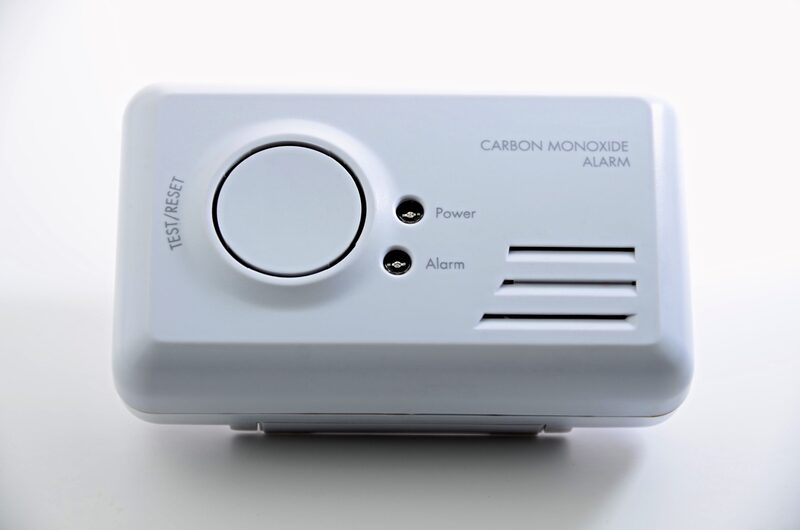
The detector itself must be a compliant one. Welsh guidance states carbon monoxide alarms should comply with BS EN 50291:20011, and Scottish guidance says CO detectors should comply with BS EN 502912. Northern Ireland guidance refers to the BS Kitemark or EN 502913. A detector is a standalone safety device: it does not depend on the grid, a supplier, an app or a broadband connection, which is the one part of a heating system that keeps working when everything else fails.
What follows is the placement rule room by room, the height and distance figures, the sites that void effective detection, and the legal position in England and Wales, Scotland and Northern Ireland.
What a compliant detector must be: BS EN 50291 and independence
The standard is the starting point, because a placement rule only matters if the device is capable of detecting carbon monoxide in the first place. Welsh building regulations guidance states that carbon monoxide alarms should comply with BS EN 50291:20011. Scottish Government guidance states that CO detectors should comply with BS EN 502912. Northern Ireland guidance tells households to buy and fit an alarm that complies with BS EN 50291, describing it as meeting British or European standards under the BS Kitemark or EN 502913. OFTEC repeats the same standard for detectors fitted alongside new or replacement heating appliances7.
A separate standard covers how the device is chosen and installed. The British Standard BS EN 50292 deals with the selection, installation, use and maintenance of electrical apparatus for the detection of carbon monoxide in domestic premises8. That is the document behind much of the siting advice below: it treats installation as part of the safety case, not an afterthought.
For a household's energy independence, the detector is unusual. It needs no mains supply to a supplier, no smart meter, no cloud account and no app. A battery unit keeps working through a power cut, which is exactly when a backup heater, a solid fuel stove or a portable gas appliance may be pressed into service. The dependence that remains is on the household testing it and replacing the battery or the unit at the end of its life, and on the appliance itself being serviced so that it is not producing carbon monoxide in the first place. Detector placement sits alongside servicing as a control, not a substitute for one. The wider safety picture is set out in carbon monoxide safety.
The basic rule: a detector in every room with a fuel-burning appliance
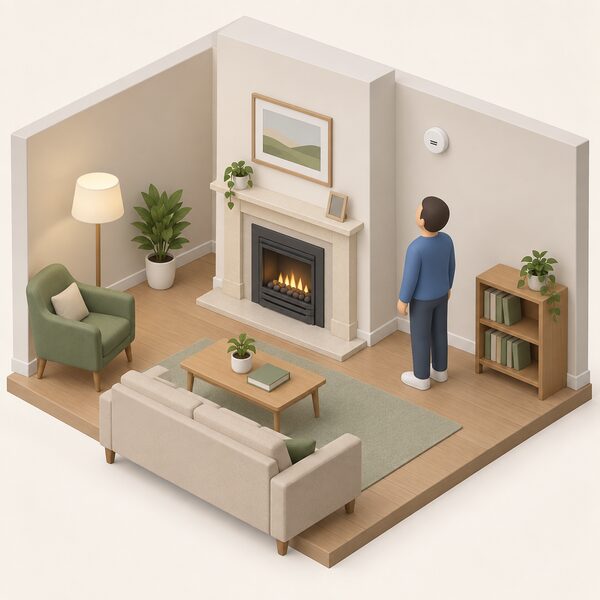
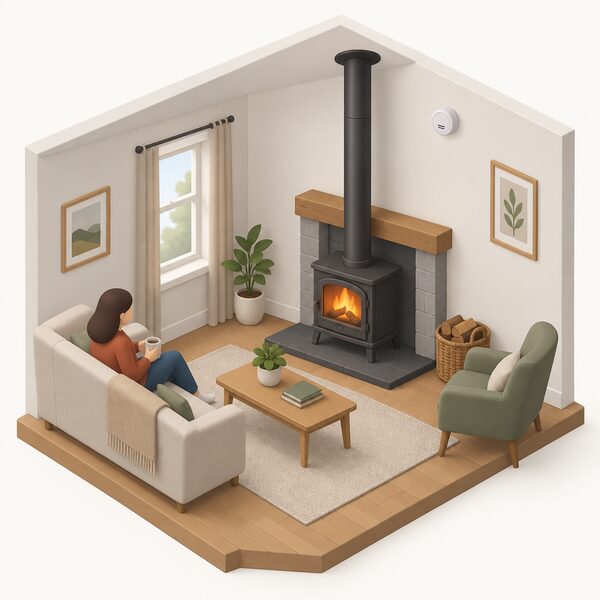
The core placement rule is room-based, not house-based. Met Office guidance states a carbon monoxide alarm should be fitted in any room that contains a gas fuel burning appliance, like a boiler and gas fire, and a solid fuel burning appliance9. Cadent gives the same instruction in plainer terms: make sure they are positioned in a room where a gas appliance is present10. OFTEC states a detector should be fitted in the same room as any new or replacement heating appliance such as a boiler, inside a building including non-habitable areas, and not designed solely for cooking purposes, depending on region7.
Maker guidance extends the rule to flues. Vaillant advises placing detectors in every room containing a fuel-burning appliance, such as a gas boiler, fire or stove, and in every room through which a flue from one of those appliances passes5. That covers the case of a flue running through a bedroom or landing where no appliance sits.
The regulatory floor is set by Requirement J3, which provides that where a fixed combustion appliance is provided, appropriate provision shall be made to detect and give warning of the release of carbon monoxide1. For solid fuel, the same guidance states that where a new or replacement fixed solid fuel appliance is installed in a dwelling, a carbon monoxide alarm should be provided in the room where the appliance is located1. Approved Document J goes further for high-risk accommodation, requiring a detector in every space, including connected spaces such as attached garages and loft spaces, containing a fixed combustion appliance, including a fixed flued combustion appliance used for cooking11.
In practice this means a house with a boiler, a gas fire and a wood stove needs three detectors at minimum, plus one in any room a flue crosses. A household that heats off the gas grid faces the same rule with oil or LPG: the appliance room is the appliance room whatever the fuel. See off grid home heating for how those systems are arranged.
Height and distance: head height, 150 cm, and 1 to 3 m from the appliance
Two numbers govern the fitting position inside the appliance room: how high, and how far away.
On distance, Welsh guidance puts the alarm between 1 m and 3 m horizontally from the appliance1. Scottish Government guidance states it should be sited between 1 m and 3 m from the appliance2. Maker guidance from Baxi repeats the band, advising that the unit sits between 1 metre and 3 metres horizontally from the appliance12. One distributor guide gives the same 1 to 3 m horizontal distance for best detection accuracy4. Viessmann suggests a detector located around two metres away from the boiler13, which sits inside the band rather than contradicting it. Energy UK gives a minimum of at least 1 m away from fires, boilers, cookers or heaters14.
On height, Energy UK advises that a wall-mounted alarm goes at head height, meaning breathing level14. One distributor guide states the detector should be placed at a height of 150 cm or more above the floor4. Baxi adds two refinements: a wall unit should sit above the level of any doors, windows or vents in the room and at least 15 cm from the ceiling, and a ceiling-mounted unit should be at least 30 cm away from the walls or any light fittings12. Welsh guidance gives the ceiling figure as at least 300 mm from any wall1.
| Position | Figure | Source |
|---|---|---|
| Horizontal distance from appliance | 1 m to 3 m | Welsh guidance1, Scottish guidance2 |
| Minimum distance from fires, boilers, cookers, heaters | At least 1 m | Energy UK14 |
| Wall height | Head height, breathing level | Energy UK14 |
| Wall height, alternative figure | 150 cm or more above floor | Distributor guide4 |
| Wall unit clearance from ceiling | At least 15 cm | Baxi12 |
| Ceiling unit clearance from wall | At least 300 mm | Welsh guidance1 |
| Ceiling unit clearance from walls or light fittings | At least 30 cm | Baxi12 |
The 1 to 3 m band exists because carbon monoxide disperses and mixes with room air rather than pooling in one place. Too close to the appliance and the sensor can be swamped or affected by heat and combustion by-products; too far and the gas may not reach it in a concentration that triggers the alarm promptly. Head height is chosen because that is where occupants breathe, so the detector samples the air that matters.
Where not to fit one: cupboards, curtains, sinks, doors, windows and damp
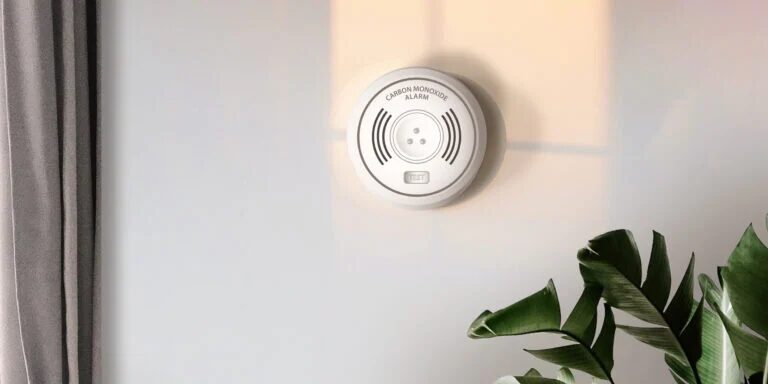
The exclusion list is as important as the placement rule, because a badly sited detector can fail to alarm while appearing to be installed. Scottish Government guidance states that a carbon monoxide detector should not be sited in an enclosed space, for example in a cupboard or behind a curtain, where it can be obstructed, directly above a sink, next to a door or window, next to an extractor fan, next to an air vent or similar ventilation opening, where dirt and dust may block the sensor, in a damp or humid location, or in the immediate vicinity of a cooking appliance15. The same guidance states plainly that a carbon monoxide detector should not be placed in a cupboard or other small enclosed space2.
Maker guidance agrees. Baxi advises not fitting detectors in enclosed spaces such as cupboards or behind curtains or furniture, and not placing them near windows, doors or fans, in damp places such as bathrooms, next to extractor fans or cooker hobs12. A distributor guide lists the same exclusions: avoid bathrooms, areas near windows or doors, and locations directly above cookers or heaters4.
There is one awkward case: an appliance that must sit in a bathroom. Scottish Government guidance states that where a combustion appliance is necessarily located in a bathroom, the CO detector should be sited outside the room as close to the appliance as possible, but allowing for the effect humid air might have on the detector when the bathroom door is open15. The detector moves out; the appliance stays put.
A boiler inside a cupboard is a related problem. Viessmann notes that if the boiler is in a cupboard and cannot be seen at all times, it may be an idea to fit a carbon monoxide detector16. The detector still goes outside the cupboard, in the room, at the distances above. Ventilation for that cupboard is a separate question, covered in boiler flues.
Rooms without an appliance: breathing level on a table or shelf
Not every detector needs fixing to a wall. In a room without an appliance, Baxi advises placing the unit at about head height, your breathing level, and notes it could stand on a table or shelf12. That is a practical option for a rented flat where drilling is not wanted, or for a room where a flue passes through but no appliance sits.
The same exclusions apply. A shelf inside a cupboard is not a shelf in the sense meant; Scottish Government guidance rules out enclosed spaces and obstructed positions15. A shelf directly above a sink, next to a window, next to an air vent or in a damp room is equally unsuitable15. A free-standing unit on a hall table or a bedroom shelf, clear of draughts and dust, meets the intent.
For rooms with no appliance and no flue, the position is a judgement rather than a rule. Liquid Gas UK states it is strongly recommended that every household has one17, and Confused.com advises that if a detector is not already fitted, it should be considered, because carbon monoxide is odourless, poisonous and colourless18. A detector in a hallway or living area gives a household a second sampling point away from the plant room, which matters if carbon monoxide migrates through a building rather than staying where it was produced.
The law in England and Wales: living accommodation requirements
The legal duty in England and Wales is narrower than the safety advice, and it is worth separating the two. Vaillant states that in England and Wales a carbon monoxide detector must be installed in any room which is used at least partly as living accommodation and contains a solid fuel burning appliance, and notes that living accommodation includes bathrooms5. HETAS puts it as: the law in England and Wales states that new or replacement solid fuel installations in your home must have a carbon monoxide alarm fitted6. OFTEC states that any new or replacement solid fuel appliance requires a BS EN 50291 kitemarked carbon monoxide alarm, covering landlords, social and private housing19.
For rented homes, the Smoke and Carbon Monoxide Alarm (Amendment) Regulations 2022 require landlords to ensure any room used as living accommodation which contains a fuel-burning appliance is equipped with a carbon monoxide alarm, excluding gas cookers19. The government's own landlord and tenant guidance describes the duty in terms of carbon monoxide alarms in rooms that contain appliances using solid fuels such as coal and wood20.
Scotland, Wales and Northern Ireland differ. OFTEC states that building regulations in Scotland, Wales and the Republic of Ireland require additional detectors in high-risk areas, such as bedrooms and principal habitable rooms through which a flue may pass7. HETAS notes there are differing rules depending on whether a household is in England, Scotland or Wales, with varying requirements under building regulations21. In Northern Ireland, the gas safety guidance points households to alarms meeting the BS Kitemark or EN 502913.
Where a detector sits in a household's energy independence
A carbon monoxide detector is the cheapest and most independent safety device in a heating system. It draws nothing from the grid, needs no supplier account, no meter reading and no app, and a battery unit continues to work in a power cut. That matters most in the situations where households fall back on secondary heat: a wood burner during an outage, a portable gas heater in a cold room, a backup appliance brought into service. The detector is the one component that keeps watch when the rest of the system is off.
The dependence that remains is on maintenance and on the appliance. A detector does not stop carbon monoxide being produced; it warns when it is. Servicing the boiler, stove or fire is the other half of the control, and the two belong together. The wider context, including the symptoms of exposure and what to do when an alarm sounds, is covered in carbon monoxide safety, and the servicing regime in boiler servicing and maintenance.
If an alarm does sound, Northern Ireland guidance is to turn appliances off, open windows and get out of the house to breathe in fresh air3. Placement is what makes that warning arrive in time.
Sources21 cited
- Building Regulations Part J guidance, heat producing appliances, Welsh Government, 2025
- Tolerable standard guidance: satisfactory fire and carbon monoxide detection, Scottish Government
- Gas safety and carbon monoxide, nidirect, 2025
- Does a boiler cupboard need ventilation?, Viessmann
- Do I need a carbon monoxide detector fitted?, Baxi
- Consumer FAQs, HETAS
- Carbon monoxide safety, OFTEC
- The Smoke and Carbon Monoxide Alarm (Amendment) Regulations (Northern Ireland) 2024, legislation.gov.uk, 2024
- Keeping your home warm in winter, Met Office
- Stay safe, warm and connected this winter, Cadent Gas
- Approved Document J: combustion appliances and fuel storage systems, Welsh Government, 2010
- Is my boiler leaking carbon monoxide?, Vaillant
- Boiler service guide for homeowners, Viessmann
- Carbon monoxide, Energy UK
- Carbon monoxide alarms in private rented properties: guidance, Scottish Government, 2016
- Gas leaks safety, Uswitch
- Safety advice, Liquid Gas UK
- Keeping gas safe: carbon monoxide, SGN
- Carbon monoxide, Wales West Utilities
- Landlord and tenant rights and responsibilities in the private rented sector, GOV.UK, 2019
- 6 log burner rules, HETAS
 Alarm Rules in Rented HomesHow many smoke and carbon monoxide alarms a rented home must have, where they must be sited, and how the rules differ across England, Scotland, Wales and Northern Ireland, including the standards alarms must meet and who tests them.
 Carbon Monoxide SafetyHow carbon monoxide arises from gas, oil, LPG and solid fuel appliances, where alarms must be sited and what the requirements are in each UK nation.
 Smell Gas or Suspect COThe emergency steps for a suspected gas escape or carbon monoxide alarm, including ventilation, ignition sources and turning the supply off at the emergency control valve.
 Boiler FluesWhere a boiler flue can go matters most when you are planning a kitchen or a new roof line.
 Test Smoke and Heat AlarmsHow often alarms should be tested, what the different beeps mean and when a unit has reached the end of its life.
 Home Energy MonitorsWhich home energy monitor suits your house, and what will it actually show you?