
In this answer
Short answer
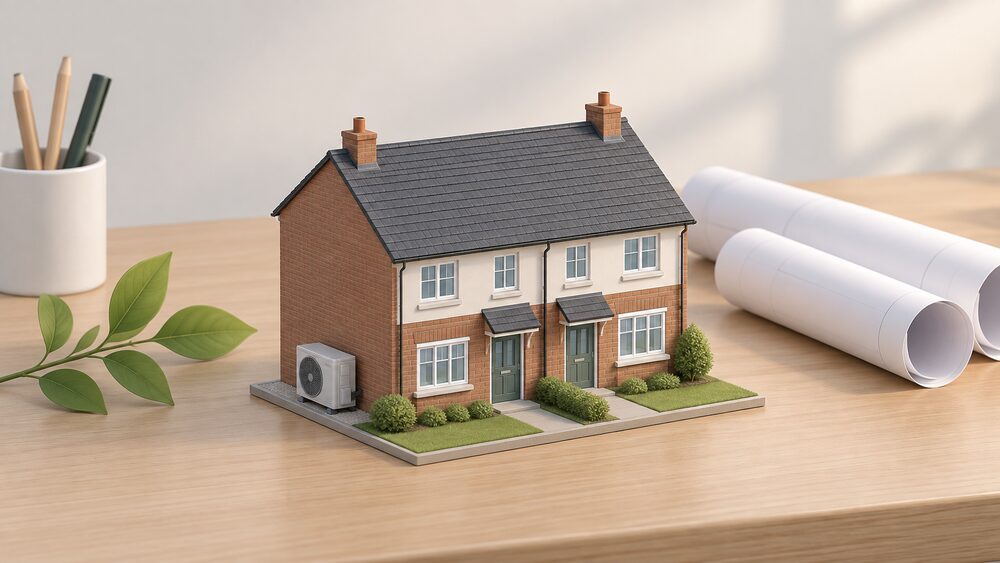
The headline figure is 75 to 80%. Homes built to the Future Homes Standard are expected to produce 75 to 80% less carbon dioxide than homes built to current Building Regulations standards, and at least 75% less than a similar new build from 20131. Government guidance puts it plainly: an average semi-detached home built to the standard will have 75% lower emissions than under 2013 standards2.
That single number is the one householders quote when comparing a new home with an older one, and it is the figure that matters for a household's carbon position. It is an expectation and an average, not a guarantee for every dwelling. The reduction comes from two changes working together: a much better insulated and airtight fabric, and low carbon heating instead of a gas boiler as the default3.
For energy independence, the effect is real but partial. A home built to the standard uses less energy for heat and does not burn gas on site, which reduces exposure to gas prices and imports. It remains connected to the electricity grid and dependent on a supplier, and the carbon figure assumes the grid continues to decarbonise. The standard lowers a household's demand; it does not make the home self-sufficient.
Who the Future Homes Standard applies to
The Future Homes Standard applies to new homes in England. Its stated purpose is to improve the energy efficiency and reduce the carbon emissions of new dwellings and non-domestic buildings, ensuring they are zero carbon ready1. The Future Buildings Standard covers non-domestic buildings alongside it, and the two are described together as part of the government's plan to improve energy efficiency and cut carbon emissions7.
It does not apply to existing homes. A household in a Victorian terrace or a 1970s semi is not required to meet the standard, and the 75 to 80% figure says nothing about the emissions of a home already standing. The comparison is between a new home built to the standard and a new home built to earlier rules, most often Part L 20138. That distinction matters when the figure is quoted in a sales brochure: it is a like-for-like comparison of new builds, not a claim about the housing stock as a whole.
Building regulations are devolved, so the standard's reach stops at the English border. Scotland has its own building standards and its own New Build Heat Standard, which mandates low carbon heating in new builds from 20259. Scotland's Section 6 energy requirements already set their own carbon targets, reducing emissions by approximately 21% compared with the previous 2010 standards, or 45% compared with the 2007 standards11. Wales sets its own Part L requirements and Northern Ireland works to separate technical booklets. A carbon reduction percentage quoted for the Future Homes Standard is an England figure unless a source says otherwise.
The standard also reaches the supply chain rather than only the household. Developers, architects, heating engineers and electricians all work to the new requirements, and the electrical contracting body NICEIC has published guidance for homeowners on what the standard means for them12. For a household buying a new home, the practical effect is that the heating system, the fabric and the ventilation are fixed at the design stage, before anyone moves in.
What the 75 to 80% figure actually measures
The percentage is a carbon dioxide figure, not an energy bill figure. Government documents describe an average home producing at least 75% lower CO2 emissions than one built to current energy efficiency requirements4, and an average semi-detached home producing 75 to 80% less carbon dioxide than one built to those requirements4. The same expectation appears across official, independent and industry documents, which is why the range is stable: 75 to 80% compared with current standards, and at least 75% compared with 20131.
The two baselines are not the same, and that is the main reason the numbers differ between documents. Some sources compare against current Building Regulations standards, which have already moved on from 2013. Others compare against Part L 2013, the older baseline, which produces the higher and more commonly quoted figure. The Building Engineering Services Association frames the target as achieving a 75 to 80% carbon reduction compared with Part L 20138, and the Chartered Institution of Building Services Engineers reports the same expectation against current standards5.
A modelled target sits underneath the percentage. Under an indicative Future Homes Standard specification, a typical semi-detached home has a carbon target of 3.6 kgCO2/m2/yr, against 16.0, 13.5 and 11.0 for earlier specifications in the same comparison4. That is kilograms of carbon dioxide per square metre per year, and it is a design target rather than a measured outcome.
| Baseline | Expected reduction | Source type |
|---|---|---|
| Current Building Regulations standards | 75 to 80% less CO2 | Official4 |
| Part L 2013 | At least 75% less carbon | Official2 |
| Part L 2013 | 75 to 80% carbon reduction target | Independent8 |
| Current standards, average home | 75 to 80% less carbon | Independent5 |
"They will ensure new homes emit, on average, at least 75% less carbon as a similar new build from 2013."
The word "average" carries weight. A flat with a heat pump and a compact envelope may beat the figure; a large detached house with high hot water demand may not reach it. The standard sets the requirement, and the achieved reduction varies by dwelling type and specification.
How the reduction is achieved
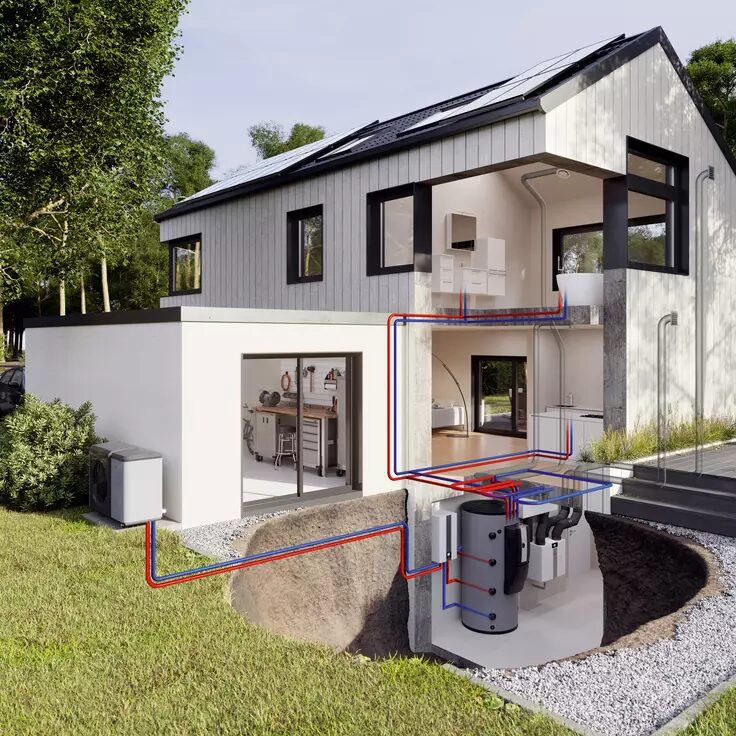
Two things do the work: the fabric and the heating system. The standard requires new build homes to be future-proofed with low carbon heating and high levels of energy efficiency3. In practice that means a heat pump, usually air source, often paired with a hot water cylinder, in a building designed to lose far less heat than a home built to earlier rules.
The fabric comes first because it determines how much heating the home needs. A better insulated, more airtight envelope lowers the demand before any heating system is chosen, which is why the standard is described as setting world-leading levels of efficiency alongside the heating requirement14. The Passivhaus Trust's work on the performance gap is a reminder that design intent and as-built performance can diverge, so the modelled figure is not the same as a metered one15.
The heating change is the more visible one. The standard mandates low carbon heating in new homes from 2025 as well as higher levels of efficiency10, and it requires all new build homes to adopt lower carbon heating alternatives16. That removes the gas boiler from the default specification. A gas connection may still exist for cooking, but the space heating and hot water come from something else.
Solar and storage are not mandated by the standard itself, but they are increasingly specified alongside it. The solar industry has argued that solar power should be a mainstay of new building regulations17, and the standard's low carbon heating requirement makes an all-electric home more common, which changes what a household's electricity demand looks like. A home with a heat pump and no on-site generation is still dependent on the grid for every unit of heat it produces.
Where the figure comes from and how firm it is
The 75 to 80% expectation has been consistent since the standard was first consulted on. The government's response to the 2021 consultation stated that an average home would produce at least 75% lower CO2 emissions than one built to current energy efficiency requirements4, and later documents repeated the 75 to 80% range against current Building Regulations standards3. The figure has not moved as the policy has developed, which is unusual for a target of this kind.
An interim step came first. Before the full standard, an uplift to energy efficiency requirements was expected to deliver a 31% carbon emissions saving compared with the then-current standard5. That interim figure is worth knowing because it explains why some homes completed in the early 2020s already perform better than the 2013 baseline without meeting the full standard.
Some industry documents quote a higher figure. A manufacturer's guidance refers to a requirement to cut carbon emissions by 80% compared with 2013 Part L18, and another refers to an 80% reduction in carbon emissions from new dwellings by 202519. These sit at the top of the range rather than contradicting it: 80% is the upper end of the 75 to 80% band, and the 2013 baseline produces the higher number. Where a document says 80%, it is usually describing the same target from the top of the range.
The standard's status has moved through consultation and publication. Industry bodies have described it as expected to be published shortly20, and the government's own impact assessment material sits alongside the final proposals1. For a household, the practical question is not the exact percentage but whether the home being bought was designed to the standard or to the rules that preceded it.
What it means for a household's energy independence
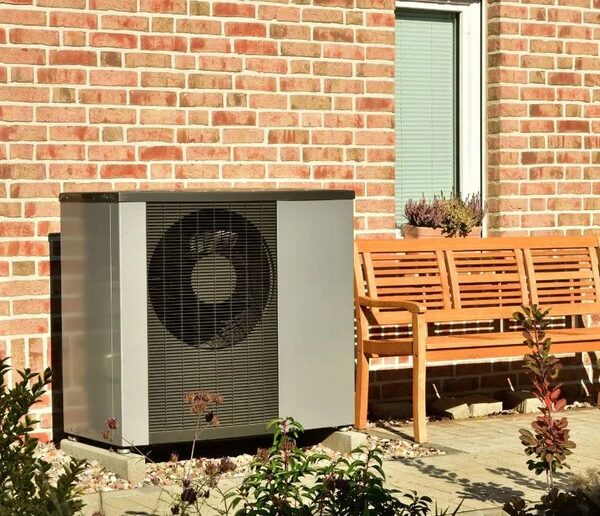
A home built to the standard is less exposed to gas. It does not burn gas for heat, so the household is not directly exposed to gas prices or to imported gas volumes. That is a genuine shift in the household's position, and it is the main independence gain the standard delivers.
What remains is dependence on electricity. The home is connected to the grid, buys from a supplier, and its carbon performance depends on how that electricity is generated. The Climate Change Committee has argued that faster electrification of the UK will put money back into people's pockets21, but that is a system-level finding, not a guarantee for any one household. A heat pump running on a high-carbon grid in 2025 and the same heat pump running on a decarbonised grid in 2035 produce very different carbon outcomes from identical hardware.
There is also a dependence on the manufacturer and the installer. A heat pump needs servicing, and its controls and any monitoring app tie the household to a company's software and support. That is a different kind of dependence from a gas connection, but it is still dependence. The standard reduces the household's exposure to fuel markets; it does not remove its reliance on the grid, a supplier or a manufacturer.
For a household comparing a new home with an older one, the figure is a reasonable guide to the direction and rough scale of the difference. It is not a promise about a specific address, and it says nothing about running costs, which depend on tariffs and usage rather than on the carbon target alone.
Sources21 cited
- RPC opinion: Future Homes and Buildings Standards impact assessments, GOV.UK
- The Future Homes Standard: research briefing, House of Commons Library
- Building for 2050: low cost, low carbon homes, GOV.UK
- Government response to the Future Homes Standard consultation, UK Parliament
- Publication of the Future Home Standard government response, CIPHE
- Building Regulations Part L, F, overheating, Future Homes and Future Buildings Standards, CIBSE
- Healthier, climate resilient homes and buildings, CIPHE
- Future Homes Standard Phase 1: Network to Emitter Impact Report, BEAMA
- Net zero heating, ECIU
- Decarbonising heat: the basics, ECIU
- Building Standards Technical Handbook 2022: Domestic, Section 6 Energy, Scottish Government
- What the Future Homes Standard means for homeowners, NICEIC
- ECA welcomes government's Future Homes Standard but warns safety could be compromised, ECA
- Building regulations and the Future Homes Standard, UK Parliament
- Passivhaus and the performance gap, Passivhaus Trust
- The ban on gas boilers explained, APHC
- Solar power must be mainstay for new building regulations, MCS
- How can we achieve the 80% carbon reduction target with HVAC technology available now, Dimplex
- Future homes we can be proud of, Mitsubishi Electric
- New industry-government partnership to tackle embodied carbon, Future Homes Hub
- CCC: faster electrification of UK will put money back into people's pockets, Carbon Brief
 Future Homes Standard FabricWill a new home be cheaper to heat than an older one?
 Future Homes StandardWill your new build still have a gas boiler, and when do the new rules actually start?
 New Build Homes and EnergyWhat heating will a new build actually have, and will it be a heat pump rather than a gas boiler?
 New Build Energy PerformanceHow energy efficient are new build homes compared with older ones?
 Gas Boilers GuideMains gas boilers heat around 23 million UK homes.
 Efficiency of UK HomesMost UK homes now score better on energy than they did a decade ago, but older houses still lag well behind new builds.